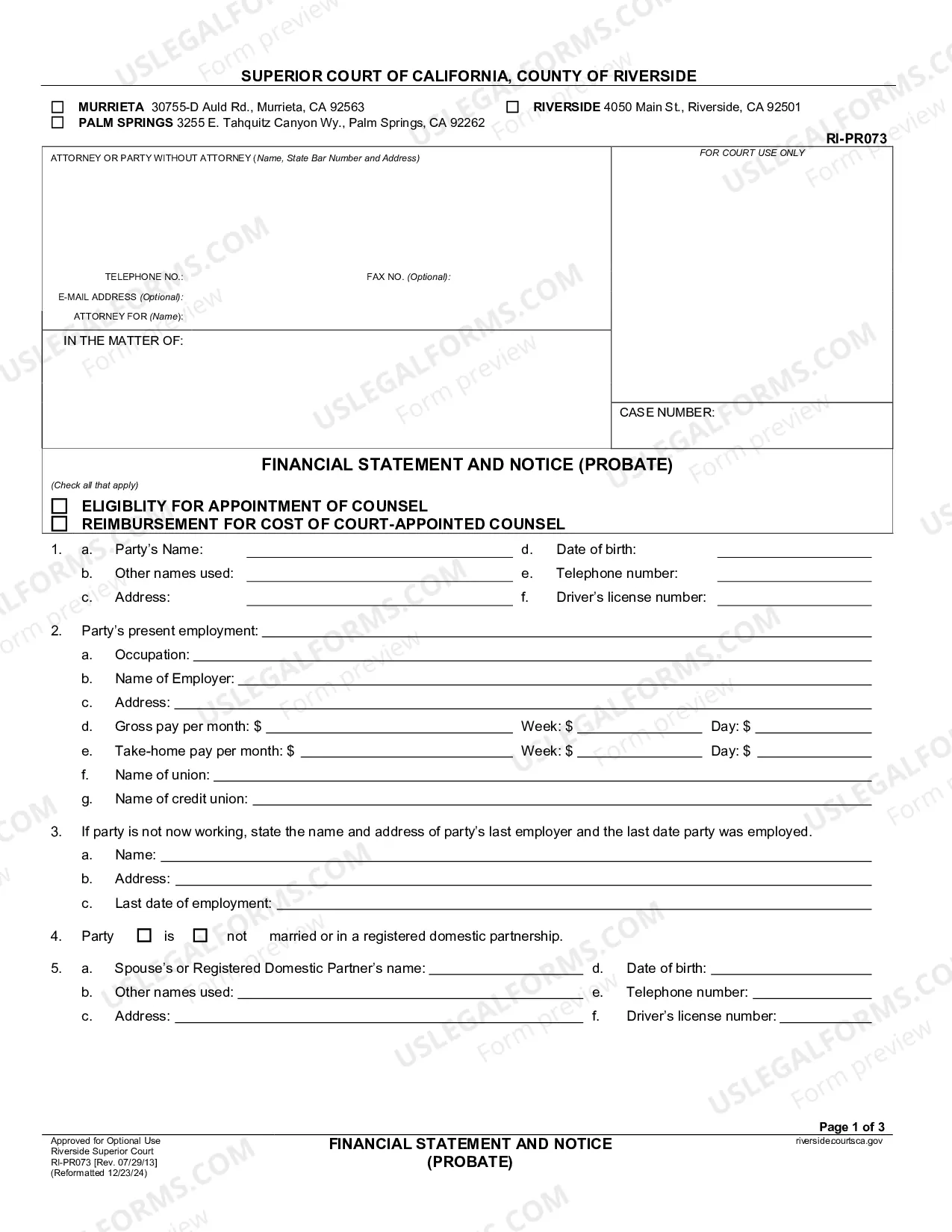
Estate Planning Data Sheet
Overview of this form
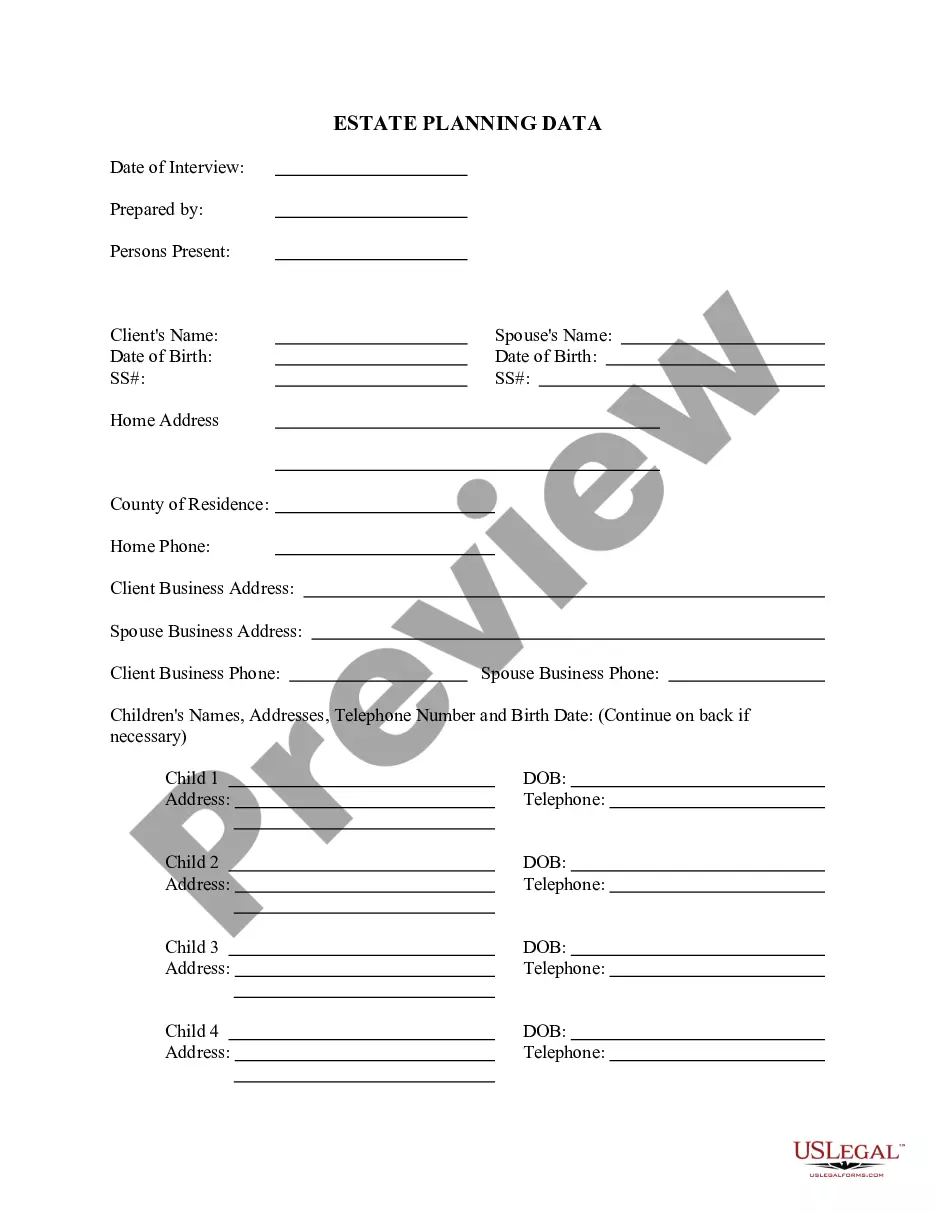
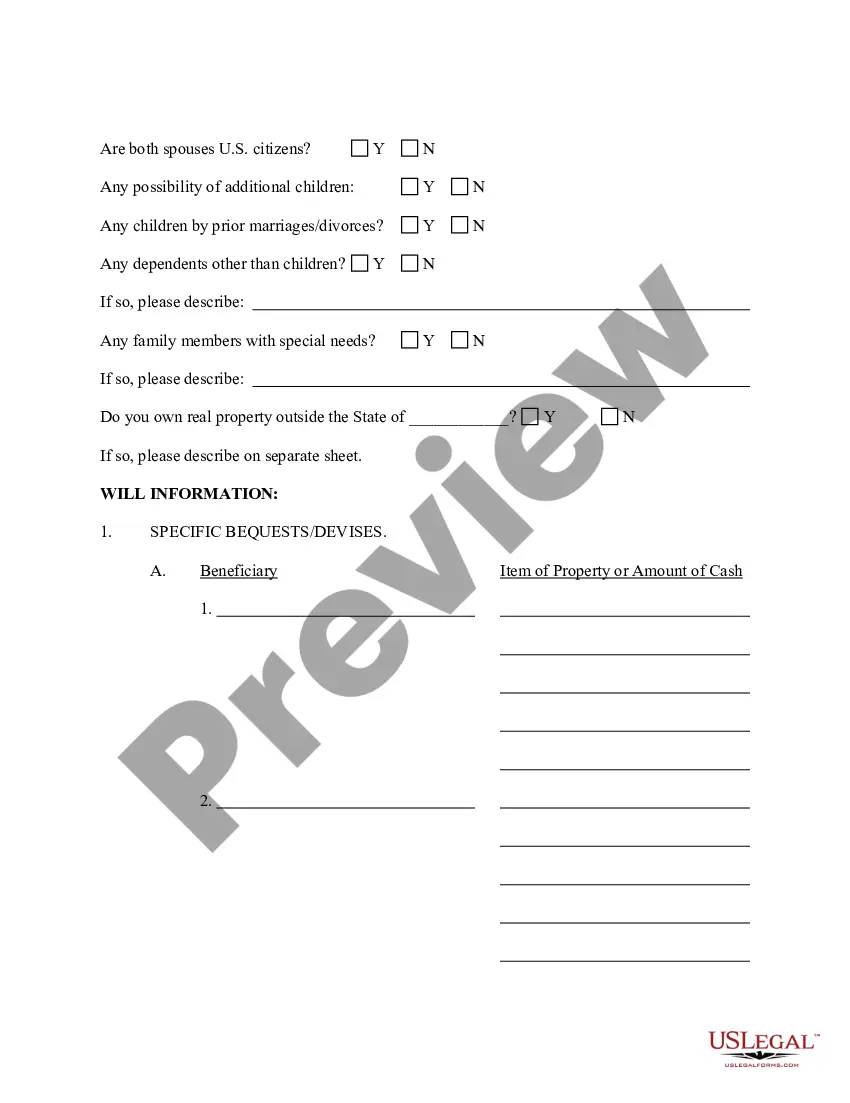
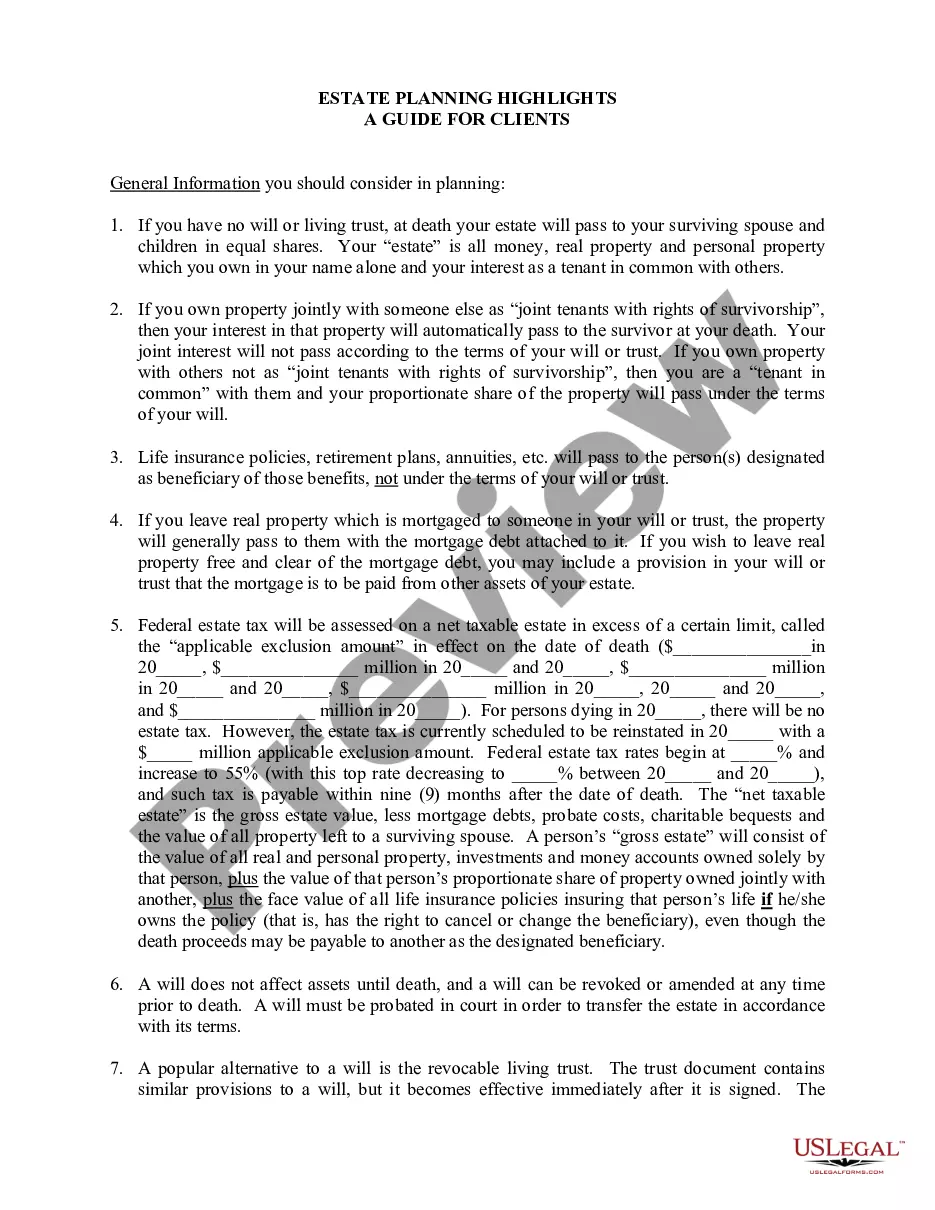
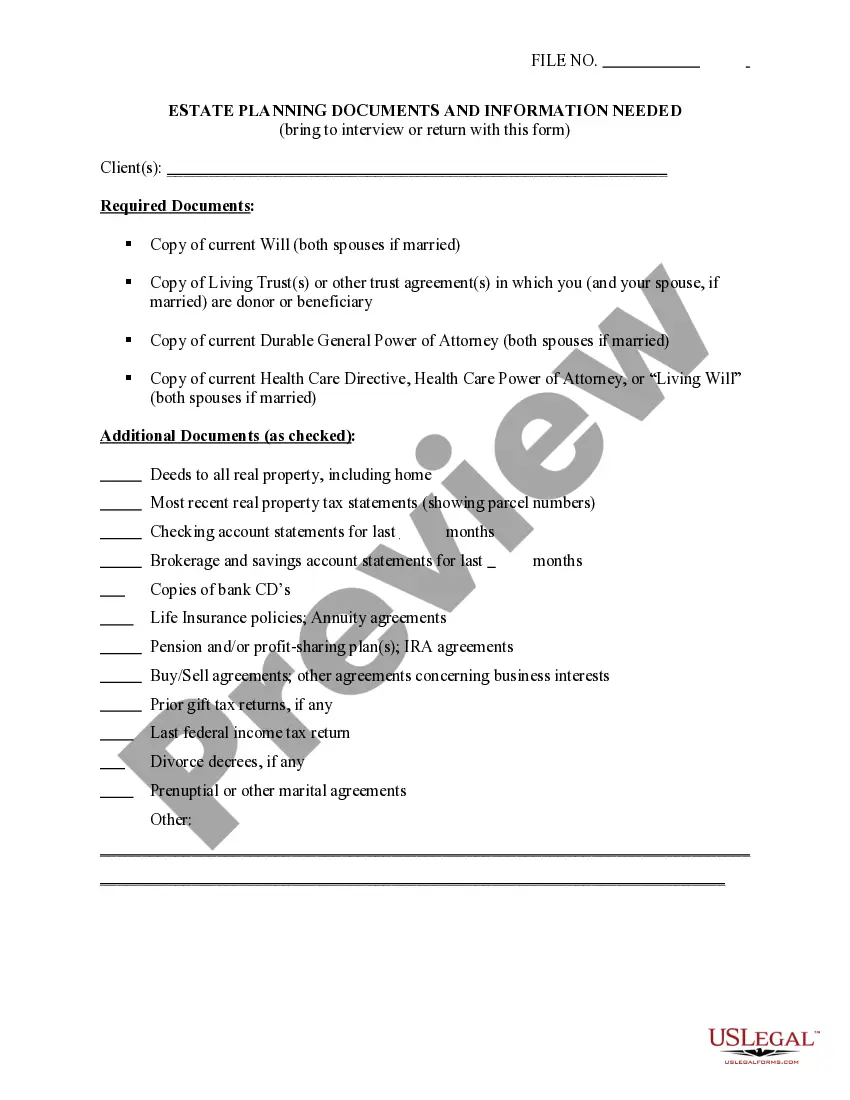
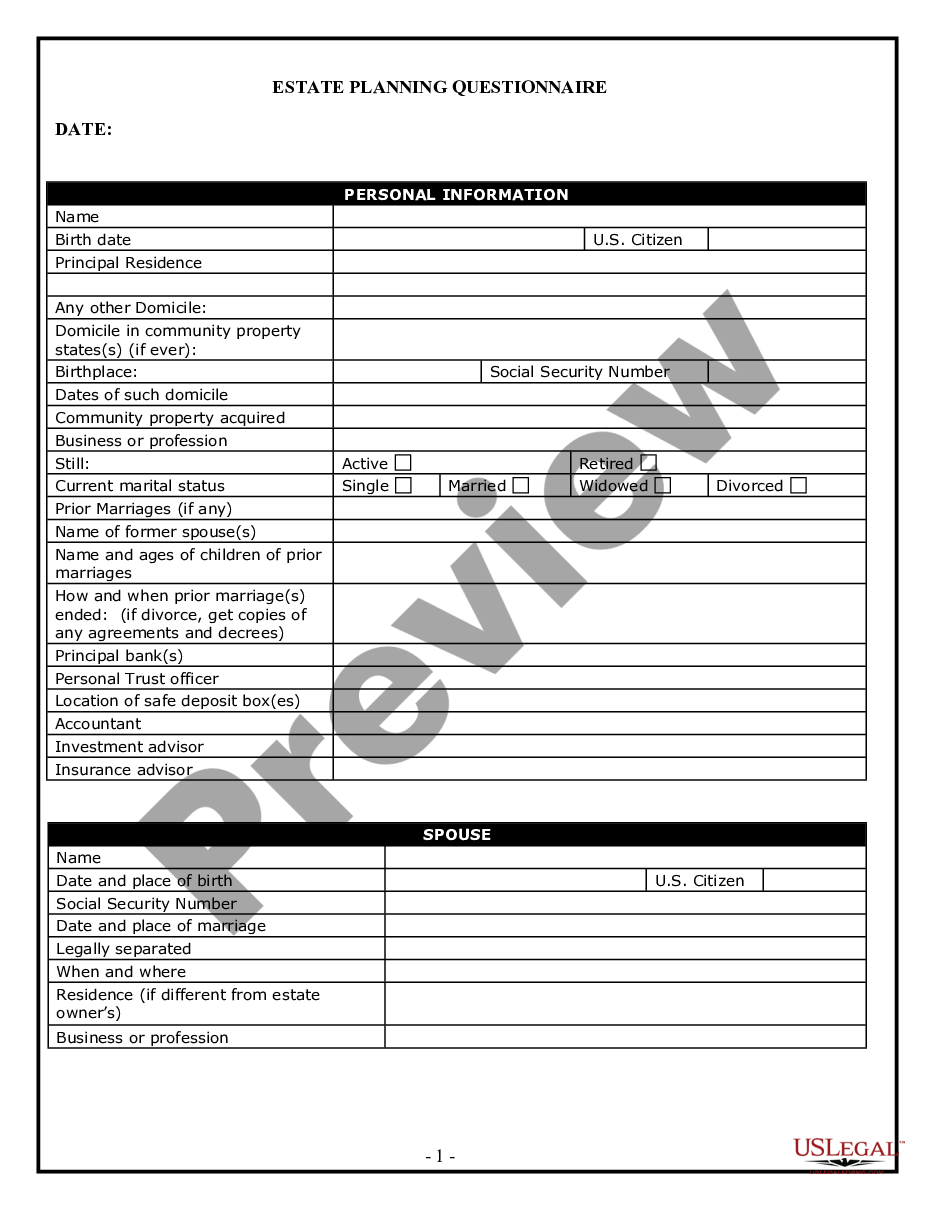
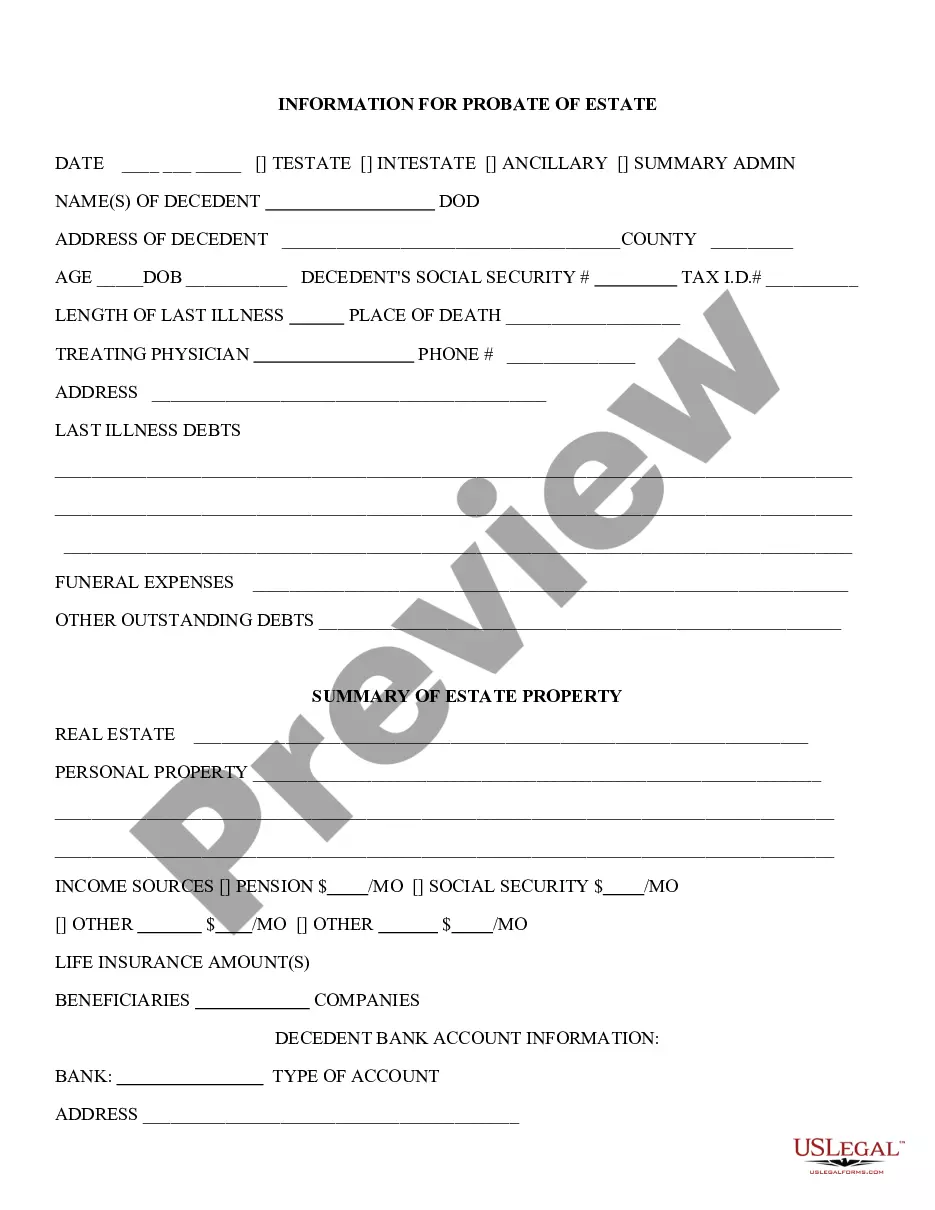
The Estate Planning Data Sheet is a crucial document that assists individuals in organizing their estate planning decisions. This form captures essential information about asset distribution, trusted beneficiaries, and the appointment of an executor. Unlike a last will or trust, the Estate Planning Data Sheet is not a legal document itself but serves as a comprehensive guide for creating legally binding estate plans tailored to your specific wishes.
Key components of this form
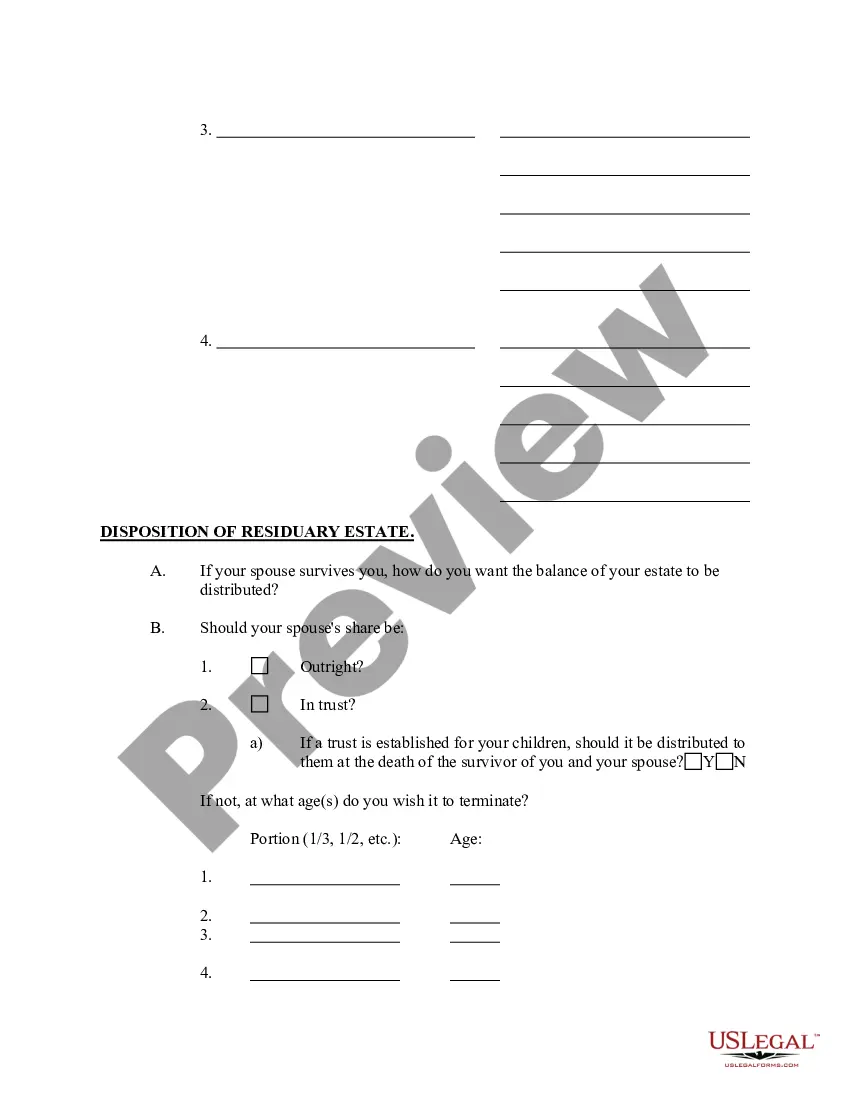
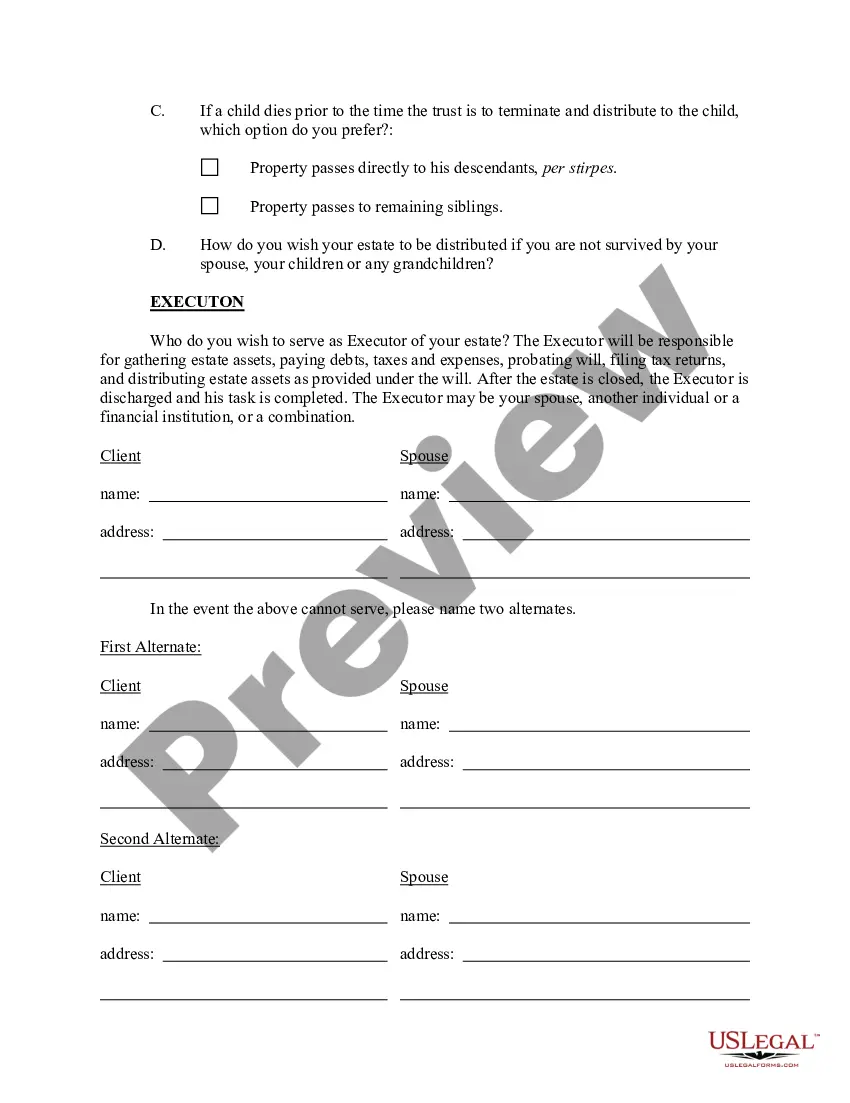
- Instructions for setting up trusts for children, including age distribution specifics.
- Options on how to distribute your estate in the absence of your spouse, children, or grandchildren.
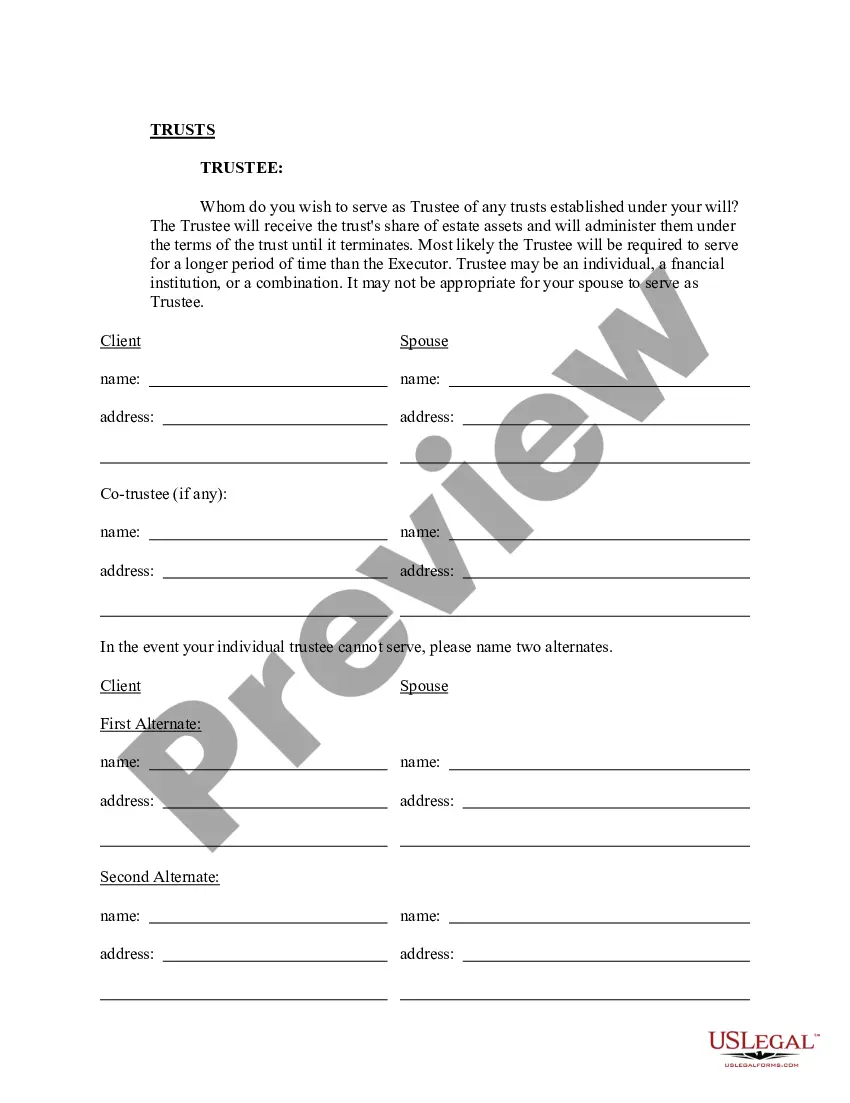
- Selection of the executor who will manage and distribute your estate assets after passing.
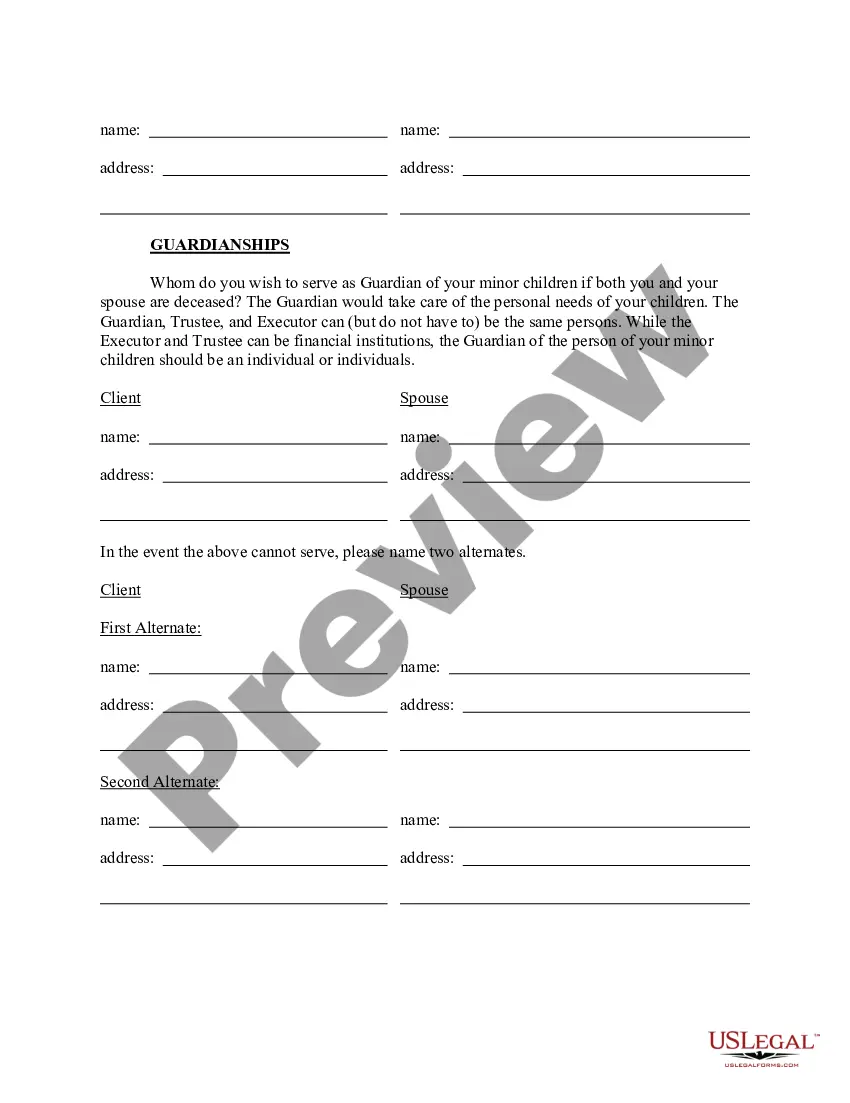
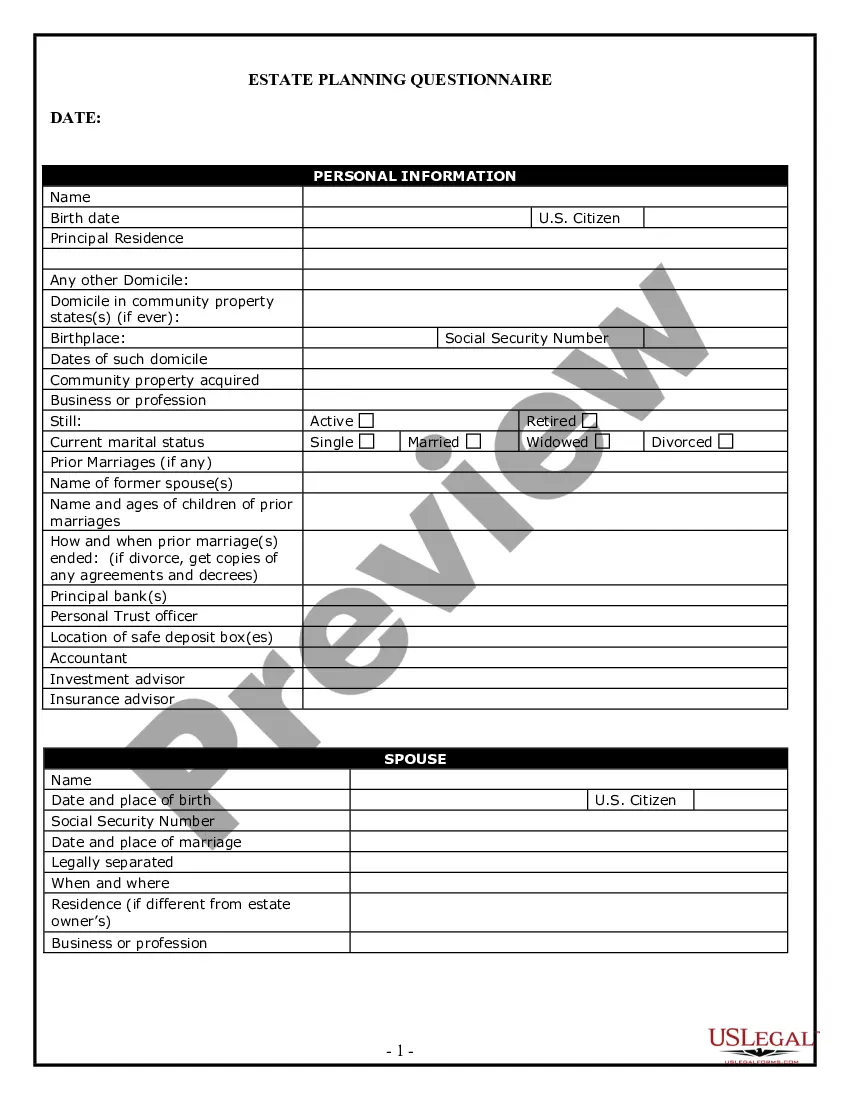
- Fields for identifying clients and their spouses as part of the estate planning process.
When to use this document
This form is ideal for individuals engaging in estate planning, especially when they want to specify how their assets should be handled after their death. It is crucial for parents setting up trusts for their children or for anyone needing to outline their estate distribution in case of unforeseen circumstances. Using this form helps ensure that your wishes are clearly articulated, protecting your family and providing peace of mind.
Who this form is for
- Individuals who are planning their estate and wish to clarify asset distribution.
- Parents looking to establish trusts for their minor children.
- Anyone wanting to designate an executor for their estate.
- Individuals without a current estate plan who want to begin the process of organizing their affairs.
How to prepare this document
- Identify your children and specify if assets in trust should pass to them upon your passing.
- State any specific conditions for distributing your estate if you are not survived by your spouse or children.
- Select an executor from among the proposed individuals or institutions who will manage your estate.
- Clearly indicate your preferences regarding the distribution of property and assets, including fractions for shares.
- Review the document for completeness and accuracy before finalizing your estate plan.
Does this document require notarization?
In most cases, this form does not require notarization. However, some jurisdictions or signing circumstances might. US Legal Forms offers online notarization powered by Notarize, accessible 24/7 for a quick, remote process.
Get your form ready online
Our built-in tools help you complete, sign, share, and store your documents in one place.
Make edits, fill in missing information, and update formatting in US Legal Forms—just like you would in MS Word.
Download a copy, print it, send it by email, or mail it via USPS—whatever works best for your next step.
Sign and collect signatures with our SignNow integration. Send to multiple recipients, set reminders, and more. Go Premium to unlock E-Sign.
If this form requires notarization, complete it online through a secure video call—no need to meet a notary in person or wait for an appointment.
We protect your documents and personal data by following strict security and privacy standards.

Make edits, fill in missing information, and update formatting in US Legal Forms—just like you would in MS Word.

Download a copy, print it, send it by email, or mail it via USPS—whatever works best for your next step.

Sign and collect signatures with our SignNow integration. Send to multiple recipients, set reminders, and more. Go Premium to unlock E-Sign.

If this form requires notarization, complete it online through a secure video call—no need to meet a notary in person or wait for an appointment.

We protect your documents and personal data by following strict security and privacy standards.
Avoid these common issues
- Failing to update the Estate Planning Data Sheet after significant life events, such as marriage or divorce.
- Overlooking to clearly specify ages or conditions for trust distribution.
- Not selecting an executor or failing to discuss the role with the chosen individual.
Benefits of using this form online
- Convenient access to the form anytime, enabling you to complete your estate planning at your own pace.
- Editable templates allow for easy customization to fit your specific needs and requirements.
- Reliable drafting by licensed attorneys ensures that your estate plan aligns with legal standards.
Looking for another form?



Form popularity
FAQ
Estate Planning Data Sheet is a planning aid that helps individuals organize their estate decisions. It captures information about asset distribution, trusted beneficiaries, and who will serve as executor. It is not itself a legal document, but it acts as a comprehensive guide to prepare legally binding estate plans tailored to your wishes. Use it at the start of estate planning to outline goals before creating formal documents.
Use the Estate Planning Data Sheet to select and document who will serve as executor and to record their duties after death. The form includes a place to name the executor and describe their role, providing a clear reference as you move toward creating formal wills or trusts.
Record information on asset distribution strategies and related notes. The form’s key components guide you to consider instructions for setting up trusts for children, options if a spouse or descendants are absent, and identification of you and your spouse. This data sheet helps you articulate how assets should be handled as you prepare final documents.
Individuals planning an estate who want to clarify asset distribution, parents seeking trusts for minor children, anyone wanting to designate an executor, and those without an existing estate plan who want to begin organizing their affairs.
It’s ideal during estate planning to specify how assets are handled after death, especially for parents setting up trusts for children or for outlining distribution in unforeseen circumstances. It helps articulate wishes clearly and provides a foundation for creating formal documents.
It is not a legal document itself; it serves as a comprehensive organizing tool to gather information before creating legally binding estate plans like wills or trusts. It does not replace a will or trust but guides their preparation.