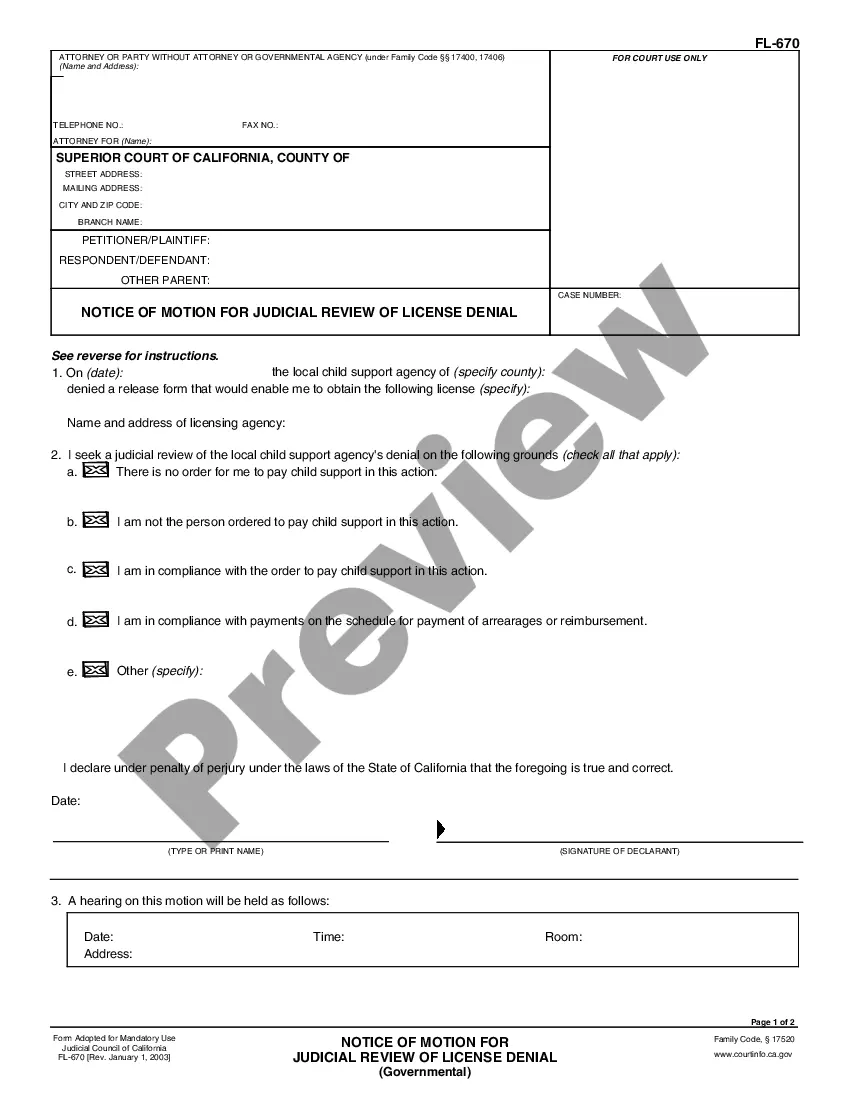
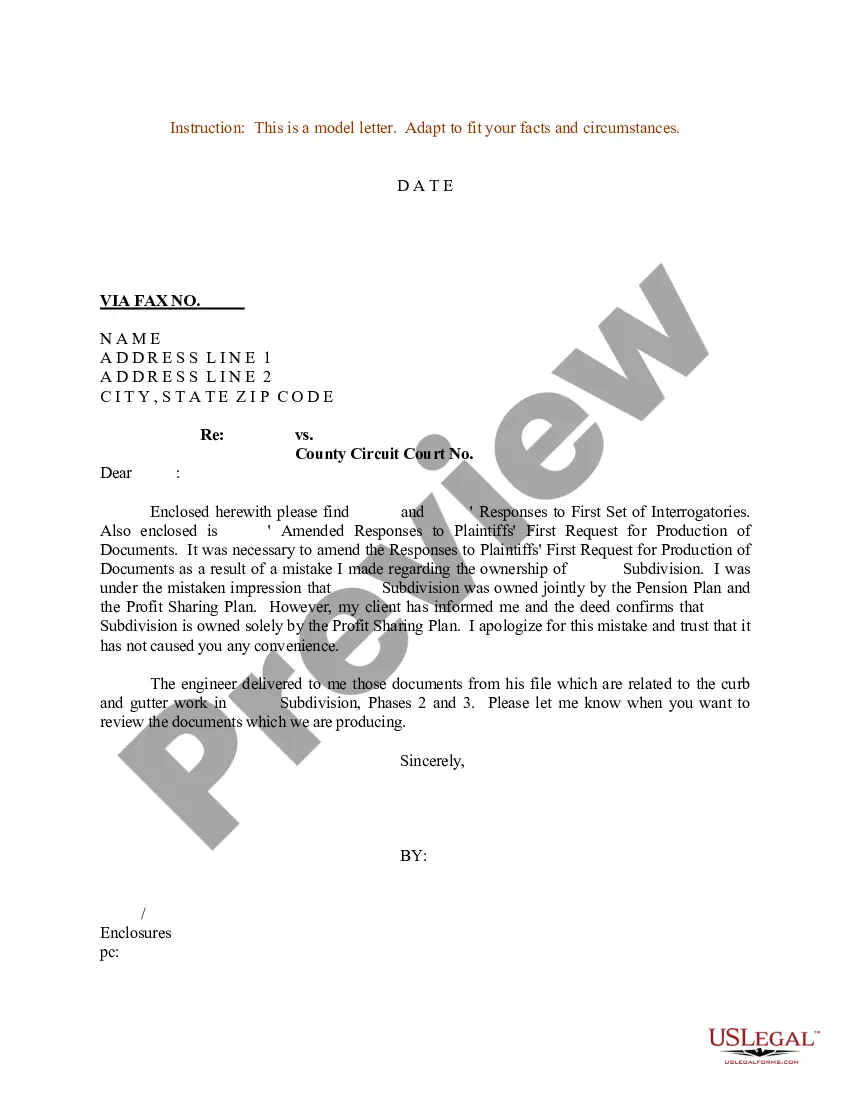
Sample Letter for Responses to First Set of Interrogatories
Understanding this form
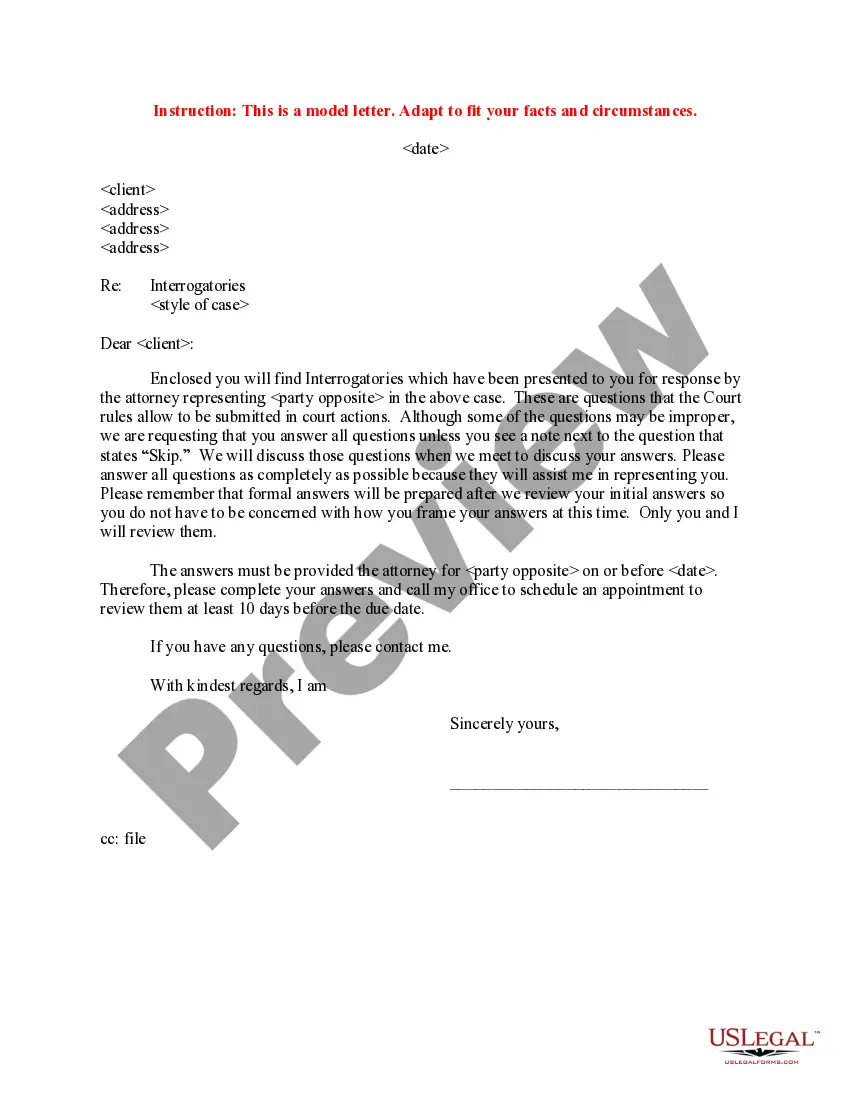
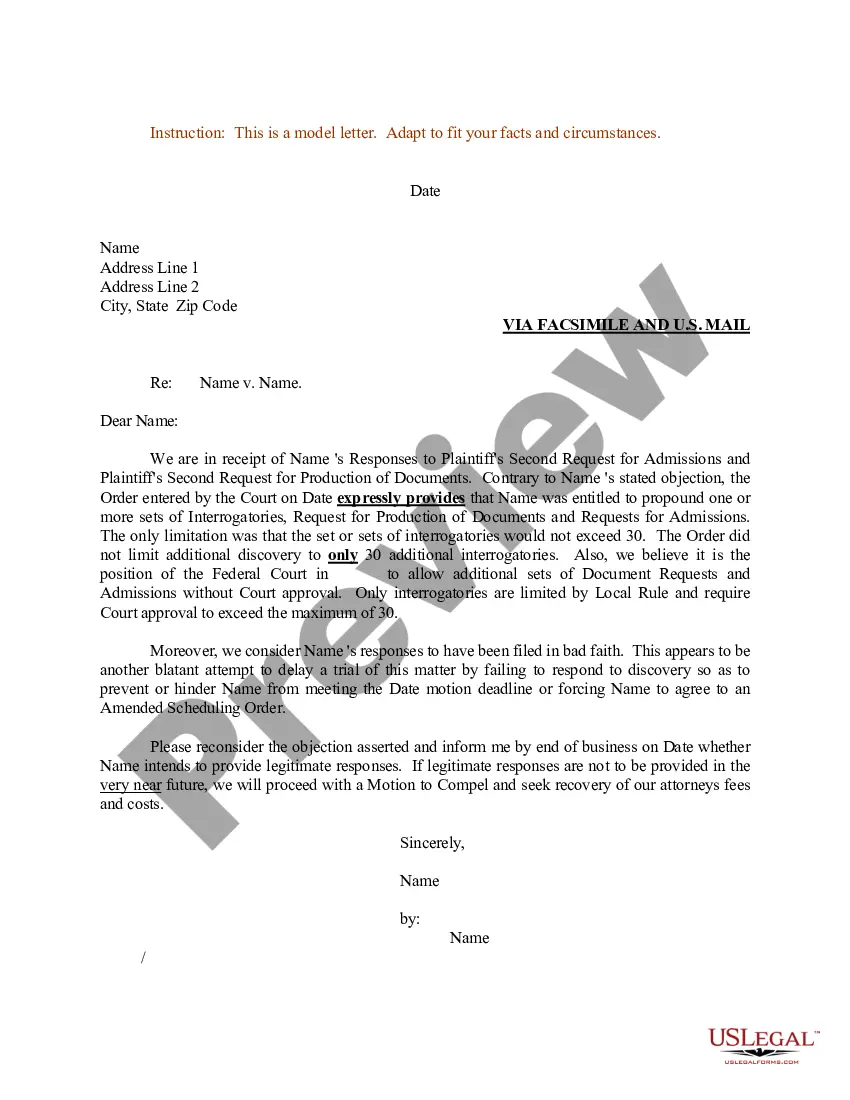
The Sample Letter for Responses to First Set of Interrogatories is a document designed to provide a structured format for responding to written questions presented as interrogatories during the discovery phase of legal proceedings. This form is particularly useful for parties involved in civil litigation who need to formally address inquiries posed by the opposing party. Unlike other legal forms, this letter helps maintain an organized record of the responses provided and clarifies the intent of the answering party.
Main sections of this form
- Header section with court information and case details
- Introduction explaining the purpose of the responses
- Numbered responses addressing each interrogatory
- Signature line for the responding party or their attorney
- Date of response submission

When this form is needed
This form is essential when a party receives their first set of interrogatories during the discovery process in a lawsuit. It is used to formally respond to questions about facts, evidence, or circumstances relevant to the case at hand. This document is typically utilized after receiving a request for information from the opposing party, and it must be completed within a specified timeframe set by court rules.
Who this form is for
- Defendants or plaintiffs involved in civil litigation
- Individuals responding to interrogatories from the opposing party
- Attorneys preparing responses for clients in a lawsuit
- Anyone needing to document formal responses to legal inquiries
How to complete this form
- Enter the court's name and case number at the top of the letter
- Clearly state the purpose of the letter in the introduction
- Number each response directly corresponding to the interrogatories received
- Provide thorough and honest answers to each question, ensuring clarity
- Sign the letter and include the date of submission
Notarization guidance
In most cases, this form does not require notarization. However, some jurisdictions or signing circumstances might. US Legal Forms offers online notarization powered by Notarize, accessible 24/7 for a quick, remote process.
Get your form ready online
Our built-in tools help you complete, sign, share, and store your documents in one place.
Make edits, fill in missing information, and update formatting in US Legal Forms—just like you would in MS Word.
Download a copy, print it, send it by email, or mail it via USPS—whatever works best for your next step.
Sign and collect signatures with our SignNow integration. Send to multiple recipients, set reminders, and more. Go Premium to unlock E-Sign.
If this form requires notarization, complete it online through a secure video call—no need to meet a notary in person or wait for an appointment.
We protect your documents and personal data by following strict security and privacy standards.

Make edits, fill in missing information, and update formatting in US Legal Forms—just like you would in MS Word.

Download a copy, print it, send it by email, or mail it via USPS—whatever works best for your next step.

Sign and collect signatures with our SignNow integration. Send to multiple recipients, set reminders, and more. Go Premium to unlock E-Sign.

If this form requires notarization, complete it online through a secure video call—no need to meet a notary in person or wait for an appointment.

We protect your documents and personal data by following strict security and privacy standards.
Avoid these common issues
- Failing to answer all interrogatories
- Providing incomplete or vague responses
- Missing the deadline for submitting answers
- Not properly formatting the letter
- Overlooking the need for signature and date
Why complete this form online
- Convenient download and immediate access to the template
- Editable format allows for personalization and precision
- Reduces the risk of missing key legal components
- Ensures compliance with general legal standards and practices
Looking for another form?
Form popularity
FAQ
As the defendant you can respond to each interrogatory in one of three ways: provide a plain answer, object to the questions giving grounds as to why you object, or object to part of the question and respond to the other part.
You must answer each interrogatory separately and fully in writing under oath, unless you object to it. You must explain why you object. You must sign your answers and objections.
When responding to Requests for Admissions, remember to answer as follows: Admit: If any portion of the Request for Admission is true then you must admit to that portion of the request. You are also allowed to have a hybrid response admit the part of the request that is true while denying another part.
Your answers to the interrogatories should usually be short, clear, and direct and should answer only the question that is being asked. This is not the time to set out your entire case or defense to the other side. Take the time to make sure your answers are correct and truthful.
Responding to Form InterrogatoriesAnswer each question, being careful to answer each subpart, if one exists. Read the question carefully, and answer only what it asks. You may attach exhibits, if necessary. The response must be verified, meaning you must swear that the responses given are true.
Personal/Corporate information of opposing party. Identifying information of witnesses. Contact information & background of expert witnesses. Insurance information.
So, can you refuse to answer interrogatories? The answer is, no, you may not.That answer must either permit inspection of the requested information or object to the production of the information for a specific reason.
In law, interrogatories (also known as requests for further information) are a formal set of written questions propounded by one litigant and required to be answered by an adversary in order to clarify matters of fact and help to determine in advance what facts will be presented at any trial in the case.