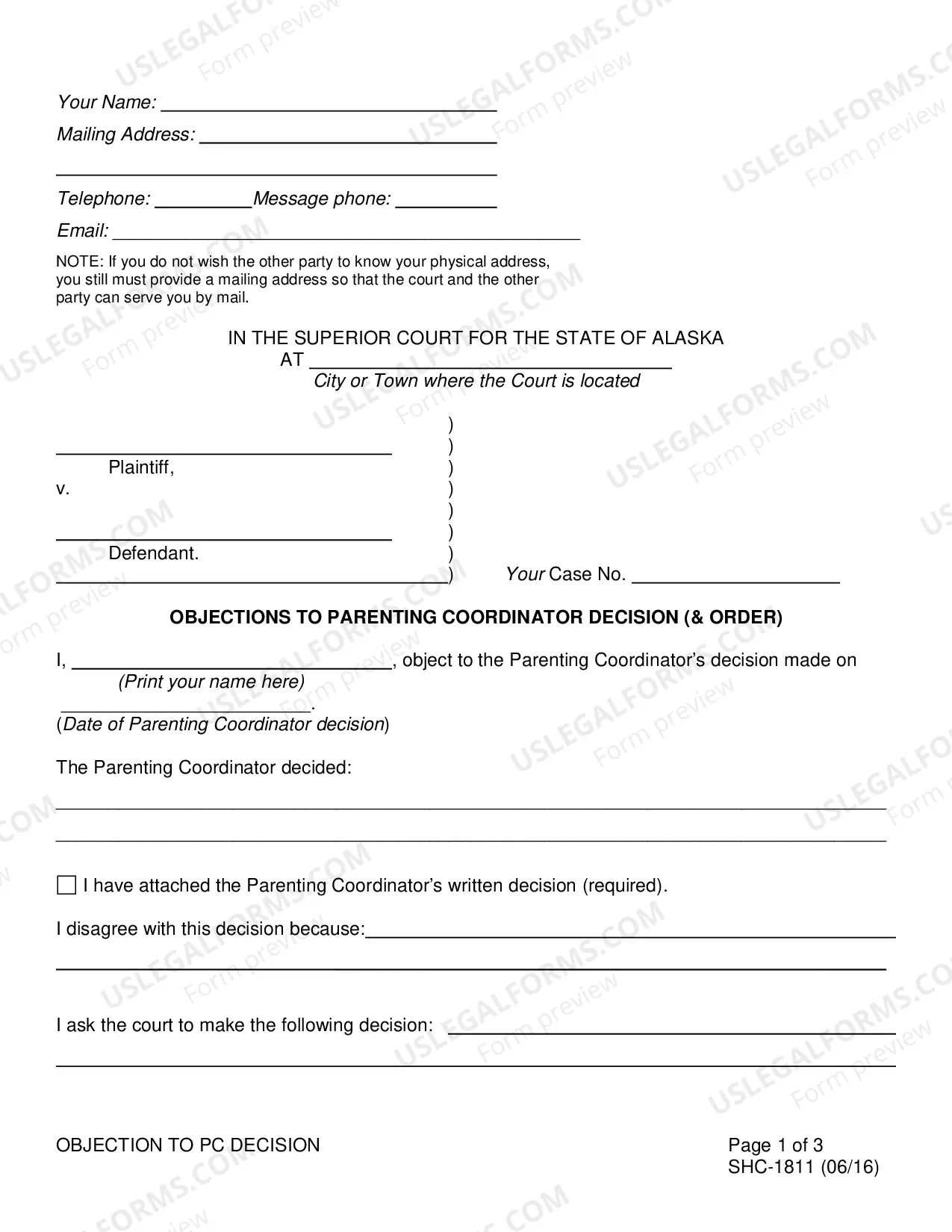
Complaint for Declaratory Judgment
What this document covers
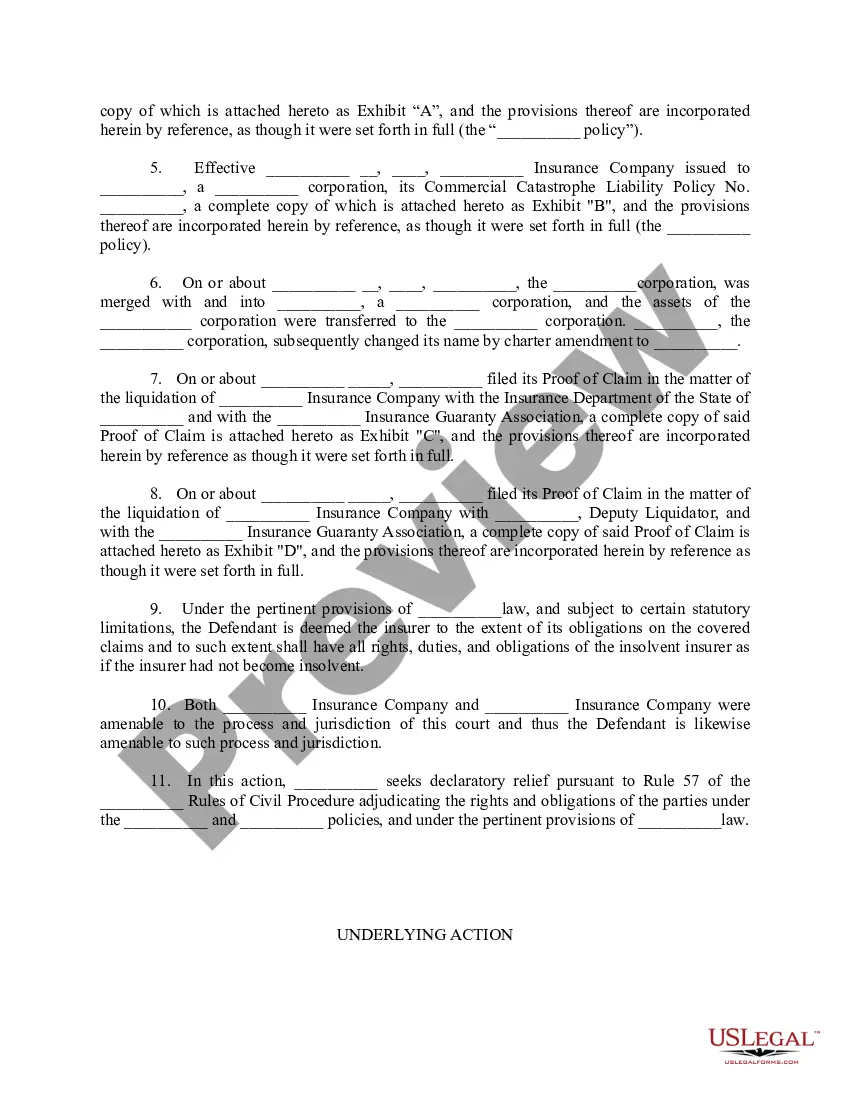
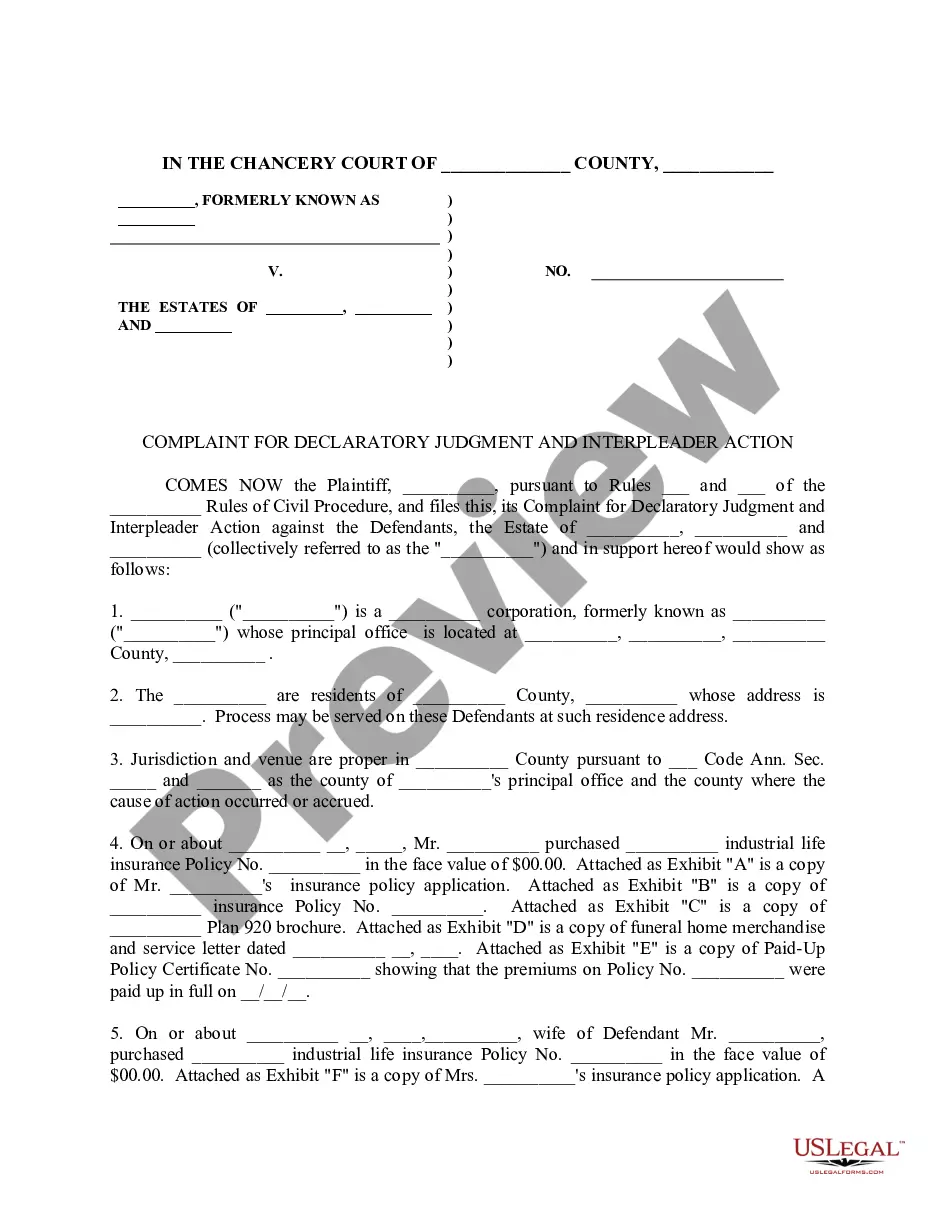
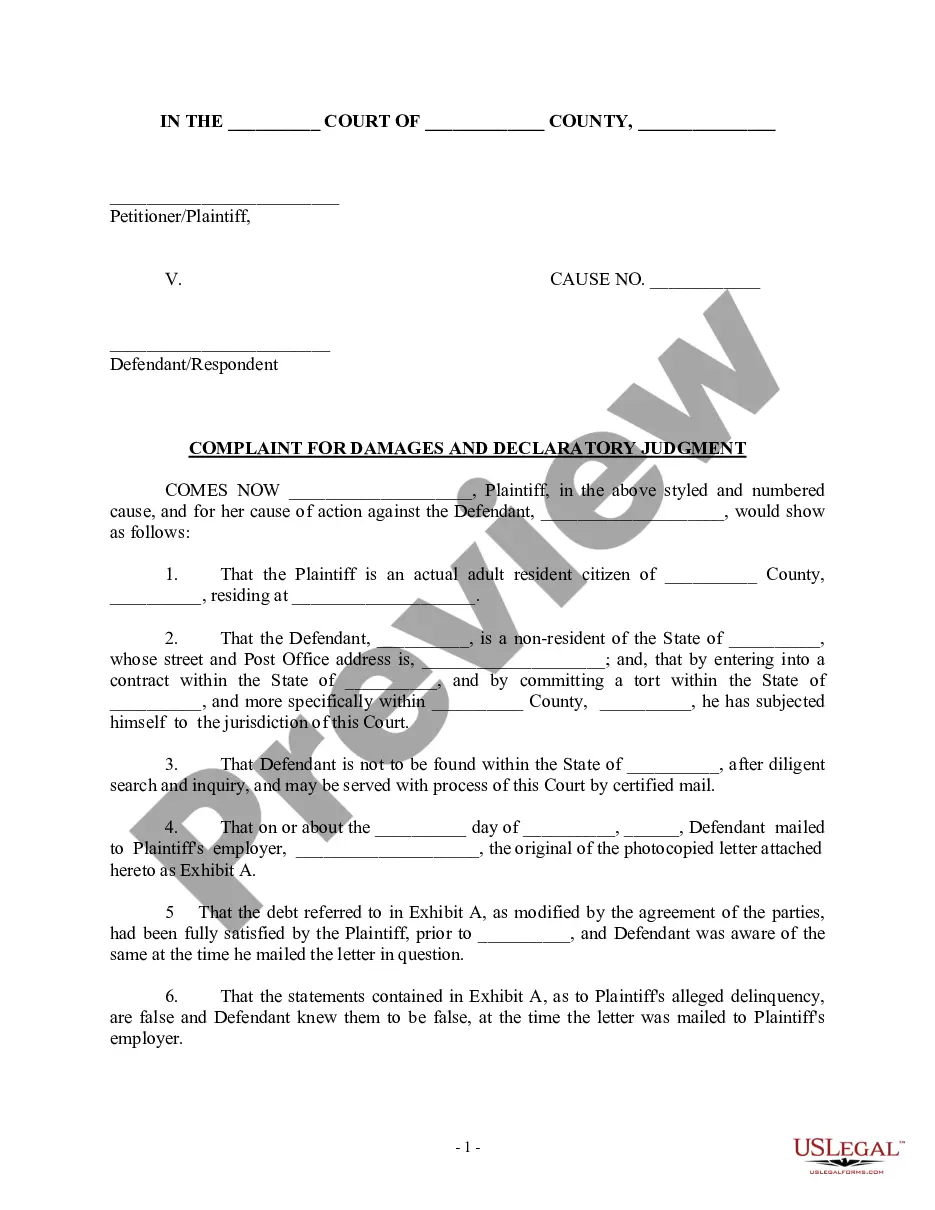
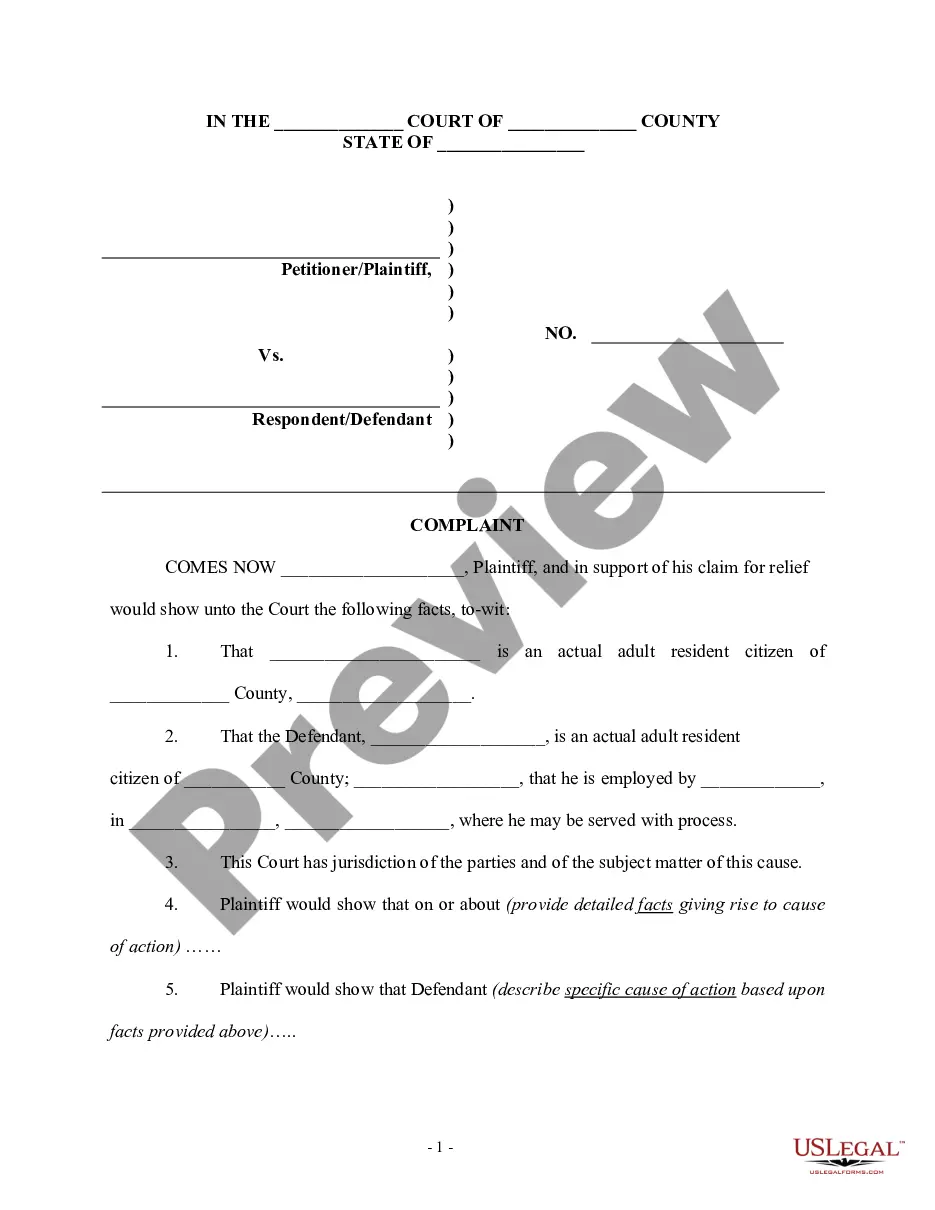
The Complaint for Declaratory Judgment is a civil document used in legal proceedings to request the court to determine the rights and obligations of parties involved in a dispute. This form serves to clarify legal uncertainties and establish legal standings that may affect a lawsuit. Unlike typical civil complaints that seek damages, a declaratory judgment complaint specifically seeks a judicial declaration regarding legal issues without demanding monetary compensation at the outset.
Main sections of this form
- Parties involved: Identification of the plaintiff and defendant, including their legal status.
- Venue: Specification of the county jurisdiction where the complaint is filed.
- Nature of the action: Outline of the insurance policies relevant to the case and prior claims.
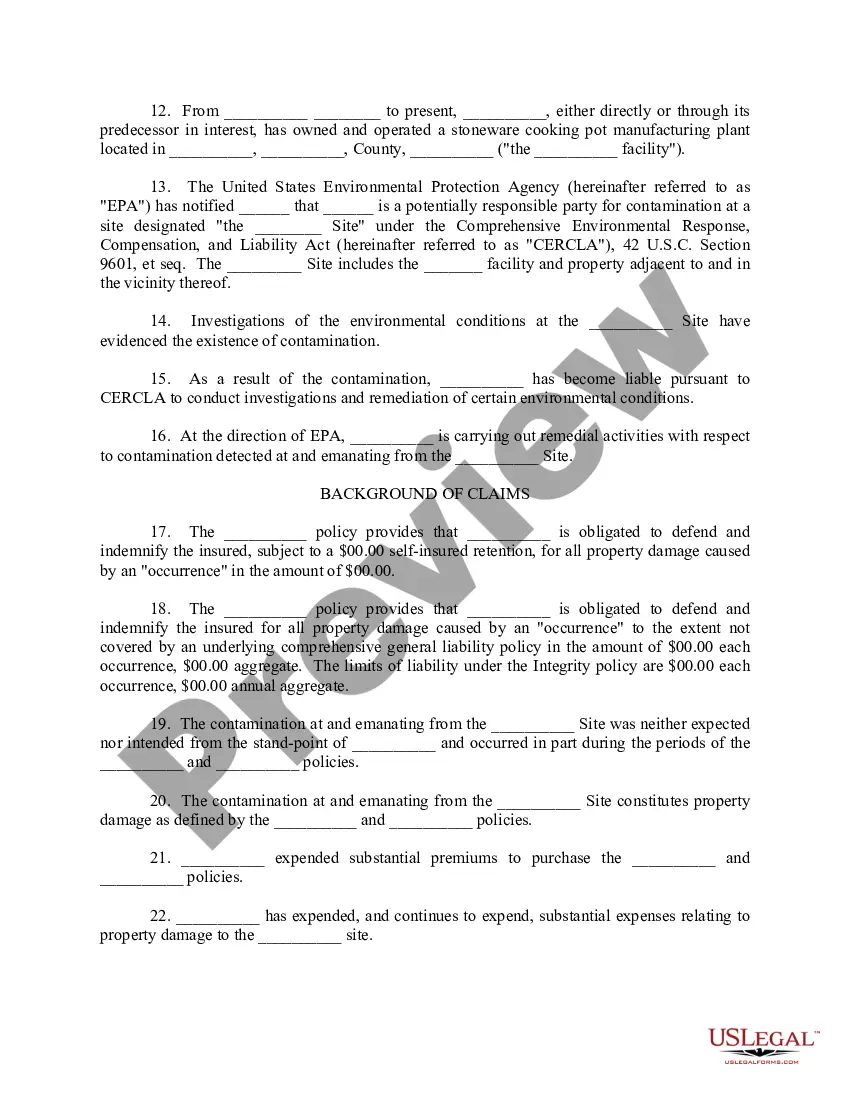
- Background of claims: Description of the underlying facts leading to the request for a declaratory judgment.
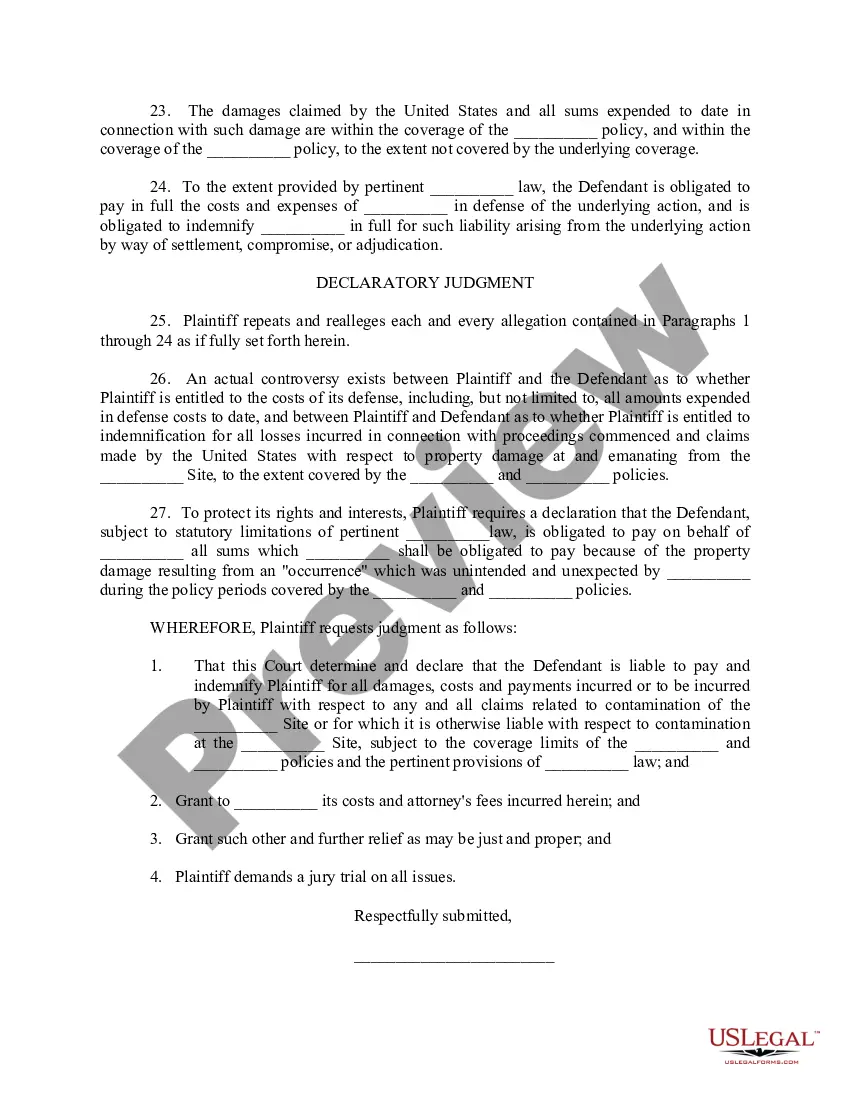
- Declaratory judgment request: A statement detailing what the plaintiff seeks from the court.




Common use cases
This form is typically used in situations where there is uncertainty regarding the rights and liabilities under an insurance policy related to a specific event or action. Common scenarios may include environmental lawsuits, liability claims, or other disputes where a party needs a legal ruling to clarify coverage or obligations under their insurance. It can also be utilized when parties anticipate lawsuits and seek pre-emptive clarity on their legal exposure.
Who needs this form
This form is designed for:
- Businesses seeking a professional opinion regarding their insurance coverage and obligations.
- Attorneys representing plaintiffs or defendants needing to clarify legal standings in a dispute.
- Individuals or organizations involved in legal proceedings requiring judicial clarification of rights under specific contracts.
How to prepare this document
- Identify the parties: Fill in the names and types of entities for both the plaintiff and defendant.
- Specify the venue: Indicate the county where the loss occurred and provide jurisdiction details.
- Detail the nature of action: Clearly describe the relevant insurance policies and context of the claims.
- Outline the background of claims: Provide a concise account of events leading to this judicial action.
- Conclusively state the relief sought: Clearly articulate what the plaintiff is asking the court to declare.
Does this document require notarization?
In most cases, this form does not require notarization. However, some jurisdictions or signing circumstances might. US Legal Forms offers online notarization powered by Notarize, accessible 24/7 for a quick, remote process.
Get your form ready online
Our built-in tools help you complete, sign, share, and store your documents in one place.
Make edits, fill in missing information, and update formatting in US Legal Forms—just like you would in MS Word.
Download a copy, print it, send it by email, or mail it via USPS—whatever works best for your next step.
Sign and collect signatures with our SignNow integration. Send to multiple recipients, set reminders, and more. Go Premium to unlock E-Sign.
If this form requires notarization, complete it online through a secure video call—no need to meet a notary in person or wait for an appointment.
We protect your documents and personal data by following strict security and privacy standards.

Make edits, fill in missing information, and update formatting in US Legal Forms—just like you would in MS Word.

Download a copy, print it, send it by email, or mail it via USPS—whatever works best for your next step.

Sign and collect signatures with our SignNow integration. Send to multiple recipients, set reminders, and more. Go Premium to unlock E-Sign.

If this form requires notarization, complete it online through a secure video call—no need to meet a notary in person or wait for an appointment.

We protect your documents and personal data by following strict security and privacy standards.
Common mistakes to avoid
- Failing to properly identify all parties involved in the dispute.
- Omitting critical facts that support the claim for declaratory relief.
- Not specifying the correct venue based on local laws and where the loss occurred.
- Using boilerplate language without adapting the form to the specific circumstances of the case.
Why complete this form online
- Convenience of accessing and downloading the form at any time.
- Editability allows users to easily fill out the form to suit their specific circumstances.
- Reliability through professionally drafted templates prepared by licensed attorneys.
Legal use & context
- The Complaint for Declaratory Judgment serves to clarify legal rights and obligations.
- It is often utilized as a preventive measure to resolve potential disputes before they escalate.
- Such forms can have legal consequences once filed, binding parties to the court's declarations.
Main things to remember
- The Complaint for Declaratory Judgment helps resolve ambiguities in legal relationships.
- Using this form can clarify legal standings before litigation progresses.
- Proper completion and adherence to local laws are crucial for effective use.
Looking for another form?

Form popularity
FAQ
To Have Standing to Appeal a Declaratory Judgment Action, the Injured Party Must Have a Direct Interest in the Litigation.
A declaratory judgment like any other judgment is reviewable on appeal.Therefore, a plaintiff who wins a declaratory judgment may seek further relief in an action on the same claim which prompted the action for a declaratory judgment.
A court-issued declaratory judgment outlines the rights and responsibilities of each involved party. This judgment does not require action or award damages. It helps to resolve disputes and prevent lawsuits.
A declaratory judgment, also called a declaration, is the legal determination of a court that resolves legal uncertainty for the litigants.A declaratory judgment does not by itself order any action by a party, or imply damages or an injunction, although it may be accompanied by one or more other remedies.
The Court clarified that declaratory judgment jurisdiction required disputes to be 'definite and concrete, touching the legal relations of the parties having adverse legal interests'; and that it be 'real and substantial' and 'admit of specific relief through a decree of a conclusive character, as distinguished from
A declaratory judgment is a binding judgment from a court defining the legal relationship between parties and their rights in a matter before the court. Typically, a party will first send a cease and desist letter prior to seeking declaratory judgment from a court.A declaratory judgment is also called a declaration.
A declaratory judgment is a binding judgment from a court defining the legal relationship between parties and their rights in a matter before the court. Typically, a party will first send a cease and desist letter prior to seeking declaratory judgment from a court.
A court-issued declaratory judgment outlines the rights and responsibilities of each involved party. This judgment does not require action or award damages. It helps to resolve disputes and prevent lawsuits.