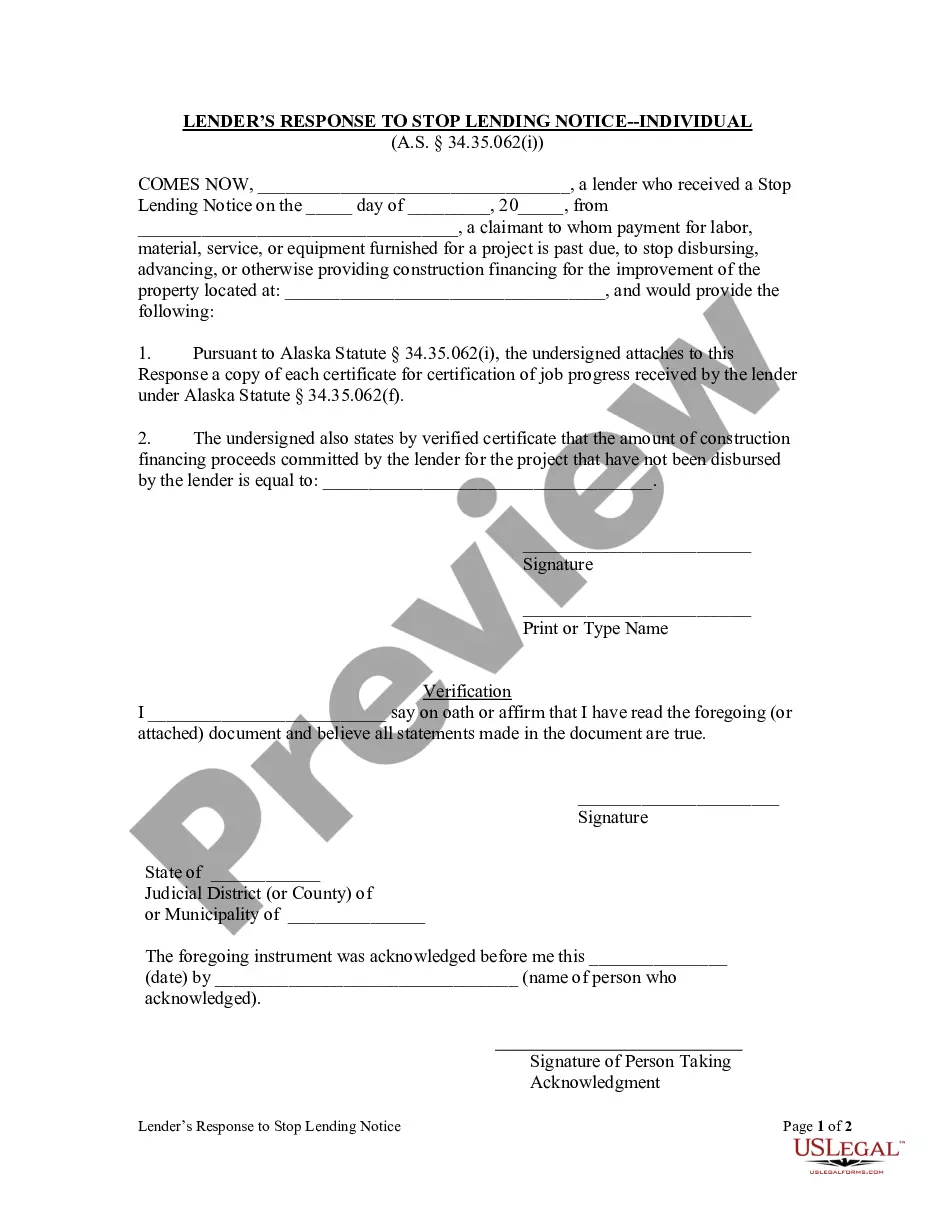
Agreement for Consent Judgment Establishing Paternity, Granting Joint Legal and Physical Custody of Minor Child to Mother and Father and Establishing Child Support Payments to Mother
About this form
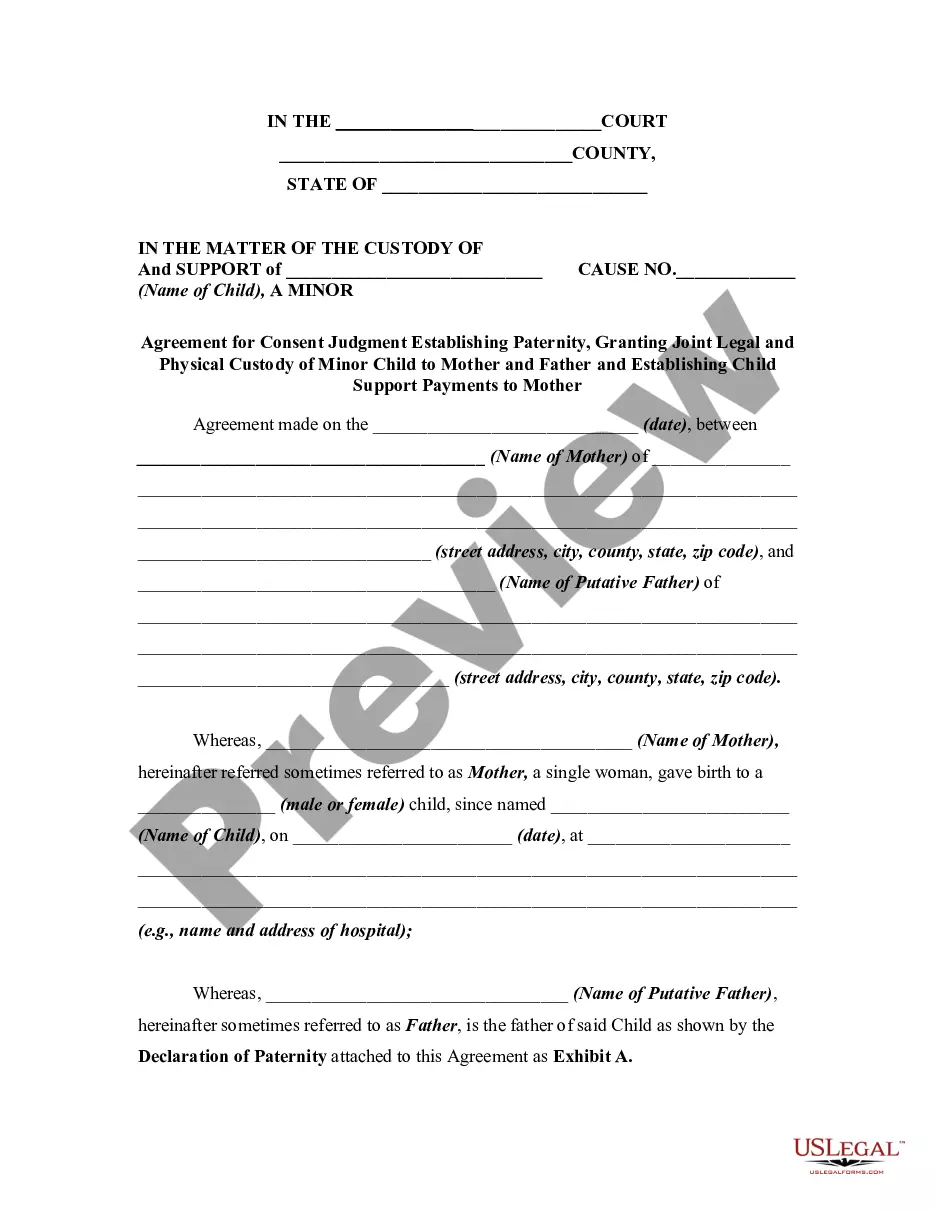
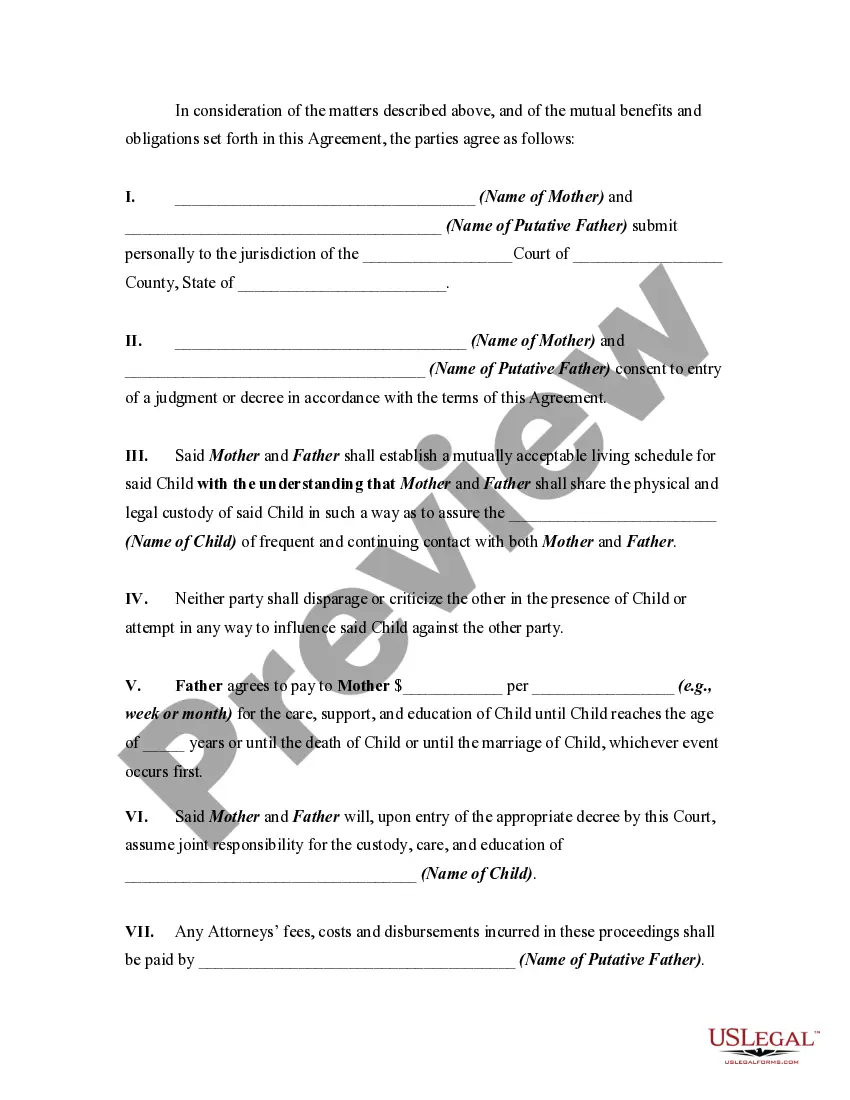
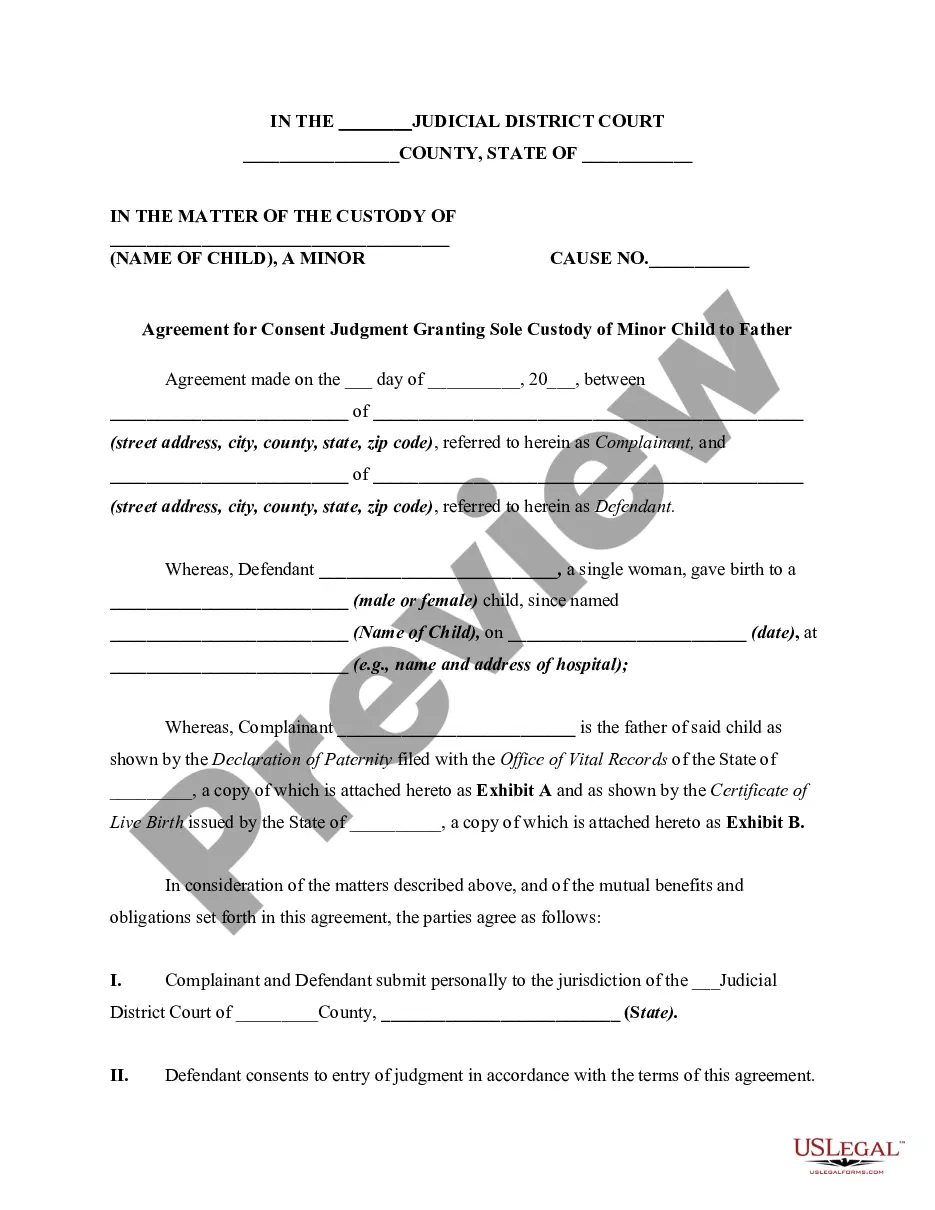
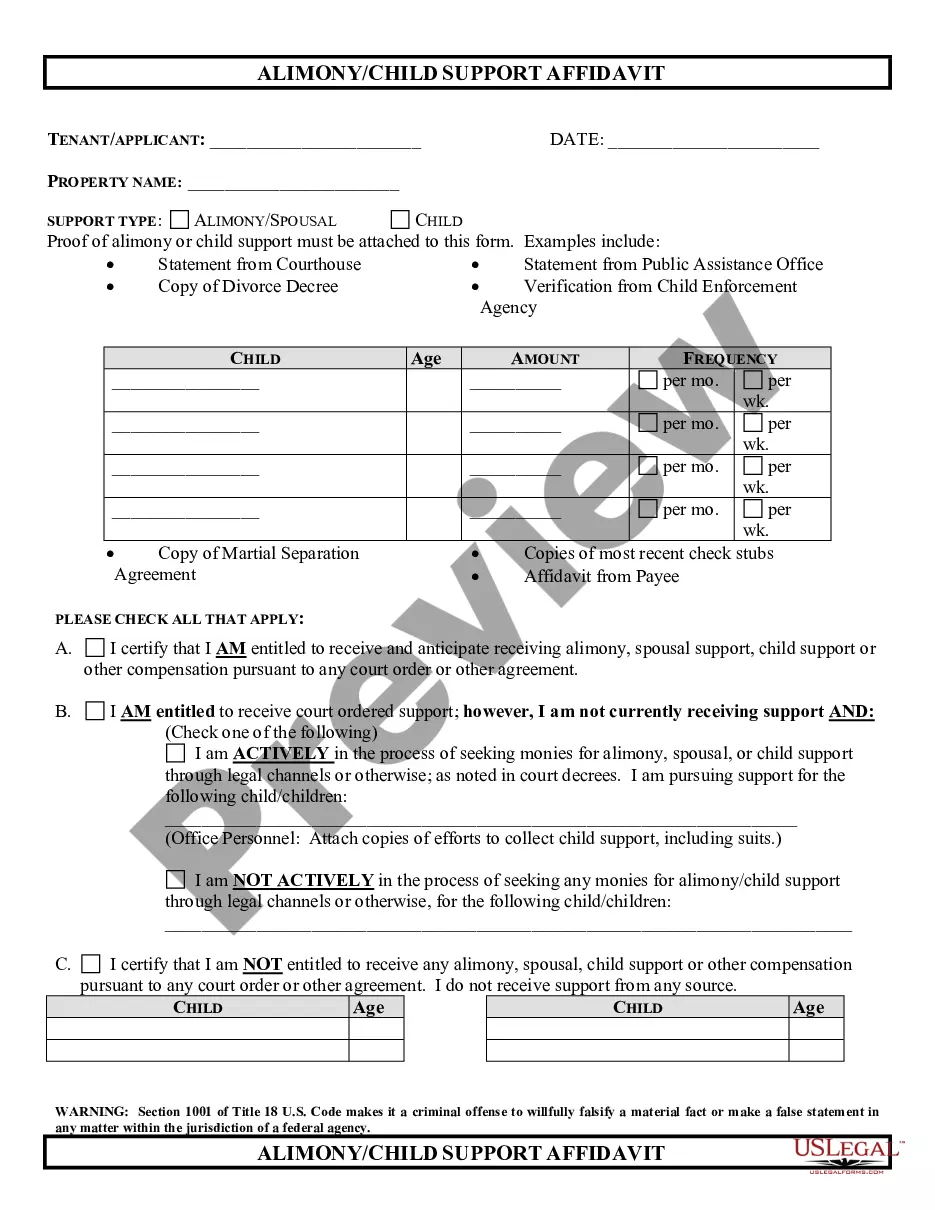
The Agreement for Consent Judgment Establishing Paternity, Granting Joint Legal and Physical Custody of Minor Child to Mother and Father and Establishing Child Support Payments to Mother is a legal document that outlines the agreement between parents regarding the paternity of their child, custody arrangements, and child support obligations. This form differs from other custody agreements by specifically including provisions for establishing paternity and detailing the joint legal and physical custody of the child. This form aims to create a clear understanding between the parties to ensure the best interests of the child are prioritized.
Main sections of this form
- The names and addresses of the Mother and Putative Father.
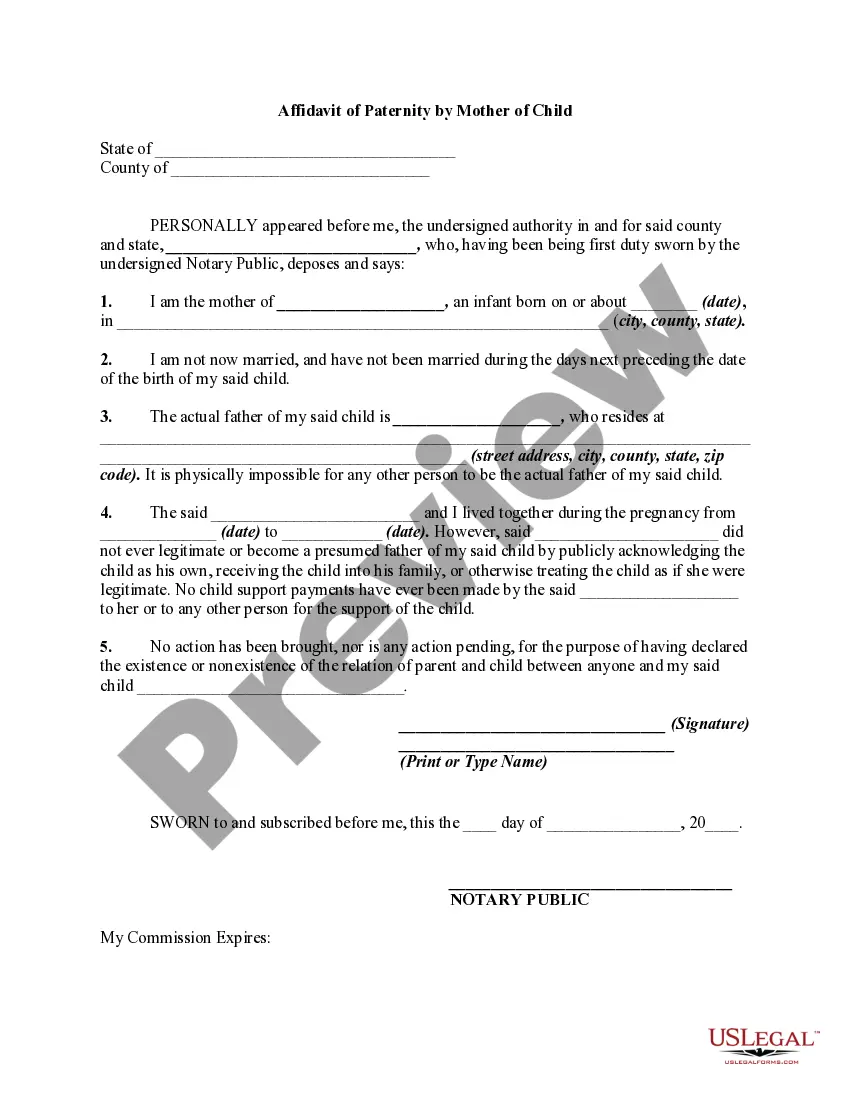
- The declaration of paternity confirming the father's identity.
- Provisions for joint legal and physical custody of the child.
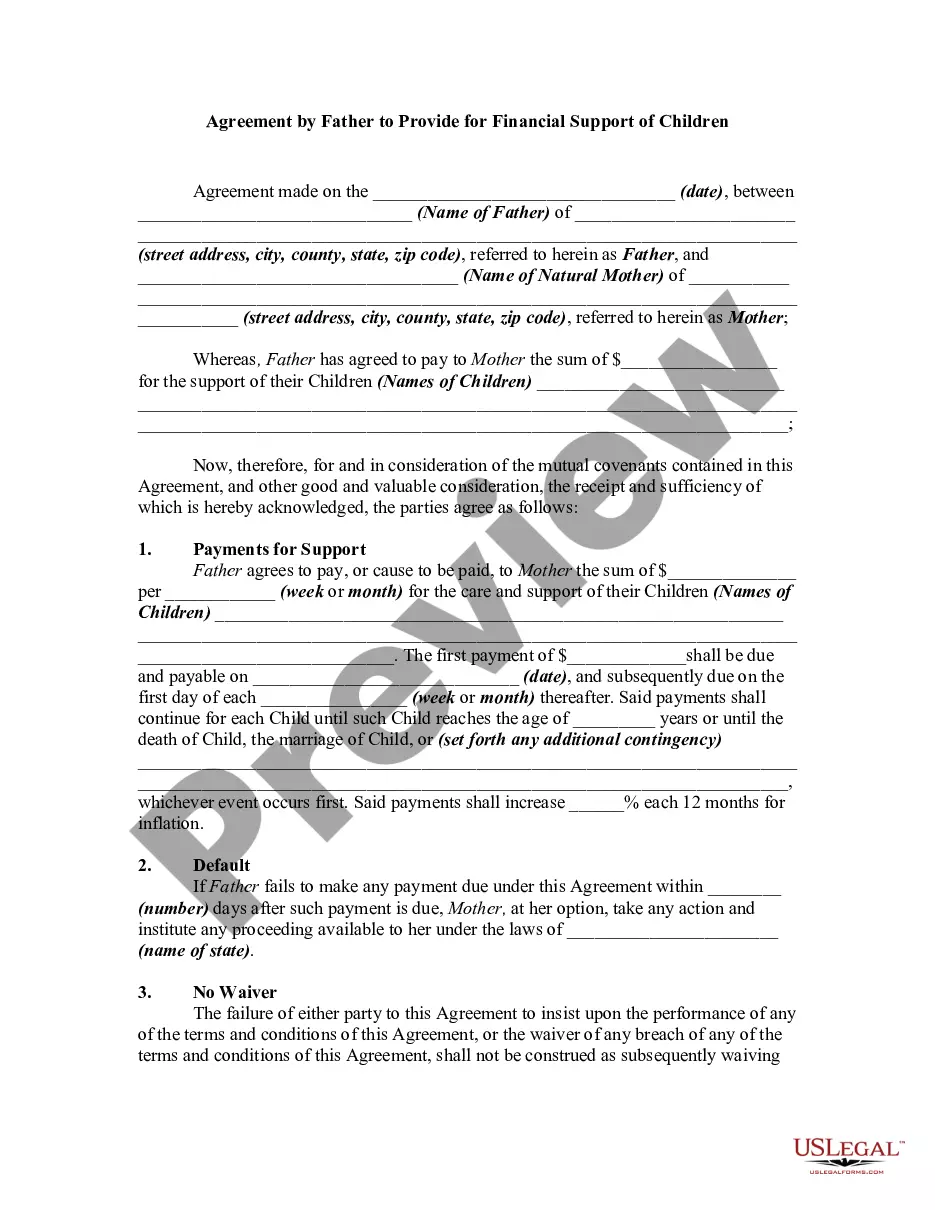
- Details on the child support payment amounts and schedules.
- Mutual obligations regarding visitation and communication between parents.
- Jurisdiction where the agreement is filed and enforced.
When to use this form
This form is typically used when both parents of a minor child who are not married seek to establish a legal agreement regarding paternity, custody, and child support. It is appropriate in situations where the child's father wishes to acknowledge his paternity and agree to joint custody with the mother, as well as determine the financial responsibilities for child support. This form can also be useful for parents who are looking to formalize their arrangement after the child is born and ensure legal enforceability.
Who can use this document
- Unmarried parents wishing to establish paternity legally.
- Putative fathers acknowledging their paternity.
- Mothers seeking legal recognition of custody and support agreements.
- Parents who agree on joint legal and physical custody arrangements.
- Individuals looking to ensure child support obligations are documented.
How to prepare this document
- Identify and enter the names and addresses of both parents.
- Specify the name and birth details of the minor child.
- Clearly state the agreement concerning joint custody and parenting responsibilities.
- Detail the child support amount and payment schedule agreed upon by both parties.
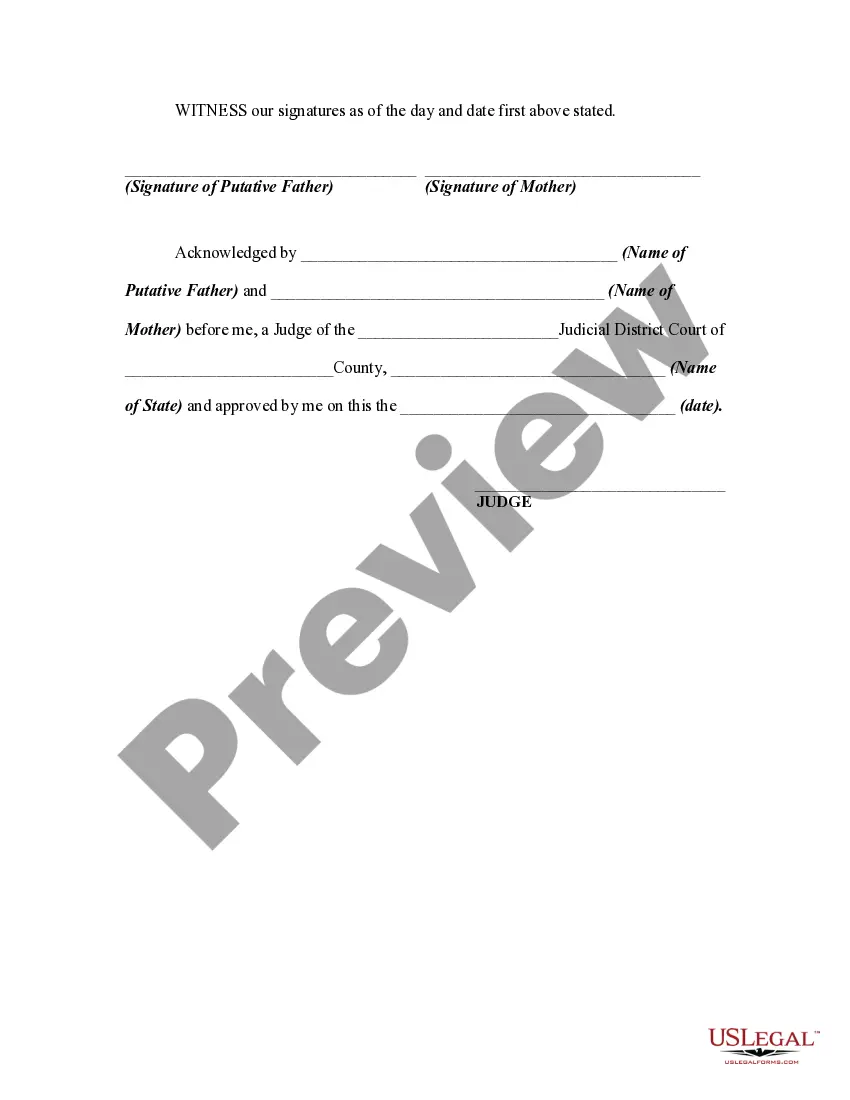
- Include signatures from both parents along with the date of the agreement.
- Ensure the document is filed in the appropriate court jurisdiction.
Is notarization required?
This form must be notarized to be legally valid. US Legal Forms provides secure online notarization powered by Notarize, allowing you to complete the process through a verified video call.
Get your form ready online
Our built-in tools help you complete, sign, share, and store your documents in one place.
Make edits, fill in missing information, and update formatting in US Legal Forms—just like you would in MS Word.
Download a copy, print it, send it by email, or mail it via USPS—whatever works best for your next step.
Sign and collect signatures with our SignNow integration. Send to multiple recipients, set reminders, and more. Go Premium to unlock E-Sign.
If this form requires notarization, complete it online through a secure video call—no need to meet a notary in person or wait for an appointment.
We protect your documents and personal data by following strict security and privacy standards.

Make edits, fill in missing information, and update formatting in US Legal Forms—just like you would in MS Word.

Download a copy, print it, send it by email, or mail it via USPS—whatever works best for your next step.

Sign and collect signatures with our SignNow integration. Send to multiple recipients, set reminders, and more. Go Premium to unlock E-Sign.

If this form requires notarization, complete it online through a secure video call—no need to meet a notary in person or wait for an appointment.

We protect your documents and personal data by following strict security and privacy standards.
Common mistakes
- Failing to correctly identify the parties involved in the agreement.
- Not specifying precise child support amounts and payment intervals.
- Neglecting to sign and date the agreement, which can invalidate it.
- Overlooking local court requirements or procedures for filing.
Advantages of online completion
- Convenient access to a legally vetted form that can be downloaded instantly.
- Edit and customize the form to fit your specific situation before printing.
- A reliable resource drafted by licensed attorneys, ensuring compliance with legal standards.
- Easy navigation through a step-by-step process to complete the form.
Looking for another form?




Form popularity
FAQ
A: From birth until the child's 18th birthday, the parents can establish paternity by completing the Acknowledgment of Paternity form.
Get on the birth certificate. Once your child is born, the easiest way to establish paternity is by getting your name on the birth certificate. Get an order through an administrative agency. Get a court order.
Indiana allows a man to execute a Voluntary Declaration of Paternity within the first 72 hours after a child's birth. If both parents sign the paternity affidavit (a form provided by the hospital from the state health department), the father's name will be put on the birth certificate and he will be the legal father.
The prosecutor will file the paternity case for free or for a $25 fee. The prosecutor will also usually ask for a child support order, but the prosecutor will not help with custody or visitation problems.
There are two kinds of custody: legal and physical. Unmarried mothers will almost always receive primary physical custody of a newborn baby. However, unmarried fathers can and do receive joint legal custody of a newborn baby and visitation rights.
Joint Legal Custody is where the parents work together and share the care and control of the upbringing of the child, even if the child has only one primary residence. Each parent has an equal voice in making decisions.
Birth certificate. If a birth certificate declares the father and he signs it, this is a legally binding qualification of paternity. DNA test. Court order.
Joint custody can exist if the parents are divorced, separated, or no longer cohabiting, or even if they never lived together. Joint custody may be: joint legal custody. joint physical custody (where the children spend a significant portion of time with each parent), or.
Indiana allows a man to execute a Voluntary Declaration of Paternity within the first 72 hours after a child's birth. If both parents sign the paternity affidavit (a form provided by the hospital from the state health department), the father's name will be put on the birth certificate and he will be the legal father.