Assignment of Judgment
What this document covers
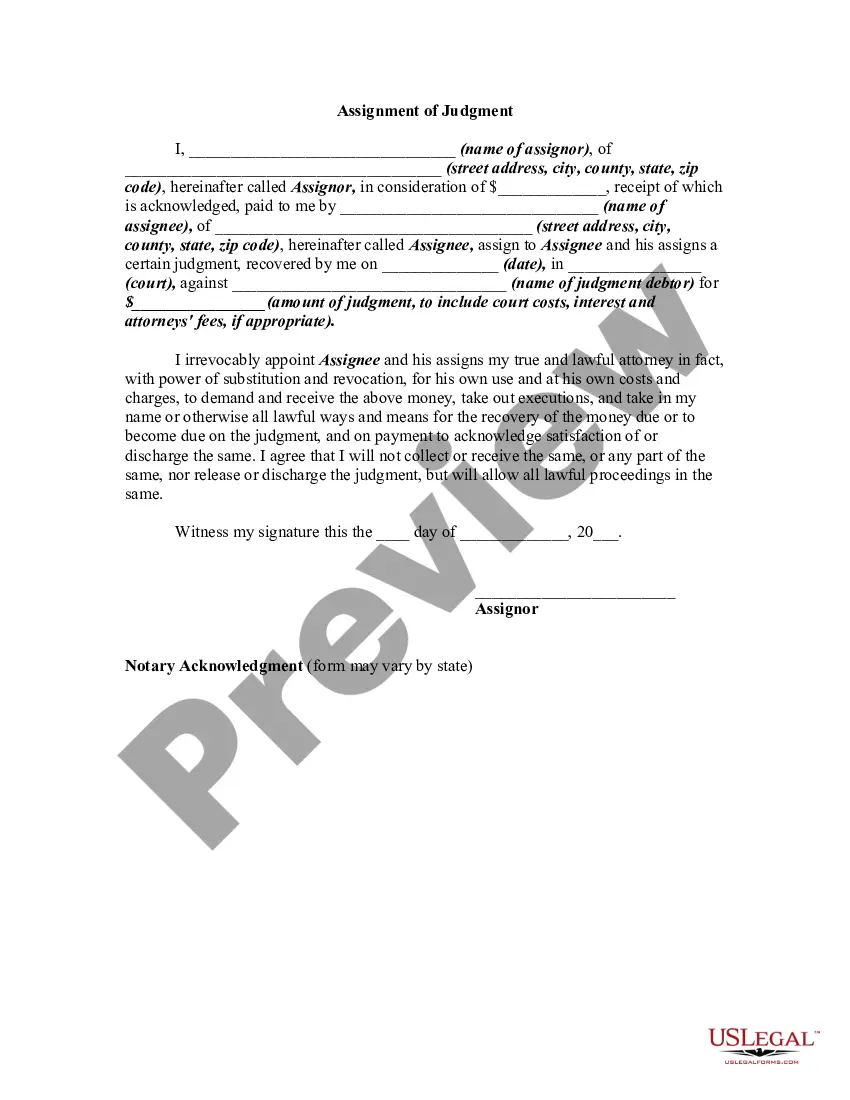
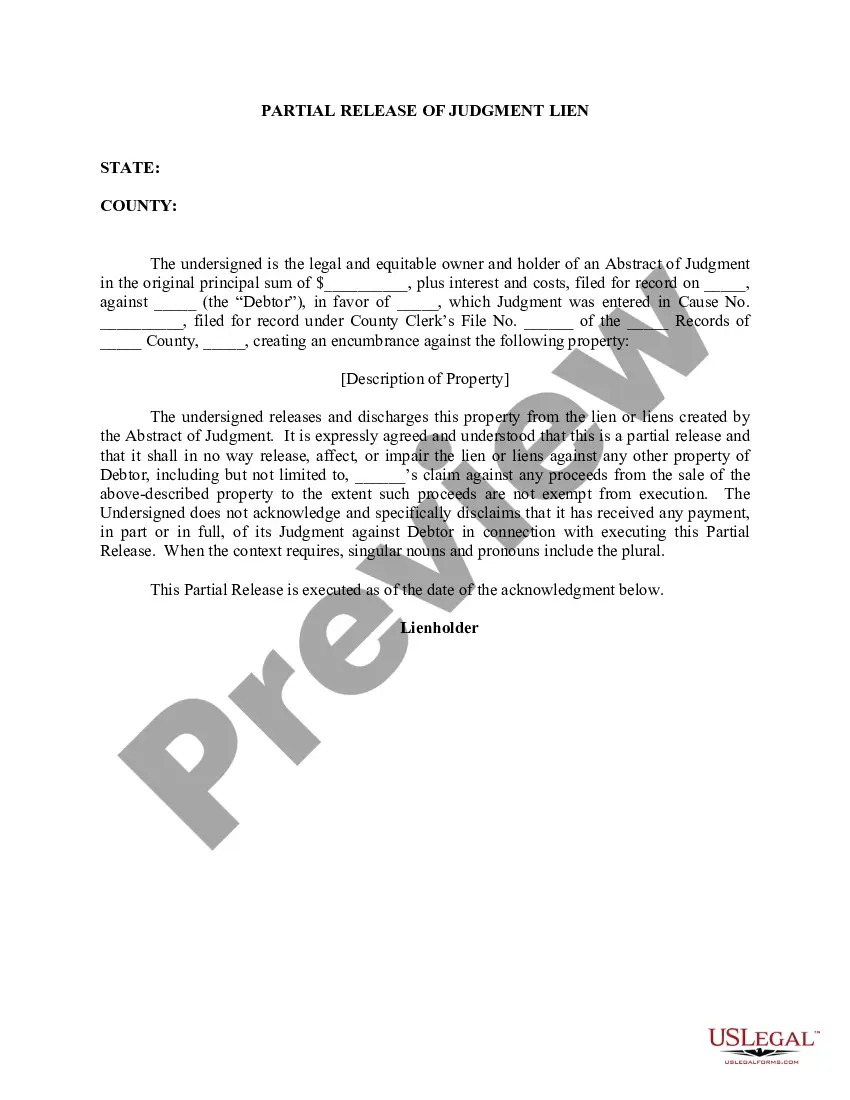
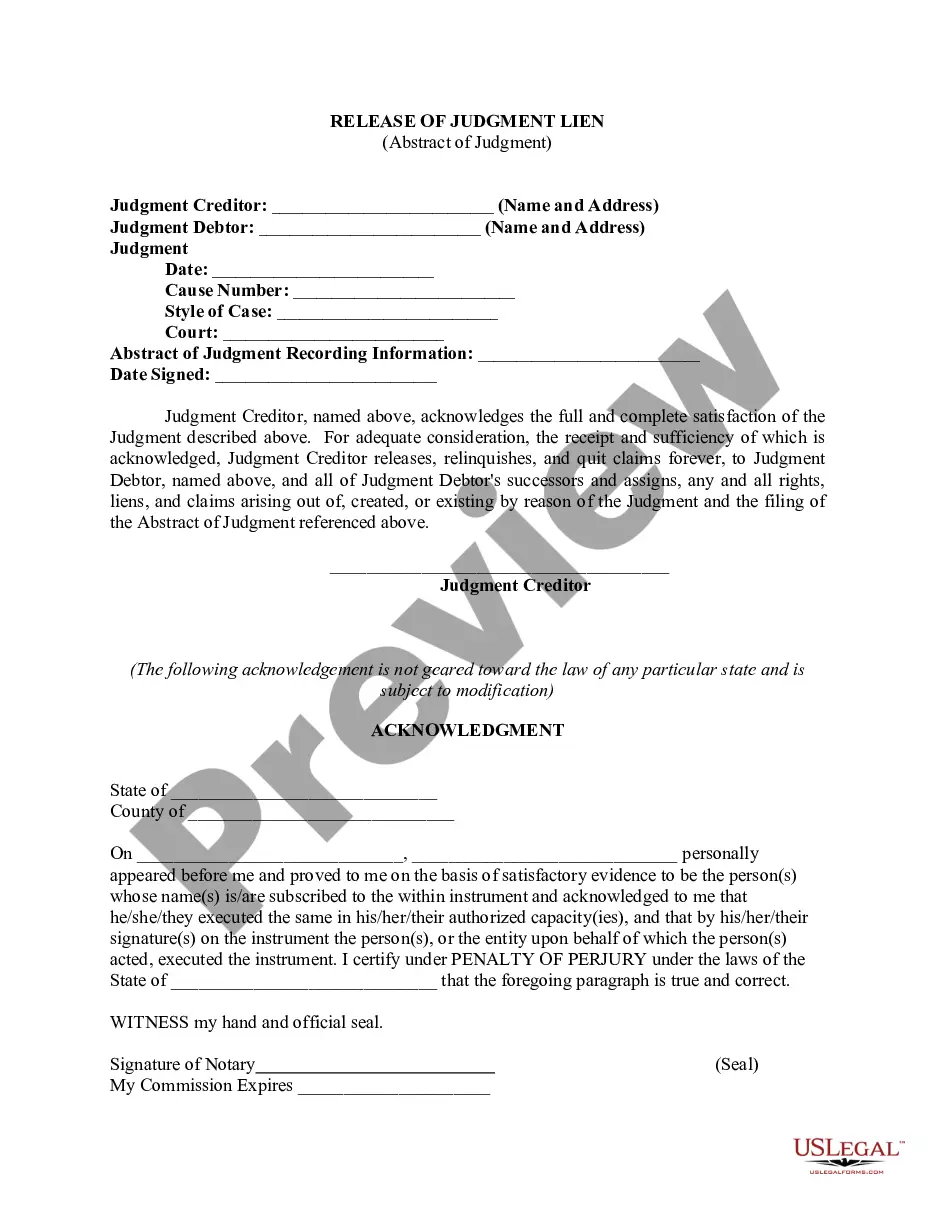
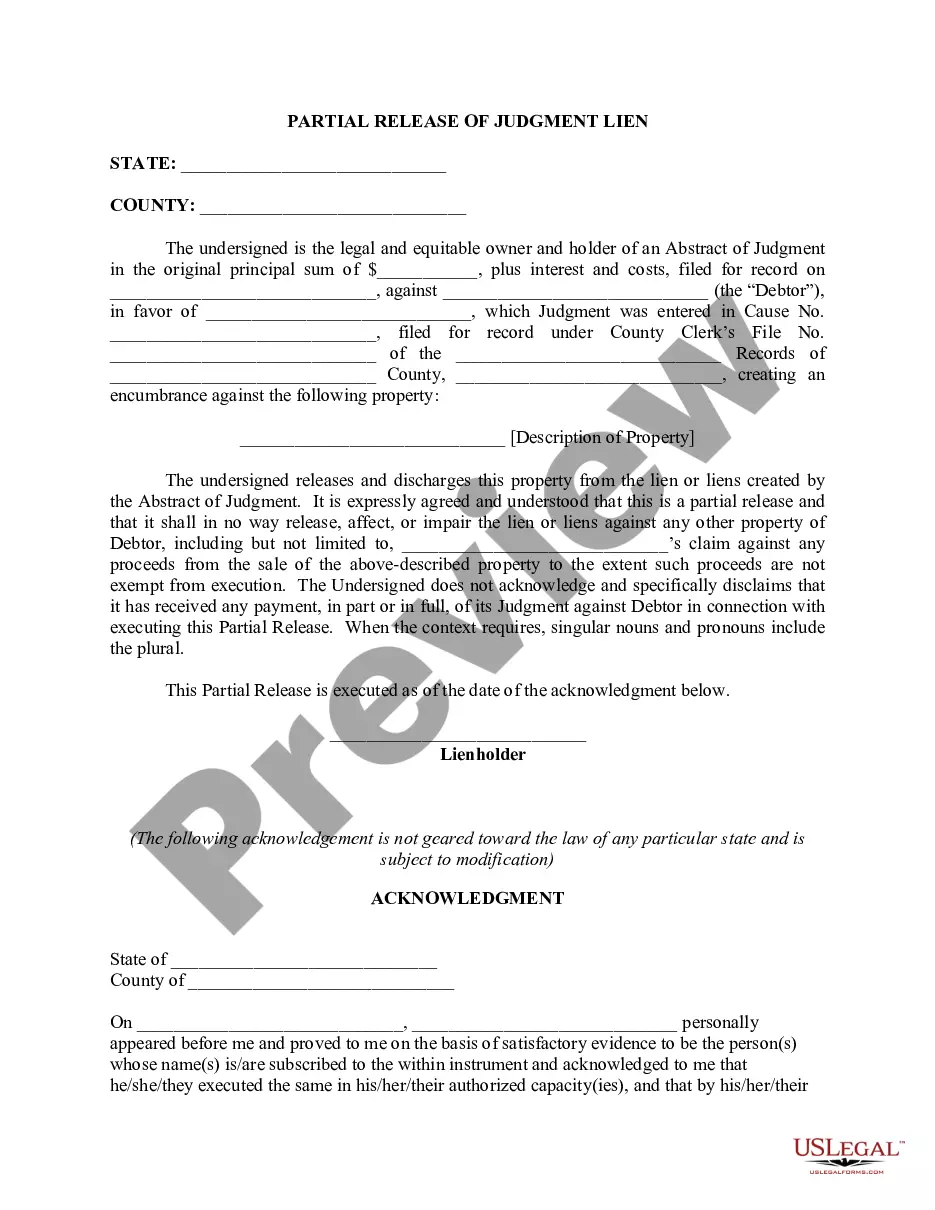
An Assignment of Judgment is a legal document used when an individual, known as the Assignor, wishes to transfer their rights to a judgment to another party, the Assignee. This form is commonly utilized for the purpose of collecting a judgment owed or as a method of settling a debt. It is distinct from other legal forms as it specifically addresses the transfer of judgment rights rather than general contractual or property transfers.
Main sections of this form
- Name of Assignor: The individual transferring the judgment rights.
- Address of Assignor: The complete address of the Assignor.
- Consideration: The amount received by the Assignor in exchange for the assignment.
- Name of Assignee: The individual receiving the judgment rights.
- Address of Assignee: The complete address of the Assignee.
- Date of Judgment: The date when the judgment was originally awarded.
- Court Information: The court name that issued the judgment.
- Name of Judgment Debtor: The person against whom the judgment is made.
- Amount of Judgment: The total amount of the judgment, including any associated costs.
- Signature of Assignor: The Assignor must sign to validate the assignment.
When to use this form
This form is essential when a person needs to assign their rights to a judgment to another party, which may occur when the Assignor cannot or prefers not to collect the judgment themselves. Scenarios include when the Assignor is settling a debt with the Assignee or when the Assignee has a vested interest in collecting the judgment. Using this form can simplify the process of transferring judgment rights, providing clear documentation of the transfer.
Who should use this form
- Individuals or businesses who hold a judgment and wish to transfer their rights to another party.
- Creditors seeking to assign their rights to a judgment for the purpose of debt collection.
- Parties involved in an agreement to settle a financial obligation.
How to prepare this document
- Identify the parties involved: Fill in the names of the Assignor and Assignee.
- Provide addresses: Enter the complete addresses for both the Assignor and Assignee.
- Specify consideration: Document the amount received by the Assignor in exchange for the assignment.
- Fill in judgment details: Include the date of the judgment, the court where it was issued, and the name of the judgment debtor.
- Enter the total amount: State the full amount of the judgment, including any additional costs.
- Sign the document: The Assignor must sign the form for it to be legally binding.
Notarization guidance
Notarization is required for this form to take effect. Our online notarization service, powered by Notarize, lets you verify and sign documents remotely through an encrypted video session, available 24/7.
Get your form ready online
Our built-in tools help you complete, sign, share, and store your documents in one place.
Make edits, fill in missing information, and update formatting in US Legal Forms—just like you would in MS Word.
Download a copy, print it, send it by email, or mail it via USPS—whatever works best for your next step.
Sign and collect signatures with our SignNow integration. Send to multiple recipients, set reminders, and more. Go Premium to unlock E-Sign.
If this form requires notarization, complete it online through a secure video call—no need to meet a notary in person or wait for an appointment.
We protect your documents and personal data by following strict security and privacy standards.

Make edits, fill in missing information, and update formatting in US Legal Forms—just like you would in MS Word.

Download a copy, print it, send it by email, or mail it via USPS—whatever works best for your next step.

Sign and collect signatures with our SignNow integration. Send to multiple recipients, set reminders, and more. Go Premium to unlock E-Sign.

If this form requires notarization, complete it online through a secure video call—no need to meet a notary in person or wait for an appointment.

We protect your documents and personal data by following strict security and privacy standards.
Common mistakes
- Failing to include complete addresses for both parties.
- Not specifying the exact consideration exchanged for the assignment.
- Omitting the signature of the Assignor, which renders the document invalid.
Benefits of using this form online
- Easy access to the form for quick preparation and submission.
- Convenience of completing the form at your own pace.
- Instant availability of downloadable templates, eliminating delays.
- Reliability of forms created based on professionally drafted templates.
Legal use & context
- An Assignment of Judgment legally transfers the right to collect a specified judgment.
- This document enables the Assignee to act on behalf of the Assignor in seeking collection.
- It is important to ensure that the underlying judgment is valid and enforceable before using this form.
Summary of main points
- The Assignment of Judgment allows for the transfer of judgment rights from one party to another.
- Complete and accurate completion of the form is crucial for its enforceability.
- Always check for state-specific requirements to ensure compliance.
Looking for another form?
Form popularity
FAQ
Assigning your judgment means that you forfeit ownership of your judgment permanently. It is a one-way sale that cannot be reversed except by finding and obtaining the cooperation of the person you assigned it to; or working and paying for a court order voiding the judgment assignment to them.
If a judgment is entered against you, a debt collector will have stronger tools, like garnishment, to collect the debt. A judgment is an official result of a lawsuit in court. In debt collection lawsuits, the judge may award the creditor or debt collector a judgment against you.
Do not use illegal ways to collect your money. Encourage the debtor to pay you voluntarily. Be organized. Ask a lawyer or collection agency for help. Make sure you renew your judgment. Ask the court for help.
Once a judgment is paid, whether in installments or a lump sum, a judgment creditor (the person who won the case) must acknowledge that the judgment has been paid by filing a Satisfaction of Judgment form with the court clerk.
Satisfied Judgments A satisfied judgment is the opposite of an unsatisfied judgment. It means that your debt is either paid or settled. While you may not have completely paid off your debt in full, you can satisfy a judgment by making a new payment plan and paying what you and the lender agreed on.
A Satisfaction of Judgment is a document signed by one party acknowledge receipt of the payment. The Satisfaction of Judgment is then filed with the court. This is beneficial to the paying party for multiple reasons. One, the court is put on notice that the debt has been satisfied.
Once a judgment is paid, whether in installments or a lump sum, a judgment creditor (the person who won the case) must acknowledge that the judgment has been paid by filing a Satisfaction of Judgment form with the court clerk.
It is divided into five types unlike judgement which is final in itself. A decree may be final or preliminary. It is a formal declaration or adjudication and is conclusive in nature. A decree is of three kinds namely, preliminary decree, final decree and partly preliminary & partly final.
What Happens After a Judgment Is Entered Against You? The court enters a judgment against you if your creditor wins their claim or you fail to show up to court. You should receive a notice of the judgment entry in the mail. The judgment creditor can then use that court judgment to try to collect money from you.