Agreement for the Partition and Division of Real Property
What is this form?
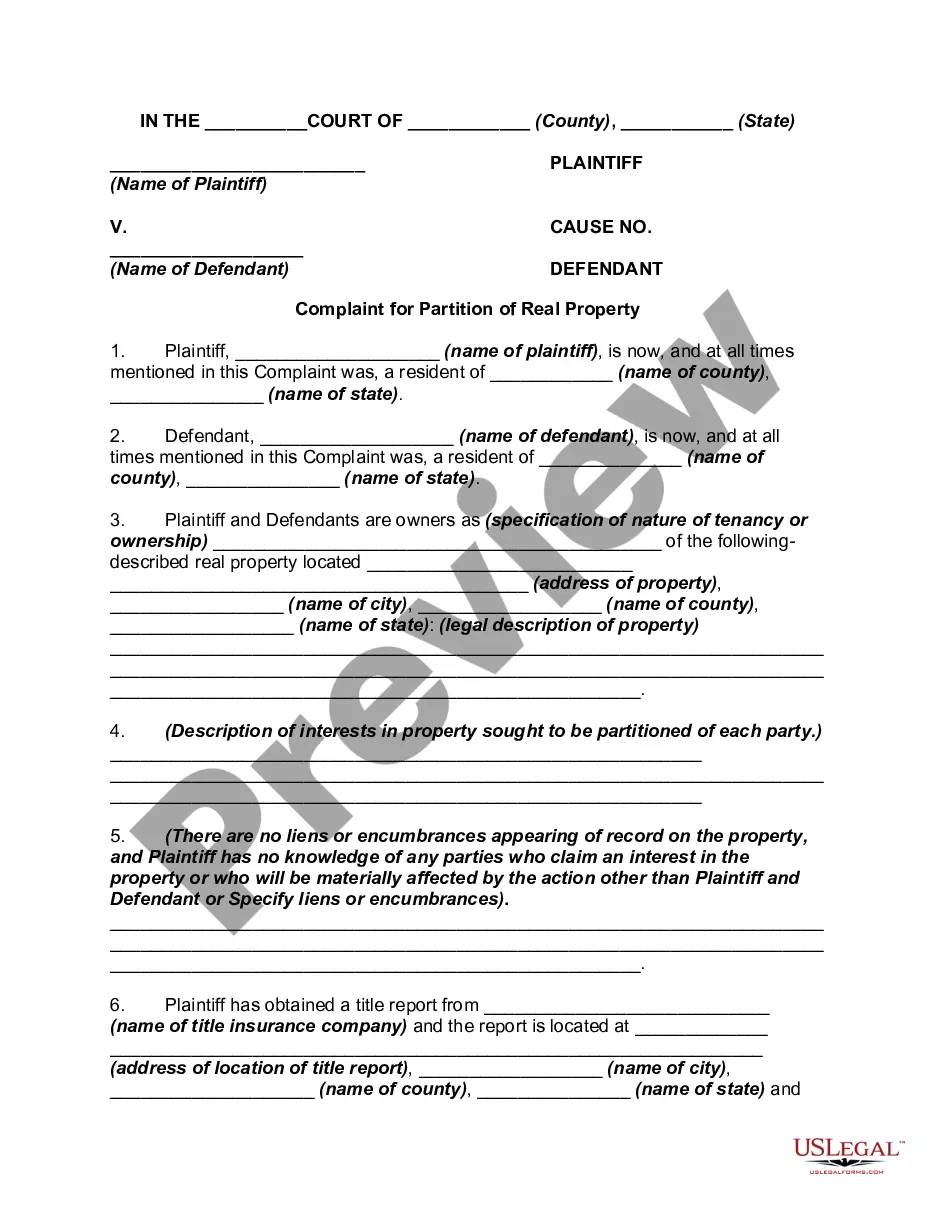
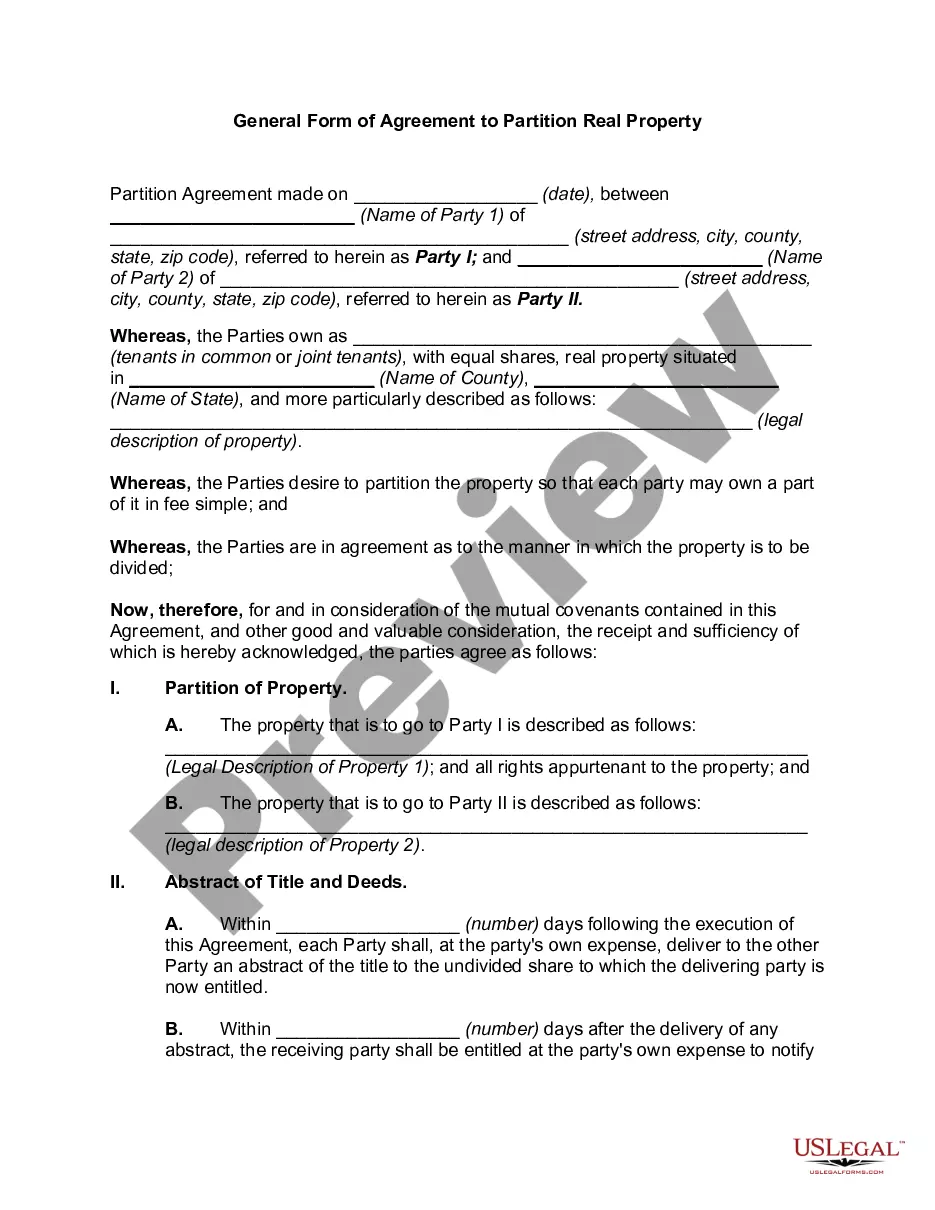
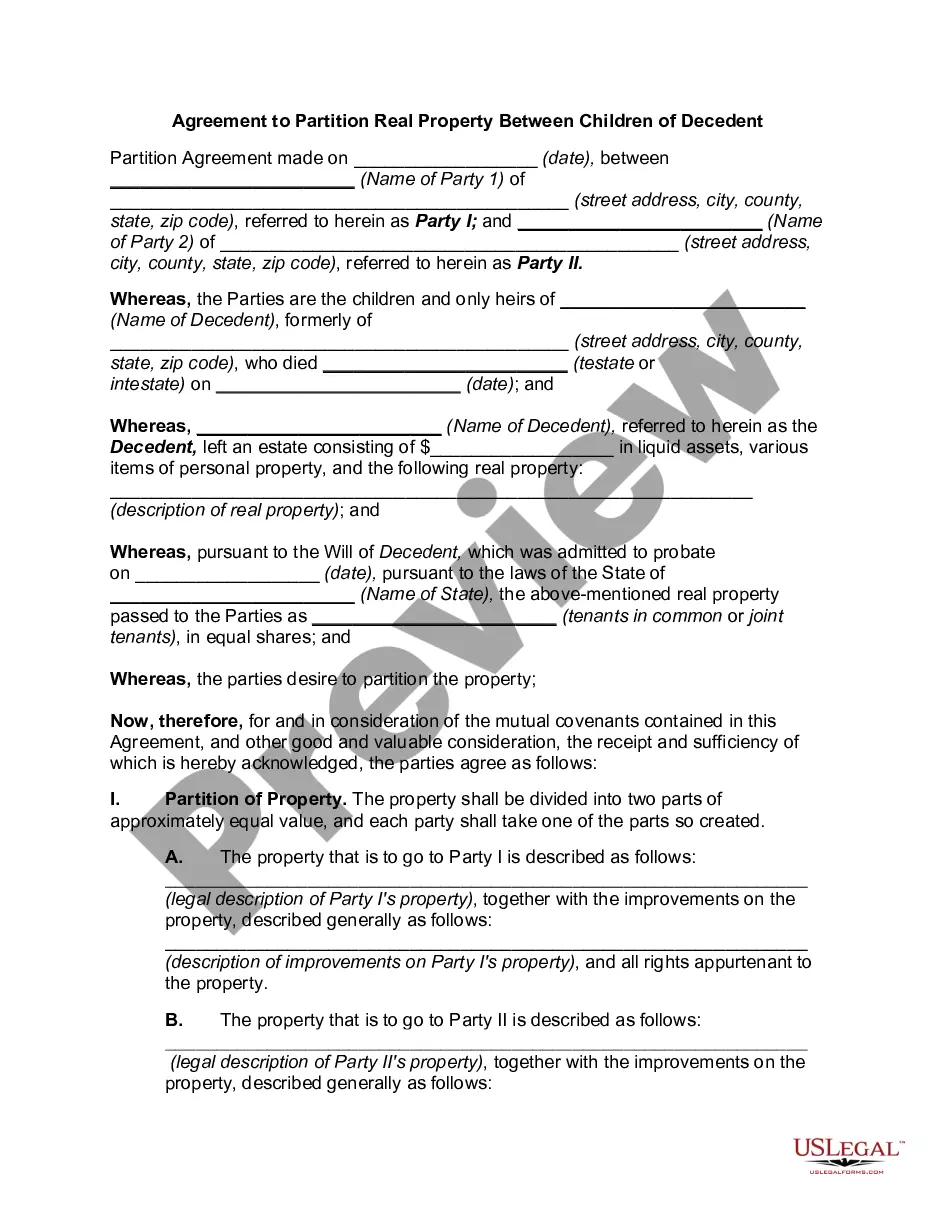
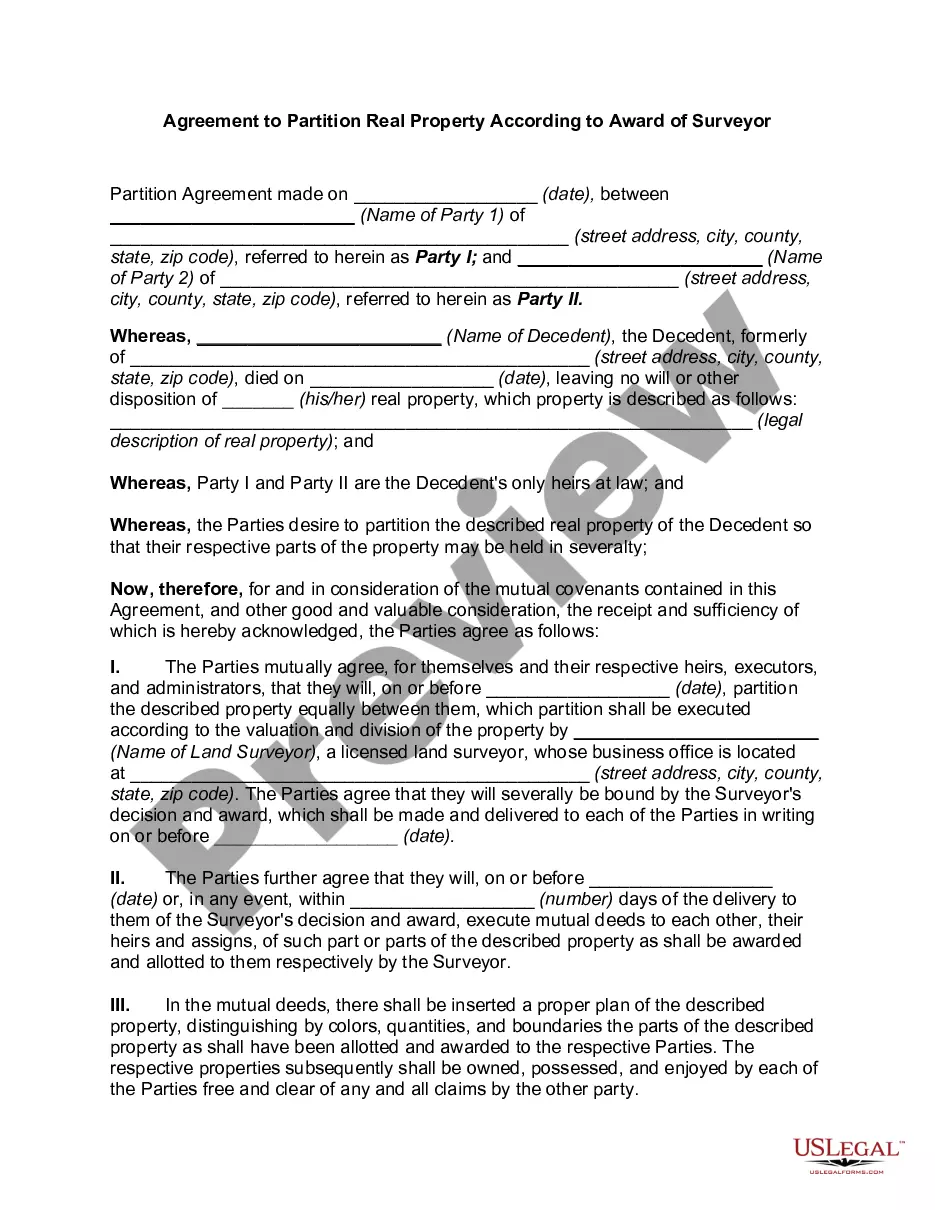
The Agreement for the Partition and Division of Real Property is a legal document used by co-owners of real estate to voluntarily divide and allocate their interests in a property. This agreement allows the co-owners to specify how the property will be partitioned, distinguishing it from general property transfer agreements by focusing specifically on the division of ownership among existing owners. This form can be used in any state, ensuring that all parties have a clear understanding of their rights and responsibilities regarding the property in question.
Key components of this form
- Identification of the co-owners and property description
- Declaration of sole ownership by co-owners, including information about any other interested parties
- Specified equitable division of the property into tracts
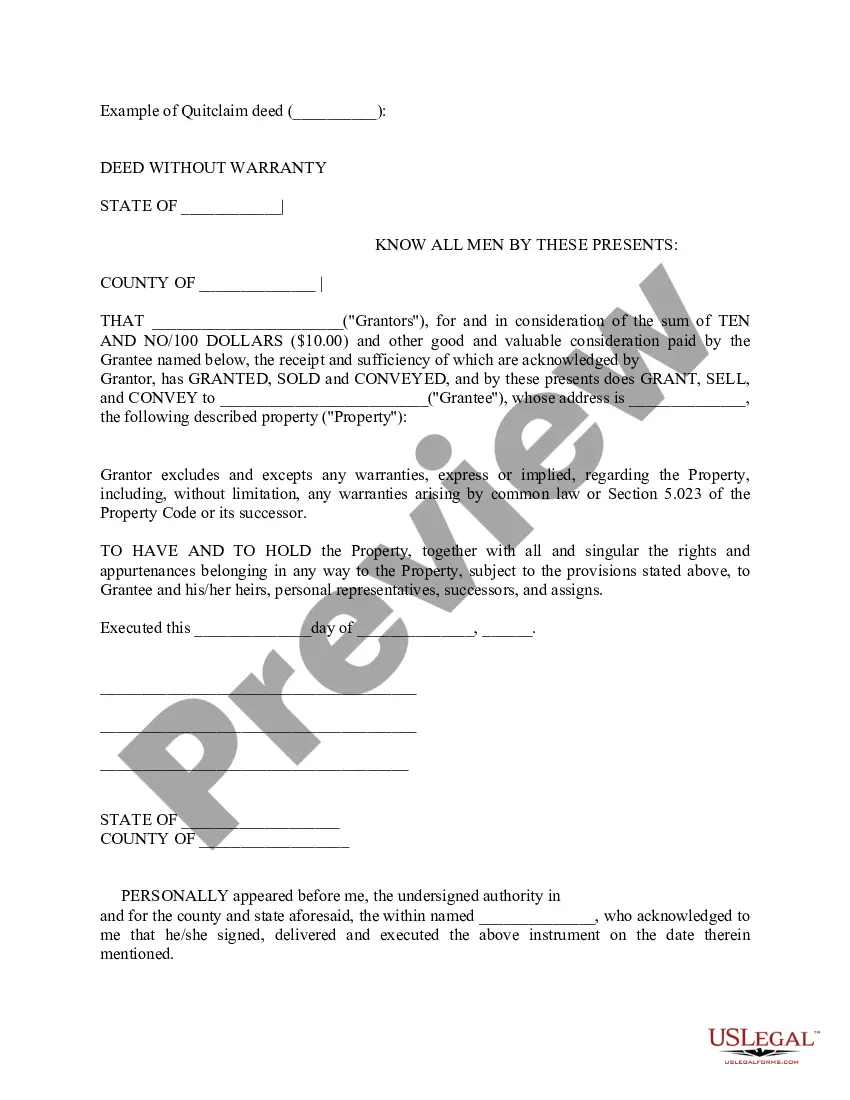
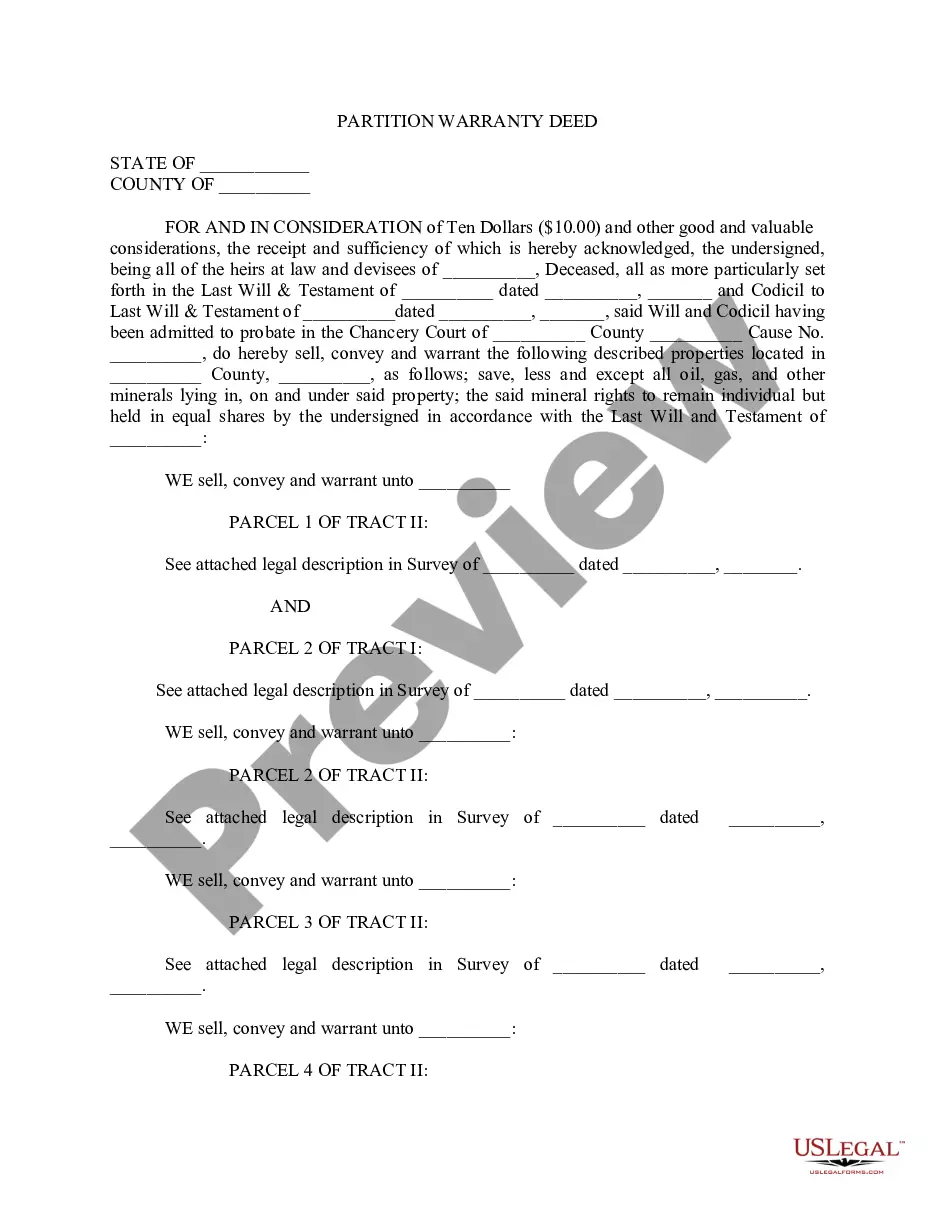
- Execution of quitclaim deeds for the transfer of interests
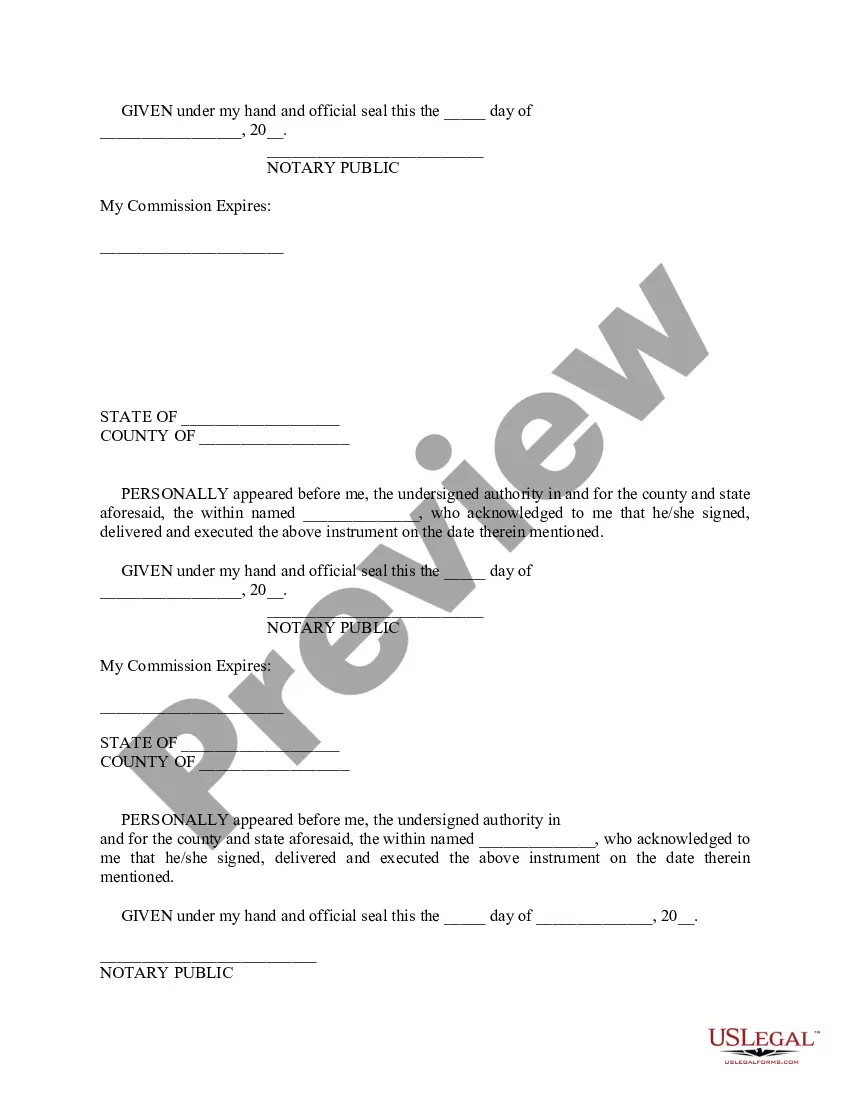
- Notary acknowledgement for the validity of the agreement


State-specific requirements
This is a general template intended for use in various states. Laws and formatting rules differ, so confirm the document meets your state’s requirements before using it.
Common use cases
This form should be used when multiple individuals hold ownership of a property and decide to divide the property among themselves. It is particularly useful in situations such as inheritance cases, partnership dissolutions, or when co-owners agree on a mutually beneficial partitioning of their shared ownership. By having a formal agreement, the co-owners can avoid potential disputes in the future regarding the ownership and use of the property.
Who can use this document
This form is intended for:
- Co-owners of real property desiring to partition their interests
- Individuals involved in property inheritance disputes
- Partners in a business or joint venture owning property together
- Anyone looking to formalize the division of shared property to avoid future conflicts
Steps to complete this form
- Identify all co-owners and accurately describe the property being partitioned.
- Clearly state any claims of ownership, including details of any liens or other interests.
- Specify how the property will be divided, including details on assigned tracts and any expected financial arrangements.
- Execute the quitclaim deeds required for each co-owner based on the identified tracts.
- Have all parties sign the agreement in front of a notary public to ensure legal validity.
Notarization guidance
This form needs to be notarized to ensure legal validity. US Legal Forms provides secure online notarization powered by Notarize, allowing you to complete the process through a verified video call, available anytime.
Mistakes to watch out for
- Failing to accurately describe the property or identify all co-owners.
- Omitting to address existing liens or interests, which can complicate partitioning.
- Not having the agreement notarized, making it potentially unenforceable.
- Rushing through the division specifications without mutual agreement from all parties.
Advantages of online completion
- Convenient access to legal forms anytime, allowing for quick preparation.
- Editability to customize the form to meet specific needs without drafting from scratch.
- Reliability of templates created by licensed attorneys, ensuring compliance with legal standards.

Form popularity
FAQ
Because real estate can rarely be physically divided, the Court typically orders the property be sold and the proceeds divided equitably between the owners. Reaching an agreement regarding the co-owners' respective interests in the property is generally the sticking point.
Partition by sale is accomplished by selling the entire property and dividing the proceeds equitably among the owners.However, before forcing an unwanted sale, the court can order or permit one of the co-owners to purchase the interest of the remaining co-owner(s) for fair market value.
A partition action allows a co-owner of a property to force a sale of the property, so they can take their share of the proceeds. However, in some cases, the other co-owners may not want to sell the property. While it's very difficult, legally, to stop a partition action there are alternatives.
To legally partition property means to bring a proceeding in court to force the physical division or sale of the property and division of the proceeds among the co owners.The right to partition can be waived if the correct agreement is executed.
Can A Partition Be Stopped? Typically, a partition action cannot be stopped once a lawsuit is filed because anyone who wants to dissolve ownership that is jointly owned with another person has a legal right to sell his/her interest if desired.
A California partition action happens when one co-owner of real property wants to sell but other co-owners do not want to sell their ownership rights. Partition means division. The opposing co-owners have the absolute right by law to divide the property and sell their portion with the legal remedy of Partition.
A court-ordered sale or physical division of property, usually real estate, that's owned by more than one person as tenants in common or joint tenancy. Any co-owner has the right to demand a partition.
Partition is the division of real or personal property between or among two or more co-owners, such as joint tenants or tenants-in-common.A Partition By Sale allows a co-owner of real property to force a sale of the entire property despite the unwillingness of any co-owner.