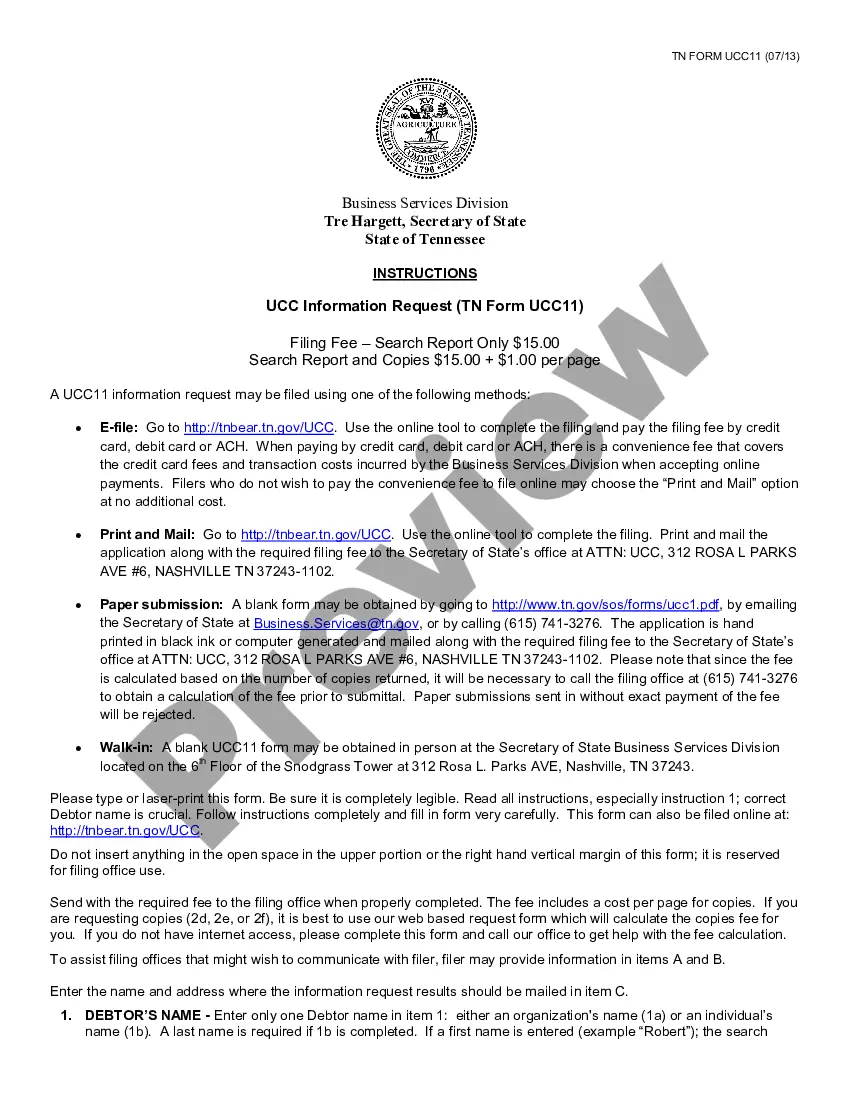
Texas Discovery Interrogatories for Divorce Proceeding for either Plaintiff or Defendant
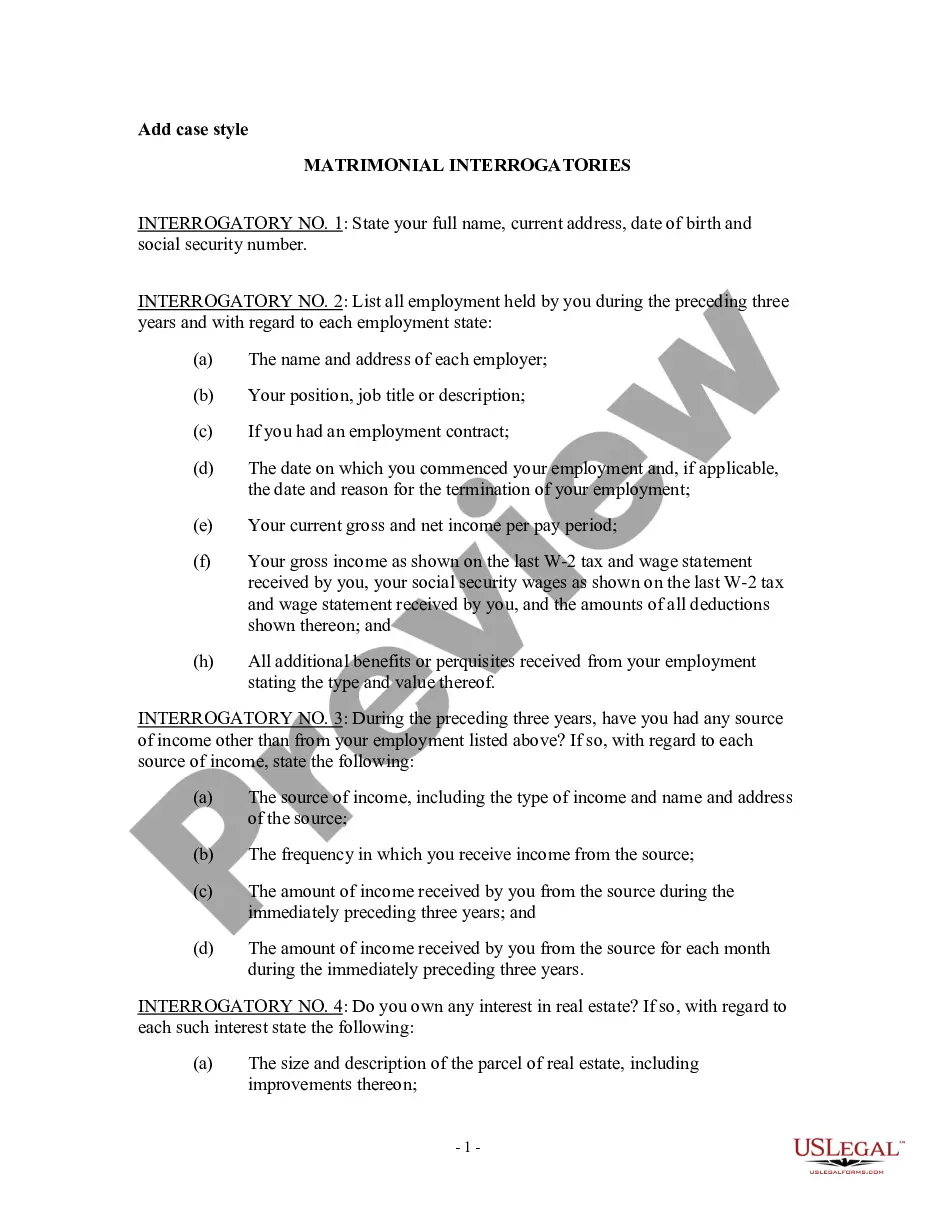
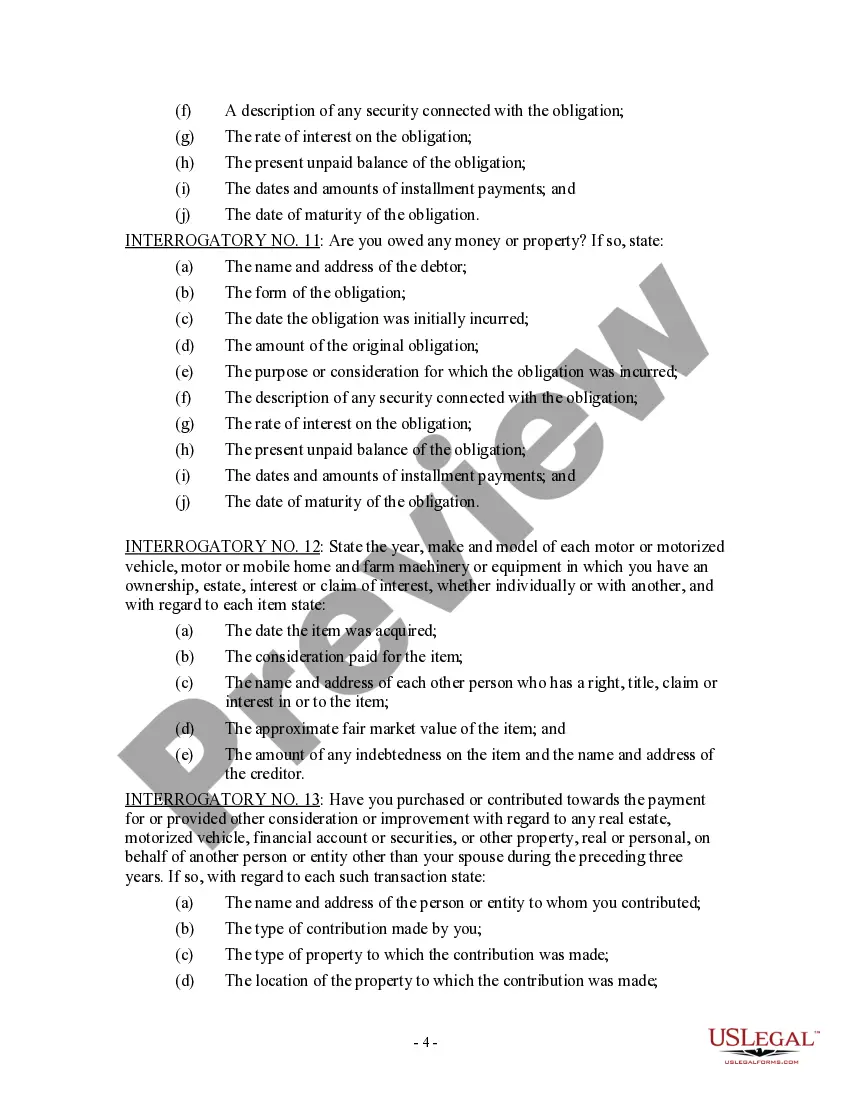
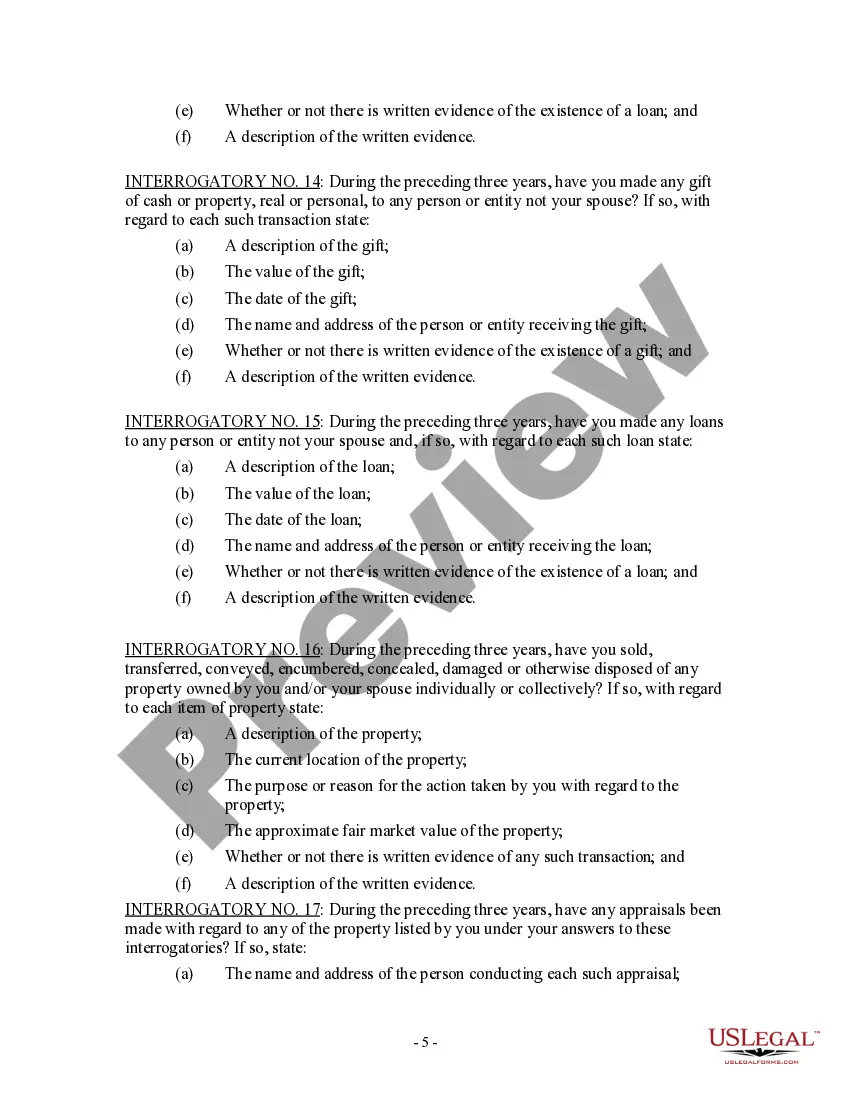
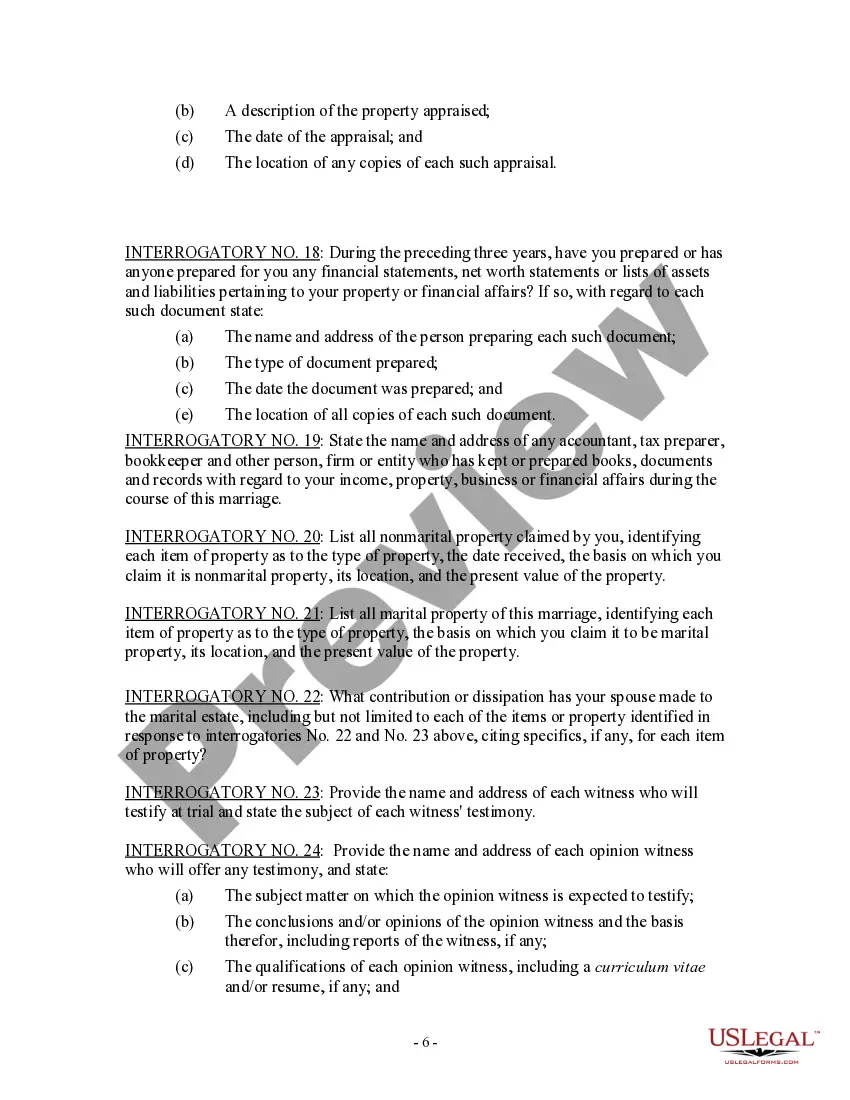
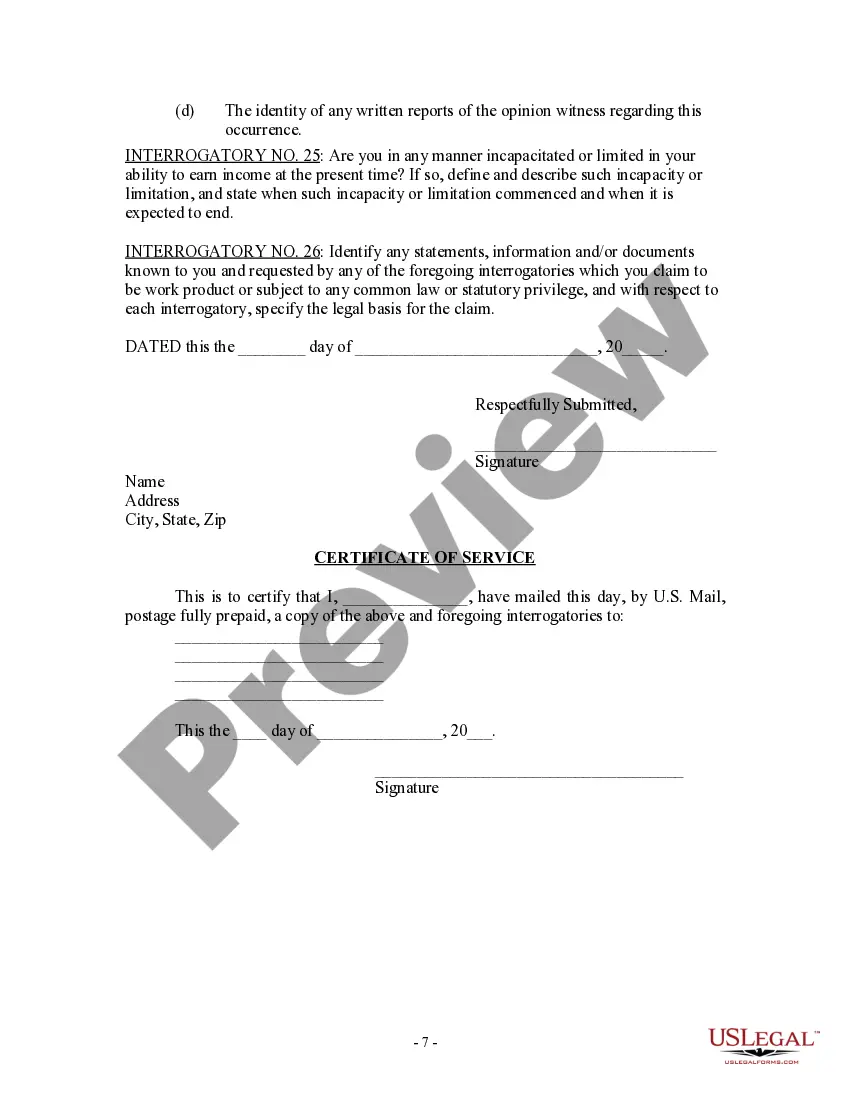
This form is known as the Discovery Interrogatories for Divorce Proceeding, which can be utilized by either the Plaintiff or Defendant in a divorce case. Its primary purpose is to gather information regarding the parties' financial status, property ownership, and other relevant details that can affect divorce proceedings. Unlike standard questionnaires, this legal form is structured to address specific inquiries that may lead to important revelations during negotiations or litigation.
- Identification of the parties involved, including full name and contact information.
- Details regarding employment history and income for the past three years.
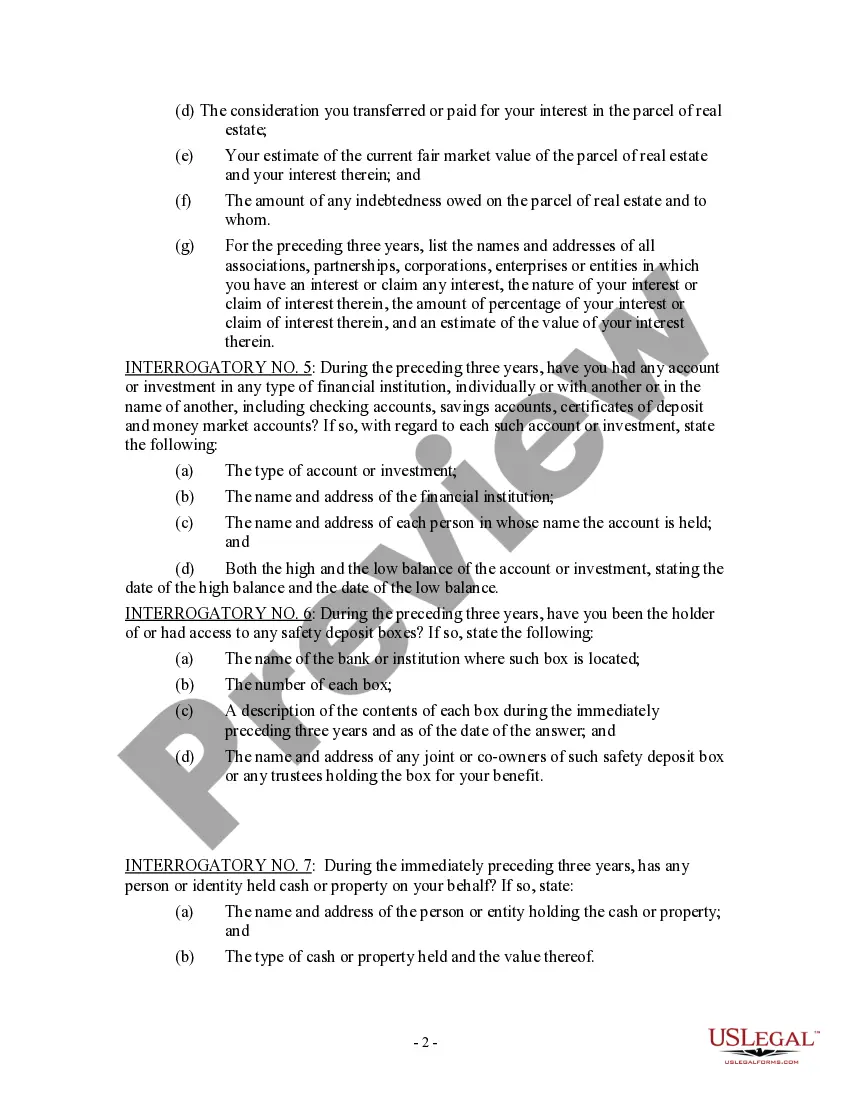
- Information about real estate ownership, including current market value and indebtedness.
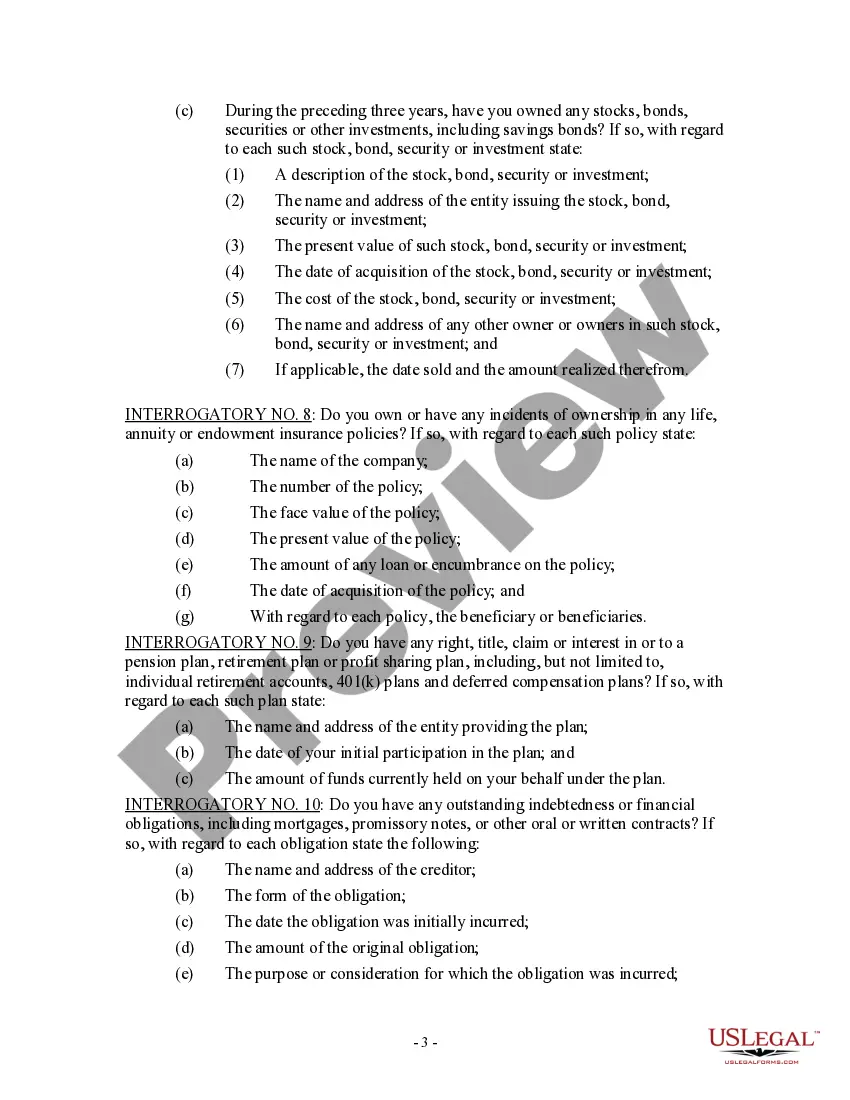
- Disclosure of financial accounts, investments, and safety deposit boxes.
- Clarification of outstanding debts and financial obligations.
- Identification of marital and non-marital property, including its value and location.
- Responses to specific inquiries regarding gifts or loans made outside of the marriage.
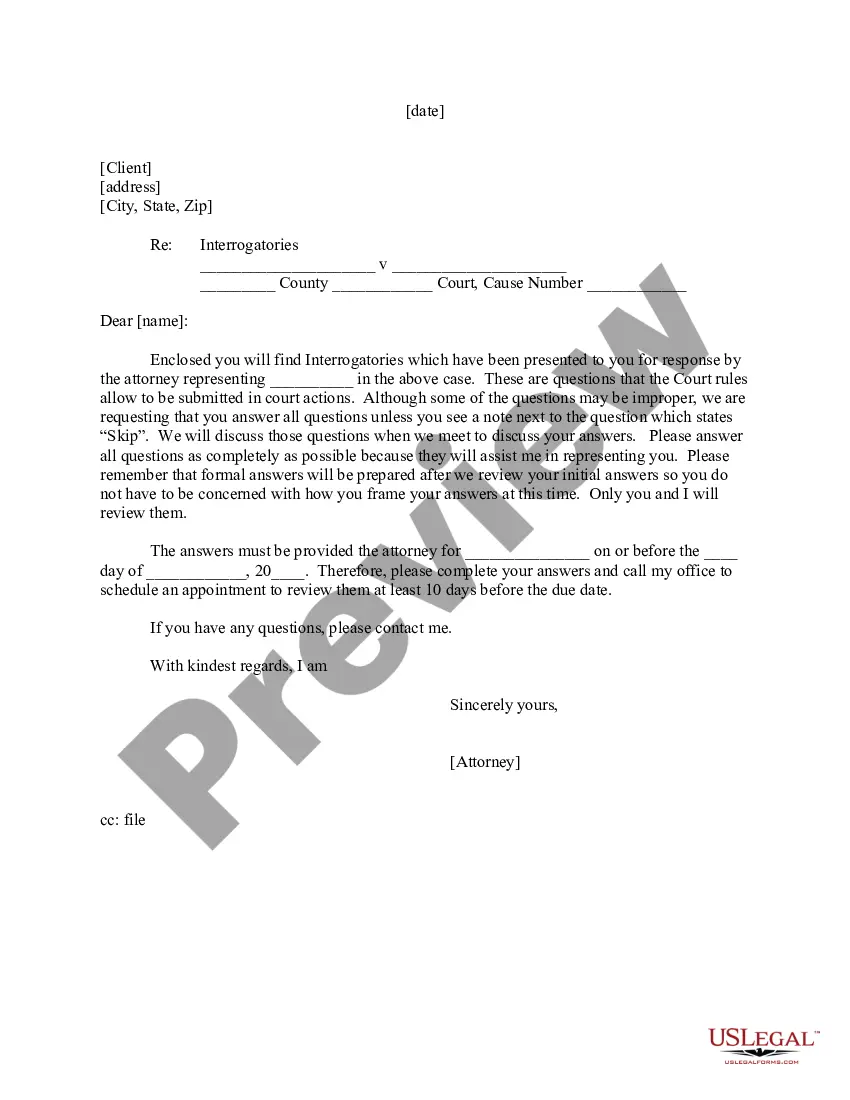
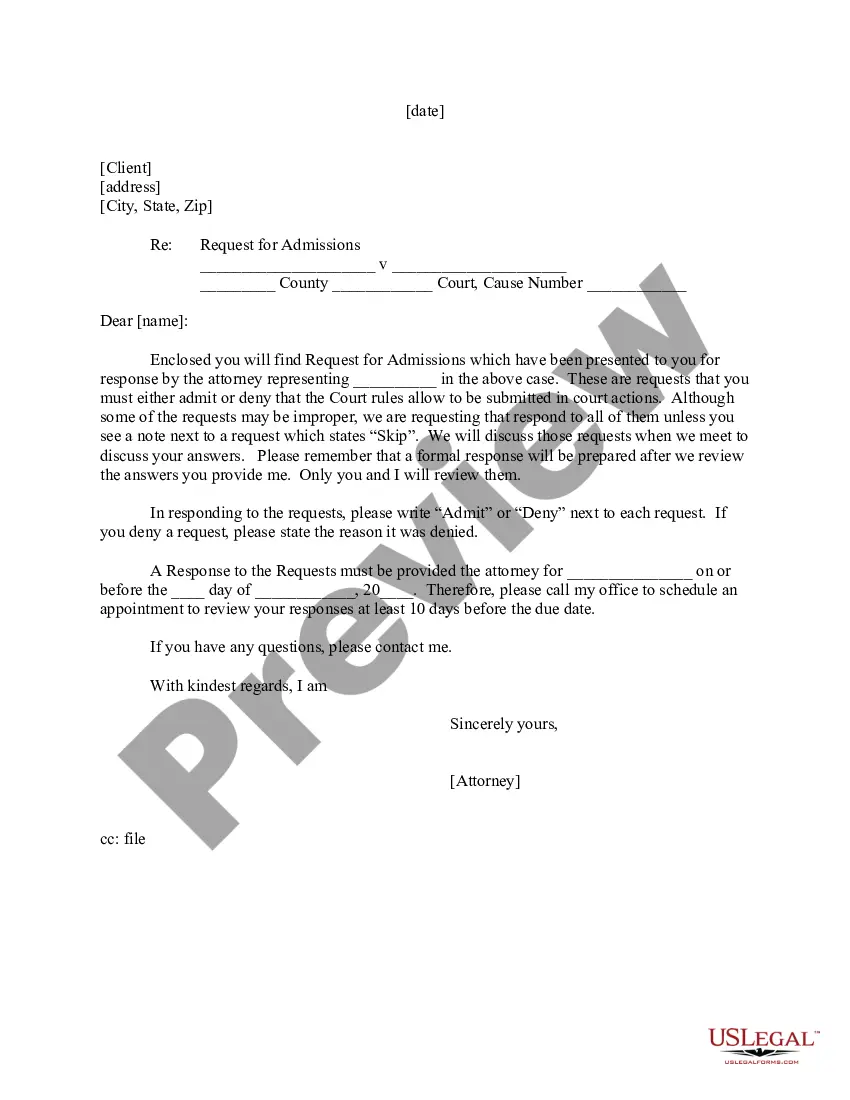
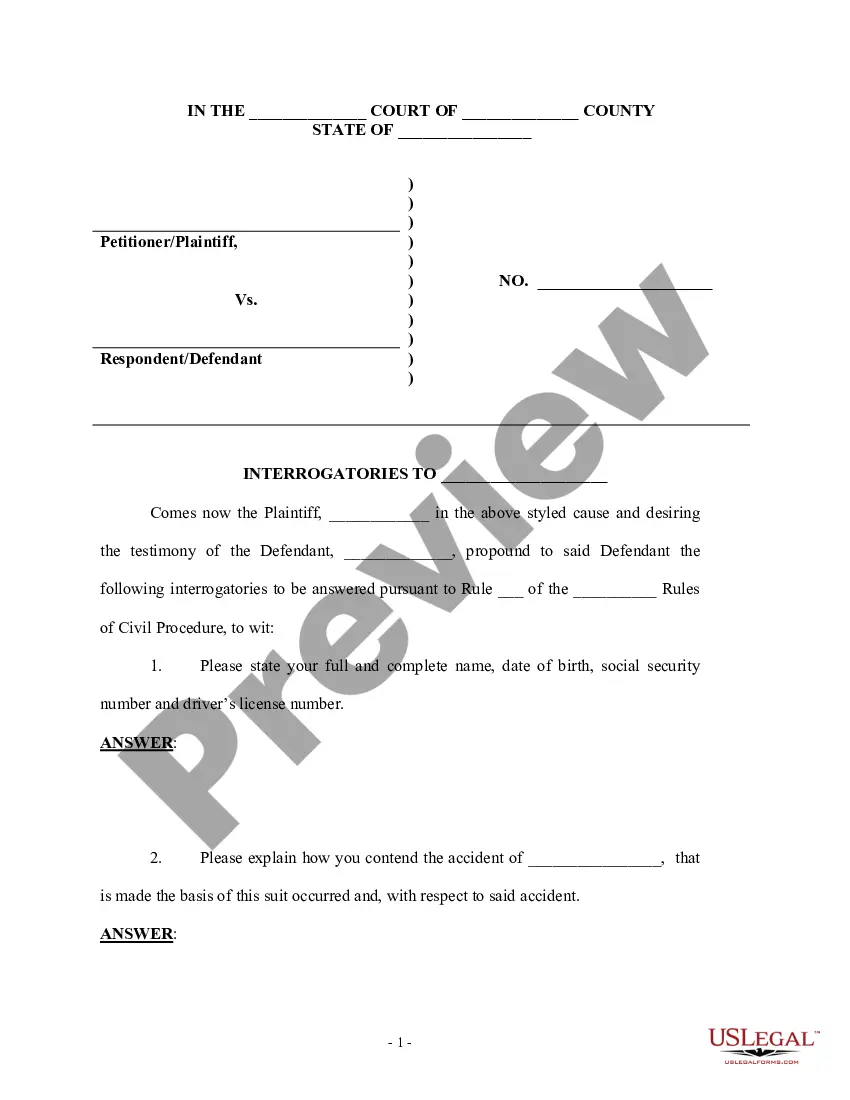
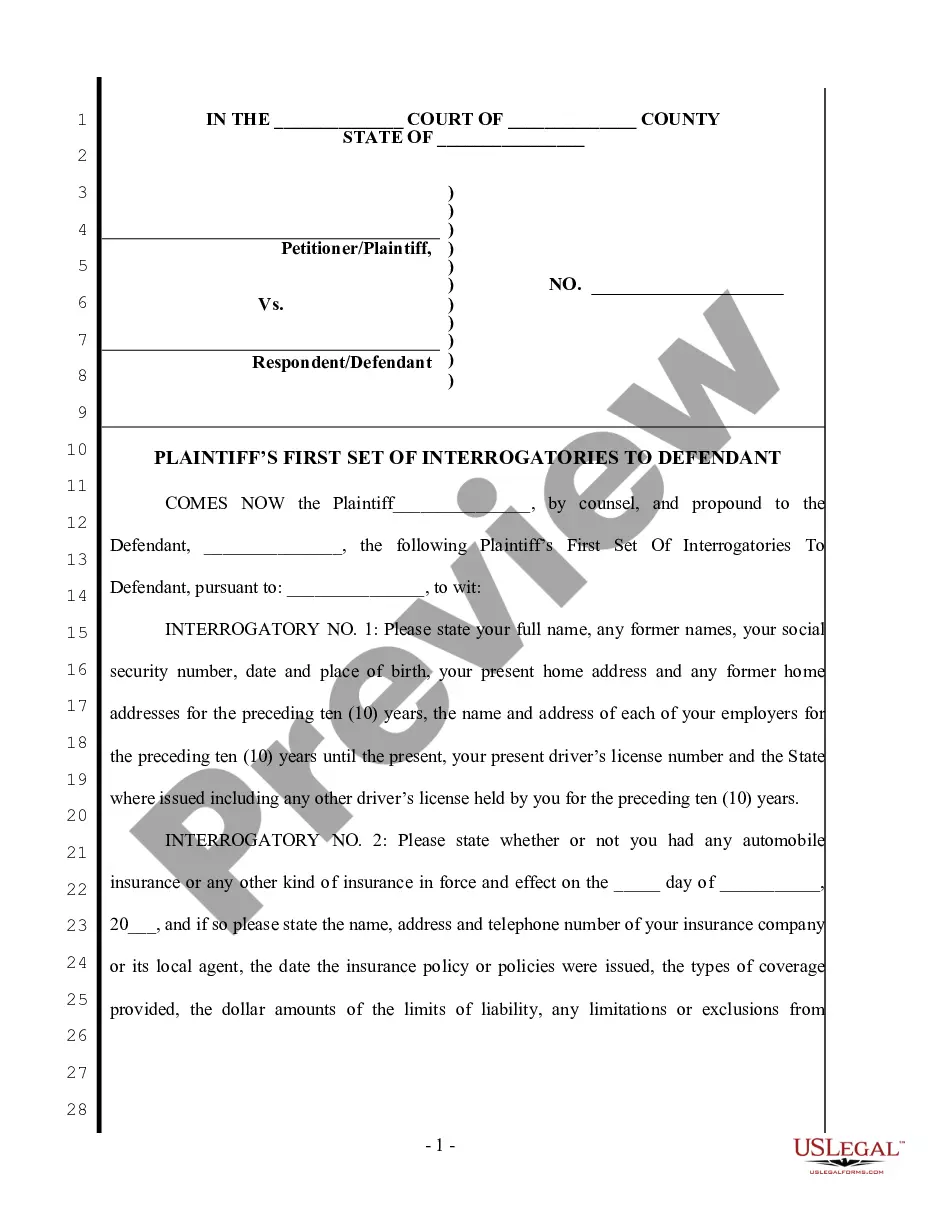
You will need this form during divorce proceedings when gathering information from the other party is essential. It is particularly useful in contested divorces where financial disclosures are crucial for equitable distribution of assets and liabilities. Additionally, this form can help unveil hidden assets or debts that may affect child support and alimony determinations.
This form is intended for:
- The Plaintiff seeking information from the Defendant.
- The Defendant responding to interrogatories in a divorce action.
- Attorneys representing either party in divorce litigation.
Steps to Complete the Form:
- Begin by identifying the parties involved, including full names and addresses.
- Answer all interrogatories thoroughly, focusing on personal, financial, and marital property information.
- Attach any necessary documentation requested, such as financial statements or employment records.
- Review the completed form for accuracy and relevance to your case.
- File the form with the court and serve a copy to the other party, ensuring proper documentation of service.
Does this document require notarization?
Notarization is generally not required for this form. However, certain states or situations might demand it. You can complete notarization online through US Legal Forms, powered by Notarize, using a verified video call available anytime.
Get your form ready online
Our built-in tools help you complete, sign, share, and store your documents in one place.
Make edits, fill in missing information, and update formatting in US Legal Forms—just like you would in MS Word.
Download a copy, print it, send it by email, or mail it via USPS—whatever works best for your next step.
Sign and collect signatures with our SignNow integration. Send to multiple recipients, set reminders, and more. Go Premium to unlock E-Sign.
If this form requires notarization, complete it online through a secure video call—no need to meet a notary in person or wait for an appointment.
We protect your documents and personal data by following strict security and privacy standards.
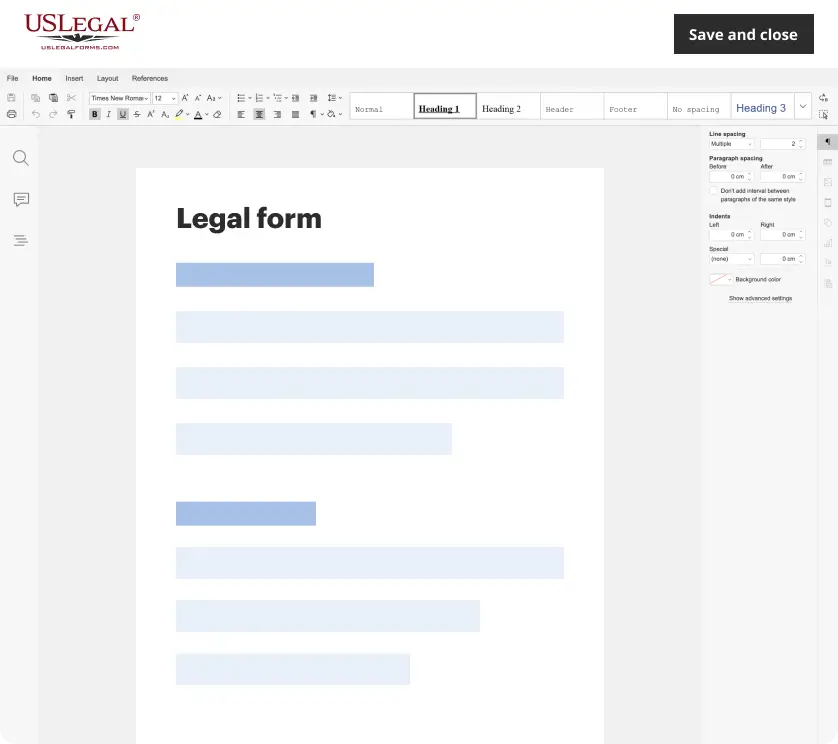
Make edits, fill in missing information, and update formatting in US Legal Forms—just like you would in MS Word.
Download a copy, print it, send it by email, or mail it via USPS—whatever works best for your next step.
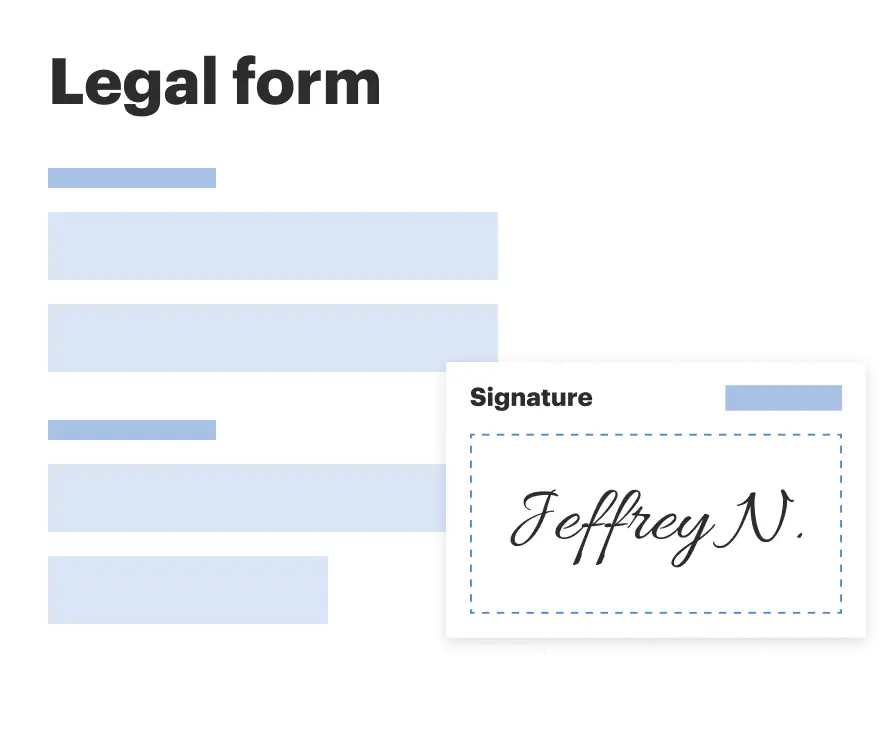
Sign and collect signatures with our SignNow integration. Send to multiple recipients, set reminders, and more. Go Premium to unlock E-Sign.

If this form requires notarization, complete it online through a secure video call—no need to meet a notary in person or wait for an appointment.
We protect your documents and personal data by following strict security and privacy standards.
Common Mistakes to Avoid:
- Failing to answer all questions accurately or completely.
- Neglecting to include supporting documents, when applicable.
- Overlooking state-specific rules regarding submission and service of interrogatories.
- Not signing or dating the form before filing.
Benefits of Using This Form Online:
- Instant access to professionally drafted, attorney-reviewed content.
- Easy to download and edit according to your specific situation.
- Reliable formatting makes compliance with court standards straightforward.
- Convenience of online storage and retrieval as needed.
Looking for another form?


Form popularity
FAQ
If you have received discovery requests (which would probably come in the mail), you have thirty days to mail your written responses back to the other side. Missing that thirty-day deadline can be serious. It could even result in you losing the case. TIP!
There are several kinds of written discovery that you and your spouse can use to get all the information you need. You will likely be required to answer the questions and produce all the documents asked for as long as it is reasonable, and a lot is considered reasonable during a divorce.
Language permits a party to serve interrogatories only on other parties.Second, and in any event, Rule 45 does not permit a party to use a subpoena to obtain information from non-parties that is unrelated to the action in which the Rule 45 subpoena is issued.
Yes, the responding party must serve all other parties with copies of the discovery responses, with the original discovery responses sent to the propounding party...
The 25-interrogatory limit applies to all parts and sub-parts of a single question (so 1a, 1b, and 1c count as three interrogatories). For civil lawsuits in state court, the allowable number of interrogatories varies, so check your state's civil procedure rules or ask your personal injury lawyer.
You must answer each interrogatory separately and fully in writing under oath, unless you object to it. You must explain why you object. You must sign your answers and objections.
You must answer each interrogatory separately and fully in writing under oath, unless you object to it. You must explain why you object. You must sign your answers and objections.
Interrogatories. Interrogatories are written questions between parties. The party who receives the interrogatories is required to respond in writing, under oath. Under Level 2 discovery, each side is only allowed 25 written interrogatories that ask more than identifying information about a document.
In general, the discovery rule means that the statute of limitations starts to run when the patient discovers or reasonably should discover the injury.If enough time passes, a statute of repose may prevent you from bringing the claim, even if you could not reasonably have discovered the injury.