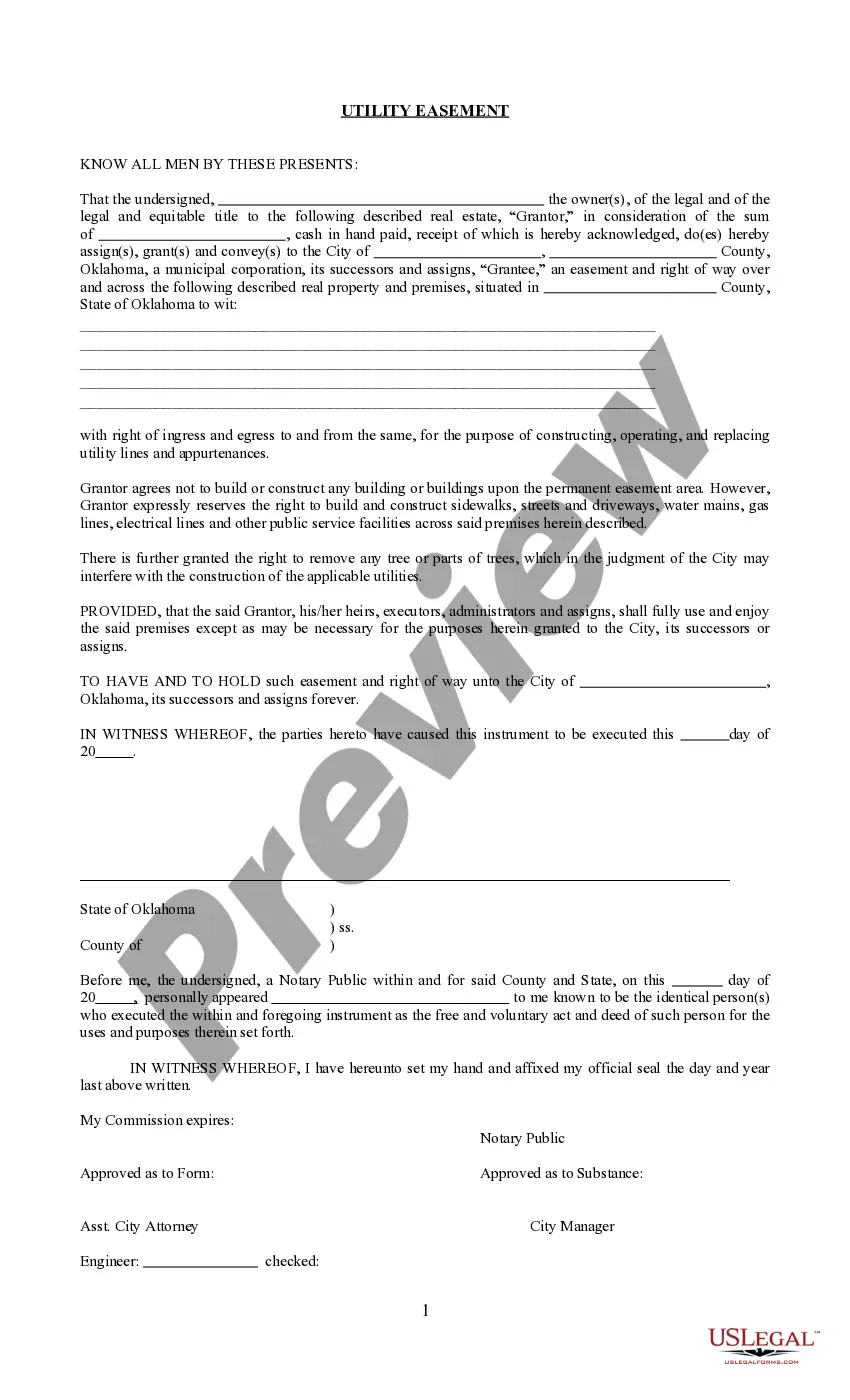
Oklahoma Utility Easement
What is this form?
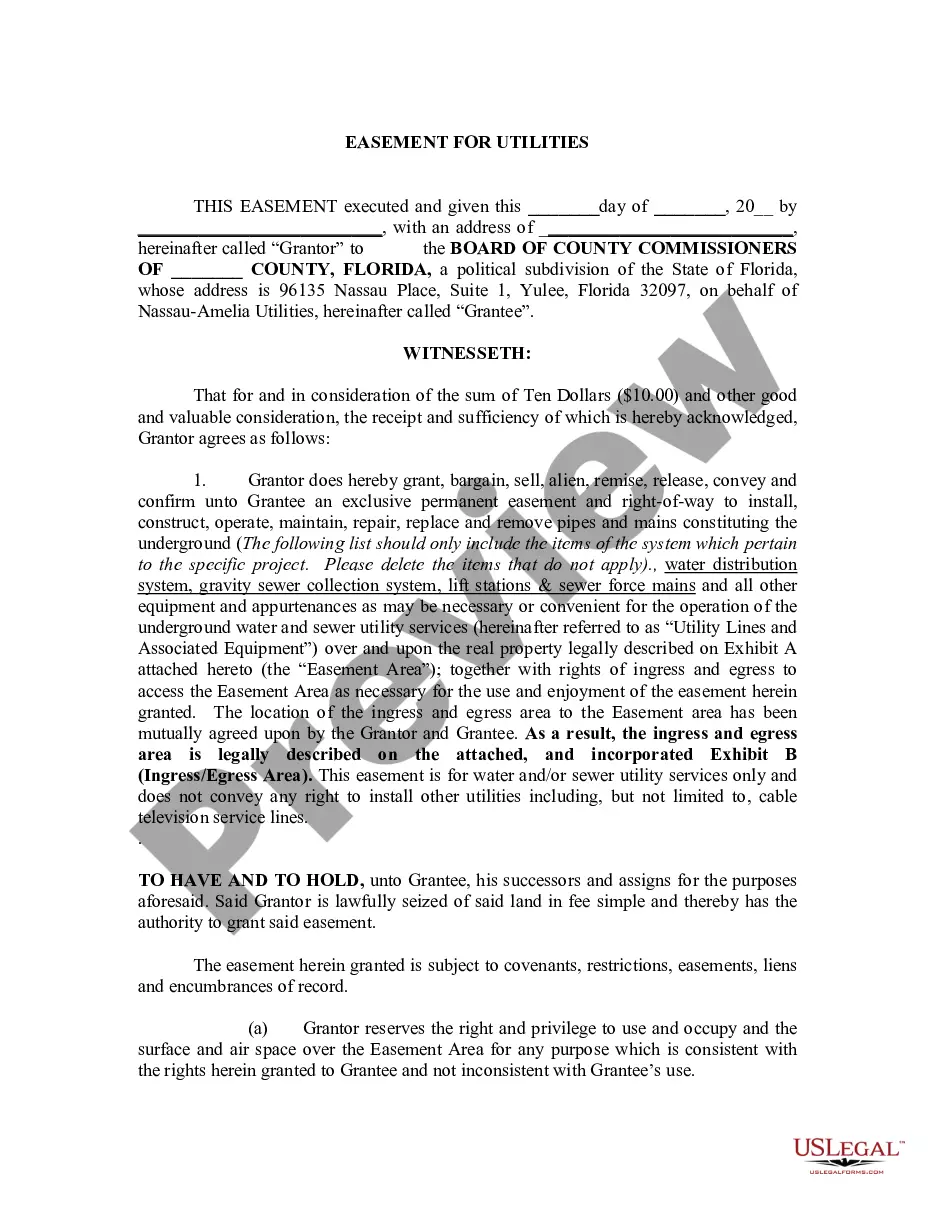
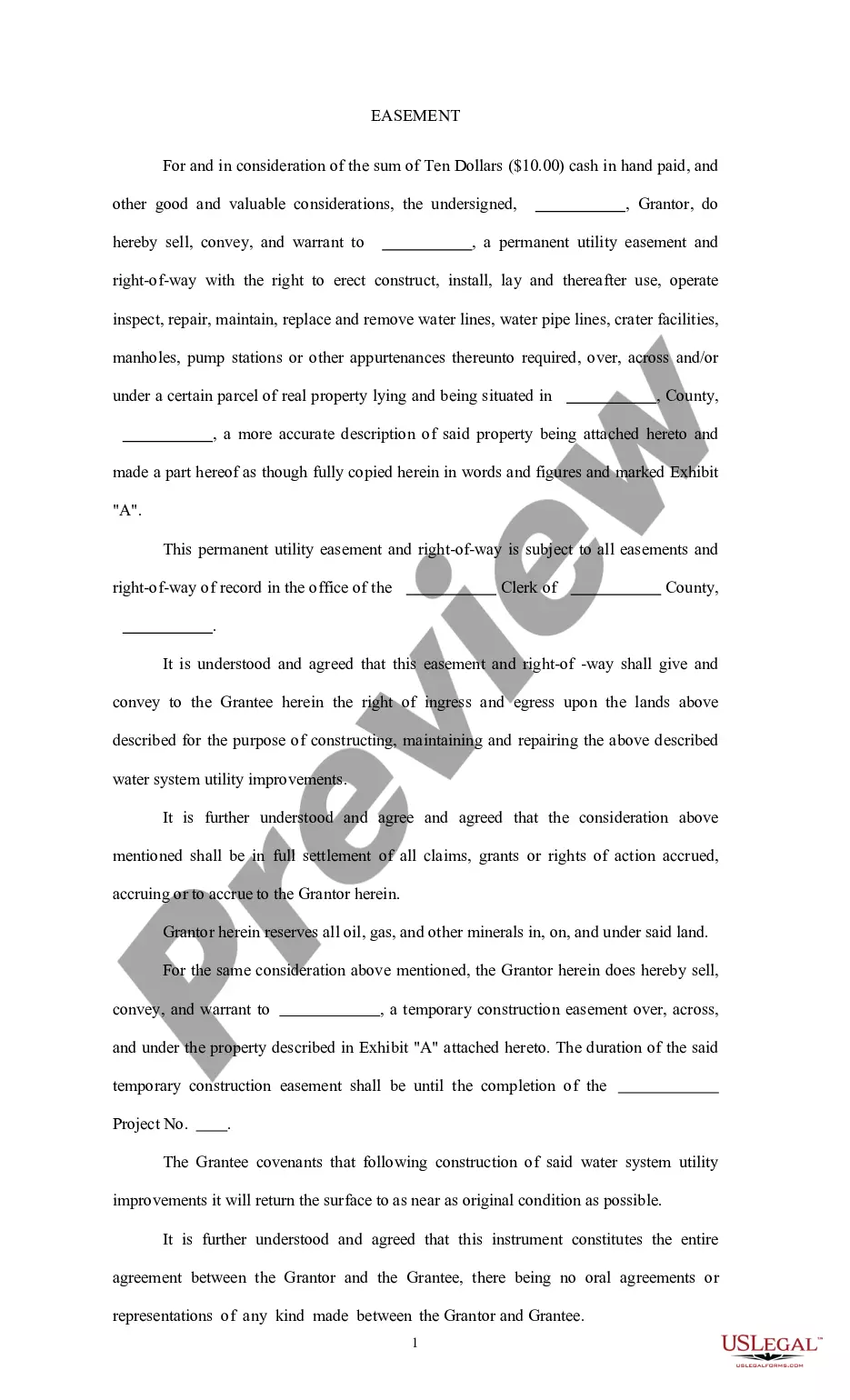
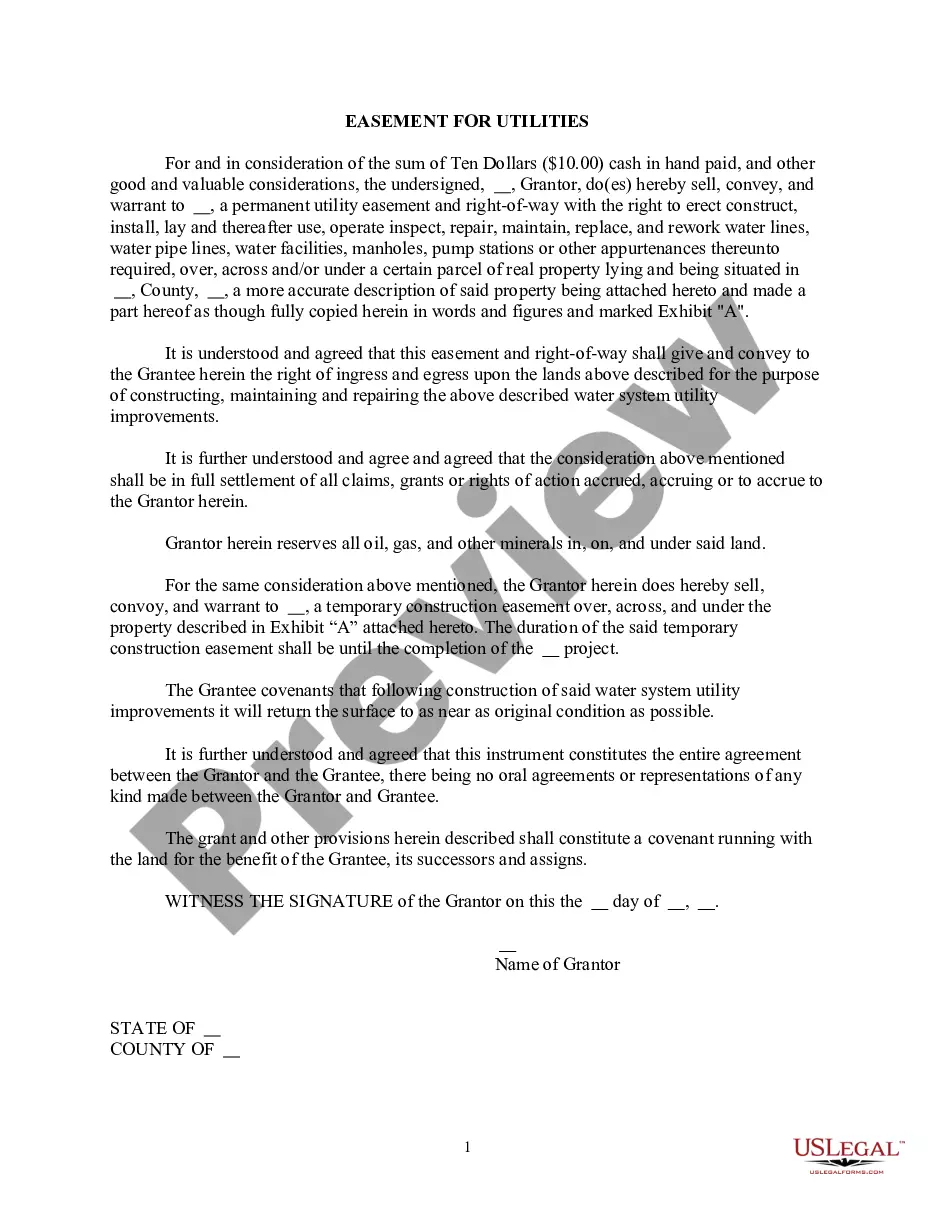
A Utility Easement form allows one party to gain legal access to another party's property for the purpose of constructing, operating, and maintaining utility lines. This form is crucial for utilities needing to install infrastructure such as electrical, water, or gas lines beneath private property. Unlike other property agreements, this easement specifically grants rights related to utility services while preserving the property owner's overall control of their land.
What’s included in this form
- Identification of Grantor and Grantee: Names of the parties involved in the easement agreement.
- Description of the easement area: Clear delineation of the property where the easement rights apply.
- Purpose of the easement: Specifies the rights granted for constructing and maintaining utility lines and any related structures.
- Grantor's limitations: Provisions restricting building on the easement area while allowing certain public facilities.
- Right of ingress and egress: Clarifies the rights to enter and exit the easement area for utility-related activities.
Situations where this form applies
This form is typically used when a utility company needs to install lines or infrastructure on private land. It is also useful when property owners permit access for the maintenance and replacement of existing utility lines. Common scenarios include new housing developments where utilities must extend service to homes, or when an existing utility needs to upgrade its services without obstructing the property owner's use of the land.
Who should use this form
- Utility companies seeking to establish legal access to land for utility purposes.
- Property owners agreeing to grant easements to utility companies.
- Attorneys representing either party in negotiating easements.
- Developers needing to ensure utility access in compliance with local regulations.
Instructions for completing this form
- Identify the parties: Fill in the names and contact information of the Grantor (property owner) and Grantee (utility company).
- Specify the property: Clearly describe the property involved, including any relevant addresses or parcel numbers.
- Define the easement area: Mark the specific location of the easement on the property, including any dimensions if necessary.
- Outline the purpose: State the reasons for granting the easement and the specific utilities involved.
- Complete required signatures: Ensure all parties sign and date the document for validity.
Is notarization required?
This form does not typically require notarization unless specified by local law. However, having the form notarized may provide an extra layer of authenticity and legal strength.
Get your form ready online
Our built-in tools help you complete, sign, share, and store your documents in one place.
Make edits, fill in missing information, and update formatting in US Legal Forms—just like you would in MS Word.
Download a copy, print it, send it by email, or mail it via USPS—whatever works best for your next step.
Sign and collect signatures with our SignNow integration. Send to multiple recipients, set reminders, and more. Go Premium to unlock E-Sign.
If this form requires notarization, complete it online through a secure video call—no need to meet a notary in person or wait for an appointment.
We protect your documents and personal data by following strict security and privacy standards.

Make edits, fill in missing information, and update formatting in US Legal Forms—just like you would in MS Word.

Download a copy, print it, send it by email, or mail it via USPS—whatever works best for your next step.

Sign and collect signatures with our SignNow integration. Send to multiple recipients, set reminders, and more. Go Premium to unlock E-Sign.

If this form requires notarization, complete it online through a secure video call—no need to meet a notary in person or wait for an appointment.

We protect your documents and personal data by following strict security and privacy standards.
Avoid these common issues
- Failing to clearly define the easement area, leading to potential disputes later.
- Not obtaining proper signatures or witnesses, which can make the document unenforceable.
- Using vague language regarding the rights granted, creating ambiguity in interpretation.
- Neglecting to specify the duration of the easement if it is not permanent.
Benefits of completing this form online
- Convenience: Easily download and fill out the form from any location.
- Editability: Modify the form to suit specific needs without having to redo the entire document.
- Reliability: Access legally vetted templates created by licensed attorneys, ensuring compliance with relevant laws.
Looking for another form?





Form popularity
FAQ
When termed as a utility easement, it means a utility company's right to access and control the portion of another person's land that is located near utility facilities and structures (i.e. utility poles, transformers, overhead or underground electrical lines).
An easement in gross is personal to the party that receives the benefit of easement. An example of an easement in gross is an easement to a utility company to run a power line across a burdened piece of property. The utility company is the benefited party and there isn't necessarily a benefited parcel of land.
Summary. An easement in gross is a right allowing an individual or an entity to use someone else's land/property. An easement in gross agreement benefits the property owner as an individual, not the property. An easement holder will be unable to transfer the benefits to another party.
The bottom line is that developers and builders who are presented with utility company easement forms should not just sign them, but think about the kinds of issues they can present. It is easier to negotiate these concessions up front before the lines go in, than to ask the utility company to amend its easement later.
When termed as a utility easement, it means a utility company's right to access and control the portion of another person's land that is located near utility facilities and structures (i.e. utility poles, transformers, overhead or underground electrical lines).
Easements can be created in a variety of ways. They can be created by an express grant, by implication, by necessity, and by adverse possession.
An appurtenant easement is an easement that runs with the land meaning it is meant to be binding on successive owners of the dominant and servient tenements.In contrast, an easement in gross is a personal easement that necessarily does not run with the land.
Express Grant by Instrument. An express grant by written instrument is the most common source of an easement. Implied. The owner of a large tract of land splits up the land with one or more parcels that do not abut a public highway or road. Necessity. Dedication.