Ohio Newly Divorced Individuals Package
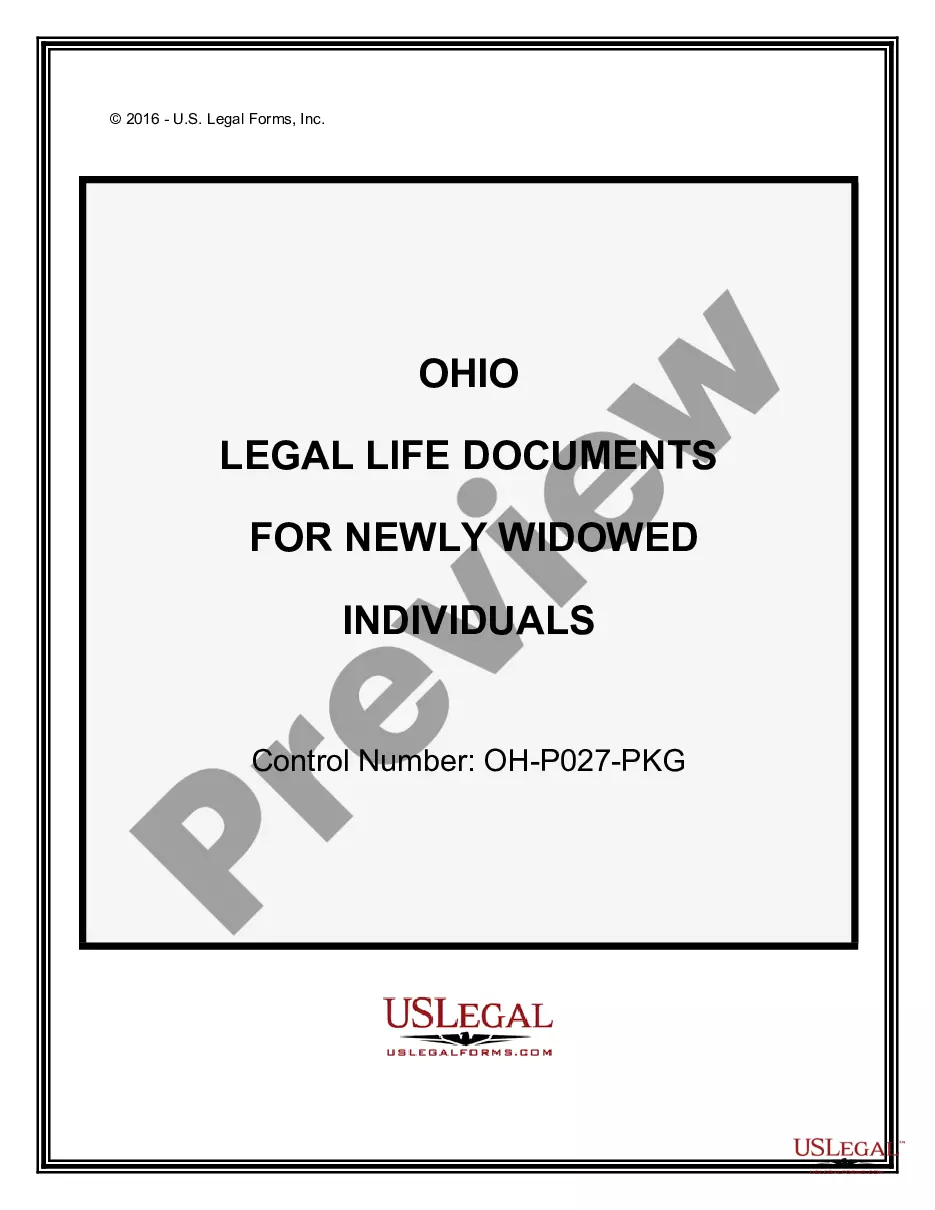
Overview of this form package
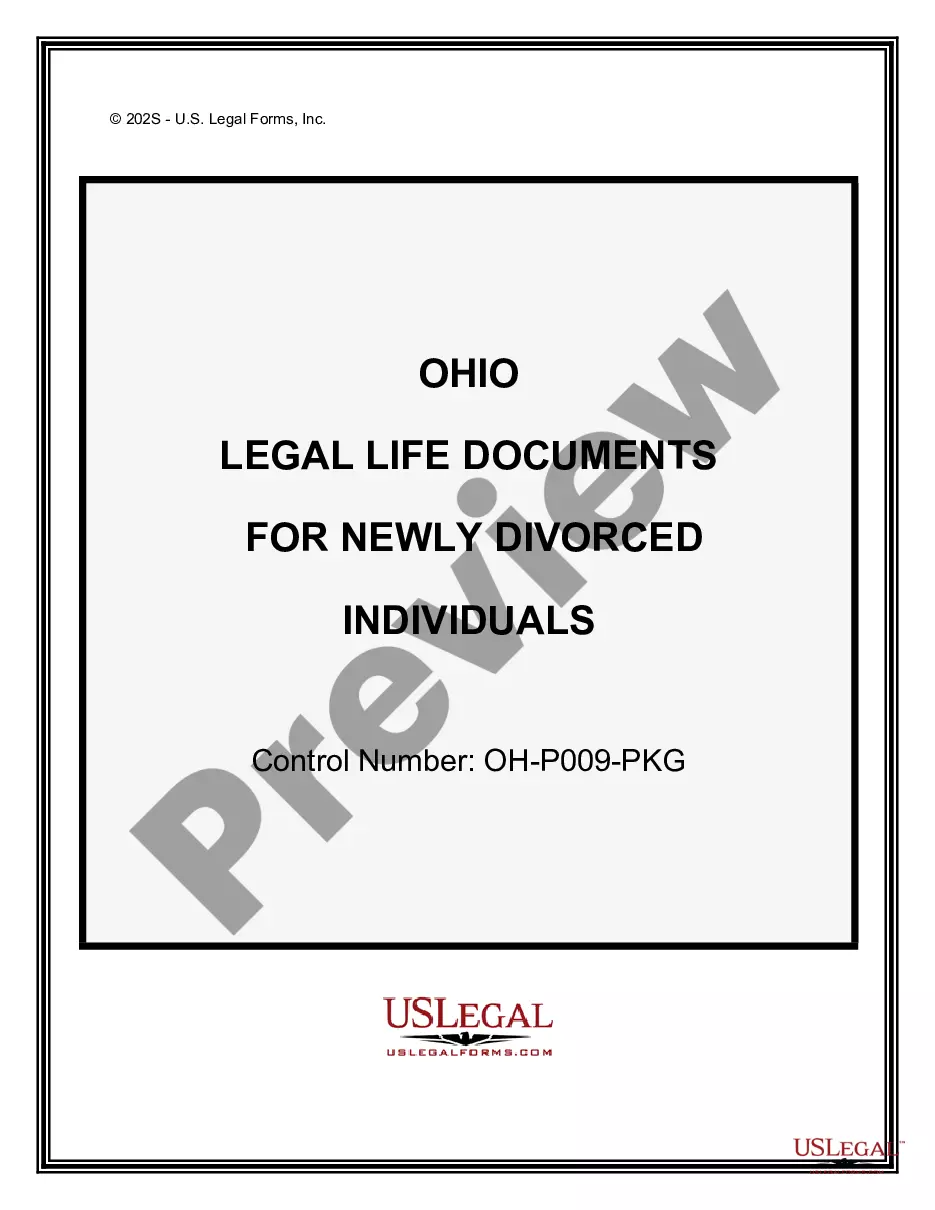
The Ohio Newly Divorced Individuals Package is a comprehensive collection of essential legal documents designed specifically for those who have recently undergone a divorce. This package helps you organize your legal affairs, ensuring that your wishes are documented and your personal planning is orderly. Unlike general legal form packages, this one is tailored to meet the specific needs of newly divorced individuals in Ohio, providing relevant forms to address crucial areas such as estate planning, healthcare directives, and name changes.
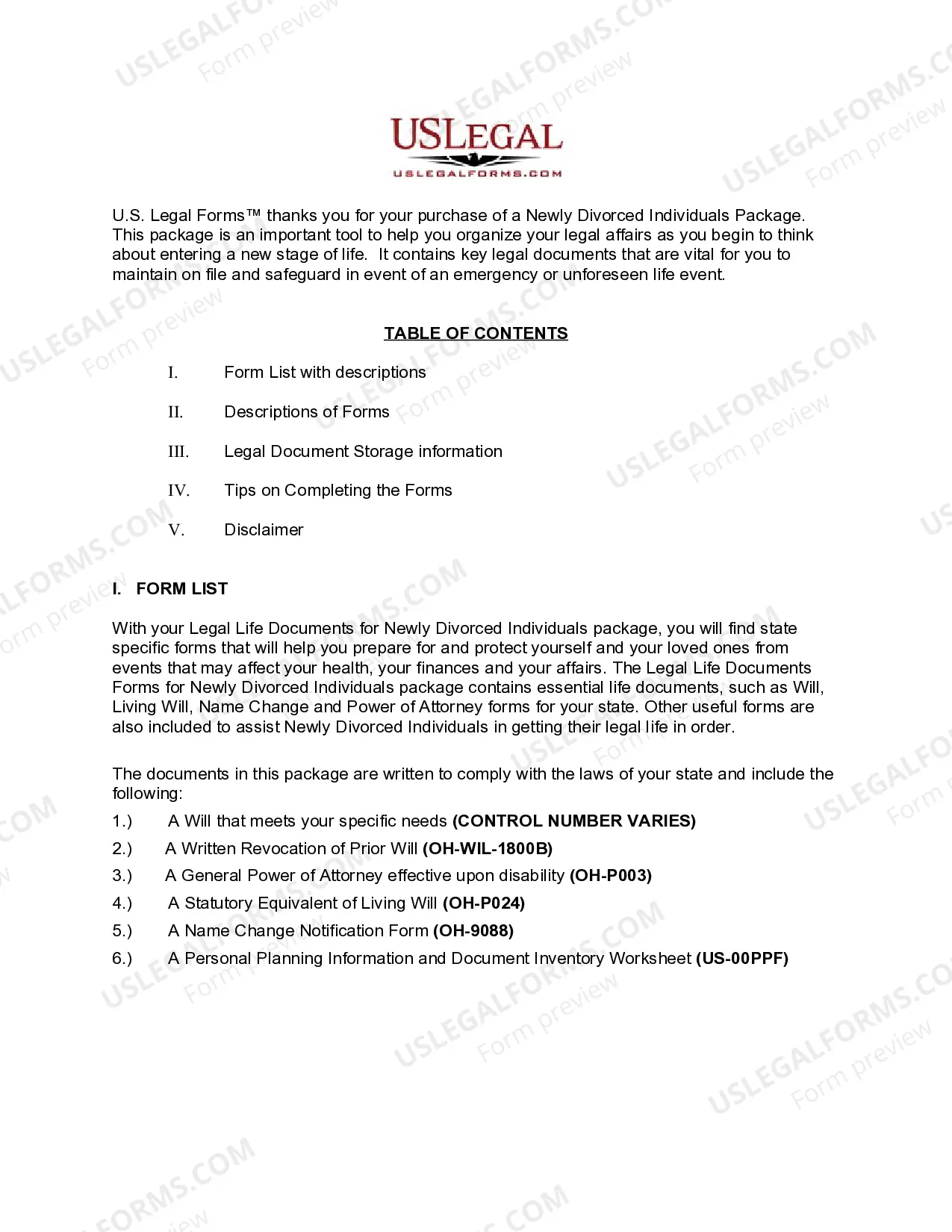
Forms you’ll find in this package
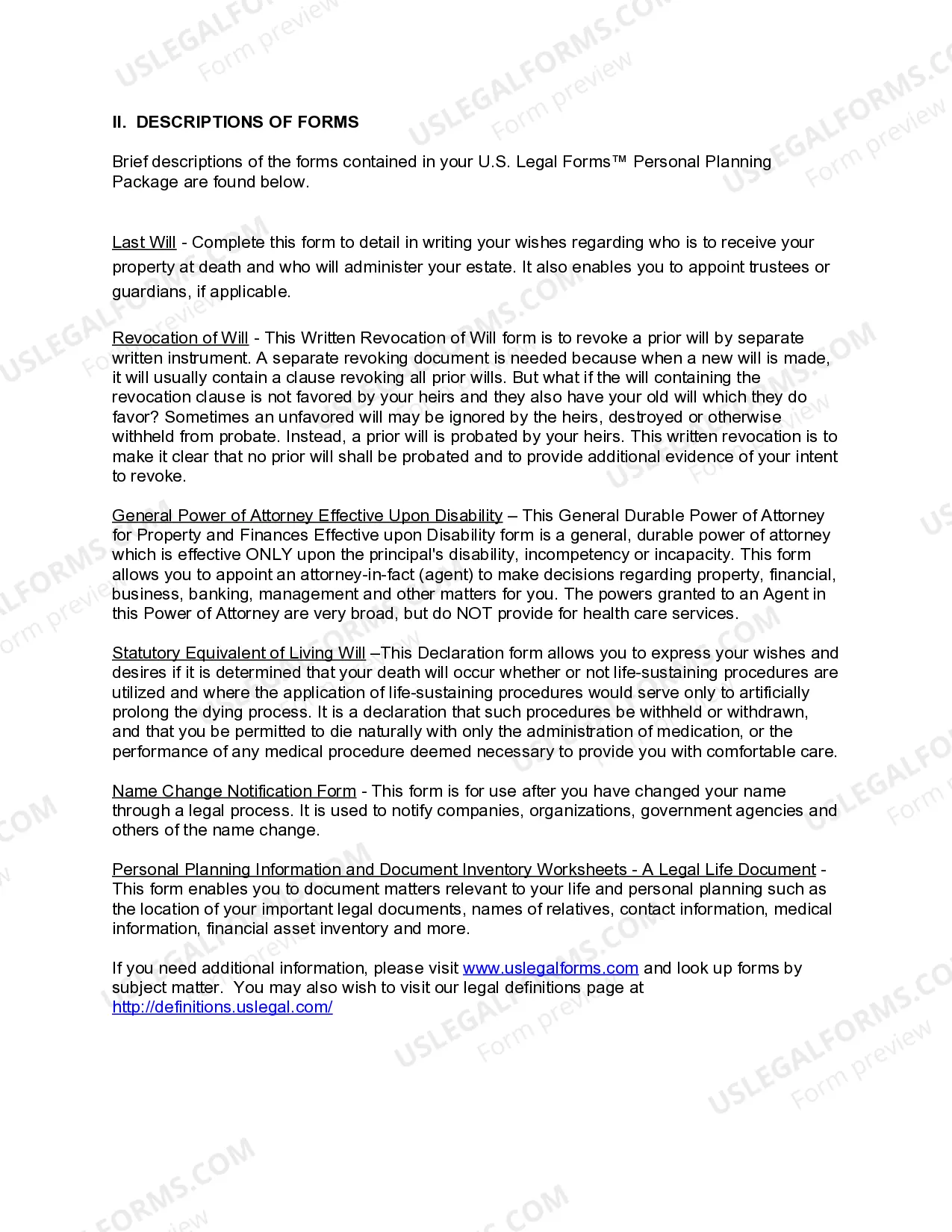
- Last Will and Testament
- Name Change Notification Form
- General Durable Power of Attorney for Property and Finances or Financial Effective upon Disability
- Living Will or Declaration concerning the use of life sustaining treatment
- Written Revocation of Will
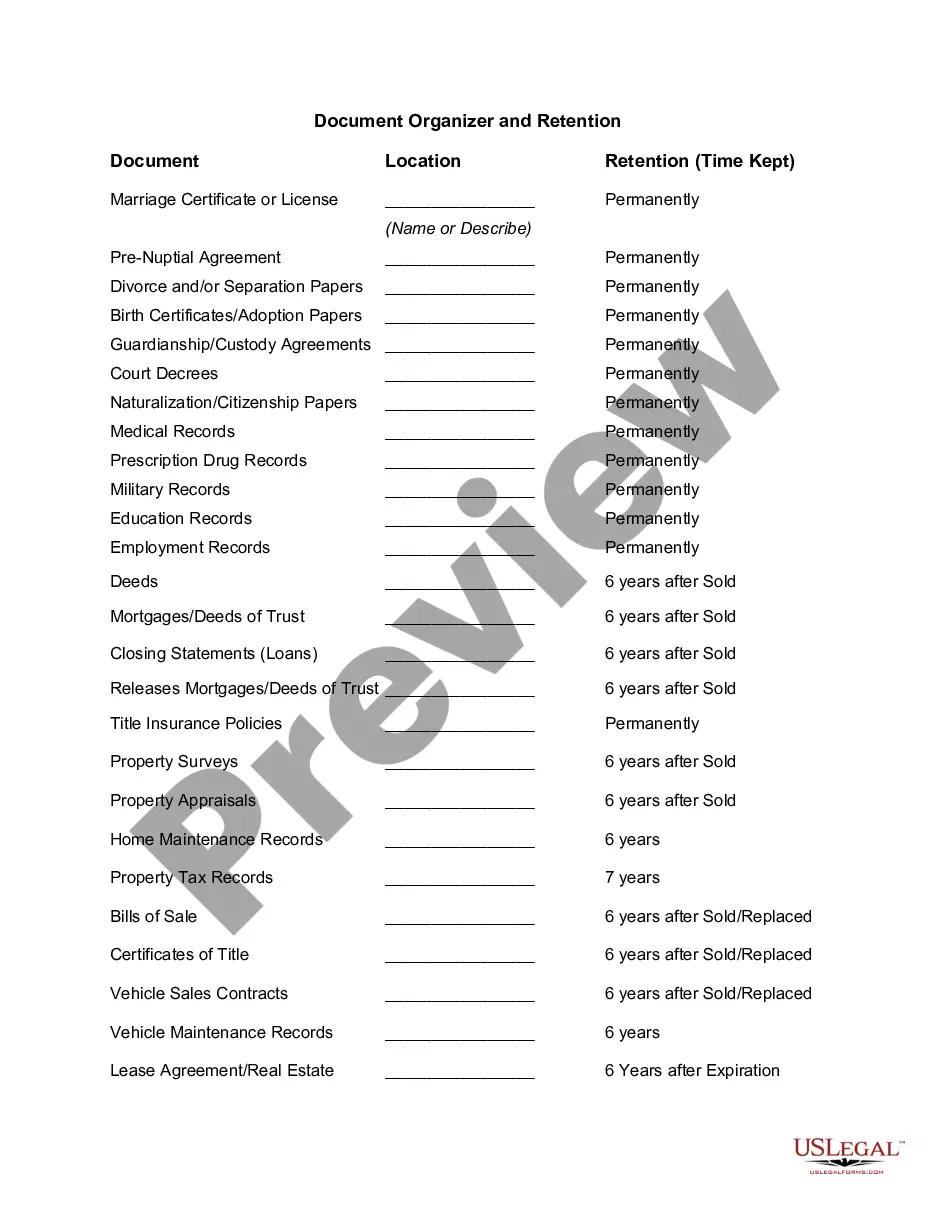
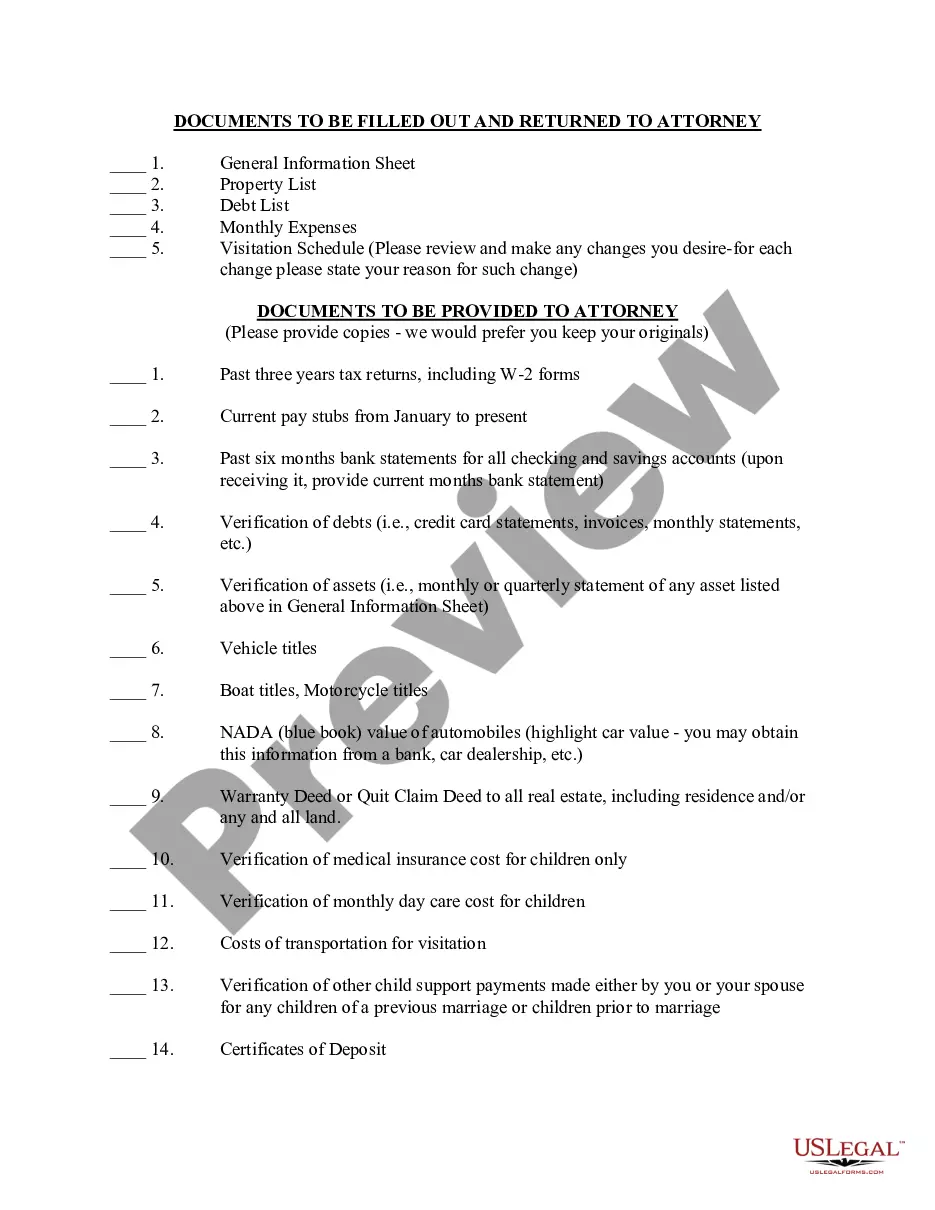
- Personal Planning Information and Document Inventory Worksheets - A Legal Life Document


Common use cases
This form package is ideal for use during several significant moments following a divorce, including:
- When you want to revoke any prior wills that may no longer reflect your wishes.
- When you need to establish a new will to clearly outline your beneficiaries and assets.
- When you require a legal directive regarding healthcare choices in the event of incapacity.
- When you seek to authorize someone to manage your financial affairs if you become disabled.
- When you have undergone a legal name change and must inform relevant entities.
Intended users of this form package
- Individuals who have recently finalized their divorce in Ohio.
- Anyone looking to update or create a new will and related legal documents.
- Those who require healthcare directives and powers of attorney due to life changes.
- Individuals needing to formally notify others of a name change post-divorce.
Steps to complete these forms
- Review all included forms thoroughly to understand their purpose.
- Gather personal information, including details for your will and powers of attorney.
- Fill out each form clearly, ensuring all necessary information is provided.
- Seek legal advice if needed, especially for complex aspects of your estate planning.
- Store completed documents in a secure location, such as a safe deposit box.
Do forms in this package need to be notarized?
Some forms in this package require notarization to be legally valid. US Legal Forms provides secure online notarization powered by Notarize, allowing you to complete the process through a verified video call, available 24/7.
Get your form ready online
Our built-in tools help you complete, sign, share, and store your documents in one place.
Make edits, fill in missing information, and update formatting in US Legal Forms—just like you would in MS Word.
Download a copy, print it, send it by email, or mail it via USPS—whatever works best for your next step.
Sign and collect signatures with our SignNow integration. Send to multiple recipients, set reminders, and more. Go Premium to unlock E-Sign.
If this form requires notarization, complete it online through a secure video call—no need to meet a notary in person or wait for an appointment.
We protect your documents and personal data by following strict security and privacy standards.

Make edits, fill in missing information, and update formatting in US Legal Forms—just like you would in MS Word.

Download a copy, print it, send it by email, or mail it via USPS—whatever works best for your next step.

Sign and collect signatures with our SignNow integration. Send to multiple recipients, set reminders, and more. Go Premium to unlock E-Sign.

If this form requires notarization, complete it online through a secure video call—no need to meet a notary in person or wait for an appointment.

We protect your documents and personal data by following strict security and privacy standards.
Avoid these common issues
- Failing to revoke prior wills, which may lead to confusion about your intentions.
- Not updating beneficiary designations on insurance or retirement accounts.
- Ignoring state-specific requirements that could invalidate your documents.
- Neglecting to store completed legal documents in a safe and easily accessible location.
Why use this package online
- Convenience of downloading and completing forms at your own pace.
- Editability allows you to make changes as your circumstances evolve.
- Reliability of forms created by licensed attorneys to ensure compliance with Ohio laws.
Looking for another form?




Form popularity
FAQ
California is a no-fault state when it comes to divorce or legal separation. It does not matter if you are filing for divorce because your spouse cheated on you, or because you just don't get along anymore.
The duration of payments is determined by a judge in Ohio family court. Alimony length is usually based on length of marriage - one commonly used standard for alimony duration is that 1 year of alimony is paid every three years of marriage (however, this is not always the case in every state or with every judge).
One of the main legal advantages that a person gains by filing the divorce petition before his or her spouse does is that the filer can request a Standing Order from the court when filing the petition.If the matter should go to a hearing, the person who files the petition usually presents his or her case first.
The answer is that each spouse is entitled to his/her own stimulus money, though it may not be paid out individually by the government if you filed joint taxes in 2019. Payments for children will be remitted to whoever claimed them on their 2019 taxes.Negotiate a fair plan with your ex-spouse.
The court presumes that the spouses contribute equally to all the marital property they acquire during the marriage. At divorce, the court divides the marital property equally between the spouses unless an unbalanced result is more equitable. The court can include either spouse's separate property, too. (Ohio Rev.
Being the First to File Does Not Impact2026 In Ohio, your rights with respect to the following are the same regardless of whether you or your spouse is the one who files for divorce:Child Custody In custody matters, the Ohio courts always focus on protecting the best interests of the children involved.
At what point during the process can a spouse remarry or start dating? A spouse cannot remarry until the divorce is finalized. When one chooses to start dating is a personal choice; there is no rule of law that dictates a specific date.
Do not move out of your home before your divorce is finalized.Even if your divorce is amicable and you can't be together anymore, leaving is one of the most legally damaging decisions you can make in the middle of a divorce. The reason is simple.