Ohio Name Change Notification Form
What this document covers
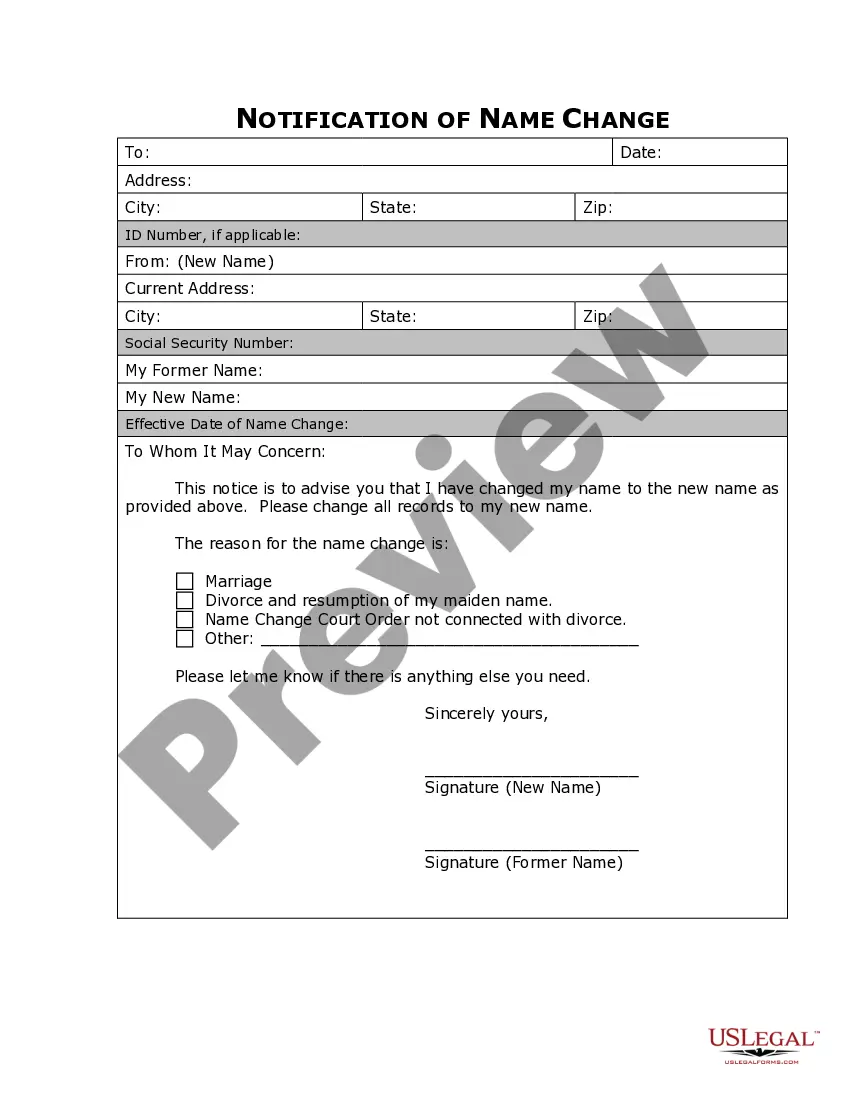
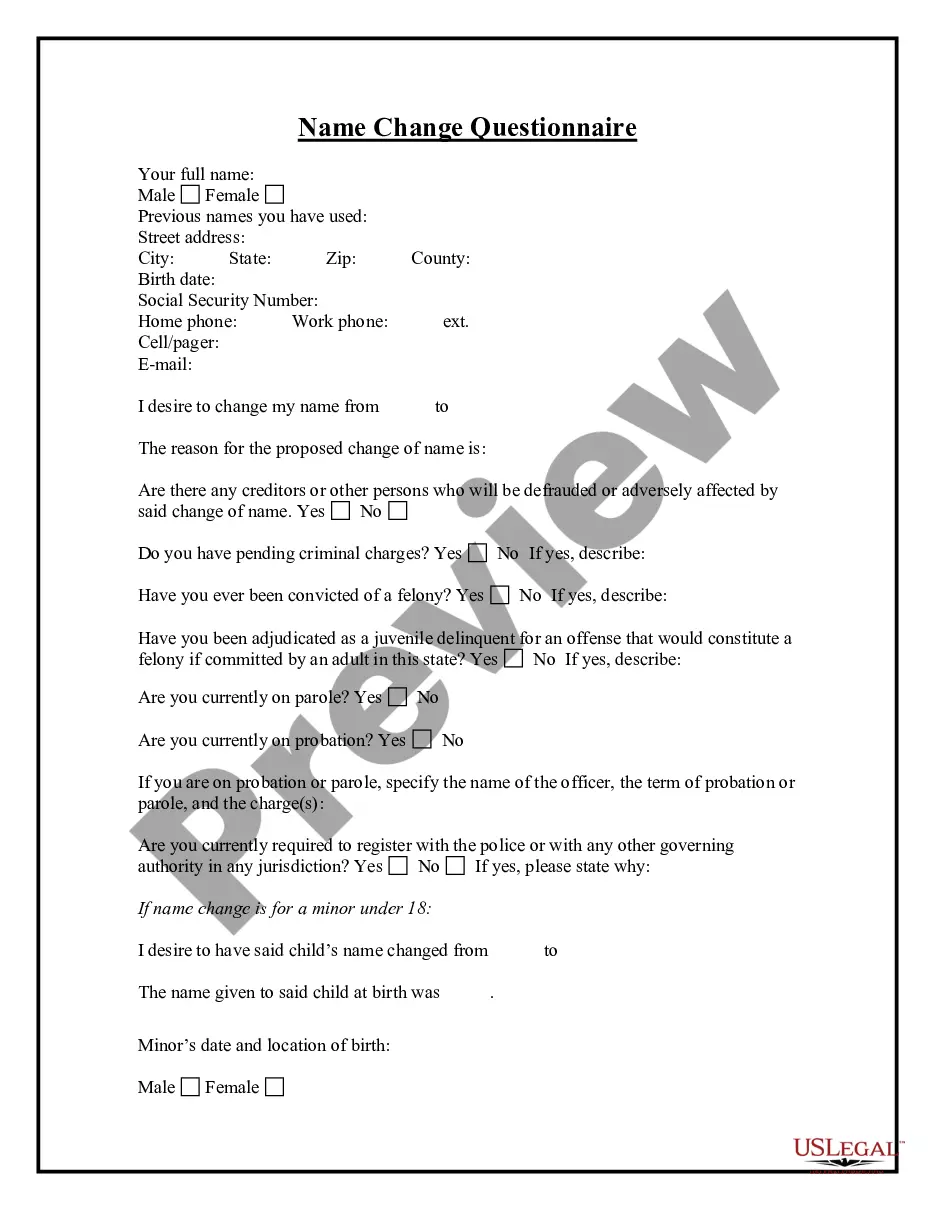
The Name Change Notification Form is a legal document designed for individuals who have legally changed their name. This form serves to officially notify various entities, such as companies, organizations, and government agencies, about the name change. Unlike other legal forms that may focus on the name change process itself, this form is specifically for communication post-change to ensure that records and accounts reflect the new name.
Main sections of this form
- Contact information: Your new name and previous name.
- Date of name change: The date when the legal name change took effect.
- List of entities being notified: Names of companies or agencies who need to be informed.
- Signature: Your signature to verify the notification.


Situations where this form applies
This form should be used after you have legally changed your name through a court process or other legal means. It is essential in situations where you need to update your name on official documents, such as driver's licenses, bank accounts, and employment records. Use this form whenever you want to ensure that all relevant parties are informed of your new name.
Who should use this form
- Individuals who have legally changed their name.
- People needing to notify financial institutions or employers.
- Anyone requiring updates to personal records held by government agencies.
Instructions for completing this form
- Identify the parties: Enter your previous and new names clearly.
- Fill in the date of your name change: Ensure accuracy to reflect the legal change.
- List all entities you are notifying: Include any companies and agencies.
- Sign the form to verify the accuracy of the information provided.
- Distribute copies to the listed entities to officially notify them of your name change.
Notarization requirements for this form
In most cases, this form does not require notarization. However, some jurisdictions or signing circumstances might. US Legal Forms offers online notarization powered by Notarize, accessible 24/7 for a quick, remote process.
Get your form ready online
Our built-in tools help you complete, sign, share, and store your documents in one place.
Make edits, fill in missing information, and update formatting in US Legal Forms—just like you would in MS Word.
Download a copy, print it, send it by email, or mail it via USPS—whatever works best for your next step.
Sign and collect signatures with our SignNow integration. Send to multiple recipients, set reminders, and more. Go Premium to unlock E-Sign.
If this form requires notarization, complete it online through a secure video call—no need to meet a notary in person or wait for an appointment.
We protect your documents and personal data by following strict security and privacy standards.

Make edits, fill in missing information, and update formatting in US Legal Forms—just like you would in MS Word.

Download a copy, print it, send it by email, or mail it via USPS—whatever works best for your next step.

Sign and collect signatures with our SignNow integration. Send to multiple recipients, set reminders, and more. Go Premium to unlock E-Sign.

If this form requires notarization, complete it online through a secure video call—no need to meet a notary in person or wait for an appointment.

We protect your documents and personal data by following strict security and privacy standards.
Common mistakes to avoid
- Not including all necessary entities on the notification list.
- Forgetting to sign the form, which may invalidate the notification.
- Providing incorrect previous or new name details.
Benefits of using this form online
- Convenience: Download and complete the form from the comfort of your home.
- Editability: Easily fill in the required fields and make adjustments as needed.
- Reliability: Access professionally drafted legal forms ensuring compliance with standard practices.
Looking for another form?






Form popularity
FAQ
Social Security Administration. Department of Motor Vehicles. Passport Office. Post Office. IRS. Voter Registration. Banks and other financial institutions. Credit Card companies (or issuers)
To petition for a legal name change in Ohio, contact your county's probate court to find out what's required. In short, you'll have to fill out a Change of Name form explaining the reason for the name change, then get a judge to sign off on it and also take out an ad in your local paper announcing the intended change.
Yes you can be traced if you change it by deed poll. All deed polls are published in The Gazette, an arcane publication of official 'stuff' this is then used by various govt and private organisations to update their records. It is a public document.Some may only change your details with a deed poll.
A: You will have to ask the court for special permission to get the name change without letting the other parent know. To do this, the judge will ask you to look for the other parent, and you have to look as hard as possible, asking friends and family and looking up public records.
You do not have to report your name change directly to the IRS. However, it's important to report it to the Social Security Administration (SSA) before you file your tax return. You can change your name by mail or go to your local Social Security office.
What Is The Hearing Process? Approximately 45 days after the Application For Name Change has been filed with the Court, a hearing before a Court magistrate will be held.
The clerk will give you a notice form which will include the date of the hearing. At this point you will be asked to pay all associated fees. The fee for submitting a name change application can be anywhere from $80 $150, depending on which county you're in.
The passport office (see more details below) The DVLA (driving licence, vehicle registration) HM Revenue and Customs. Child Benefit. Local Authority (Council tax and electoral register) Land Registry. Student Loans. Your employer.