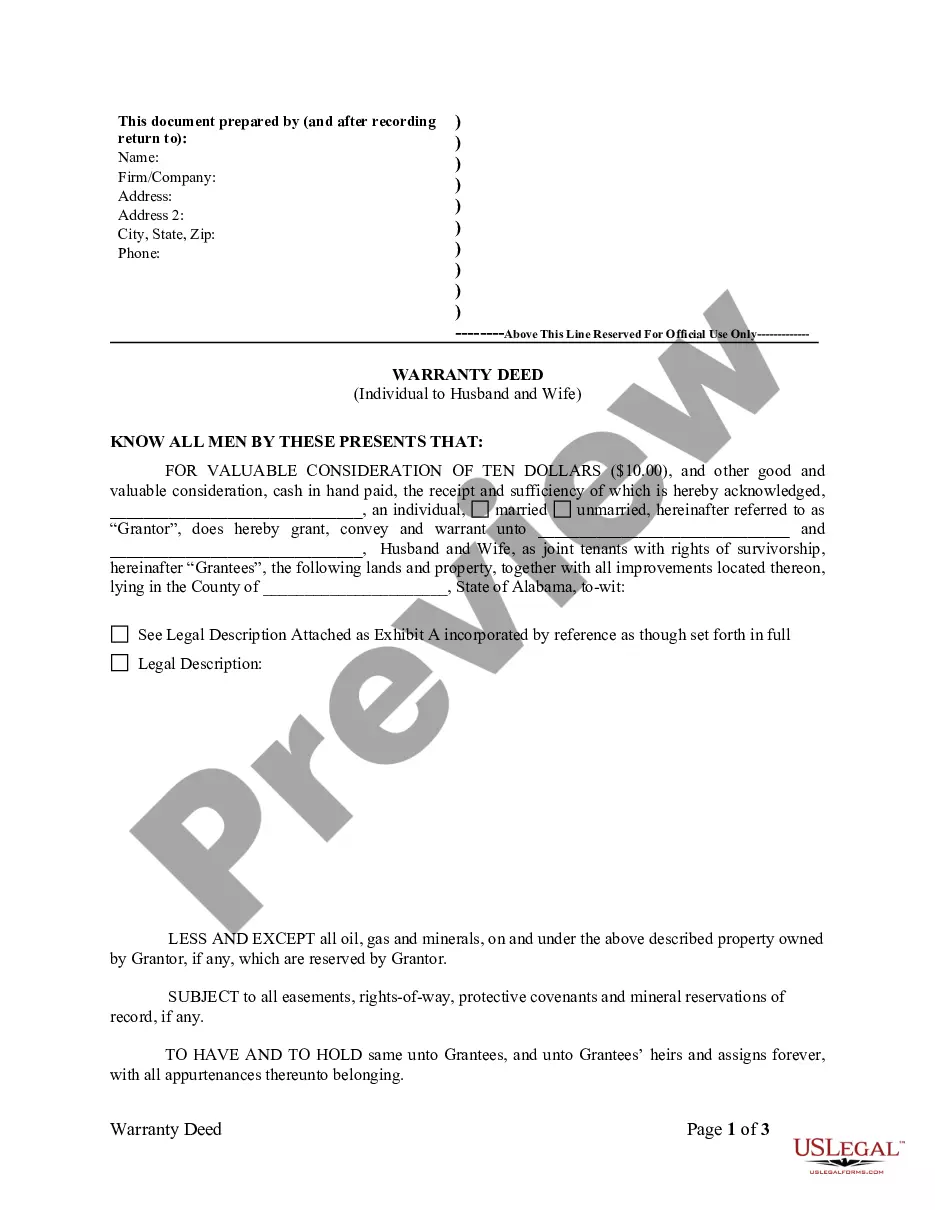
Ohio Conservation Easement To Preserve Scenic Conditions
Overview of this form
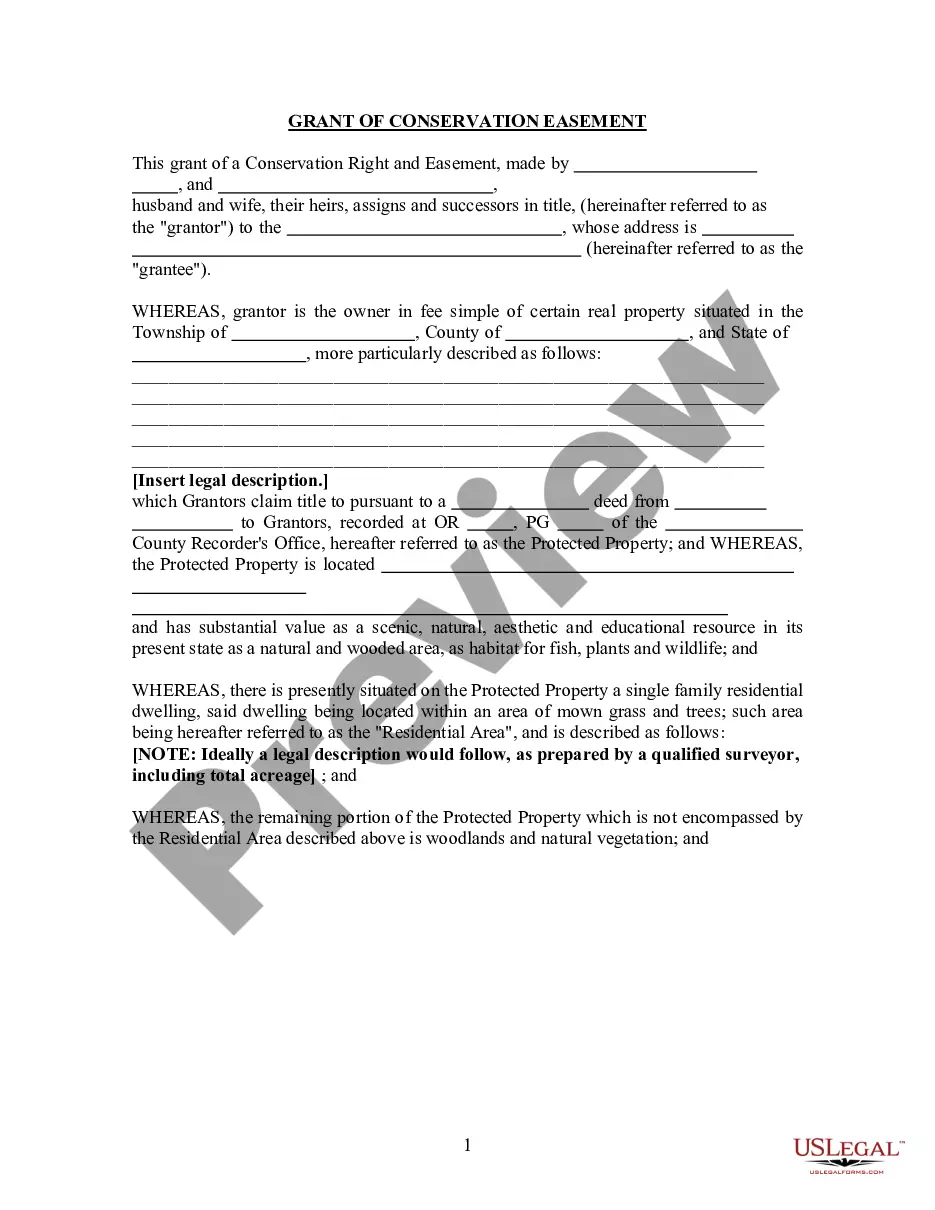
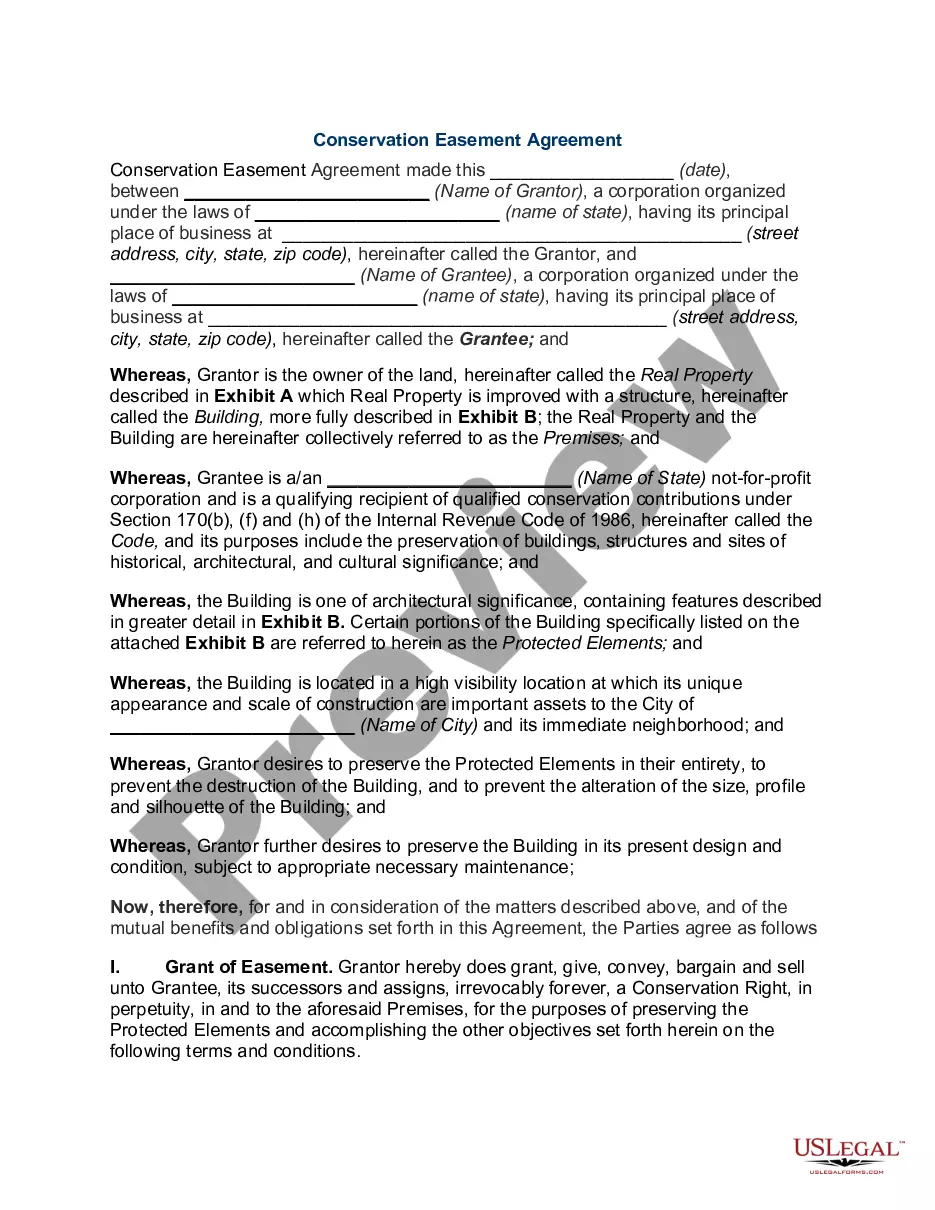
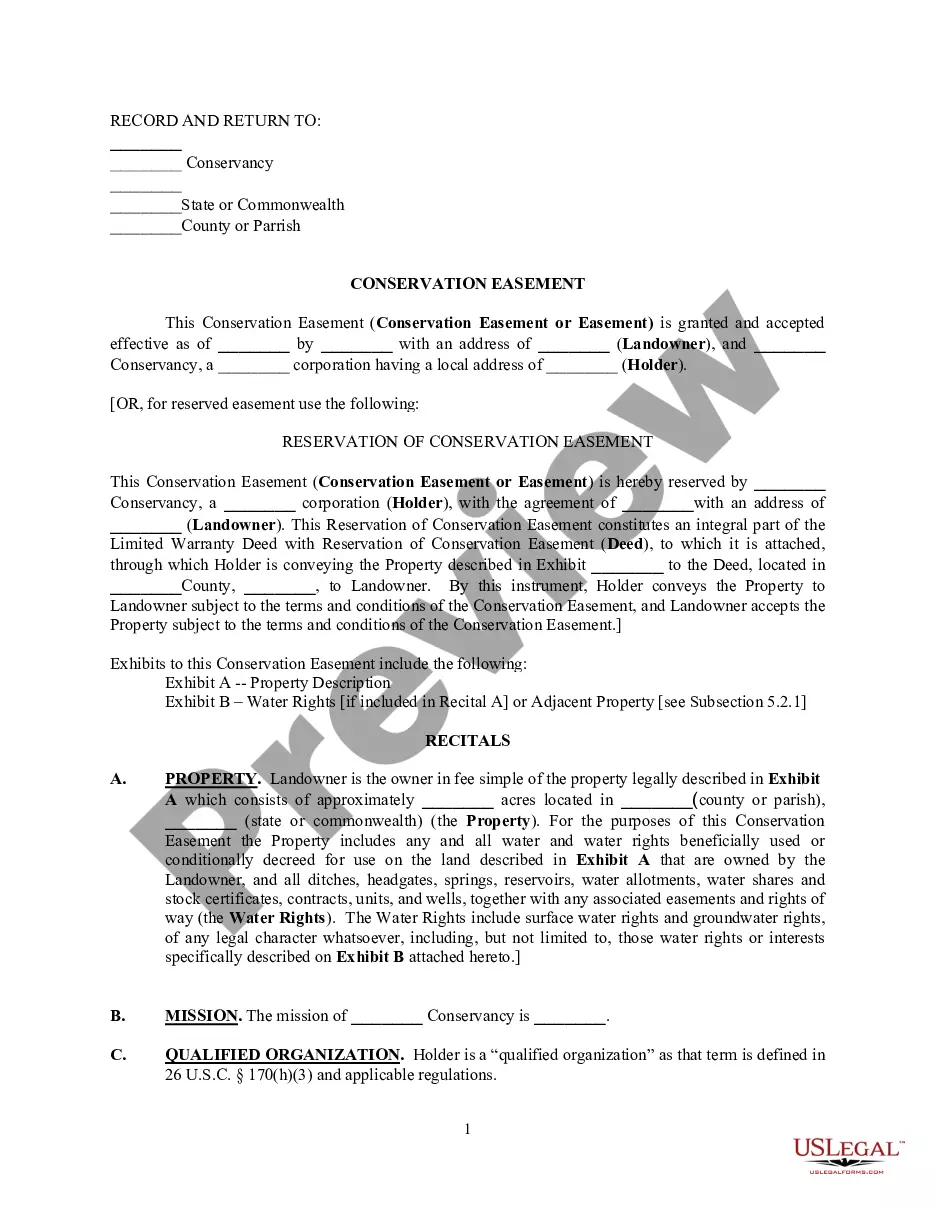
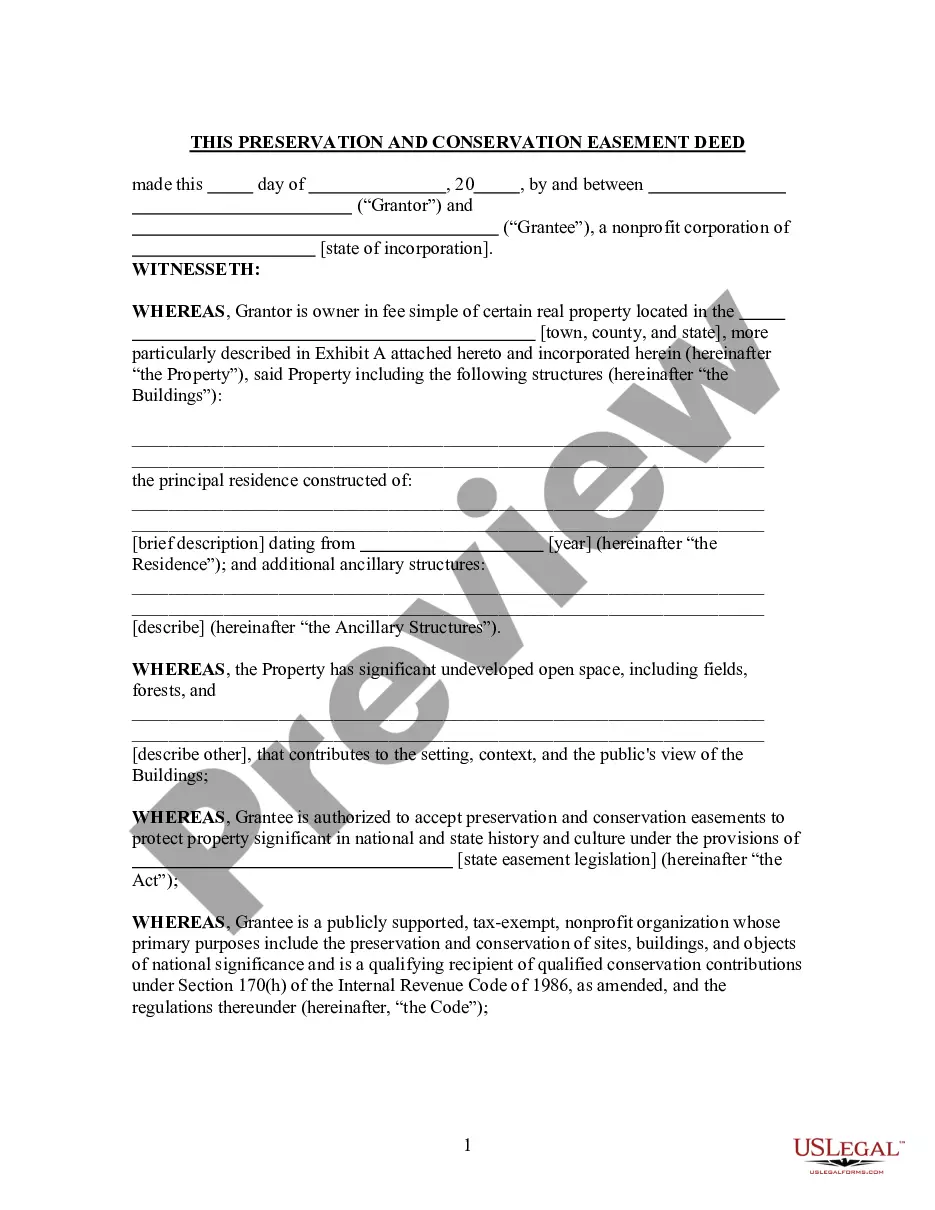
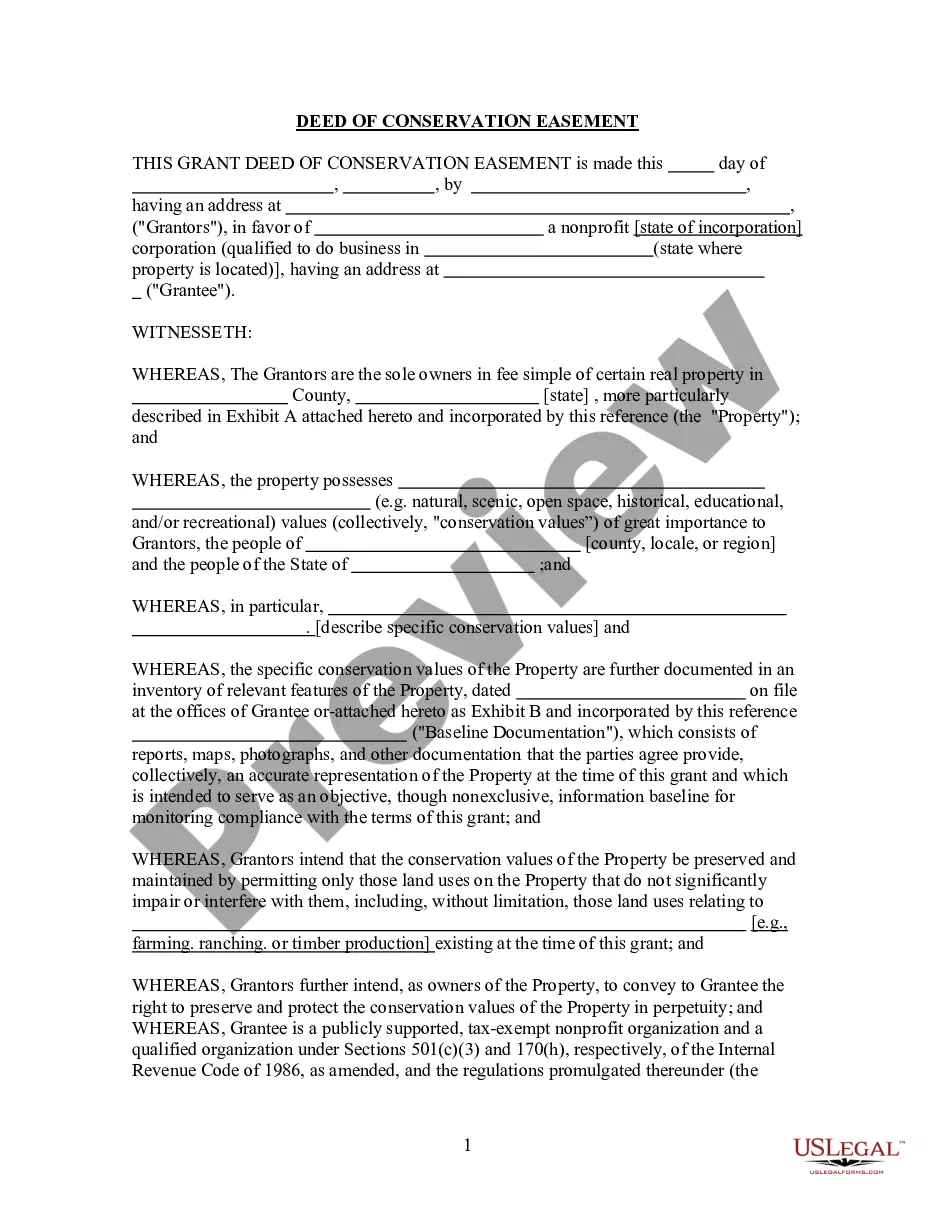
The Conservation Easement To Preserve Scenic Conditions is a legal form used in Ohio to protect and maintain a property in its natural and scenic state. This form uniquely restricts development and use of the land to ensure it remains a habitat for native flora and fauna. Unlike typical property agreements, this conservation easement focuses specifically on preserving the ecological and aesthetic values of the land.
Form components explained
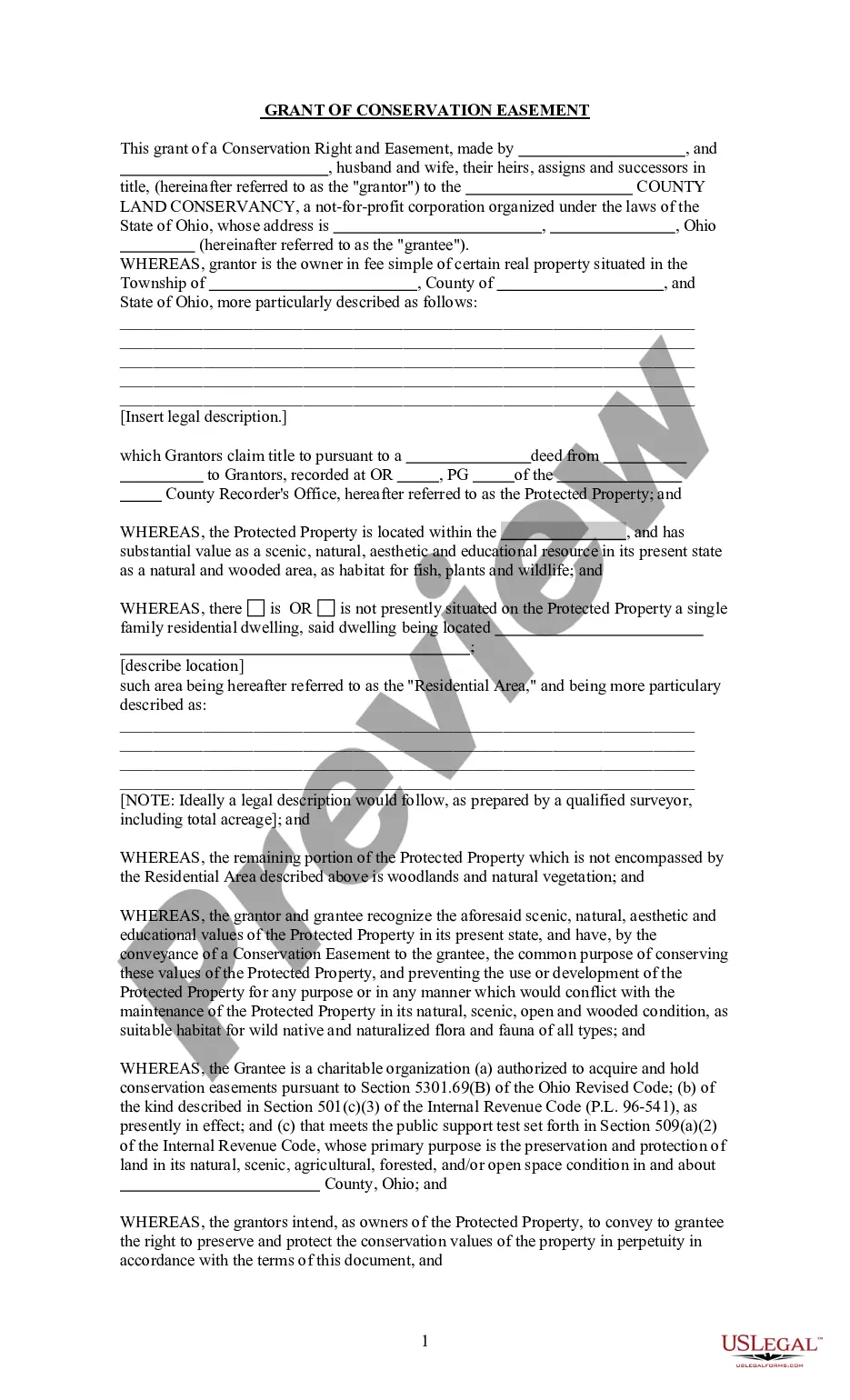
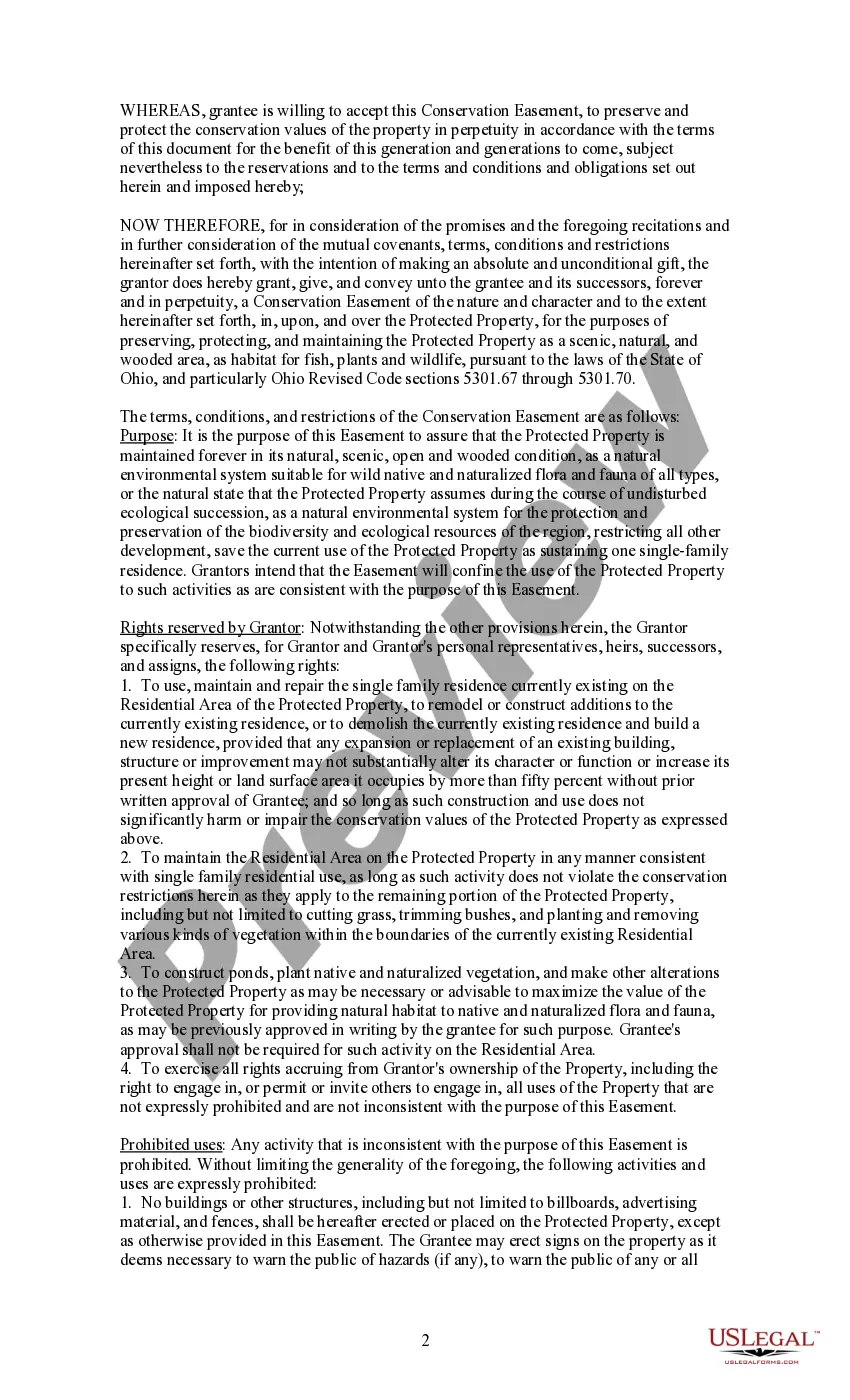
- Legal description of the property, including total acreage.
- Purpose and intent of the easement, ensuring permanent conservation of the property.
- Rights reserved by the grantor concerning the use of a single-family residence.
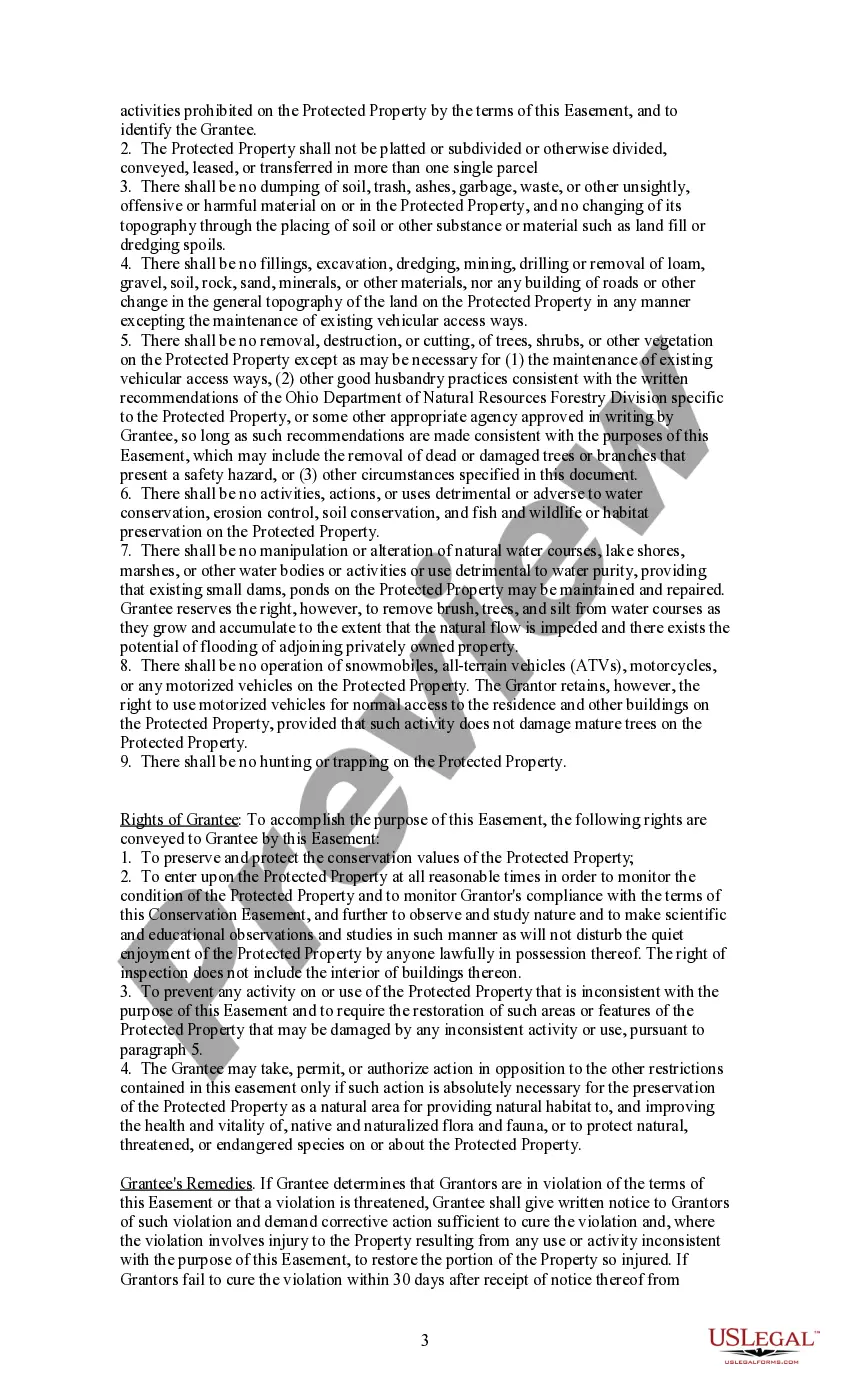
- Detailed prohibited uses of the property to prevent any harmful development.
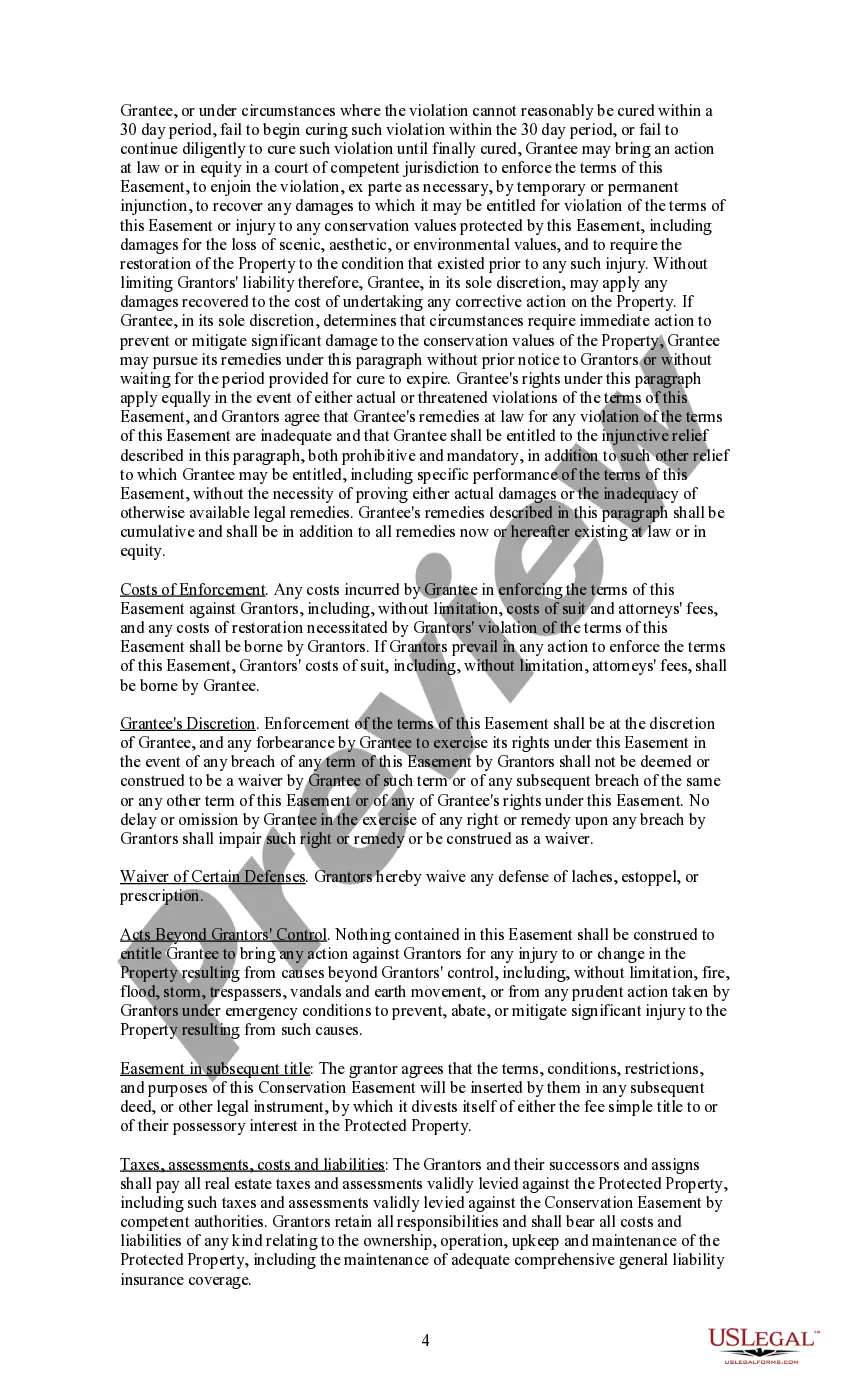
- Rights of the grantee to monitor the property and enforce conservation terms.
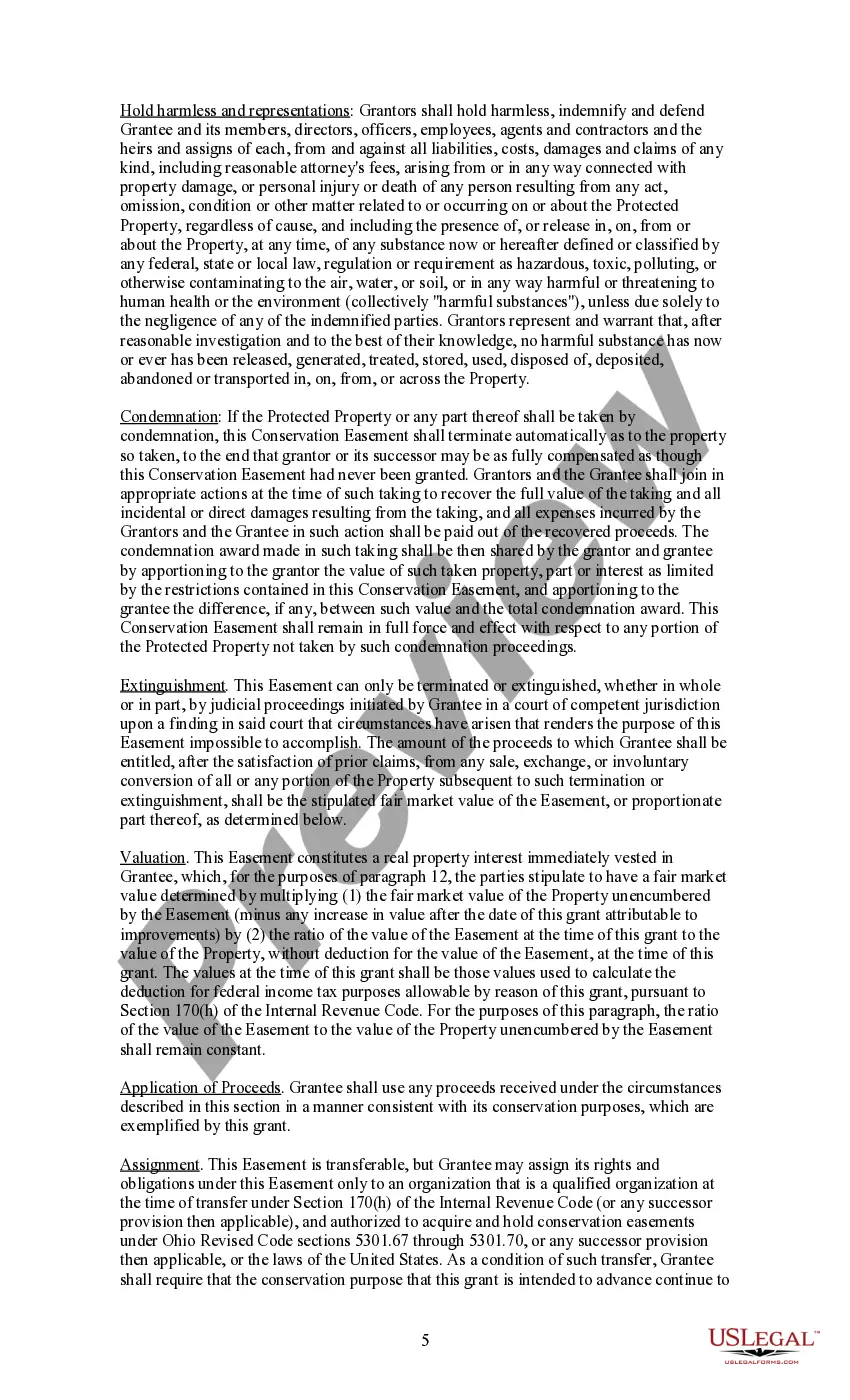
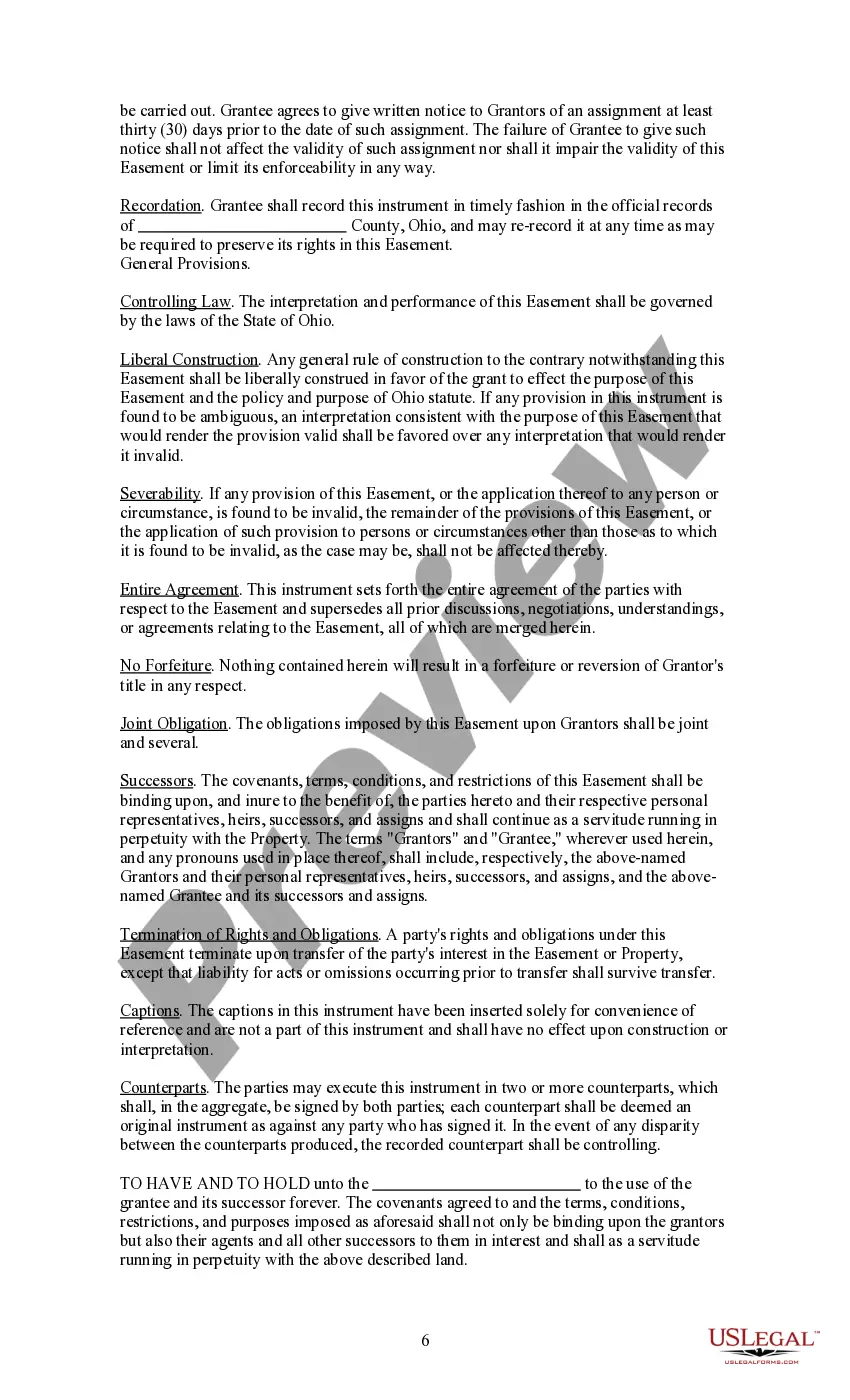
- Conditions for potential restoration and damages in case of violations.
When to use this form
This form is essential when property owners wish to ensure that their land remains undeveloped and preserved for its scenic qualities. It is particularly useful for landowners interested in protecting natural habitats or specific landscapes, preventing future development that could damage these features.
Who should use this form
Eligible users include:
- Property owners seeking to preserve the natural state of their land.
- Developers looking to understand restrictions related to conservation easements.
- Environmental organizations interested in negotiating easements with landowners.
- Attorneys representing parties involved in land use and conservation matters.
Completing this form step by step
Steps to complete this form:
- Identify the parties involved in the easement agreement.
- Provide a legal description of the property, prepared by a qualified surveyor.
- Clearly state the purpose of the conservation easement.
- List any reserved rights by the grantor and prohibited uses of the property.
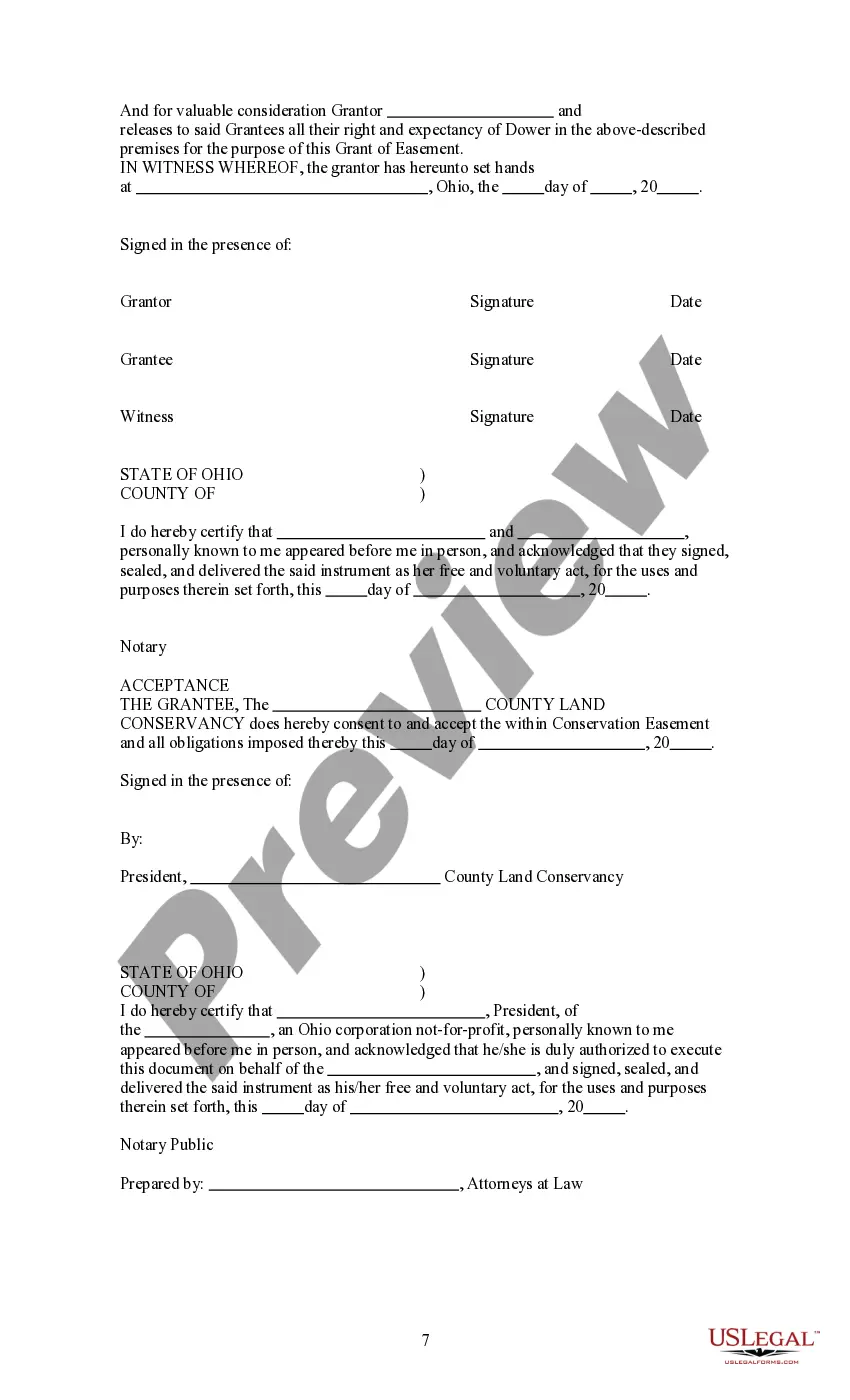
- Guarantee signatures from all parties involved for legal validation.
Notarization guidance
This form does not typically require notarization unless specified by local law. However, having the document notarized can enhance its credibility and enforceability.
Get your form ready online
Our built-in tools help you complete, sign, share, and store your documents in one place.
Make edits, fill in missing information, and update formatting in US Legal Forms—just like you would in MS Word.
Download a copy, print it, send it by email, or mail it via USPS—whatever works best for your next step.
Sign and collect signatures with our SignNow integration. Send to multiple recipients, set reminders, and more. Go Premium to unlock E-Sign.
If this form requires notarization, complete it online through a secure video call—no need to meet a notary in person or wait for an appointment.
We protect your documents and personal data by following strict security and privacy standards.

Make edits, fill in missing information, and update formatting in US Legal Forms—just like you would in MS Word.

Download a copy, print it, send it by email, or mail it via USPS—whatever works best for your next step.

Sign and collect signatures with our SignNow integration. Send to multiple recipients, set reminders, and more. Go Premium to unlock E-Sign.

If this form requires notarization, complete it online through a secure video call—no need to meet a notary in person or wait for an appointment.

We protect your documents and personal data by following strict security and privacy standards.
Avoid these common issues
Common mistakes to avoid:
- Failing to provide a complete and accurate legal description of the property.
- Not clearly defining reserved rights, leading to future conflicts.
- Ignoring local regulations that may affect the easement terms.
- Omitting necessary signatures, which can render the document invalid.
Benefits of using this form online
Benefits of using this form online:
- Convenient access to legal templates without needing to visit a lawyerâs office.
- Editable forms that can be tailored to meet specific needs.
- Reliable resources drafted by licensed attorneys ensuring legal compliance.
- A Conservation Easement is a legally binding document that can prevent further development on the property.
- Enforceability depends on compliance with both state laws and the specific terms outlined in the easement.
- Limitations may apply based on local zoning laws or community regulations.
Key takeaways
- The Conservation Easement is vital for preserving scenic landscapes in Ohio.
- It provides grants rights while restricting harmful development and use.
- Proper completion ensures long-term protection of the environment and habitat.
Looking for another form?

Form popularity
FAQ
The value of the donation of a conservation easement is considered a charitable deduction for income tax purposes. The deduction is up to 50% of the donor's charitable contribution base (adjusted gross income, less net operating loss carryback) for the taxable year.
The most common way to protect land is by conservation easement. A conservation easement (also known as a conservation restriction or conservation agreement) is a voluntary, legal agreement between a landowner and a land trust or government agency that permanently limits uses of the land in order to protect its
Conservation easements are a great idea, in theory. Here's the way they work. Basically, if you are willing to donate your property for the public good, and that donation reduces the value of your property, you get to take a tax deduction equal to the reduction in the value of your property.
One big advantage of buying a home or land with an easement is that it could result in major savings. Conservation land is restrictive by nature, and that's often a big sticking point for buyers. But if you're willing to deal with those restrictions, it could be a good way to buy land or property on the cheap.
Buying a home with a conservation easement could limit you substantially as a property owner. Most easements prohibit you from building permanent structures on them.Also, with an easement, you're generally prohibited from altering its natural habitat.
Decide on your vision. Think about your wishes, needs and objectives for your land. Check out potential partners. Contact land trusts and government agencies that work to assist landowners in your community who are interested in conservation. Get checked out. Take the plunge. Build your partnership.
1) DONATING A CONSERVATION EASEMENT - If you want to retain ownership of your land, but arrange for its permanent protection now, you can do so by donating a conservation easement to the Trust. 2) DONATING LAND - You may wish to give your land to our Trust outright.
Charitable Deductions for Conservation Easement. A charitable deduction for a conservation easement has been in the tax law for some time.The eligible deduction is based on the difference in the fair market value of the property before and after the easement.
When you create a conservation easement, you may lose access to certain rights. While you'll likely retain certain surface rights like farming and ranching, development is almost always limited.