Ohio Conservation Easement
What is this form?
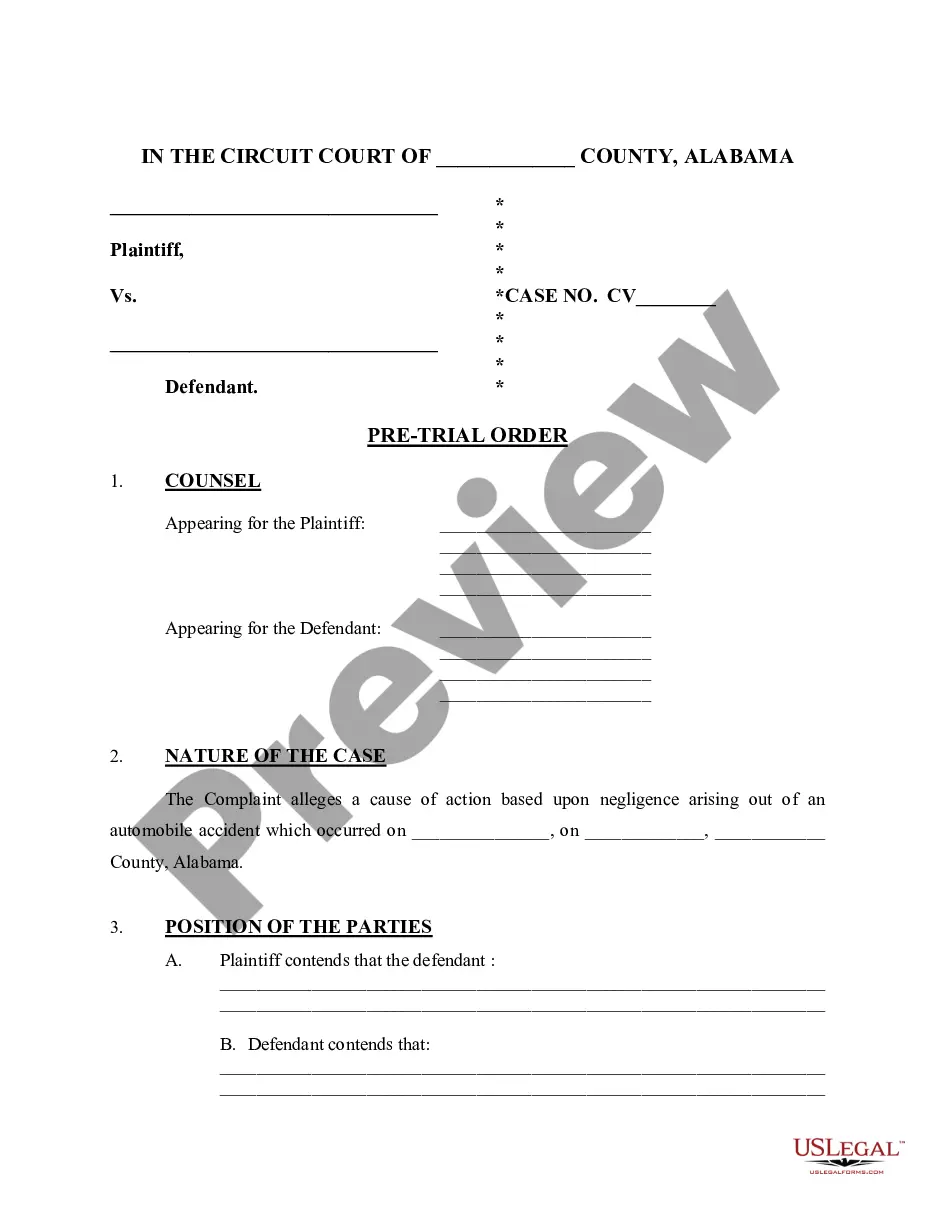
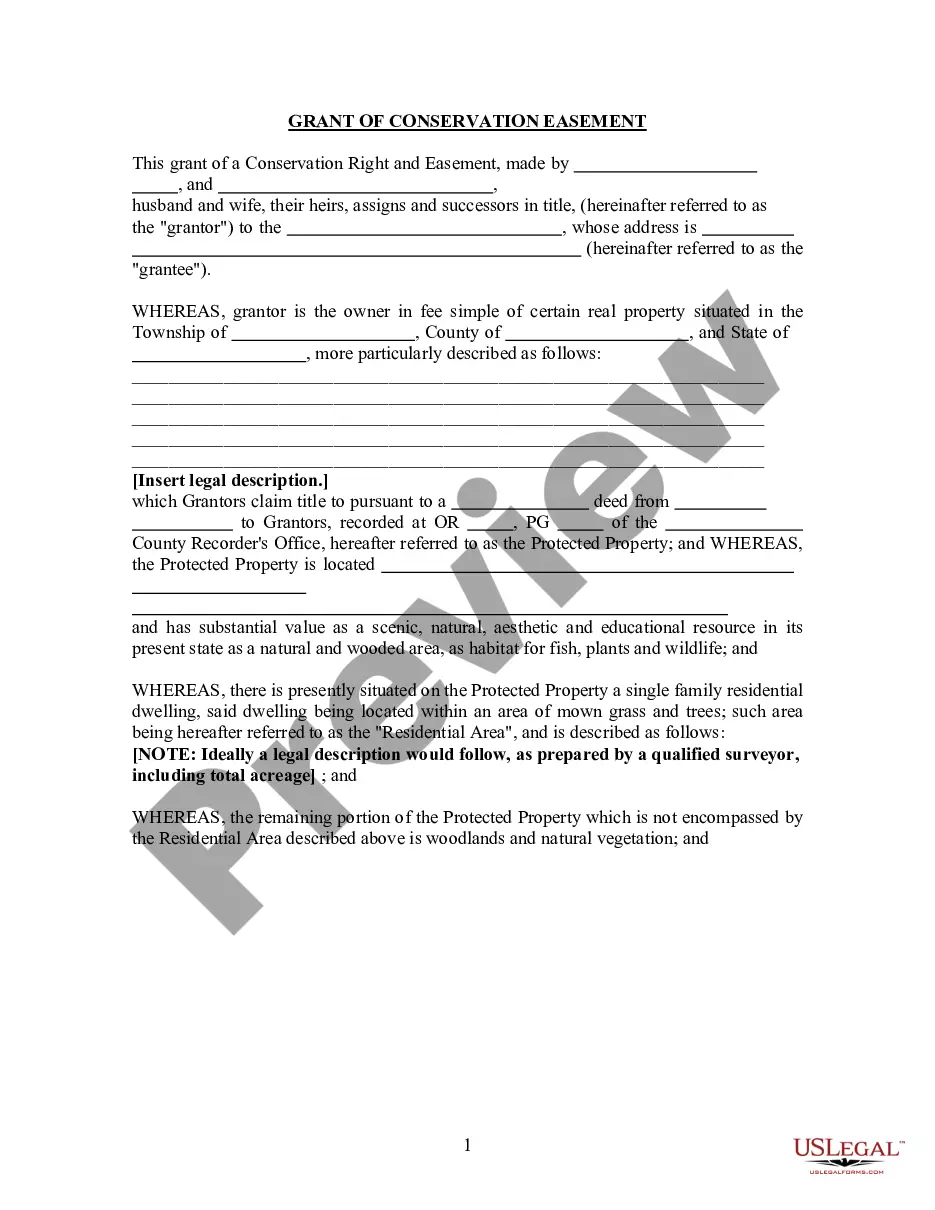
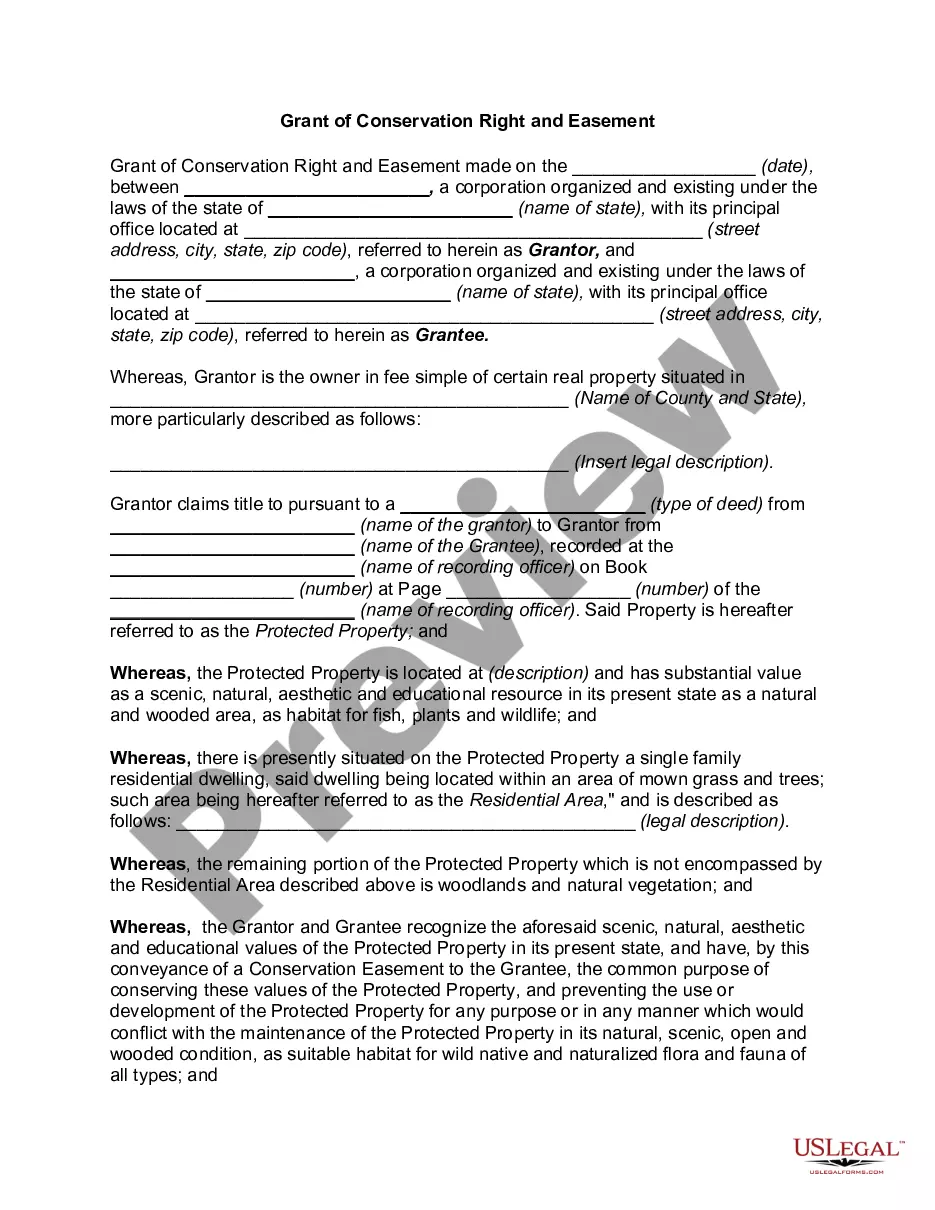
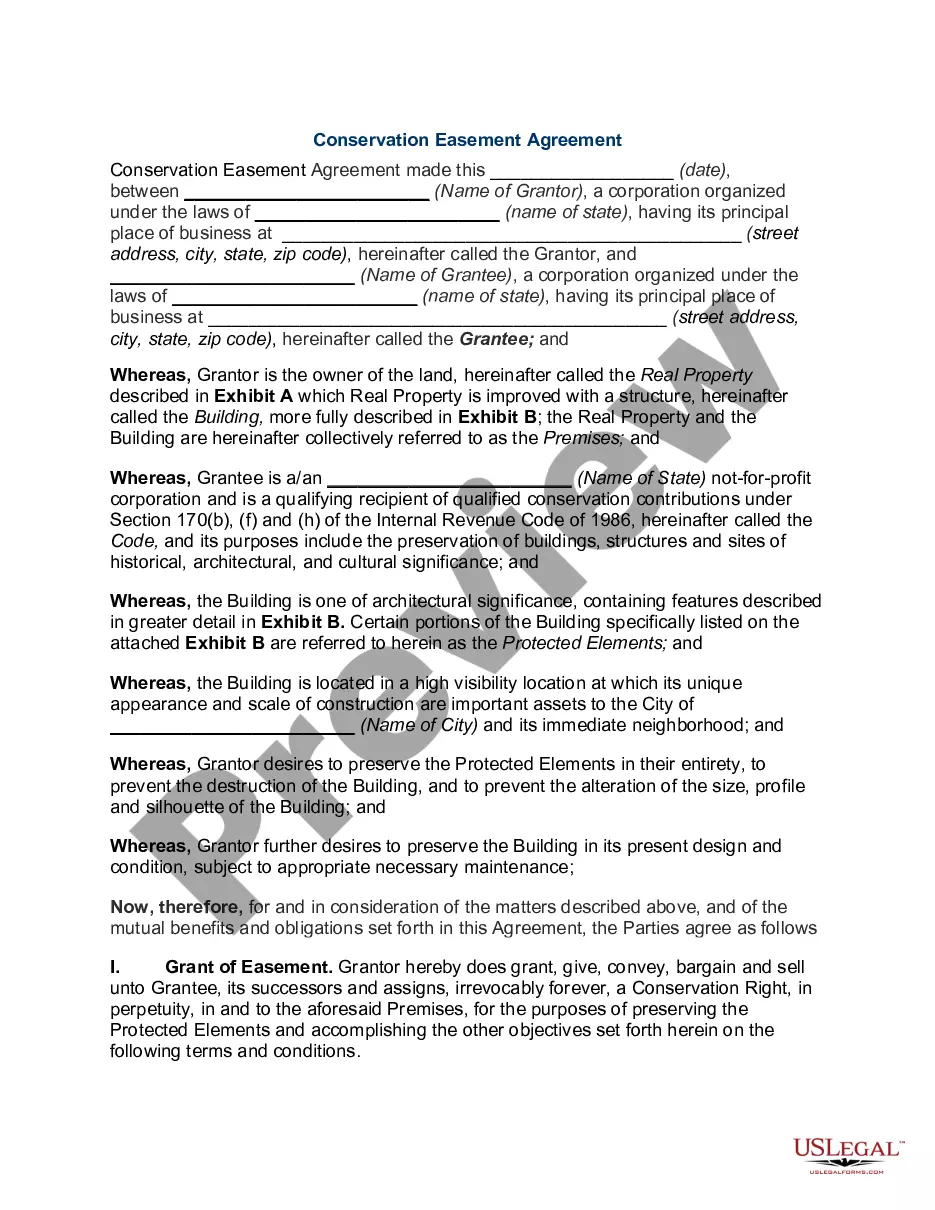
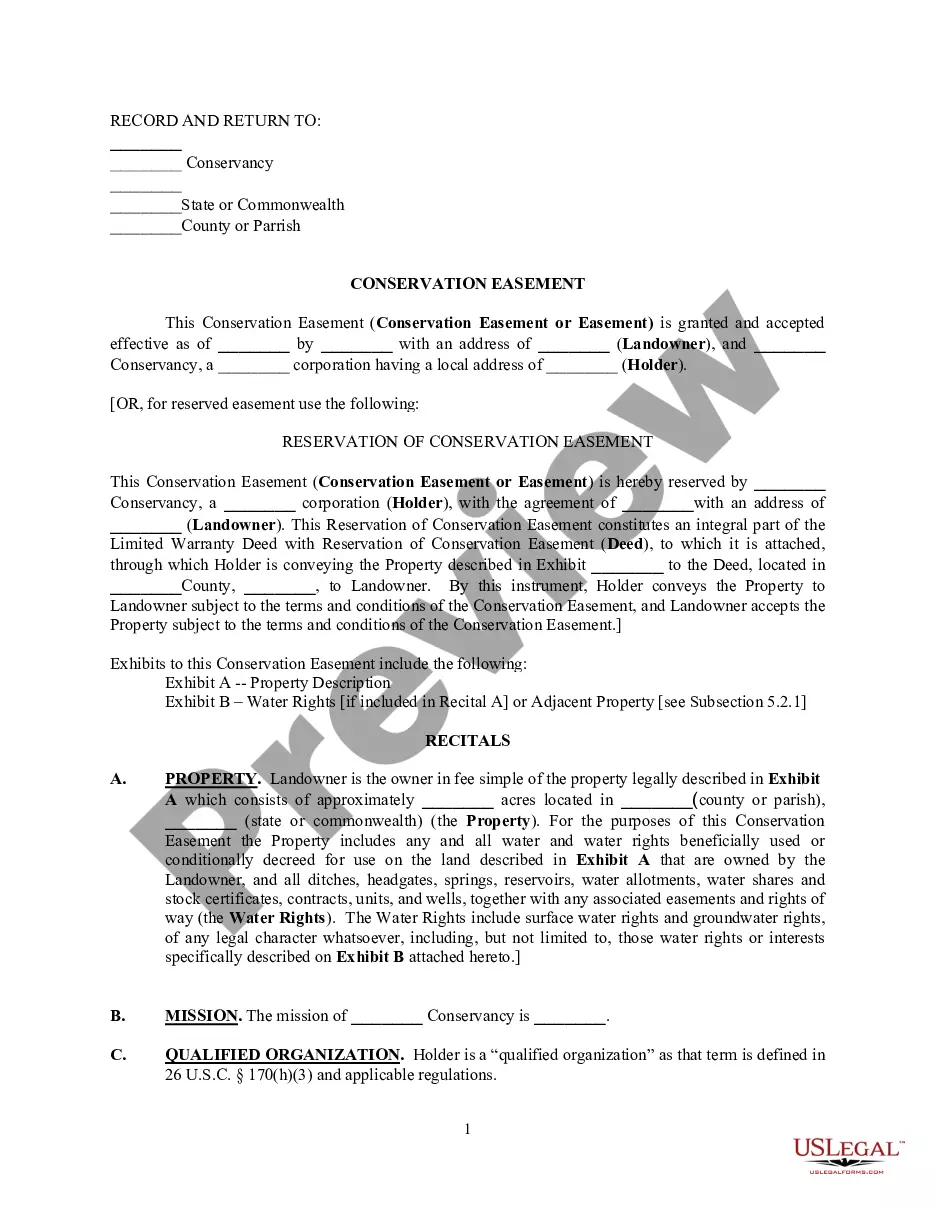
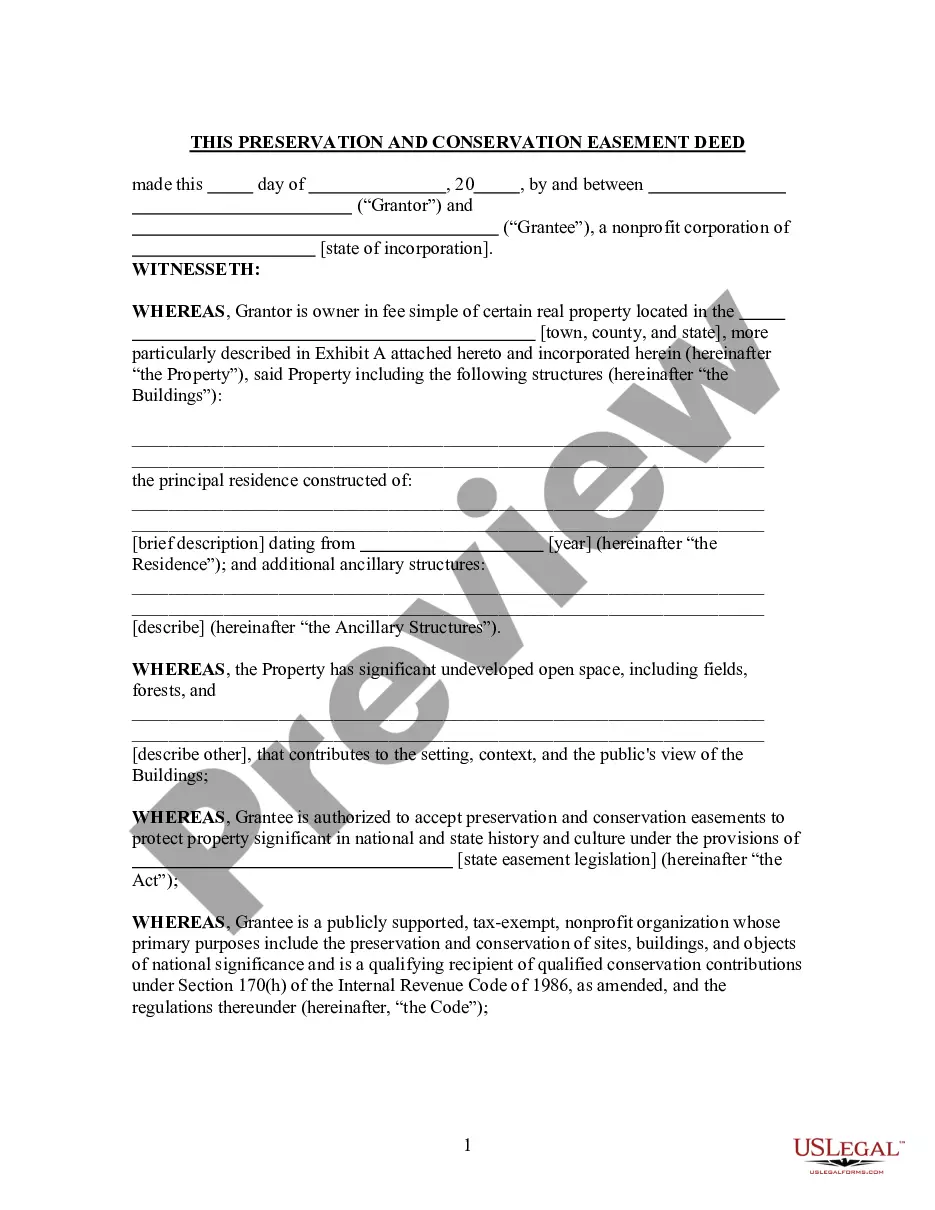
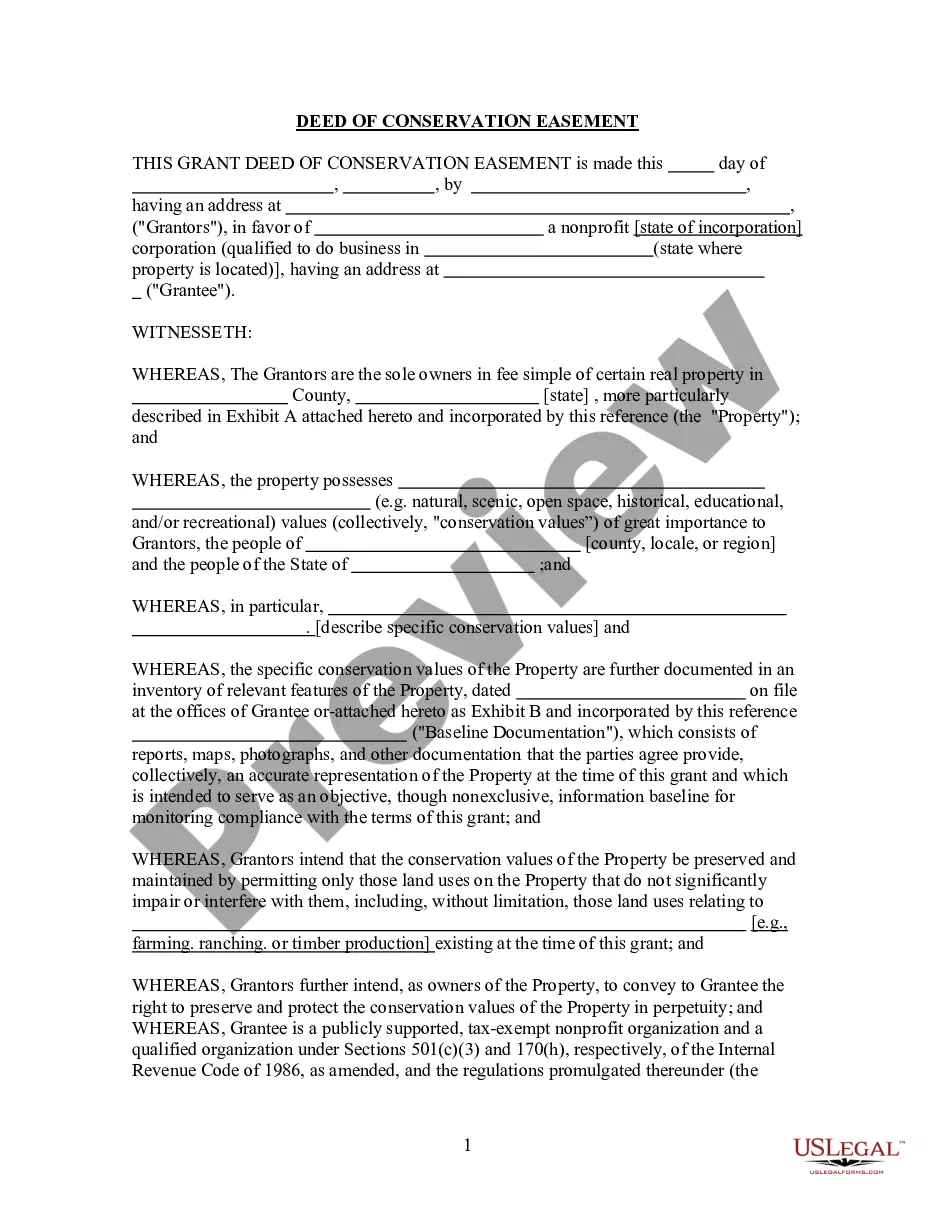
The Conservation Easement is a legal document designed to protect the natural and aesthetic value of a property. This form allows property owners (grantors) to convey specific rights to a qualified organization (grantee), ensuring that the land remains in its natural state. Unlike other forms of property agreements, a conservation easement limits development and use of the land, promoting ecological preservation in perpetuity.
Key components of this form
- Legal description of the property being conserved.
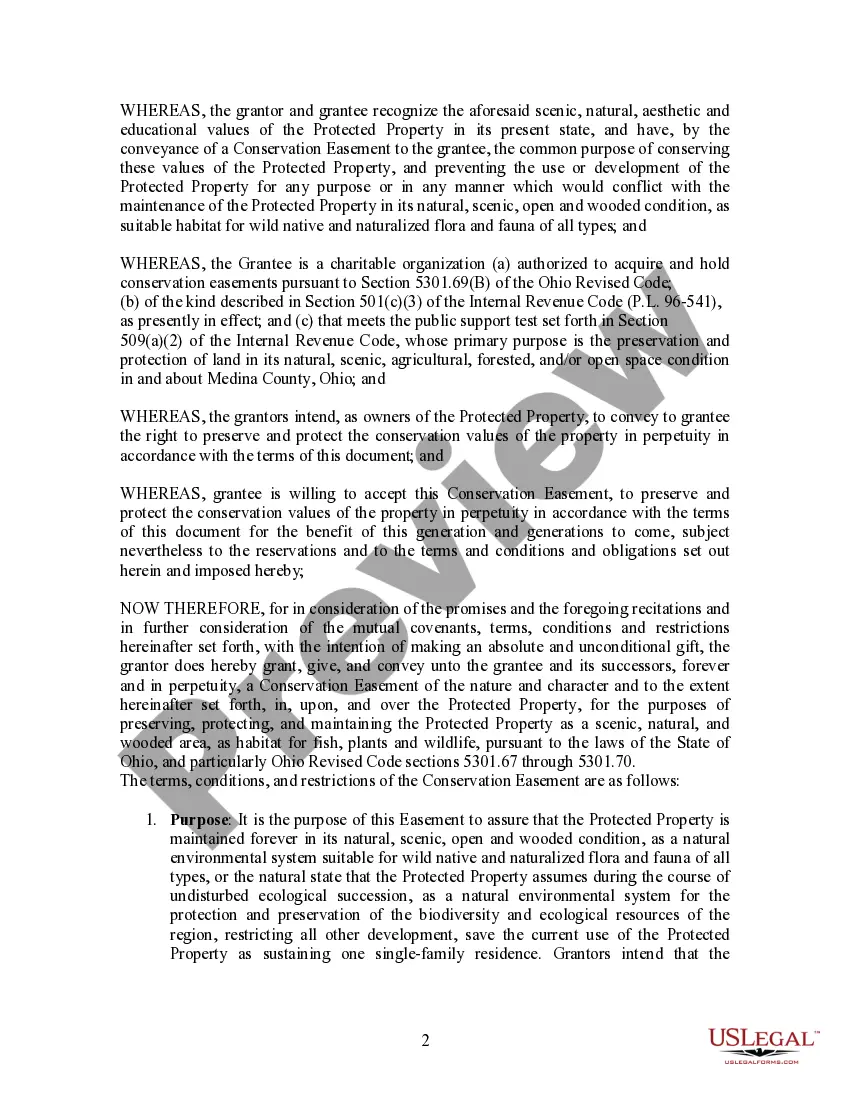
- Purpose statement outlining the conservation goals of the easement.
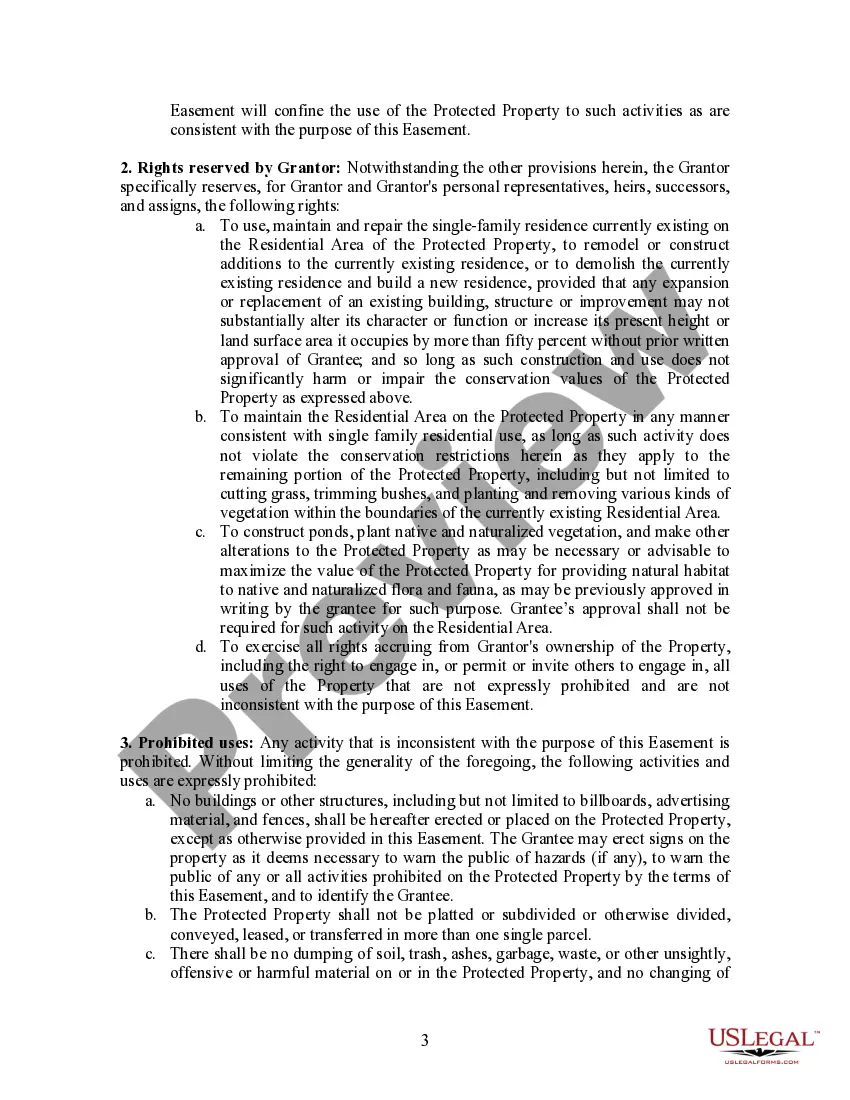
- Rights reserved by the grantor, including limited uses of the property.
- Prohibited uses to maintain the natural state of the property.
- Enforcement rights of the grantee to ensure compliance with the easement terms.
- Conditions for transferring the easement to future parties.
When to use this form
This form is ideal for property owners who wish to protect their land's environmental and scenic values. If you want to ensure that your property remains undeveloped and conserved for future generations, this conservation easement is a suitable option. It is also used when owners wish to contribute to conservation efforts in their communities, particularly around areas with rich biodiversity or scenic landscapes.
Who needs this form
This form is intended for:
- Private property owners looking to limit development on their land.
- Non-profit organizations involved in land conservation efforts.
- Individuals or groups seeking to preserve natural habitats and promote ecological sustainability.
How to complete this form
- Identify the parties involved in the easement (grantor and grantee).
- Provide a legal description of the Protected Property.
- Clearly state the purpose of the conservation easement.
- Outline any rights reserved by the grantor relative to the property use.
- Specify prohibited activities that could hinder conservation efforts.
- Sign and date the document in accordance with local laws.
Is notarization required?
This form does not typically require notarization unless specified by local law. However, it is advisable to consult local regulations or legal counsel to confirm any specific requirements regarding notarization in your jurisdiction.
Get your form ready online
Our built-in tools help you complete, sign, share, and store your documents in one place.
Make edits, fill in missing information, and update formatting in US Legal Forms—just like you would in MS Word.
Download a copy, print it, send it by email, or mail it via USPS—whatever works best for your next step.
Sign and collect signatures with our SignNow integration. Send to multiple recipients, set reminders, and more. Go Premium to unlock E-Sign.
If this form requires notarization, complete it online through a secure video call—no need to meet a notary in person or wait for an appointment.
We protect your documents and personal data by following strict security and privacy standards.

Make edits, fill in missing information, and update formatting in US Legal Forms—just like you would in MS Word.

Download a copy, print it, send it by email, or mail it via USPS—whatever works best for your next step.

Sign and collect signatures with our SignNow integration. Send to multiple recipients, set reminders, and more. Go Premium to unlock E-Sign.

If this form requires notarization, complete it online through a secure video call—no need to meet a notary in person or wait for an appointment.

We protect your documents and personal data by following strict security and privacy standards.
Common mistakes
- Failing to provide an accurate legal description of the property.
- Not clearly defining the conservation goals, leading to ambiguity.
- Omitting the rights reserved by grantors, potentially causing conflicts in property use.
- Forgetting to sign and date the form properly.
Why complete this form online
- Immediate access to the latest legal templates prepared by licensed attorneys.
- Convenient download options allowing for easy customization.
- Secure and reliable documentation process without the need for physical storage.
- Time-saving process compared to drafting a form from scratch.
Legal use & context
- The conservation easement is legally binding and protects both parties' rights.
- Enforcement rights allow grantees to monitor compliance and take action against violations.
- State-specific laws guide how conservation easements are established and enforced, ensuring local compliance.
What to keep in mind
- A Conservation Easement is essential for preserving land for ecological and aesthetic purposes.
- Understanding the rights and responsibilities of both grantors and grantees is crucial.
- Proper completion and compliance with legal requirements ensure the easement's effectiveness.
Looking for another form?

Form popularity
FAQ
In a conservation easement, a landowner voluntarily agrees to sell or donate certain rights associated with his or her property often the right to subdivide or develop and a private organization or public agency agrees to hold the right to enforce the landowner's promise not to exercise those rights.
Conservation easement tax deduction The value of the donation of a conservation easement is considered a charitable deduction for income tax purposes. The deduction is up to 50% of the donor's charitable contribution base (adjusted gross income, less net operating loss carryback) for the taxable year.
When a conservation easement is placed on a property, it typically lowers the property's value for federal estate tax purposes and may decrease estate tax liability. Therefore, easements may help heirs avoid being forced to sell off land to pay estate taxes and enable land to stay in the family.
One big advantage of buying a home or land with an easement is that it could result in major savings. Conservation land is restrictive by nature, and that's often a big sticking point for buyers. But if you're willing to deal with those restrictions, it could be a good way to buy land or property on the cheap.
If a conservation easement is voluntarily donated to a land trust or government agency, and if it benefits the public by permanently protecting important conservation resources, it can qualify as a charitable tax deduction on the donor's federal income tax return.
Conservation easements are a great idea, in theory. Here's the way they work. Basically, if you are willing to donate your property for the public good, and that donation reduces the value of your property, you get to take a tax deduction equal to the reduction in the value of your property.
When you create a conservation easement, you may lose access to certain rights. While you'll likely retain certain surface rights like farming and ranching, development is almost always limited.