New Mexico Motion to Adopt Parties' Agreement regarding Custody of Minor Child
Overview of this form
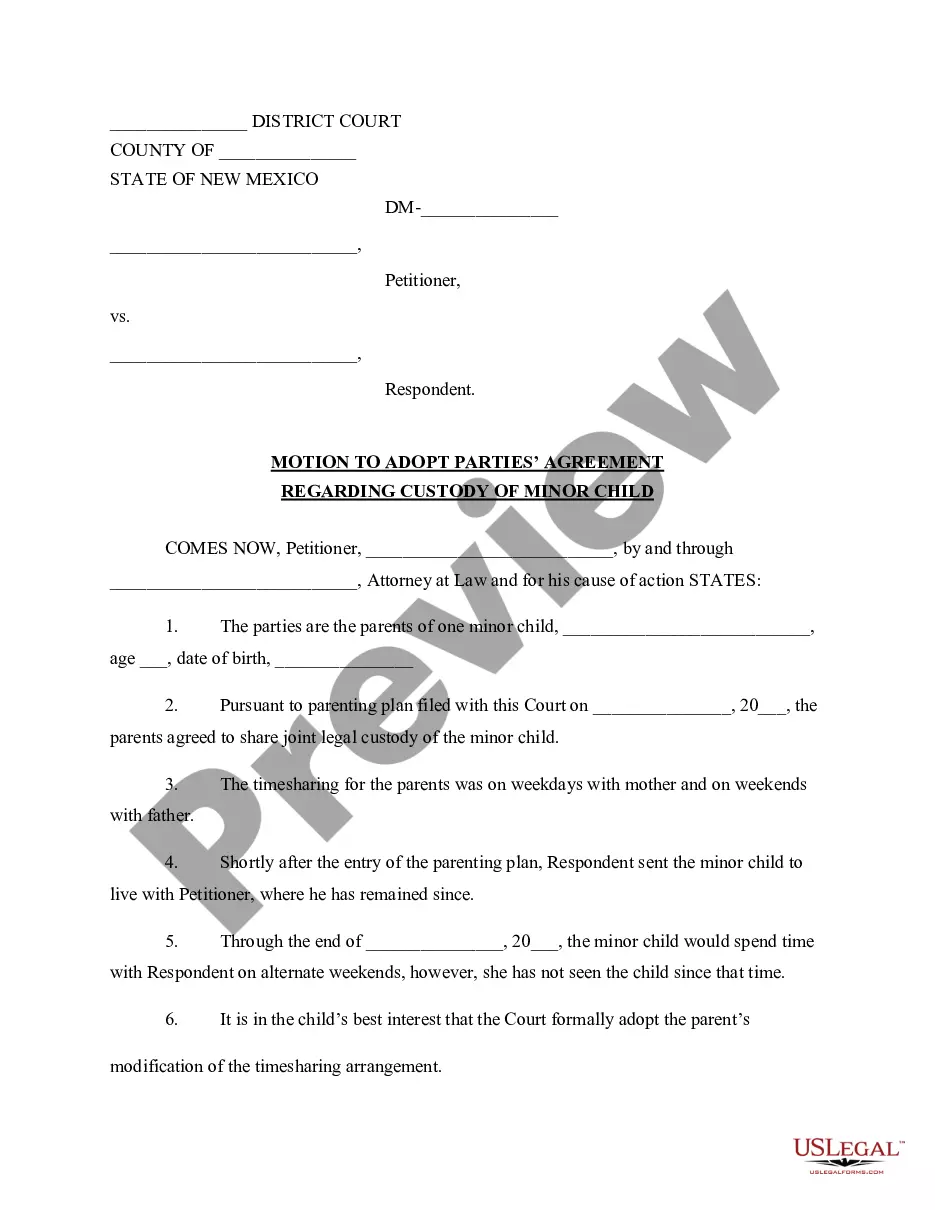
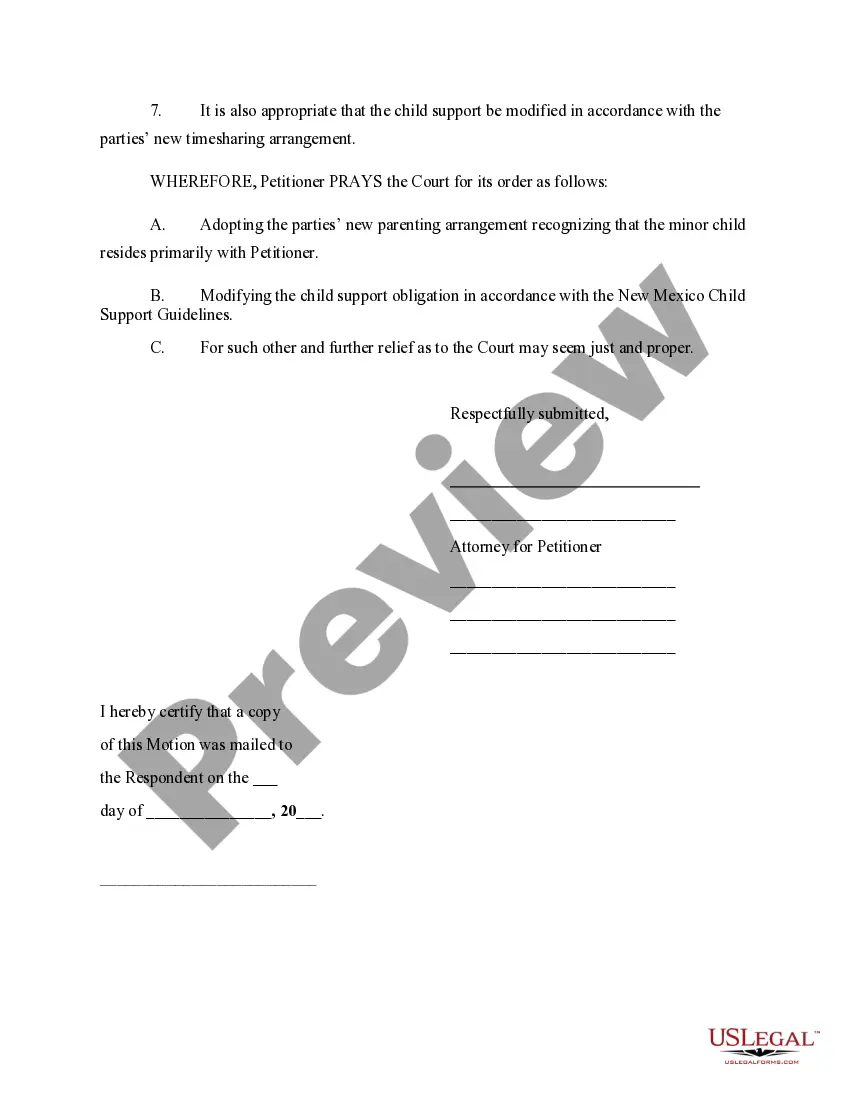
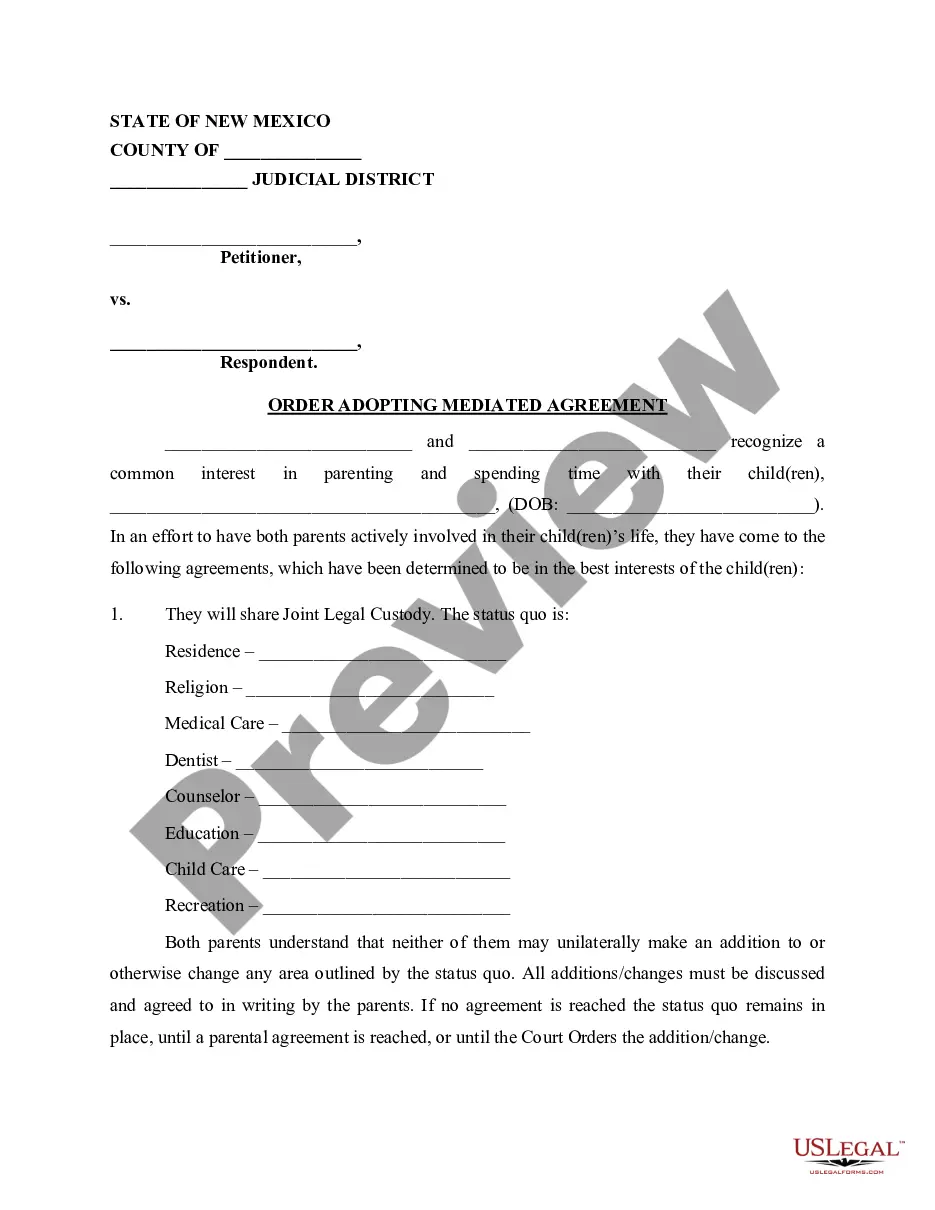
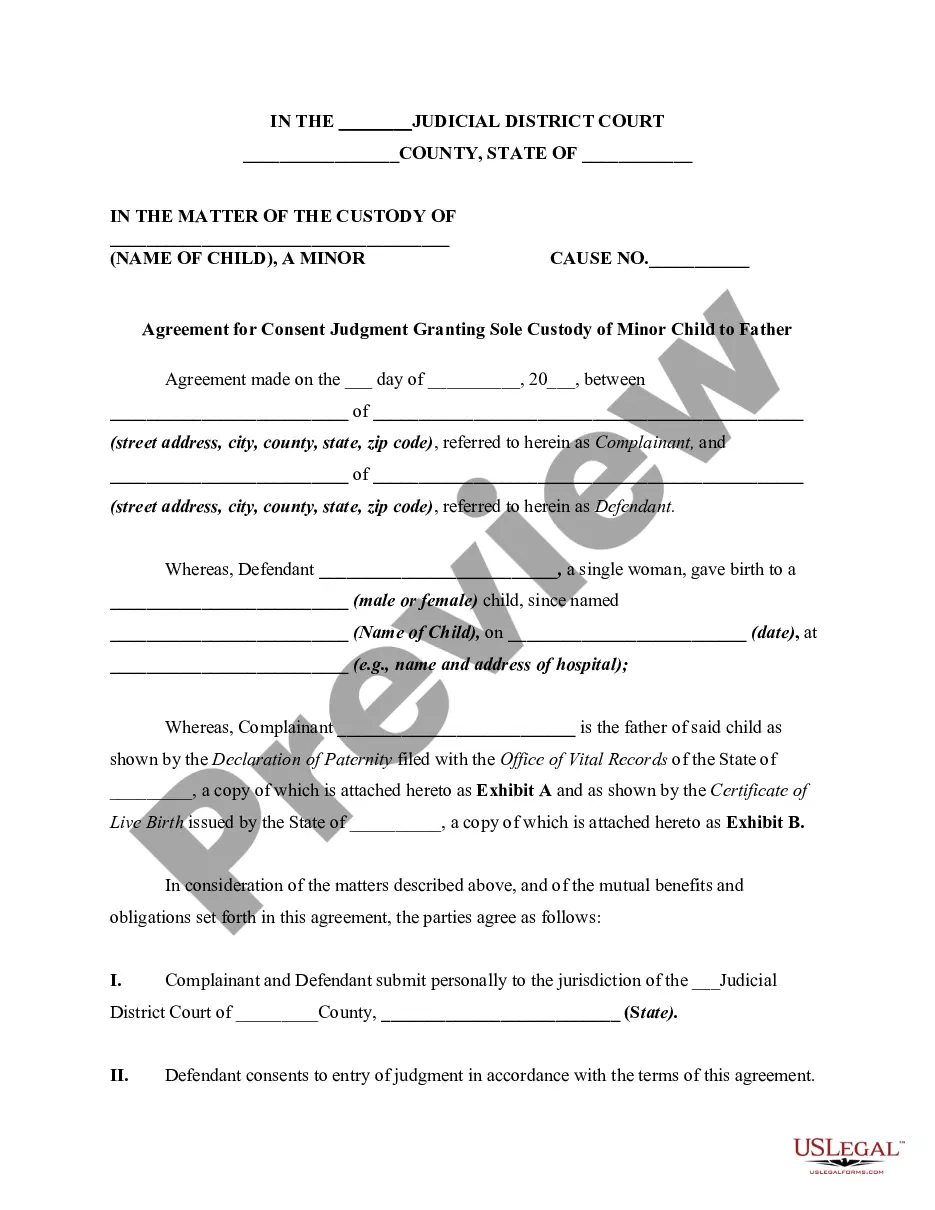
The Motion to Adopt Parties' Agreement regarding Custody of Minor Child is a legal document filed in court to modify existing custody arrangements and child support obligations for a minor child. This form is used when parents mutually agree to changes in their parenting plan, ensuring that the court formally recognizes these adjustments and reflects them in the legal custody agreement. Unlike standard custody forms, this motion emphasizes the adoption of mutually agreed-upon changes rather than initiating custody proceedings.
Main sections of this form
- Petitioner and Respondent information: Names and roles of the parents involved.
- Details about the minor child: Name, age, and date of birth.
- Reference to the prior parenting plan: Filing date and agreement on custody.
- Change of living arrangements: Explanation of where the child currently resides.
- Request for modification: Changes to child custody and support obligations.
- Verification section: Certification of the motion's truthfulness by the petitioner under oath.

Common use cases
This form should be used in situations where parents have reached a new agreement regarding their child's custody and timesharing. It is important when there is a significant change in circumstances, such as one parent assuming primary custody or changes that may affect child support. It is specifically useful when both parties consent to the modification and wish to formalize the agreement through the court system.
Who can use this document
- Parents seeking to modify an existing custody agreement.
- Those who have mutually agreed on changes to child custody and support.
- Individuals needing a legal record of custody arrangements for court approval.
Instructions for completing this form
- Identify the petitioner and respondent: Enter the names of the parents.
- Provide details of the minor child: Fill in the child's name, age, and date of birth.
- Reference the previous parenting plan: Include the filing date of the earlier agreement.
- Describe the current living arrangements: Explain where the child resides currently.
- State the terms of the modification: Clearly outline the proposed changes to custody and support.
- Sign and date the form: Ensure it is verified and notarized as required before submission.
Does this form need to be notarized?
Yes, this form must be notarized to be legally valid. This ensures that the signatures are authenticated, thereby upholding the integrity of the agreement in the eyes of the court. US Legal Forms offers integrated online notarization services, making it convenient to complete this step securely and efficiently through a video call at any time.
Get your form ready online
Our built-in tools help you complete, sign, share, and store your documents in one place.
Make edits, fill in missing information, and update formatting in US Legal Forms—just like you would in MS Word.
Download a copy, print it, send it by email, or mail it via USPS—whatever works best for your next step.
Sign and collect signatures with our SignNow integration. Send to multiple recipients, set reminders, and more. Go Premium to unlock E-Sign.
If this form requires notarization, complete it online through a secure video call—no need to meet a notary in person or wait for an appointment.
We protect your documents and personal data by following strict security and privacy standards.

Make edits, fill in missing information, and update formatting in US Legal Forms—just like you would in MS Word.

Download a copy, print it, send it by email, or mail it via USPS—whatever works best for your next step.

Sign and collect signatures with our SignNow integration. Send to multiple recipients, set reminders, and more. Go Premium to unlock E-Sign.

If this form requires notarization, complete it online through a secure video call—no need to meet a notary in person or wait for an appointment.

We protect your documents and personal data by following strict security and privacy standards.
Common mistakes
- Failing to include accurate information about the minor child.
- Not providing the correct dates related to the existing custody agreement.
- Overlooking the need for both parties' agreement on changes.
- Neglecting to sign or notarize the form before submission.
Why use this form online
- Convenient and accessible: Easily download the form whenever needed.
- Editability: Fill out the form digitally, ensuring clarity and legibility.
- Reliable legal framework: The forms are drafted by licensed attorneys, ensuring compliance with legal standards.
Looking for another form?


Form popularity
FAQ
There are two types of guardianships, a full guardianship and a limited guardianship.
The Kin-GAP Program offers financial assistance and other support services such as Medi-Cal for a child who is placed with an approved relative legal guardian.The payment amount cannot exceed the amount the child/youth would have received in foster care.
Whenever possible, New Mexico guardianship issues are decided under the Kinship Guardian Act. This means if parents are unable or unwilling to raise their children, then preference will be given to people able and willing to care for them.The child's parents consented to your guardianship of their child or children.
Even though wills are considered more complicated contracts, they can still be handwritten to be considered legally enforceable.It is important to note that even if a written requirement is required under the Statute of Frauds, a handwritten agreement will still work to make the document legally binding.
Guardianship, as opposed to foster care, is a more permanent solution and is typically used for cases involving relative caregivers.? Kinship care is usually preferred over foster care so that a child is able to maintain relationships with extended family in a safe and familiar environment.
Child May Assert Their Own Preference Starting at Age 14 When evaluating a child's best interests, the New Mexico court will give the child an opportunity to be heard on their own preferences for a custody arrangement. At a young age, this information is obtained through a private discussion with the judge.
Guardianship of the person. The legal guardian has the right to consent for the minor and make all decisions regarding the minor's health and education. A legal guardian will maintain custody of the minor until the minor reaches the age of eighteen, or until a judge determines that the minor no longer needs a guardian.
A custody and visitation schedule (including a holiday schedule) Parenting provisions. Child support information. Anything else that will help you and the other parent raise the child.
In writing your own custody and support agreement, you should use language that reflects your willingness to cooperate with the other parent. The tone should be positive and indicate that both parties are willing to comply with the terms of the document. If written this way, a judge is more likely to approve its terms.