Nebraska Heirship Affidavit - Descent

What is this form?
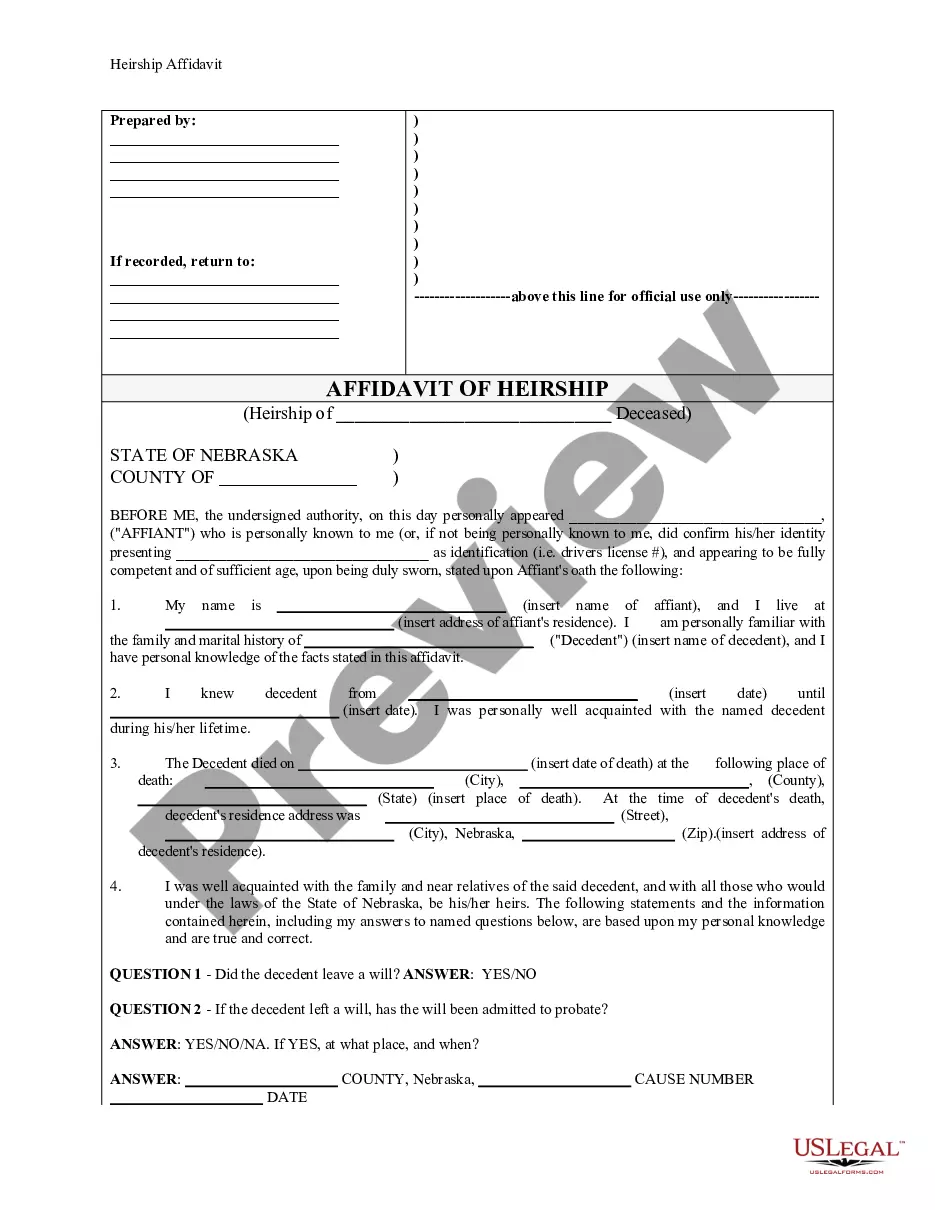
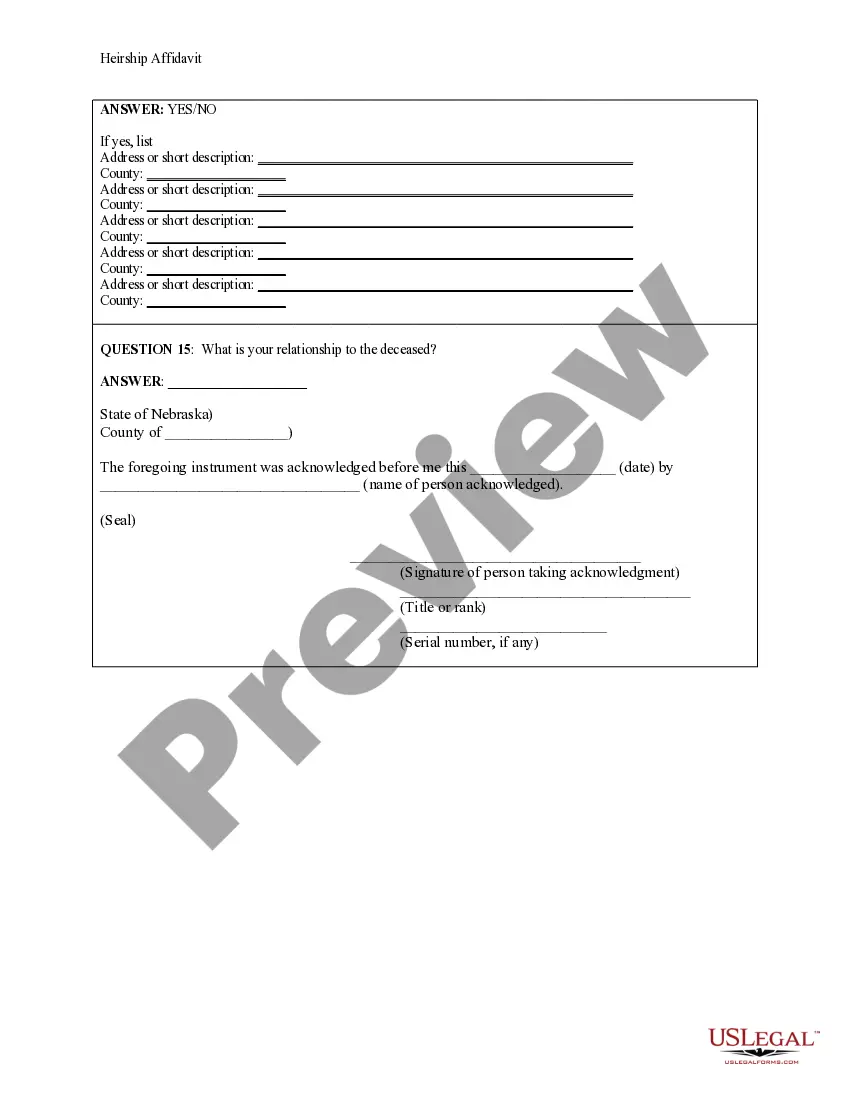
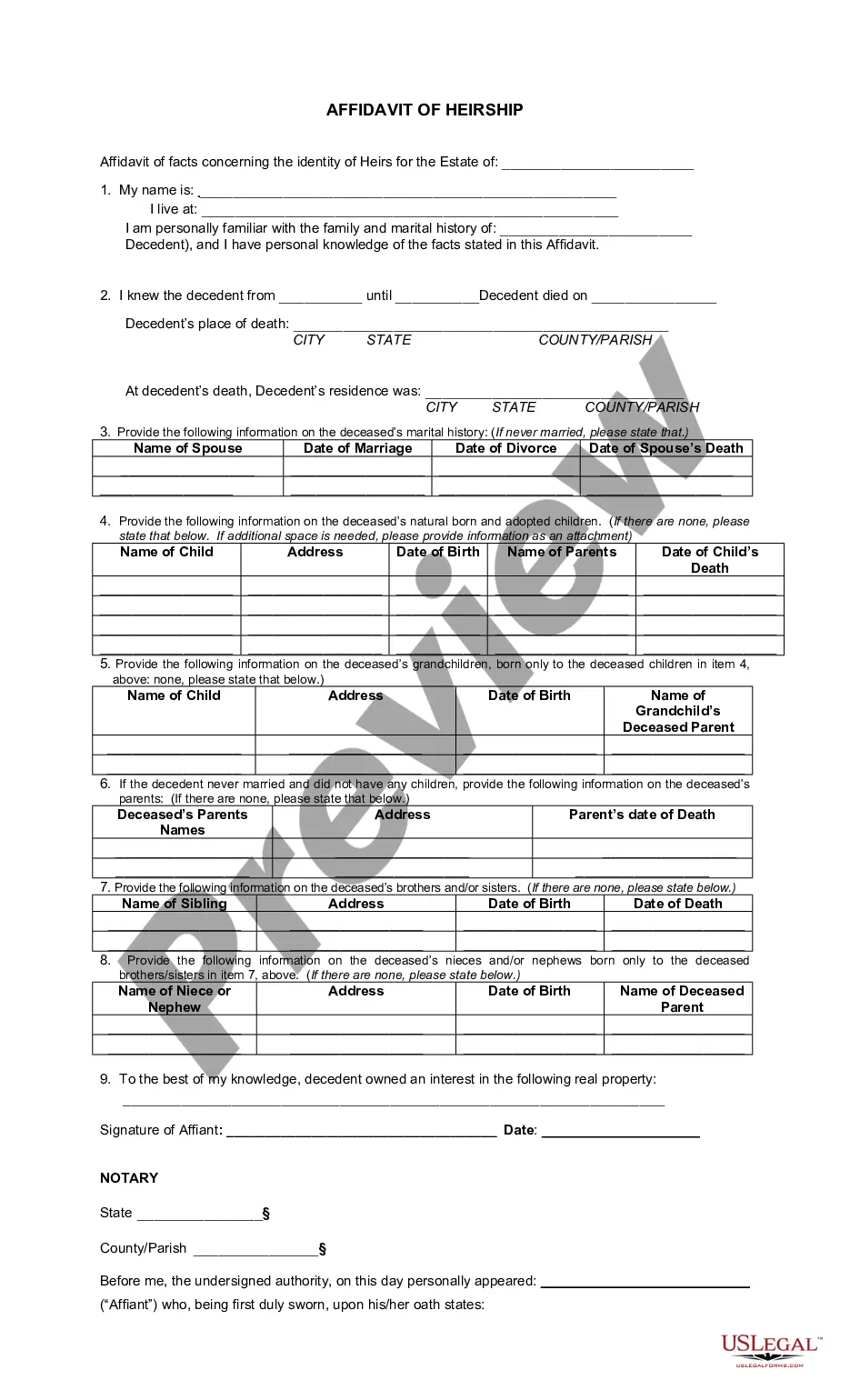
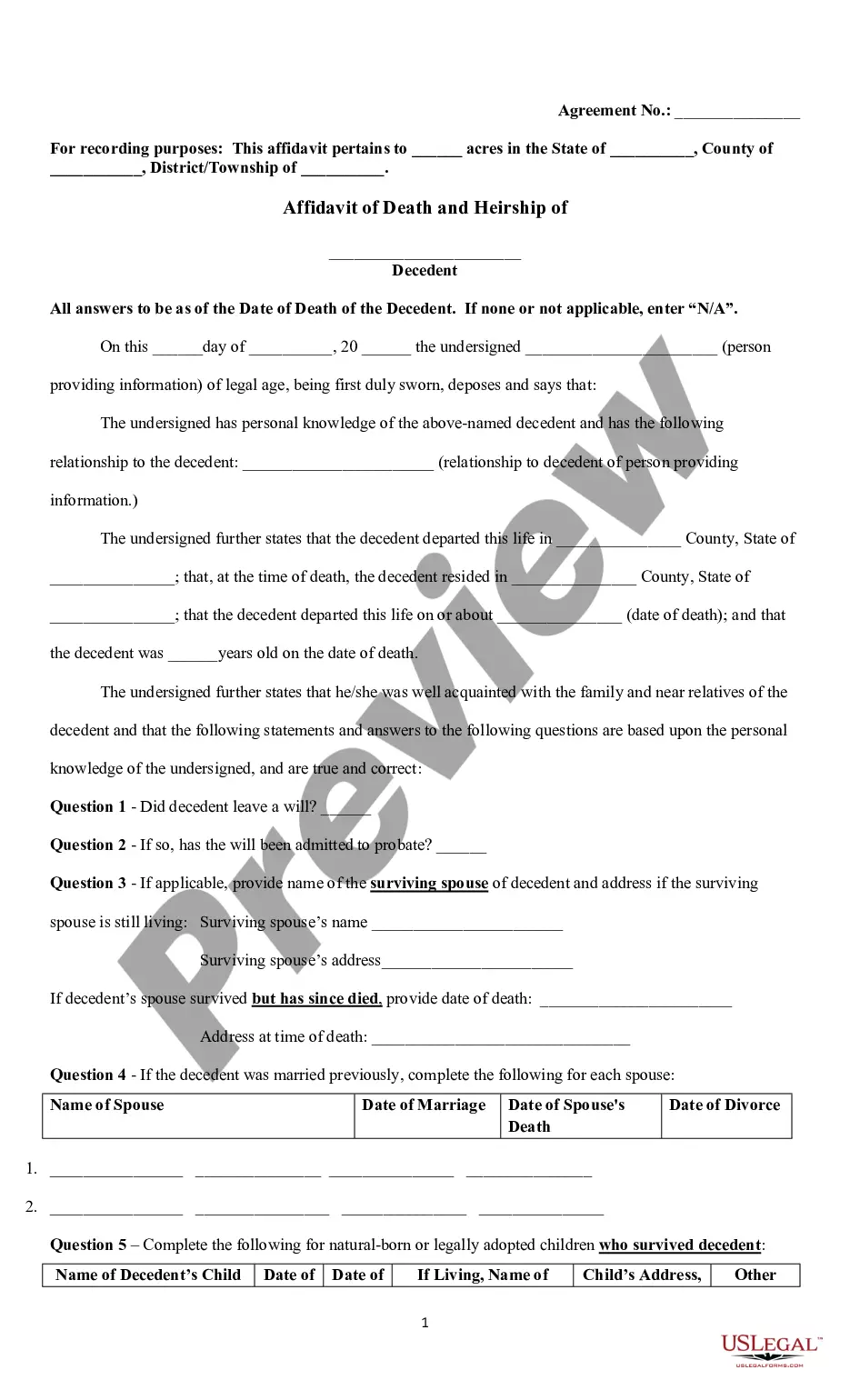
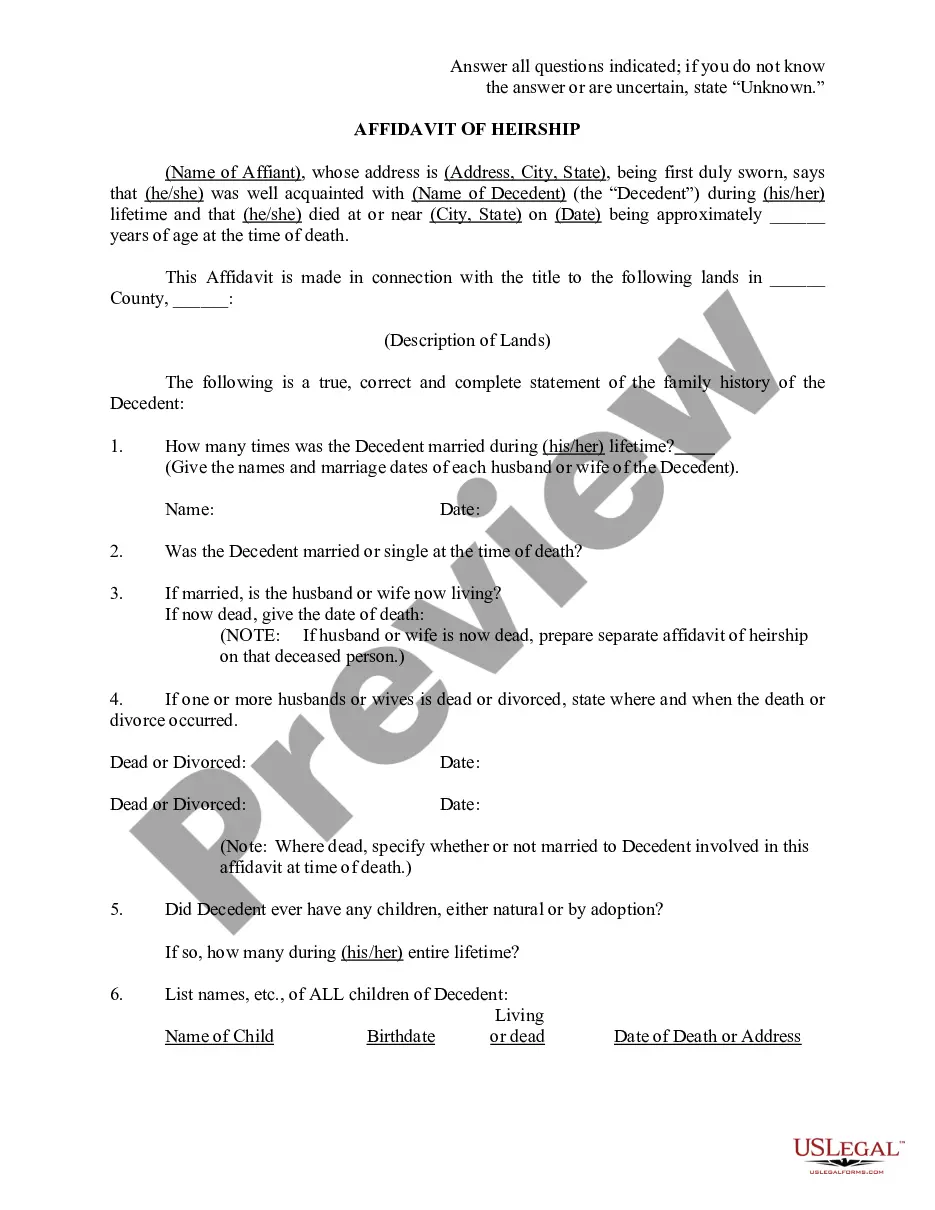
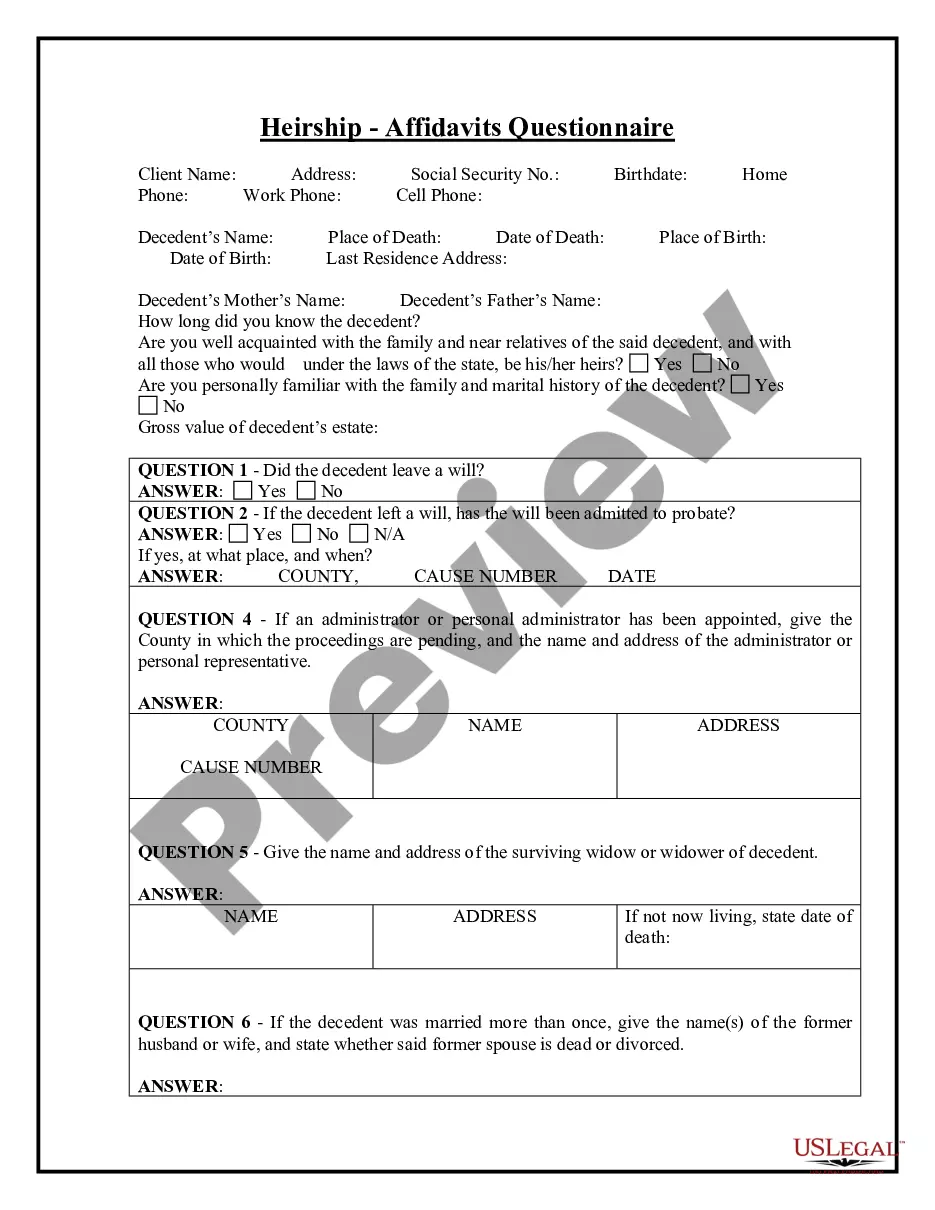
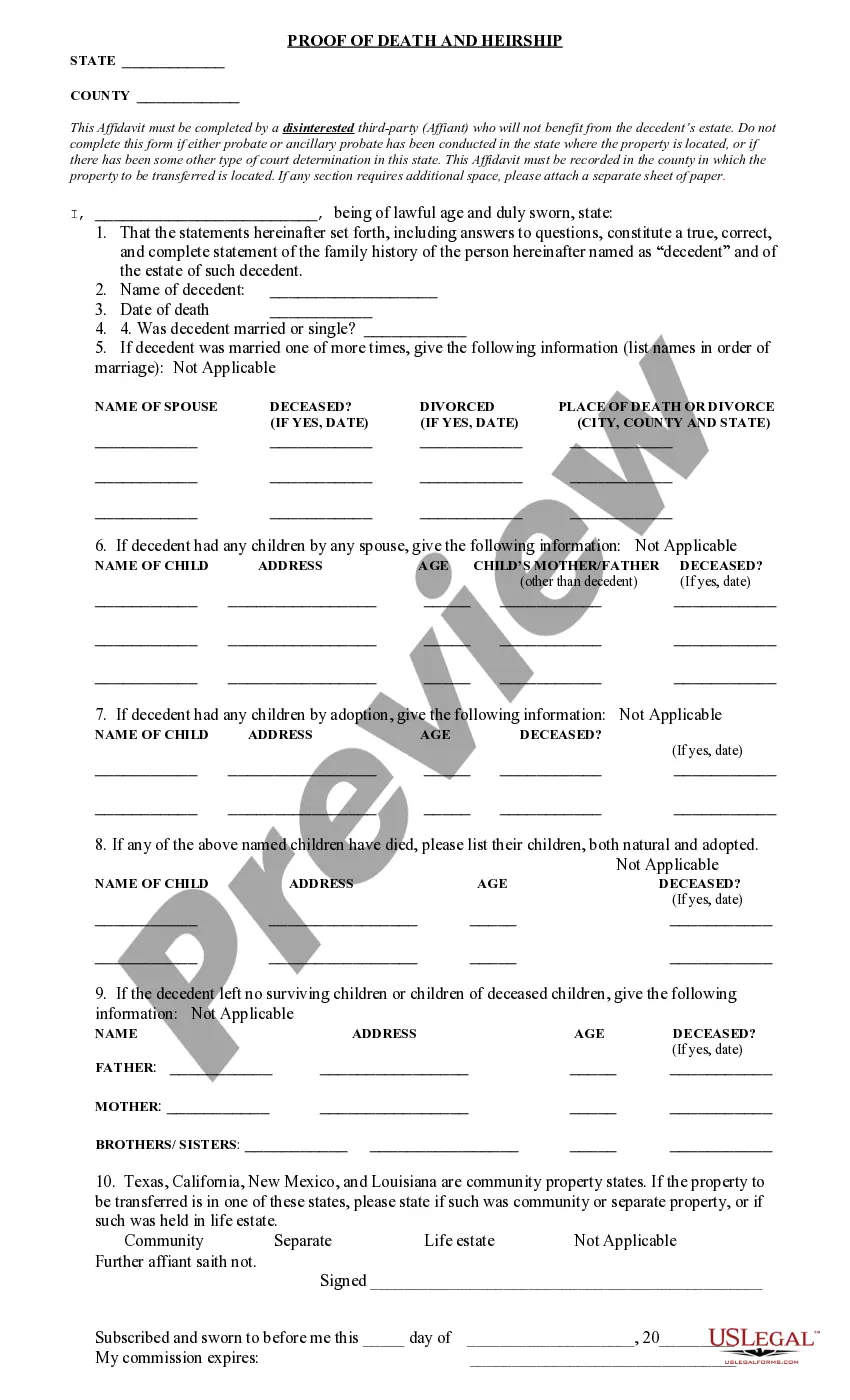
The Heirship Affidavit - Descent is a legal document utilized to declare the heirs of a deceased individual. This form is essential for establishing ownership of both personal and real property when someone dies without a will. Unlike other estate planning documents, this affidavit confirms who the heirs are under state law and may be recorded in official land records as needed.
What’s included in this form
- Affiant's name and address
- Name and details of the deceased, including date of death
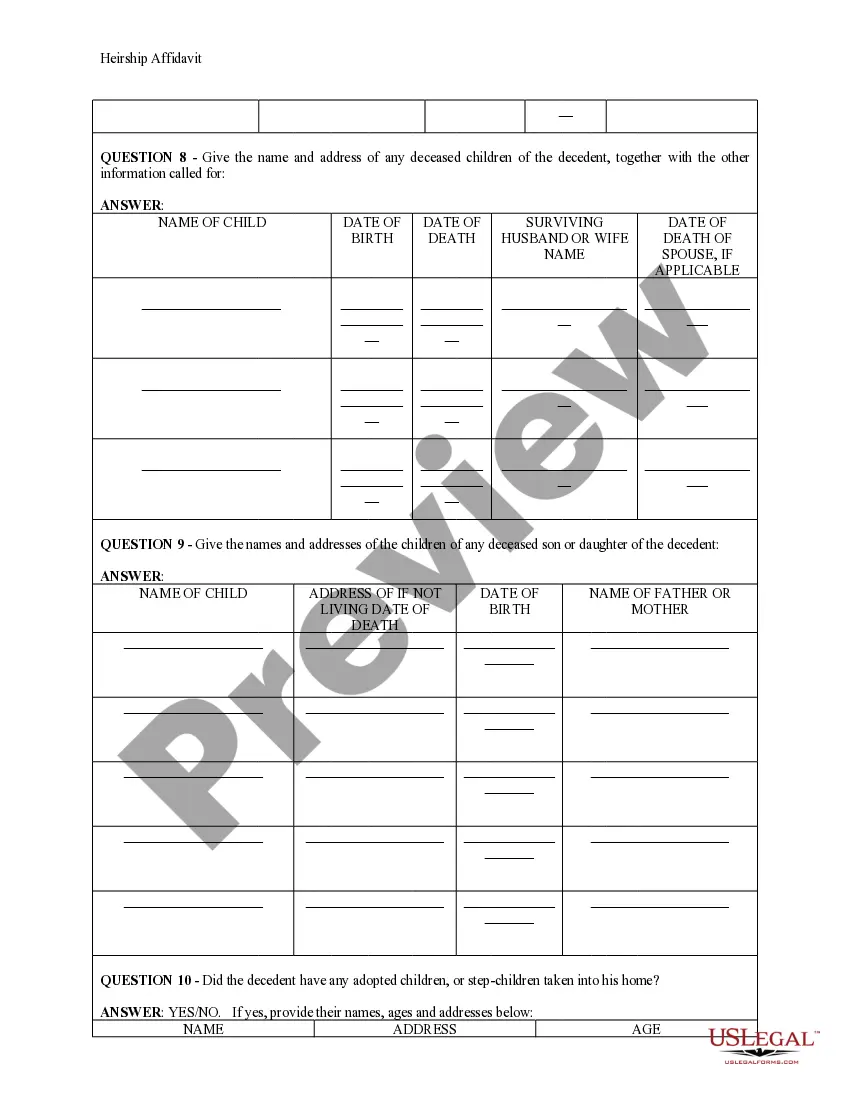
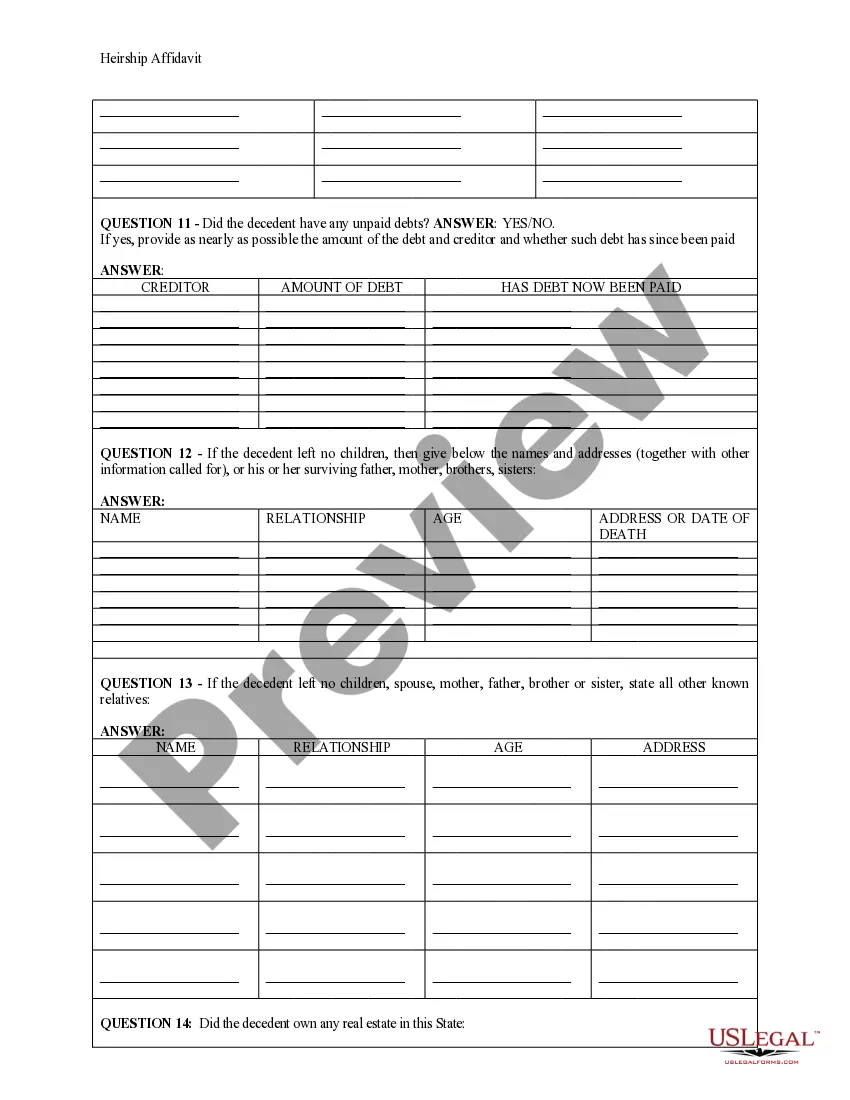
- Information about heirs, including relationships and addresses
- Questions about wills, probate status, and debts
- Signature of the affiant and witness by a notary public

When this form is needed
This form is commonly used in situations where an individual dies intestate (without a will), and heirs need to establish their legal rights to the deceased's property. For instance, if a decedent owned real estate or other significant assets, the heirs would require an Heirship Affidavit to transfer ownership or during the sale of the land.
Who should use this form
- Individuals who have experienced the death of a family member or loved one without a will
- Heirs seeking to establish proof of their relationship to the deceased for property rights
- Legal representatives or trusted persons familiar with the deceased's family history
- Persons involved in the sale of real estate that belonged to the deceased
Completing this form step by step
- Enter the affiant's name and address at the top of the document.
- Provide the name of the deceased and relevant dates such as their date of death and place of residence.
- Answer specific questions regarding the existence of a will and any appointed representatives for the estate.
- List all surviving heirs, including children and spouses, along with their addresses.
- Sign the affidavit in the presence of a notary public to certify the document.
Does this form need to be notarized?
Yes, this form must be notarized to be legally valid. The affidavit should be signed in the presence of a notary public, who will verify the identity of the affiant and witness the signing of the document. US Legal Forms offers integrated online notarization services for convenience and security.
Get your form ready online
Our built-in tools help you complete, sign, share, and store your documents in one place.
Make edits, fill in missing information, and update formatting in US Legal Forms—just like you would in MS Word.
Download a copy, print it, send it by email, or mail it via USPS—whatever works best for your next step.
Sign and collect signatures with our SignNow integration. Send to multiple recipients, set reminders, and more. Go Premium to unlock E-Sign.
If this form requires notarization, complete it online through a secure video call—no need to meet a notary in person or wait for an appointment.
We protect your documents and personal data by following strict security and privacy standards.

Make edits, fill in missing information, and update formatting in US Legal Forms—just like you would in MS Word.

Download a copy, print it, send it by email, or mail it via USPS—whatever works best for your next step.

Sign and collect signatures with our SignNow integration. Send to multiple recipients, set reminders, and more. Go Premium to unlock E-Sign.

If this form requires notarization, complete it online through a secure video call—no need to meet a notary in person or wait for an appointment.

We protect your documents and personal data by following strict security and privacy standards.
Common mistakes
- Failing to correctly identify the deceased and their heirship relations.
- Not providing complete addresses for all surviving heirs.
- Leaving questions unanswered, particularly regarding the existence of a will.
- Neglecting to have the affidavit notarized before submission.
Why complete this form online
- Immediate access to the Heirship Affidavit template, saving time and hassle.
- The ability to edit the document as needed before finalizing it.
- Convenience of completing the form from home without needing to visit a lawyerâs office.
Quick recap
- The Heirship Affidavit - Descent is essential for establishing heirs when no will exists.
- Proper completion and notarization of the affidavit are critical for legal recognition.
- Accurate information about the deceased and heirs is vital to avoid complications.
Looking for another form?
Form popularity
FAQ
No, in Nebraska, you do not need to notarize your will to make it legal. However, Nebraska allows you to make your will "self-proving" and you'll need to go to a notary if you want to do that. A self-proving will speeds up probate because the court can accept the will without contacting the witnesses who signed it.
Is Probate Required in Nebraska? Probate is necessary in Nebraska for estates. However, there are a few exceptions that allow the estate to pass to the heirs without going through the legal process.
Joint tenancy with right of survivorship. Property owned in joint tenancy automatically passes, without probate, to the surviving owner(s) when one owner dies. Tenancy by the entirety. Community property with right of survivorship.
Close relatives. Certain relatives of the deceased person are given a $40,000 exemption from the state inheritance tax. In other words, they don't owe any tax at all unless they inherit more than $40,000. This tax exemption applies to these family members of the deceased person: parents.
Retirement accountsIRAs or 401(k)s, for examplefor which a beneficiary was named. Life insurance proceeds (unless the estate is named as beneficiary, which is rare) Property held in a living trust. Funds in a payable-on-death (POD) bank account.
If you die without a will in Nebraska, your children will receive an intestate share of your property.For children to inherit from you under the laws of intestacy, the state of Nebraska must consider them your children, legally. For many families, this is not a confusing issue.
Write a Living Trust. The most straightforward way to avoid probate is simply to create a living trust. Name Beneficiaries on Your Retirement and Bank Accounts. For some, a last will is often a better fit than a trust because it is a more straightforward estate planning document. Hold Property Jointly.
While federal estate taxes and state-level estate or inheritance taxes may apply to estates that exceed the applicable thresholds (for example, in 2021 the federal estate tax exemption amount is $11.7 million for an individual), receipt of an inheritance does not result in taxable income for federal or state income tax
In Nebraska, you can make a living trust to avoid probate for virtually any asset you ownreal estate, bank accounts, vehicles, and so on. You need to create a trust document (it's similar to a will), naming someone to take over as trustee after your death (called a successor trustee).