Mississippi Transfer on Death Deed or TOD - Beneficiary Deed for Individual to Individual
What this document covers
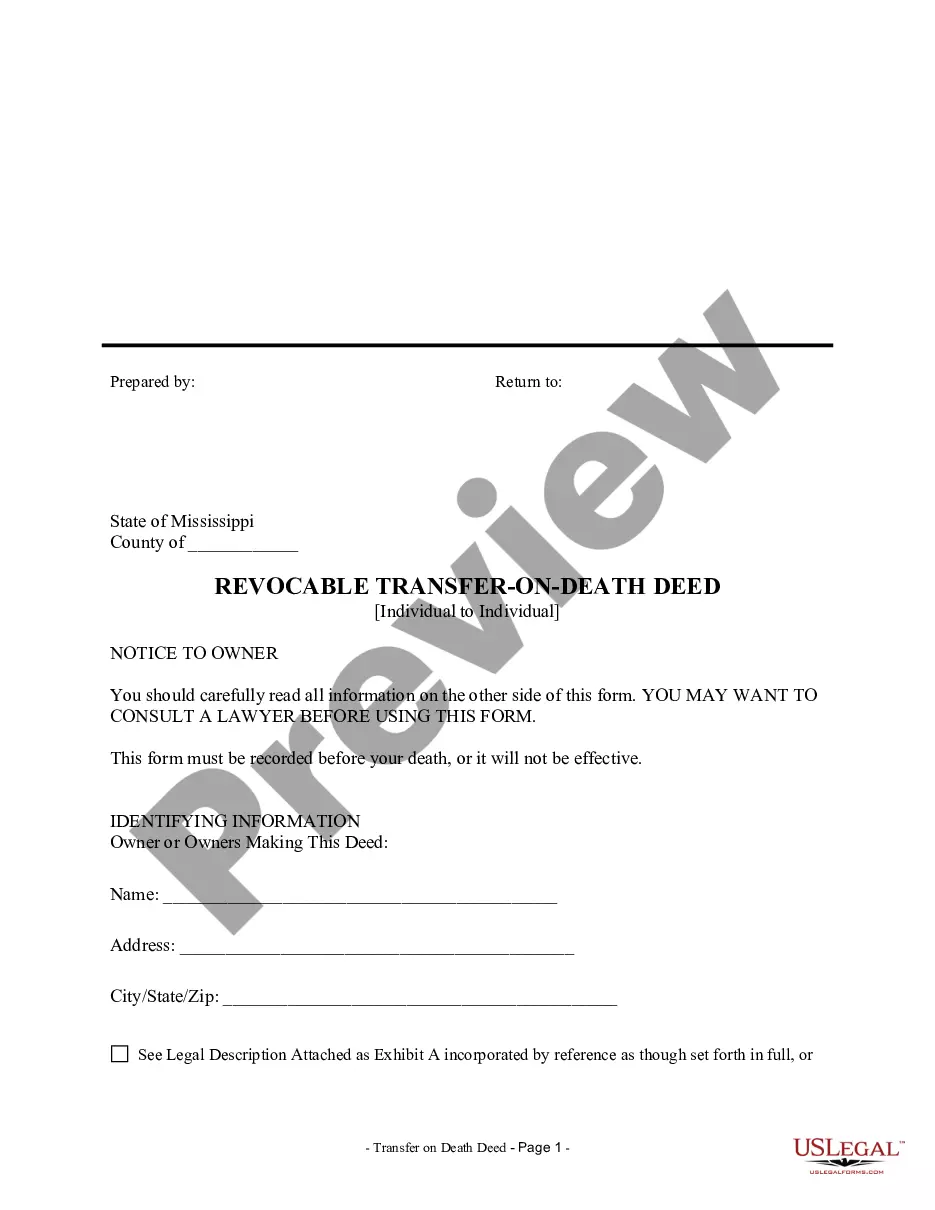
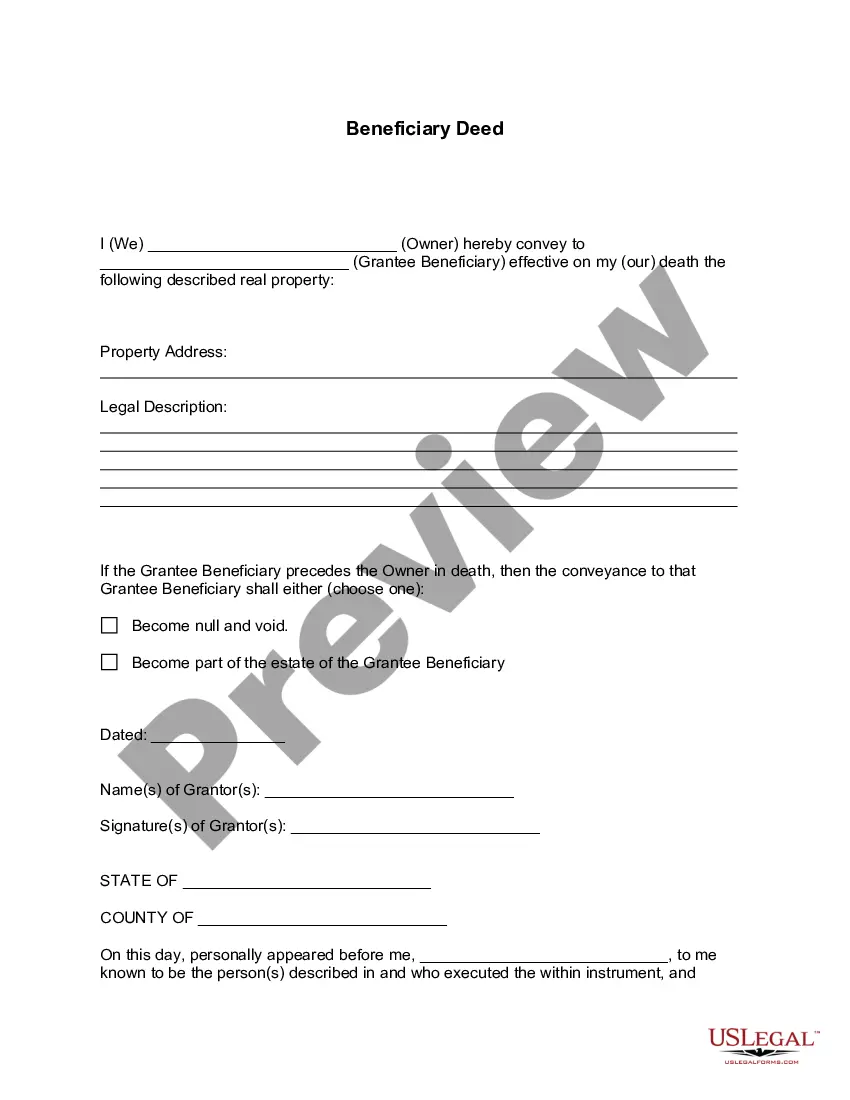
The Transfer on Death Deed (TOD) is a legal document used to transfer ownership of real estate from an individual to a designated beneficiary without the need for probate. This deed comes into effect only after the death of the grantor and can be revoked at any time before that. It is a practical tool for individuals looking to simplify the transfer of property upon their death, distinguishing it from similar forms like a traditional will by allowing the direct transfer of property without court intervention.
Main sections of this form
- Identifying Information: Names and addresses of the grantor and beneficiary.
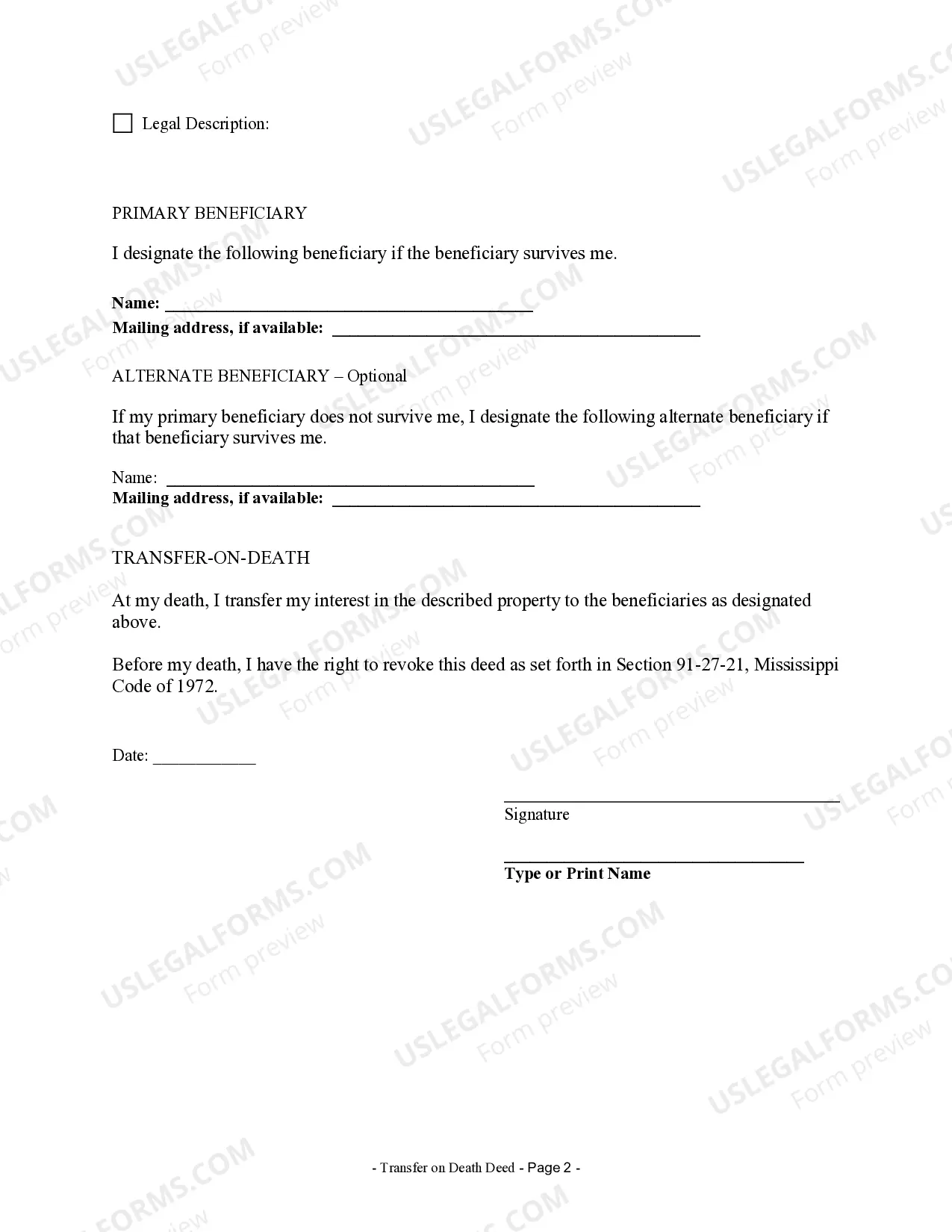
- Primary Beneficiary: The individual who will receive the property upon the grantor's death.
- Alternate Beneficiary: An optional second beneficiary, who will inherit the property if the primary beneficiary does not survive the grantor.
- Transfer Clause: Statement transferring property interests to the designated beneficiaries upon the grantor's death.
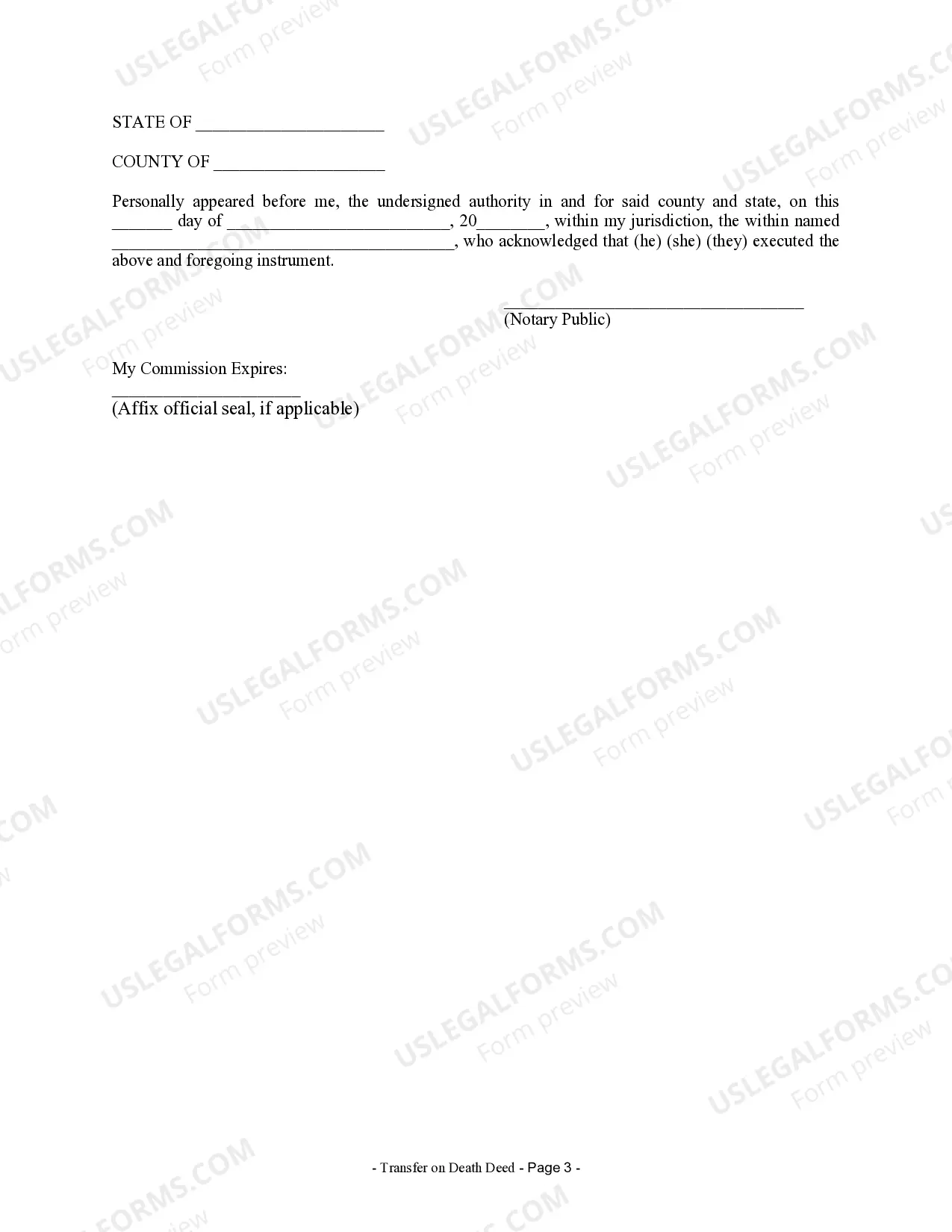
- Signature and Notarization: Requirements for signing and notarizing the deed to ensure its validity.




Common use cases
This form is ideal for individuals who wish to ensure that their property passes directly to a chosen beneficiary without undergoing the probate process. It is particularly useful for homeowners looking to simplify the transfer of assets and avoid potential disputes among heirs after their passing. Scenarios include transferring family property to a child or designating a partner as the inheritor of real estate.
Who needs this form
- Individuals who own real estate and want to designate a beneficiary for property transfer upon death.
- Homeowners looking to avoid the complexities and costs of probate.
- People who wish to retain the ability to revoke the transfer before death.
- Those who have established a clear intention about who should inherit specific properties.
How to complete this form
- Identify the parties involved by entering the names and addresses of the grantor and beneficiary.
- Designate a primary beneficiary who will inherit the property upon your death.
- Optionally, specify an alternate beneficiary to inherit the property if the primary beneficiary does not survive.
- Complete the transfer clause indicating the property being transferred.
- Sign the deed and have it notarized to ensure its legal validity.
- Record the completed deed with the local county office prior to your death.
Does this document require notarization?
Yes, this form must be notarized to be legally valid. The execution of this deed requires acknowledgment in the presence of a notary public to confirm the identity of the grantor and their intention to execute the document. US Legal Forms offers integrated online notarization services, allowing you to complete this process securely and conveniently via video call.
Get your form ready online
Our built-in tools help you complete, sign, share, and store your documents in one place.
Make edits, fill in missing information, and update formatting in US Legal Forms—just like you would in MS Word.
Download a copy, print it, send it by email, or mail it via USPS—whatever works best for your next step.
Sign and collect signatures with our SignNow integration. Send to multiple recipients, set reminders, and more. Go Premium to unlock E-Sign.
If this form requires notarization, complete it online through a secure video call—no need to meet a notary in person or wait for an appointment.
We protect your documents and personal data by following strict security and privacy standards.

Make edits, fill in missing information, and update formatting in US Legal Forms—just like you would in MS Word.

Download a copy, print it, send it by email, or mail it via USPS—whatever works best for your next step.

Sign and collect signatures with our SignNow integration. Send to multiple recipients, set reminders, and more. Go Premium to unlock E-Sign.

If this form requires notarization, complete it online through a secure video call—no need to meet a notary in person or wait for an appointment.

We protect your documents and personal data by following strict security and privacy standards.
Avoid these common issues
- Failing to record the deed before the grantorâs death, which invalidates the transfer.
- Not providing complete and accurate property descriptions.
- Forgetting to include or update alternate beneficiaries as needed.
- Neglecting to consult legal advice to ensure all implications are understood.
Looking for another form?

Form popularity
FAQ
This Mississippi TOD deed designates a specific person to receive the property when the grantor dies. The transfer occurs outside probate if the deed is properly executed and recorded during the grantor's lifetime, and the grantor retains ownership during life. It’s intended for an individual grantor naming a single beneficiary.
A TOD deed in Mississippi transfers title to a named beneficiary automatically at the grantor’s death, without the property passing through the grantor’s probate estate. The grantor generally retains ownership and control during life and can revoke or amend the deed. Proper drafting, execution, and county recording are required for the deed to be effective.
Mississippi recognizes the concept of a transfer-on-death deed for real estate, including this form, as a means to transfer property to a named beneficiary upon the grantor’s death. To be effective, the deed must be properly drafted, executed, and recorded according to Mississippi law; consult a Mississippi-licensed attorney for current requirements.
While a lawyer is not always required, consulting a Mississippi-licensed attorney is advisable to ensure the deed is properly drafted, executed, and recorded, and to confirm it works with any existing ownership interests. An attorney can help address revocation, amendments, and conflicts with other estate planning documents.
Potential downsides include reduced flexibility—once recorded, changing the designation generally requires a new deed or revocation—and possible conflicts with other estate plans or creditors. It may also transfer property before addressing debts or liens, and may not adapt well to life changes like remarriage. An attorney can help ensure this fits Mississippi estate planning.
This form designates a single beneficiary for an individual grantor, unlike TOD deeds that name multiple beneficiaries or shared interests. It focuses on one-person transfer of the property upon death, reducing complexity for the grantor but limiting flexibility if needs change. Always align with other wills or trusts in Mississippi.