Mississippi Motion to Withdraw as Attorney
About this form
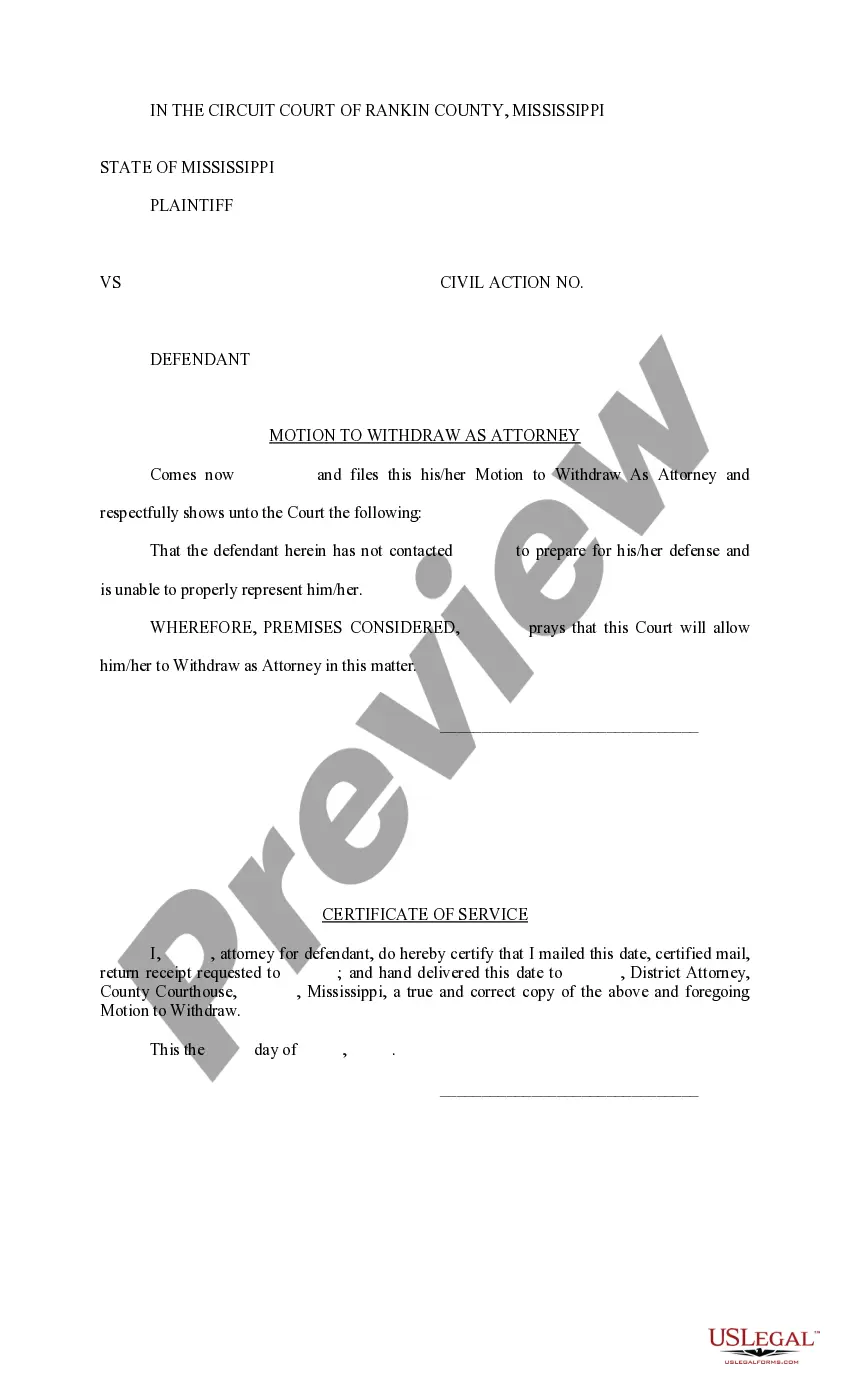
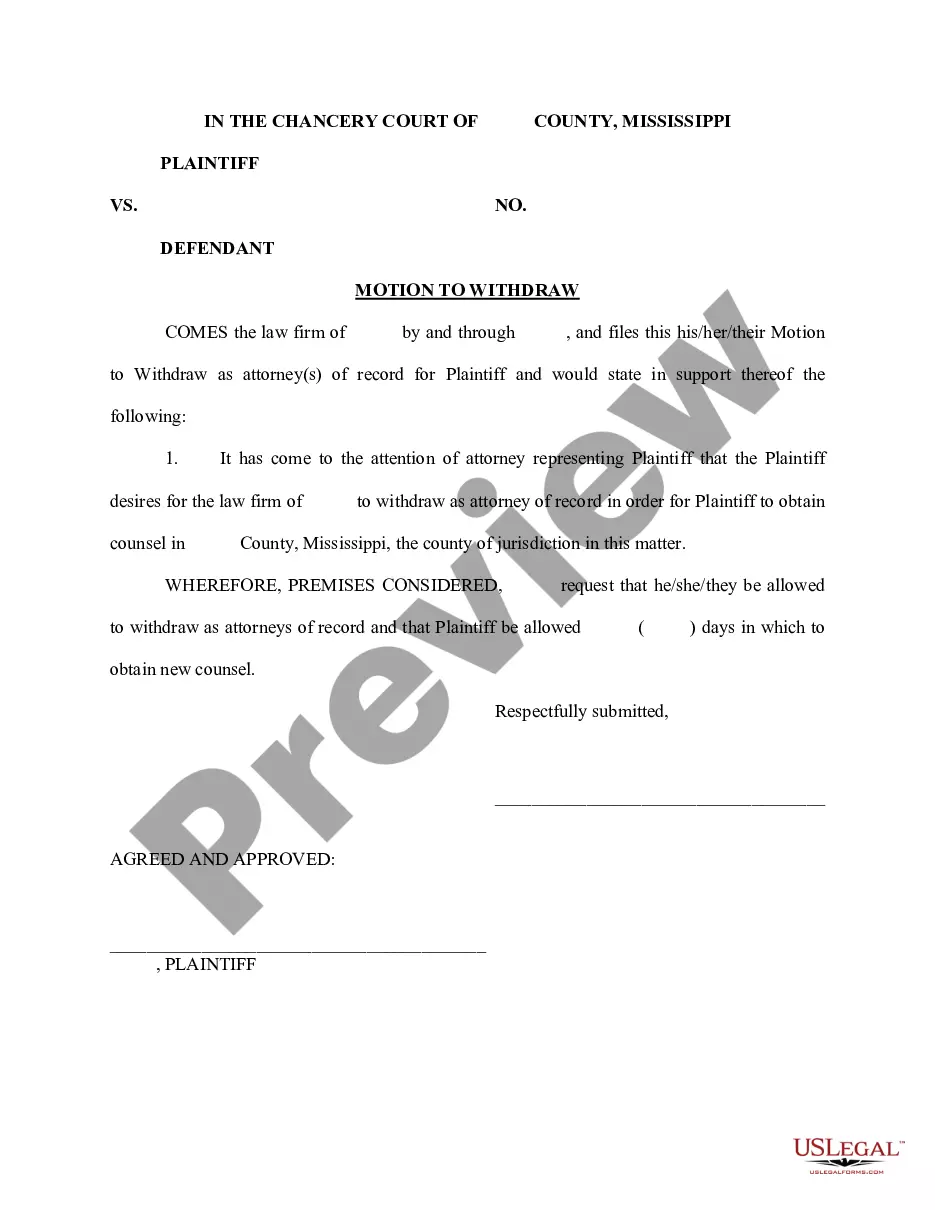
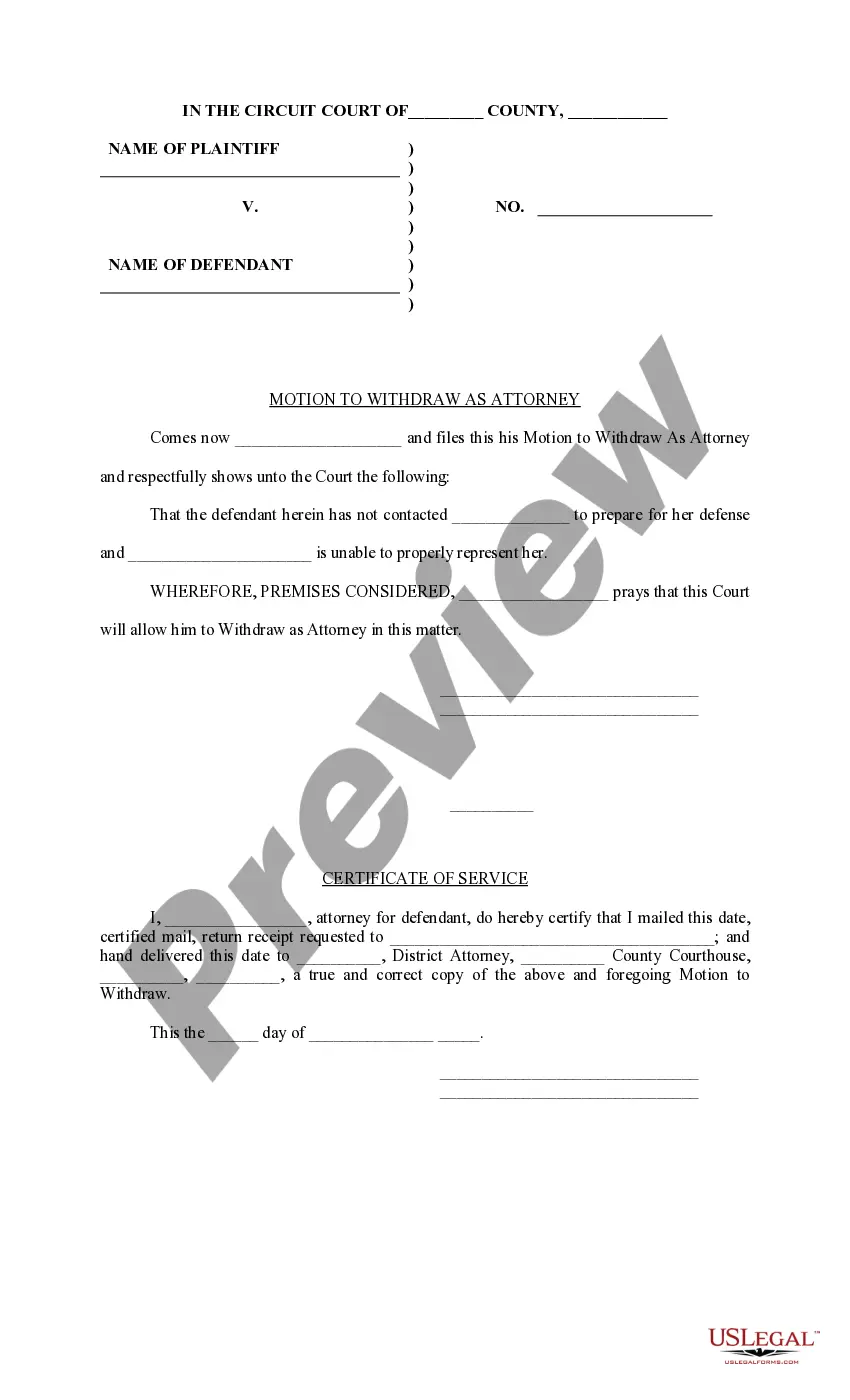
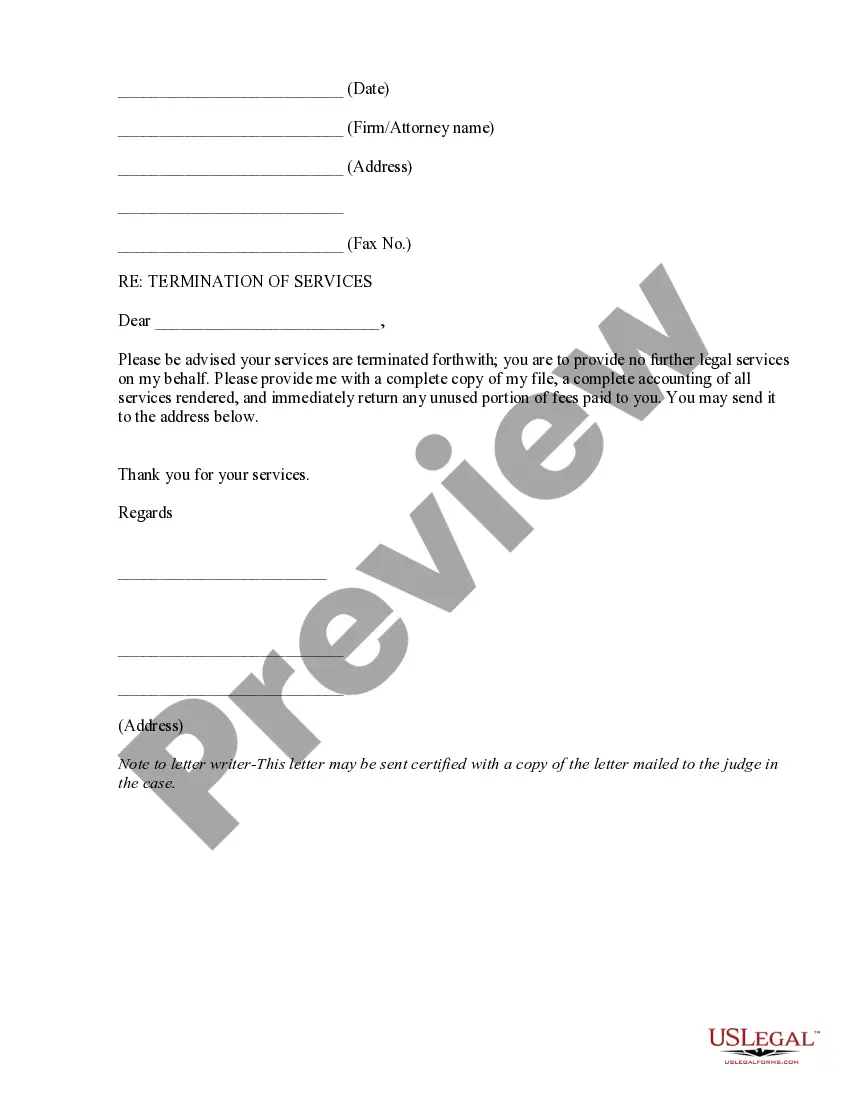
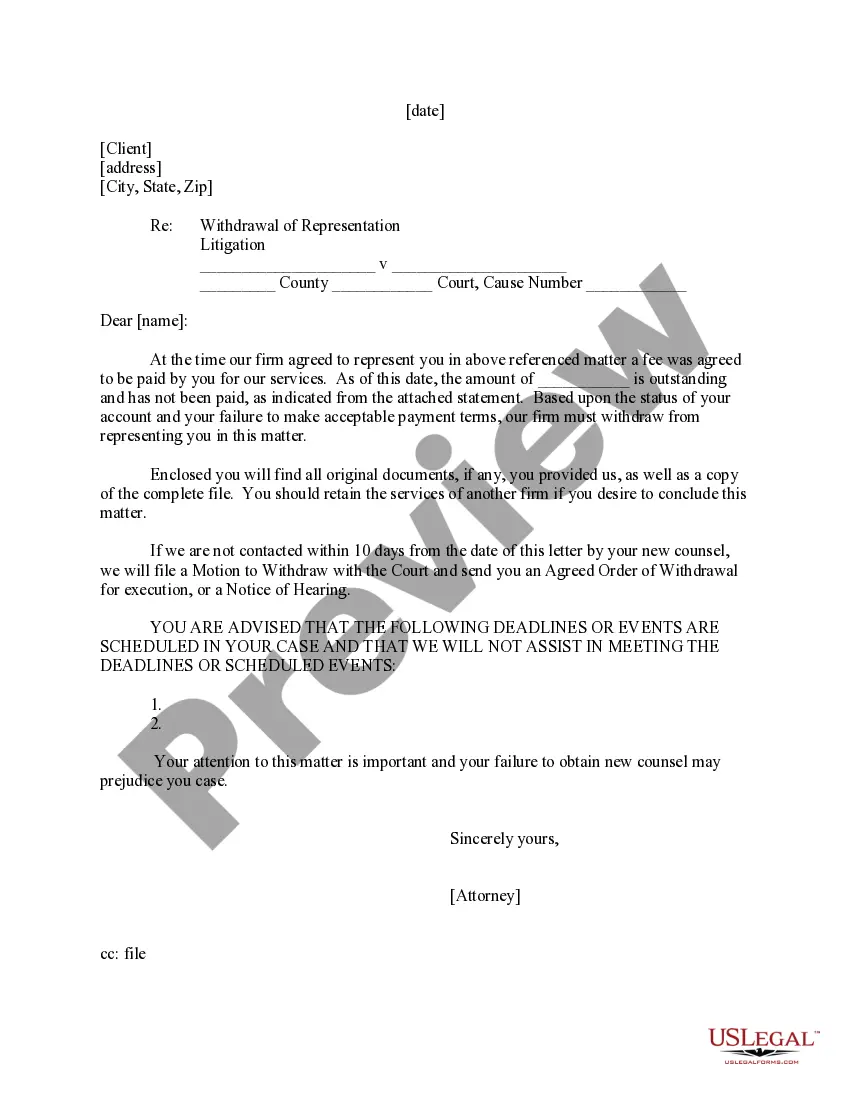
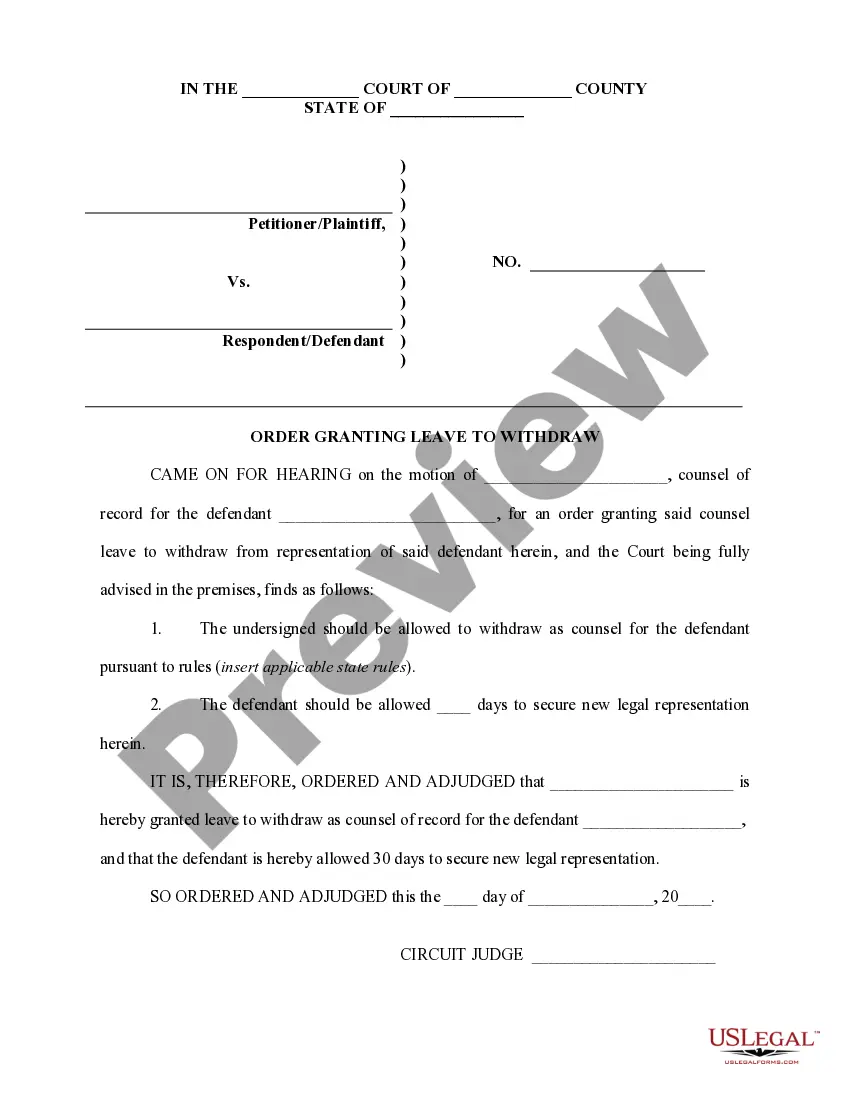
A Motion to Withdraw as Attorney is a formal request for a lawyer to discontinue representation of a client in a legal proceeding. This legal document is used to notify the court of the attorney's intention to withdraw and to provide reasons for the withdrawal. This motion differs from other legal motions because it specifically addresses the attorney-client relationship and seeks to formally sever it, ensuring that all legal protocols are followed for a smooth transition.
Key parts of this document
- Identifying information of the attorney and the client.
- Statement of the reasons for withdrawal.
- A declaration of the status of the case.
- A notice to the client regarding the withdrawal.
- Signature of the attorney and date of the motion.
When this form is needed
This form is necessary when an attorney can no longer represent a client due to various reasons such as conflict of interest, client non-cooperation, or personal issues affecting the attorney's ability to perform. It should also be used if the attorney has not received the necessary fees or if there are ethical conflicts that prevent continued representation.
Who can use this document
- Attorneys seeking to withdraw from a case.
- Clients wishing to understand the process of their attorney's withdrawal.
- Legal professionals requiring a standardized motion for court use.
How to complete this form
- Identify the attorney and client involved, including their contact information.
- Clearly state the reasons for the withdrawal in the designated section.
- Include details about the current status of the case.
- Notify the client of the withdrawal in accordance with ethical guidelines.
- Sign and date the motion before submitting it to the court.
Notarization requirements for this form
This form does not typically require notarization unless specified by local law. However, it is advisable to check specific jurisdictional requirements to ensure compliance with all legal standards.
Get your form ready online
Our built-in tools help you complete, sign, share, and store your documents in one place.
Make edits, fill in missing information, and update formatting in US Legal Forms—just like you would in MS Word.
Download a copy, print it, send it by email, or mail it via USPS—whatever works best for your next step.
Sign and collect signatures with our SignNow integration. Send to multiple recipients, set reminders, and more. Go Premium to unlock E-Sign.
If this form requires notarization, complete it online through a secure video call—no need to meet a notary in person or wait for an appointment.
We protect your documents and personal data by following strict security and privacy standards.
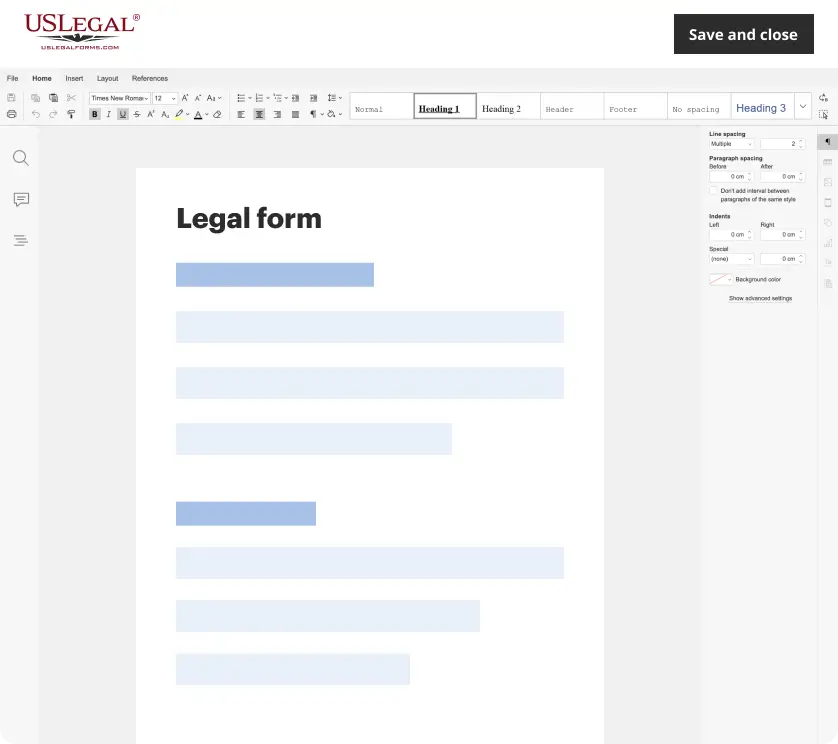
Make edits, fill in missing information, and update formatting in US Legal Forms—just like you would in MS Word.
Download a copy, print it, send it by email, or mail it via USPS—whatever works best for your next step.
Sign and collect signatures with our SignNow integration. Send to multiple recipients, set reminders, and more. Go Premium to unlock E-Sign.

If this form requires notarization, complete it online through a secure video call—no need to meet a notary in person or wait for an appointment.

We protect your documents and personal data by following strict security and privacy standards.
Typical mistakes to avoid
- Failure to provide sufficient reasons for withdrawal.
- Not notifying the client before filing the motion.
- Inaccurate or incomplete court case information.
Benefits of using this form online
- Easy access to a professionally drafted template.
- Ability to customize the form to match specific case details.
- Instant availability for downloads, saving time compared to traditional methods.
Looking for another form?
Form popularity
FAQ
Even if the matter is not pending before a tribunal, the ethics rules of most states provide that a lawyer cannot withdraw until he or she has taken reasonable steps to avoid foreseeable prejudice to the rights of his client, such as giving notice to the client, allowing time for employment of other counsel, delivering
The court may request an explanation for the withdrawal, while the lawyer may be bound to keep confidential the facts that would constitute such an explanation. The lawyer's statement that professional considerations require termination of the representation ordinarily should be accepted as sufficient.
Withdrawal from representation, in United States law, occurs where an attorney terminates a relationship of representing a client.Where litigation has been filed and an attorney is representing the client in court, permission of the court must usually be sought in support of an attorney's withdrawal.
Even if the matter is not pending before a tribunal, the ethics rules of most states provide that a lawyer cannot withdraw until he or she has taken reasonable steps to avoid foreseeable prejudice to the rights of his client, such as giving notice to the client, allowing time for employment of other counsel, delivering
In CA, a lawyer's motion to withdraw is routinely granted, and all the lawyer has to allege is your non-cooperation or a breakdown in communication --lawyers aren't compelled to represent someone they can't work with.
It is difficult for a lawyer to withdraw from representing a client. Judges have discretion in appointing guardian ad litem or indigent cases to attorneys. Judges have discretion in appointing guardian ad litem or indigent cases to attorneys.
A lawyer must withdraw from representing a client under the following circumstances: (1) they are discharged by the client; (2) the client persists in instructing the lawyer to act contrary to professional ethics; (3) the lawyer is instructed by the client to do something that is inconsistent with the lawyer's duty to
Once an attorney has received court permission to withdraw from the representation, the attorney must return all of the client's property in his or her possession, including client funds and any unused or unearned prepaid fees or retainers.