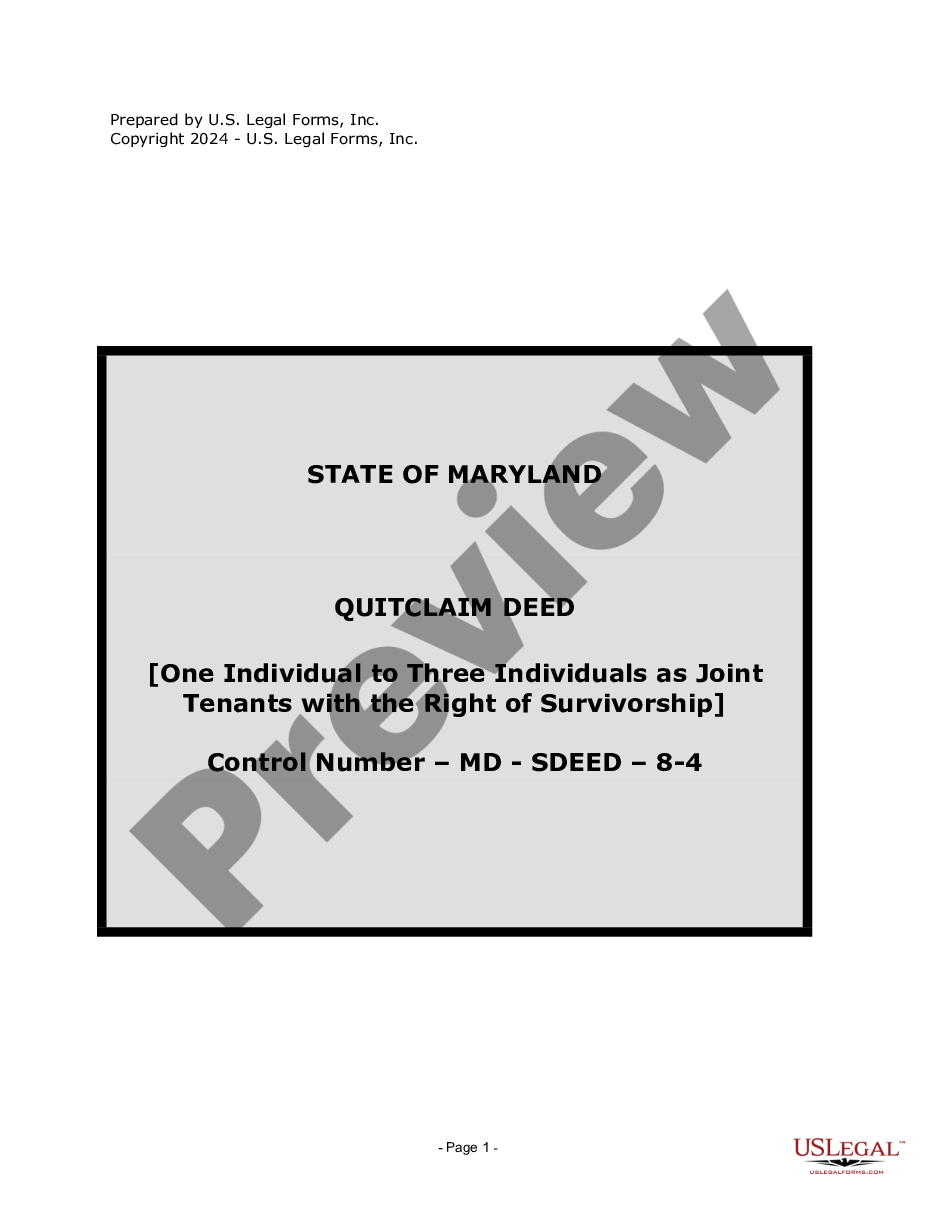
Maryland Quitclaim Deed from one Individual to Three Individuals as Joint Tenants with the Right of Survivorship
What this document covers
The Quitclaim Deed from one Individual to Three Individuals as Joint Tenants with the Right of Survivorship is a legal document used to transfer ownership of real property. Unlike other types of deeds, a quitclaim deed does not guarantee that the grantor has clear title to the property. This form is specifically designed for situations where one person conveys their interest in real estate to three individuals, all holding the title as joint tenants, which means if one tenant passes away, their interest automatically transfers to the surviving tenants. This legal structure promotes ease of transfer and simplifies inheritance issues among the joint tenants.
Main sections of this form
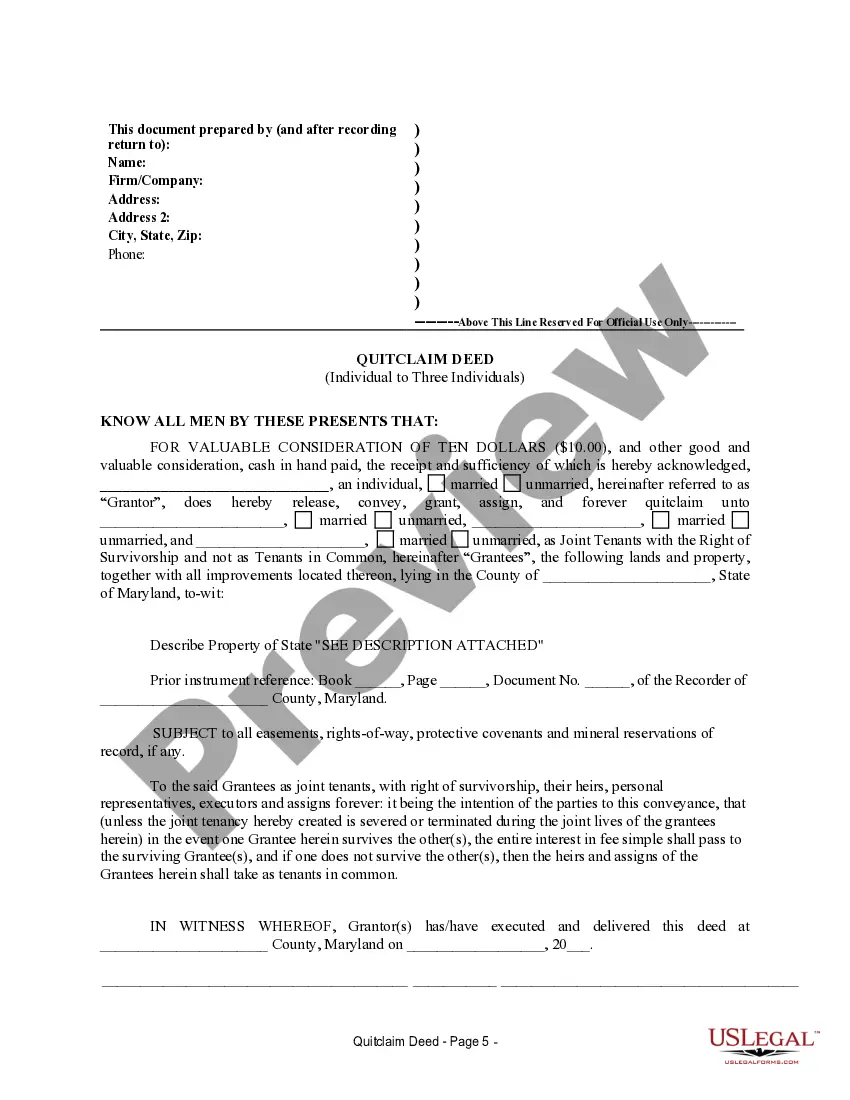
- Identification of the grantor (person giving up the property) and grantees (those receiving the property).
- Statement of consideration, typically a nominal amount for the transfer.
- Description of the property being transferred.
- Clauses establishing joint tenancy with the right of survivorship.
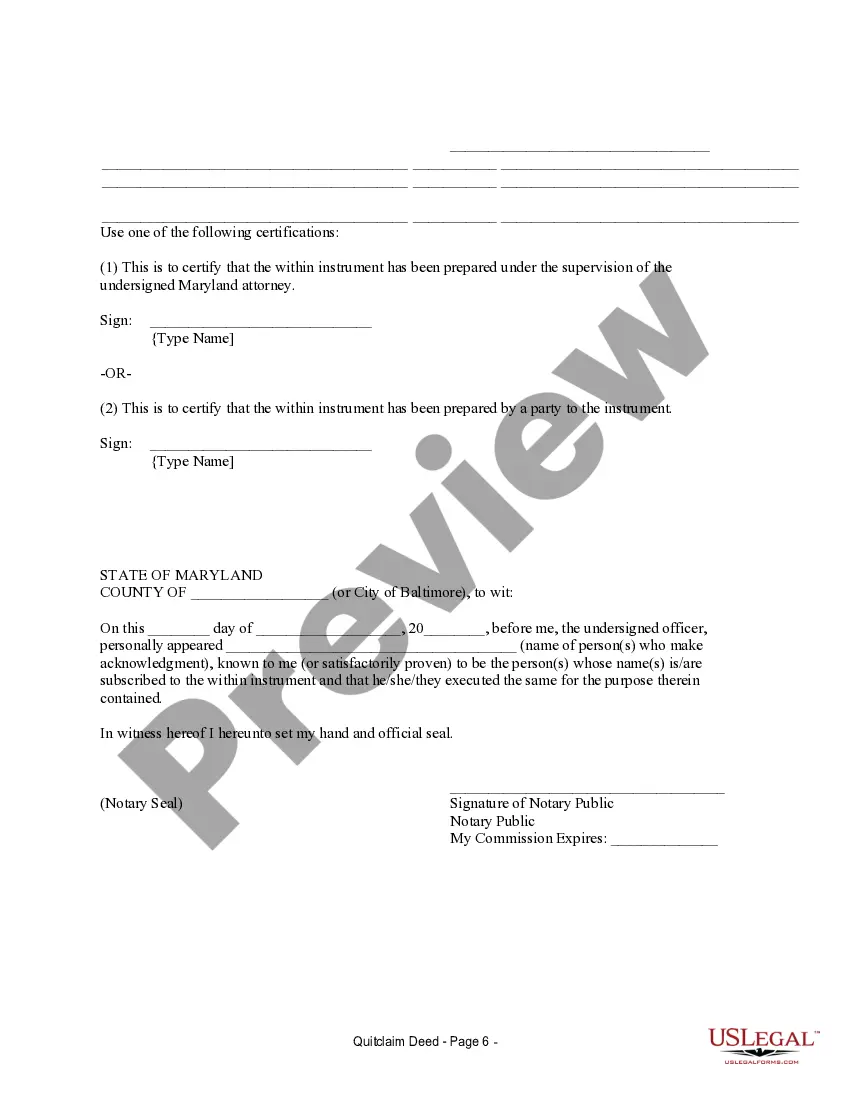
- Signature lines for the grantor and acknowledgments for notary public.






Common use cases
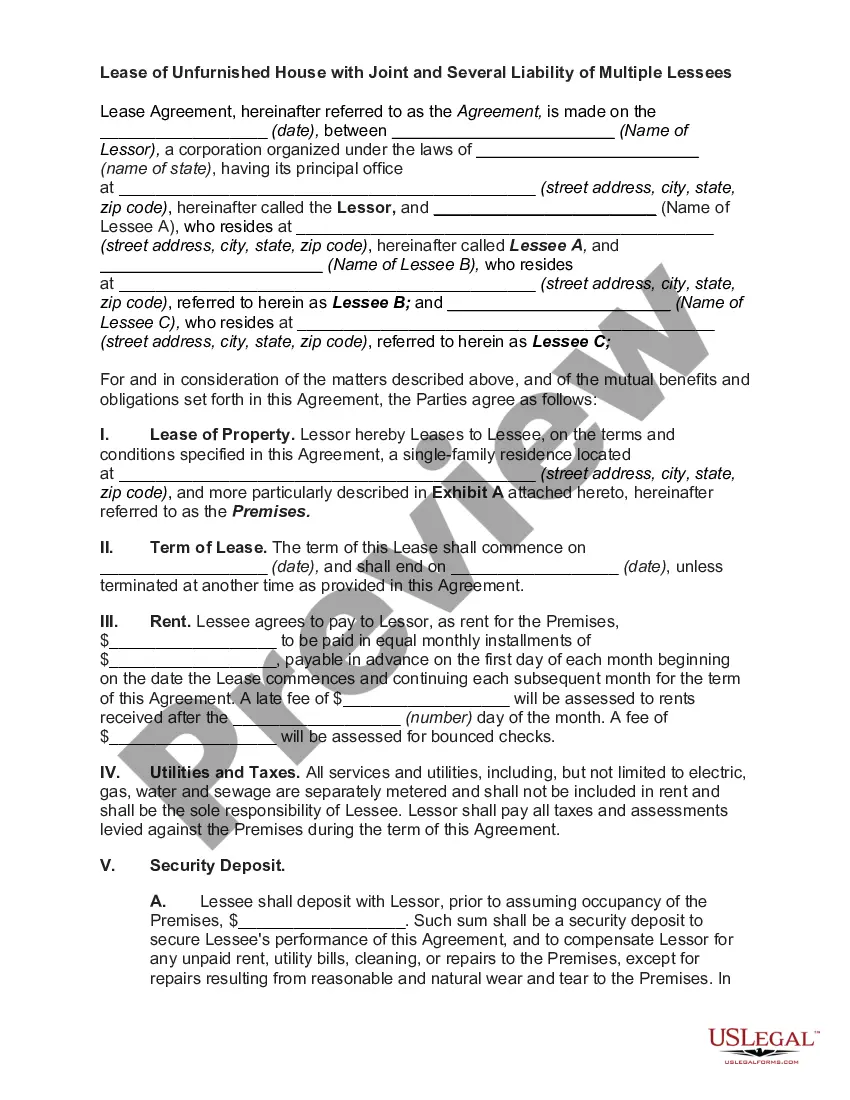
This quitclaim deed is commonly used in situations where an individual wants to transfer property ownership to multiple people without litigation or disputes. Typical scenarios include family property transfers, adding joint owners for estate planning, or among friends or partners where joint ownership is preferred. It is especially useful when the transfer is straightforward, and the grantor wishes to retain no future claims to the property.
Who needs this form
This form is appropriate for:
- Individuals looking to transfer their property interest to multiple parties.
- Property owners wanting to establish joint tenancy with friends, family, or partners.
- Grantors who understand the implications of transferring property via a quitclaim deed.
- Those who are not concerned about title guarantees but want to simplify property ownership arrangements.
Completing this form step by step
- Identify the grantor and ensure they are the legal owner of the property.
- List the names of the three individuals who will become the grantees.
- State the consideration paid for the transfer, typically ten dollars.
- Provide a detailed description of the property being transferred.
- Gather signatures from the grantor and have the deed notarized after completion.
Does this form need to be notarized?
This form needs to be notarized to ensure legal validity. US Legal Forms provides secure online notarization powered by Notarize, allowing you to complete the process through a verified video call, available anytime.
Get your form ready online
Our built-in tools help you complete, sign, share, and store your documents in one place.
Make edits, fill in missing information, and update formatting in US Legal Forms—just like you would in MS Word.
Download a copy, print it, send it by email, or mail it via USPS—whatever works best for your next step.
Sign and collect signatures with our SignNow integration. Send to multiple recipients, set reminders, and more. Go Premium to unlock E-Sign.
If this form requires notarization, complete it online through a secure video call—no need to meet a notary in person or wait for an appointment.
We protect your documents and personal data by following strict security and privacy standards.
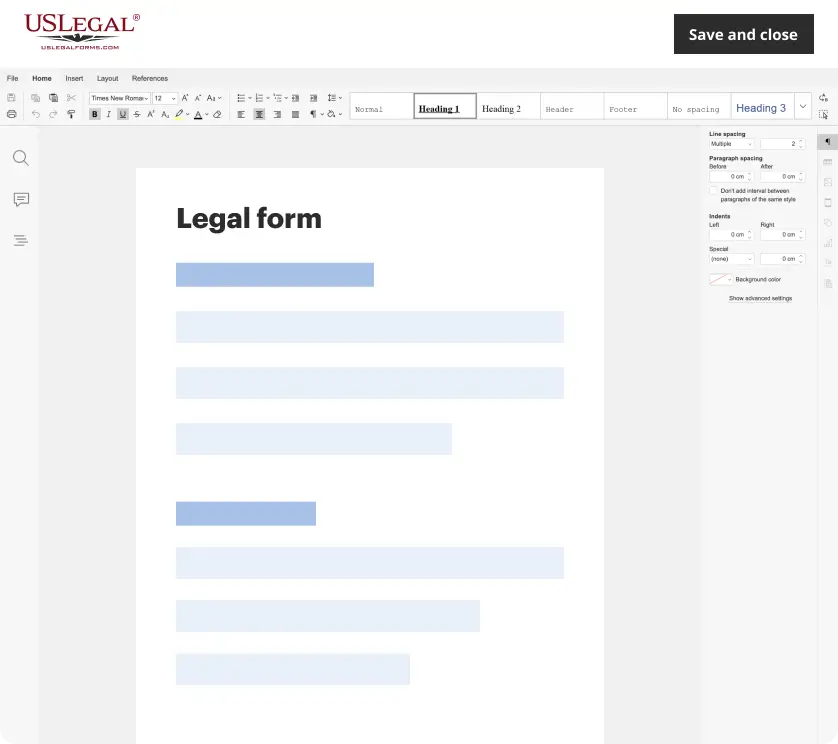
Make edits, fill in missing information, and update formatting in US Legal Forms—just like you would in MS Word.
Download a copy, print it, send it by email, or mail it via USPS—whatever works best for your next step.
Sign and collect signatures with our SignNow integration. Send to multiple recipients, set reminders, and more. Go Premium to unlock E-Sign.

If this form requires notarization, complete it online through a secure video call—no need to meet a notary in person or wait for an appointment.

We protect your documents and personal data by following strict security and privacy standards.
Common mistakes to avoid
- Failing to include a complete and accurate property description.
- Neglecting to have the deed notarized before submission.
- Omitting the necessary intake sheet required in Maryland.
- Not understanding the legal implications of joint tenancy.
Why complete this form online
- Immediate access to professionally drafted templates, saving time and effort.
- Easy to complete digitally, ensuring all necessary fields are filled in accurately.
- Convenient editing options that allow users to customize the document according to their needs.
- Secure storage and retrieval of forms for future reference.
Looking for another form?

Form popularity
FAQ
'Joint tenants with right of survivorship' means that two or more individuals own a property together, with each having equal rights. When one owner dies, their share goes directly to the surviving tenants without going through probate. This legal arrangement promotes a seamless transfer of ownership and can be advantageous for families or partners.
This is known as 'Severing the Joint Tenancy'. It requires service of a written notice of change the 'severance'. It can be done without the other owner's cooperation or agreement. It is recorded at the Land Registry, and the other owner will know it has been done but only 'after the event' so to speak.
In order to sever the right of survivorship, a tenant must only record a new deed showing that his or her interest in the title is now held in a Tenancy-in-Common or as Community Property.
The tenancy will continue if only one joint tenants leaves without having the right to do this. You will only have the right to leave a joint tenancy early if your landlord agrees to this arrangement or if your tenancy agreemetn allows you to.
If you're joint tenants and you both want to leave, either you or your ex-partner can end the tenancy by giving notice. You'll both need to move out. If you've agreed one of you plans to stay, it's usually best to explain this to your landlord and ask them to update the tenancy agreement.
For example, if one joint tenant wants to sell the property but the other joint tenant doesn`t want to sell, it is possible to ask for a court order to either physically divide the property or sell it and divide the sales proceeds among the joint tenant owners.
Joint tenancy can only be created if the four people obtain their interest at the same time. In other words, if three people own a building, they cannot add a fourth person to the deed and create a joint tenancy.
As with the tenancy-in-common, a joint tenancy can exist in three or more people. Obviously, each party must have an interest that is equal to one divided by the total number of joint tenants. If one of the joint tenants dies, the others share his or her interest and they remain joint tenants with each other.
Joint tenancy creates survivorship rights: If one owner dies, the share automatically passes to the surviving owner. You can terminate joint tenancy by transferring your share to the other tenant. A joint tenant also has the right to sell or gift his share to another party.
When joint tenants have right of survivorship, it means that the property shares of one co-tenant are transferred directly to the surviving co-tenant (or co-tenants) upon their death. While ownership of the property is shared equally in life, the living owners gain total ownership of any deceased co-owners' shares.