Massachusetts Discovery Interrogatories from Defendant to Plaintiff with Production Requests

What is this form?
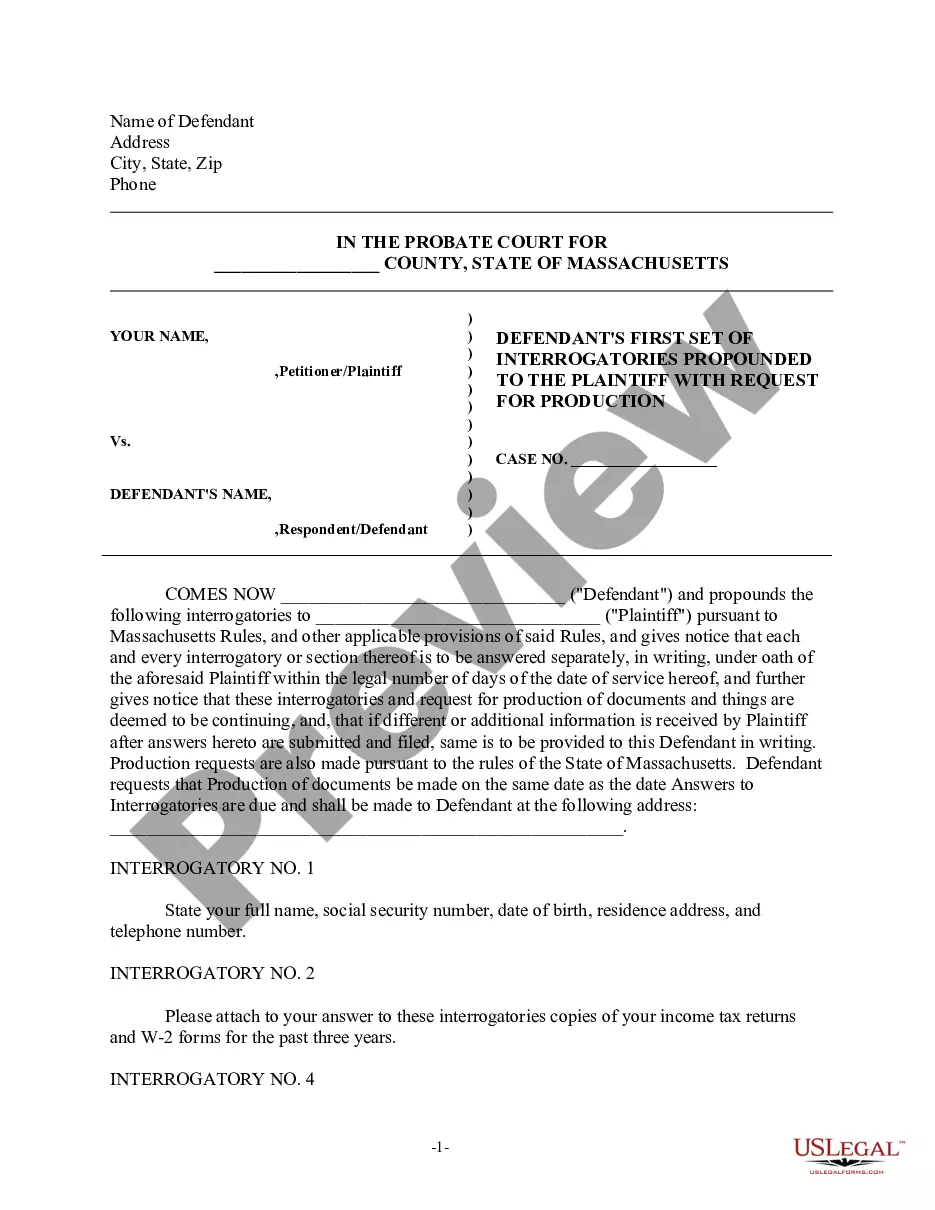
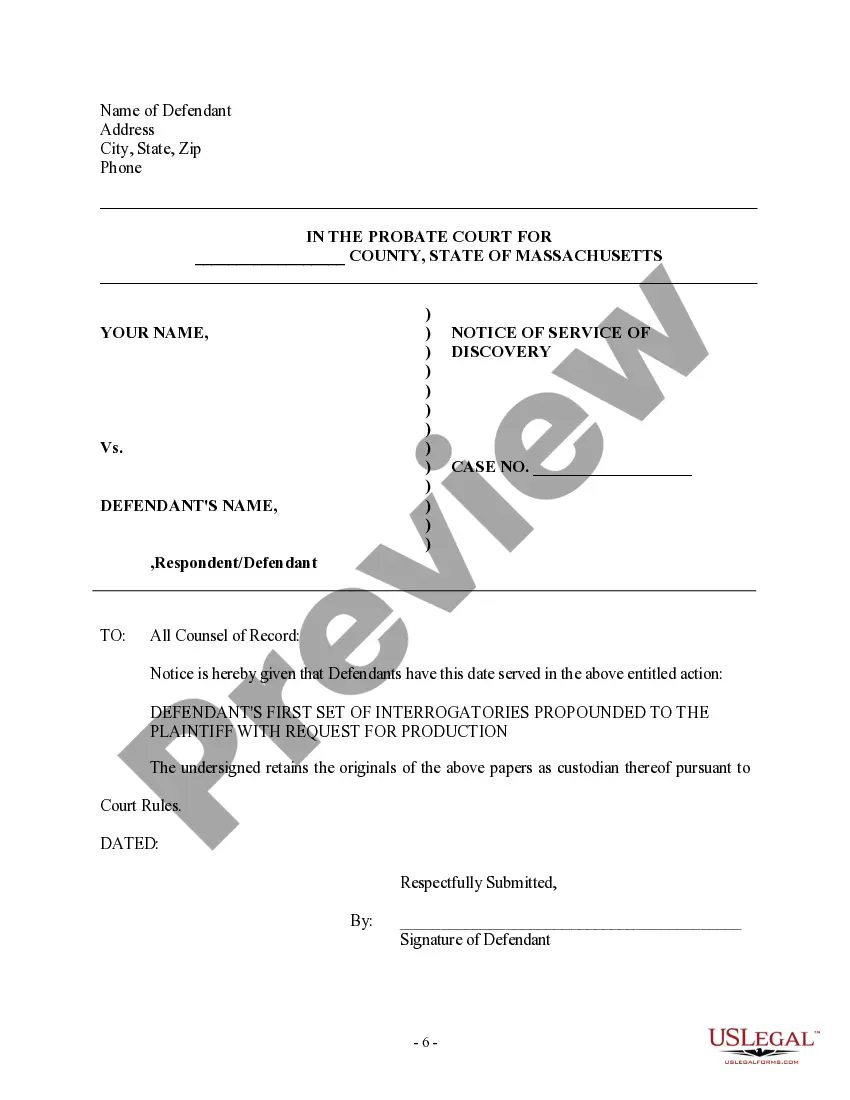
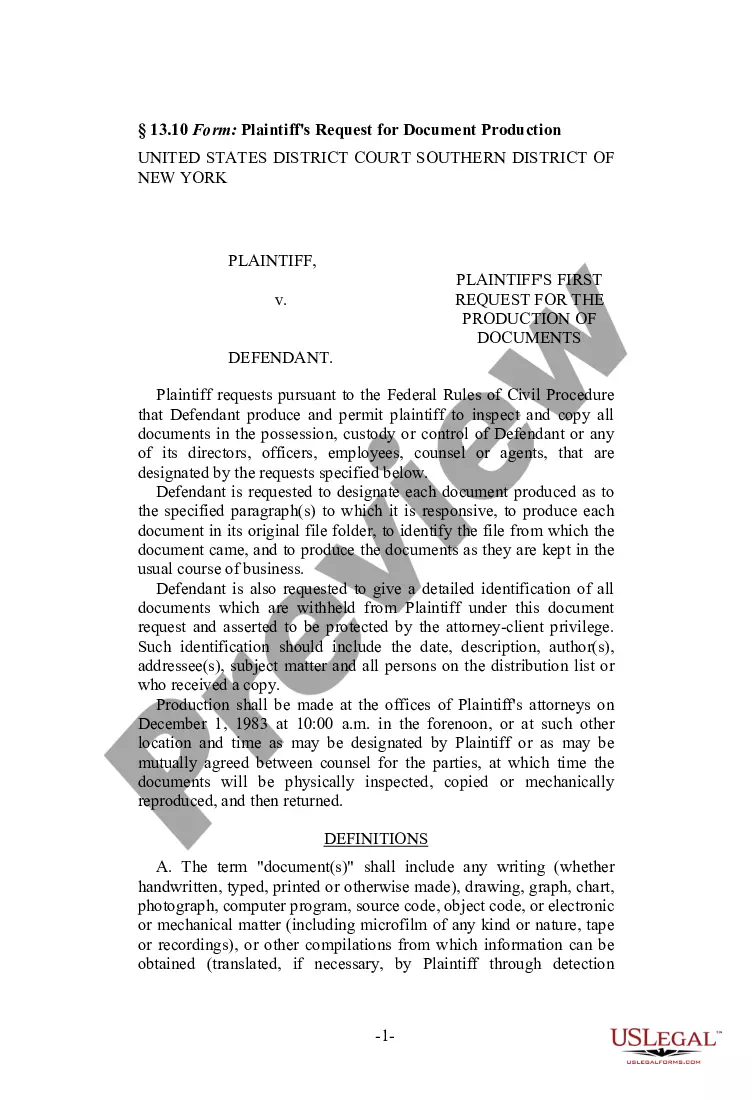
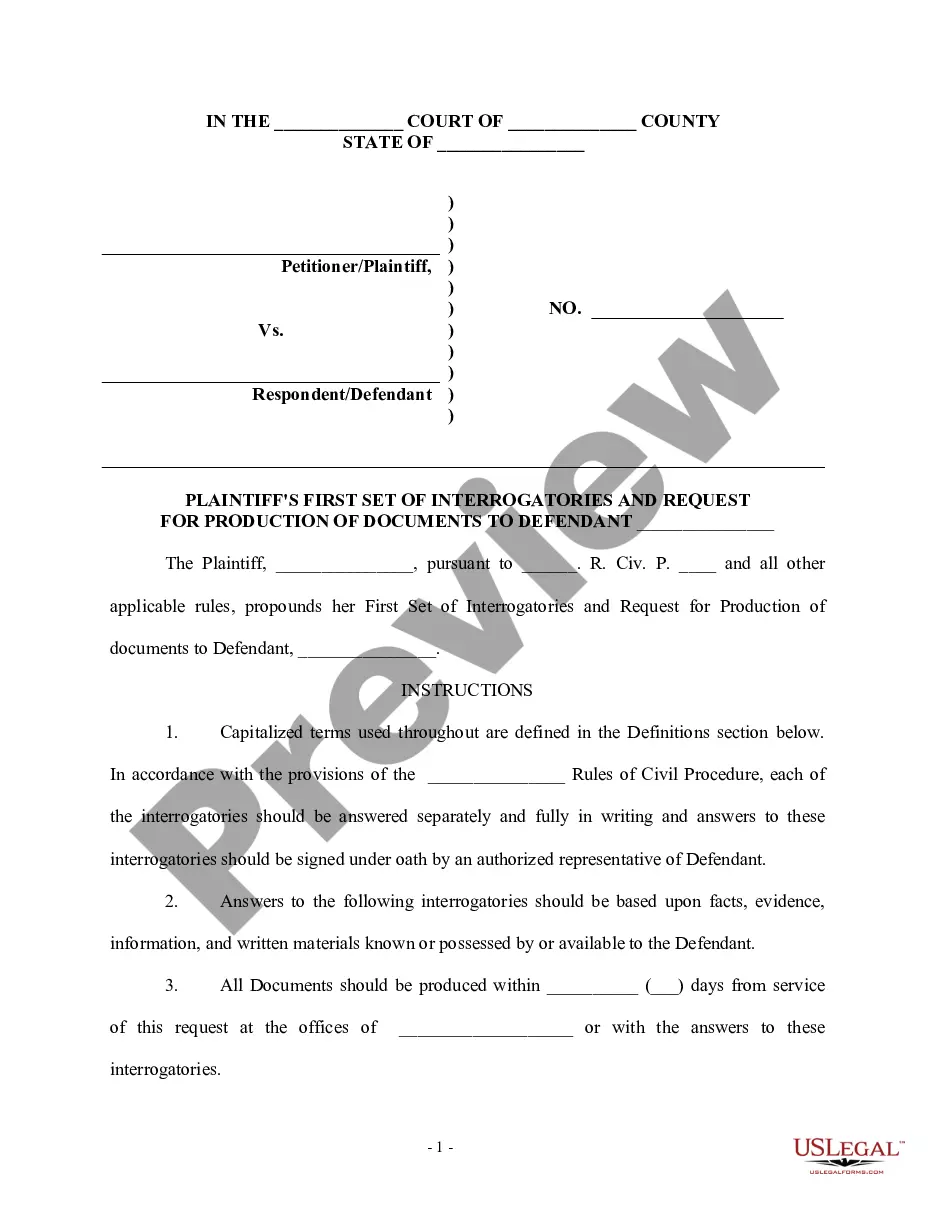
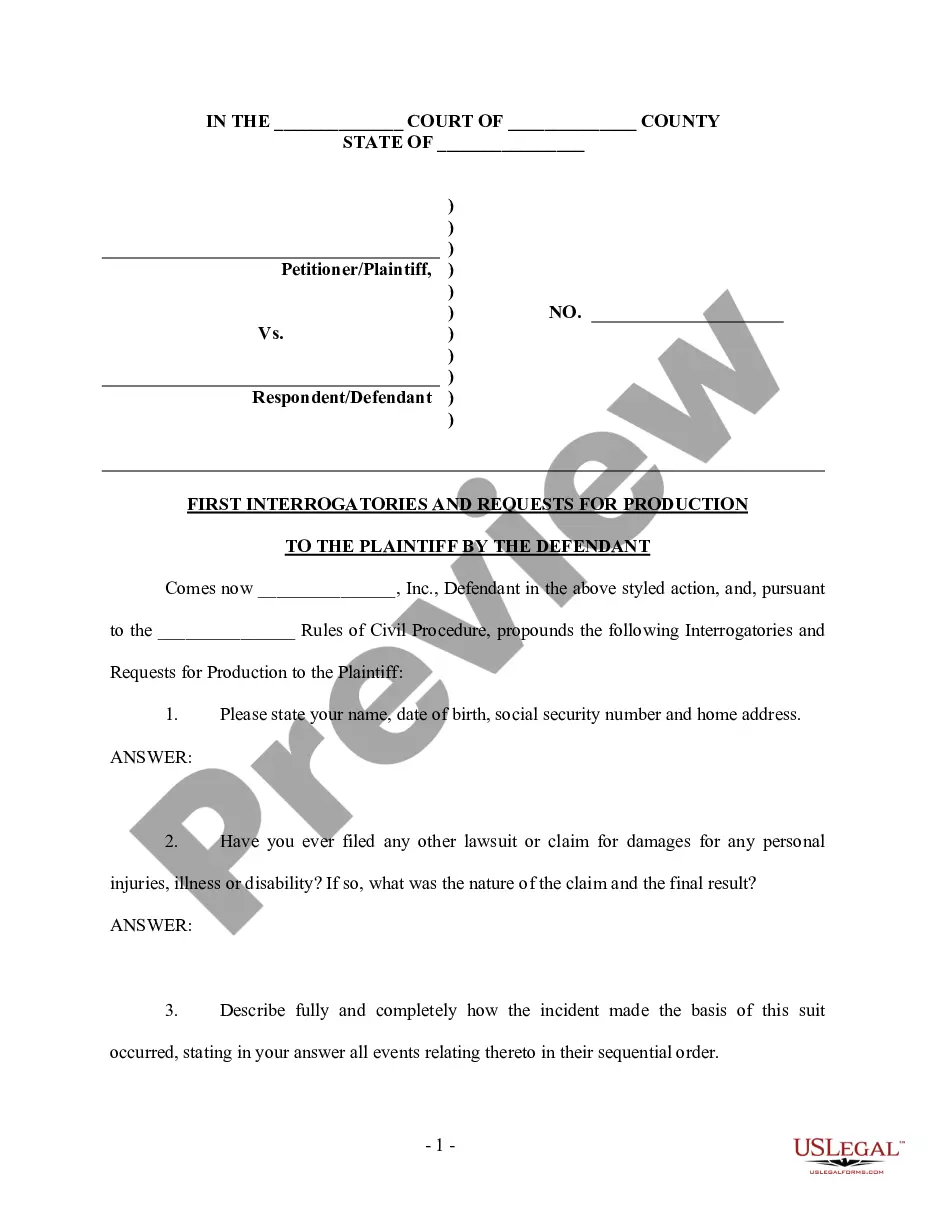
The Discovery Interrogatories from Defendant to Plaintiff with Production Requests is a legal document used in divorce proceedings. This form allows the defendant to submit a set of interrogatories, which are questions that the plaintiff must answer under oath, and include requests for the production of relevant documents. It serves to gather information that can be critical in determining the outcome of a divorce case. This form is tailored to the laws and procedural rules of Massachusetts, setting it apart from similar forms used in other jurisdictions.
Main sections of this form
- Defendant's information: Name, address, and contact details
- Plaintiff's information: Name to whom interrogatories are directed
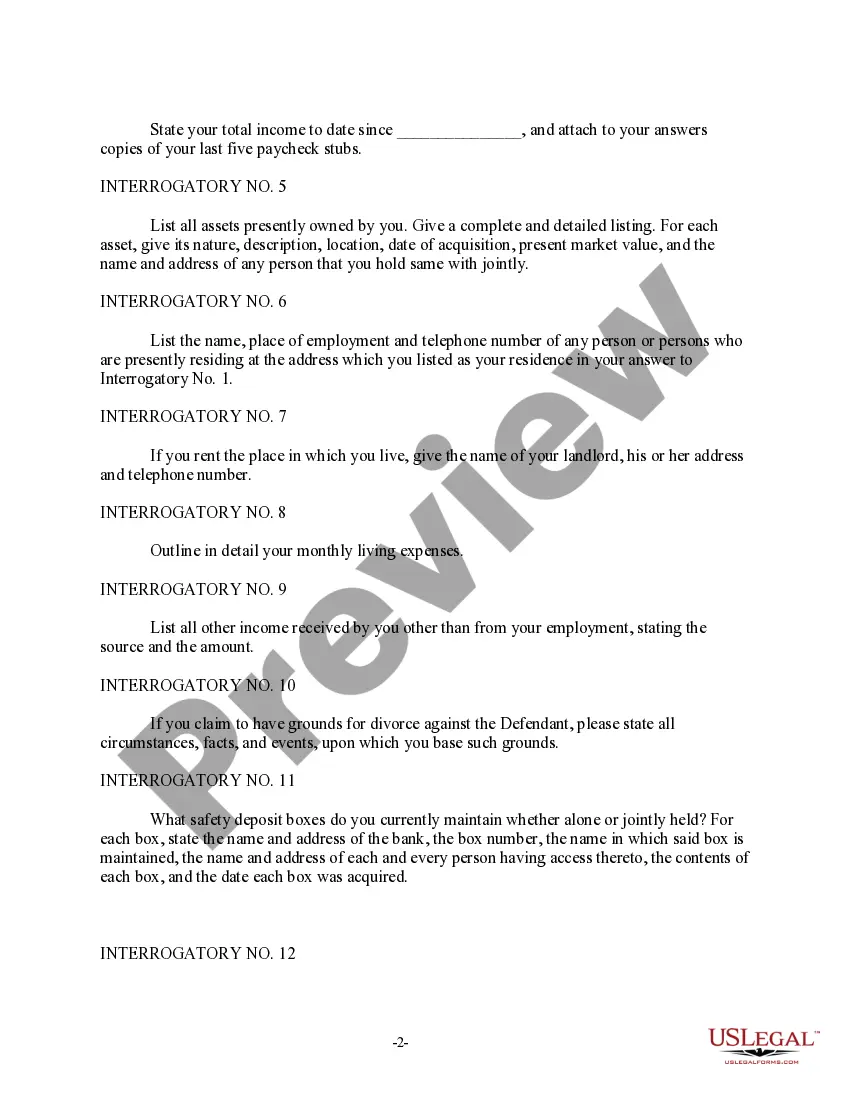
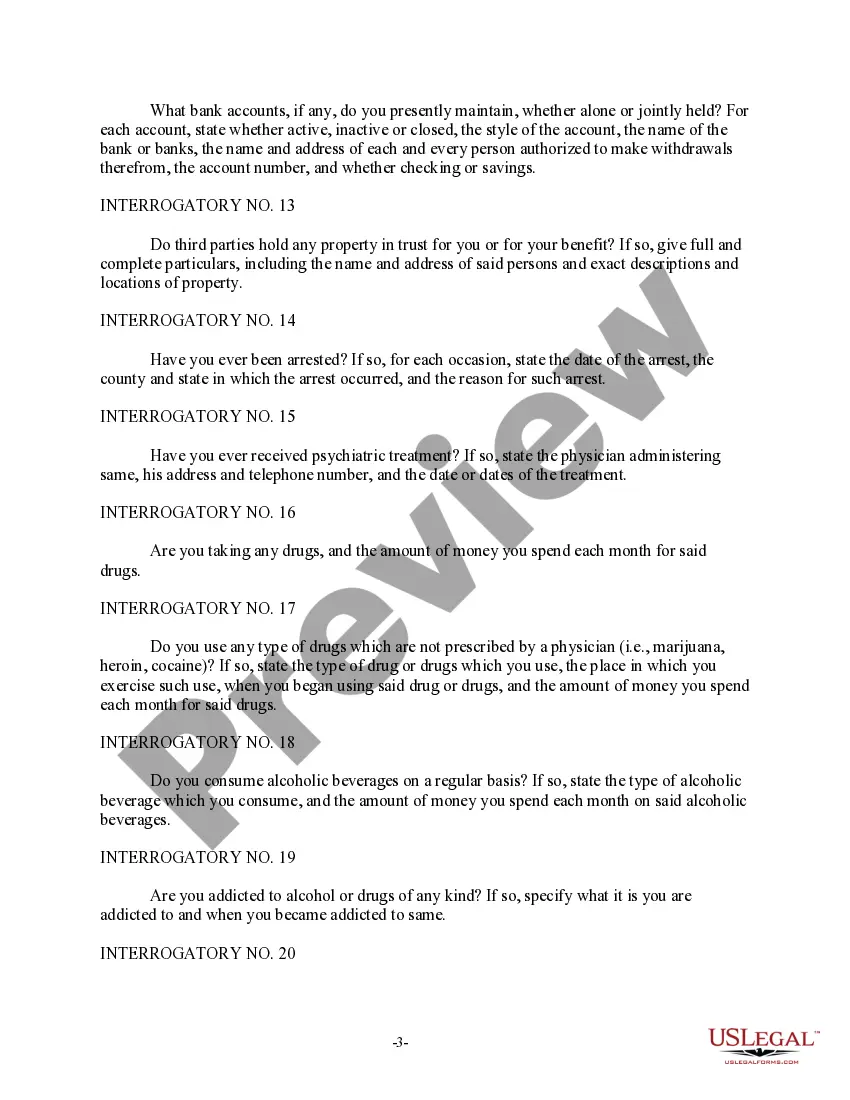
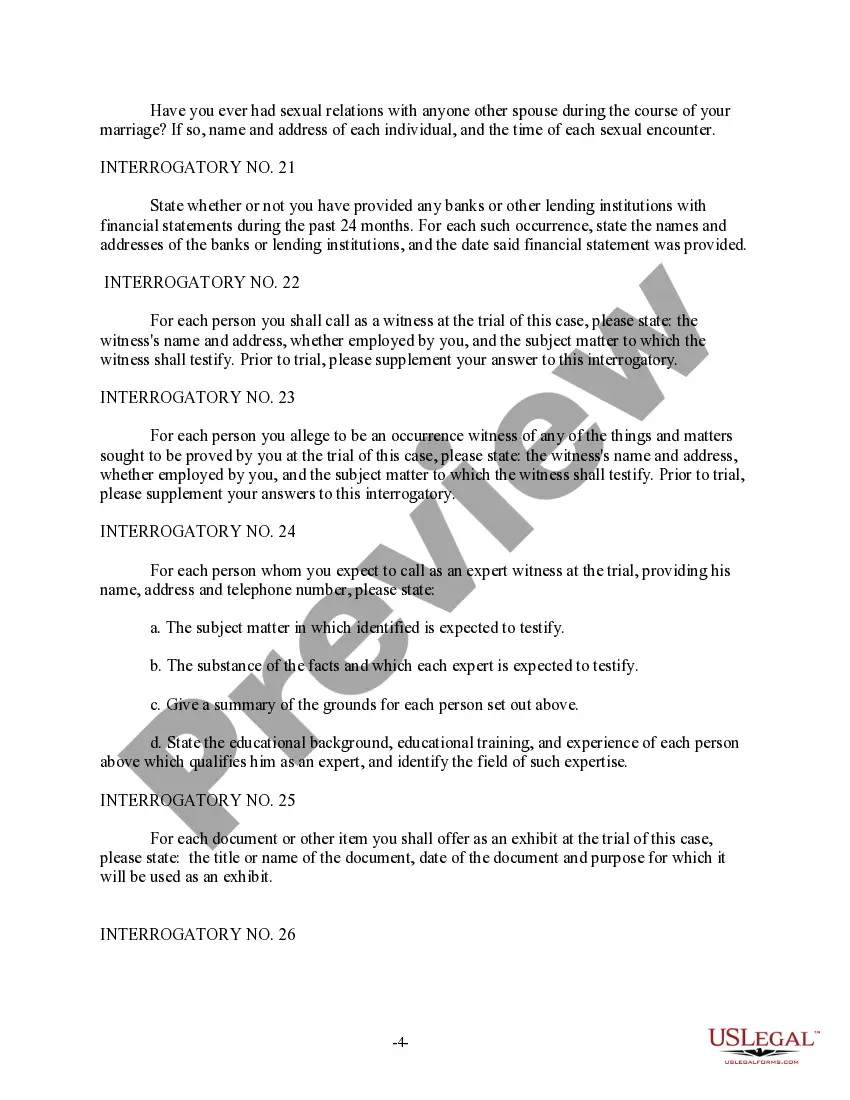
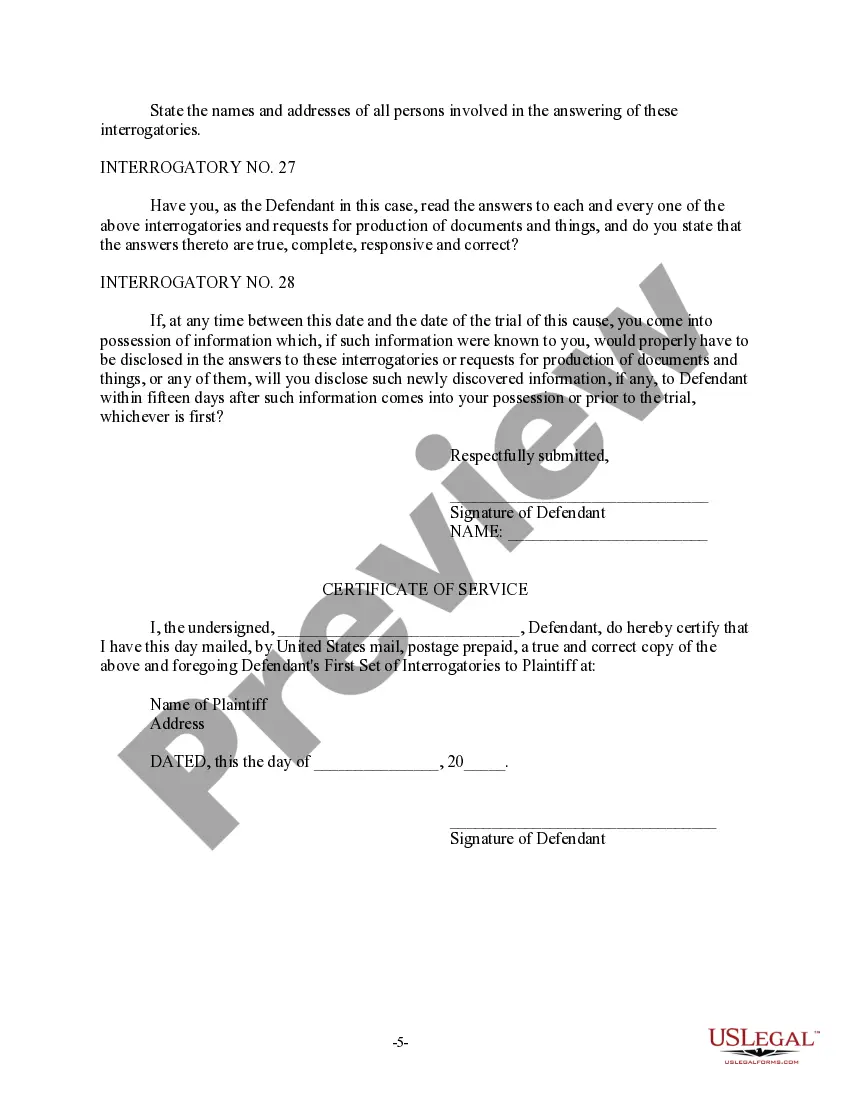
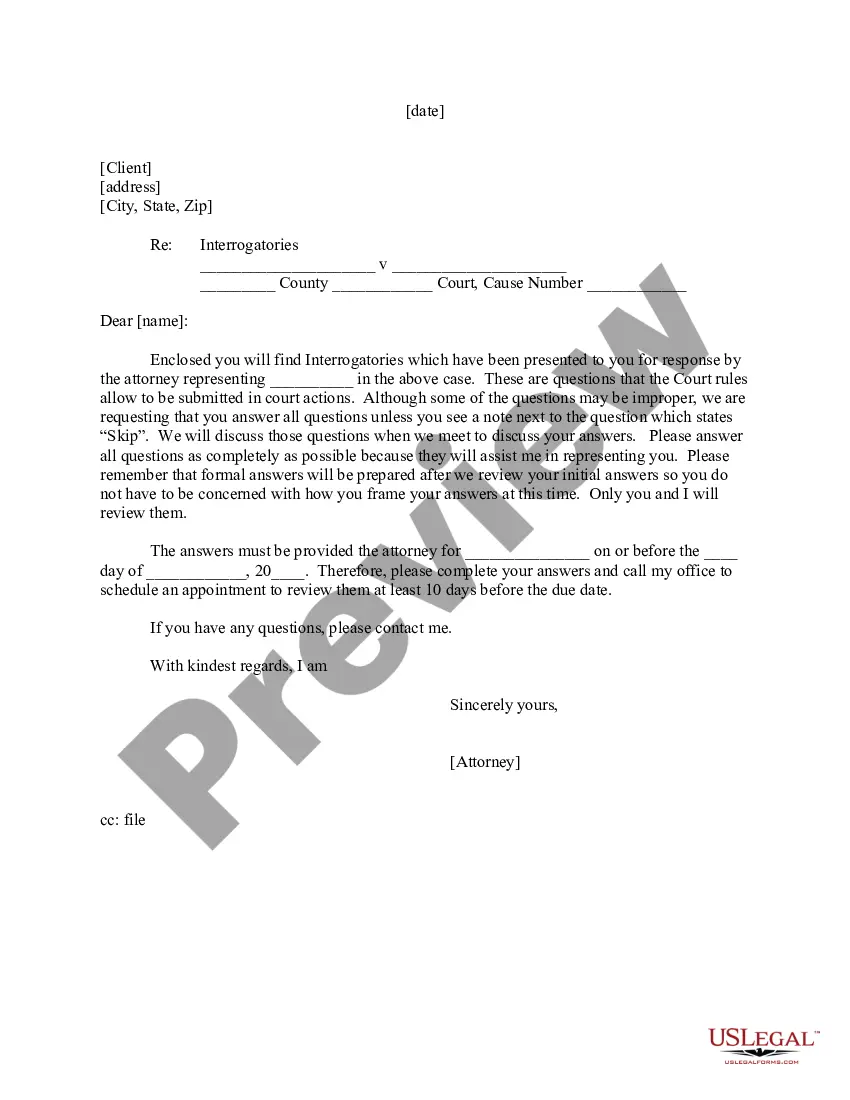
- Interrogatories: A series of questions requiring detailed responses from the plaintiff
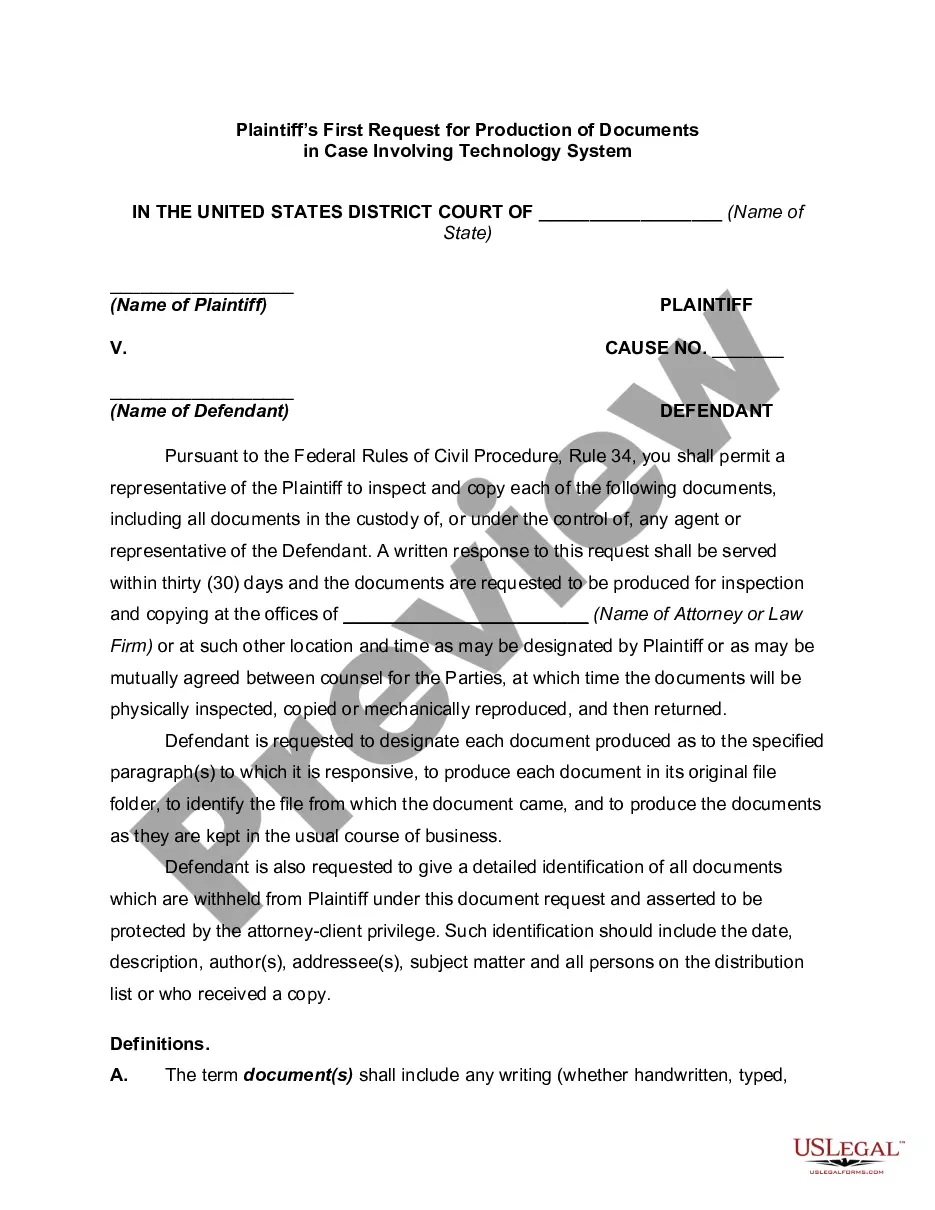
- Production requests: Requests for the plaintiff to provide documents that support their answers
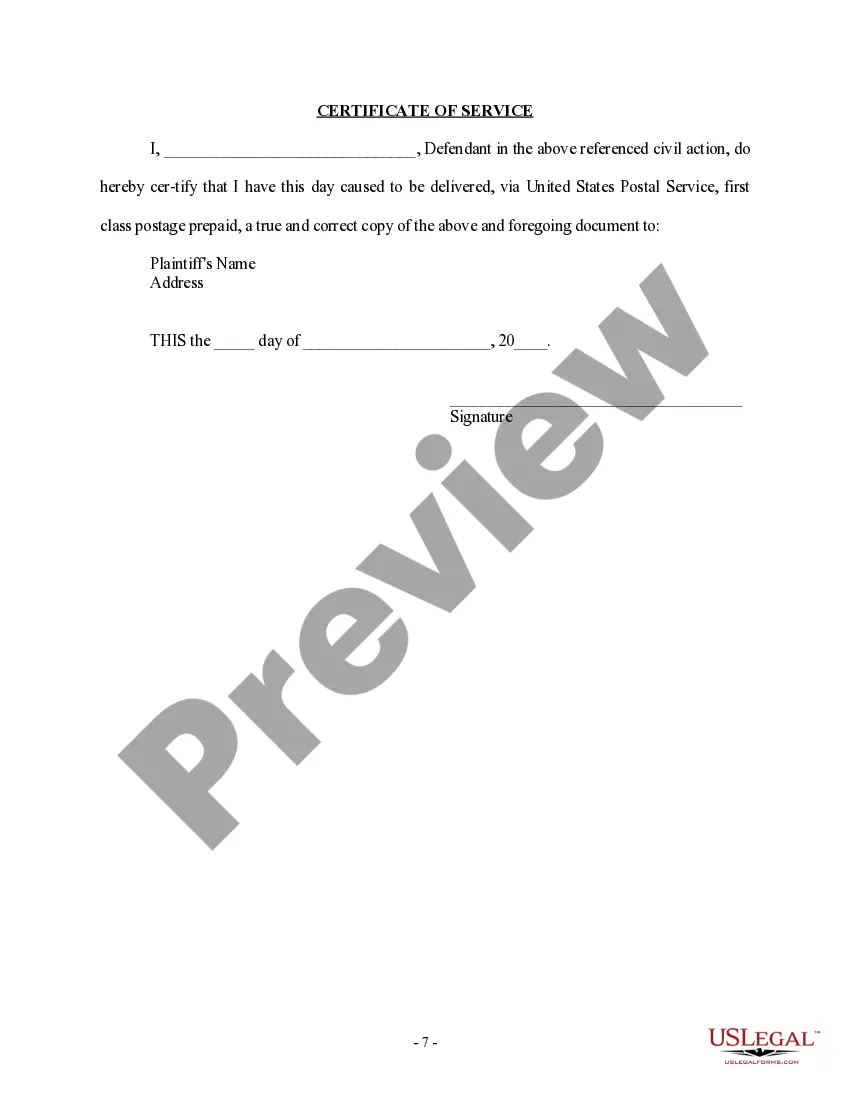
- Notices: Instructions regarding the submission and service of interrogatories
When to use this form
This form should be used when a defendant in a divorce action seeks information from the plaintiff to support their legal position. It is most relevant when the defendant needs clarity on the plaintiff's financial situation, grounds for divorce, or any other pertinent facts that could affect the divorce proceedings.
Who can use this document
- Defendants in divorce cases in Massachusetts
- Individuals seeking to gather evidence before a divorce trial
- Attorneys representing defendants in family law matters
How to complete this form
- Identify the parties: Fill in the names and contact information of the defendant and plaintiff.
- Answer interrogatories: Complete each question with detailed, truthful answers under oath.
- Attach required documents: Include financial documents or any other relevant materials as specified in the interrogatories.
- Sign and date: The defendant must sign the document to validate it before submitting it to the court.
- Provide notice: Ensure that proper notice of service is given to the plaintiff, following the guidelines provided.
Does this document require notarization?
In most cases, this form does not require notarization. However, some jurisdictions or signing circumstances might. US Legal Forms offers online notarization powered by Notarize, accessible 24/7 for a quick, remote process.
Get your form ready online
Our built-in tools help you complete, sign, share, and store your documents in one place.
Make edits, fill in missing information, and update formatting in US Legal Forms—just like you would in MS Word.
Download a copy, print it, send it by email, or mail it via USPS—whatever works best for your next step.
Sign and collect signatures with our SignNow integration. Send to multiple recipients, set reminders, and more. Go Premium to unlock E-Sign.
If this form requires notarization, complete it online through a secure video call—no need to meet a notary in person or wait for an appointment.
We protect your documents and personal data by following strict security and privacy standards.

Make edits, fill in missing information, and update formatting in US Legal Forms—just like you would in MS Word.

Download a copy, print it, send it by email, or mail it via USPS—whatever works best for your next step.

Sign and collect signatures with our SignNow integration. Send to multiple recipients, set reminders, and more. Go Premium to unlock E-Sign.

If this form requires notarization, complete it online through a secure video call—no need to meet a notary in person or wait for an appointment.

We protect your documents and personal data by following strict security and privacy standards.
Avoid these common issues
- Failing to respond to all interrogatories fully and truthfully.
- Not providing requested documents alongside the interrogatories.
- Missing deadlines for answering or producing documents.
- Inadvertently omitting pertinent details that could impact the case.
Why use this form online
- Convenient access to professionally drafted templates tailored for specific legal needs.
- Editability, allowing users to customize the form to fit individual circumstances.
- Reliable information that aligns with current legal standards in Massachusetts.
Looking for another form?



Form popularity
FAQ
Interrogatories, which are written questions about things that are relevant or important to the case. (NRCP 33; JCRCP 33) Requests for production of documents or things, which are written requests that demand the other side provide particular documents or items.
If the plaintiff does not respond to the court order, then you can file a Motion to Dismiss and you may win your case. Send a final request. If they do not respond to the final request within 30 days you can send the court an application for entry of final judgment or dismissal.
The purpose of interrogatories is to learn a great deal of general information about a party in a lawsuit. For example, the defendant in a personal injury lawsuit about a car accident might send you interrogatories asking you to disclose things like: Where you live. Where you work.
You must answer each interrogatory separately and fully in writing under oath, unless you object to it. You must explain why you object. You must sign your answers and objections.
No party shall serve upon any other party as of right more than thirty interrogatories, including interrogatories subsidiary or incidental to, or dependent upon, other interrogatories, and however the same may be grouped or combined; but the interrogatories may be served in two or more sets, as long as the total number
That disclosure is accomplished through a methodical process called "discovery." Discovery takes three basic forms: written discovery, document production and depositions.
California written discovery generally consists of four methods: Request for Production of Documents, Form Interrogatories, Special Interrogatories, and Requests for Admissions.
Interrogatories ask questions; the responding party provides written answers. A request for production of documents requests the production of documents (or other tangible things); the responding party provides documents.
Interrogatories Interrogatories are written questions that are sent by one party to another.Requests for production are the means by which you can ask the other party to make copies of documents, photographs, records, etc. and to request the inspection of property.