Louisiana Amended Judgment in Child Custody case
Overview of this form
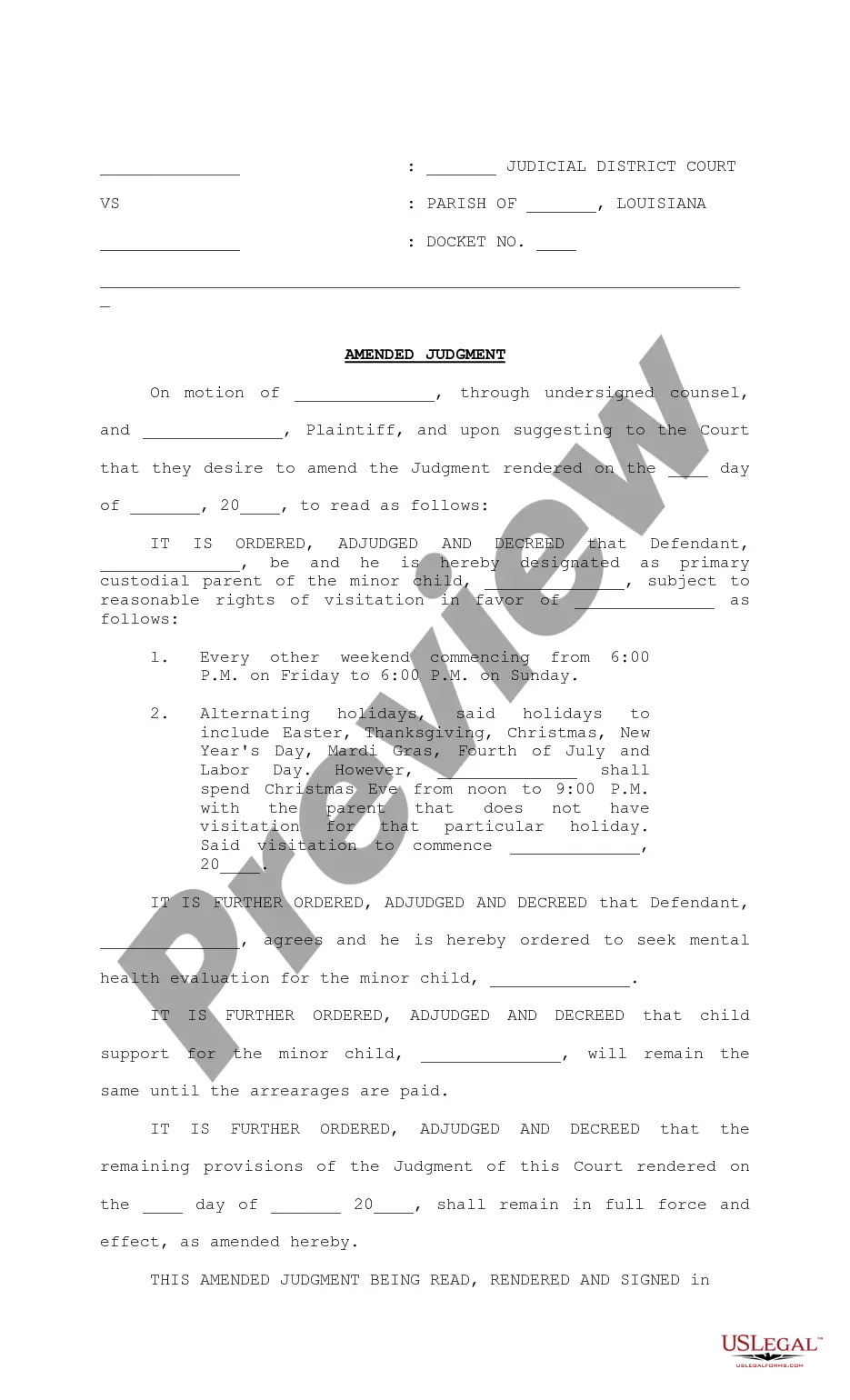
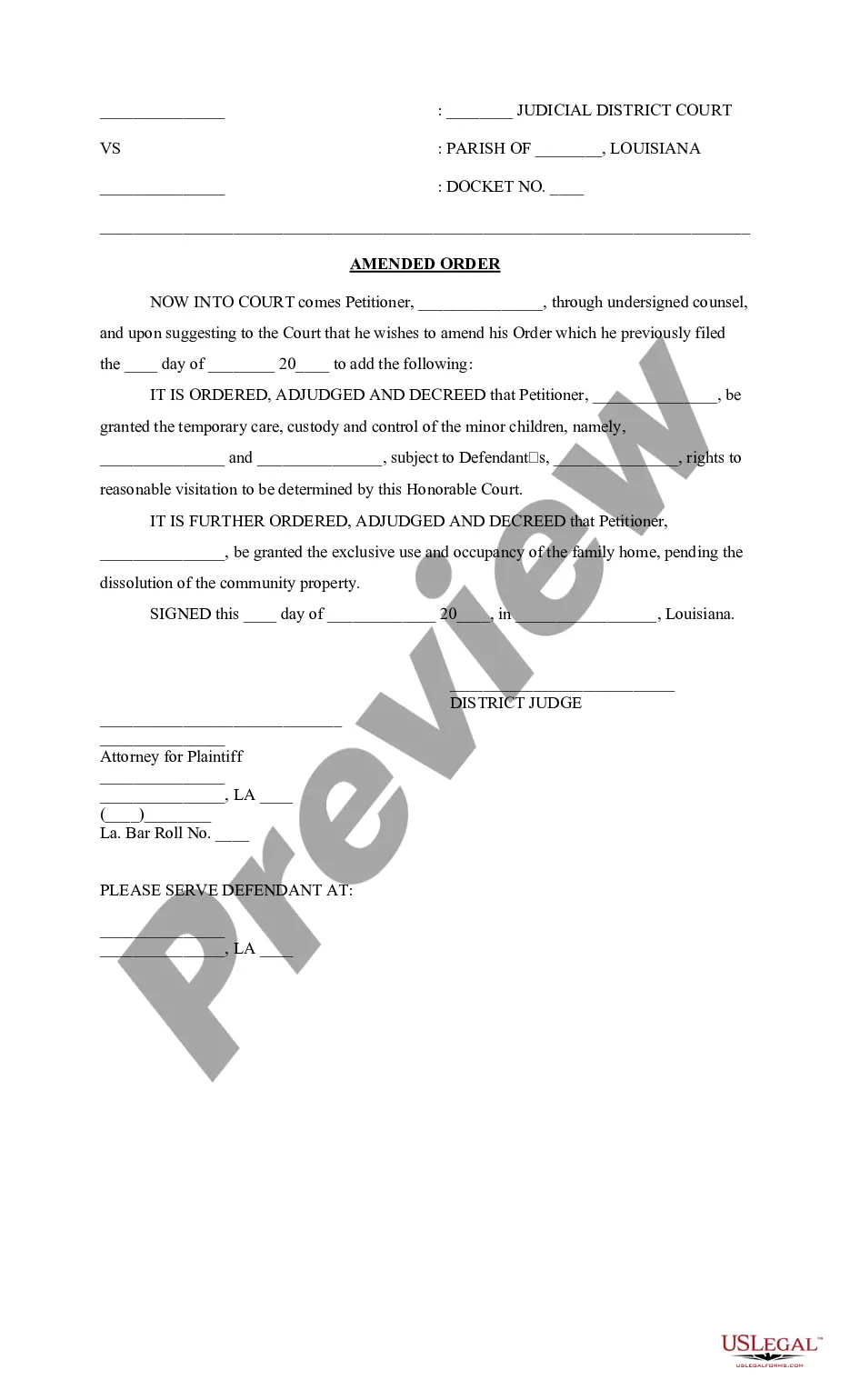
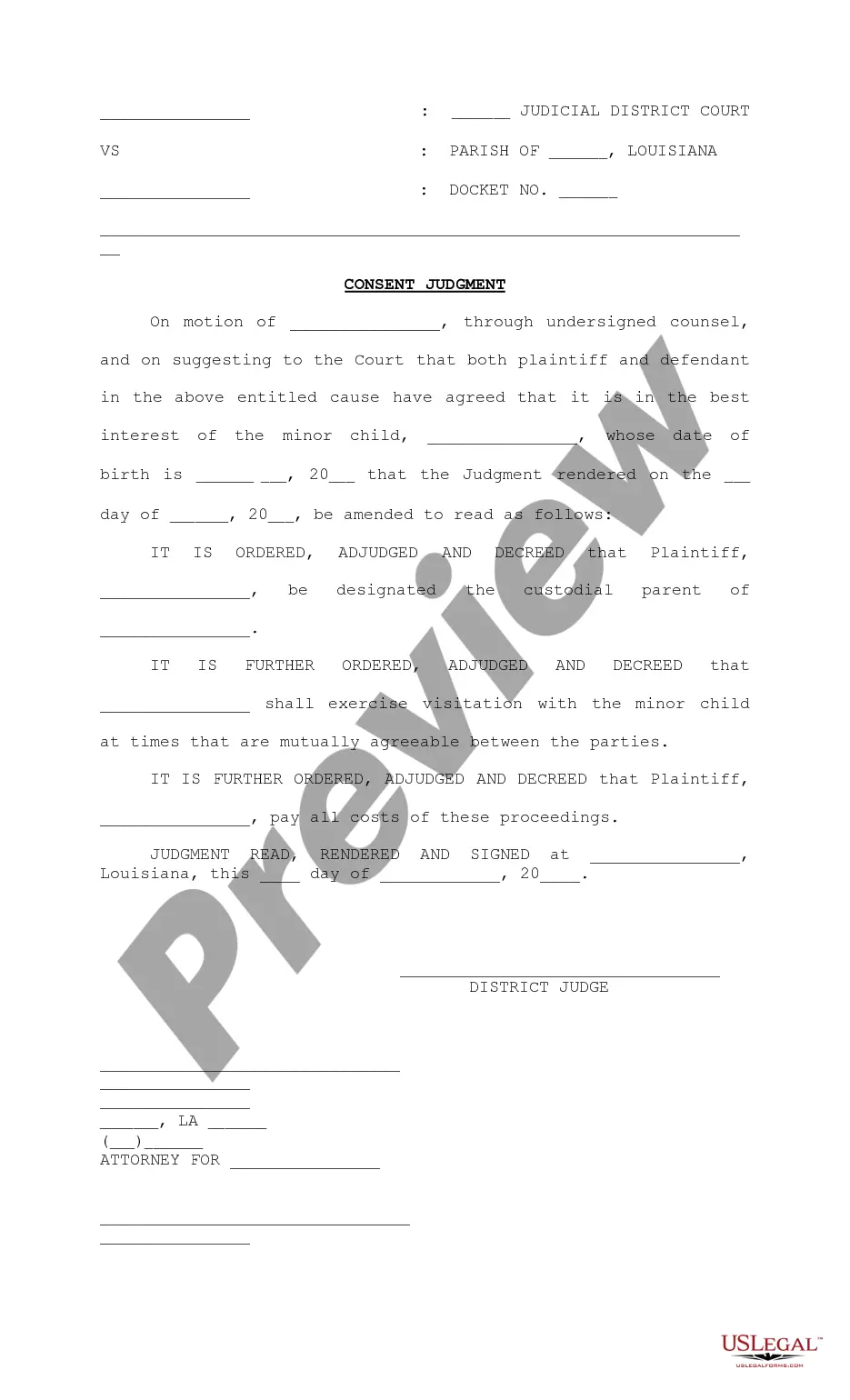
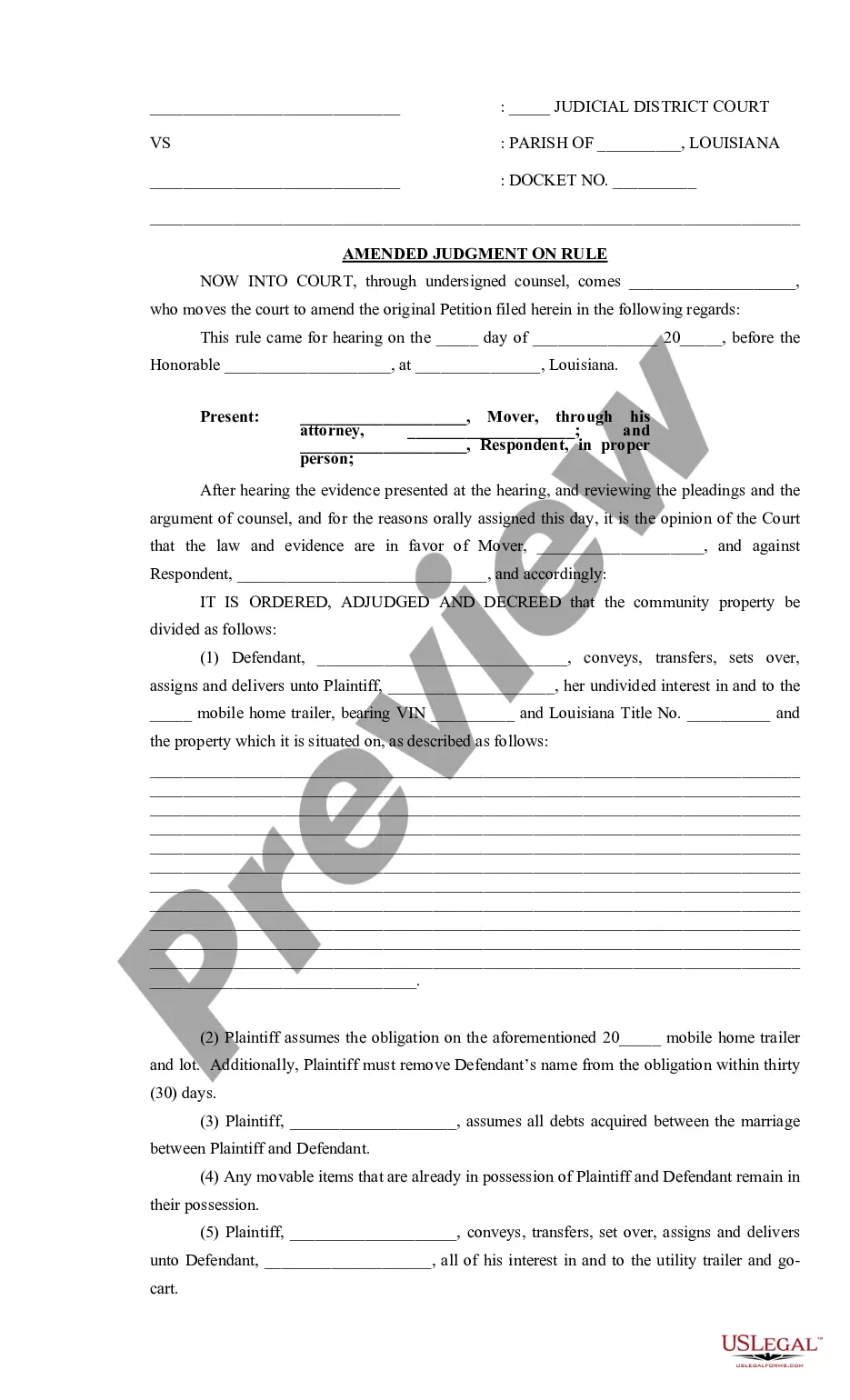
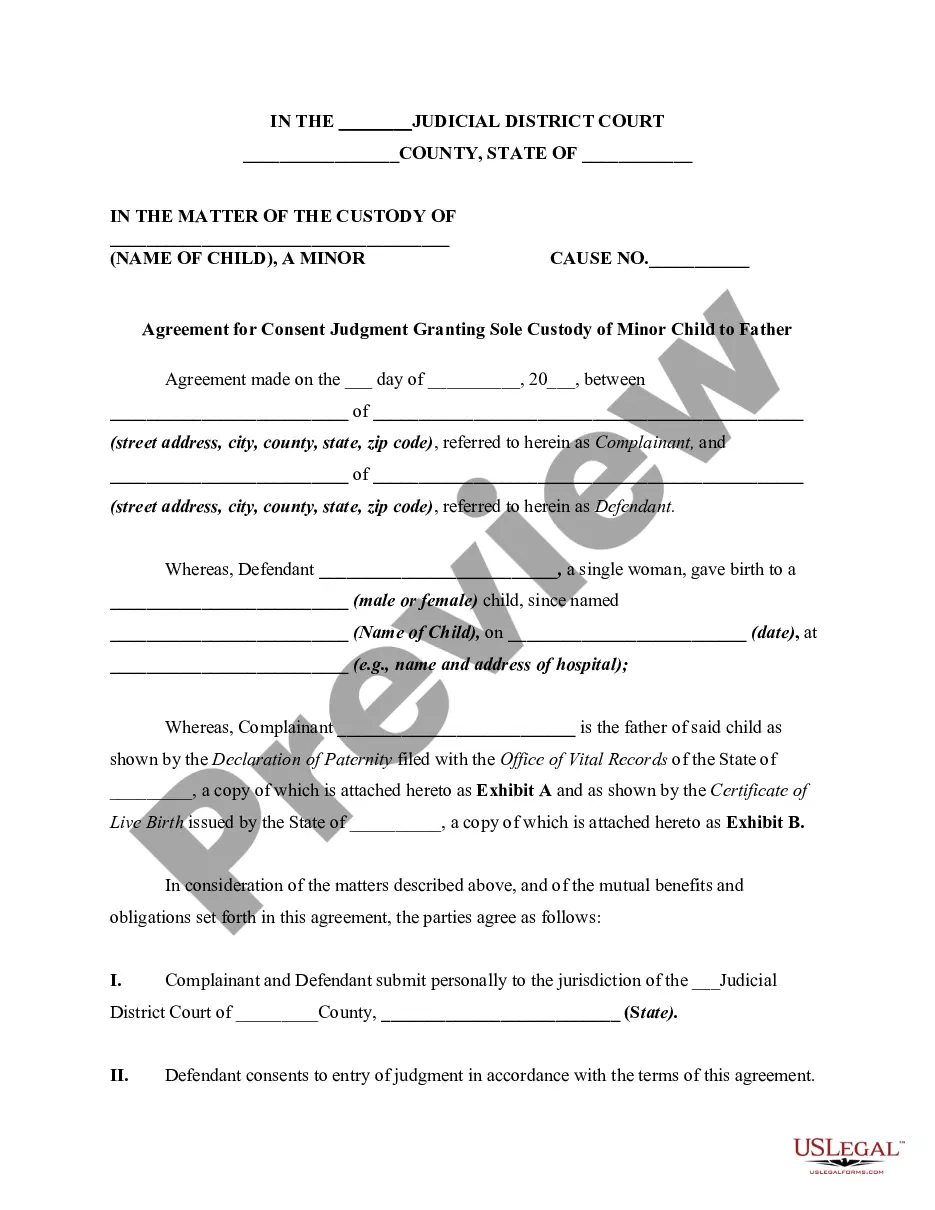
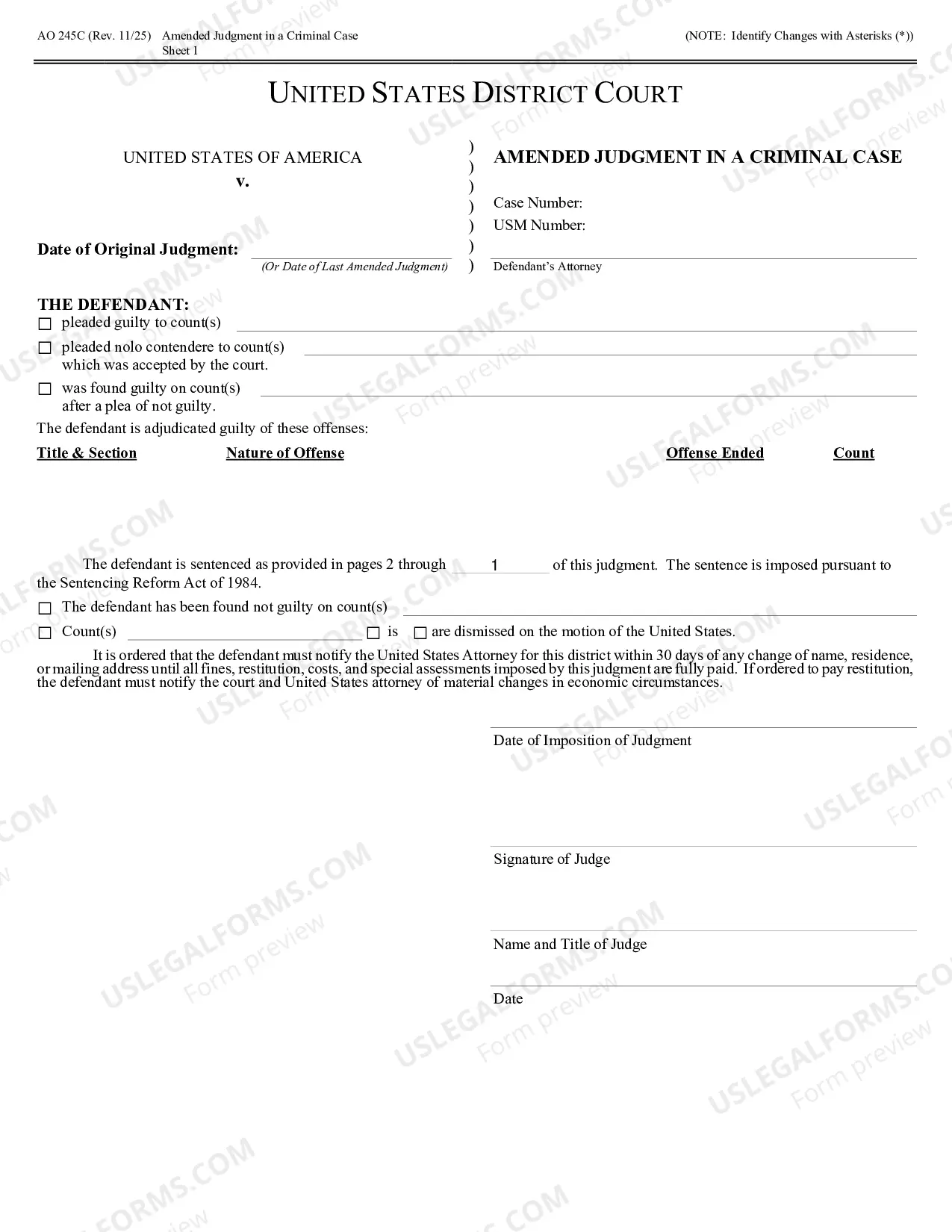
The Amended Judgment in Child Custody case is a legal document used to modify an existing court order regarding child custody arrangements. This form is essential when both parties (petitioner and defendant) agree to amend the terms of custody, visitation, and support for a minor child, offering a more tailored solution than a standard custody judgment. It specifies custody designations, visitation rights, and ongoing child support obligations while maintaining previous court orders unless explicitly changed in the amendment.
Key components of this form
- Designation of the primary custodial parent.
- Details of visitation rights and schedule for the other parent.
- Order for mental health evaluation of the minor child.
- Child support provisions and terms regarding arrearages.
- Confirmation that prior provisions of the custody judgment remain in force.

When this form is needed
This form should be used when there is a need to amend an existing child custody judgment. Common scenarios include changes in family circumstances, new agreements between parents regarding custody and visitation, or updates related to the child's welfare, such as the need for a mental health evaluation. Additionally, this form is necessary when existing orders must be clarified or adjusted to reflect current realities.
Who needs this form
- Parents or guardians involved in child custody cases in Louisiana.
- Individuals seeking to amend existing custody agreements for their minor children.
- Attorneys representing clients in custody matters.
Instructions for completing this form
- Identify the parties involved: fill in the names of the petitioner and defendant.
- Enter the details of the minor child, including their name and any relevant birthdates.
- Specify the custody arrangement, detailing which parent will be the primary custodian.
- Outline the visitation schedule, including specific dates and times for visitation rights.
- Include any orders regarding mental health evaluations or amendments to child support obligations.
- Sign and date the document, ensuring compliance with any additional local requirements.
Notarization requirements for this form
This form does not typically require notarization unless specified by local law. However, confirming with a local attorney or the court can provide clarity on this requirement.
Get your form ready online
Our built-in tools help you complete, sign, share, and store your documents in one place.
Make edits, fill in missing information, and update formatting in US Legal Forms—just like you would in MS Word.
Download a copy, print it, send it by email, or mail it via USPS—whatever works best for your next step.
Sign and collect signatures with our SignNow integration. Send to multiple recipients, set reminders, and more. Go Premium to unlock E-Sign.
If this form requires notarization, complete it online through a secure video call—no need to meet a notary in person or wait for an appointment.
We protect your documents and personal data by following strict security and privacy standards.

Make edits, fill in missing information, and update formatting in US Legal Forms—just like you would in MS Word.

Download a copy, print it, send it by email, or mail it via USPS—whatever works best for your next step.

Sign and collect signatures with our SignNow integration. Send to multiple recipients, set reminders, and more. Go Premium to unlock E-Sign.

If this form requires notarization, complete it online through a secure video call—no need to meet a notary in person or wait for an appointment.

We protect your documents and personal data by following strict security and privacy standards.
Common mistakes to avoid
- Failing to include all necessary parties' names in the document.
- Not specifying the visitation schedule clearly, leading to confusion.
- Omitting to mention existing child support obligations or their amendments.
- Forgetting to obtain the required signatures from both parents.
Benefits of completing this form online
- Convenience of completing the form at your own pace without the need for physical trips to legal offices.
- Editability allows you to customize the document according to your specific situation.
- Reliability through templates drafted by licensed attorneys, ensuring compliance with legal standards.
Quick recap
- The Amended Judgment in Child Custody case allows for essential modifications to existing custody agreements.
- Using this form online simplifies the process of making legal changes without unnecessary complications.
- Ensure all details are accurately filled to avoid common mistakes that could delay proceedings.
Looking for another form?





Form popularity
FAQ
Age of the children. Each parent's living situation. Each parent's willingness to support the other's relationship with the children. Each parent's relationship with the children before the divorce. Children's preferences. Continuity and stability.
A judge can't force a parent to remain in the state following a divorce. However, in some instances where one parent relocates, a judge will change custody to serve a child's needs. A custodial parent has the right to travel freely and even relocate with a child under certain circumstances.
Physical Relocation. The noncustodial parent can reach out to the court to modify custody if the custodial parent moves. One Parent Refuses to Follow the Custody Terms. The Child's Needs Have Changed. A Parent's Situation Has Changed. The Child Is in Danger. 9 Secrets the Insurance Adjuster Doesn't Want You to Know.
In order to request a modification to the child custody agreement, the parent requesting the change must file a petition with the court. Each side gets the opportunity to present their arguments as to whether the current arrangement should or should not be changed.
Petition. The first step involves filling out a form with the court. Service. This the legal term that refers to actually giving the other parent notice that you are requesting a change. Filing. Once all the paperwork is completed, it must be filed with the court. Scheduling. Court.
You cannot appeal a court decision simply because you are unhappy with the outcome; you must have a legal ground to file the appeal. If the judge in your case made a mistake or abused his/her discretion, then you might have grounds to file an appeal.
Permission to appeal is presently required for decisions made by district judges, this should be made orally at the hearing although it can be made later.Permission can then be sought to request a hearing for the decision to be reconsidered, this has to be done within 7 days.
It isn't impossible to change a custody agreement when one parent won't agree, but it's much harder than when both parents are on the same page. Read on to find out what to do if the other parent does not follow the parenting plan.
What are my chances of winning on appeal? Most appeals are not successful. For example, the California courts of appeal will reverse the judgment in civil appeals only about 20 percent of the time. An appellant in a civil case therefore has a one-in-five chance of winning, in general.