Louisiana Amended Judgment on Rule
Overview of this form
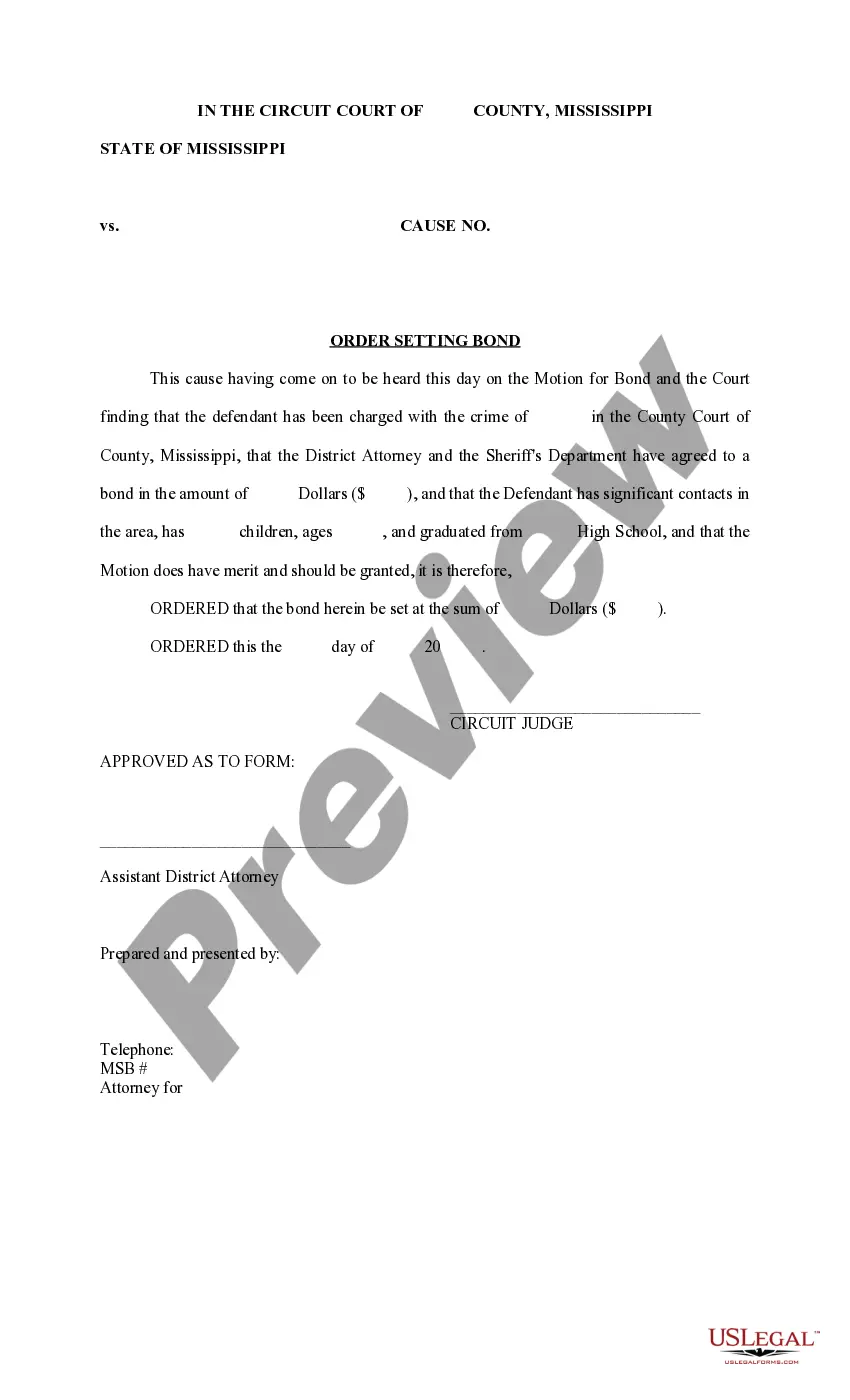
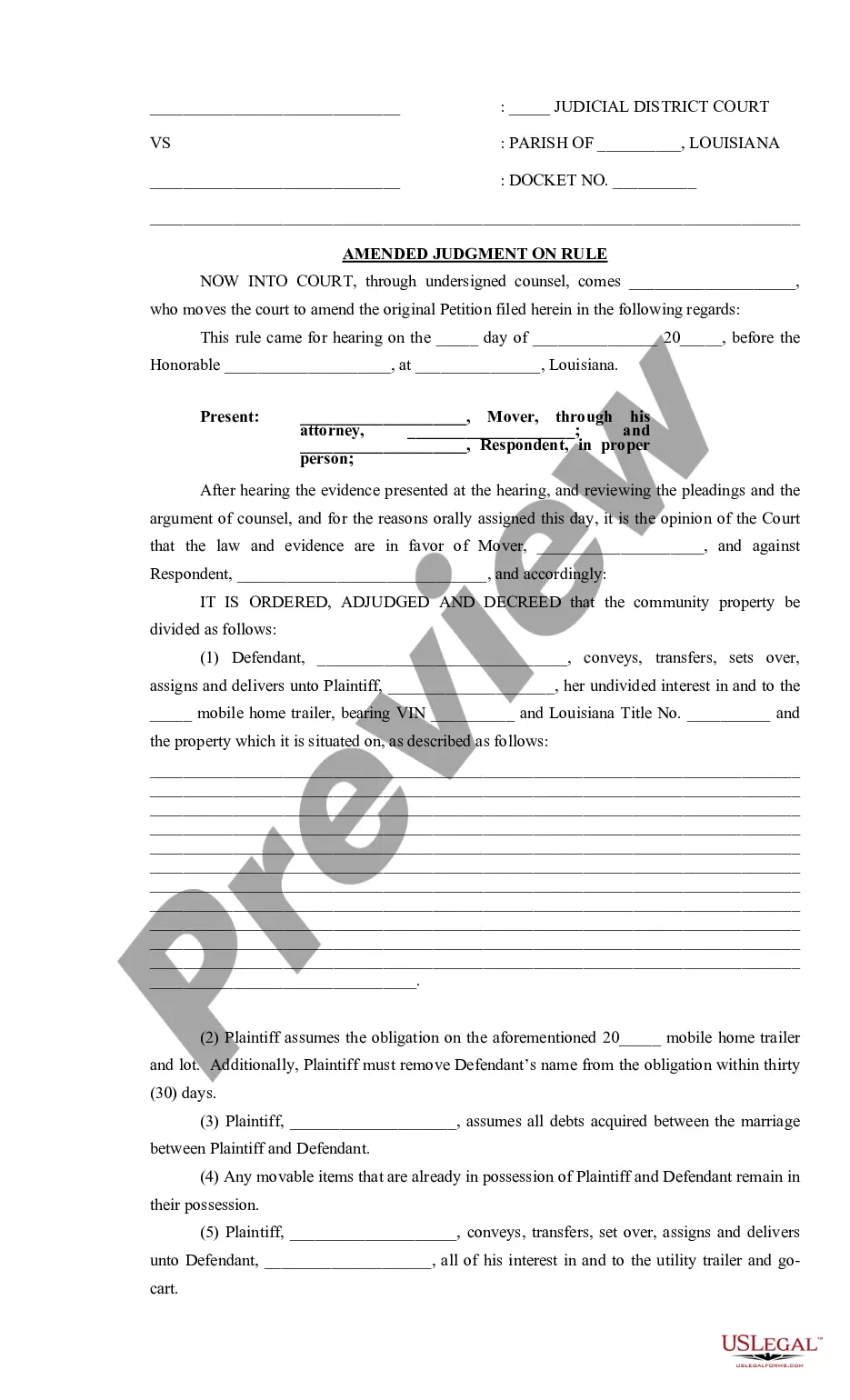
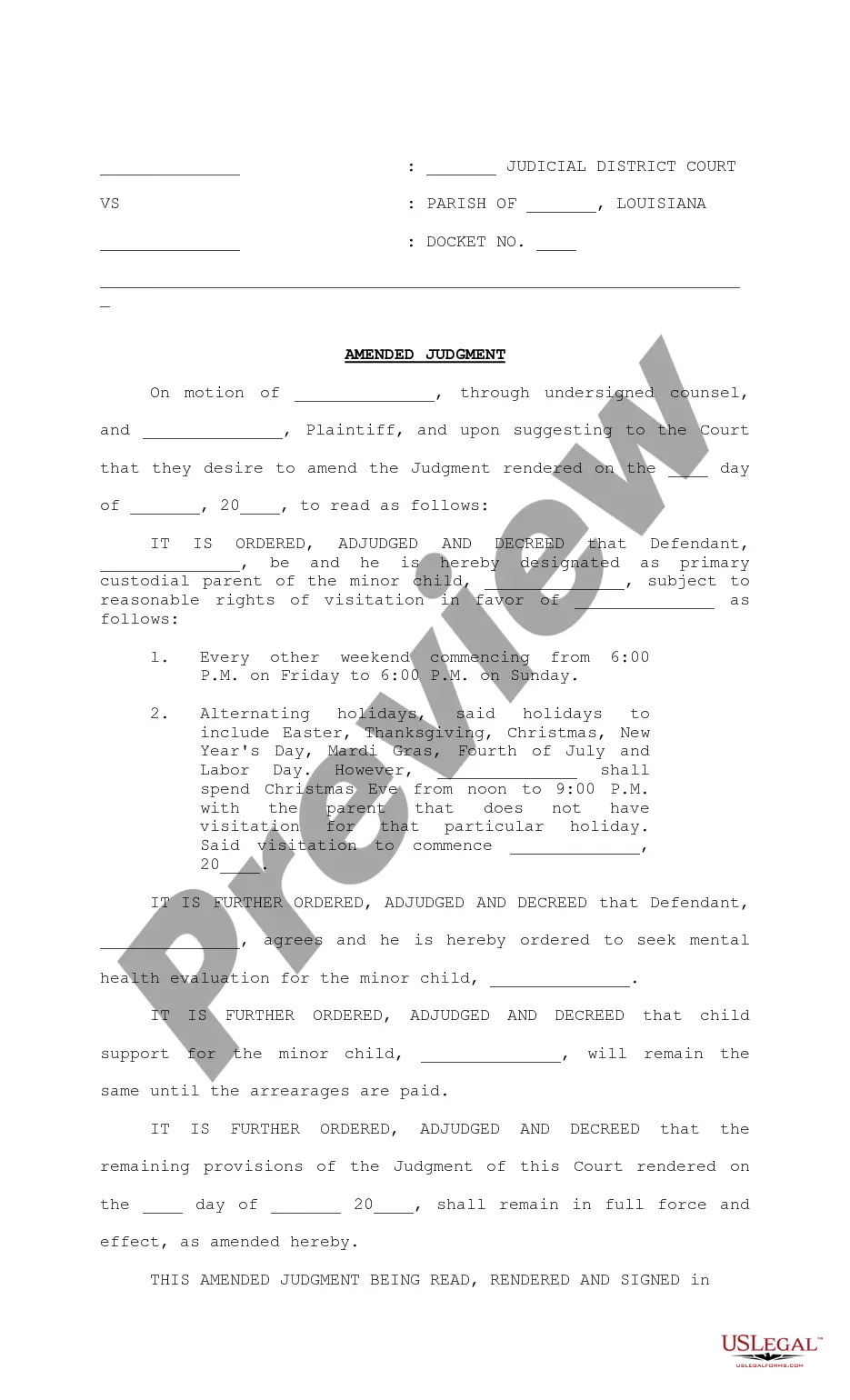
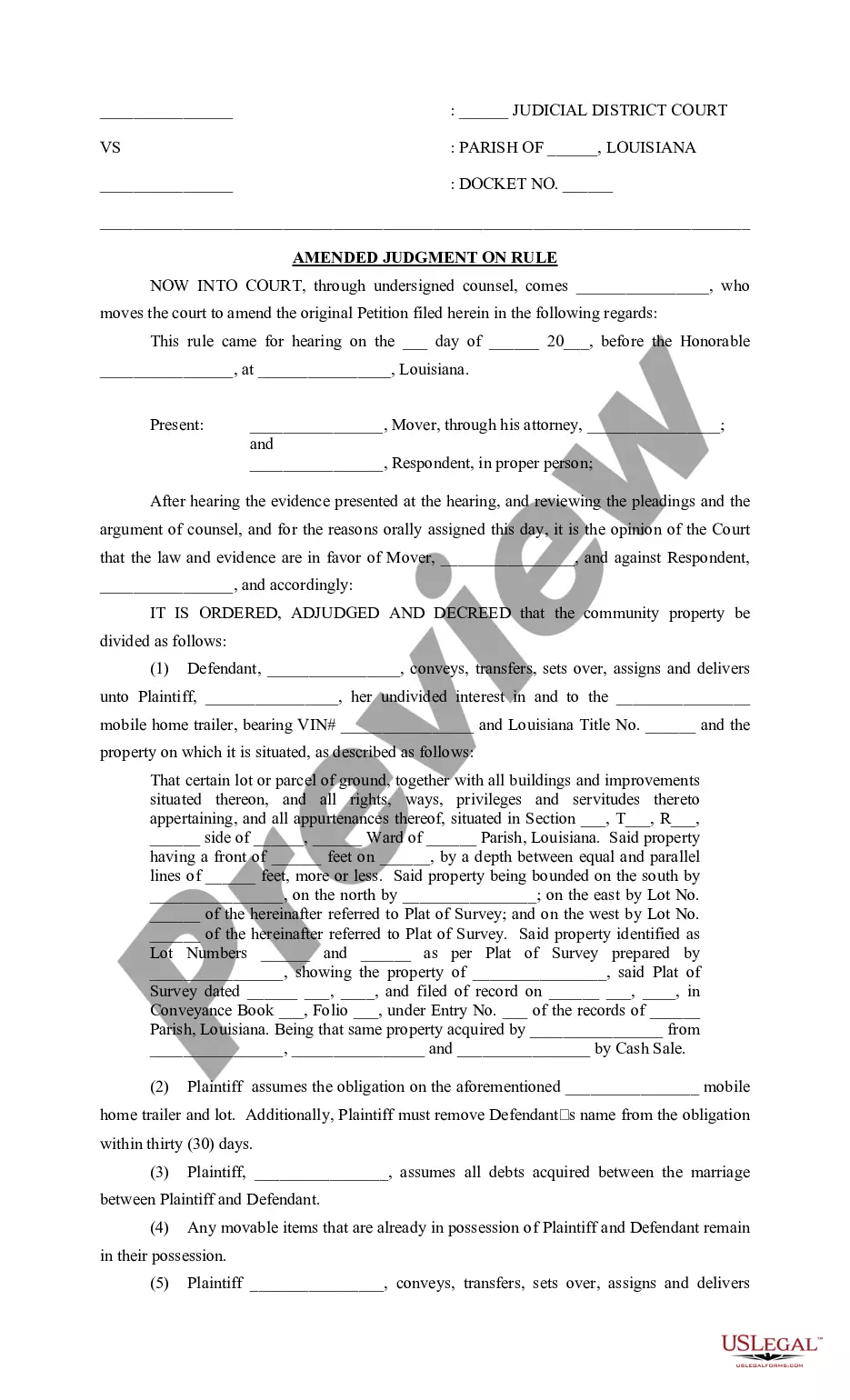
The Amended Judgment on Rule is a legal document used in divorce proceedings in Louisiana. This form allows the court to modify an existing judgment regarding the division of community property between parties. It details the specific allocations of assets and responsibilities, ensuring each party is legally recognized for their interests and obligations post-divorce.
What’s included in this form
- Identification of the court and case number.
- Details of the parties involved in the divorce.
- Summary of the evidence presented during the hearing.
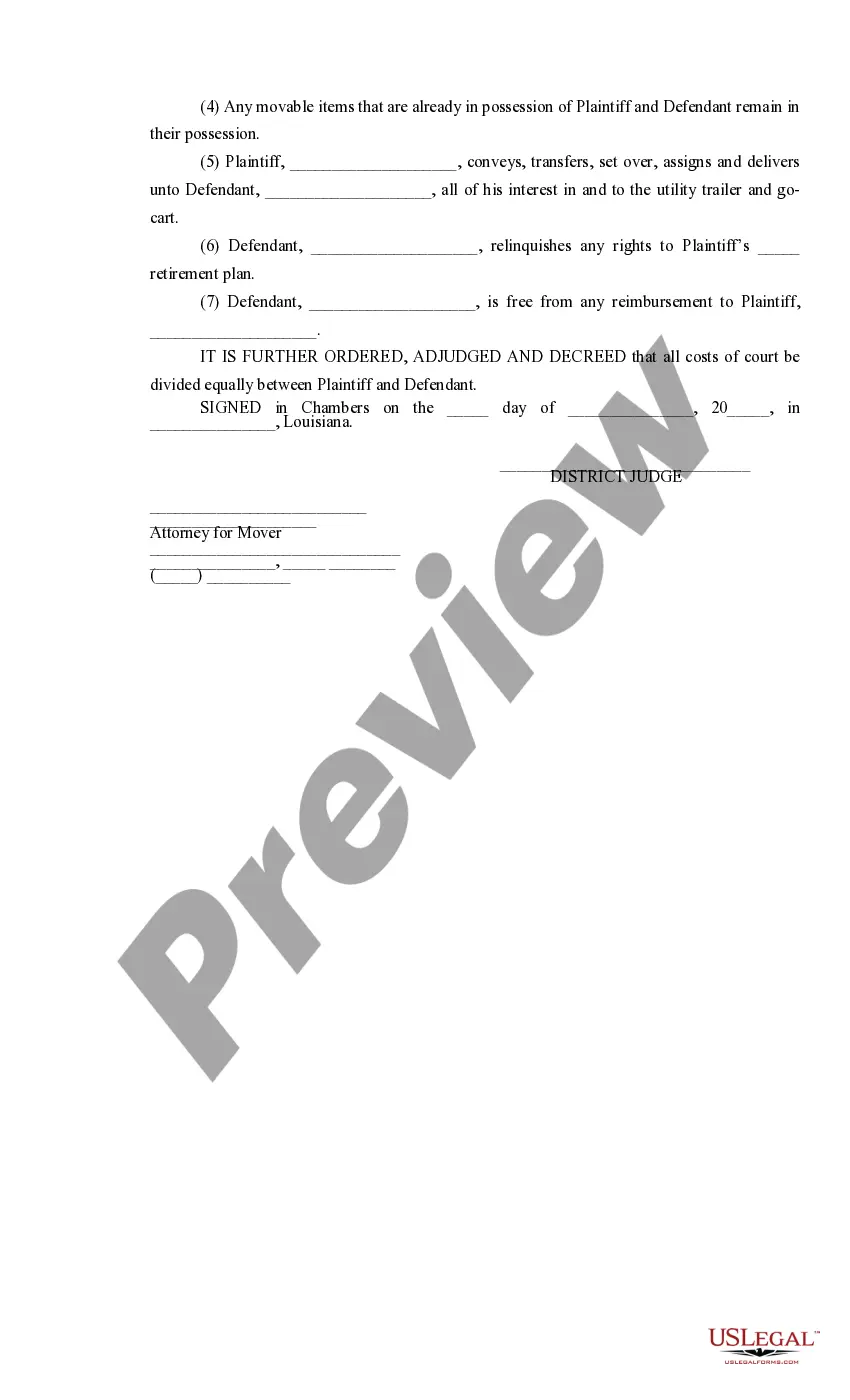
- Specifics on the division of community property, including assets and debts.
- Signature lines for the judge and attorneys involved.
Common use cases
This form is necessary when divorcing parties seek to amend the distribution of community property originally outlined in a divorce judgment. It is typically used when there have been changes in circumstances or agreements between the parties that necessitate a different allocation of assets or responsibilities.
Intended users of this form
- Divorcing couples in Louisiana who need to amend an existing court judgment.
- Parties seeking to legally document an agreed change in property division.
- Individuals represented by an attorney handling divorce proceedings.
Steps to complete this form
- Enter the names and contact information of the parties involved.
- Fill out the date of the hearing and the judge's name.
- Specify the assets being divided, including any relevant descriptions and identification numbers.
- Detail any obligations each party is assuming, such as debts or property responsibilities.
- Ensure that the proper signatures are obtained from both parties and the presiding judge.
Is notarization required?
This form usually doesn’t need to be notarized. However, local laws or specific transactions may require it. Our online notarization service, powered by Notarize, lets you complete it remotely through a secure video session, available 24/7.
Get your form ready online
Our built-in tools help you complete, sign, share, and store your documents in one place.
Make edits, fill in missing information, and update formatting in US Legal Forms—just like you would in MS Word.
Download a copy, print it, send it by email, or mail it via USPS—whatever works best for your next step.
Sign and collect signatures with our SignNow integration. Send to multiple recipients, set reminders, and more. Go Premium to unlock E-Sign.
If this form requires notarization, complete it online through a secure video call—no need to meet a notary in person or wait for an appointment.
We protect your documents and personal data by following strict security and privacy standards.

Make edits, fill in missing information, and update formatting in US Legal Forms—just like you would in MS Word.

Download a copy, print it, send it by email, or mail it via USPS—whatever works best for your next step.

Sign and collect signatures with our SignNow integration. Send to multiple recipients, set reminders, and more. Go Premium to unlock E-Sign.

If this form requires notarization, complete it online through a secure video call—no need to meet a notary in person or wait for an appointment.

We protect your documents and personal data by following strict security and privacy standards.
Common mistakes to avoid
- Failing to include all relevant assets and debts in the division.
- Not obtaining the necessary signatures from all parties.
- Leaving out important details that may affect property rights.
Benefits of completing this form online
- Immediate access to up-to-date legal forms drafted by licensed attorneys.
- Convenience of filling out and downloading the form at your own pace.
- Ability to edit the form to fit your specific situation before submitting.
Looking for another form?
Form popularity
FAQ
Rule 966 in Louisiana relates to the procedure for obtaining an Amended Judgment on Rule. This rule allows a party to request a modification of an existing judgment under specific circumstances. It is important to understand how to properly file for an amended judgment to ensure compliance with Louisiana law. Utilizing resources such as US Legal Forms can help you navigate the complexities of the Louisiana Amended Judgment on Rule process.
In Louisiana, personal property that can be seized under a judgment includes movable assets such as vehicles, jewelry, and certain types of household items. However, state law protects certain exemptions, ensuring individuals retain essential belongings. If you're navigating a Louisiana Amended Judgment on Rule, it's wise to consult with a legal professional to understand what can be affected. Such guidance can prevent unexpected losses.
In Louisiana, a judgment typically remains valid for a period of ten years from the date it was issued. After this time, the judgment can become unenforceable unless renewed. Understanding the implications of a Louisiana Amended Judgment on Rule is vital for maintaining your rights under such judgments. Always verify the status of any judgment and consider potential renewal options before the expiration.
A motion to amend a judgment in Louisiana is a formal request asking the court to change or alter its previous judgment. This motion can address clerical errors, clarify ambiguous terms, or incorporate new evidence that wasn't available during the initial judgment. When considering a Louisiana Amended Judgment on Rule, it's essential to follow the specific procedures laid out in court rules. Legal assistance can provide clarity on what can be amended.
According to Louisiana law, a judgment lien remains valid for a period of 10 years.
A motion is an application to the court made by the prosecutor or defense attorney, requesting that the court make a decision on a certain issue before the trial begins. The motion can affect the trial, courtroom, defendants, evidence, or testimony. Only judges decide the outcome of motions.
21 provides that misjoinder of parties is not ground for dismissal of an action, and that parties may be dropped or added by court order on motion of any party or of the court's own initiative at any stage in the action and on such terms as are just.
A judgment lien in Louisiana will remain attached to the debtor's property (even if the property changes hands) for ten years.
The grant of summary judgment usually results in a final judgment only if the grant resolves all issues as to all parties. An order for summary judgment is interlocutory if it does not entirely end the proceedings before the trial court.
A "motion" is simply a formal request to a court that it do something or decide an issue in favor of the party that asks for it. "Granted" means the court agreed with the request, and did or decided in favor of the requester.