Colorado Master Easement Agreement - Crossings and Encroachments
About this form
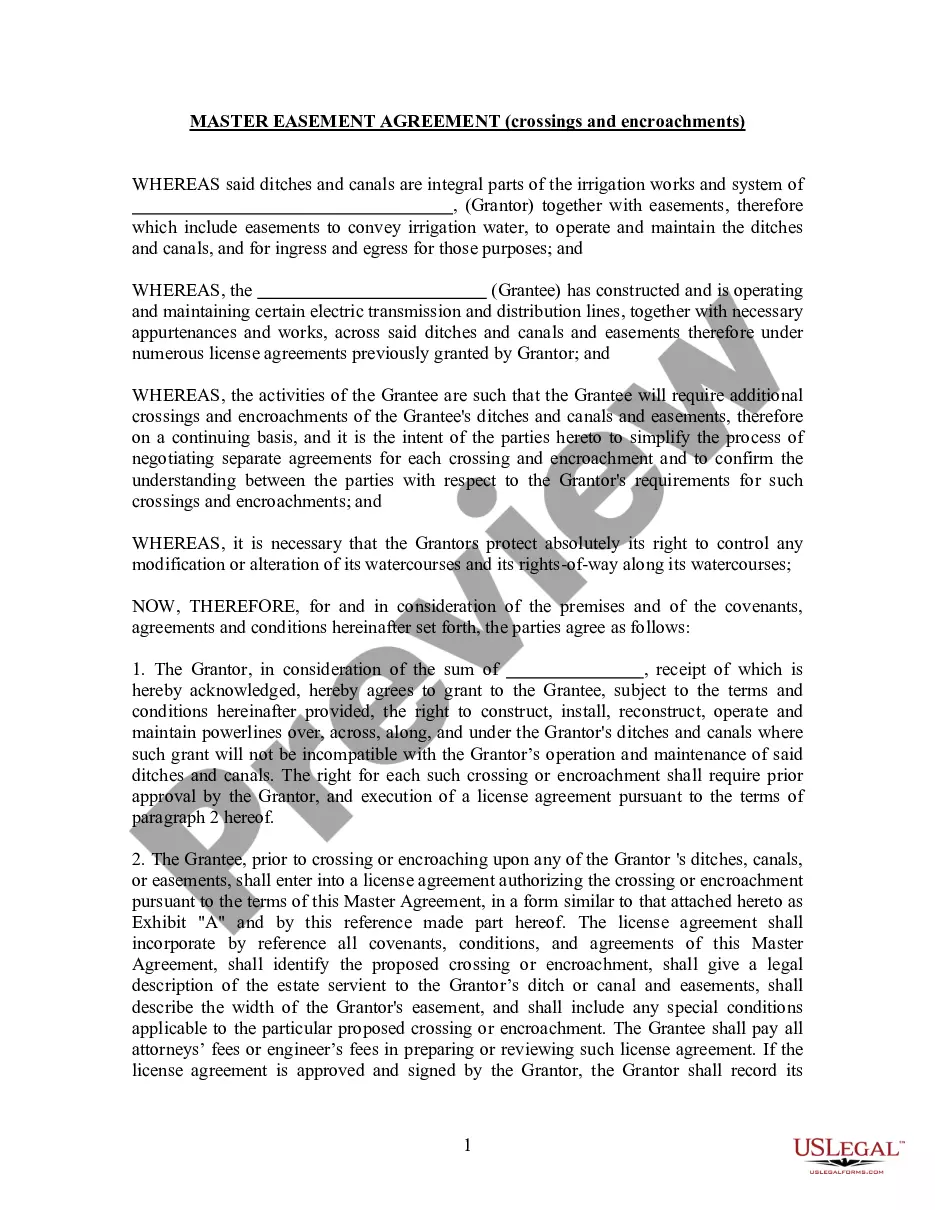
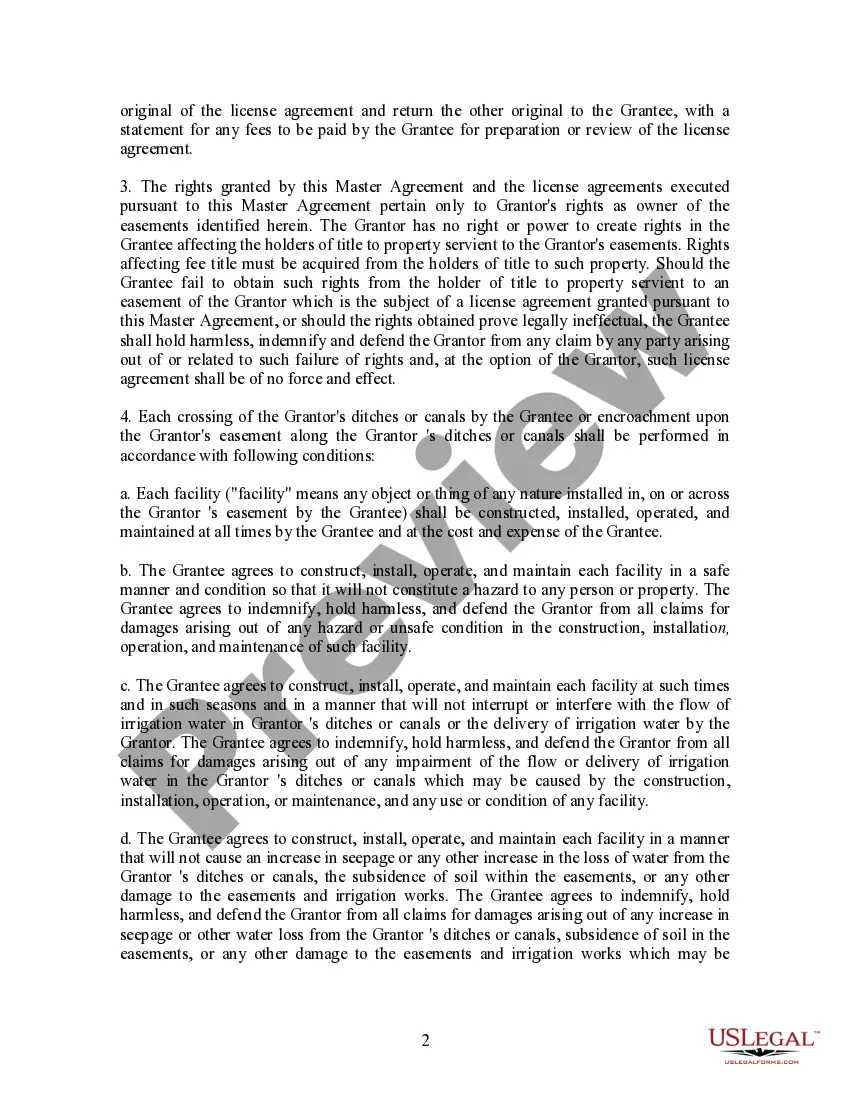
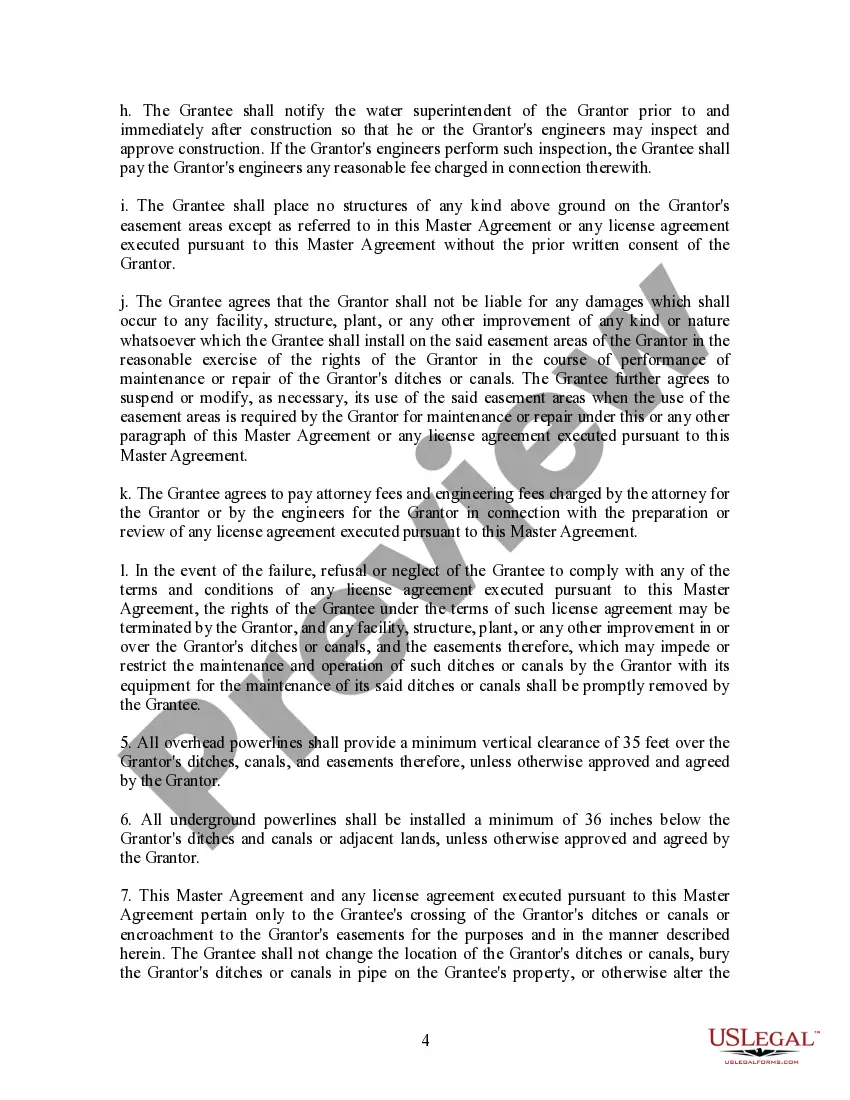
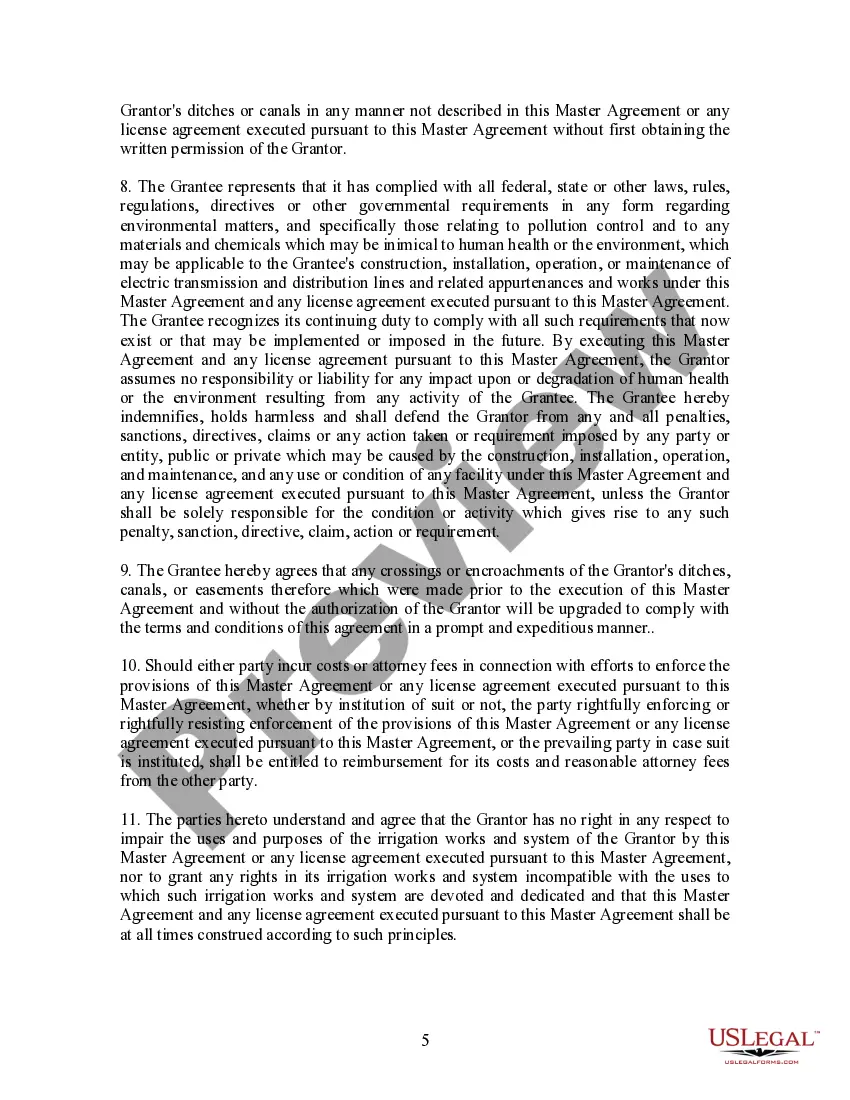
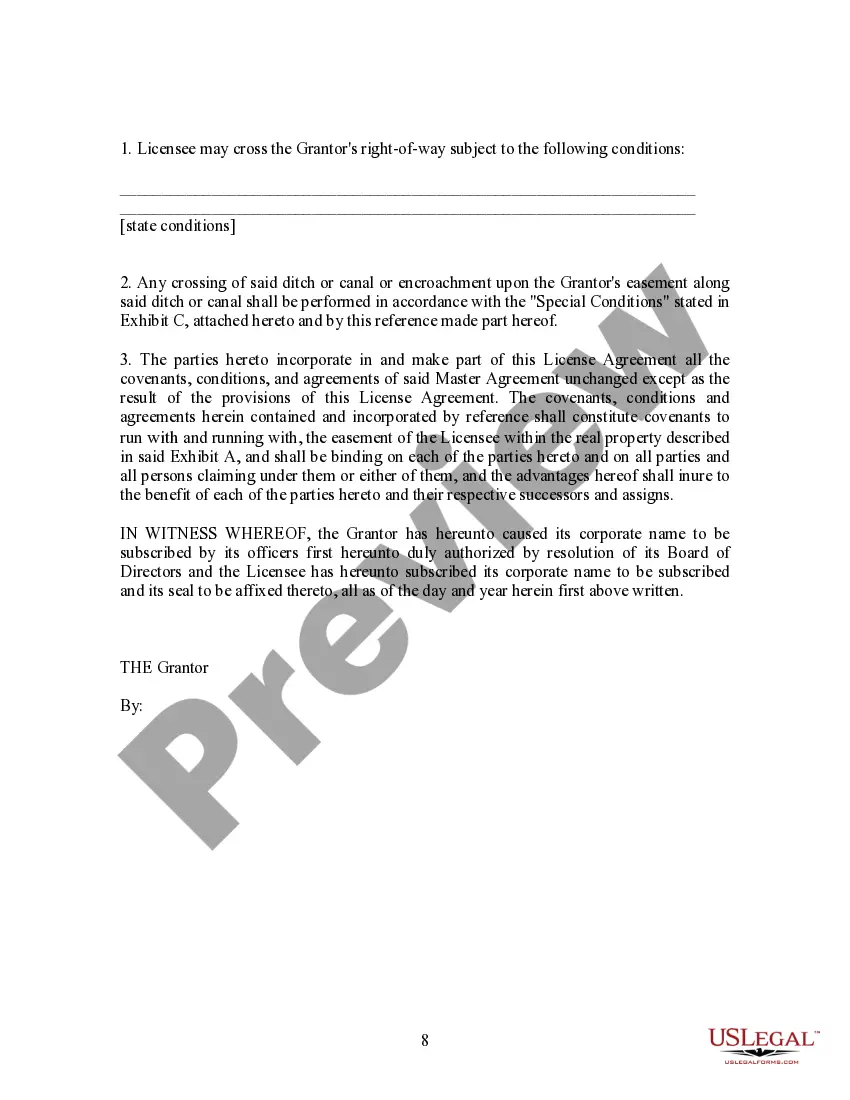
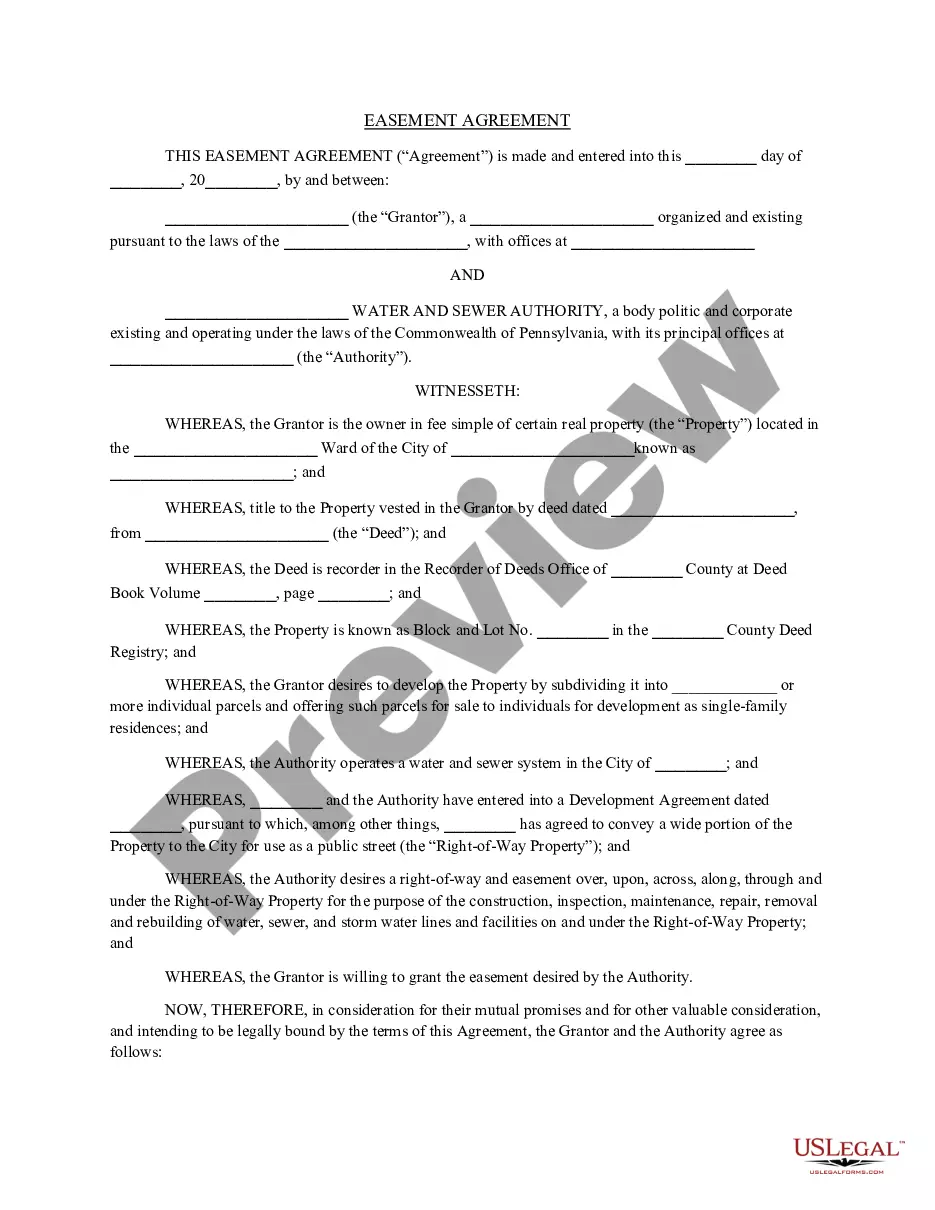
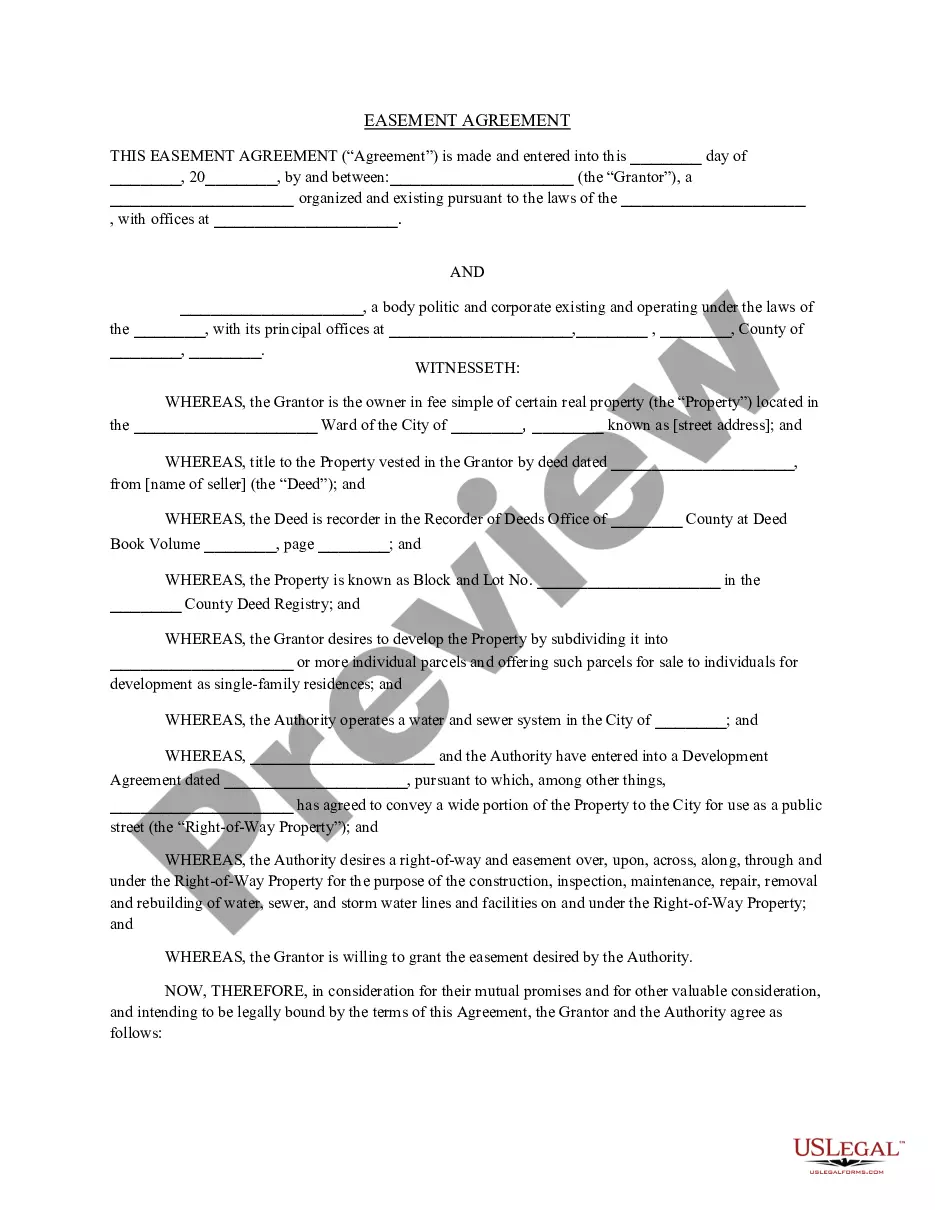
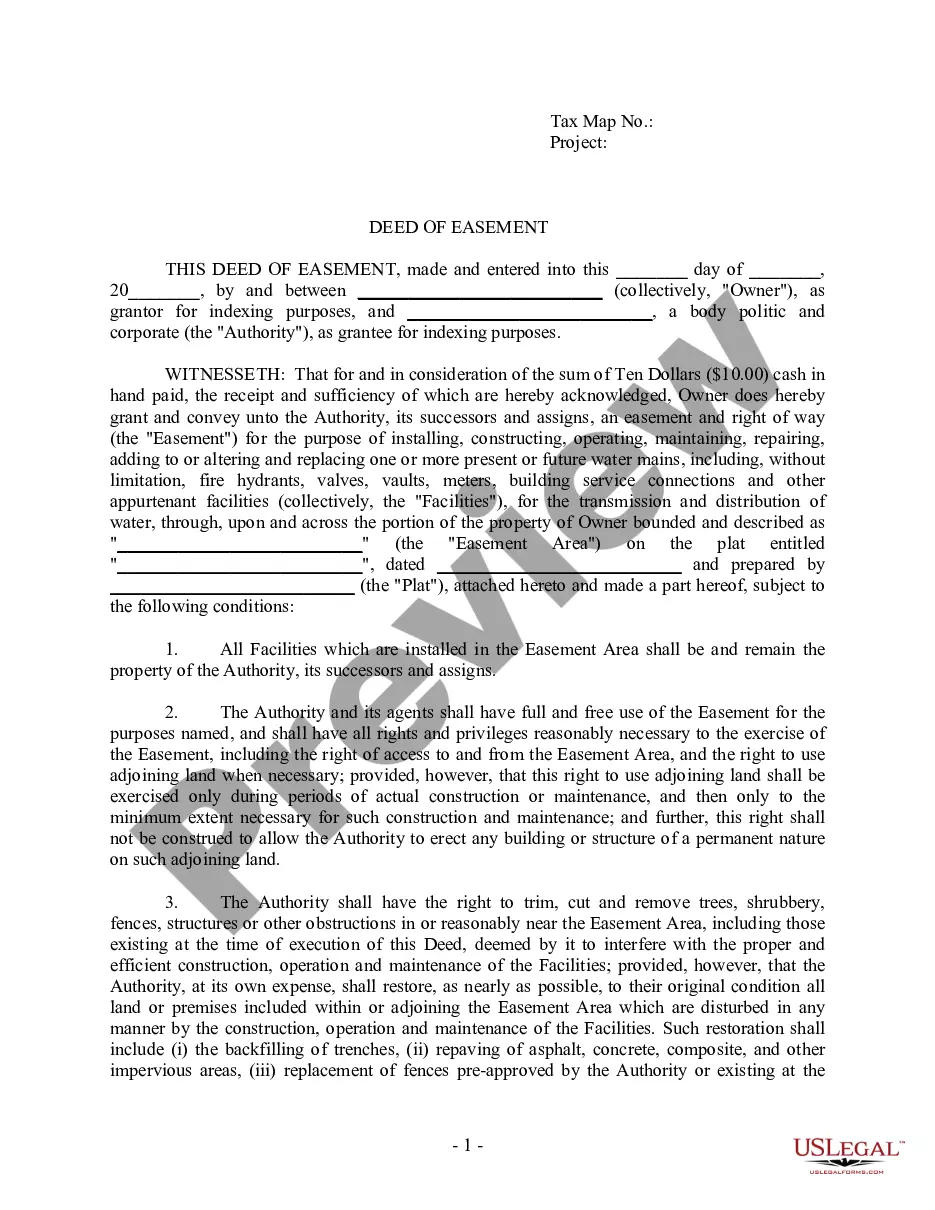
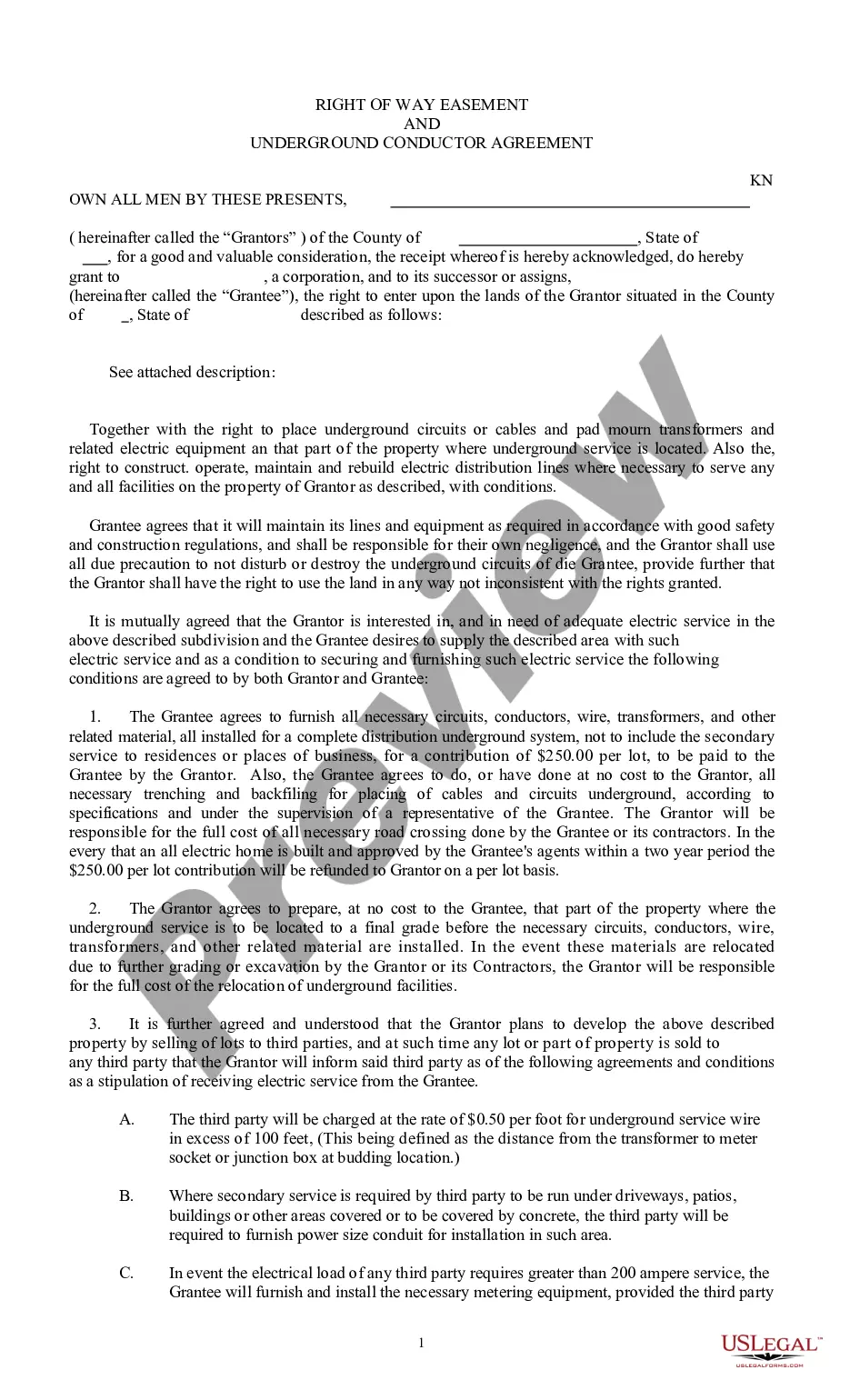
The Master Easement Agreement - Crossings and Encroachments provides a legal framework specifying the rights for one party (the Grantee) to construct and maintain utilities over another party's property (the Grantor's). This form is essential for establishing rights and responsibilities related to easements, which are legal allowances that permit one party to use another's land for specific purposes. Unlike simple easement grants, this agreement simplifies negotiations for multiple crossings and encroachments, ensuring that both parties understand and agree on their rights and obligations.
What’s included in this form
- Definition of the easement and its purpose, including rights of crossing and encroachment.
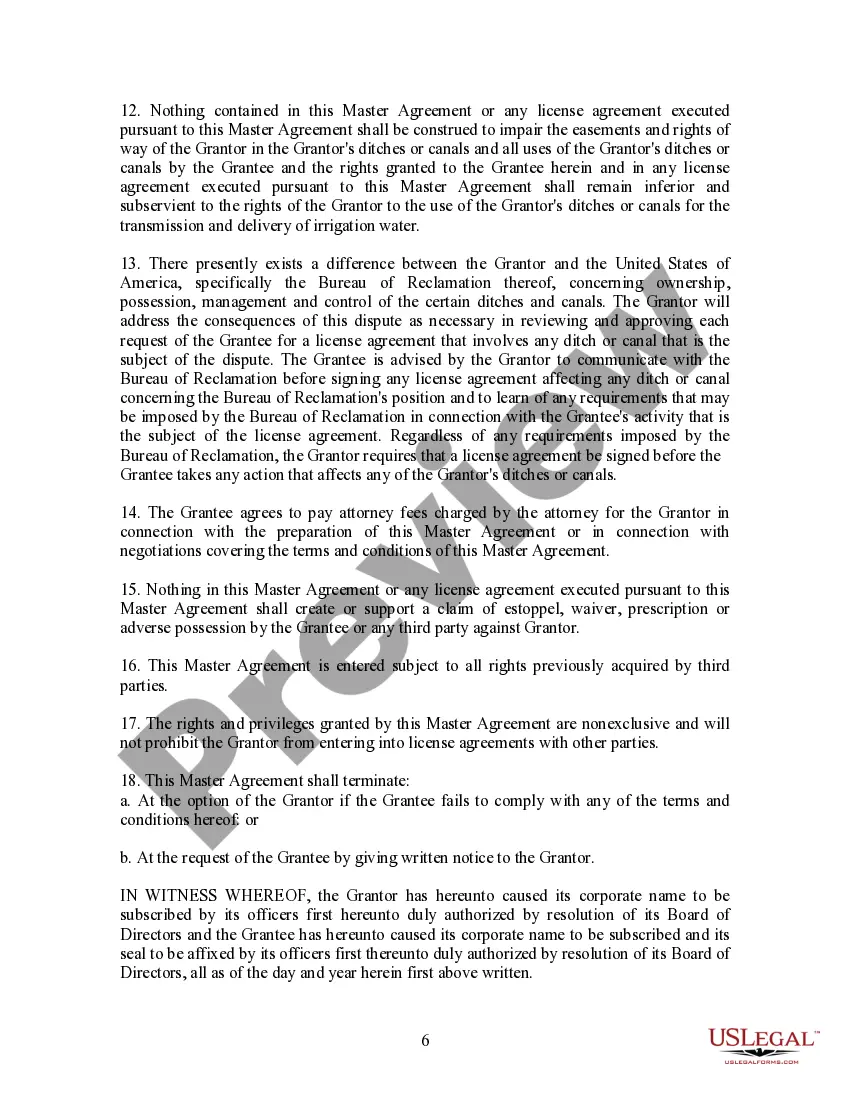
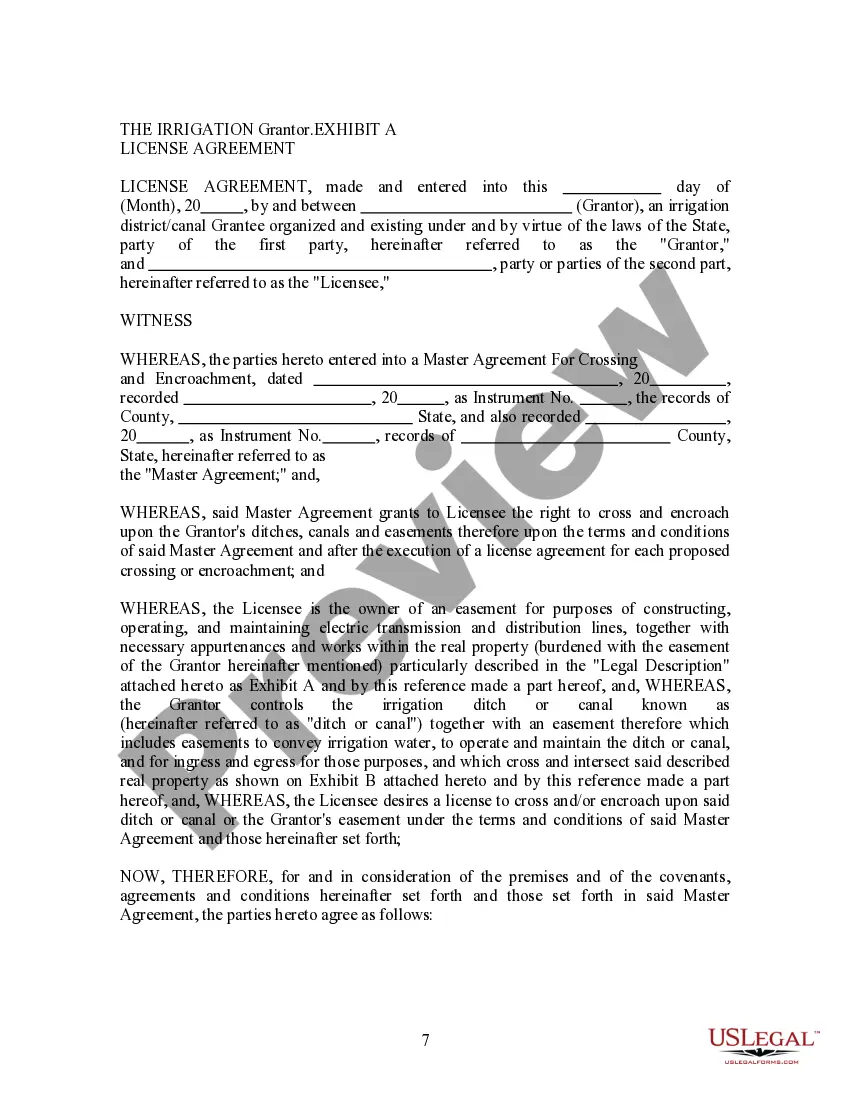
- Requirements for the Grantee, including obtaining a license agreement for each crossing.
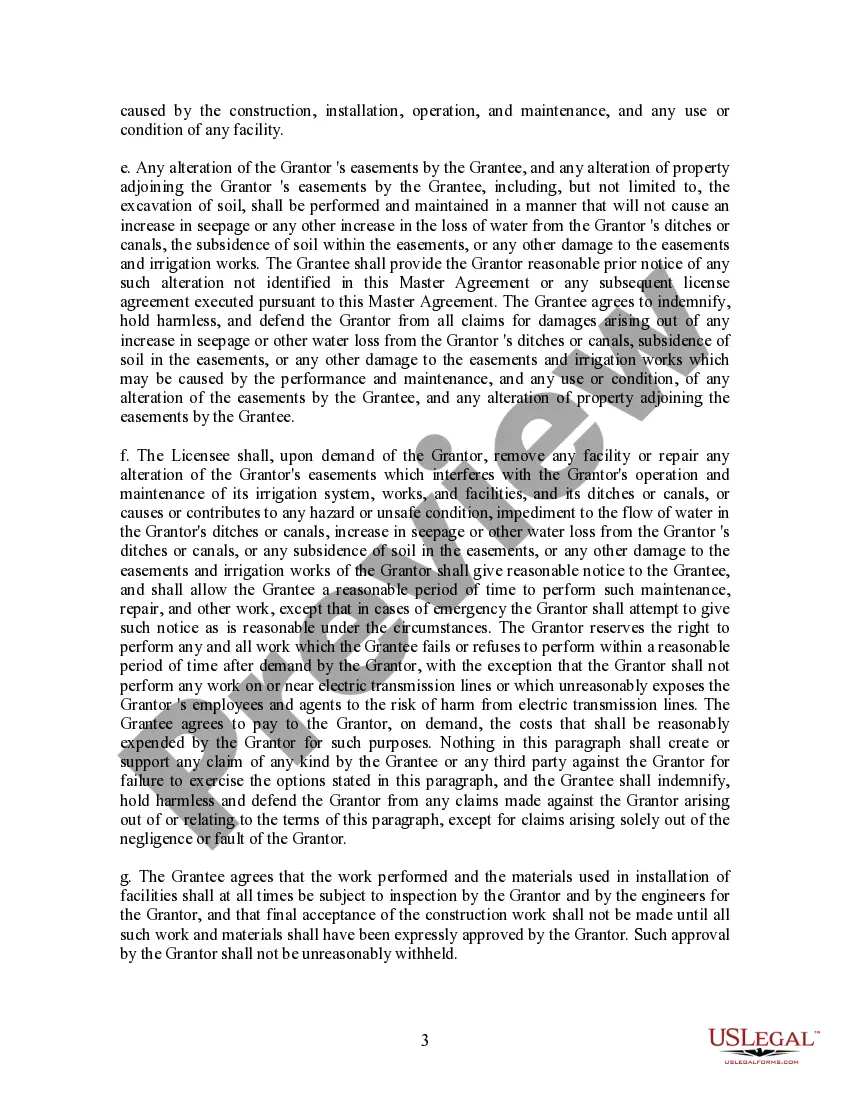
- Indemnification clauses protecting the Grantor from liabilities resulting from the Grantee's actions.
- Specifications on facilities installation, maintenance, and safety standards concerning the Grantor's water systems.
- Conditions under which the agreement may be terminated or modified.
- Provisions related to compliance with federal and state regulations regarding environmental impacts.
When this form is needed
This form should be utilized in situations where a utility or individual needs to cross or encroach upon another party's property to install or maintain power lines or other infrastructure. Common scenarios include utility companies requiring access for installation, repair, or maintenance of services; agricultural operators needing access to irrigation systems; or developers planning construction that affects adjacent properties. Using this form ensures clear guidelines and agreements are established upfront, minimizing disputes and legal complications.
Intended users of this form
This Master Easement Agreement is suitable for:
- Utility companies needing access to conduct their services.
- Property developers looking to build or maintain infrastructure on adjacent lands.
- Agricultural landowners requiring access to canals or ditches for irrigation.
- Individuals or businesses planning to install utilities that impact the usage of another's property.
How to complete this form
- Identify the parties involved, including the Grantor and the Grantee.
- Specify the property and easements affected by the agreement.
- Outline the proposed crossings or encroachments along with their legal description.
- Include applicable conditions and requirements for installation, maintenance, and safety.
- Ensure both parties sign and date the agreement, and consider having it notarized for added legal validation.
Notarization requirements for this form
This form does not typically require notarization unless specified by local law. However, having the document notarized can add an extra layer of authentication, ensuring that signatures are verified and legally binding.
Get your form ready online
Our built-in tools help you complete, sign, share, and store your documents in one place.
Make edits, fill in missing information, and update formatting in US Legal Forms—just like you would in MS Word.
Download a copy, print it, send it by email, or mail it via USPS—whatever works best for your next step.
Sign and collect signatures with our SignNow integration. Send to multiple recipients, set reminders, and more. Go Premium to unlock E-Sign.
If this form requires notarization, complete it online through a secure video call—no need to meet a notary in person or wait for an appointment.
We protect your documents and personal data by following strict security and privacy standards.

Make edits, fill in missing information, and update formatting in US Legal Forms—just like you would in MS Word.

Download a copy, print it, send it by email, or mail it via USPS—whatever works best for your next step.

Sign and collect signatures with our SignNow integration. Send to multiple recipients, set reminders, and more. Go Premium to unlock E-Sign.

If this form requires notarization, complete it online through a secure video call—no need to meet a notary in person or wait for an appointment.

We protect your documents and personal data by following strict security and privacy standards.
Avoid these common issues
- Failing to clearly define the easement and its specific uses.
- Not obtaining necessary licenses or approvals before commencing work.
- Overlooking local regulations or requirements governing easements and utilities.
- Neglecting to include indemnification clauses, which can protect against future disputes.
Benefits of using this form online
- Convenient access to templates that can be downloaded and customized quickly.
- Reliability with forms drafted by licensed attorneys, ensuring legal compliance and completeness.
- Editability allows users to tailor agreements to their specific needs without needing extensive legal knowledge.
- Immediate availability helps expedite the legal process associated with easements and property use.
- The easement agreement secures legal rights for the Grantee while protecting the Grantorâs property interests.
- Failure to obtain proper licenses under this agreement can result in legal penalties or the termination of rights.
- This agreement remains in effect unless either party fails to comply with its terms, providing a clear framework for both sides.
Looking for another form?



Form popularity
FAQ
In Colorado, neighbors can build a fence on the property line, provided they adhere to local laws and regulations. It's essential to communicate with your neighbor and understand shared responsibilities regarding maintenance and costs. A Colorado Master Easement Agreement - Crossings and Encroachments can offer a solution to clearly outline the terms of such arrangements. This agreement helps ensure that both parties agree on the usage and rights associated with the shared boundary.
Yes, Colorado has an adverse possession law that allows individuals to claim ownership of land under certain conditions. If someone openly uses and occupies a property without permission for 18 years, they may gain legal title to that property. This law connects to the importance of a Colorado Master Easement Agreement - Crossings and Encroachments, which can help prevent disputes related to land use. Clear agreements can protect your interests and prevent unforeseen claims.
The 7 year fence law in Colorado allows property owners to establish ownership of a fence by maintaining it continuously for seven years. This can impact any disputes regarding property lines or ownership of shared fences. When addressing boundary issues, a Colorado Master Easement Agreement - Crossings and Encroachments can clarify responsibilities and ensure mutual agreement among neighbors. Understanding this law can protect your property rights.
The good neighbor law in Colorado encourages property owners to maintain friendly boundaries with their neighbors. This law promotes cooperation, especially when it comes to shared fences or landscaping. When considering a Colorado Master Easement Agreement - Crossings and Encroachments, this law emphasizes respect for each other's property. By understanding this law, you can foster a better relationship with your neighbors.
The primary difference between an easement and an encroachment lies in their legality. An easement is a formal agreement allowing specified use of land, while an encroachment occurs without permission and typically violates property lines. Understanding this distinction helps property owners navigate potential disputes. Reviewing the Colorado Master Easement Agreement - Crossings and Encroachments can provide clarity when faced with these issues.
No, your neighbor cannot block your easement without risking a legal dispute. Easements exist to ensure that you can access certain areas, whether for utility access or pathways. If a neighbor attempts to obstruct this access, they are infringing on your legal rights. It may be helpful to reference the Colorado Master Easement Agreement - Crossings and Encroachments to protect your interests.
An encroachment refers to the unauthorized use of a portion of someone else's property, typically without permission. In contrast, an easement is a legal right granted to someone to use a portion of another's property for specific purposes. While both involve property use, easements are formally documented agreements, whereas encroachments may lead to disputes. Knowing these differences is crucial when dealing with the Colorado Master Easement Agreement - Crossings and Encroachments.
One significant disadvantage of an easement is that it limits the property owner's use of their land. The easement holder has legal rights to use part of your property, which can hinder your ability to fully utilize that area. Additionally, easements can affect property values negatively. Understanding the nuances of the Colorado Master Easement Agreement - Crossings and Encroachments can help you navigate these challenges.
In Colorado, property owners cannot arbitrarily block an established easement. An easement provides a legal right for someone to use a portion of your property for specific purposes, such as pathways or utility access. While changes can be made if both parties agree, blocking an easement without consent can lead to legal complications. It’s wise to consult a professional about the Colorado Master Easement Agreement - Crossings and Encroachments for guidance.
Encroachment occurs when a property owner builds or extends a structure beyond their property line. For example, if a fence is constructed that crosses onto a neighbor's land, this is an encroachment. It can lead to disputes between neighbors. Understanding the Colorado Master Easement Agreement - Crossings and Encroachments can help clarify boundaries and resolve such issues.