California Agricultural Land Trust
Overview of this form
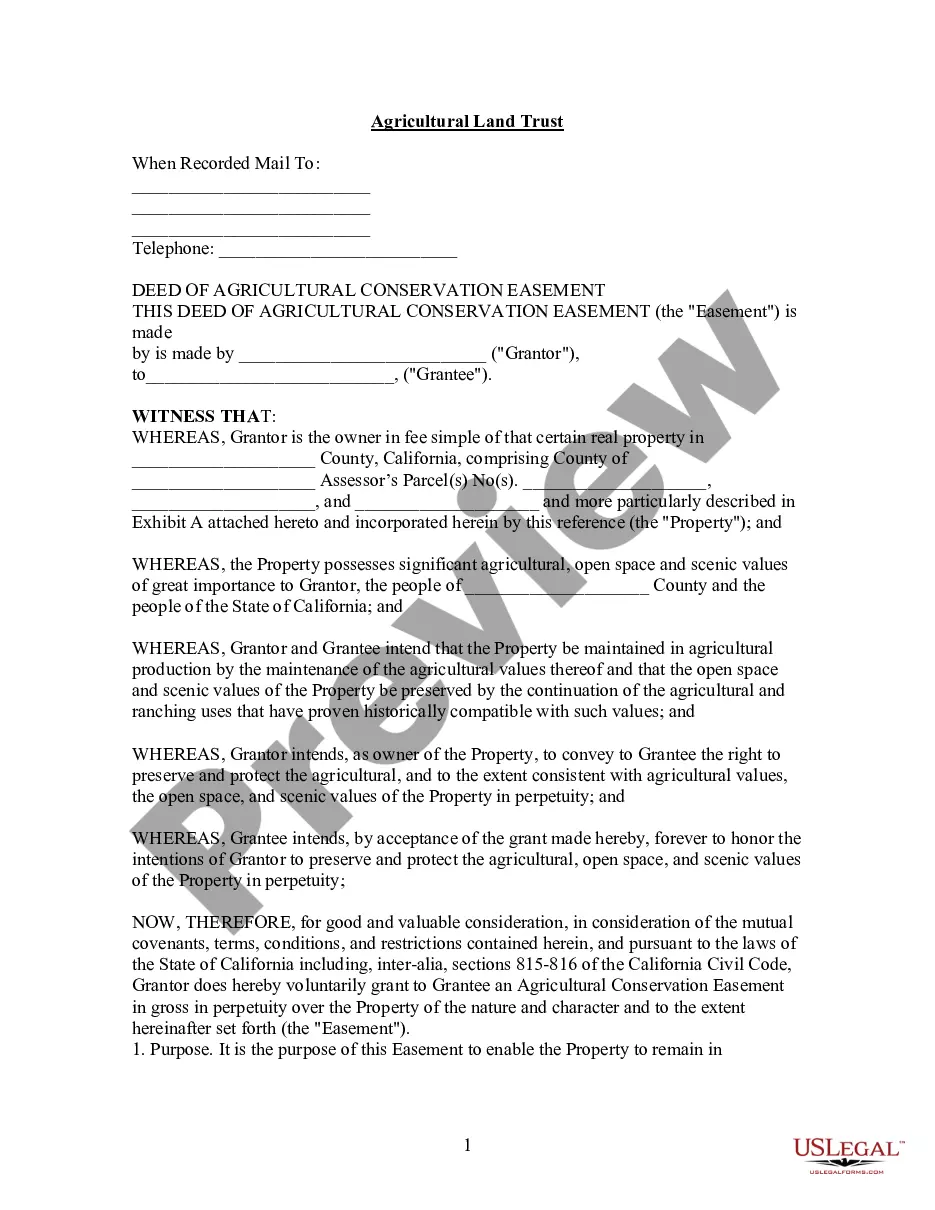
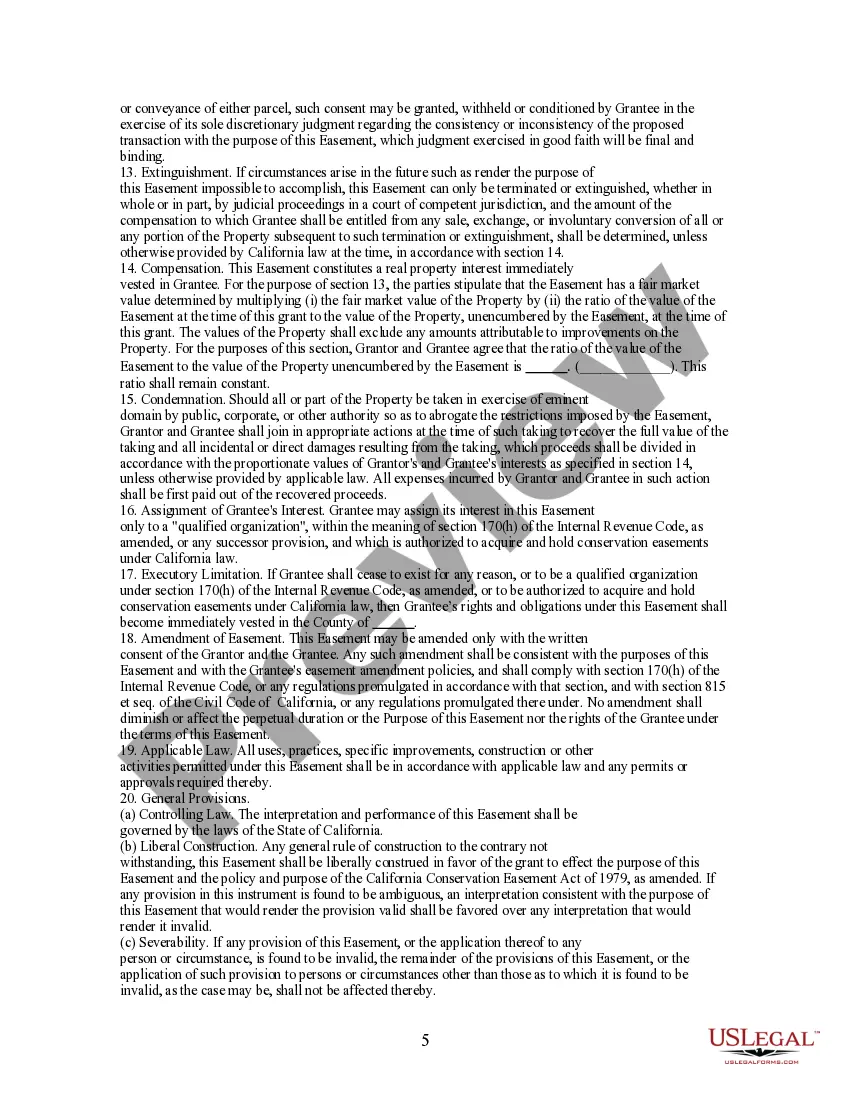
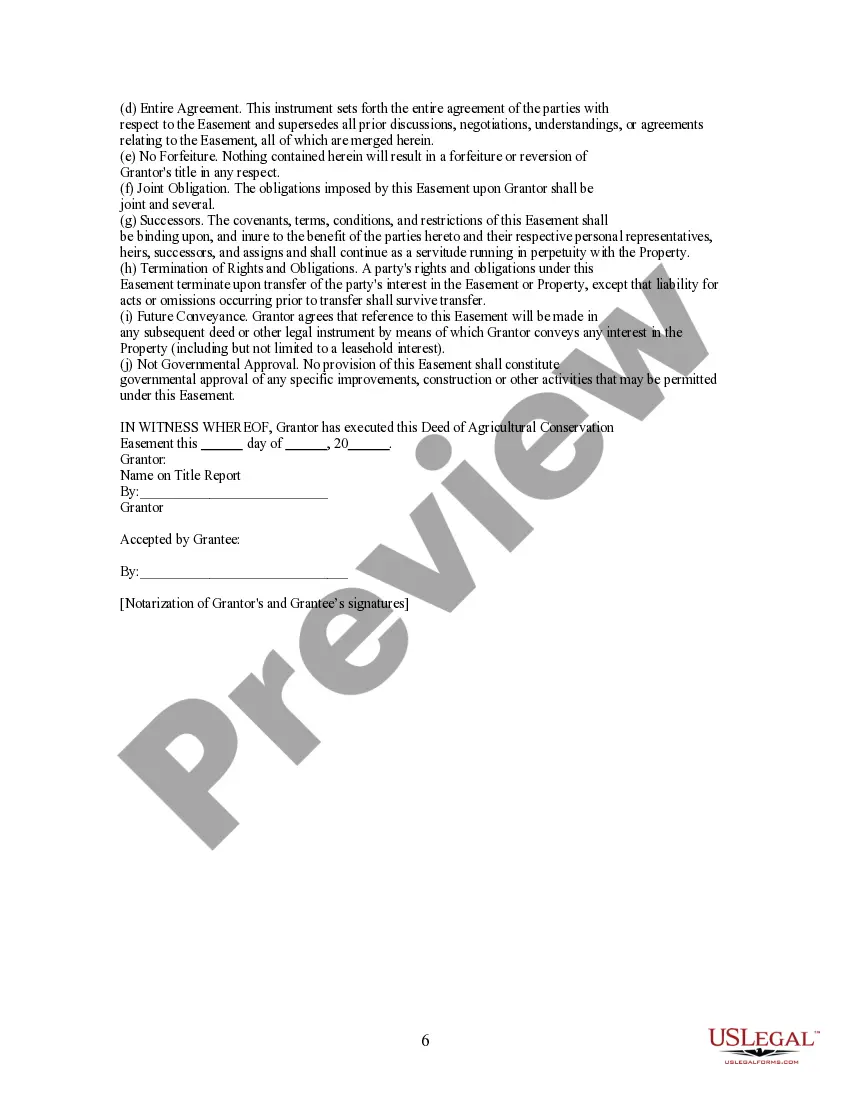
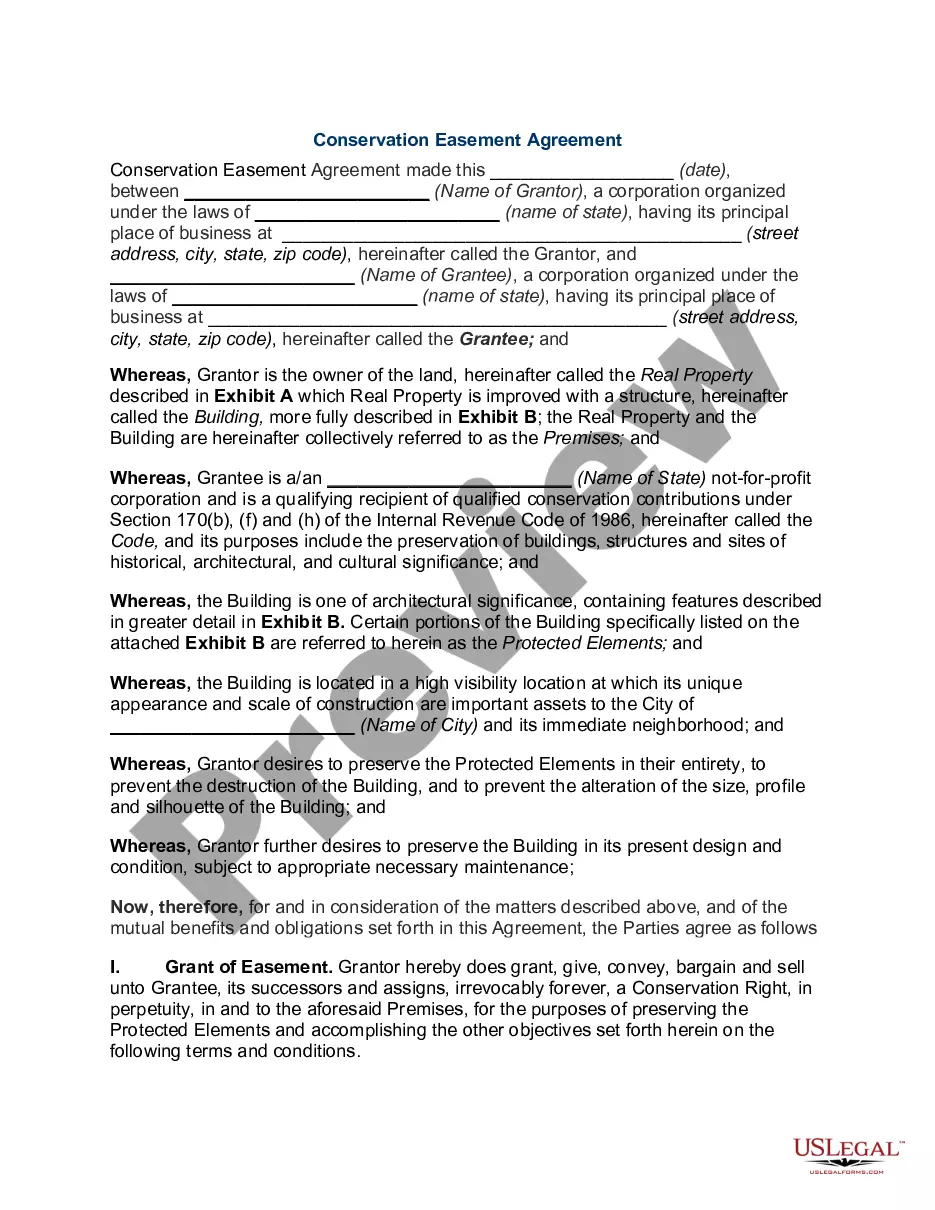
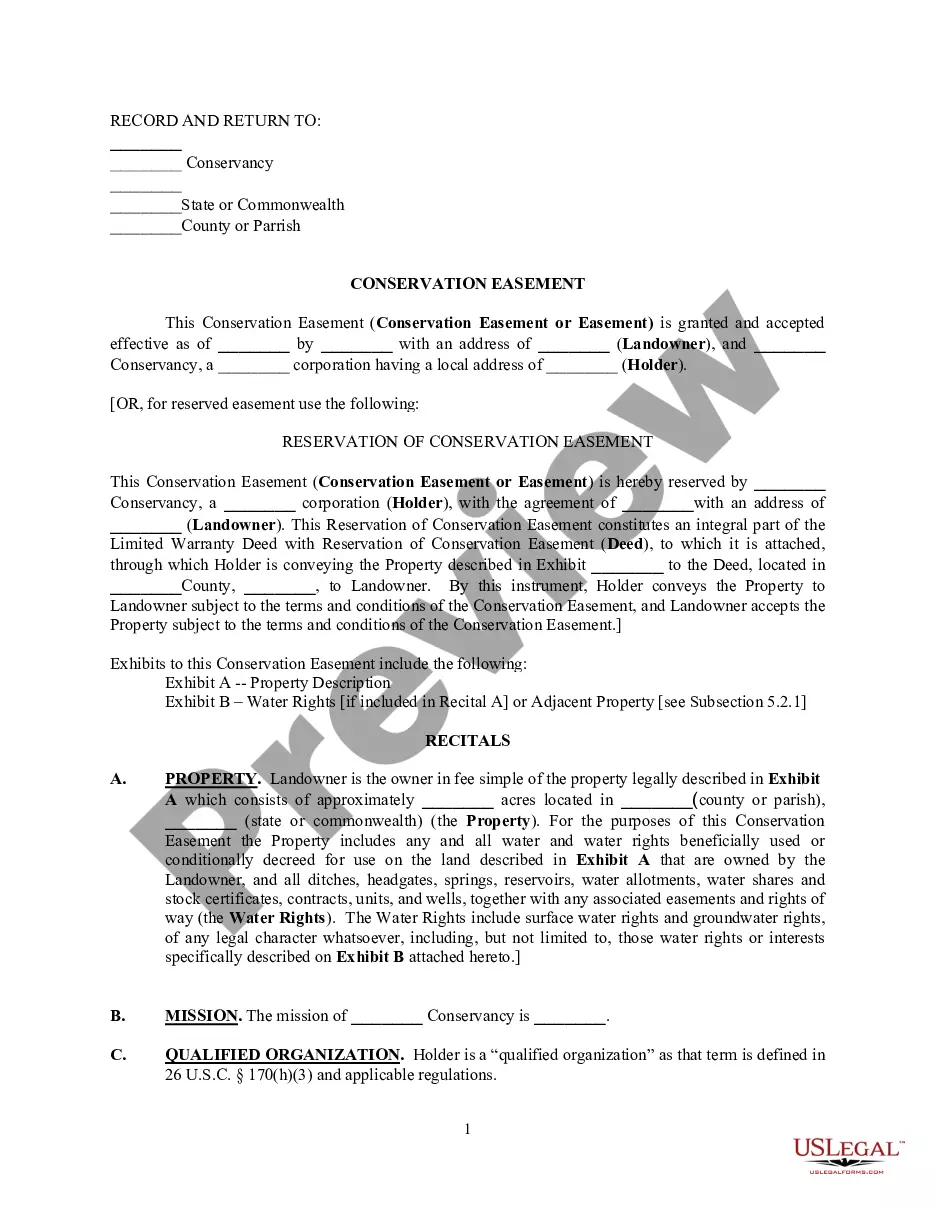
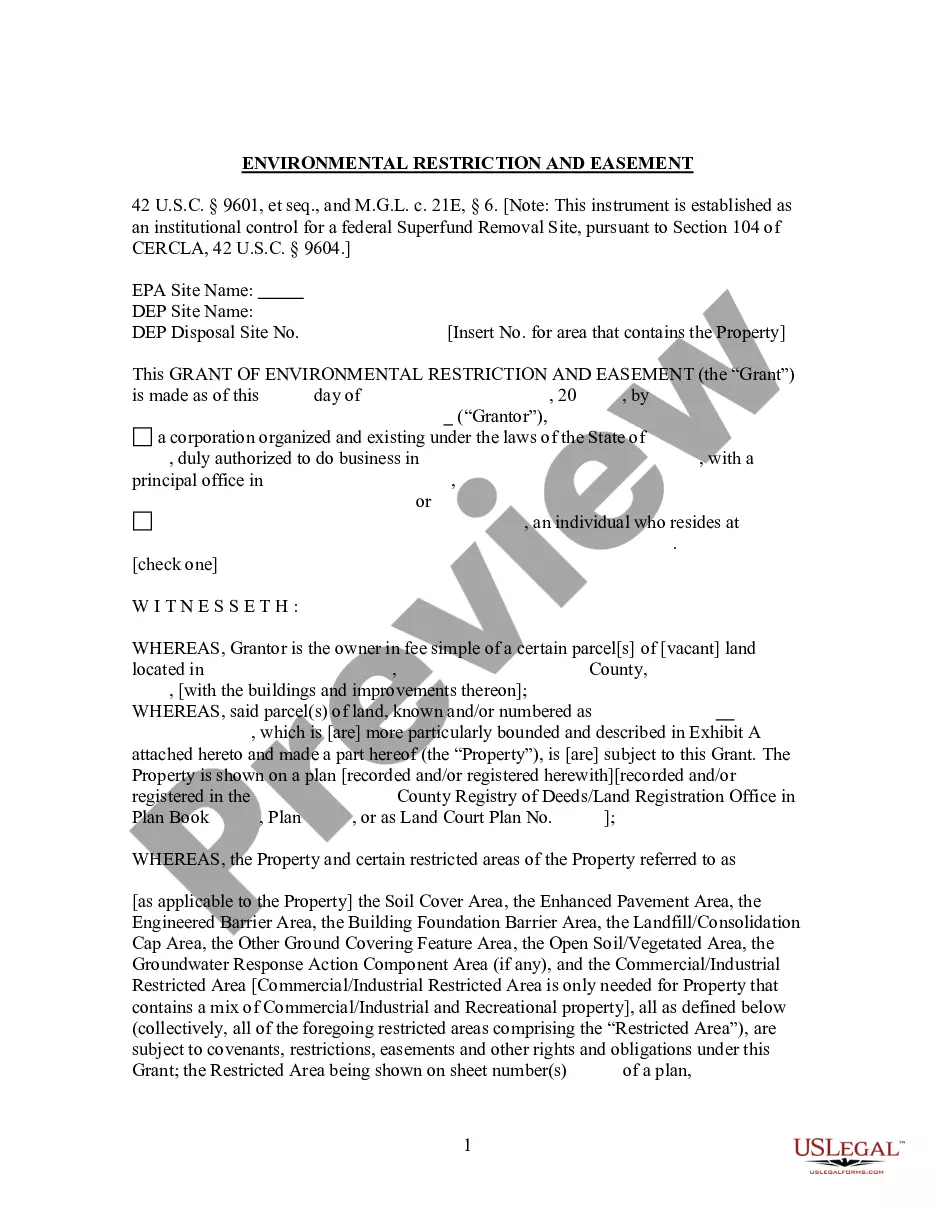
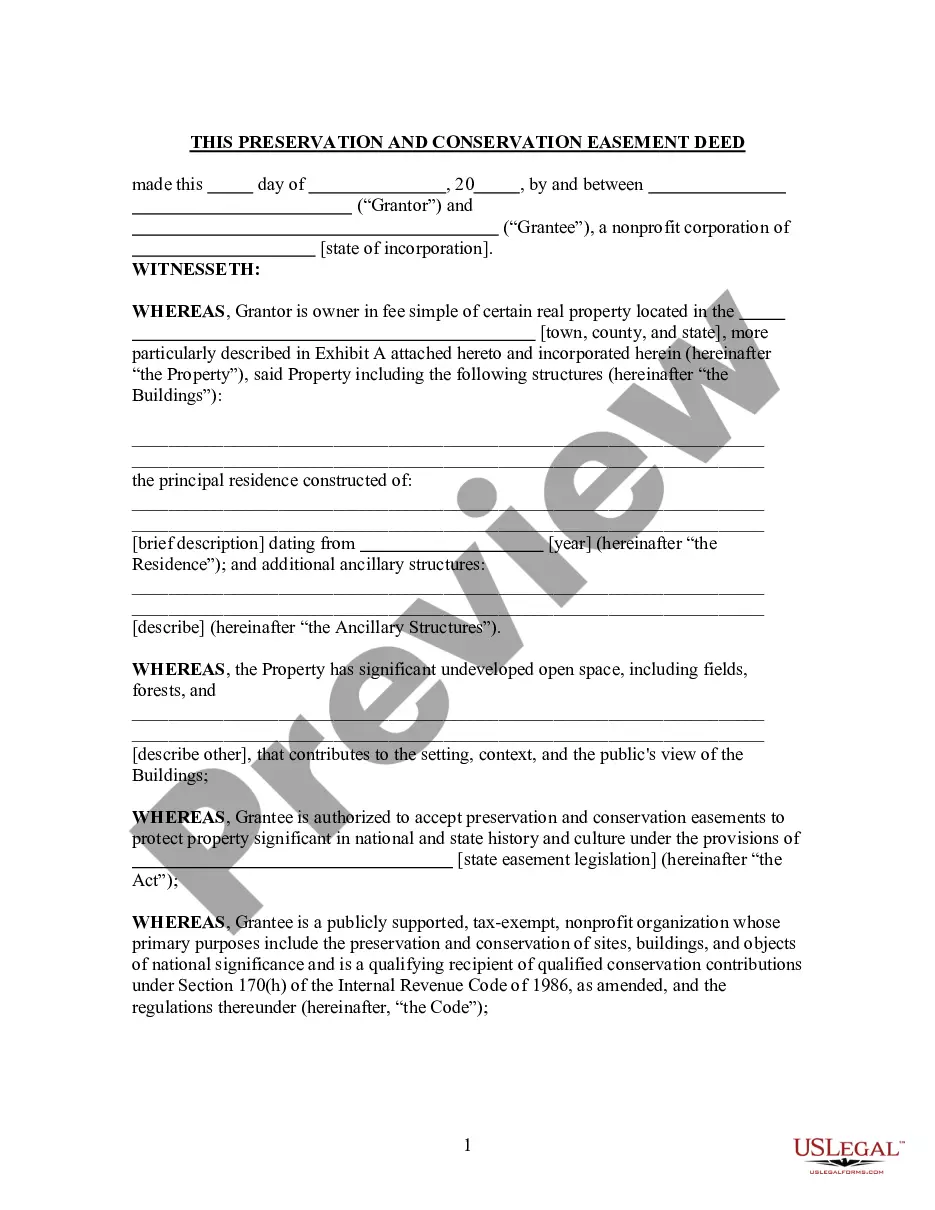
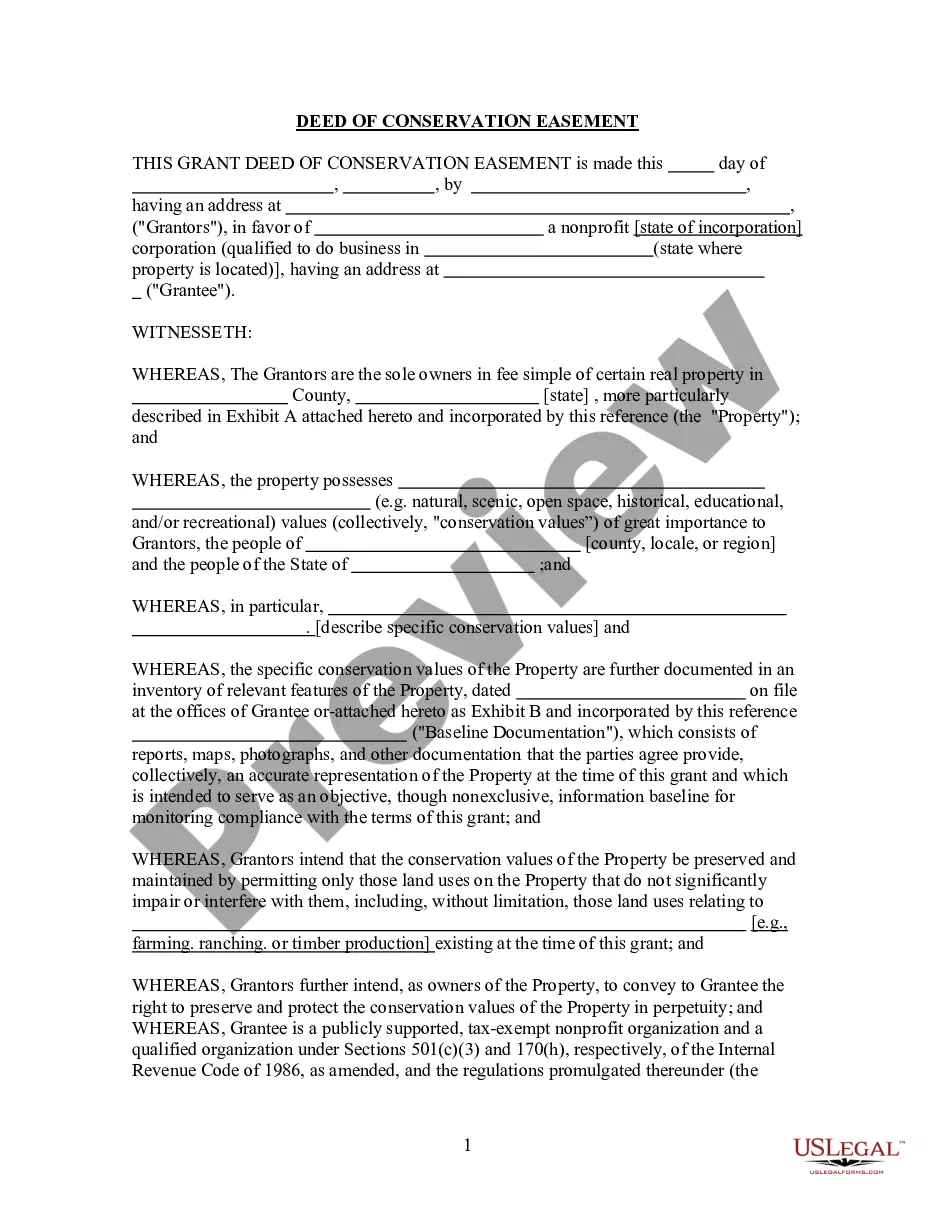
The Agricultural Land Trust form is a legal document that establishes a conservation easement to protect agricultural and open space values on specific property. This form allows landowners (Grantors) to convey their rights to a designated entity (Grantee) to preserve the land's agricultural uses and scenic qualities in perpetuity. Unlike other property agreements, this easement focuses primarily on maintaining agricultural practices and preventing developments that may compromise these values.
Key components of this form
- Identification of the Grantor (landowner) and Grantee (designated organization).
- Description of the property including assessor's parcel numbers.
- Purpose clause outlining the intention to maintain agricultural uses.
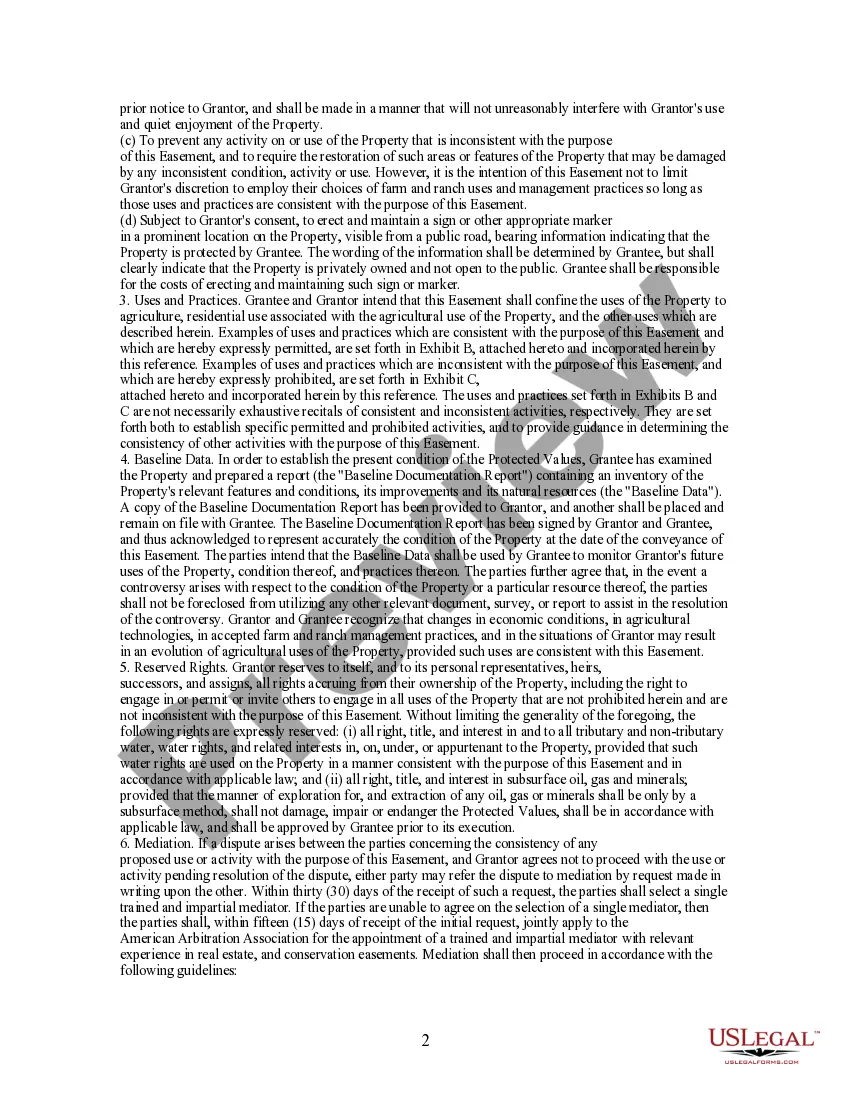
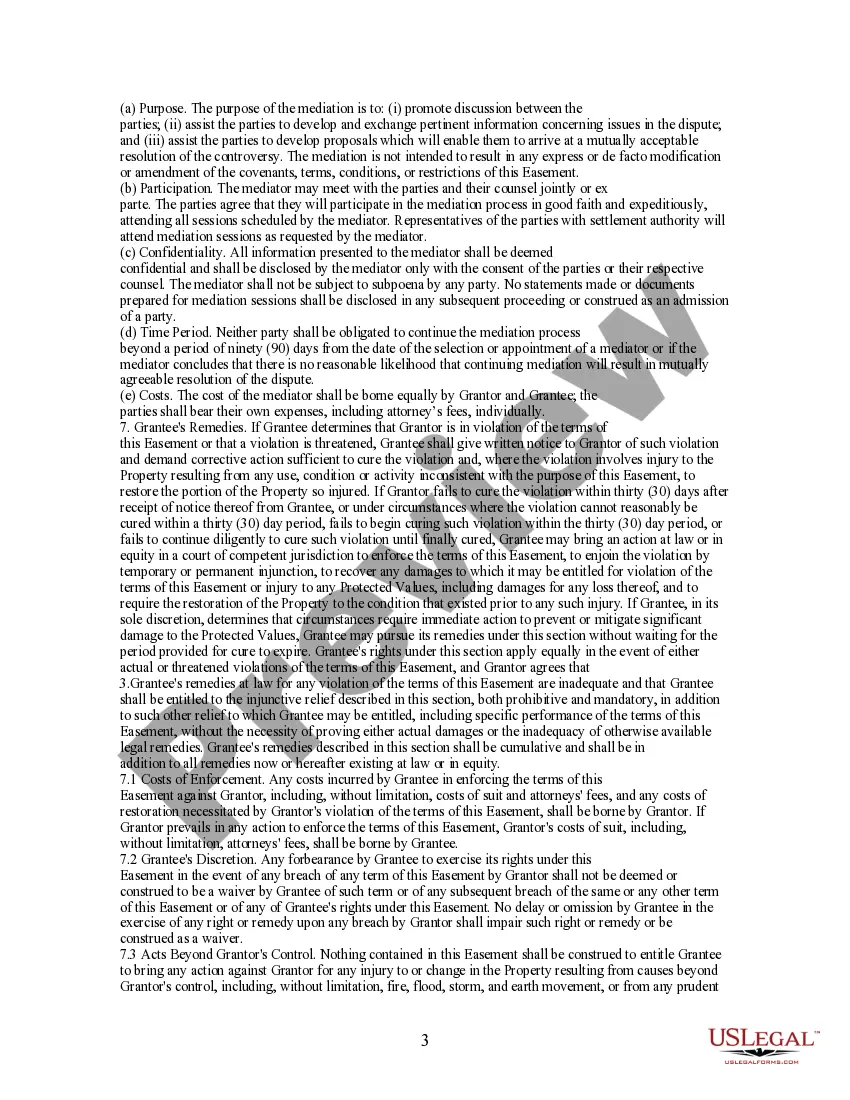
- Affirmative rights ensuring the Grantee can monitor and protect the land.
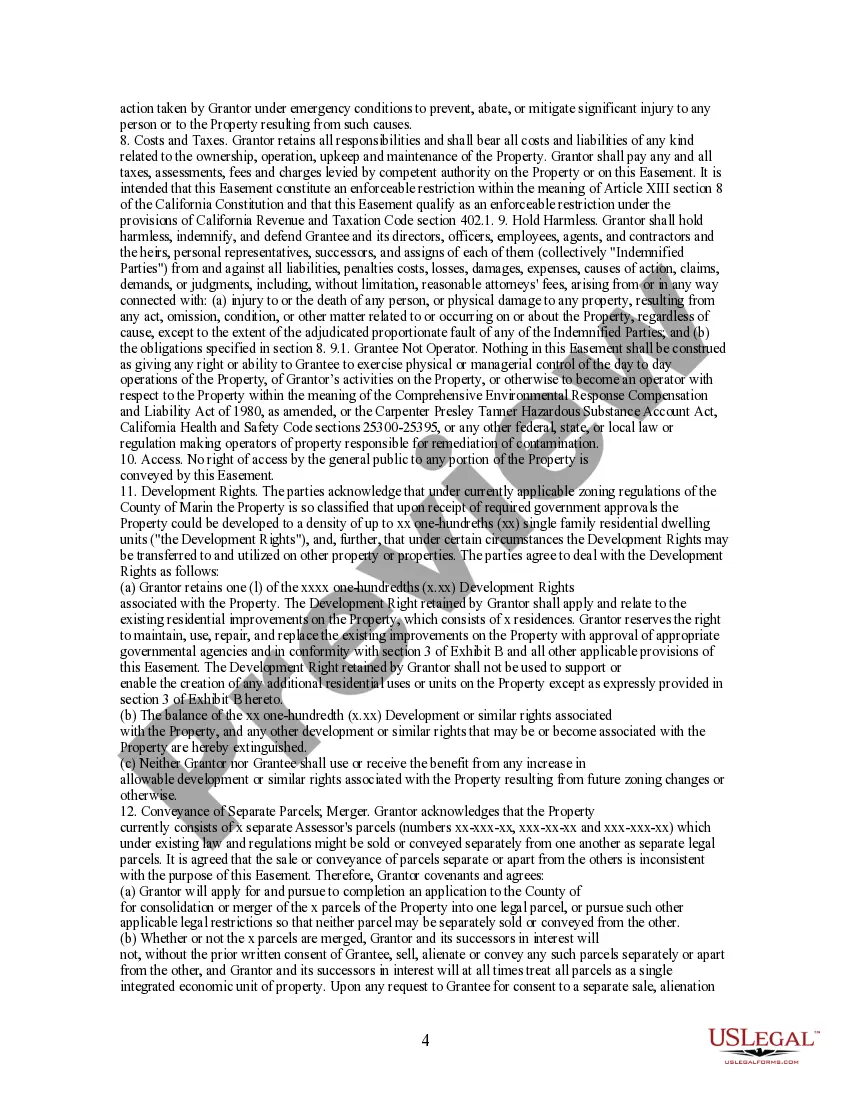
- reserved rights allowing Grantor to retain specific ownership rights.
- Limitations on incompatible activities on the property.
When this form is needed
This form is appropriate for landowners who wish to protect their farmland from development and maintain its agricultural productivity over the long term. It is also useful for organizations or entities dedicated to conservation efforts wanting to secure agricultural land for future generations, ensuring that it remains used for farming or ranching purposes rather than commercial or residential development.
Intended users of this form
- Farmers and landowners seeking to preserve their agricultural land.
- Conservation organizations looking to establish easements on agricultural properties.
- Property owners interested in maintaining the scenic qualities of their land.
- Individuals or groups concerned with environmental conservation and sustainable land use.
How to prepare this document
- Identify the parties involved, including the full legal names of the Grantor and Grantee.
- Specify the property details, including county and assessor's parcel numbers.
- Clearly state the purpose of the easement and any restrictions on land use.
- Review and list any reserved rights of the Grantor related to the property.
- Sign the document in front of a notary to ensure its legal validity.
Notarization requirements for this form
This form does not typically require notarization unless specified by local law. However, it is advisable to have the signature of the Grantor notarized to ensure legal validity and acceptance by public authorities.
Get your form ready online
Our built-in tools help you complete, sign, share, and store your documents in one place.
Make edits, fill in missing information, and update formatting in US Legal Forms—just like you would in MS Word.
Download a copy, print it, send it by email, or mail it via USPS—whatever works best for your next step.
Sign and collect signatures with our SignNow integration. Send to multiple recipients, set reminders, and more. Go Premium to unlock E-Sign.
If this form requires notarization, complete it online through a secure video call—no need to meet a notary in person or wait for an appointment.
We protect your documents and personal data by following strict security and privacy standards.

Make edits, fill in missing information, and update formatting in US Legal Forms—just like you would in MS Word.

Download a copy, print it, send it by email, or mail it via USPS—whatever works best for your next step.

Sign and collect signatures with our SignNow integration. Send to multiple recipients, set reminders, and more. Go Premium to unlock E-Sign.

If this form requires notarization, complete it online through a secure video call—no need to meet a notary in person or wait for an appointment.

We protect your documents and personal data by following strict security and privacy standards.
Common mistakes
- Failing to clearly specify the property details or omitting legal descriptions.
- Not consulting with legal professionals about the implications of the easement.
- Ignoring local regulations that may affect the terms of the conservation easement.
- Not having the document notarized, if required, to ensure enforceability.
Benefits of using this form online
- Immediate access to legally vetted templates drafted by licensed attorneys.
- Convenient downloading and printing options for timely completion.
- Editability to adapt the form to specific needs without additional costs.
- Compliance with current legal standards and practices.
Looking for another form?

Form popularity
FAQ
Yes, California does recognize land trusts, including the California Agricultural Land Trust, as viable legal entities. These trusts hold property interests for beneficial owners, ensuring that land is used according to specific conservation goals. California promotes agricultural land trusts to safeguard the state’s rich farming heritage and foster sustainable practices. For reliable assistance in establishing a land trust, consider using UsLegalForms to streamline the documentation and compliance process.
A California Agricultural Land Trust is a legal arrangement designed to protect agricultural land from being developed or used for non-agricultural purposes. These trusts help preserve valuable farmland for future generations, offering farmers security in their land and livelihood. By conserving agricultural land, these trusts play a crucial role in maintaining local food supplies and sustaining rural economies. If you're interested in creating or understanding a land trust, UsLegalForms offers resources to guide you through the process.
Generally, the individual or entity that creates the land trust is responsible for paying taxes on the property. In the case of a California Agricultural Land Trust, the trust itself may qualify for certain tax exemptions, depending on its specific structure and purpose. It is essential to consult a tax professional to understand the applicable tax implications for your situation. By utilizing a service like UsLegalForms, you can navigate land trust agreements more effectively, ensuring compliance with tax regulations.
Building a house on property zoned as agricultural is often restricted in California to maintain the integrity of agricultural land use. However, there are exceptions depending on local laws and the type of agricultural activities being conducted. Collaborating with the California Agricultural Land Trust can support your efforts in determining viable options and ensuring your project aligns with agricultural preservation goals.
Building on agricultural zoned land in California is subject to strict regulations intended to protect agricultural resources. Generally, you may not build unless the development meets specific criteria outlined in local zoning laws. Consulting with the California Agricultural Land Trust can facilitate understanding these criteria and empower you to explore your building options without compromising your land's agricultural value.
Yes, it is possible to put a house on farmland in California, but specific regulations apply. You must check with local zoning ordinances to determine if converting part of your agricultural land for residential use is permissible. Engaging with the California Agricultural Land Trust can help clarify these regulations and guide you through the necessary steps to ensure a smooth process.
To turn agricultural land into residential property in California, you generally need to go through a rezoning process. This process involves applying to your local planning department, which will assess your proposal based on zoning laws and land use regulations. Working with the California Agricultural Land Trust can provide the guidance necessary to navigate the complexities of this transition, ensuring compliance with state laws while maximizing your land's potential.
A land trust in California operates by allowing landowners to donate or sell their land to a trust that preserves it for agricultural use. This process often involves a conservation easement, which restricts future development and ensures that the land remains productive for farming. The California Agricultural Land Trust helps protect these vital landscapes while offering landowners tax benefits and financial incentives. By participating, you contribute to the preservation of California's agricultural heritage.
To get your property classified as agricultural in California, you must meet specific criteria set by your county, such as minimum income from farming activities. The California Agricultural Land Trust can assist you in understanding these requirements and provide support in the classification process. Proper documentation and compliance with local regulations are crucial to achieving this designation.
To establish a land trust in California, start by researching local land trusts and understanding their criteria and application processes. Collaborating with a knowledgeable organization like a California Agricultural Land Trust can provide guidance and resources. It's beneficial to consult legal and agricultural experts to navigate the requirements successfully.