Arkansas Beneficiary / Transfer on Death Deed from Two Individuals to Three Individuals
What is this form?
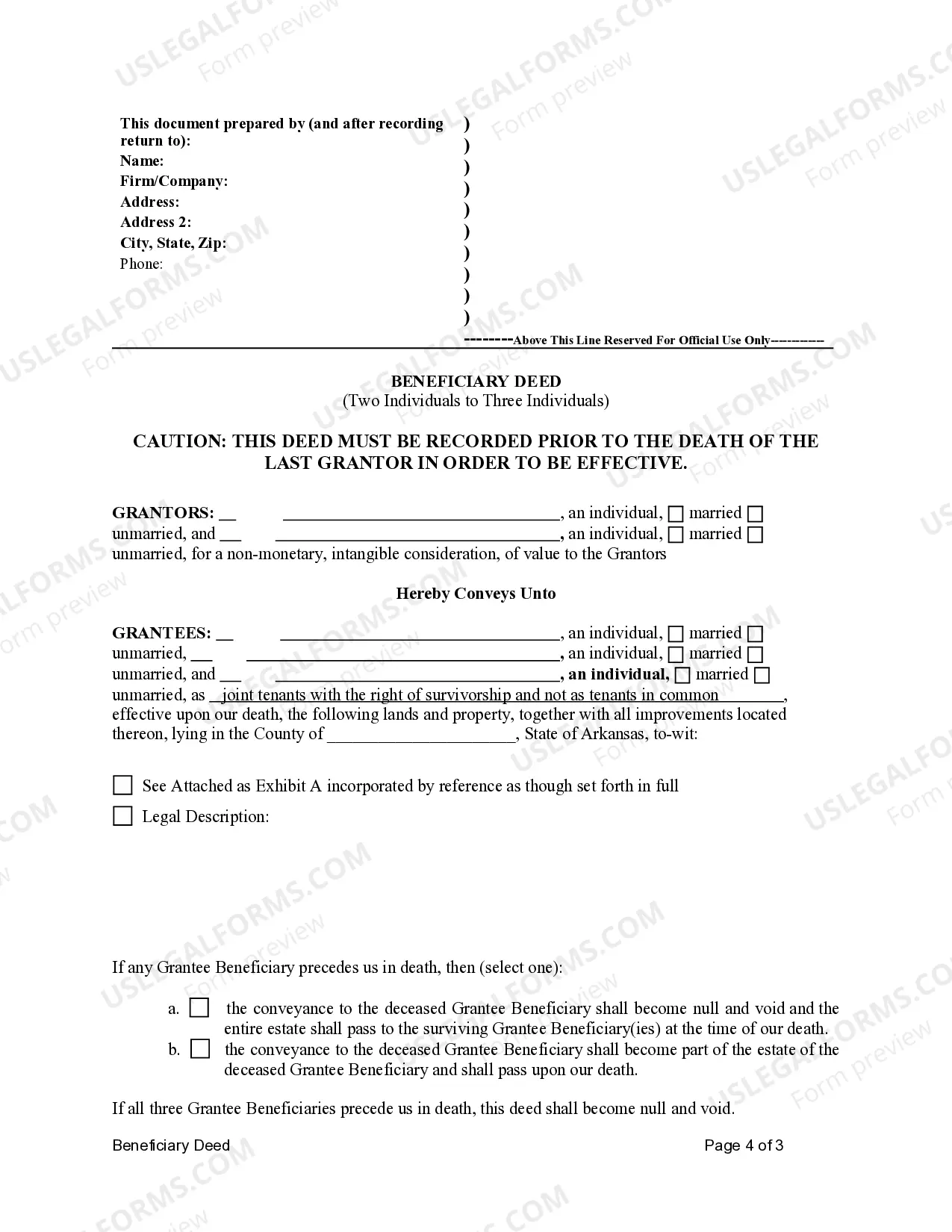
This form is a Beneficiary Deed, also known as a Transfer on Death Deed, designed for transferring property upon the death of the Grantors, who can be two individuals. The Grantees, or beneficiaries, can be three individuals. This form allows the Grantors to designate how the property will be held and ensure that if a Grantee does not survive the Grantors, their share will go to their estate or the surviving Grantees. This deed is revocable during the Grantors' lifetime and is effective only if recorded before the death of the last Grantor.
Form components explained
- Grantors: The two individuals who are transferring the property.
- Grantees: The three individuals who will receive the property upon the death of the Grantors.
- Property description: Detailed information about the property being transferred.
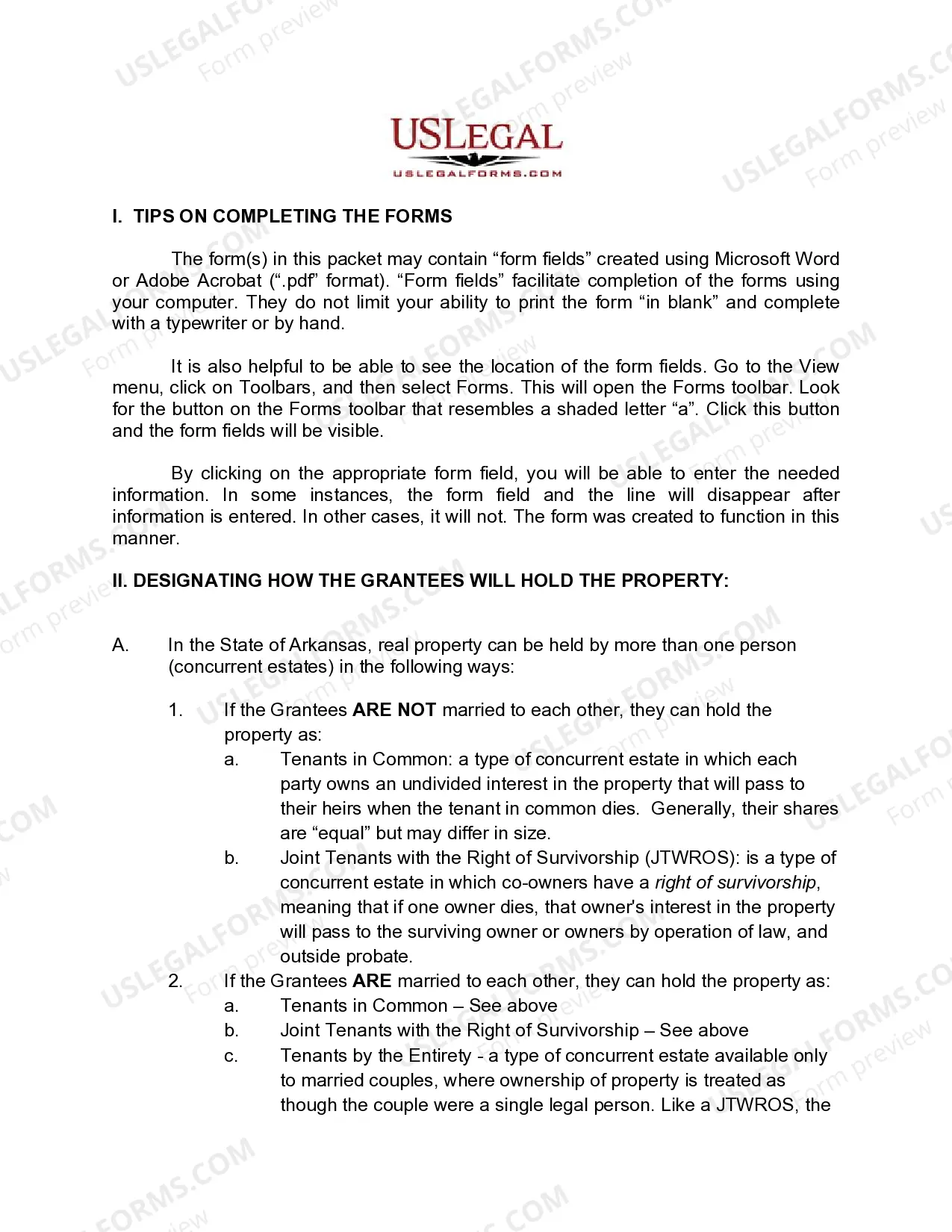
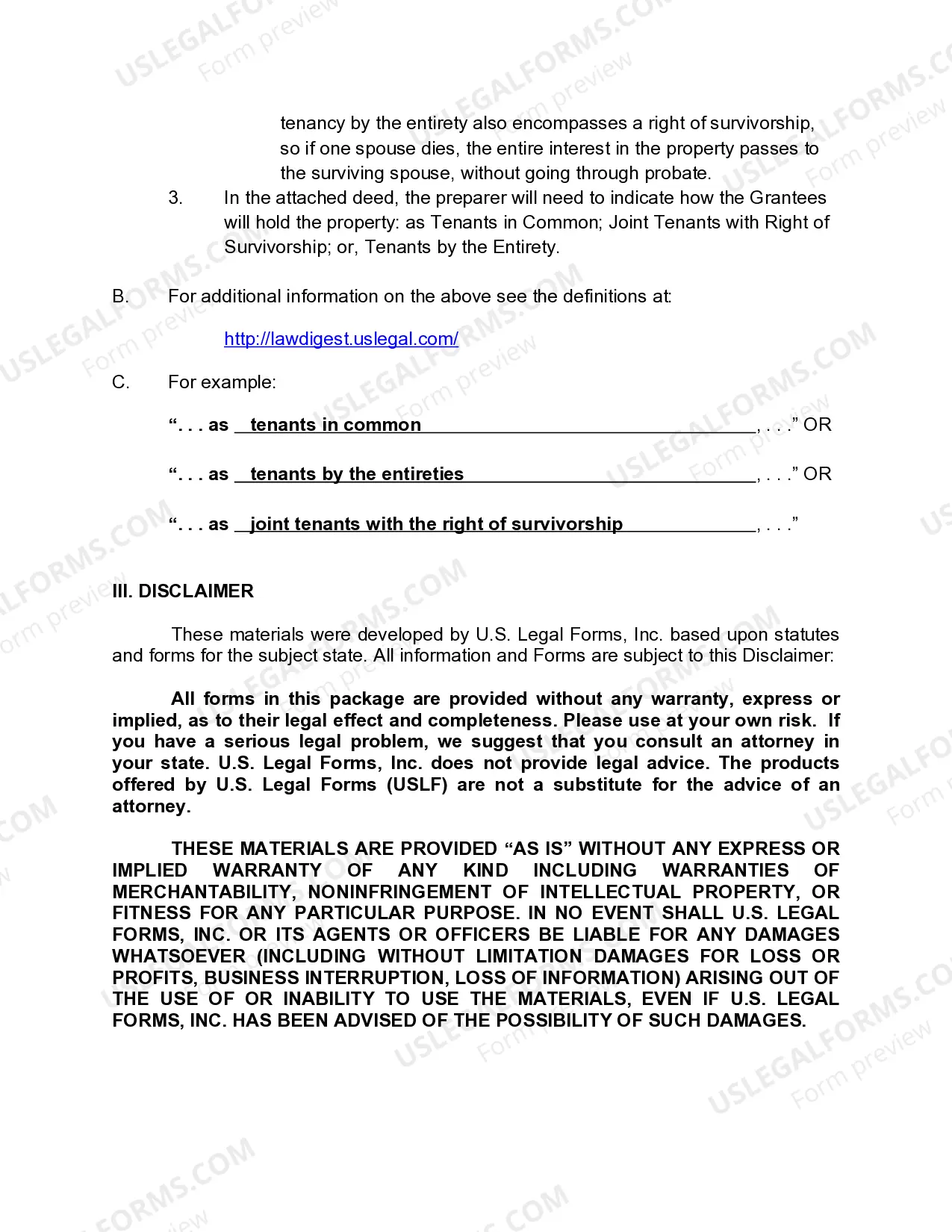
- Designation of property holding: Instructions on how the Grantees will hold the property (e.g., tenants in common, joint tenants with the right of survivorship, or tenants by the entirety).
- Revocability clause: Details that the transfer can be revoked by the Grantors at any time before their death.
- Recording requirement: The deed must be recorded prior to the last Grantor's death for it to be effective.





Common use cases
This form is useful when individuals want to ensure that their property is transferred directly to their chosen beneficiaries without going through the probate process. It is particularly relevant for couples or individuals who may wish to leave property to multiple heirs and want to specify how each will hold their interest in the property. Use this form if you have property that you want to transfer upon your death in a straightforward manner, thereby avoiding potential disputes among heirs.
Intended users of this form
- Individuals or couples (married or unmarried) transferring property to multiple beneficiaries.
- Those seeking a simple way to manage property transfer at death without probate.
- People who want to specify how the Grantees will hold the property.
- Any individual wanting the flexibility to revoke the transfer before death.
How to complete this form
- Identify the Grantors by entering their full names.
- Specify the Grantees by including the full names of the three individuals who will inherit the property.
- Provide a detailed description of the property being transferred, including its location and any relevant identifiers.
- Choose how the Grantees will hold the property (tenants in common, joint tenants with the right of survivorship, or tenants by the entirety) and indicate this on the form.
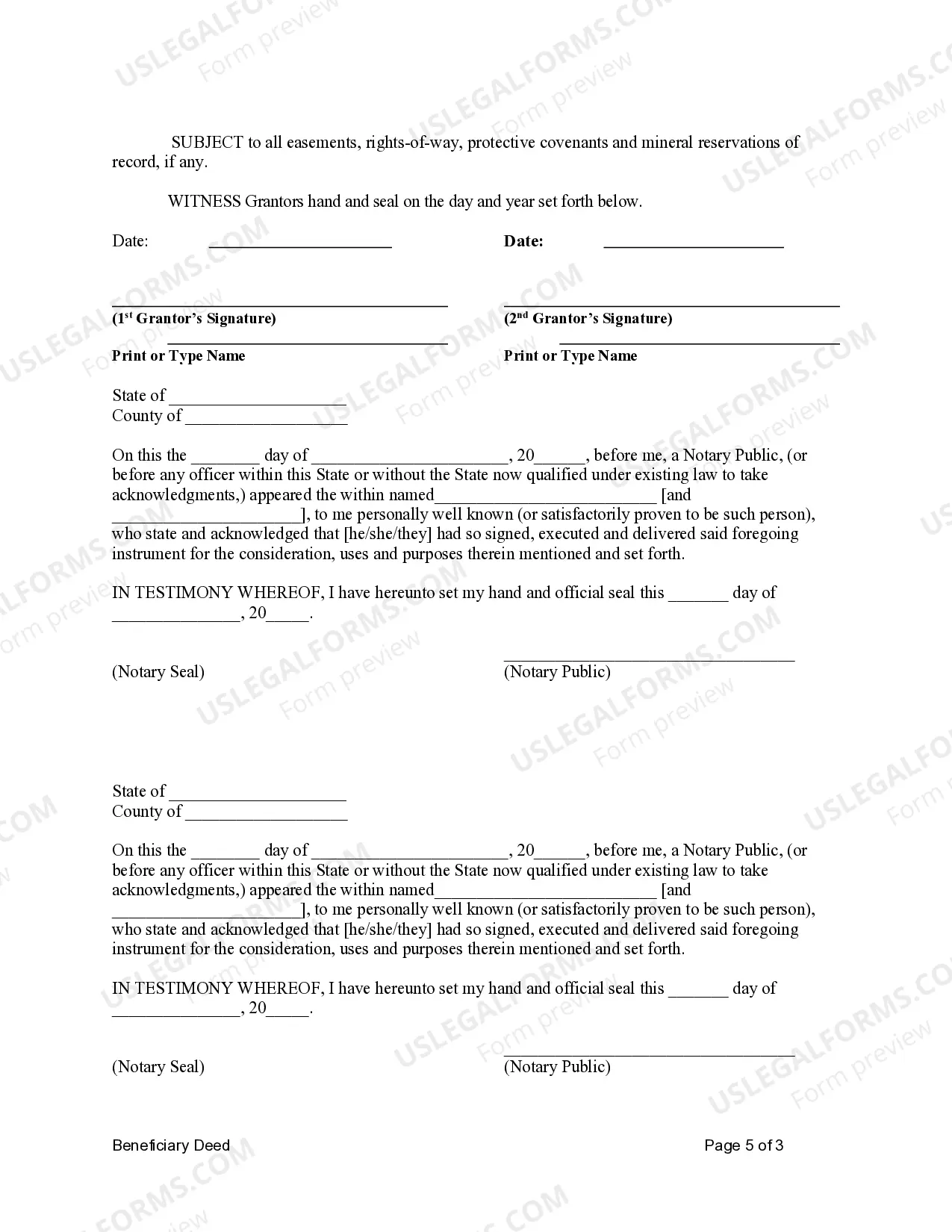
- Sign and date the form in the presence of a notary, if required for your state.
- Record the completed deed with the appropriate local government office prior to the last Grantor's death.
Notarization requirements for this form
Yes, this form must be notarized to be legally valid. Notarization verifies the identity of the Grantors and ensures that they are signing the deed willingly. US Legal Forms offers integrated online notarization, allowing you to complete the process via secure video calls without needing to travel.
Get your form ready online
Our built-in tools help you complete, sign, share, and store your documents in one place.
Make edits, fill in missing information, and update formatting in US Legal Forms—just like you would in MS Word.
Download a copy, print it, send it by email, or mail it via USPS—whatever works best for your next step.
Sign and collect signatures with our SignNow integration. Send to multiple recipients, set reminders, and more. Go Premium to unlock E-Sign.
If this form requires notarization, complete it online through a secure video call—no need to meet a notary in person or wait for an appointment.
We protect your documents and personal data by following strict security and privacy standards.

Make edits, fill in missing information, and update formatting in US Legal Forms—just like you would in MS Word.

Download a copy, print it, send it by email, or mail it via USPS—whatever works best for your next step.

Sign and collect signatures with our SignNow integration. Send to multiple recipients, set reminders, and more. Go Premium to unlock E-Sign.

If this form requires notarization, complete it online through a secure video call—no need to meet a notary in person or wait for an appointment.

We protect your documents and personal data by following strict security and privacy standards.
Typical mistakes to avoid
- Failing to properly identify all Grantors and Grantees can invalidate the deed.
- Omitting to describe the property adequately may lead to complications later.
- Not recording the deed before the death of the last Grantor can render the transfer ineffective.
- Choosing an incorrect method for Grantees to hold the property without understanding the implications.
Why complete this form online
- Convenient access to the document allows for easy customization and completion.
- Editable forms can be tailored specifically to your needs and circumstances.
- Access to templates created by licensed attorneys ensures legal compliance.
- Secure storage of completed forms for future reference and peace of mind.
Summary of main points
- A Transfer on Death Deed allows for easy transfer of property upon death.
- It can be revoked at any time by the grantors.
- Ensure that the deed is recorded prior to the last grantor's death for legal effect.
- Selecting the correct property holding type is crucial for future interests.
Looking for another form?

Form popularity
FAQ
While an Arkansas Beneficiary / Transfer on Death Deed from Two Individuals to Three Individuals can simplify property transfer, it does have disadvantages. For instance, this deed does not shield your property from Medicaid claims or creditor issues, and it may complicate joint ownership arrangements. Additionally, the property may not be effectively transferred if changes occur in state laws, so it's essential to stay informed and consult with a qualified professional.
Creating a beneficiary deed in Arkansas involves preparing a form that designates individuals as beneficiaries to your property after your death. You must sign and notarize the deed, then record it with your county's recorder of deeds to make it effective. Just like with the Arkansas Beneficiary / Transfer on Death Deed from Two Individuals to Three Individuals, our platform offers templates and guidance to help you navigate the process easily.
To create a transfer on death deed in Arkansas, you need to complete a specific form that identifies you as the current owner and names the individuals who will receive the property upon your passing. It's crucial to ensure that the deed is properly signed, notarized, and filed with the county recorder where the property is located. Our platform, US Legal Forms, provides a user-friendly solution for drafting and filing these deeds efficiently, ensuring compliance with state laws.
When it comes to the Arkansas Beneficiary / Transfer on Death Deed from Two Individuals to Three Individuals, you can designate multiple beneficiaries. Generally, there is no strict limit on the number of beneficiaries you can include, allowing for flexibility in your estate planning. It is essential to ensure that all beneficiaries are clearly named in the deed to avoid any future disputes. If you need guidance on this process, our platform, US Legal Forms, offers resources to help streamline your estate planning.
To transfer a deed after death in Arkansas, you generally need to present the death certificate and the original deed to the county clerk or recorder's office. If the property was left through a transfer on death deed, the beneficiaries must file the deed to officially transfer ownership. In cases without a will, probate may be necessary. An Arkansas Beneficiary / Transfer on Death Deed from Two Individuals to Three Individuals simplifies this process and provides clear instructions for your heirs.
While you can create an Arkansas Beneficiary / Transfer on Death Deed from Two Individuals to Three Individuals without a lawyer, consulting one is advisable. A lawyer can ensure that the deed complies with state laws and meets your specific needs. This extra reassurance can prevent potential issues for your beneficiaries later on, making the process smoother for everyone involved.
You cannot transfer a deed to a deceased person since property ownership must be assigned to a living individual. However, if the deceased had an Arkansas Beneficiary / Transfer on Death Deed from Two Individuals to Three Individuals, the ownership automatically passes to the named beneficiaries upon death. If there is no such deed, you will likely need to go through the probate process to settle the estate.
To transfer a property using a transfer on death deed to two beneficiaries, you must complete the necessary forms that name both beneficiaries and file them with the county recorder's office. This document allows the transfer of the property upon your death, avoiding probate. It's crucial to ensure that the deed clearly states the intent to transfer to both individuals. An Arkansas Beneficiary / Transfer on Death Deed from Two Individuals to Three Individuals helps clarify the beneficiaries' shared ownership.
To transfer a property deed from a deceased relative in Arkansas, you must first obtain a copy of the death certificate. Next, you should check if the property was held in a trust or if there was a transfer on death deed in place. If not, you may need to file for probate to transfer property ownership. Utilizing an Arkansas Beneficiary / Transfer on Death Deed from Two Individuals to Three Individuals can streamline this process.
A beneficiary deed in Arkansas can include multiple individuals, providing flexibility in estate planning. This enables you to designate several heirs and clearly outline their respective shares in the property. However, it is key to ensure each beneficiary's information is correct to prevent any legal issues later.