Alabama Motion for Sanctions
Overview of this form
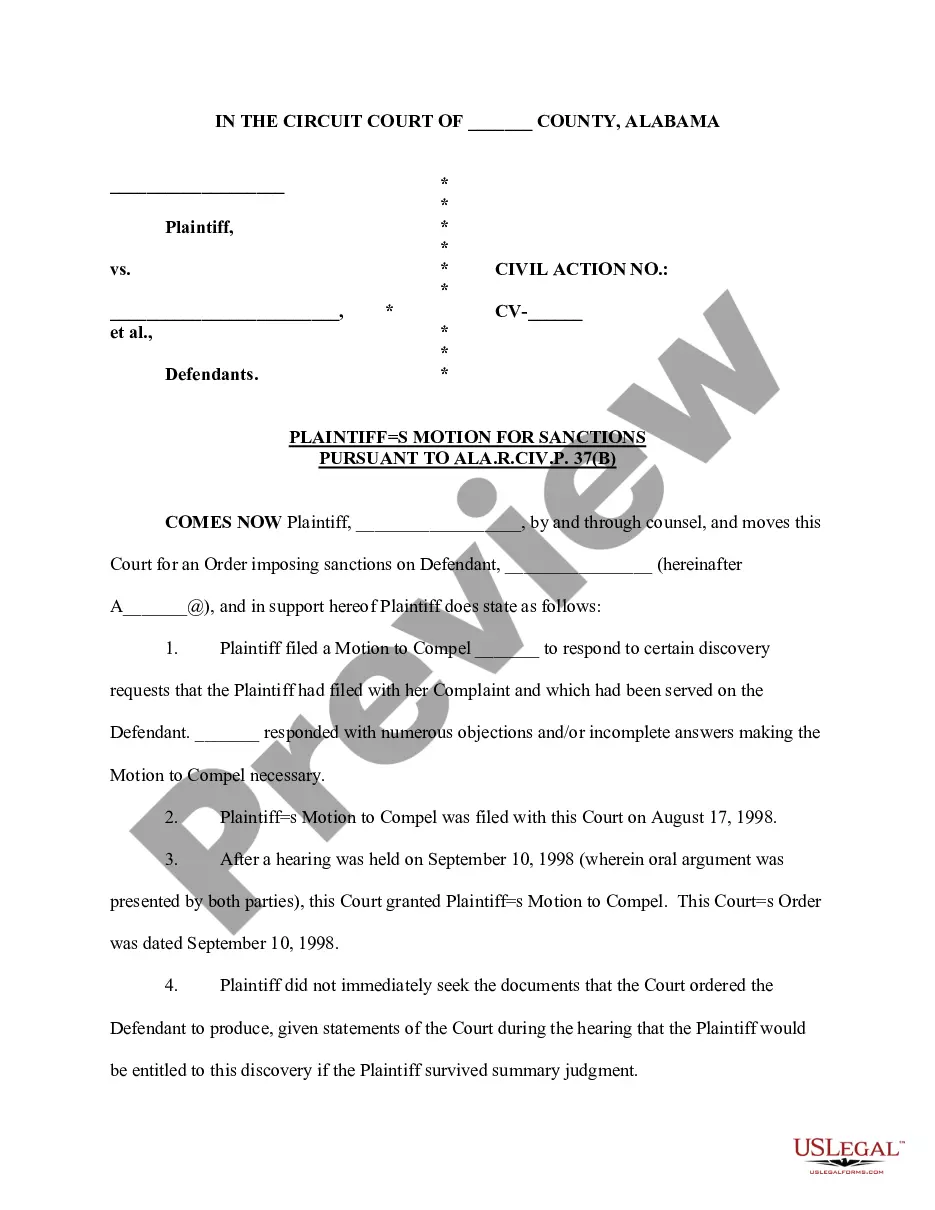
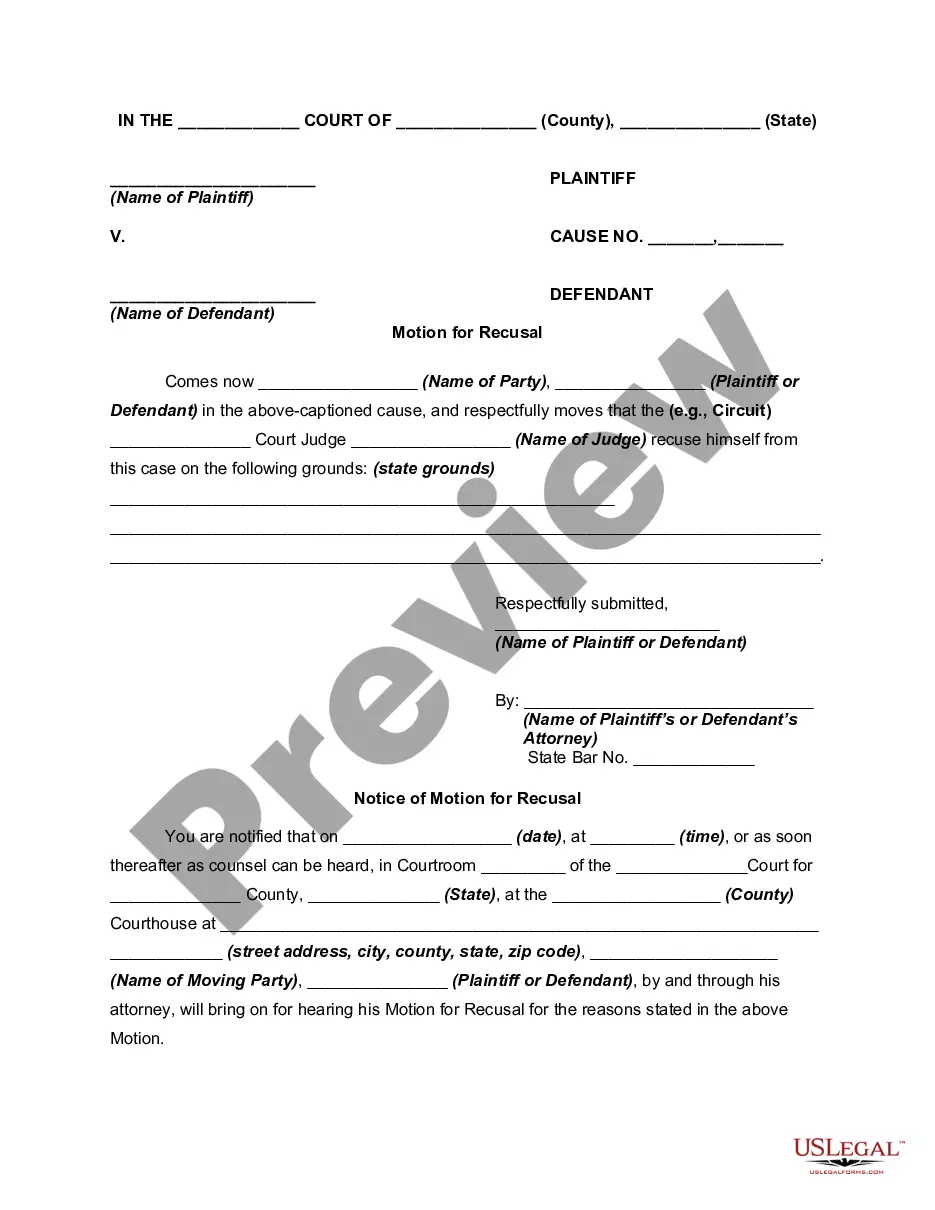
The Motion for Sanctions is a legal document filed by a party seeking penalties against another party for failing to comply with court orders, specifically in response to a Motion to Compel. This form is crucial for ensuring compliance and holding parties accountable in legal proceedings.
Main sections of this form
- Identification of the Plaintiff and Defendant, including names and contact information.
- CIVIL ACTION NUMBER, which is the unique identifier for the case.
- The motion's introduction, detailing the request for sanctions.
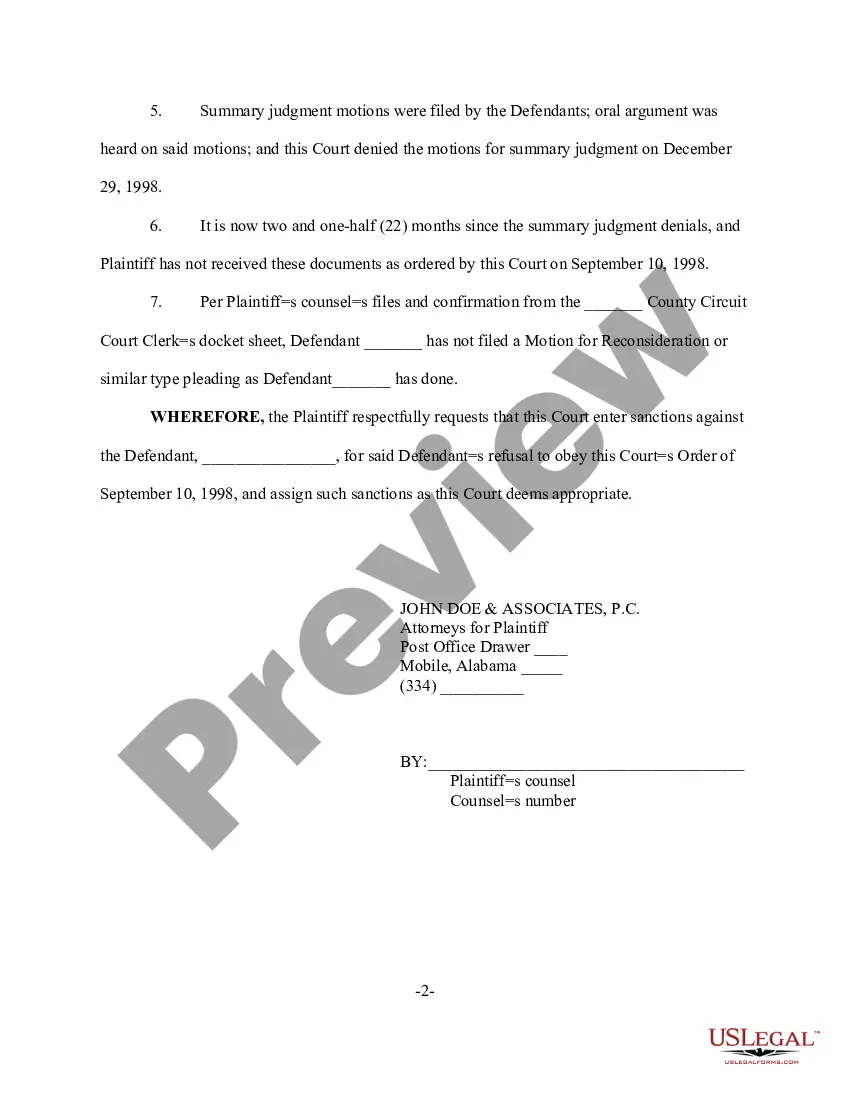
- Facts establishing the grounds for the motion, including previous court orders and the Defendant's lack of compliance.
- A clear request for the specific sanctions to be imposed by the court.
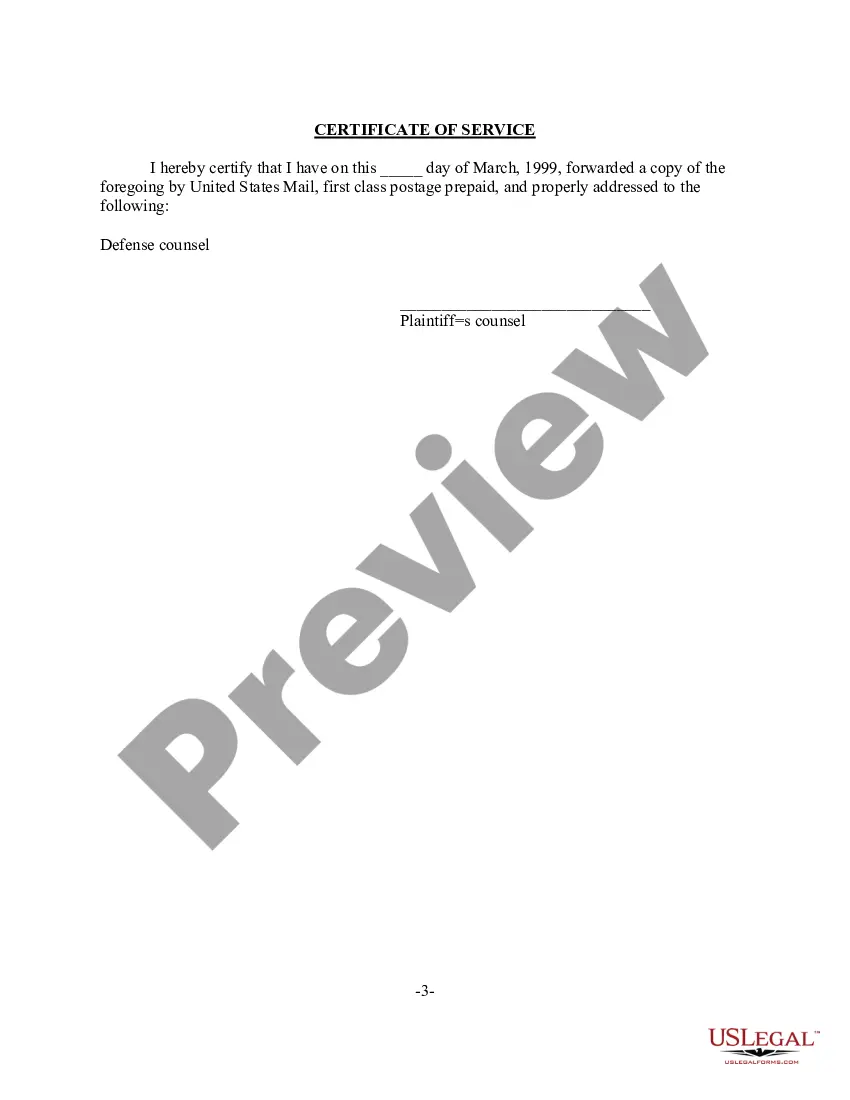
- Certificate of Service, confirming that the motion has been sent to the opposing party.
When to use this form
This form should be used when a party has failed to comply with a court order, particularly after a Motion to Compel has been granted. It may be relevant in situations where critical documents or information have not been provided, which affects the progress of a legal case.
Intended users of this form
- Litigants in civil cases who need to enforce court orders.
- Attorneys representing clients seeking sanctions against non-compliant parties.
- Individuals or entities involved in discovery disputes requiring judicial intervention.
How to complete this form
- Identify the Plaintiff and Defendant by filling in their names and contact details.
- Enter the CIVIL ACTION NUMBER associated with the case.
- Detail the facts outlining the Defendant's failure to comply with the court's order.
- Specify what sanctions you are requesting the court to impose on the Defendant.
- Complete the Certificate of Service by including the date and method of sending the motion to the opposing party.
Does this form need to be notarized?
This form does not typically require notarization unless specified by local law. Ensure to verify any jurisdiction-specific requirements for the motion to ensure compliance.
Get your form ready online
Our built-in tools help you complete, sign, share, and store your documents in one place.
Make edits, fill in missing information, and update formatting in US Legal Forms—just like you would in MS Word.
Download a copy, print it, send it by email, or mail it via USPS—whatever works best for your next step.
Sign and collect signatures with our SignNow integration. Send to multiple recipients, set reminders, and more. Go Premium to unlock E-Sign.
If this form requires notarization, complete it online through a secure video call—no need to meet a notary in person or wait for an appointment.
We protect your documents and personal data by following strict security and privacy standards.

Make edits, fill in missing information, and update formatting in US Legal Forms—just like you would in MS Word.

Download a copy, print it, send it by email, or mail it via USPS—whatever works best for your next step.

Sign and collect signatures with our SignNow integration. Send to multiple recipients, set reminders, and more. Go Premium to unlock E-Sign.

If this form requires notarization, complete it online through a secure video call—no need to meet a notary in person or wait for an appointment.

We protect your documents and personal data by following strict security and privacy standards.
Common mistakes
- Failing to include the CIVIL ACTION NUMBER, which is essential for identifying the case.
- Not providing sufficient detail on the Defendant's non-compliance.
- Omitting the Certificate of Service, which is required to prove that the opposing party was notified.
Benefits of using this form online
- Convenience of downloading the form at any time without visiting a law office.
- Editability to easily customize the form according to specific case details.
- Access to reliable, attorney-drafted documents ensuring compliance with legal standards.
Looking for another form?



Form popularity
FAQ
So, can you refuse to answer interrogatories? The answer is, no, you may not.That answer must either permit inspection of the requested information or object to the production of the information for a specific reason.
The court may also impose an issue sanction by an order prohibiting any party engaging in the misuse of the discovery process from supporting or opposing designated claims or defenses.(1) An order striking out the pleadings or parts of the pleadings of any party engaging in the misuse of the discovery process.
A party shall not propound more than forty (40) interrogatories to any other party without leave of court. Upon motion, and for good cause shown, the court may increase the number of interrogatories that a party may serve upon another party.
Sanctions, in law and legal definition, are penalties or other means of enforcement used to provide incentives for obedience with the law, or with rules and regulations.A judge may sanction a party during a legal proceeding, by which it is implied that they impose penalties.
(1) In General. If, after notice and a reasonable opportunity to respond, the court determines that Rule 11(b) has been violated, the court may impose an appropriate sanction on any attorney, law firm, or party that violated the rule or is responsible for the violation.
Interrogatory answers, in order to be used as substantive evidence at trial, must be introduced into evidence as part of the record.One procedure for admitting the answers, after securing the court's permission, is to read the questions and answers before the jury so that they are in the trial transcript.
(1) Number. Unless otherwise stipulated or ordered by the court, a party may serve on any other party no more than 25 written interrogatories, including all discrete subparts. Leave to serve additional interrogatories may be granted to the extent consistent with Rule 26(b)(1) and (2).
The interrogatories must not exceed 30, including all subparts, unless the court permits a larger number on motion and notice and for good cause.
The court can issue sanctions on the motion of a party or on its own without a motion. (1) Sanctions Against The rule authorizes sanctions to be brought against the person signing the pleading, motion or other paper; i.e., the attorney or pro se Page 10 Sanctions Chapter 4.2 3 party, or the represented party, or both.