Modification Legal Loan Forgiveness
Description
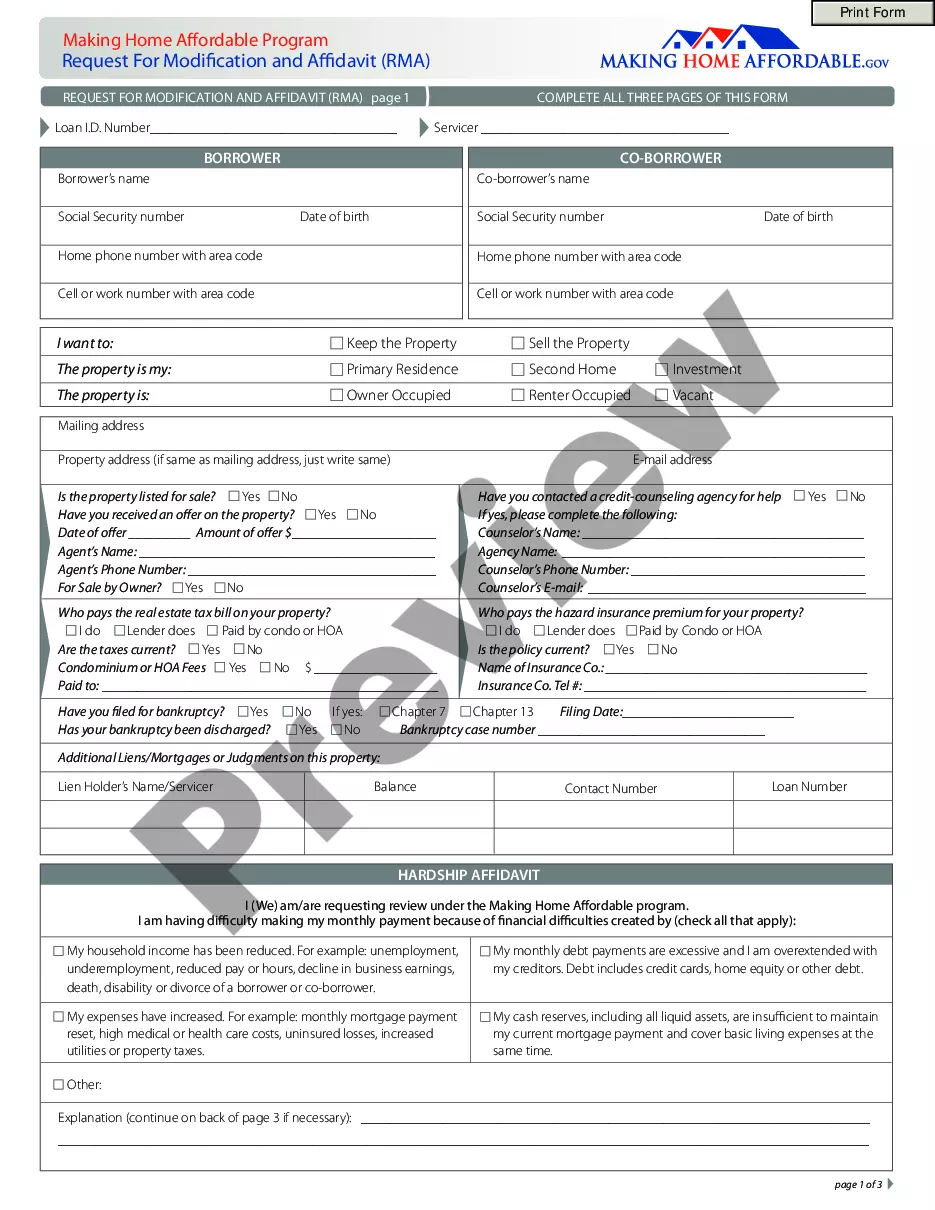
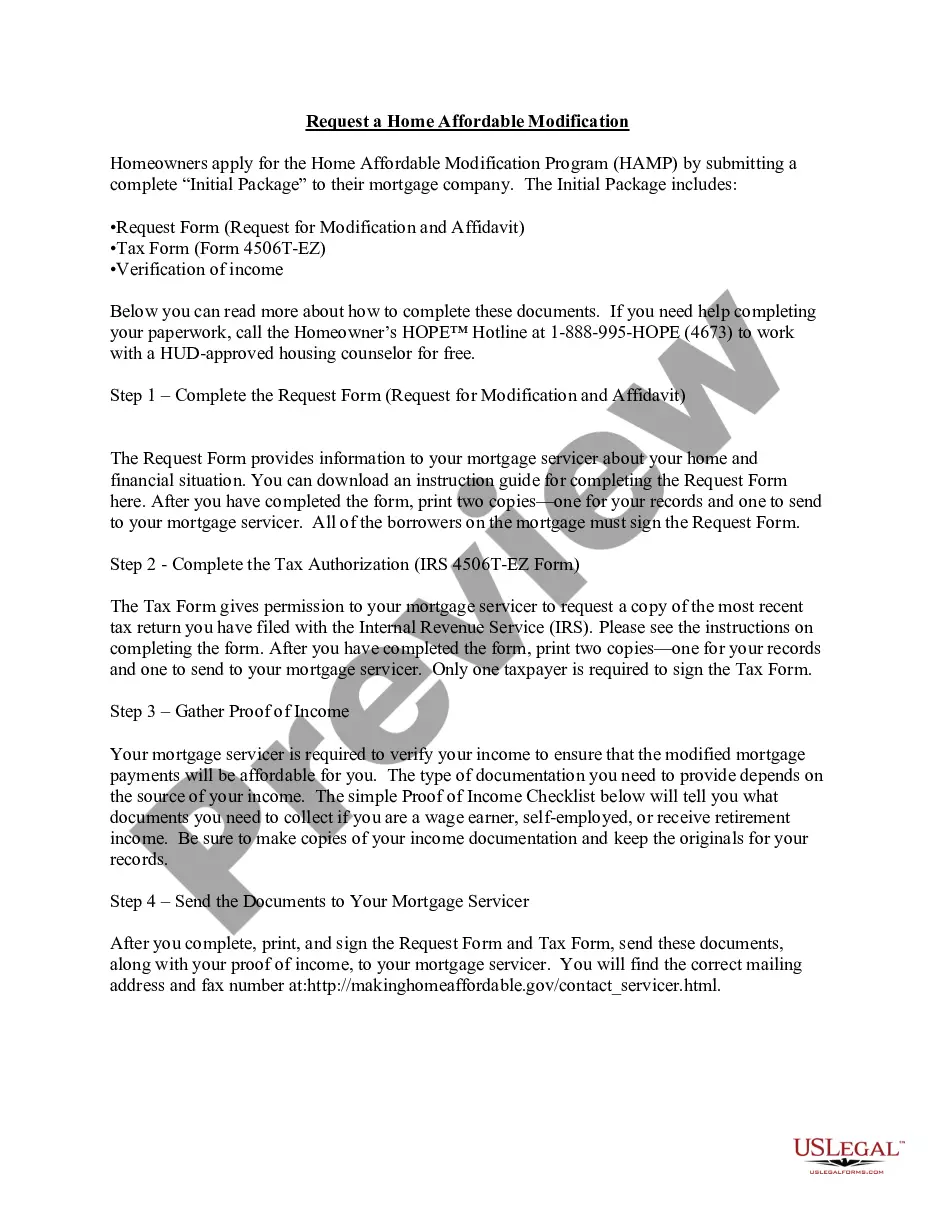







How to fill out HAMP Loan Modification Package?
The Adjustment Legal Loan Exemption displayed on this page is a versatile legal template created by expert attorneys in accordance with federal and local laws and regulations.
For over 25 years, US Legal Forms has supplied individuals, businesses, and legal practitioners with more than 85,000 confirmed, state-specific forms for any commercial and personal situation. It’s the fastest, easiest, and most trustworthy means to procure the documents you require, as the service ensures bank-level data security and anti-virus protection.
Register for US Legal Forms to have authenticated legal templates for all of life’s situations readily available.
- Search for the document you require and review it.
- Browse through the file you looked up and preview it or verify the form description to ensure it meets your needs. If it doesn’t, use the search bar to find the suitable one. Click Buy Now once you've found the template you need.
- Register and Log Into your account.
- Select the subscription plan that fits you and create an account. Use PayPal or a credit card for a swift payment. If you already possess an account, Log In and check your subscription to proceed.
- Obtain the fillable template.
- Choose the format you prefer for your Adjustment Legal Loan Exemption (PDF, Word, RTF) and download the sample to your device.
- Complete and sign the documents.
- Print out the template to fill it out manually. Alternatively, use an online multifunctional PDF editor to quickly and accurately complete and sign your form with a valid.
- Re-download your documents.
- Utilize the same document again whenever necessary. Access the My documents tab in your profile to download again any previously acquired forms.
Form popularity
FAQ
While various discussions on Reddit highlight personal experiences, modification legal loan forgiveness after 20 years hinges on the repayment plan in use. Many users report positive outcomes through income-driven repayment plans, suggesting that thorough research and awareness of the rules is essential. Engaging in communities like Reddit can offer helpful insights, but verify information against official resources and guidance.
Income-driven repayment (IDR) plans are currently a vital tool for borrowers seeking modification legal loan forgiveness. There have been discussions about reforming student loan policies, but IDR remains a crucial pathway for many. Always stay informed about the latest developments to ensure you can take advantage of all available options for loan forgiveness.
Your student loans may indeed qualify for forgiveness after 20 years, particularly under income-driven repayment plans. To benefit from modification legal loan forgiveness, you must consistently meet the payment requirements of these programs. It is crucial to keep accurate records and understand your loan terms to ensure you receive any potential forgiveness.
Consolidation can lead to modification legal loan forgiveness, though it depends on the repayment plan you choose after consolidating. When you consolidate your loans, you may switch to an income-driven repayment plan that qualifies you for forgiveness after a specific period. Be sure to review the benefits and risks of consolidating to maximize your potential for loan forgiveness.
Eligibility for modification legal loan forgiveness primarily includes borrowers who have made consistent payments under a qualifying repayment plan. Most often, this applies to federal student loan borrowers who work in public service or non-profit sectors. If you have been in repayment for a set number of years, you could qualify for forgiveness. Understanding the details is crucial, and platforms like uslegalforms can help you navigate the application process effectively.
To qualify for a loan modification, you need to demonstrate a valid financial hardship, such as job loss or medical expenses. Additionally, lenders require comprehensive documentation to assess your situation. Using resources like uslegalforms can simplify this process, guiding you toward obtaining modification legal loan forgiveness.
Certain factors can disqualify you from obtaining a loan modification. If you have sufficient income to make your current payments or if you filed for bankruptcy without a successful plan, you might face disqualification. Understanding these aspects is crucial in your pursuit of modification legal loan forgiveness.
You generally need to provide several documents when applying for a loan modification. These can include your income statements, tax returns, a hardship letter, and your current loan details. Collecting these documents will facilitate the process and assist you in securing modification legal loan forgiveness.
Getting approved for a loan modification can be challenging, but it largely depends on your financial situation. Lenders typically evaluate your income, expenses, and payment history. If you demonstrate financial hardship, you may increase your chances of receiving modification legal loan forgiveness.
A loan modification might involve adjusting the interest rate on your mortgage, which can lower your monthly payments. For instance, if you have a fixed-rate mortgage, your lender may reduce the rate to make your payments more manageable. This process can lead to modification legal loan forgiveness, helping borrowers who are struggling.