Debt Abuse Collection Formula
Description
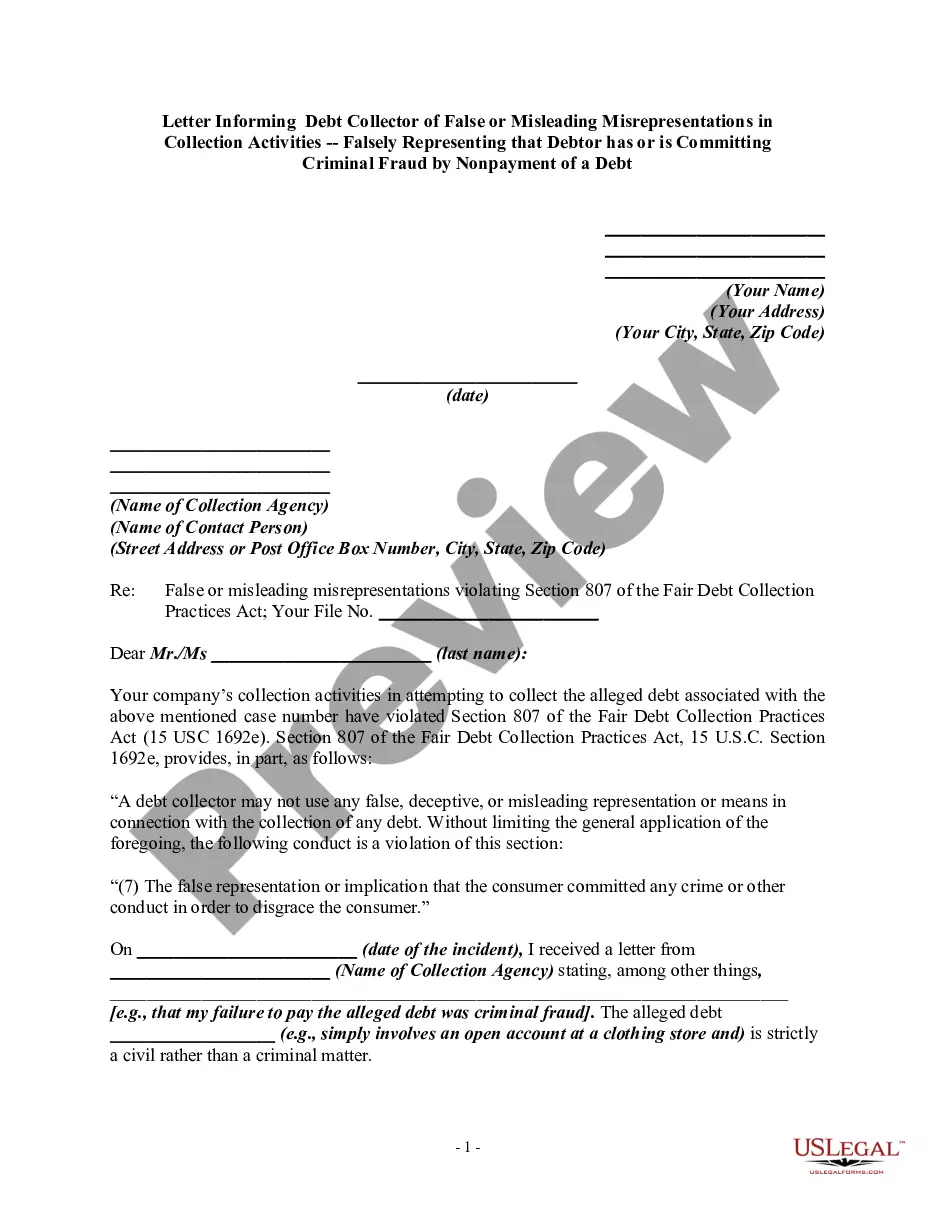
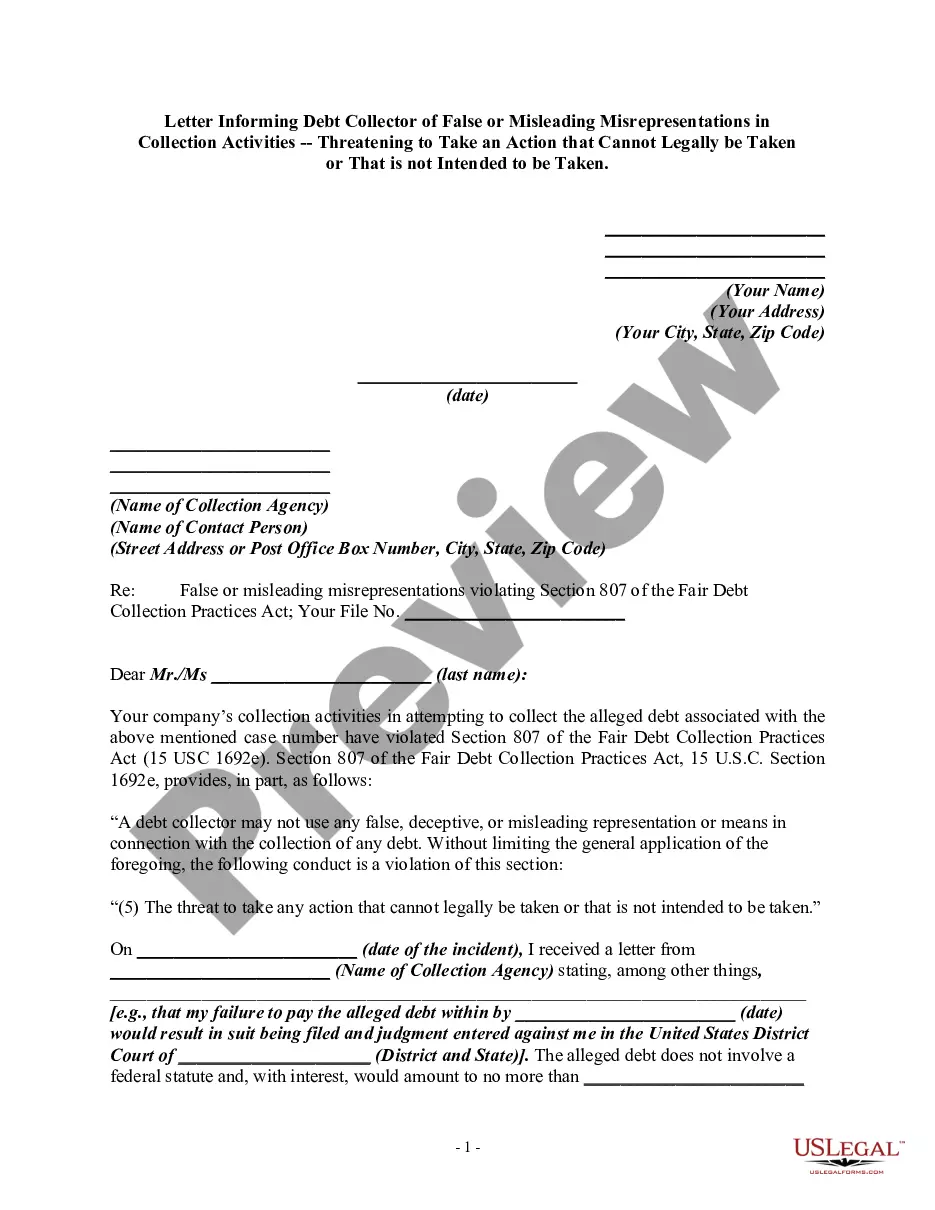
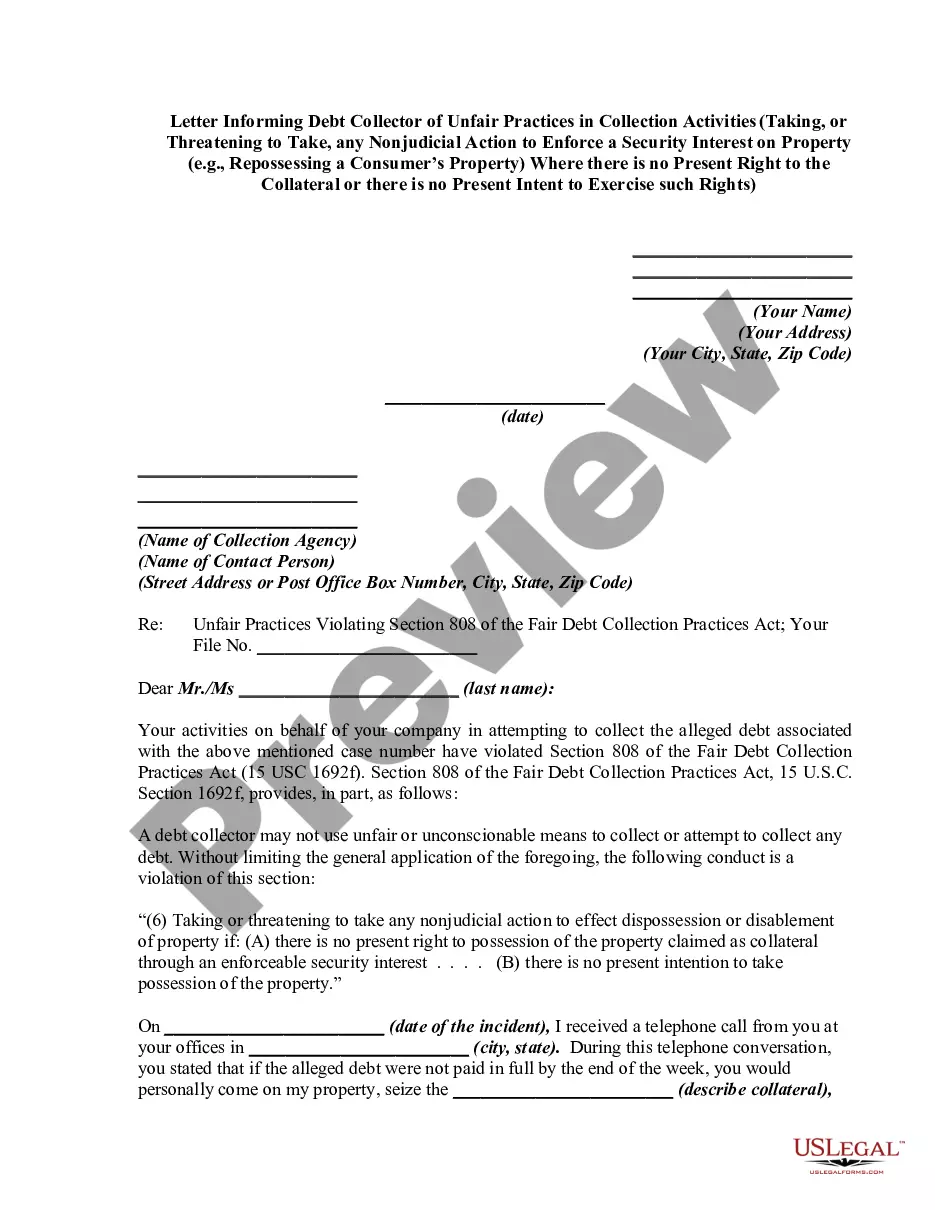
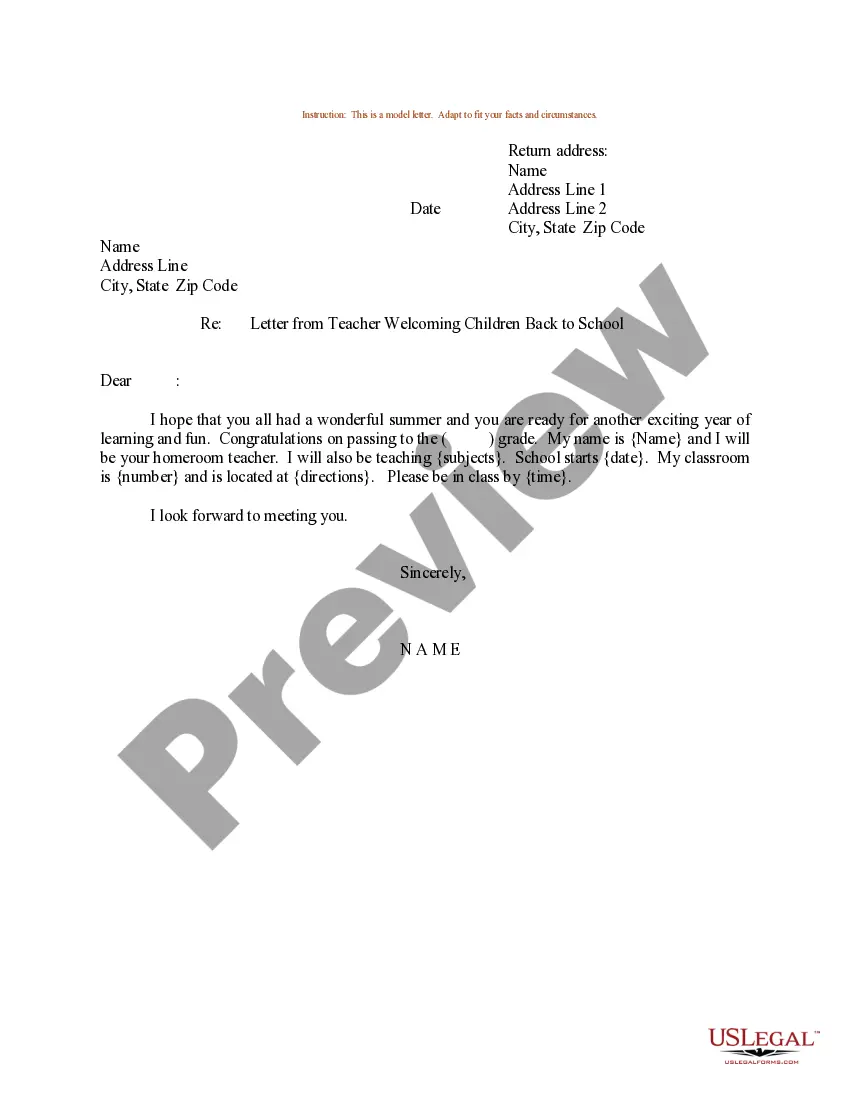


How to fill out Letter Informing Debt Collector Of Harassment Or Abuse In Collection Activities Involving Threats To Use Violence Or Other Criminal Means To Harm The Physical Person, Reputation, And/or Property Of The Debtor?
The Debt Abuse Collection Template you observe on this page is a reusable legal framework crafted by expert attorneys in accordance with federal and state legislation and regulations.
For over 25 years, US Legal Forms has offered individuals, entities, and lawyers more than 85,000 authenticated, state-specific forms for various business and personal situations. It represents the quickest, simplest, and most dependable method to acquire the documents you require, as the service ensures bank-grade data security and malware protection.
Subscribe to US Legal Forms to have validated legal templates for all of life’s situations readily available.
- Search for the document you require and examine it.
- Choose the pricing option that fits you and establish an account. Utilize PayPal or a credit card to make a swift payment. If you already have an account, Log In and verify your subscription to proceed.
- Choose the format you prefer for your Debt Abuse Collection Template (PDF, DOCX, RTF) and download the sample onto your device.
- Print the template to fill it out manually. Alternatively, use an online multi-functional PDF editor to quickly and accurately fill out and sign your form with an electronic signature.
- Utilize the same document again whenever necessary. Access the My documents tab in your profile to redownload any previously saved forms.
Form popularity
FAQ
By the 22nd century BC, Ur-Nammu, an ancient Sumerian ruler, formulated the first extant law code, consisting of casuistic statements ("if... then..."). Around 1760 BC, King Hammurabi further developed Babylonian law, by codifying and inscribing it in stone.
There are five types of legal system i.e. civil law; common law; customary law; religious law and mixed law.
Legal refers to anything that is permitted or allowed by the law. For example, it is legal to drive a car, but it is not legal to drive a car without a license. Law refers to a system of rules that are enforced by a government or other authority.
The bill has to be voted on by both houses of Congress: the House of Representatives and the Senate. If they both vote for the bill to become a law, the bill is sent to the President of the United States. He or she can choose whether or not to sign the bill. If the President signs the bill, it becomes a law.
Definition of law is a rule of conduct developed by the government or society over a certain territory. Law follows certain practices and customs in order to deal with crime, business, social relationships, property, finance, etc. The Law is controlled and enforced by the controlling authority.
The word ?law? often refers only to rules and regulations; but a line can be drawn between the rules and regulations themselves and those structures, institutions, and processes that breathe life into them. This expanded domain is the ?legal system.?
In civil law jurisdictions, a legislature or other central body codifies and consolidates the law. In common law systems, judges may make binding case law through precedent, although on occasion this may be overturned by a higher court or the legislature.
Legality refers to what fits within the law and is compliant with a legal framework. It limits us and determines what we can and cannot do ing to the law. Legitimacy, however, involves following a correct, fair, genuine, moral and ethical path.