Good Faith With Meaning
Description
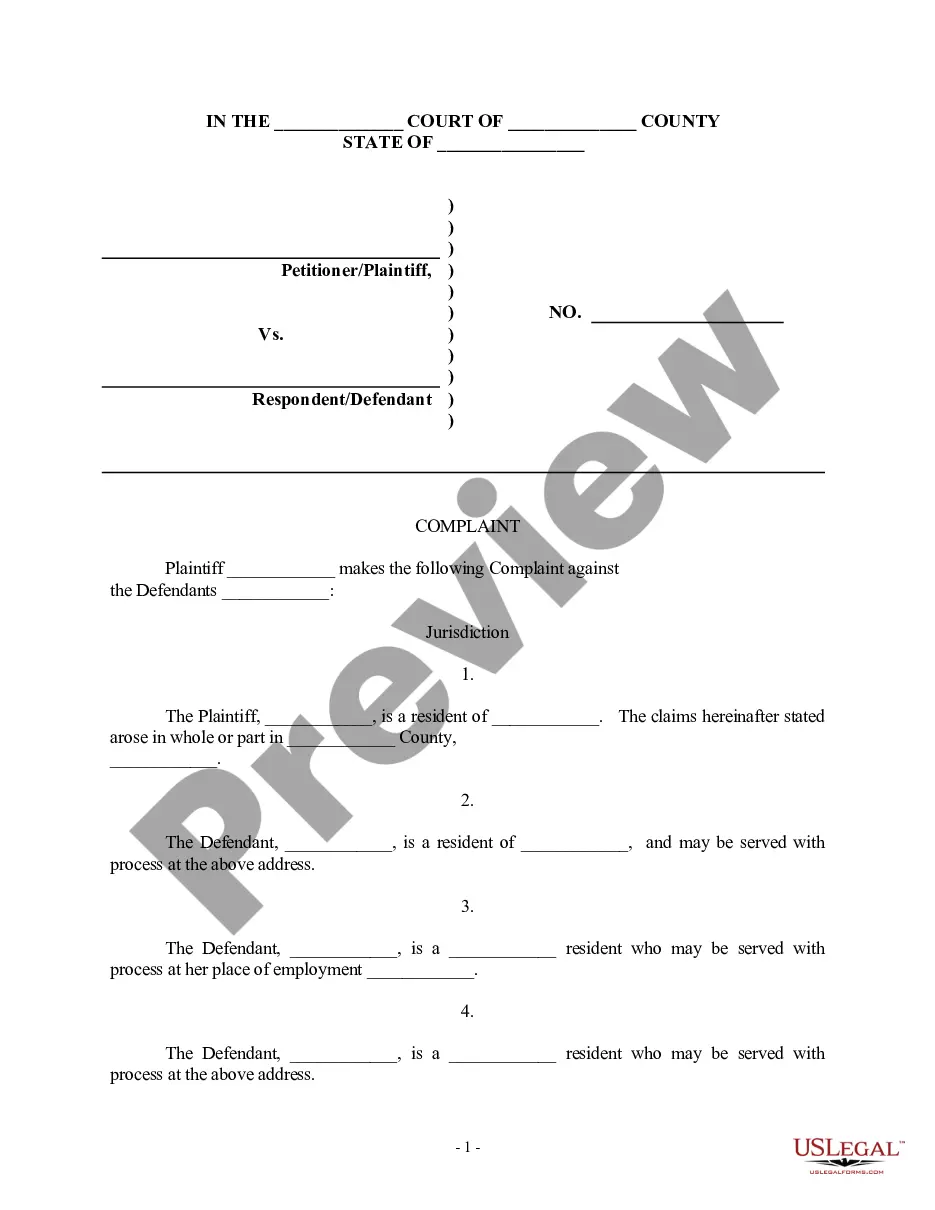
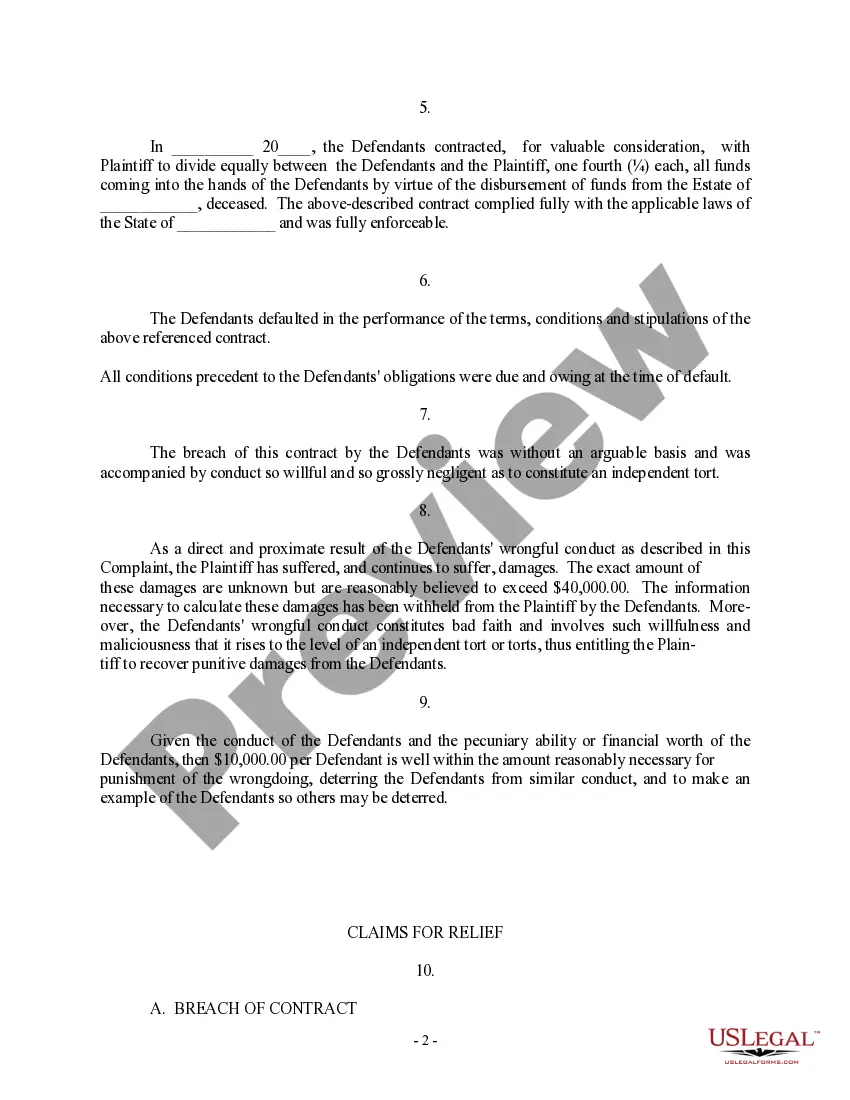
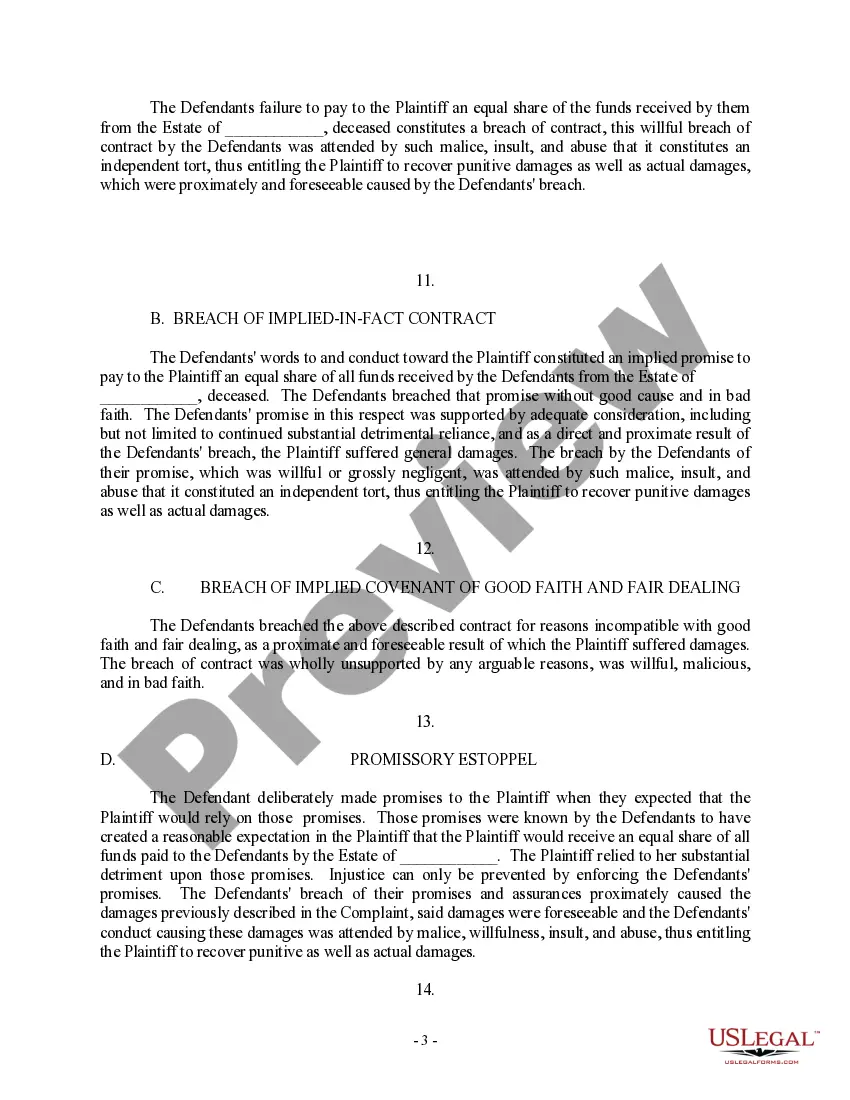
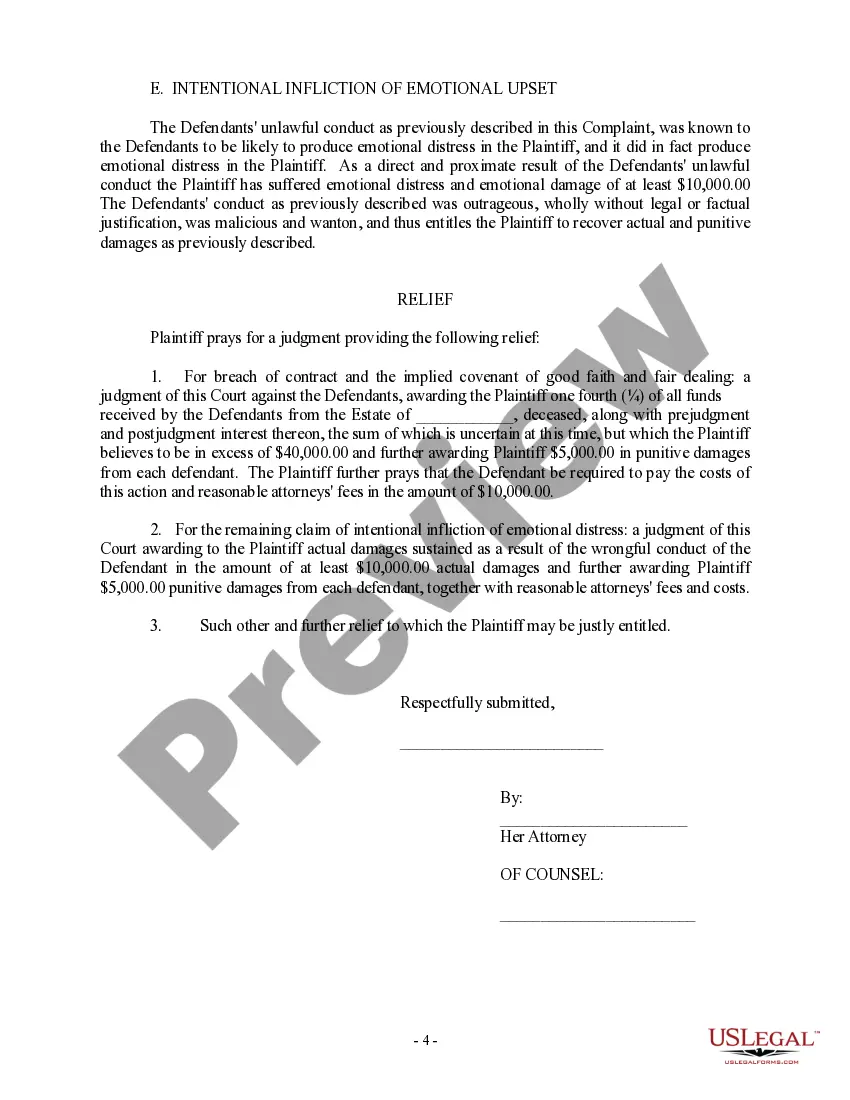



How to fill out Complaint Regarding Breach Of Contract To Divide Estate Proceeds, Implied Contract, Good Faith And Fair Dealing, Promissory Estoppel, Emotional Distress?
It is clear that one cannot rapidly establish a career in law, nor can one master the swift drafting of Good Faith With Meaning without possessing a tailored education. Assembling legal papers is an extensive process that necessitates certain training and abilities. Therefore, why not entrust the formulation of the Good Faith With Meaning to those who are experienced.
With US Legal Forms, one of the most extensive legal template repositories, you can discover anything from court documents to templates for in-office correspondence. We understand the significance of compliance and adherence to federal and local regulations. That’s the reason why, on our site, all forms are tailored to specific locations and are current.
Let’s get started with our platform and acquire the document you require in just minutes.
You can restore access to your documents from the My documents tab at any moment. If you are a current customer, you can merely Log In, and locate and download the template from the same section.
Regardless of the objective of your documents—whether they are financial, legal, or personal—our platform has you covered. Experience US Legal Forms now!
- Locate the form you are searching for by utilizing the search bar at the top of the page.
- View it (if this option is available) and evaluate the explanatory notes to find out if Good Faith With Meaning fits your needs.
- Reinitiate your search if you require any other template.
- Create a complimentary account and choose a subscription plan to purchase the form.
- Click Buy now. After payment is processed, you can obtain the Good Faith With Meaning, complete it, print it, and send or mail it to the specified recipients or institutions.
Form popularity
FAQ
Using the phrase 'in good faith' involves emphasizing your intention to act honestly in transactions. You can incorporate it into your writing when outlining agreements or justifying decisions made during negotiations. Understanding good faith with meaning can enhance clarity and foster trust in your communications.
'In good faith' refers to actions taken honestly and without intent to deceive. In legal contexts, good faith with meaning establishes that a party is committed to fulfilling obligations and honoring agreements. Courts often refer to this principle when determining whether a party acted properly in a given situation.
To be in good faith means to act with a sincere intention to fulfill obligations or commitments. It involves being honest and transparent in dealings with others, ensuring that goodwill remains at the core of interactions. This principle is crucial in legal contexts, as acting in good faith establishes credibility and mutual respect.
The phrase 'in good faith' refers to an individual's honesty and sincerity when engaging in agreements or actions. It implies a commitment to act fairly and transparently, without any intention to deceive. Understanding good faith with meaning is essential for fostering trust in legal and personal relationships.
If something is done in good faith, it is done sincerely and honestly: act in good faith She was acting in good faith for her client.
Good faith is a broad term that's used to encompass honest dealing. Depending on the exact setting, good faith may require an honest belief or purpose, faithful performance of duties, observance of fair dealing standards, or an absence of fraudulent intent.
The provider can create a Good Faith assessment for the individual by clicking on the blue "new" button. The form can only be completed if you open another window with the client's information next to your "assessment" because it doesn't population by itself.
The good faith estimate must include a number of disclaimers. For example, it must state that the estimate is based on information known at the time it was created. Therefore, it won't include any costs for unanticipated items or services that are not reasonably expected and that could occur due to unforeseen events.
Phrase. If you do something in good faith, you seriously believe that what you are doing is right, honest, or legal, even though this may not be the case. This report was published in good faith but we regret any confusion which may have been caused.