Job Satisfaction
Description
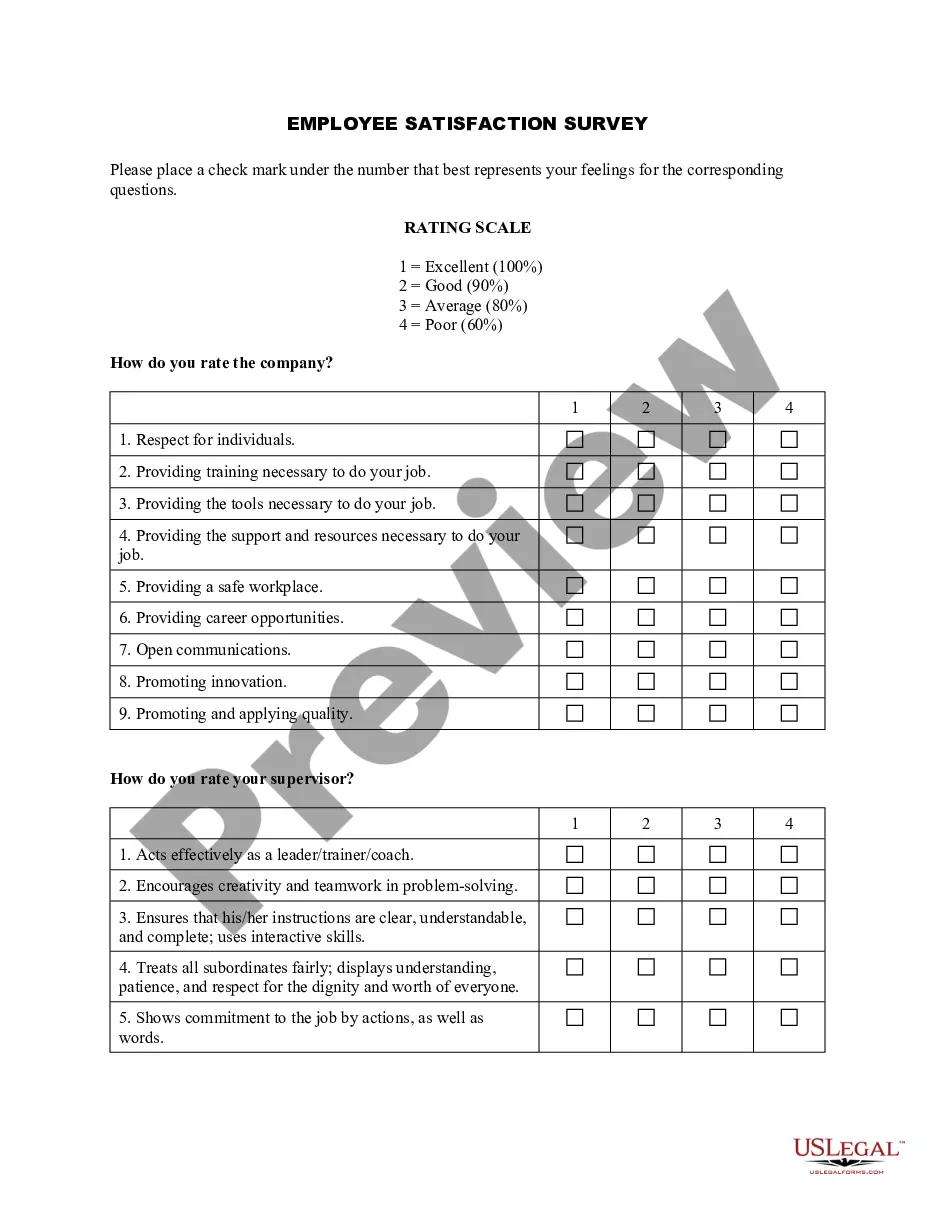
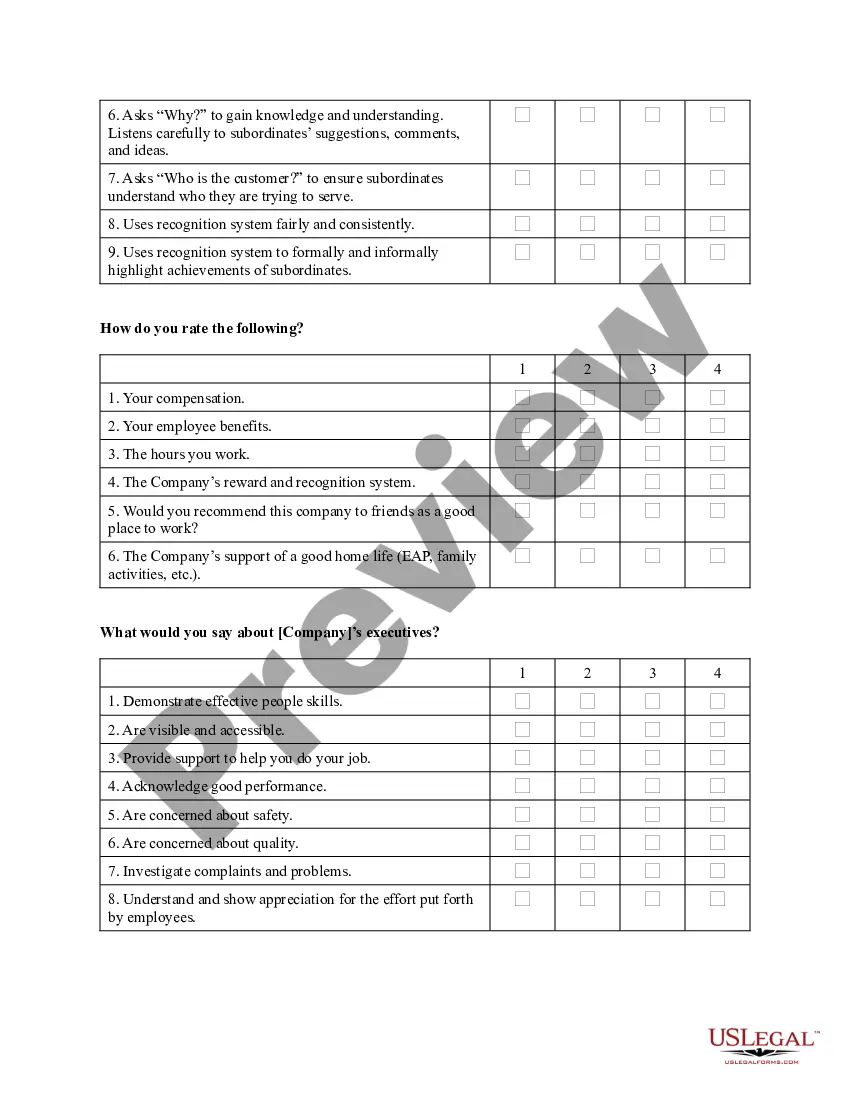
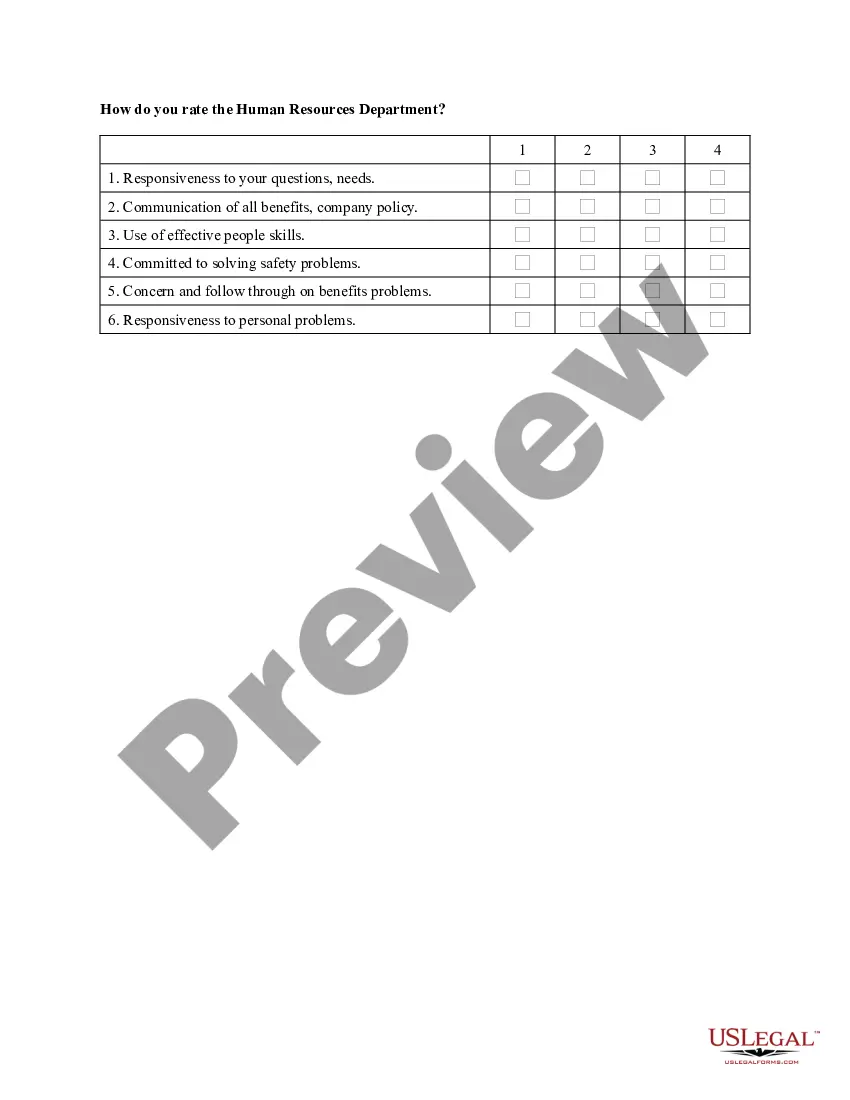
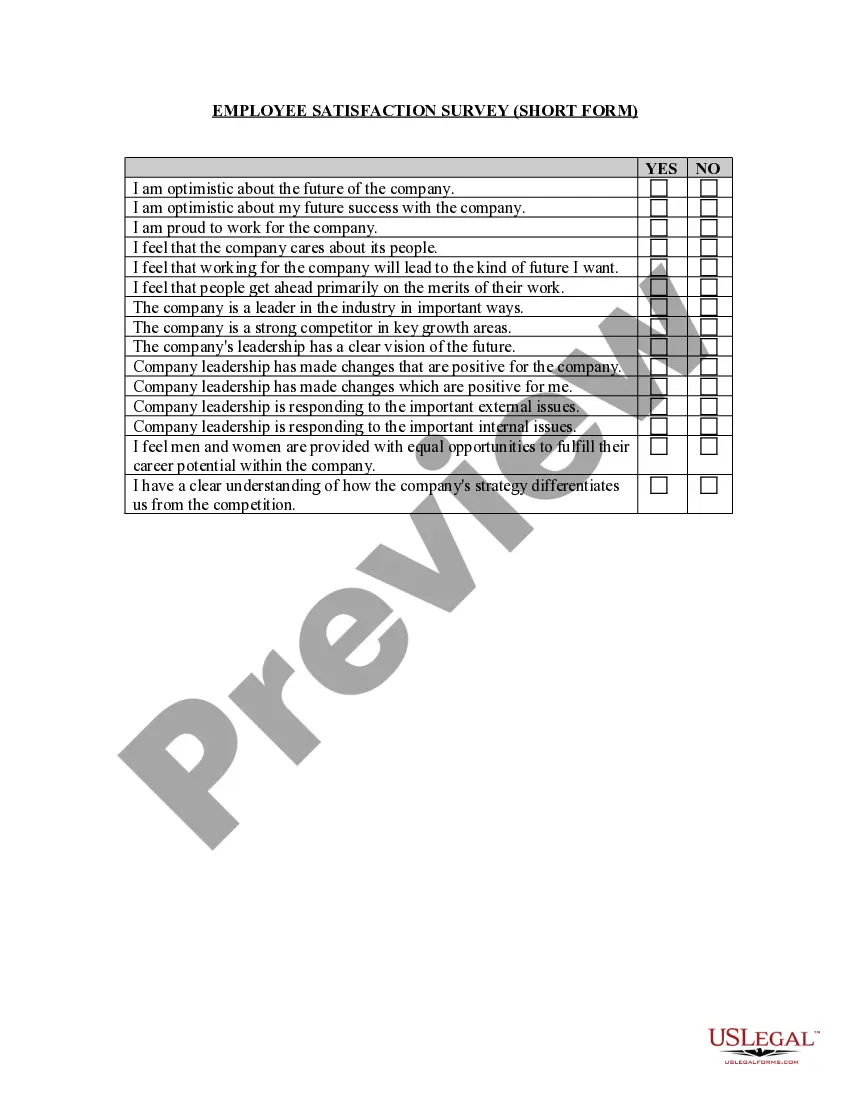
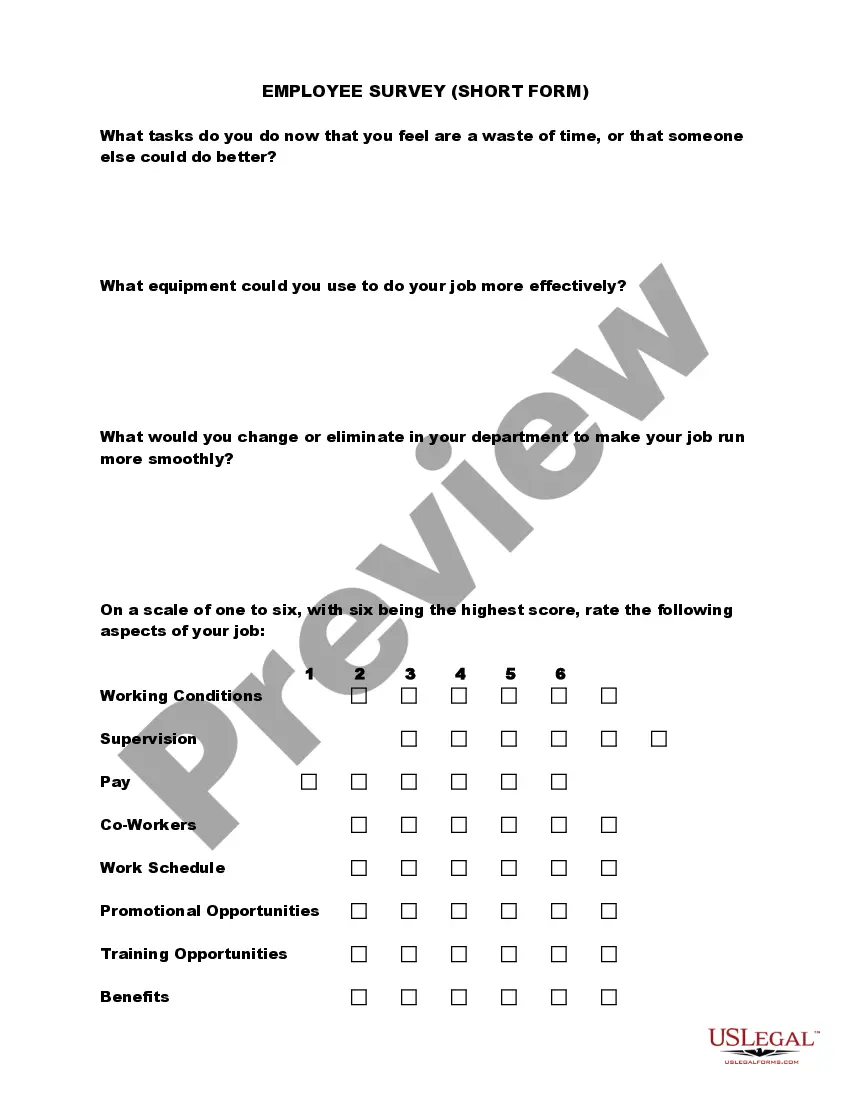


How to fill out Employee Satisfaction Survey - Long Form?
- If you're a returning user, log in to your account to access the form template you need. Ensure your subscription is active and up-to-date.
- For new users, start by exploring the Preview mode and read the form description carefully to ensure it meets your legal requirements.
- If necessary, search for alternative forms using the Search tab to find the most suitable document for your needs.
- Once you find the right form, click the Buy Now button and select your preferred subscription plan, which will require you to create an account.
- Complete your transaction by entering your credit card information or choosing to pay via PayPal for the subscription.
- Finally, download the legal form and save it on your device. You can also access it later from the My Forms section in your profile.
By following these steps, accessing the comprehensive collection of legal forms has never been easier. The user-friendly interface and robust support ensure you can achieve your legal objectives swiftly.
Experience the advantages of a vast legal library today. Start your journey to complete job satisfaction with US Legal Forms.
Form popularity
FAQ
To determine your job satisfaction, think about how you feel when you start and end your workday. Are you excited about your tasks? Do you feel respected and appreciated? Analyzing these feelings can clarify your level of job satisfaction. If you find areas of improvement, consider using resources like US Legal Forms to help you develop a plan to enhance your work experience.
A job satisfaction statement could be: 'I find joy in my work because I make a difference in my team’s success and feel valued for my contributions.' This statement clearly communicates personal fulfillment and highlights key ingredients of job satisfaction, such as valuing relationships and the impact of one's work. Crafting your own statement can help you identify what truly matters in your job.
When asked about what is most satisfying about your job, it is helpful to focus on personal growth and accomplishments. You might mention the satisfaction from achieving goals, building relationships with coworkers, or making a positive impact on clients' lives. Sharing these insights highlights the personal aspects of job satisfaction and can inspire others to consider their own career fulfillment.
Job satisfaction refers to how content an individual is with their job. For example, a teacher who feels fulfilled by helping students learn and grow may experience high job satisfaction. This could be due to their passion for education, supportive colleagues, and recognition from students and parents. Understanding job satisfaction can help others evaluate their own feelings about work.
When answering what job satisfaction means to you, first reflect on your own feelings about your job. Identify specific aspects that contribute to your satisfaction, such as meaningful work or good teamwork. Share personal experiences that highlight these factors. This will not only clarify your thoughts but also help others understand the importance of feeling fulfilled in their work.
To write about job satisfaction, begin by defining what it means. Discuss the factors that contribute to satisfaction in a job, such as work environment, job roles, relationships with colleagues, and personal fulfillment. Use real-life examples to illustrate points and incorporate data or statistics when applicable. Lastly, encourage readers to reflect on their own experiences to create a personal connection with the concept.
Finding job satisfaction hinges on five key factors: alignment with personal values, supportive work culture, opportunities for growth, recognition, and work-life balance. Understanding which of these factors resonate with you can guide your approach to your employment. By prioritizing these elements, you can design a career path that enhances your job satisfaction and overall happiness.
Obtaining job satisfaction involves actively engaging in your role and striving for continuous improvement. Start by assessing your current job responsibilities against your personal values. Embrace opportunities for learning and development, and consider using tools from platforms like USLegal to help you navigate your career path effectively.
To make your job more enjoyable, focus on cultivating a positive work environment. Building strong connections with your teammates can create a supportive atmosphere. Incorporating small breaks throughout your day can also refresh your mind and improve your overall job satisfaction.
For many, job satisfaction stems from a combination of meaningful work, recognition, and opportunities for growth. Think about introducing new responsibilities that align with your passions. If you're seeking a more structured approach to achieving career goals, USLegal can provide helpful resources to enhance your job experience.