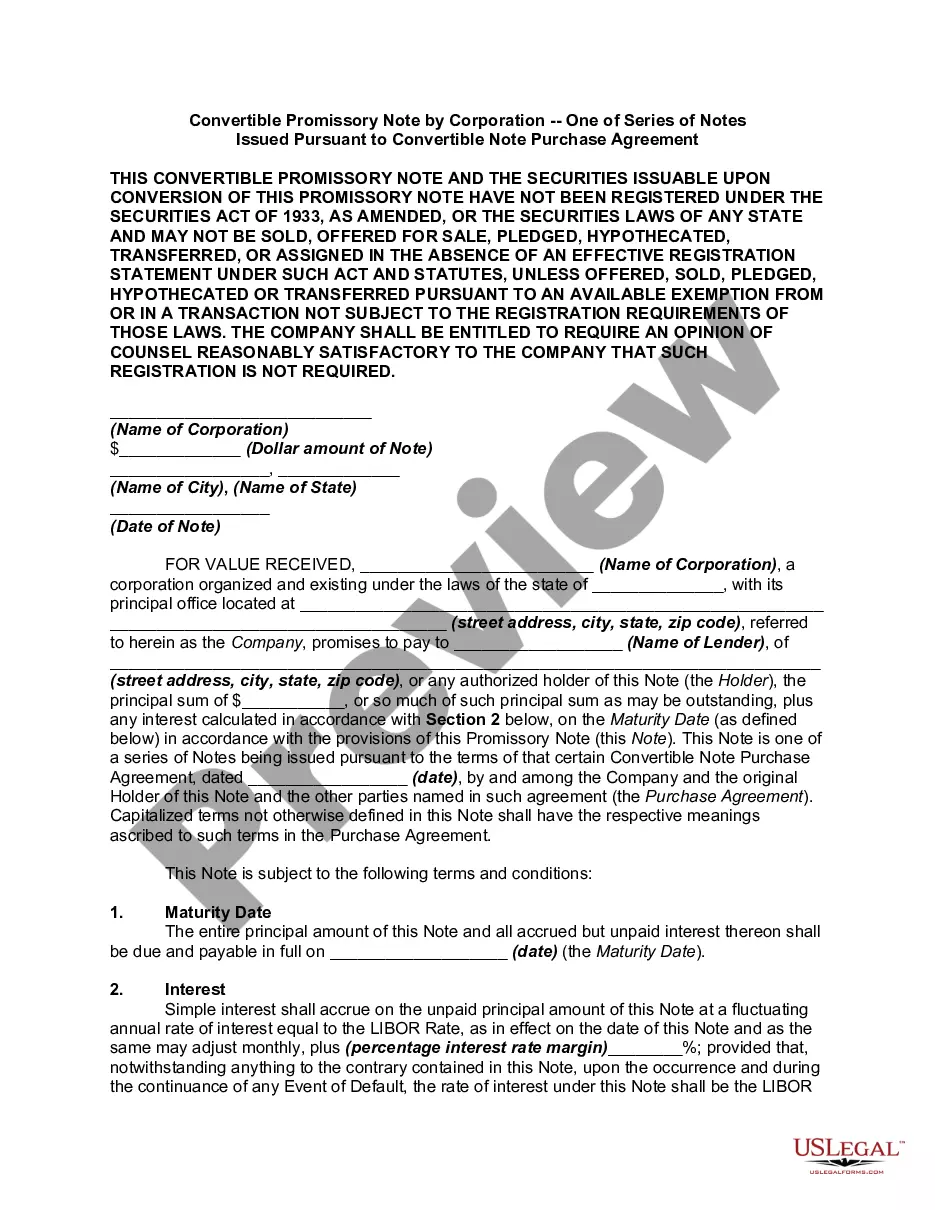
Convertible Note Notes Form For Startup
Description
Get your form ready online
Our built-in tools help you complete, sign, share, and store your documents in one place.
Make edits, fill in missing information, and update formatting in US Legal Forms—just like you would in MS Word.
Download a copy, print it, send it by email, or mail it via USPS—whatever works best for your next step.
Sign and collect signatures with our SignNow integration. Send to multiple recipients, set reminders, and more. Go Premium to unlock E-Sign.
If this form requires notarization, complete it online through a secure video call—no need to meet a notary in person or wait for an appointment.
We protect your documents and personal data by following strict security and privacy standards.

Make edits, fill in missing information, and update formatting in US Legal Forms—just like you would in MS Word.

Download a copy, print it, send it by email, or mail it via USPS—whatever works best for your next step.

Sign and collect signatures with our SignNow integration. Send to multiple recipients, set reminders, and more. Go Premium to unlock E-Sign.

If this form requires notarization, complete it online through a secure video call—no need to meet a notary in person or wait for an appointment.

We protect your documents and personal data by following strict security and privacy standards.
Looking for another form?
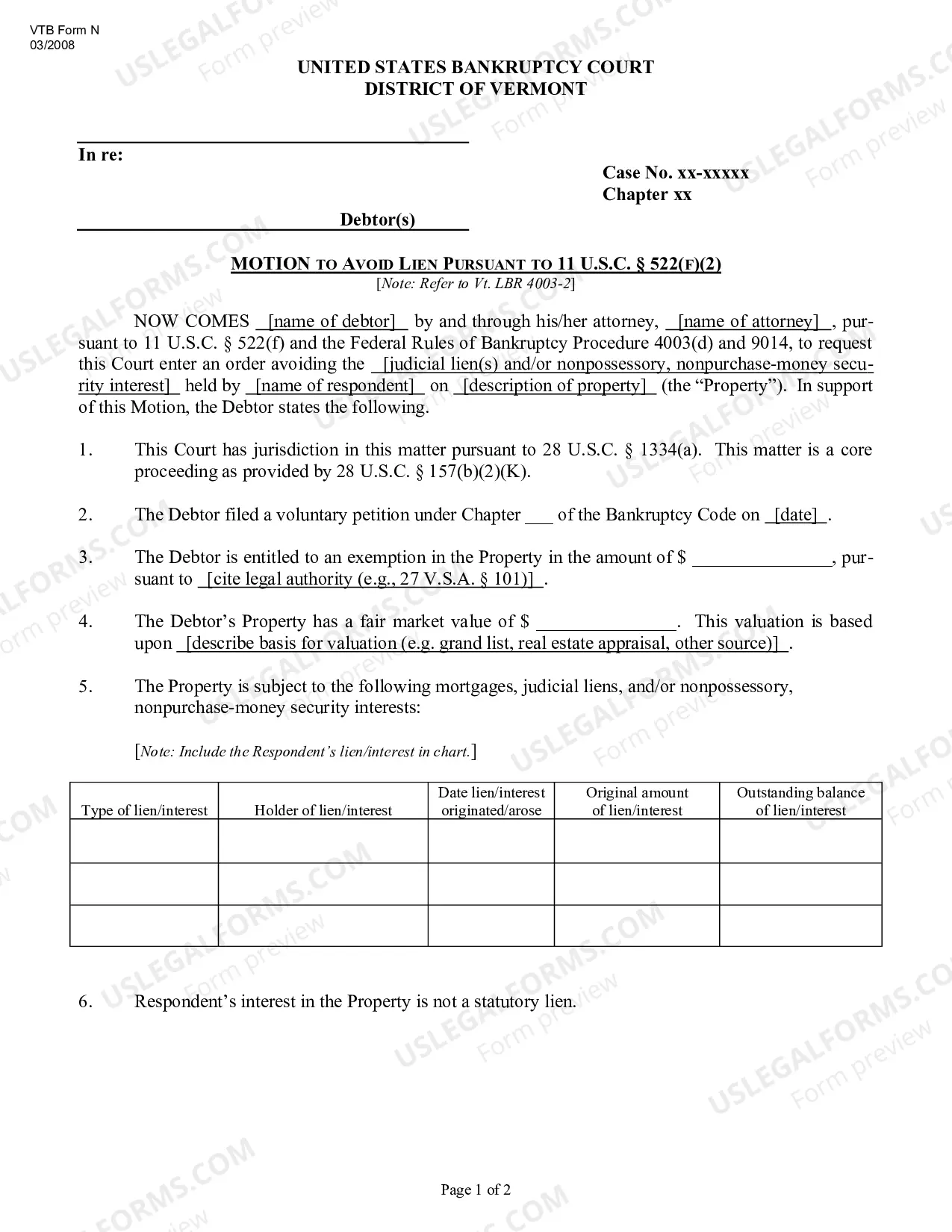


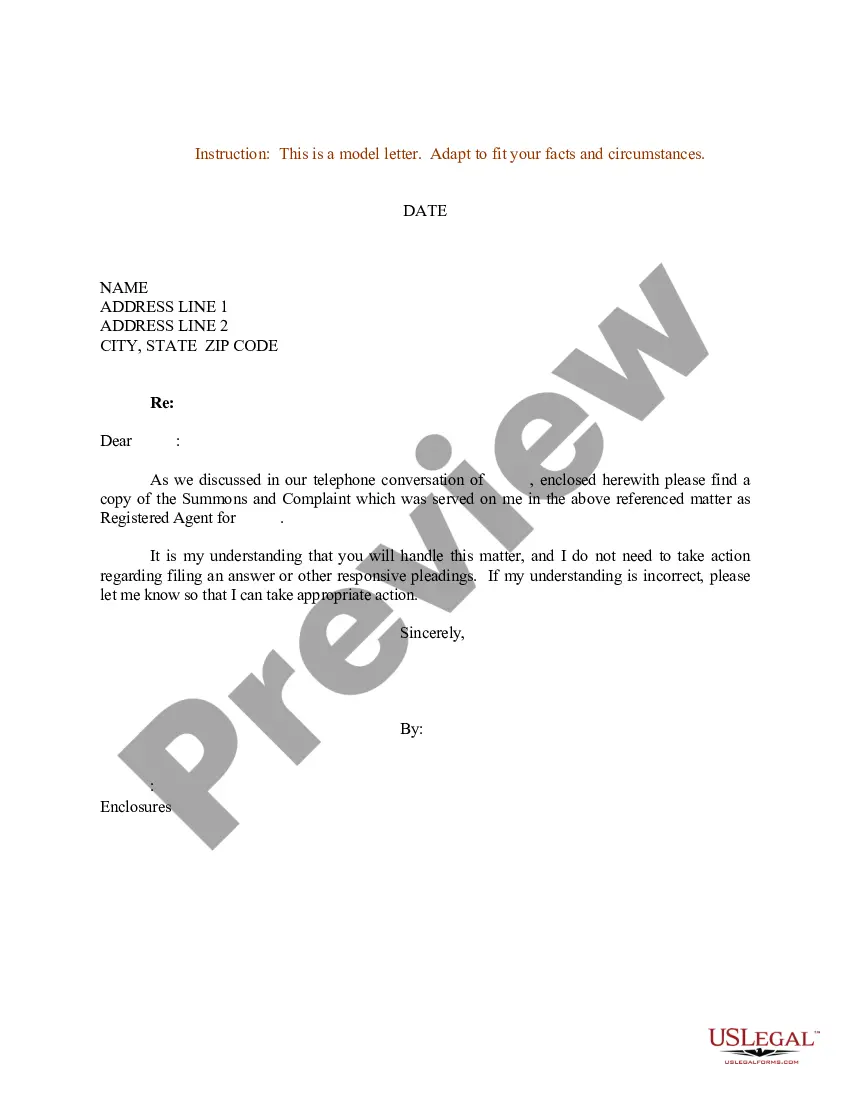
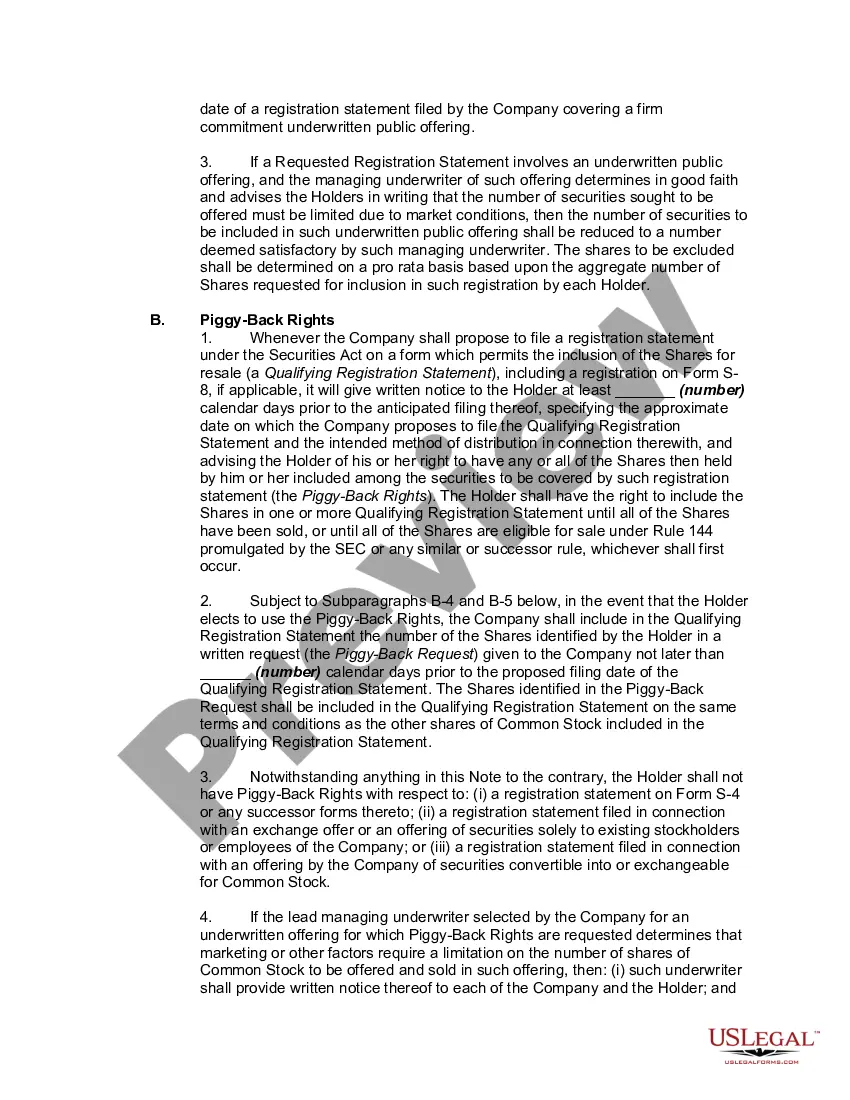
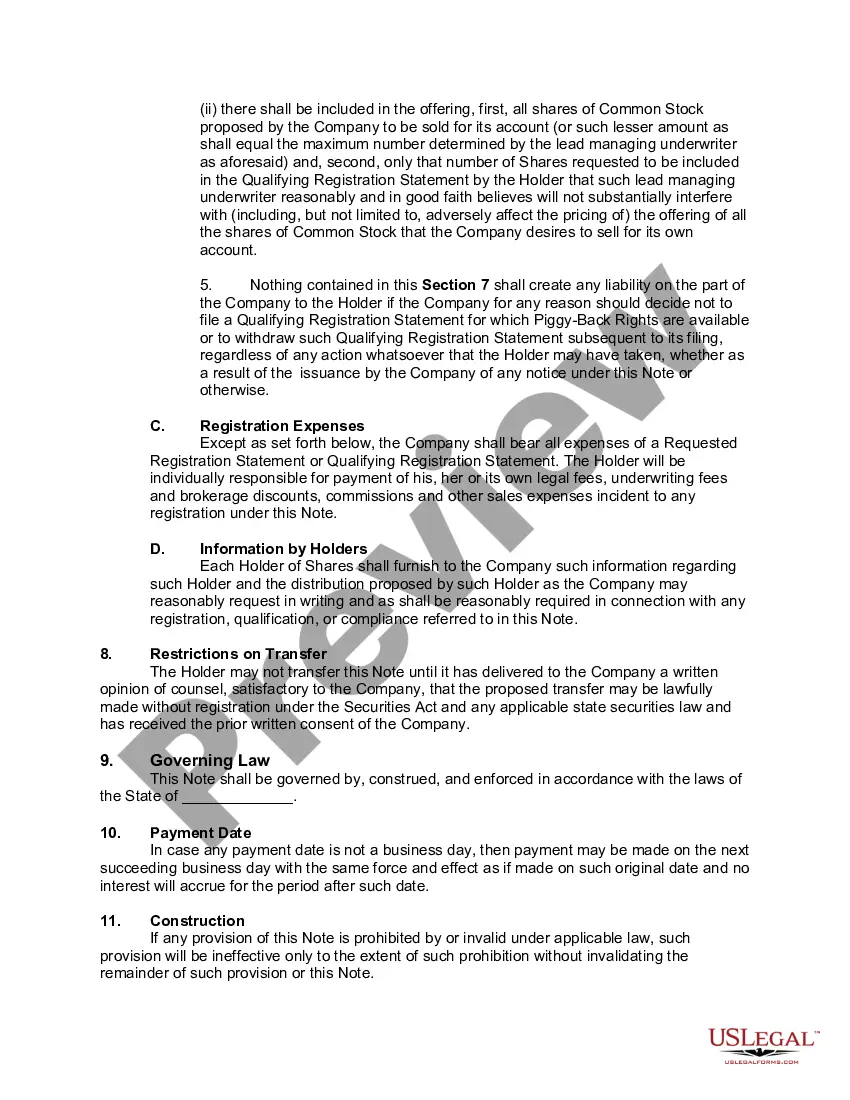
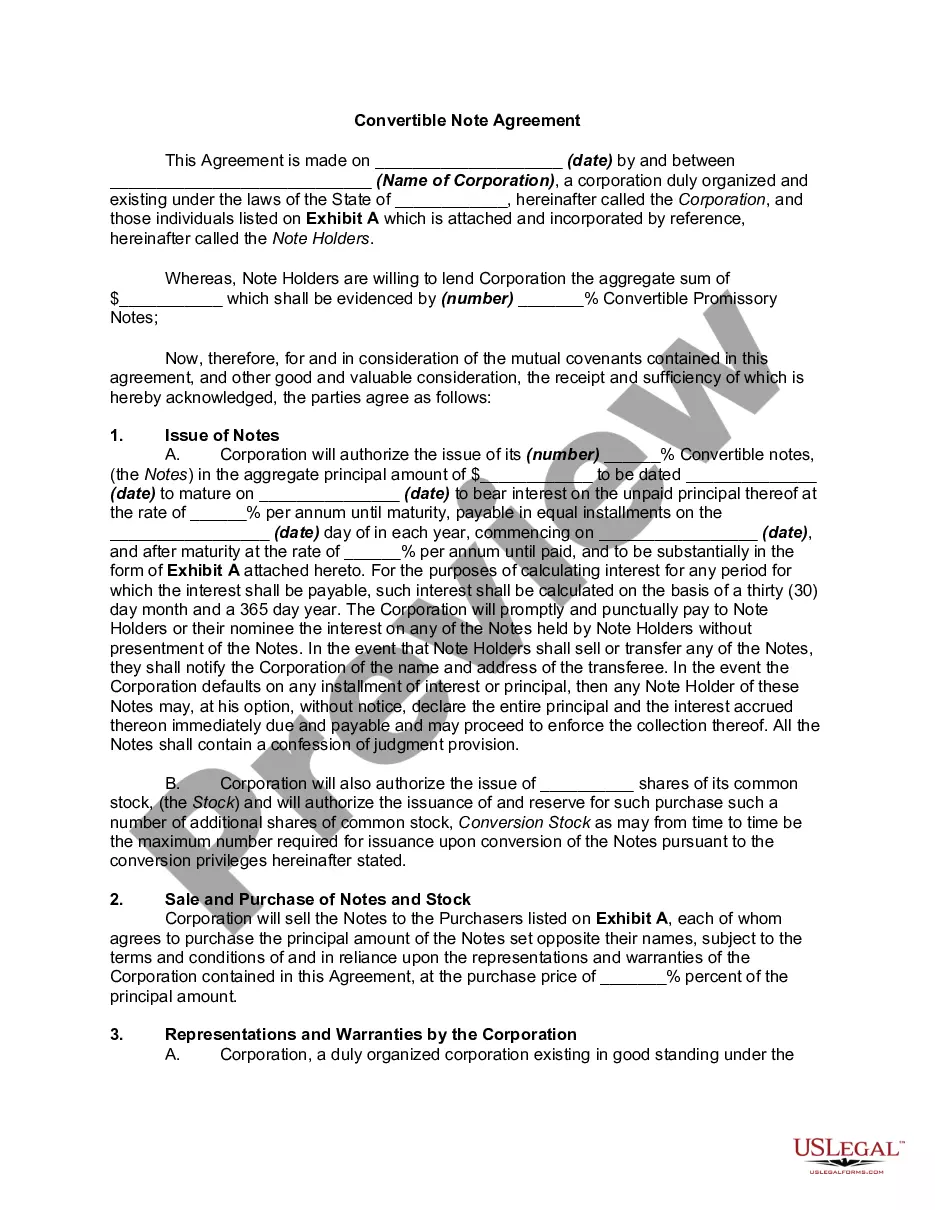
How to fill out Convertible Promissory Note By Corporation - One Of Series Of Notes Issued Pursuant To Convertible Note Purchase Agreement?
Managing legal documents and processes can be a lengthy addition to your day.
Convertible Note Notes Form For Startup and similar forms typically require you to search for them and navigate your way to complete them efficiently.
As a result, whether you are managing financial, legal, or personal issues, maintaining a comprehensive and user-friendly online repository of forms readily available will be immensely beneficial.
US Legal Forms is the leading online resource for legal templates, boasting over 85,000 state-specific documents and a variety of tools to assist you in completing your paperwork with ease.
Is this your first experience with US Legal Forms? Register and set up your account in just a few minutes, and you’ll gain access to the form library and Convertible Note Notes Form For Startup. After that, follow the steps below to fill out your form.
- Browse through the selection of relevant documents available to you with just one click.
- US Legal Forms provides state- and county-specific forms available for download at any time.
- Protect your document management process by utilizing a premier service that enables you to create any form in just minutes without any additional or hidden fees.
- Simply Log In to your account, search for Convertible Note Notes Form For Startup, and download it immediately from the My documents section.
- You can also access previously downloaded forms.
Form popularity
FAQ
If a startup fails, the convertible note notes form for startup dictates that the investors may lose their investment. In most cases, convertible notes are treated as debt, and if the company goes bankrupt, investors might only recoup a fraction of their funds, if any. It is crucial for investors to understand these risks upfront. Not achieving success can leave investors in a precarious situation, underscoring the importance of thorough evaluations before investment.
Here's an example: You sell $1m in convertible notes to an investor with a valuation cap of $10m, and a 30% discount rate. After 18 months, your startup gets a pre-money valuation of $20m, at $20 per share, during a Series A funding.
What Is Convertible Debt? Convertible debt (sometimes called a convertible note) is an investment option used by early-stage investors, like venture capitalists and angel investors, to provide funds to a startup while delaying the valuation of said startup until a later date.
If a company raises money on a note and the company fails, the investors are creditors, getting money back prior to any shareholder and any creditor that doesn't have security or statutory preference. In almost every case, convertible note holders in these situations would be lucky to get pennies back on the dollar.
With convertible debt, a business borrows money from a lender or investor where both parties enter the agreement with the intent (from the outset) to repay all (or part) of the loan by converting it into a certain number of its preferred or common shares at some point in the future.
The valuation is usually determined during the Series A financing when more data are available to base a valuation. The main purpose of investing in convertible notes is not about receiving a large monetary return. However, the notes do earn investors' interest in the 2 to 8 percent range.