Adverse Possessor For Possessory Title
Description
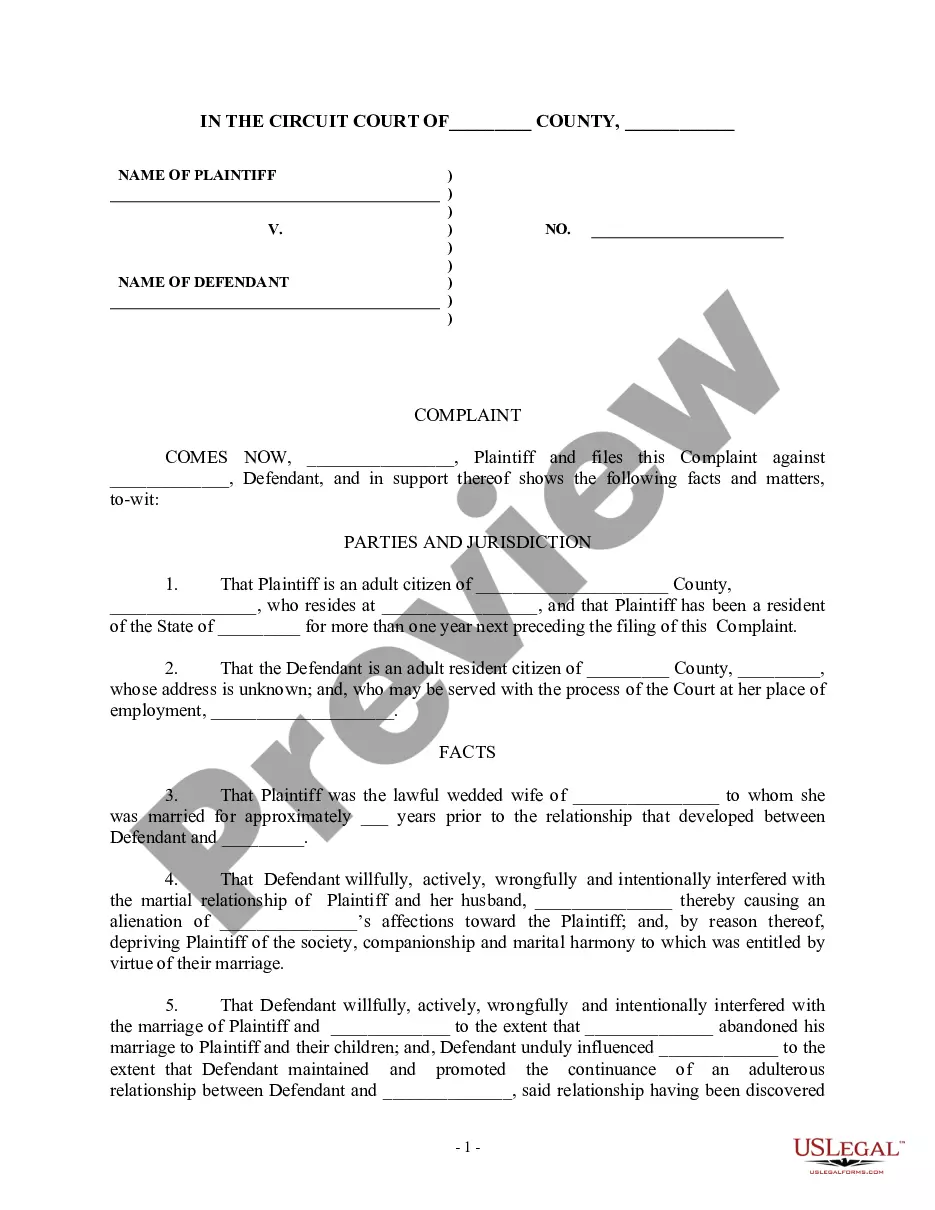
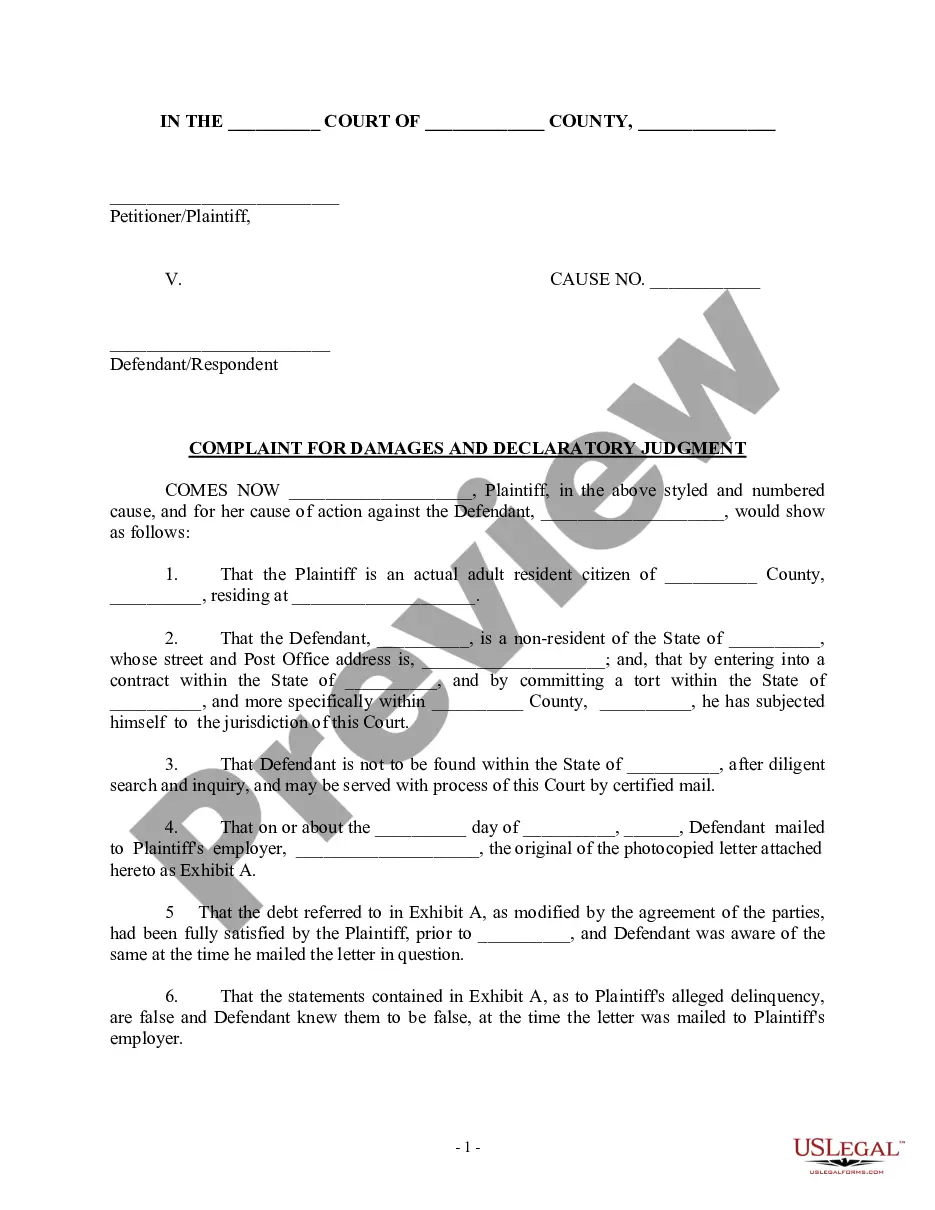
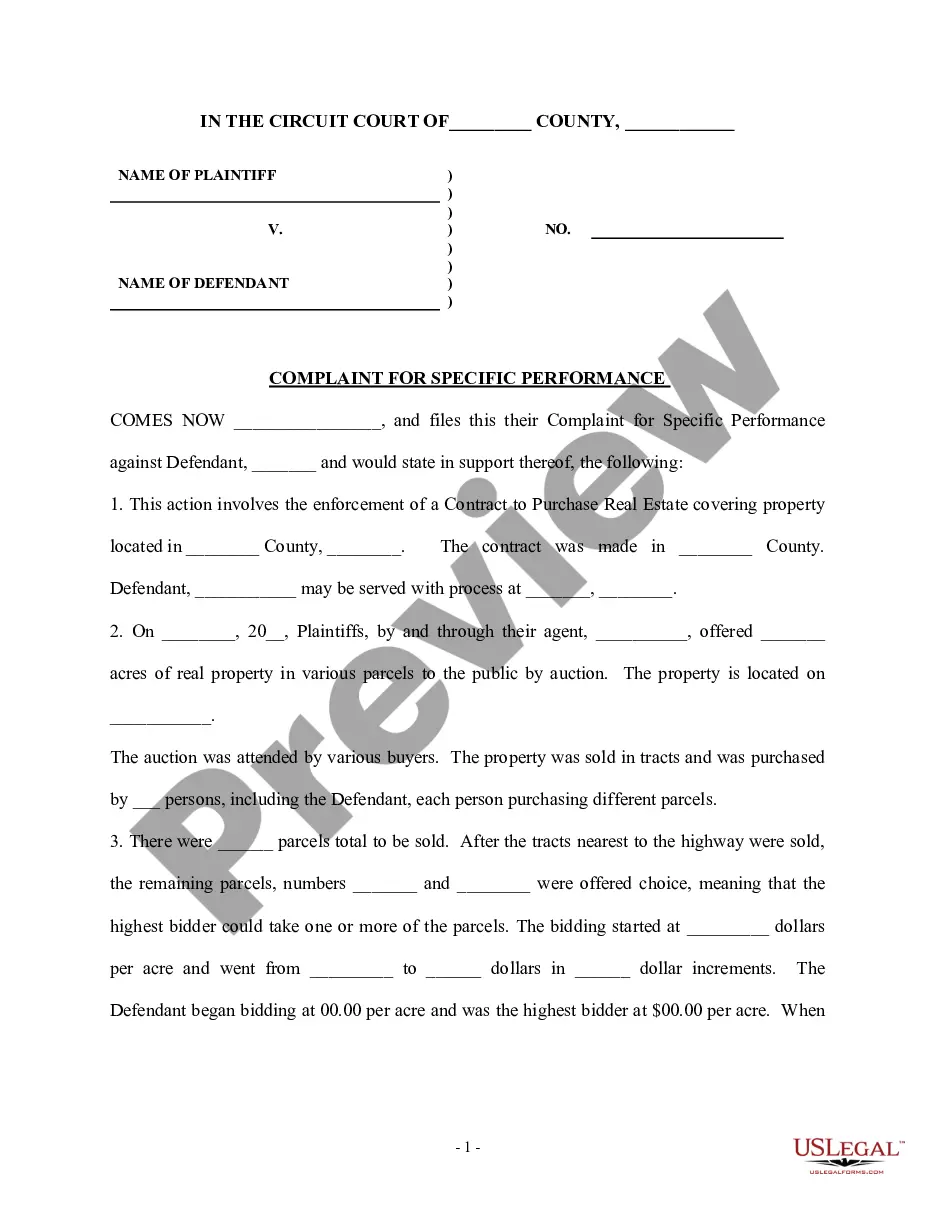
Get your form ready online
Our built-in tools help you complete, sign, share, and store your documents in one place.
Make edits, fill in missing information, and update formatting in US Legal Forms—just like you would in MS Word.
Download a copy, print it, send it by email, or mail it via USPS—whatever works best for your next step.
Sign and collect signatures with our SignNow integration. Send to multiple recipients, set reminders, and more. Go Premium to unlock E-Sign.
If this form requires notarization, complete it online through a secure video call—no need to meet a notary in person or wait for an appointment.
We protect your documents and personal data by following strict security and privacy standards.

Make edits, fill in missing information, and update formatting in US Legal Forms—just like you would in MS Word.

Download a copy, print it, send it by email, or mail it via USPS—whatever works best for your next step.

Sign and collect signatures with our SignNow integration. Send to multiple recipients, set reminders, and more. Go Premium to unlock E-Sign.

If this form requires notarization, complete it online through a secure video call—no need to meet a notary in person or wait for an appointment.

We protect your documents and personal data by following strict security and privacy standards.
Looking for another form?
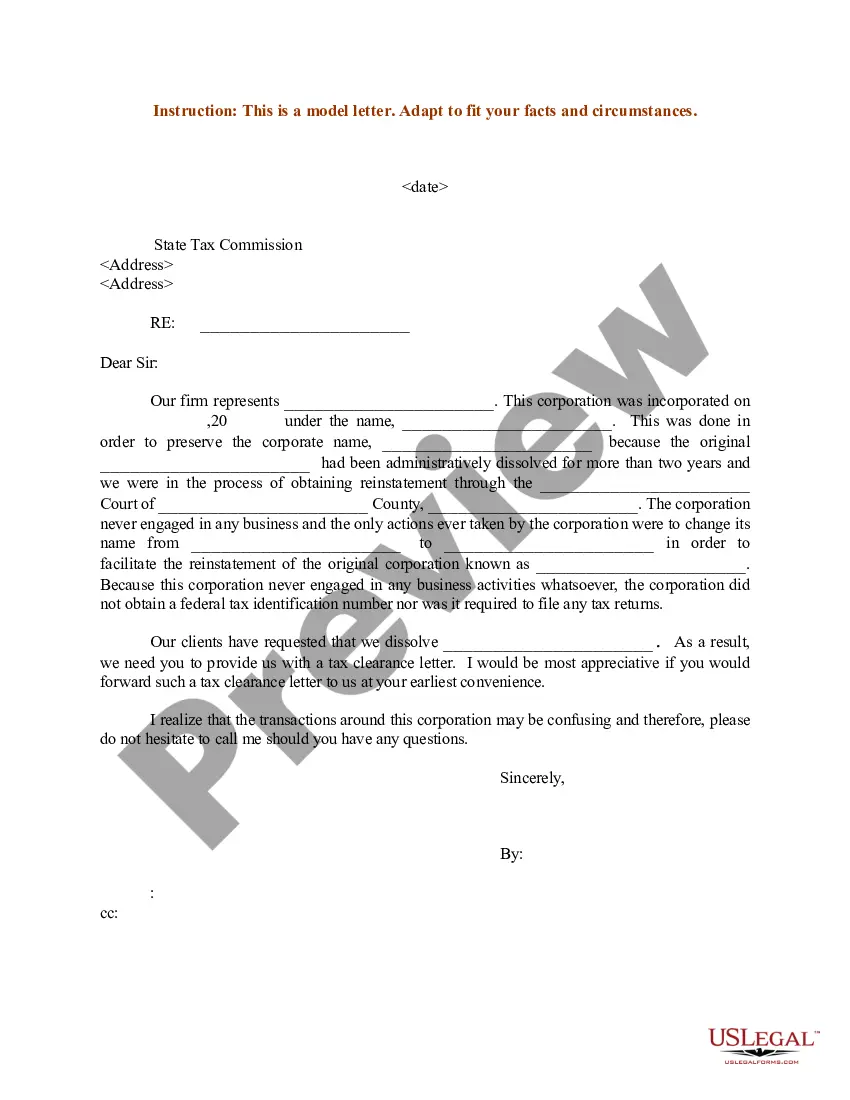
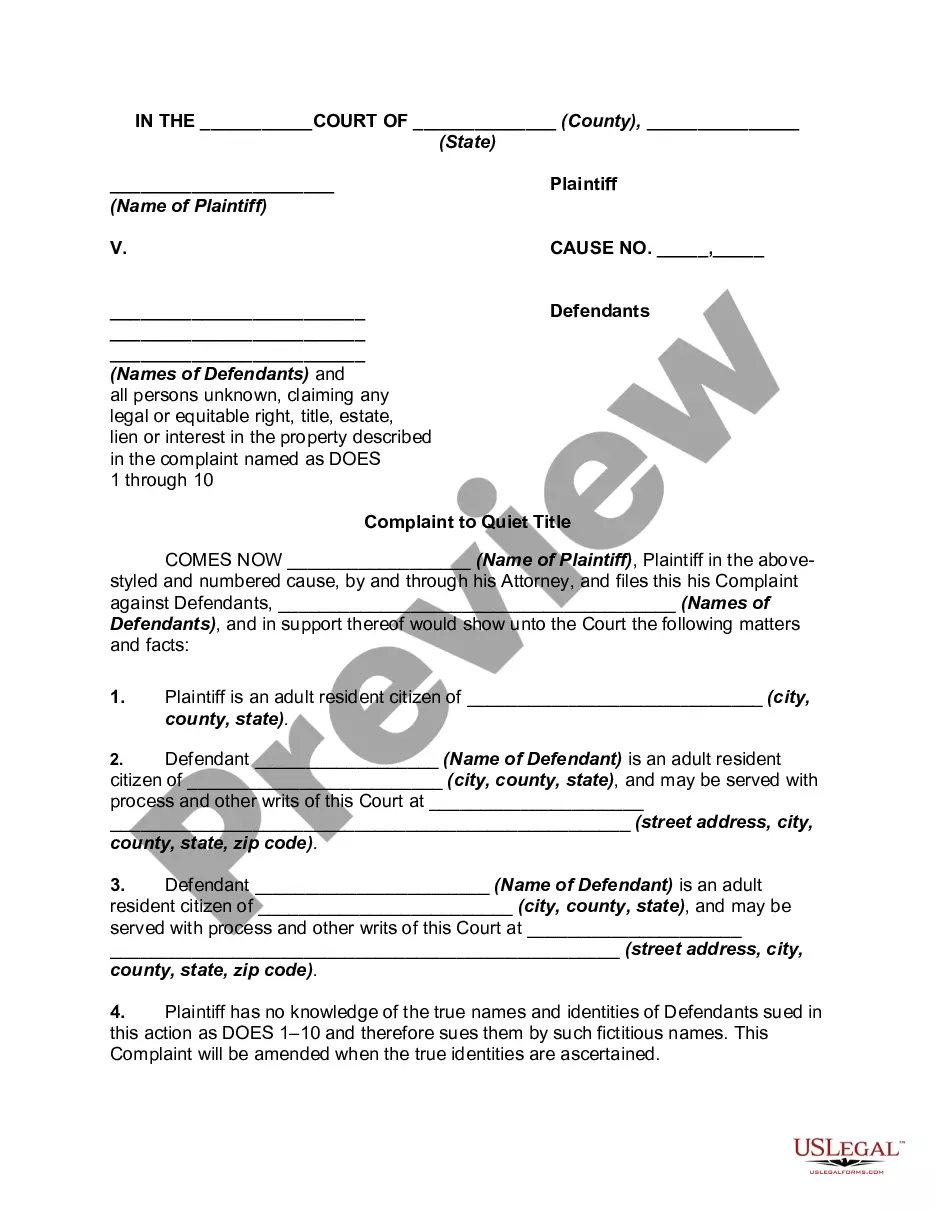
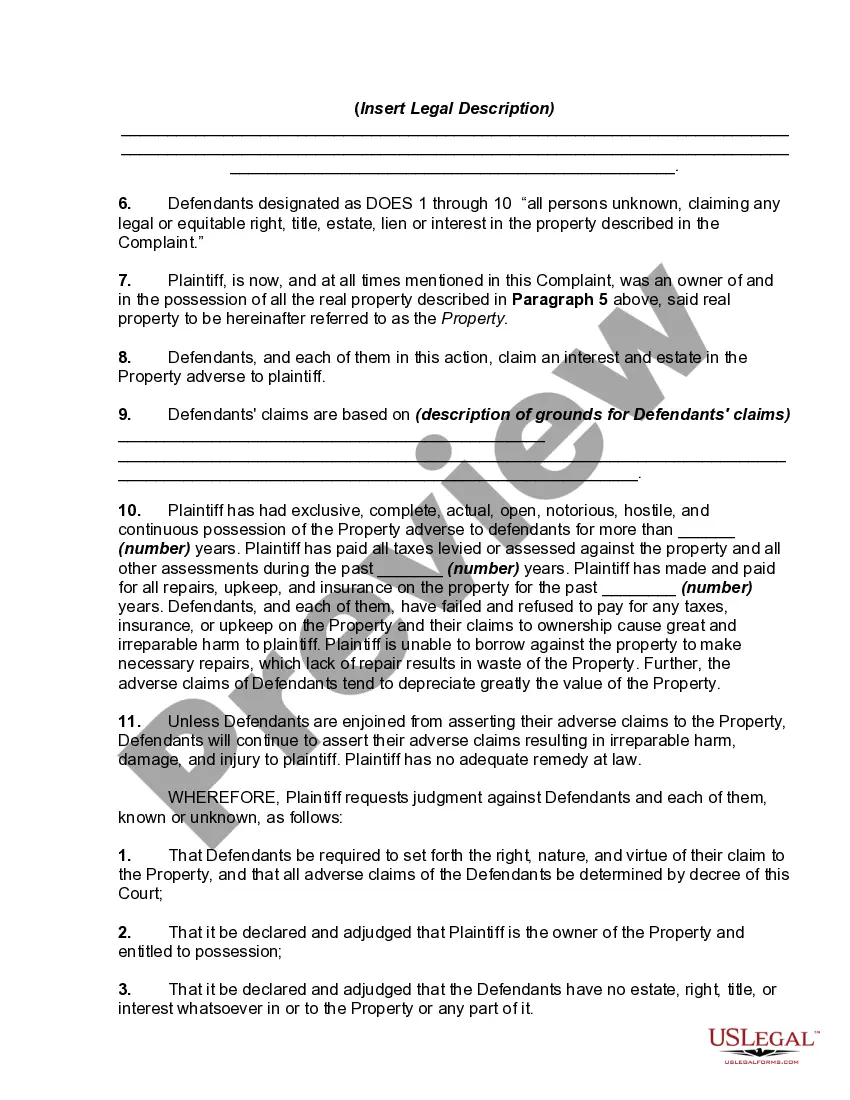
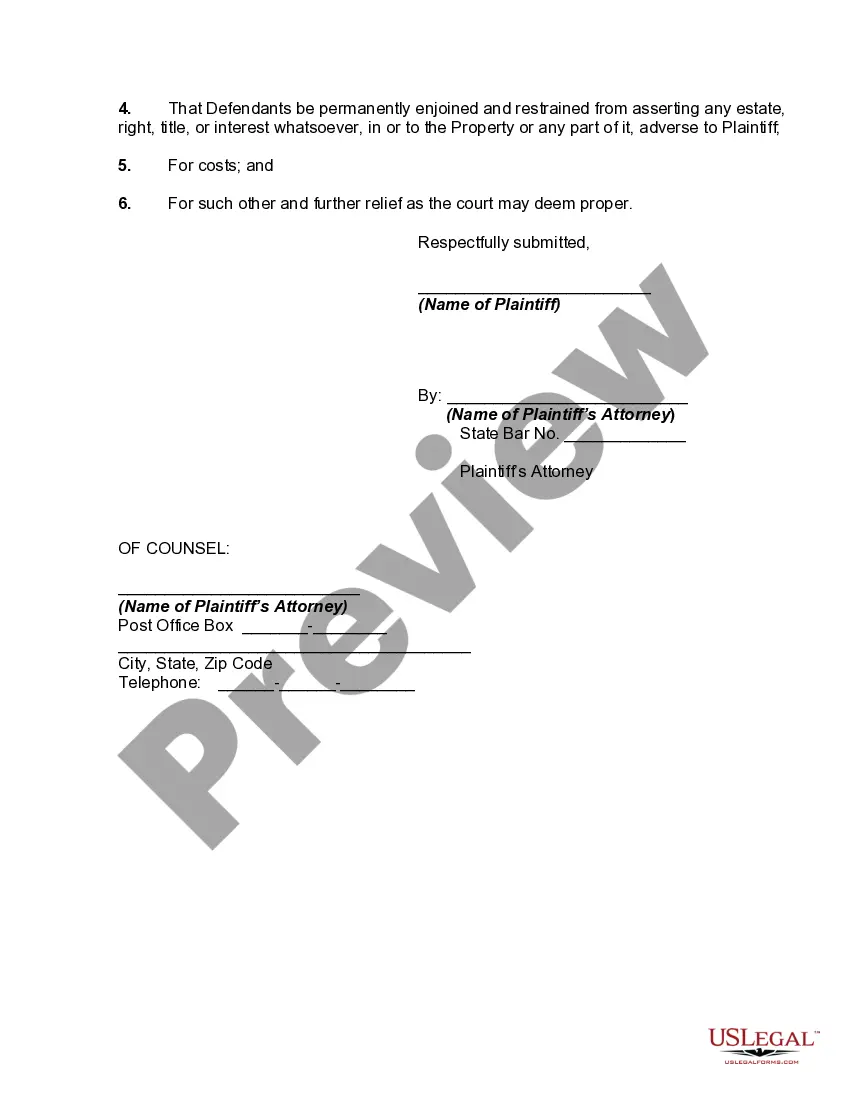
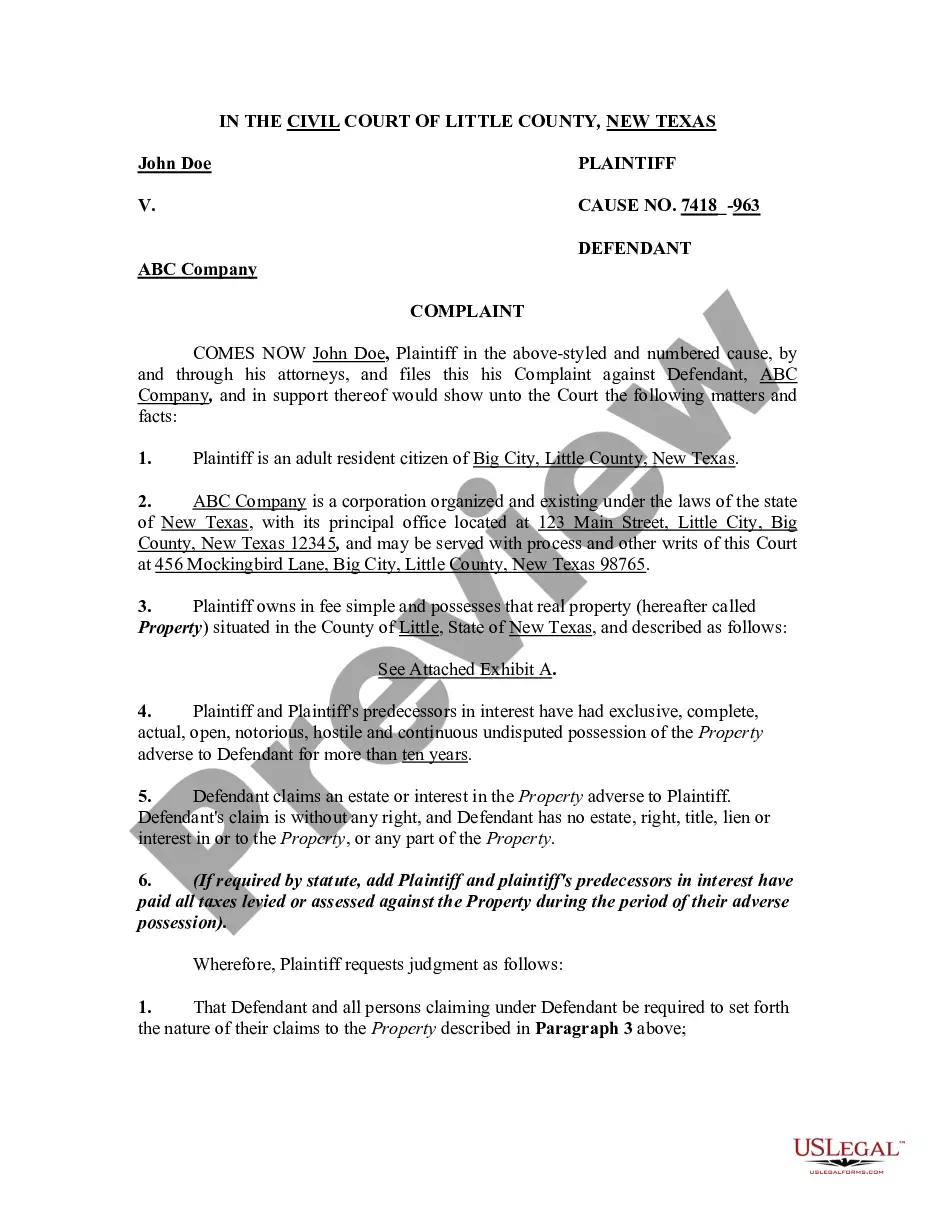
How to fill out Complaint To Quiet Title By Adverse Possessor With Unknown Defendants?
- If you're a returning user, log into your account and download the necessary form template directly on your device by clicking the Download button. Ensure your subscription is current; if it's expired, renew it based on your plan.
- If this is your first time using US Legal Forms, start by exploring the Preview mode and reading the form description to select the correct document that meets your requirements and complies with your jurisdiction.
- If needed, use the Search tab to look for alternative templates to ensure you find the right one. Once you identify a suitable form, proceed to the next step.
- Purchase the selected document by clicking on the Buy Now button. Choose your preferred subscription plan and create an account to gain access to the extensive library.
- Complete your purchase by entering your credit card information or choosing to pay via PayPal.
- Download your form and save it onto your device. You can access it anytime through the My Forms section of your profile.
In conclusion, US Legal Forms empowers users with a vast selection of over 85,000 legal documents, making it easier than ever to find, purchase, and manage your forms effectively.
Start your journey today by exploring the available resources, ensuring your legal processes are streamlined and simplified.
Form popularity
FAQ
Filing for adverse possession in Illinois involves a clear understanding of the state's requirements. First, you must demonstrate that you have occupied the property openly, continuously, and exclusively for at least 20 years. After gathering necessary documentation, you will need to file a lawsuit in the appropriate court. Utilizing resources from uslegalforms can simplify this process, providing the forms and guidance necessary to establish your claim as an adverse possessor for possessory title effectively.
To defeat a claim of adverse possession, property owners must prove that their occupancy of the land is not continuous or open. Engage a qualified attorney who can demonstrate that the adverse possessor has not met the required duration of possession or has not used the property without permission. Additionally, showing any evidence of your own use or maintenance of the property can support your case. Remember, addressing these issues promptly helps protect your rights as an owner and ensures that claims for possessory title do not succeed.
Adverse possession is a legal doctrine that allows someone to claim a piece of property after occupying it for a certain period without permission from the actual owner. This claim for possessory title is grounded in the idea that land should be used productively. Therefore, if a person openly occupies and maintains the property, they may obtain legal rights to it. Understanding the implications of this concept can be enhanced through resources from US Legal Forms.
In Connecticut, the rules for adverse possession require continuous, open, and hostile use of the property for 15 years. The possessor must treat the land as if they own it, without any permission from the actual owner. Moreover, the use must be visible to the property owner or anyone else. To navigate these specific regulations, consider utilizing tools provided by US Legal Forms for a clearer understanding of your rights.
In Minnesota, the typical period required for an adverse possessor for possessory title is 15 years. This means one must occupy the land openly, continuously, and without the owner's consent for that duration. Understanding these time frames is crucial for both property owners and potential possessors. Seek resources from US Legal Forms for detailed insights into local laws.
An example of adverse possession involves a person who openly occupies an unused piece of land for a specified period without the owner's permission. For instance, if someone maintains a garden on a neighbor's vacant lot for 15 years, they may claim it under adverse possession for possessory title. This scenario illustrates how continuous, visible use can lead to a possession claim, emphasizing the importance of knowing one’s rights.
Adverse possession can complicate the marketability of a title. If a property owner has not officially recognized the adverse possessor for possessory title, potential buyers may hesitate due to uncertainty. It's vital to clear any claims through legal channels to ensure a smooth transaction. This makes working with platforms like US Legal Forms essential for understanding and navigating these issues.
Some legal experts suggest that states like California have relatively straightforward adverse possession laws, making it easier to establish a claim. The process still requires satisfying specific criteria, but clarity in laws can be beneficial. To explore your specific circumstances further, resources like US Legal Forms can guide you on how to navigate the requirements of being an adverse possessor for possessory title.
In Tennessee, the statutory period for adverse possession is typically 20 years. This means that an individual must occupy the property openly and continuously for two decades to qualify as an adverse possessor for possessory title. If you’re unsure about your situation, consulting a legal service like US Legal Forms can provide clarity and assistance.
To beat an adverse possession claim, you should present evidence that demonstrates your ownership and challenge the claimant's occupancy. If you can show that the claimant did not openly and continuously occupy the land, you may refute their claim as an adverse possessor for possessory title. Legal advice is especially helpful in navigating these complex scenarios.