Adverse Action Regulations
Description
Get your form ready online
Our built-in tools help you complete, sign, share, and store your documents in one place.
Make edits, fill in missing information, and update formatting in US Legal Forms—just like you would in MS Word.
Download a copy, print it, send it by email, or mail it via USPS—whatever works best for your next step.
Sign and collect signatures with our SignNow integration. Send to multiple recipients, set reminders, and more. Go Premium to unlock E-Sign.
If this form requires notarization, complete it online through a secure video call—no need to meet a notary in person or wait for an appointment.
We protect your documents and personal data by following strict security and privacy standards.

Make edits, fill in missing information, and update formatting in US Legal Forms—just like you would in MS Word.

Download a copy, print it, send it by email, or mail it via USPS—whatever works best for your next step.

Sign and collect signatures with our SignNow integration. Send to multiple recipients, set reminders, and more. Go Premium to unlock E-Sign.

If this form requires notarization, complete it online through a secure video call—no need to meet a notary in person or wait for an appointment.

We protect your documents and personal data by following strict security and privacy standards.
Looking for another form?







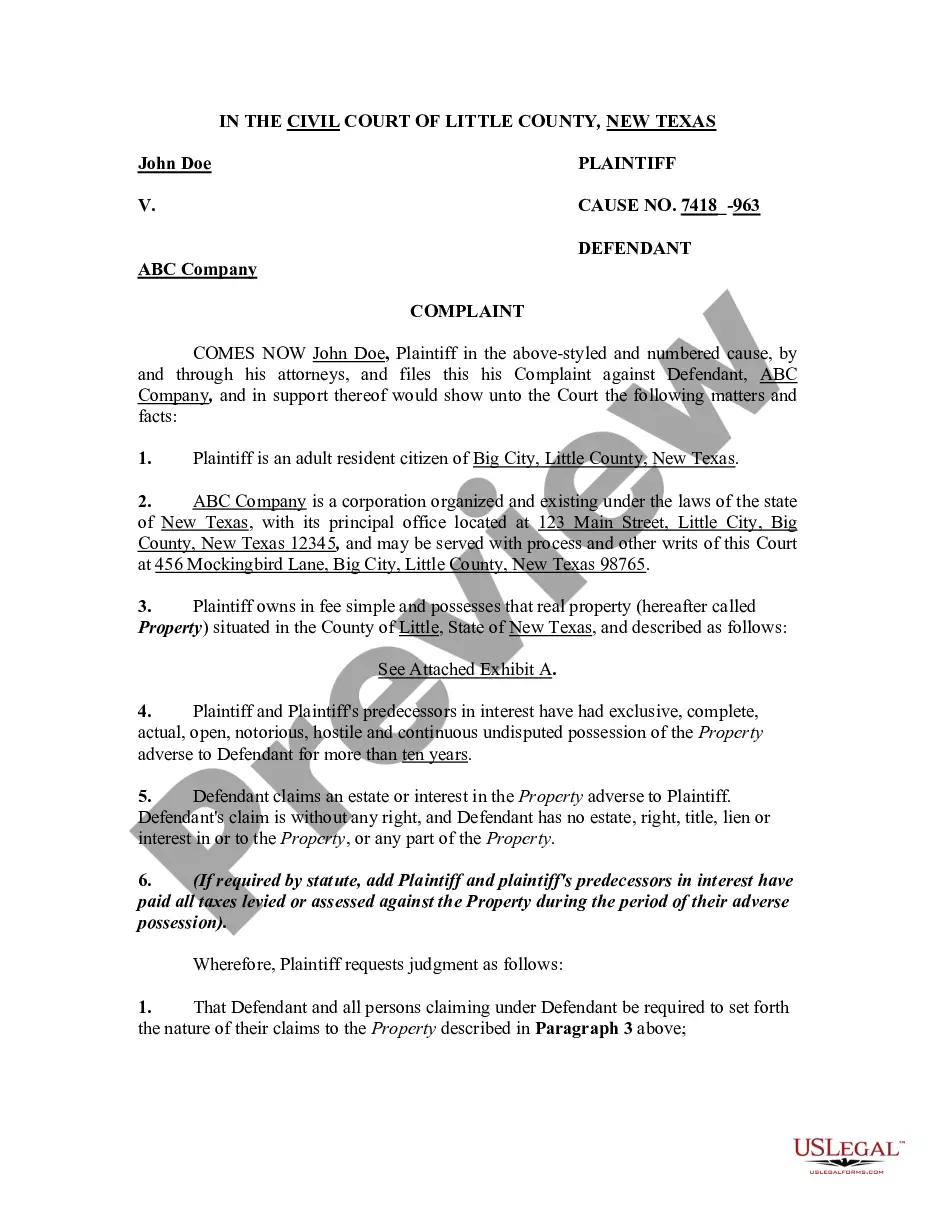
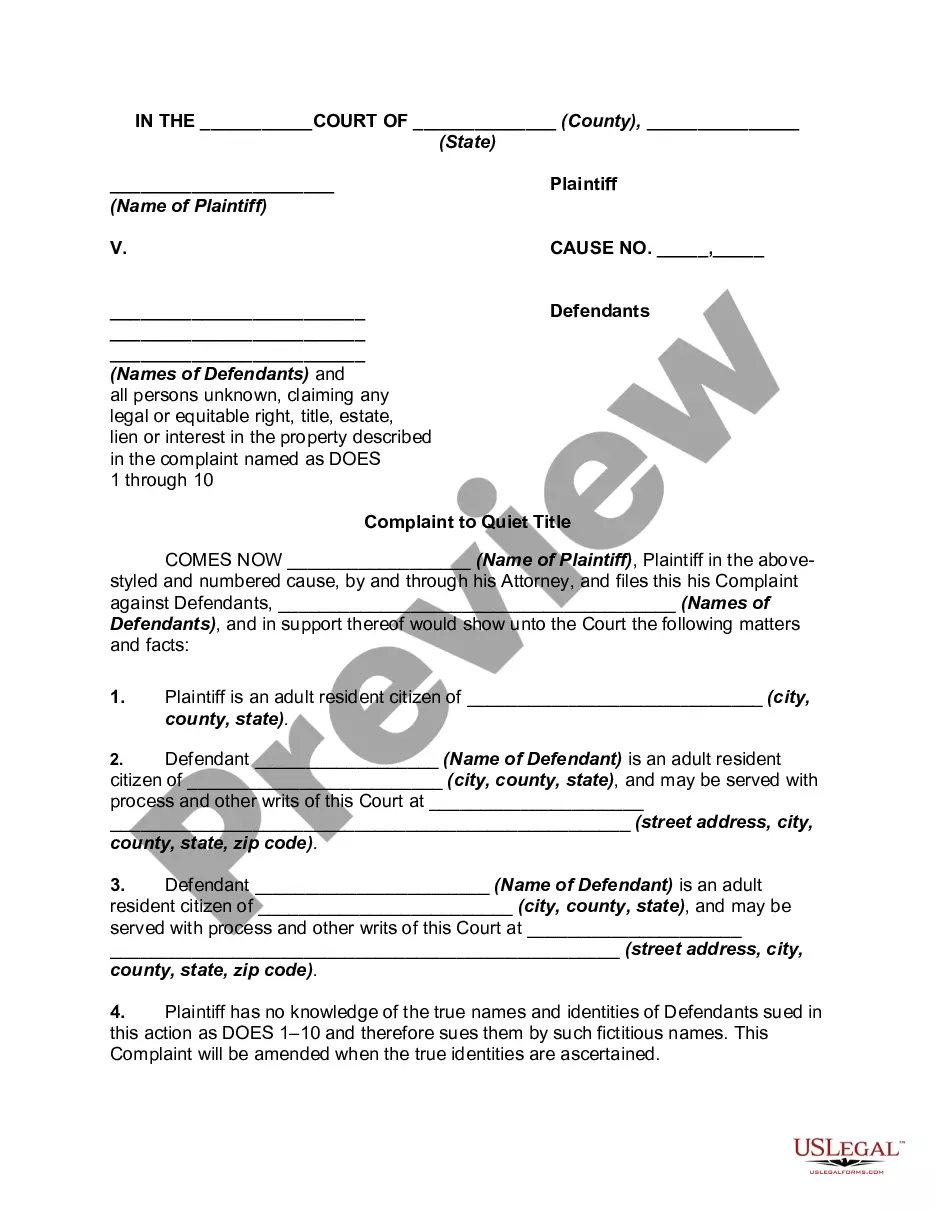
How to fill out Complaint To Quiet Title By Person Claiming Adverse Possession - Squatters Rights?
Utilizing samples of legal documents that adhere to federal and state regulations is essential, and the web provides countless choices to select from.
However, what is the benefit of expending time looking for the correct Adverse Action Regulations example online when the US Legal Forms digital library conveniently compiles such templates in one location.
US Legal Forms is the most comprehensive online legal repository featuring over 85,000 fillable forms created by legal professionals for any business and personal situation. They are easy to navigate with all documents sorted by state and intended use. Our specialists stay updated with legislative changes, ensuring that your paperwork remains current and compliant when obtaining an Adverse Action Regulations from our site.
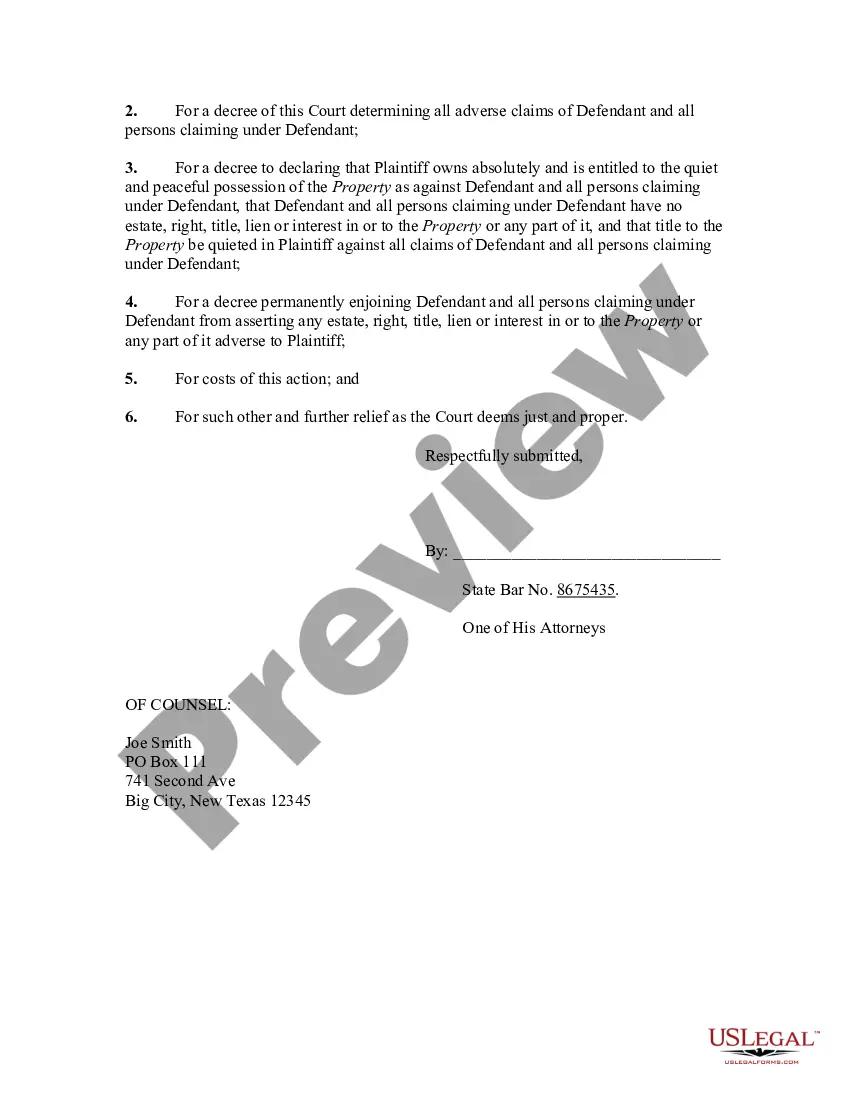
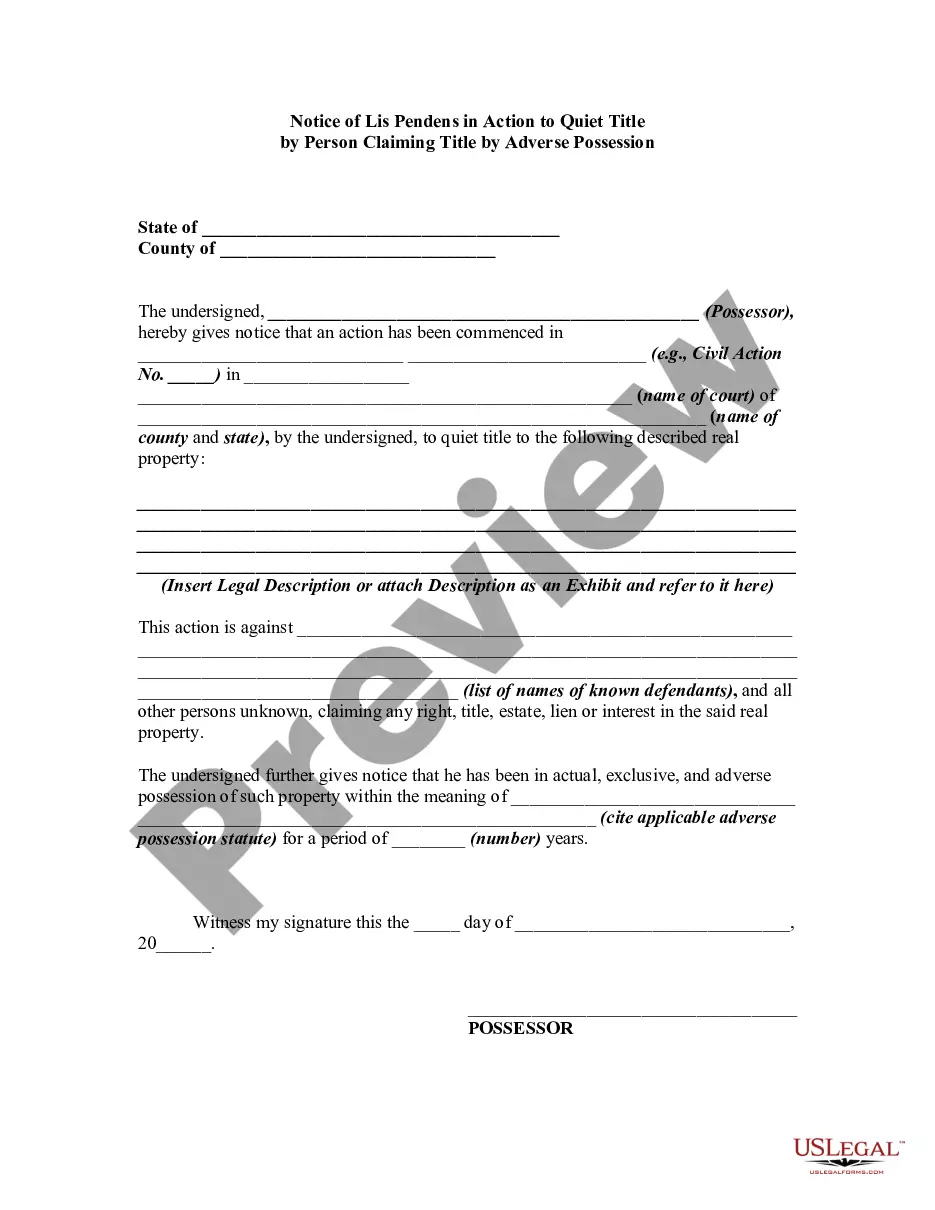
- Assess the template using the Preview function or through the text description to confirm it fulfills your criteria.
- Search for an alternative sample using the search feature at the top of the page if necessary.
- Select Buy Now once you’ve identified the correct form and choose a subscription option.
- Create an account or Log In and proceed to make a payment via PayPal or credit card.
- Pick the appropriate format for your Adverse Action Regulations and download it.
Form popularity
FAQ
It is a common misconception that there is a ?magic age? when a child can decide which parent they will live with. In both Washington and Oregon, a child can only choose which parent they'd like to live with when they turn 18 or are otherwise emancipated.
Prior to the age of 18, the court and the state does not consider minors to have the capability of making a full determination of where they want to establish their residency. Therefore, the age of majority is the only age in which they can make such a decision.
When the child turns 18, the court no longer has the jurisdiction (power) to require custody or visitation with either parent.
NOTE: Requests for modification of child support may only be made to the Oregon Child Support Program under certain circumstances; for example, if it has been at least 36 months (3 years) since the date the support order was entered or last modified; or there has been a substantial change of circumstances.
There is no set age when a child gets to decide who they live with. Other than when they are 18, but then they are no longer a child. The older and more mature a child is, the more the court will value their opinion.
When Can My Child Refuse Visitation? There is no specific age at which a child can decide to refuse to visit with a parent or change custody arrangements without the court's approval.
If a child doesn't want to live with a parent, it might be a safety issue. If your child is old enough, ask what is happening there that makes him or her not want to go. For small children, ask them to draw a picture of life at Daddy's house. A professional counselor and lawyers might need to be involved.
Your request for modification should be filed in the circuit court that entered the judgment you are asking the court to modify. If either party lives in a different judicial district in Oregon than the one that entered that judgment, you may request that the case be transferred.