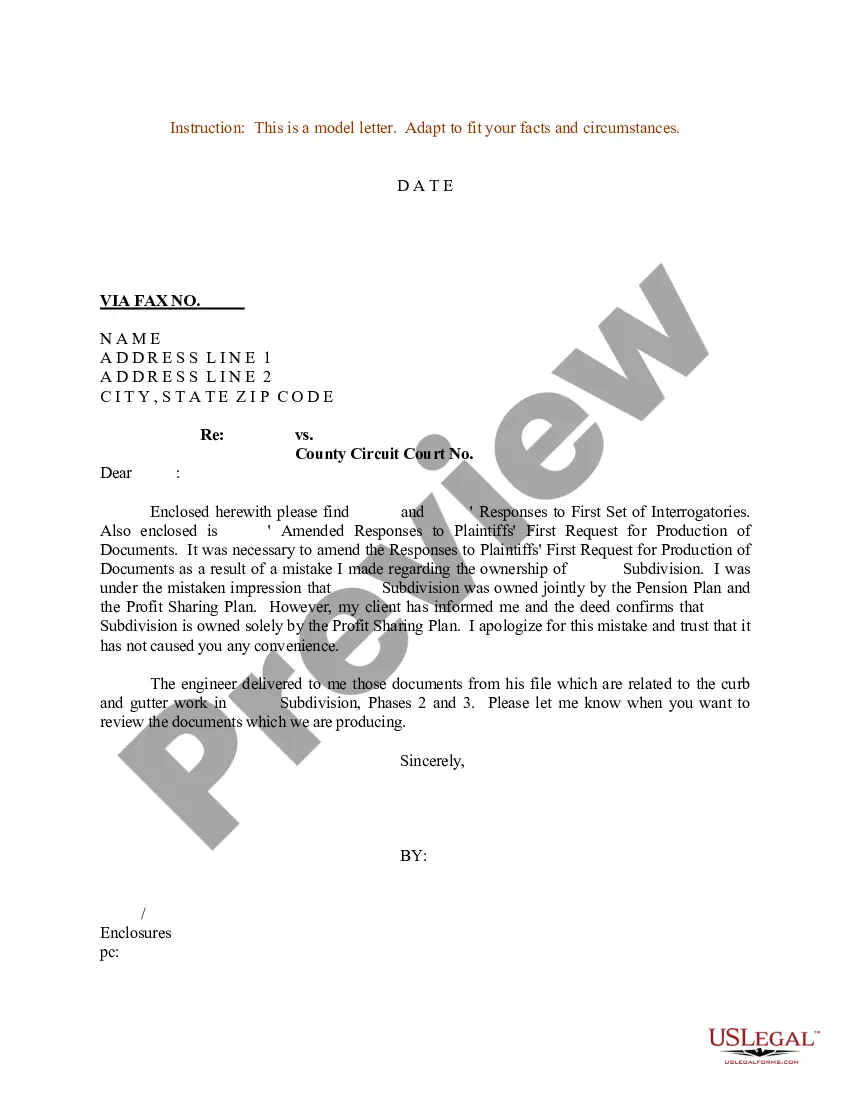
Sample Response To Interrogatories Federal Court
Description

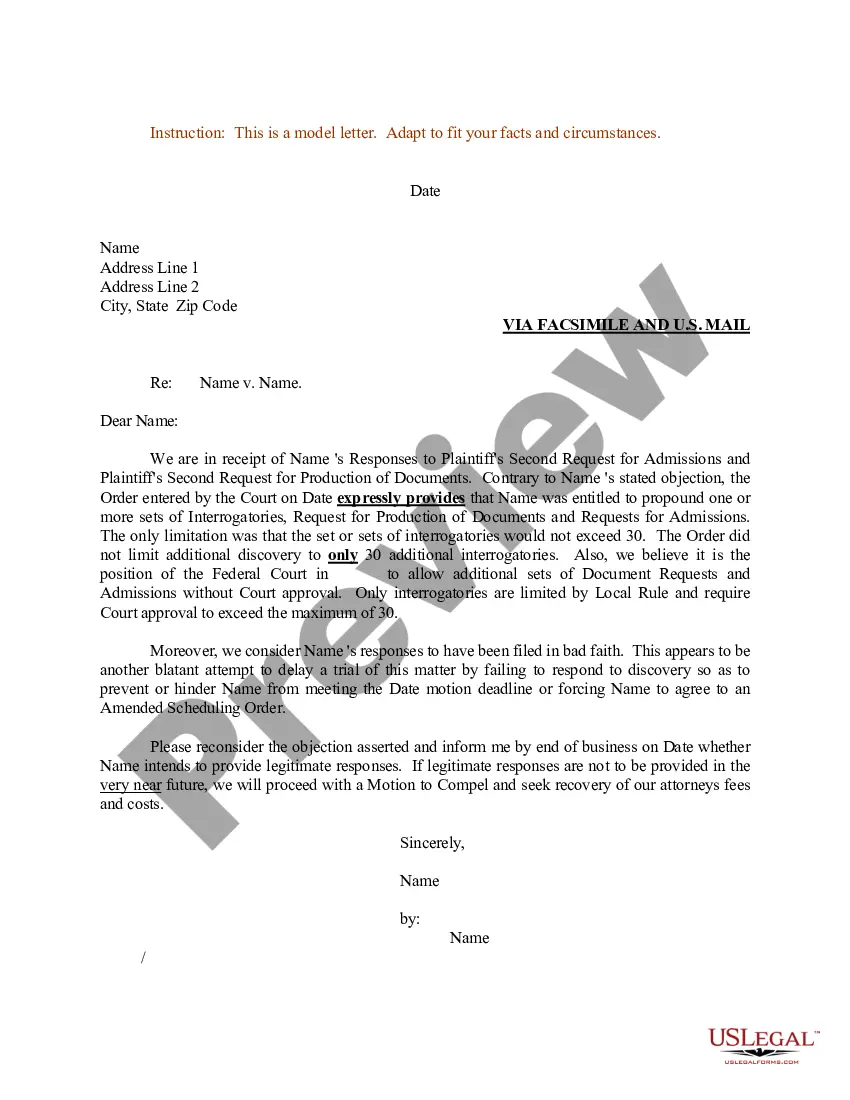
Get your form ready online
Our built-in tools help you complete, sign, share, and store your documents in one place.
Make edits, fill in missing information, and update formatting in US Legal Forms—just like you would in MS Word.
Download a copy, print it, send it by email, or mail it via USPS—whatever works best for your next step.
Sign and collect signatures with our SignNow integration. Send to multiple recipients, set reminders, and more. Go Premium to unlock E-Sign.
If this form requires notarization, complete it online through a secure video call—no need to meet a notary in person or wait for an appointment.
We protect your documents and personal data by following strict security and privacy standards.

Make edits, fill in missing information, and update formatting in US Legal Forms—just like you would in MS Word.

Download a copy, print it, send it by email, or mail it via USPS—whatever works best for your next step.

Sign and collect signatures with our SignNow integration. Send to multiple recipients, set reminders, and more. Go Premium to unlock E-Sign.

If this form requires notarization, complete it online through a secure video call—no need to meet a notary in person or wait for an appointment.

We protect your documents and personal data by following strict security and privacy standards.
Looking for another form?
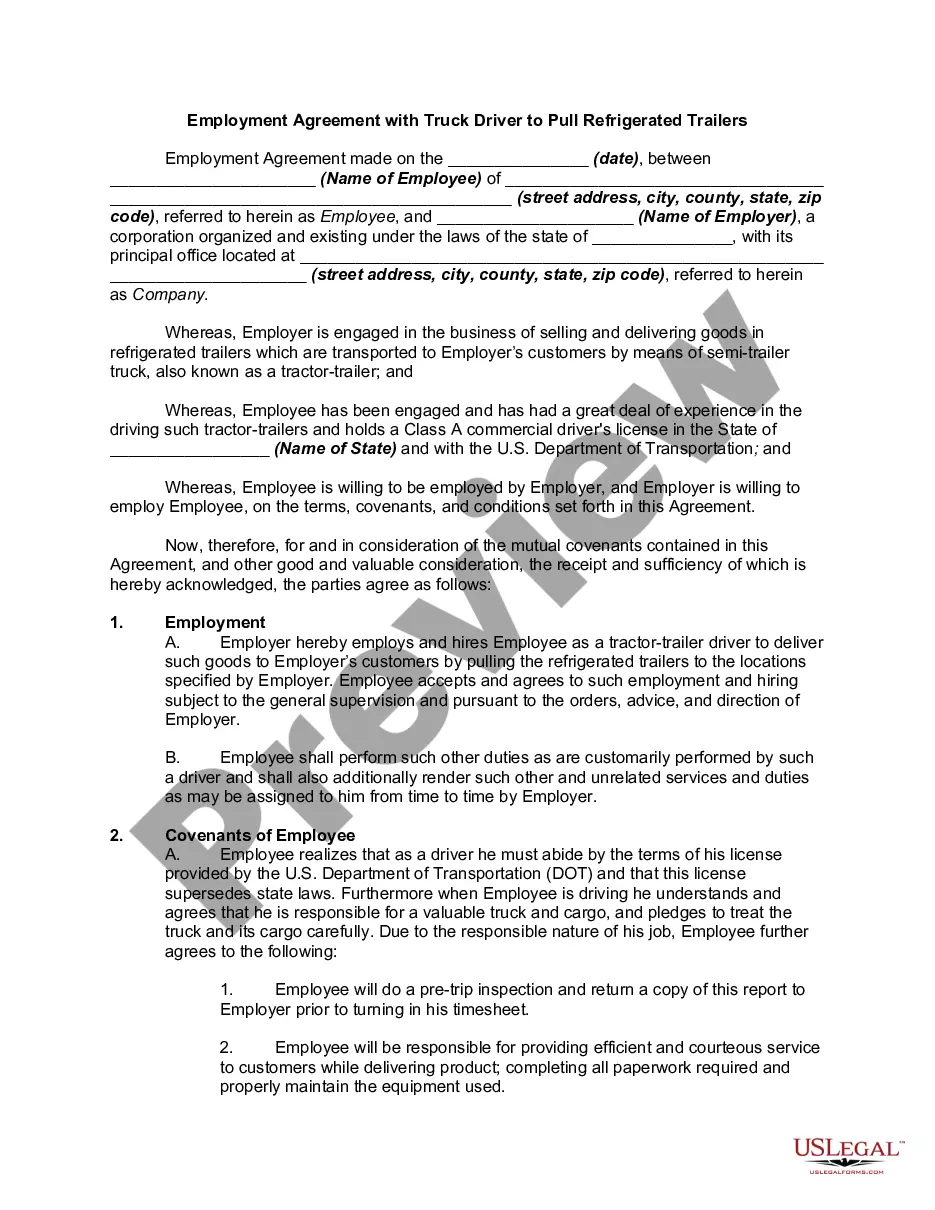






How to fill out Sample Letter For Responses To First Set Of Interrogatories?
Legal administration can be perplexing, even for the most seasoned professionals.
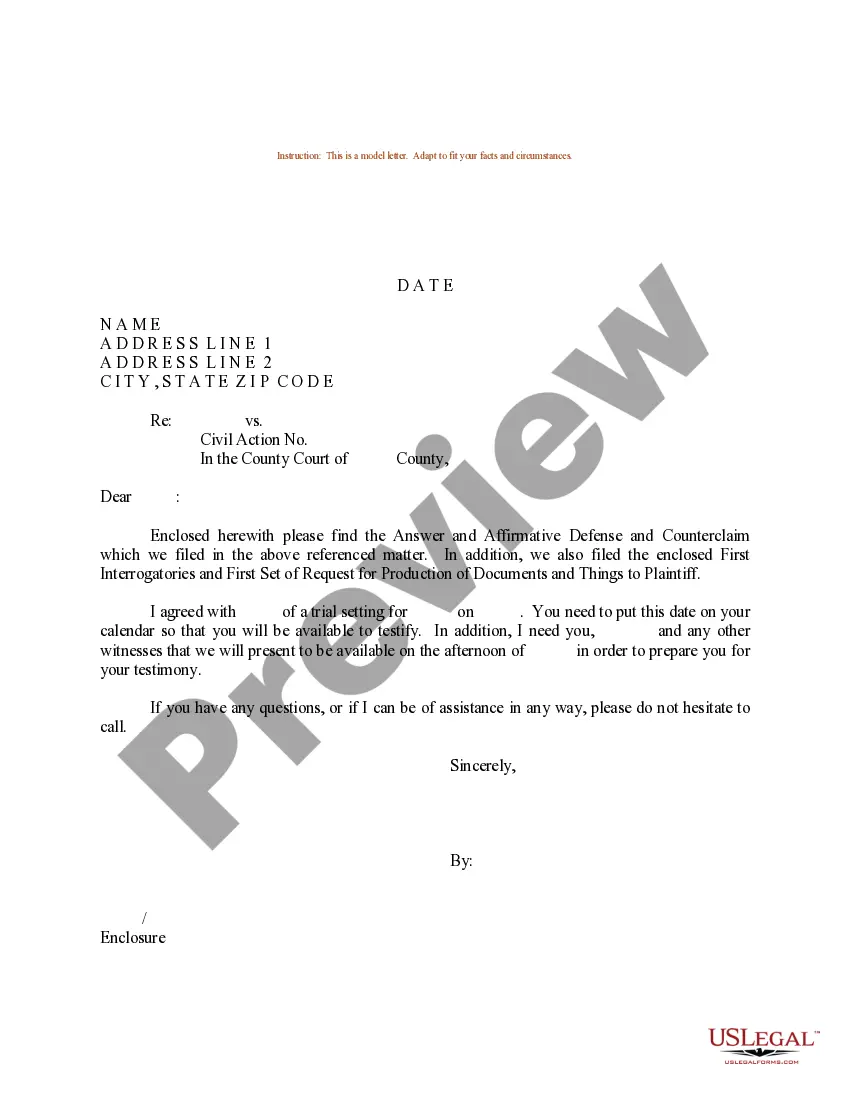
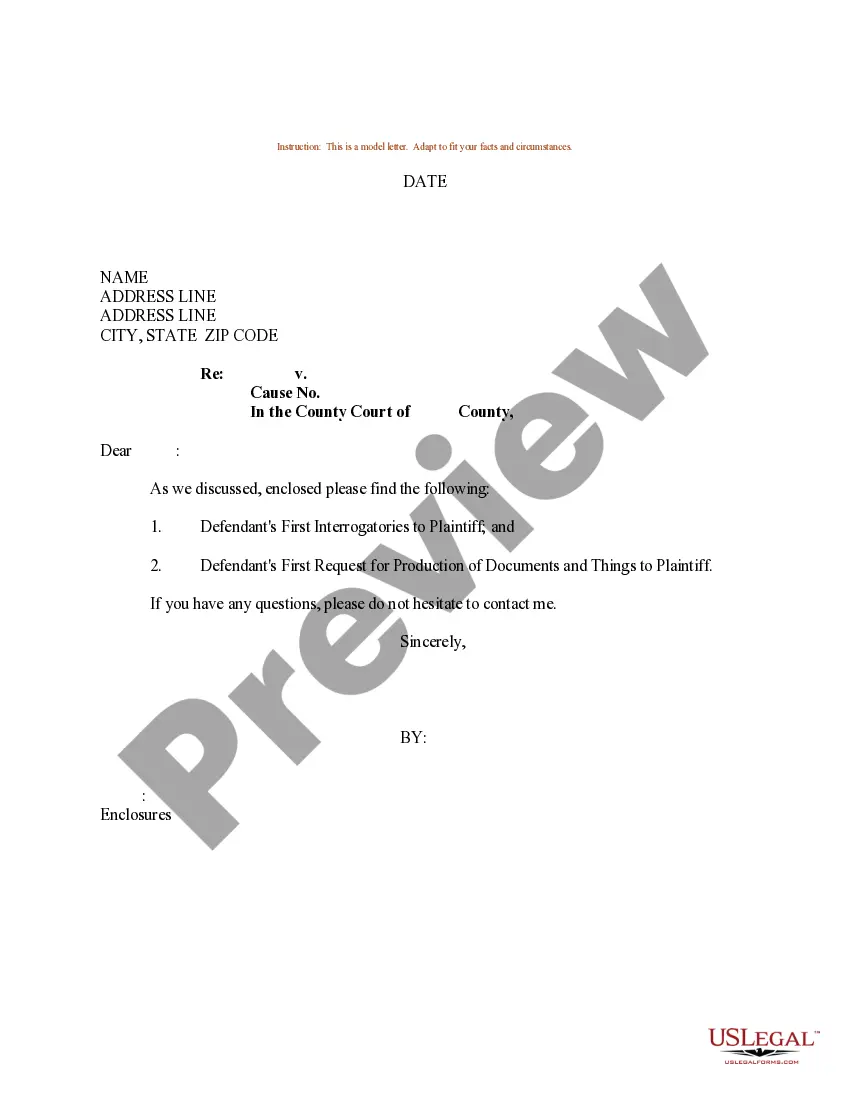
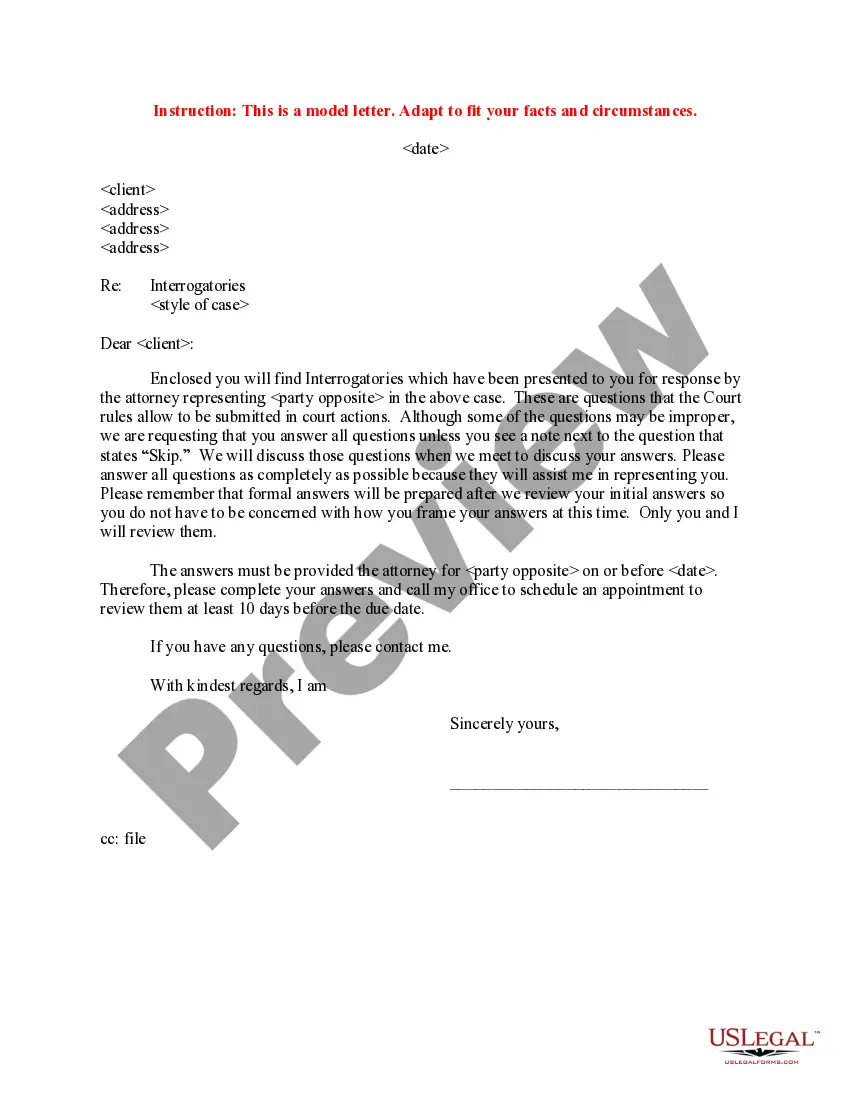
When you're seeking a Sample Response To Interrogatories Federal Court and don’t have the opportunity to invest in finding the correct and current version, the process can be stressful.
Tap into a valuable resource library of articles, guides, and tools pertinent to your situation and needs.
Save time and energy looking for the forms you require, and leverage US Legal Forms’ advanced search and Preview feature to locate and acquire Sample Response To Interrogatories Federal Court.
Make sure that the sample is authorized in your state or county. Choose Buy Now when you're ready. Select a subscription plan. Choose the format you desire, and Download, complete, eSign, print, and submit your documents. Make use of the US Legal Forms online catalog, supported by 25 years of expertise and trustworthiness. Transform your daily document management into a simple and user-friendly process today.
- If you have a subscription, Log In to your US Legal Forms account, search for the form, and download it.
- Check your My documents section to view the forms you have previously saved and manage your folders as needed.
- If this is your first experience with US Legal Forms, create a free account and enjoy unrestricted access to all the benefits of the library.
- Here are the procedures to follow after downloading the required form.
- Verify that this is the correct form by previewing it and examining its details.
- Access state- or county-specific legal and business documents.
- US Legal Forms satisfies all requirements you might have, from personal to business paperwork, all in one location.
- Utilize advanced tools to complete and manage your Sample Response To Interrogatories Federal Court.
Form popularity
FAQ
Discovery is the process through which the parties exchange information that may be helpful to prove their claims or defenses. The discovery process is governed by Federal Rules of Civil Procedure 26?37, 45, and the court's Local Civil Rules.
(b) ?Request for a bill of particulars? is a written request served by defendant upon the people, without leave of the court, requesting a bill of particulars, specifying the items of factual information desired, and alleging that defendant cannot adequately prepare or conduct his defense without the information ...
To commence an e-filed action or special proceeding, a summons and complaint or summons with notice in an action, or a petition in a special proceeding shall be filed with the County Clerk through NYSCEF by uploading the documents to the NYSCEF site in PDF-A format.
A BOP's essential uses include: Amplifying a pleading by giving the opposing party a detailed understanding of the claim or defense being particularized.
No Fee Authorization Letter: Where a ?No Fee Authorization Letter? is referenced, it is intended to be a written request on the letterhead of the attorney or filer that an action or particular document type: will be accepted with no fee required and include the basis for the exemption.
A bill of particulars is defined as a written itemization of claims in a lawsuit that the defendant may demand of the plaintiff in some situations in order to clarify the details of the claims. See e.g., United States v. Davis 139 S.
Responding to a Demand for a Bill of Particulars In your response, you must either answer the questions in the Demand or object to them. The Bill of Particulars must include the name and index number of the case at the top of the page.
Unlike interrogatories and deposition responses where contradictory evidence can be admitted by the plaintiff, the Bill of Particulars is conclusive as to the items and amounts claimed and no other evidence is admissible at trial.