Florida Codicil to Will Form for Amending Your Will - Will Changes or Amendments
What this document covers
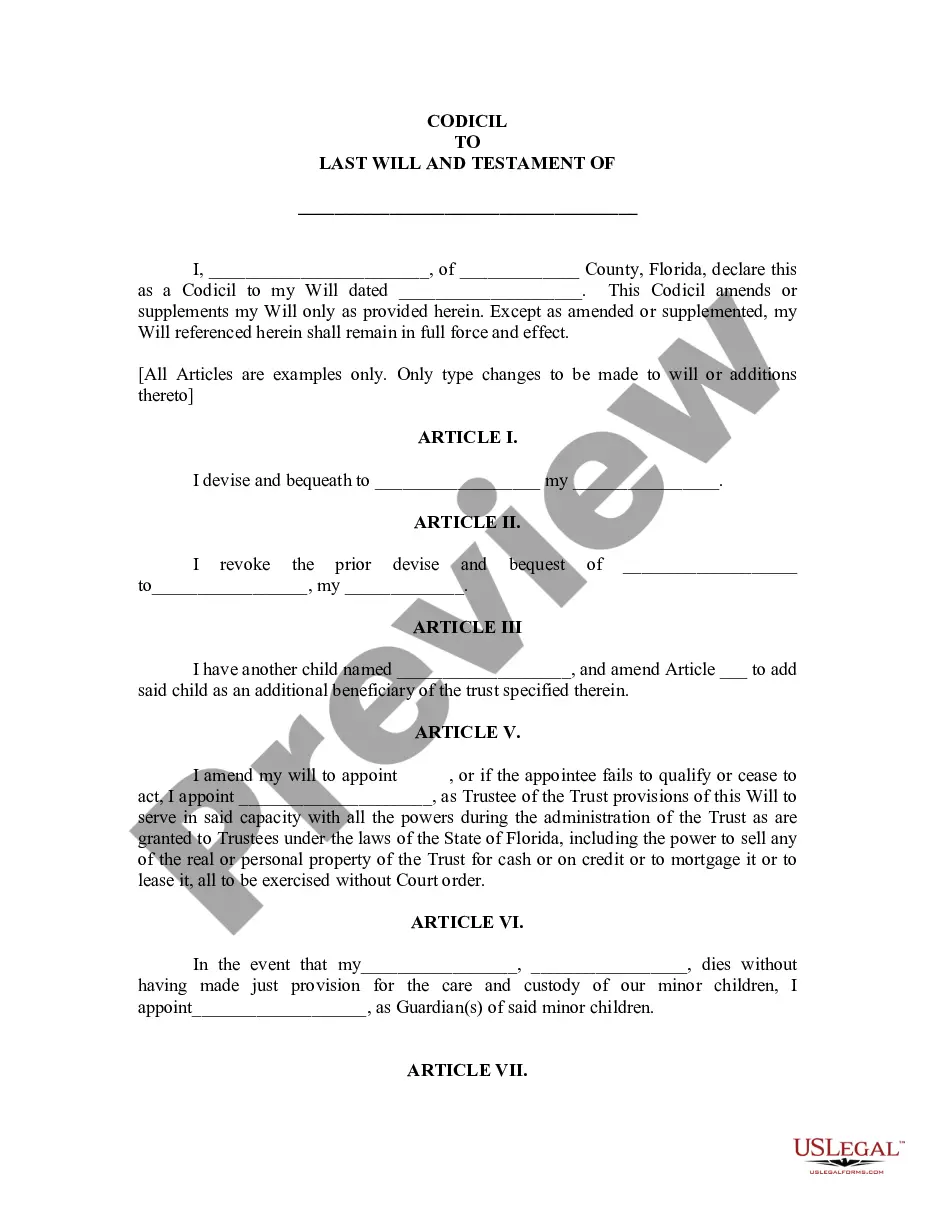
The Codicil to Will Form is a legal document used to amend or change an existing will without needing to create an entirely new one. It allows an individual, known as the testator, to specify modifications while ensuring that the original will remains valid except for the changes stipulated in the codicil. This form is particularly useful for those who want to make minor adjustments to their estate plan quickly and efficiently, keeping costs down and avoiding the complexities of drafting a new will.
Main sections of this form
- Identification of the testator and reference to the original will.
- Provisions for devising and bequeathing specific assets.
- Revocation of previous bequests or arrangements in the original will.
- Amendments to include new beneficiaries or guardianship arrangements.
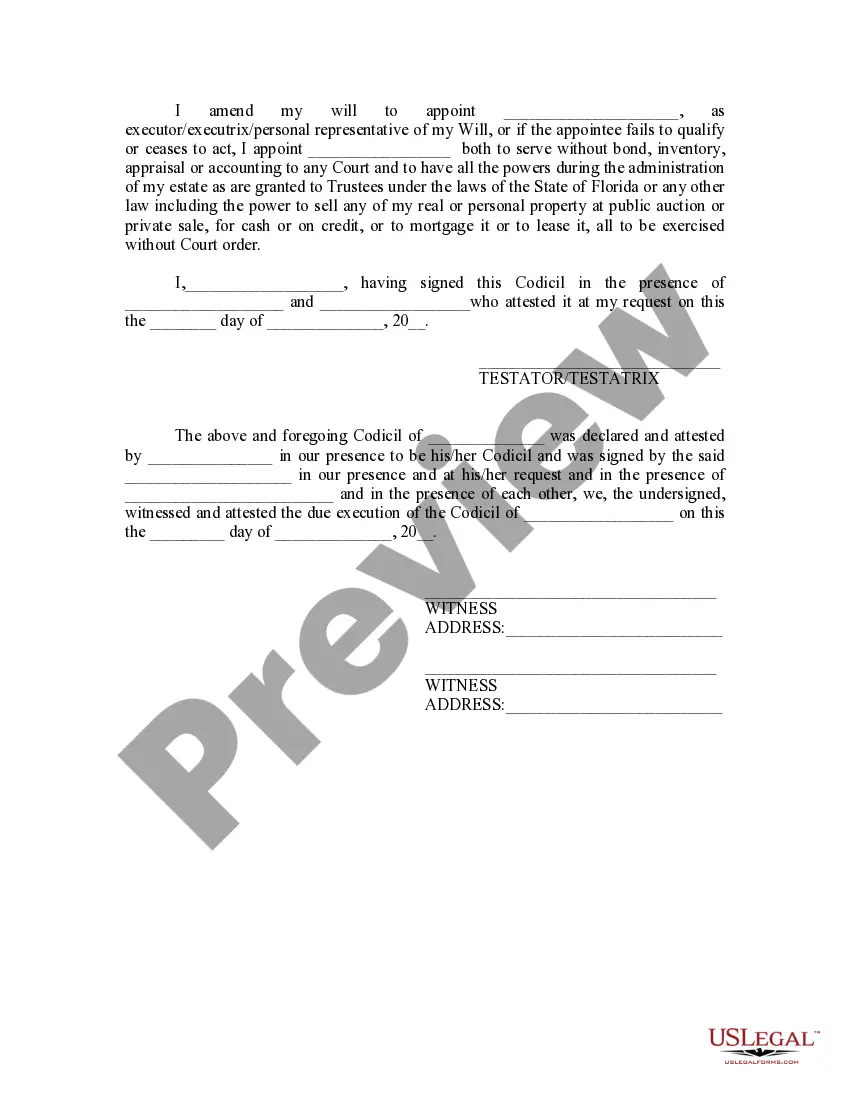
- Execution by the testator and attestation by witnesses.
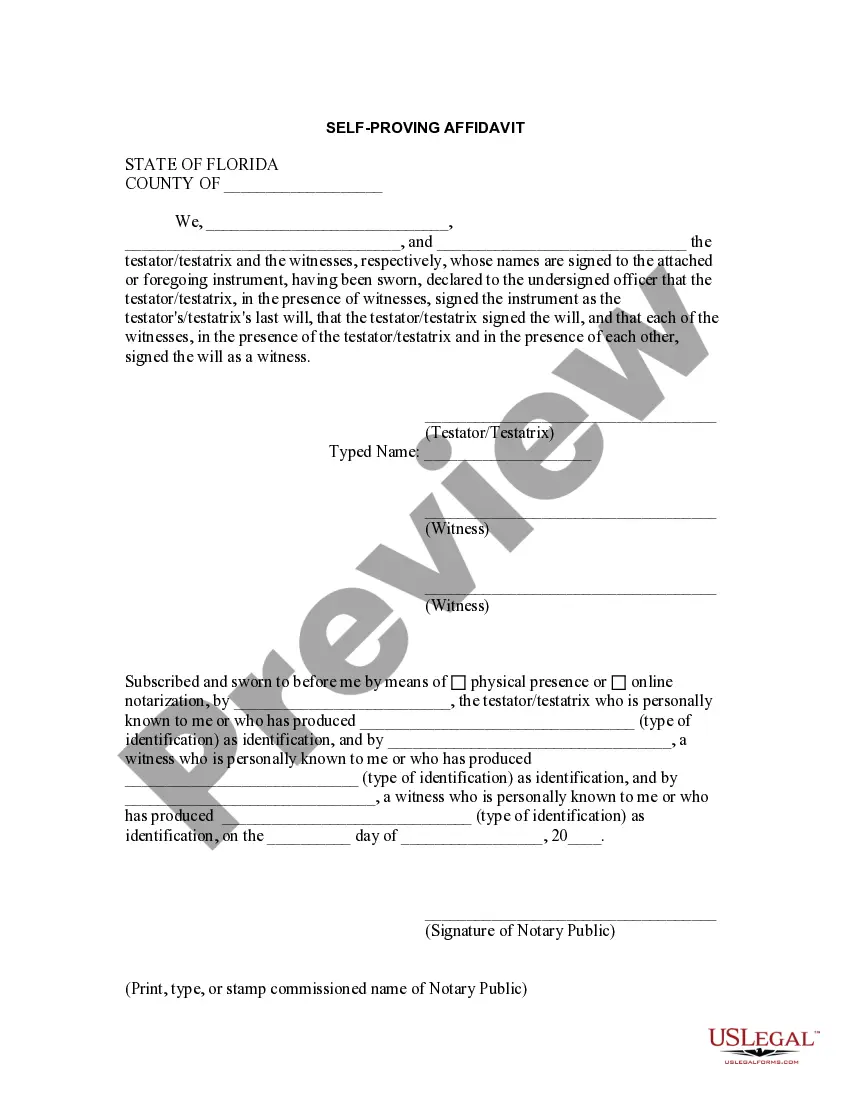
- Self-proving affidavit to confirm validity.

When to use this document
You should use this codicil form when you need to make changes to your existing will without drafting a new one. Common scenarios include adding new beneficiaries, changing an executor, revoking existing bequests, or updating guardian designations for minor children. If your circumstances change, such as a marriage, divorce, or the birth of a child, this form can help ensure your will accurately reflects your wishes.
Who this form is for
- Individuals who have an existing will and wish to make minor amendments.
- Testators who are experiencing changes in their personal circumstances, like marriage or the birth of a child.
- People who want to ensure clarity about their estate plan without the expense of creating a new will.
- Residents of Florida or those whose estate is governed under Florida law.
Completing this form step by step
- Identify yourself as the testator and provide the date of your original will.
- Specify the changes you wish to make to your will in the designated articles.
- Include names and any relevant information for new beneficiaries or guardians.
- Sign the codicil in the presence of at least two witnesses.
- Have the witnesses sign, providing their addresses as required.
- If needed, complete the self-proving affidavit to enhance the validity of your codicil.
Does this document require notarization?
No, this form does not typically require notarization unless specified by local law. However, having the codicil notarized can offer an additional layer of validation and may ease the probate process.
Get your form ready online
Our built-in tools help you complete, sign, share, and store your documents in one place.
Make edits, fill in missing information, and update formatting in US Legal Forms—just like you would in MS Word.
Download a copy, print it, send it by email, or mail it via USPS—whatever works best for your next step.
Sign and collect signatures with our SignNow integration. Send to multiple recipients, set reminders, and more. Go Premium to unlock E-Sign.
If this form requires notarization, complete it online through a secure video call—no need to meet a notary in person or wait for an appointment.
We protect your documents and personal data by following strict security and privacy standards.

Make edits, fill in missing information, and update formatting in US Legal Forms—just like you would in MS Word.

Download a copy, print it, send it by email, or mail it via USPS—whatever works best for your next step.

Sign and collect signatures with our SignNow integration. Send to multiple recipients, set reminders, and more. Go Premium to unlock E-Sign.

If this form requires notarization, complete it online through a secure video call—no need to meet a notary in person or wait for an appointment.

We protect your documents and personal data by following strict security and privacy standards.
Mistakes to watch out for
- Not properly identifying the original will, which can lead to confusion about which document is being amended.
- Failing to sign the codicil in front of witnesses, which may invalidate the document.
- Not updating beneficiary information correctly, leading to unintended distribution of assets.
- Neglecting to complete the self-proving affidavit, which can complicate the probate process.
Why complete this form online
- Convenience of accessing the form from anywhere, saving time and travel.
- Editable format allows for easy customization to fit your specific needs.
- Reliability of attorney-drafted content, ensuring legality and adherence to state laws.
- Cost-effective solution compared to hiring a lawyer for minor amendments.
Looking for another form?

Form popularity
FAQ
The Florida Codicil to Will Form for Amending Your Will - Will Changes or Amendments is a legal document that lets a testator make specific changes to an existing Florida will without creating a new one. Use it when you need to adjust bequests, add or revoke beneficiaries, or update guardianship or executor details. The form covers identification, provisions for assets, revocation of prior bequests, amendments, execution with witnesses, and a self-proving affidavit.
To add a codicil in Florida using this form, identify the testator and reference the original will, specify the changes (new or removed bequests, guardians, or executors), and sign the document in the presence of witnesses. Then execute the codicil and attach the self-proving affidavit to confirm validity.
Yes. A codicil amends an existing will by modifying its provisions while leaving the rest of the will in place. This form explicitly sets out the testator, the original will reference, the changes, any revoked bequests, and the new or updated provisions, followed by execution and a self-proving affidavit.
The form includes a self-proving affidavit to confirm validity and streamline probate, but notarization requirements can vary. The codicil itself requires execution by the testator with witnesses; the affidavit is typically notarized to enhance acceptance in Florida courts. For precise requirements, consult a Florida-licensed attorney.
Using this form does not require a lawyer, but complex changes or questions about your estate may warrant legal advice. The form provides sections for identifying the testator, the original will, the requested amendments, and the execution with witnesses plus a self-proving affidavit.
It amends an existing will rather than replacing it. The codicil references the original will, lists specific changes (such as new beneficiaries or updated guardianship), and requires execution with witnesses and a self-proving affidavit, avoiding the cost and complexity of creating an entirely new will.