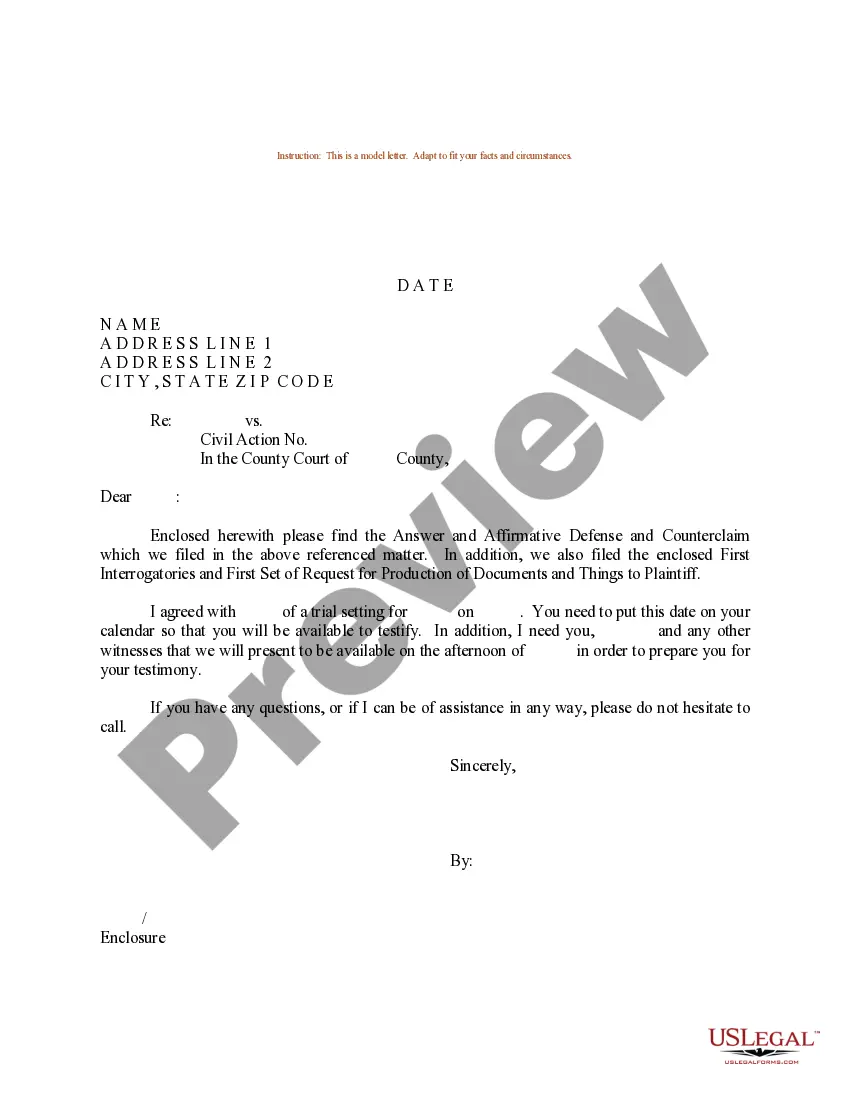
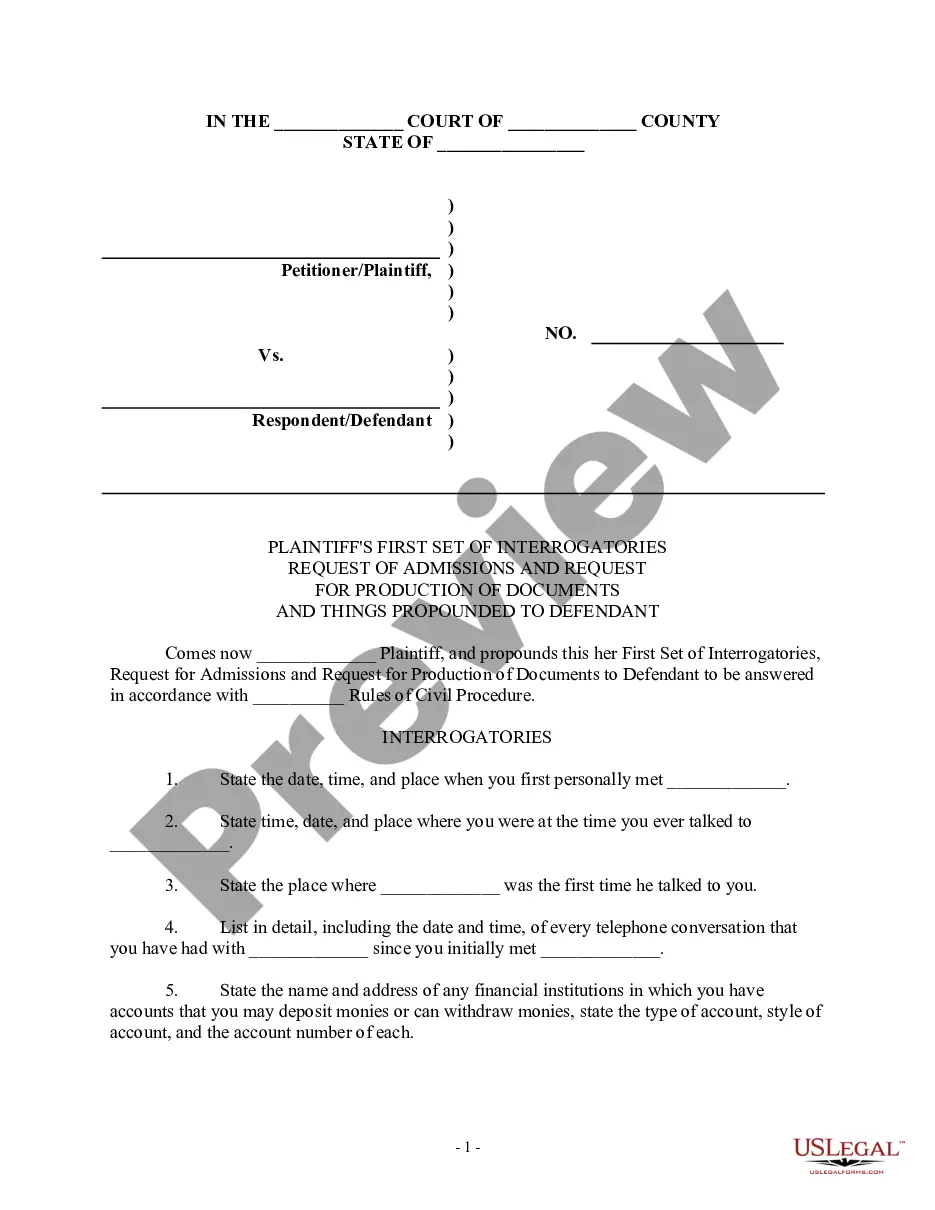
Letter Of Interrogatory With Questions
Description

Get your form ready online
Our built-in tools help you complete, sign, share, and store your documents in one place.
Make edits, fill in missing information, and update formatting in US Legal Forms—just like you would in MS Word.
Download a copy, print it, send it by email, or mail it via USPS—whatever works best for your next step.
Sign and collect signatures with our SignNow integration. Send to multiple recipients, set reminders, and more. Go Premium to unlock E-Sign.
If this form requires notarization, complete it online through a secure video call—no need to meet a notary in person or wait for an appointment.
We protect your documents and personal data by following strict security and privacy standards.

Make edits, fill in missing information, and update formatting in US Legal Forms—just like you would in MS Word.

Download a copy, print it, send it by email, or mail it via USPS—whatever works best for your next step.

Sign and collect signatures with our SignNow integration. Send to multiple recipients, set reminders, and more. Go Premium to unlock E-Sign.

If this form requires notarization, complete it online through a secure video call—no need to meet a notary in person or wait for an appointment.

We protect your documents and personal data by following strict security and privacy standards.
Looking for another form?
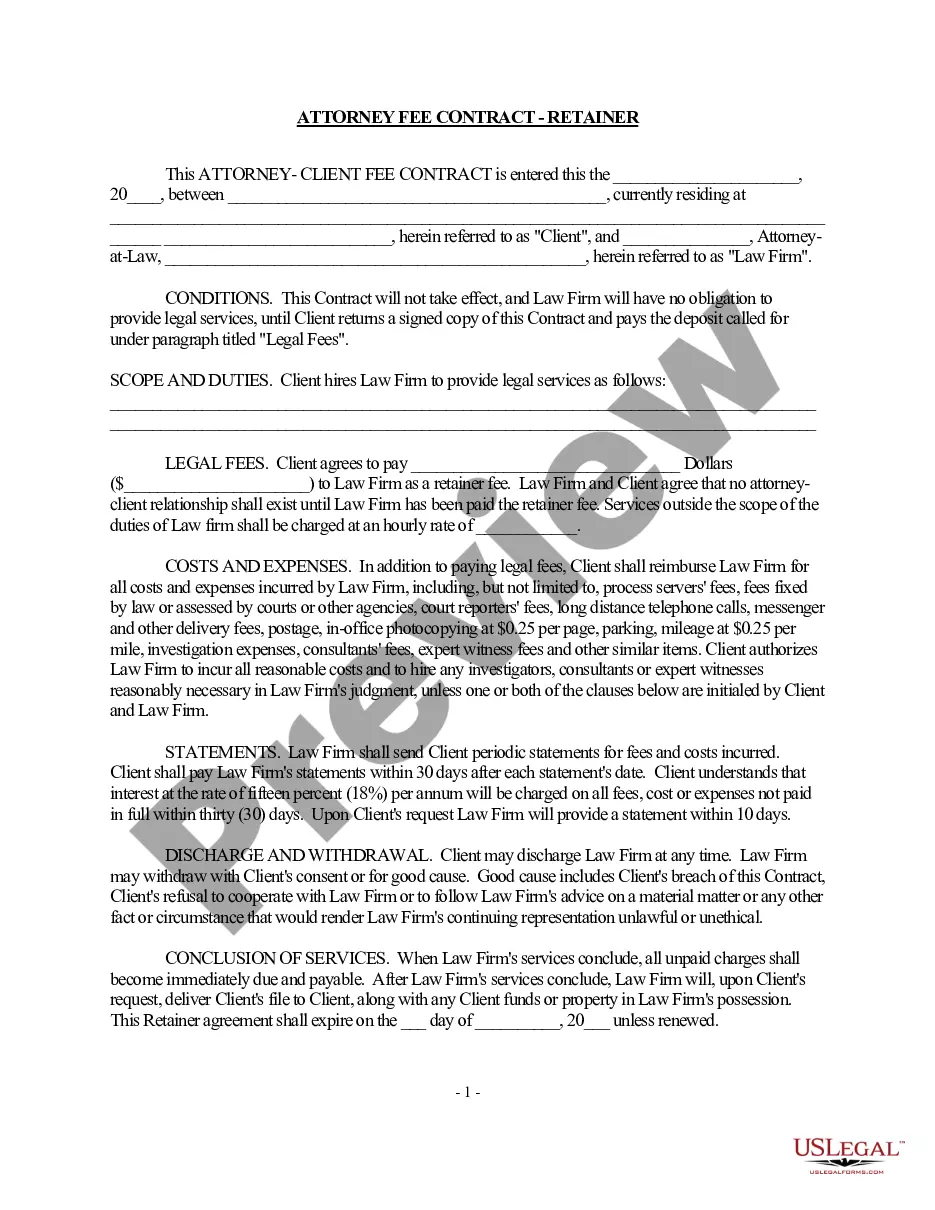
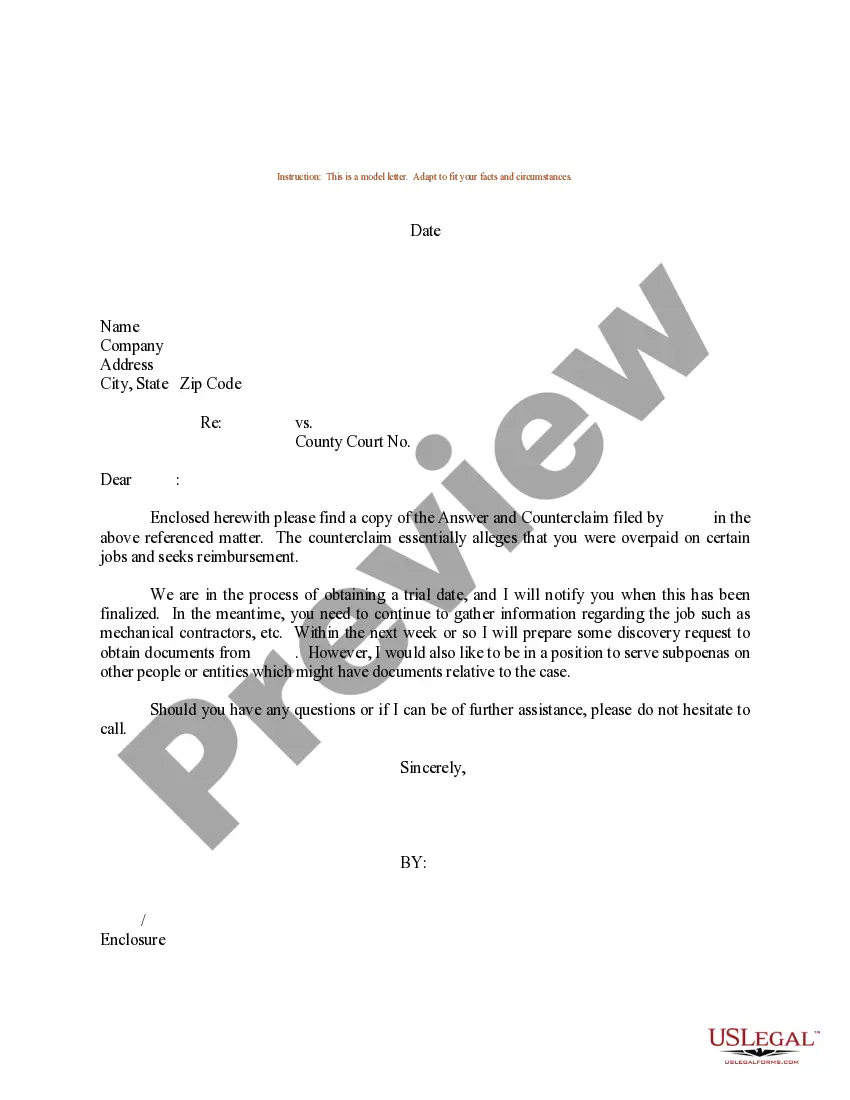
How to fill out Sample Letter For First Interrogatories And First Set Of Request For Production Of Documents?
Finding a reliable source for the most up-to-date and suitable legal templates is a significant part of navigating bureaucracy.
Selecting the correct legal documents requires accuracy and meticulousness, which underscores the importance of sourcing Letter Of Interrogatory With Questions exclusively from reputable providers, such as US Legal Forms. An incorrect template can consume your time and hinder the progress of your matter.
Eliminate the stress associated with your legal paperwork. Explore the vast US Legal Forms collection to discover legal templates, verify their applicability to your case, and download them instantly.
- Utilize the library navigation or search option to locate your sample.
- Examine the form's description to confirm its compatibility with your state's and region's requirements.
- Check the form preview, if available, to ensure it is indeed the document you need.
- Return to the search to find the appropriate template if the Letter Of Interrogatory With Questions does not meet your criteria.
- When you are confident about the form's suitability, proceed to download it.
- If you are a registered user, click Log in to verify your identity and access your chosen forms in My documents.
- If you do not yet have an account, click Buy now to acquire the template.
- Choose the subscription plan that aligns with your needs.
- Continue with the registration process to complete your purchase.
- Finalize your payment by selecting a method (credit card or PayPal).
- Choose the file format for downloading the Letter Of Interrogatory With Questions.
- After obtaining the form on your device, you can modify it using the editor or print it out to complete it manually.
Form popularity
FAQ
Yes, you can object to form interrogatories if you believe they are unclear or irrelevant. When you receive a letter of interrogatory with questions that do not align with the case’s needs, raising objections is a vital step. State your concerns clearly and provide reasons for your objections. Utilizing this approach ensures that the information collected remains relevant and useful for your case.
Yes, you can ask for documents in an interrogatory, but it is important to phrase such requests clearly. When you write a letter of interrogatory with questions, including document requests can help streamline the discovery process. Make sure the requests are reasonable and directly related to the case, as this increases the likelihood of compliance. This approach also assists in gathering critical evidence needed for your argument.
A letter of interrogatory is a formal document that you send to the opposing party in a legal case, requesting specific information or clarification about various aspects of the case. Essentially, it contains questions designed to gather facts that help in litigation. By using a letter of interrogatory with questions, you can secure crucial insights without the need for court appearances. This can be a valuable tool in preparing your legal strategy.
Yes, you can absolutely request documents in interrogatories. When crafting a letter of interrogatory with questions, you may include requests for relevant documents that support your case. This can help clarify issues and provide necessary evidence. Remember to be specific about the documents you seek, as this will help ensure a thorough response.
The main purpose of a letter of interrogatory with questions is to gather information from the opposing party in a legal case. These written questions help clarify the facts and establish a basis for your claims or defenses. Ultimately, interrogatories serve as a vital tool for discovery, which aids in preparing both parties for trial. Utilizing US Legal Forms can streamline this process, providing structured formats for your interrogatories and ensuring compliance with legal standards.
If someone doesn't respond to the letter of interrogatory with questions, it can lead to complications in your case. Typically, the court may impose penalties or require the unresponsive party to provide answers under court order. As a result, using platforms like US Legal Forms can help ensure that your letter is properly drafted, making it more likely to elicit the necessary responses. Don't leave your case at risk; proper documentation can strengthen your position.
If you face an interrogatory that stumps you, respond by honestly communicating your inability to provide an answer. You can articulate that your lack of knowledge stems from not having relevant information or records. Maintaining this transparency upholds the integrity of the process. Using a letter of interrogatory with questions can help organize your thoughts and present your response clearly.
When you do not know the answer to a question, the best approach is to acknowledge your uncertainty. Clearly state that you lack the necessary information and explain any steps you took to find the answer. It is crucial to maintain honesty in your responses to avoid any implications of withholding information. A letter of interrogatory with questions serves as a useful format for conveying your response effectively.
Filling out an interrogatories form requires careful attention to detail. Begin by reading each question thoroughly and providing concise answers where applicable. If a question does not apply to you, ensure you indicate your reasoning. A letter of interrogatory with questions can guide you through the process, offering clarity on how to respond appropriately.
If you encounter an interrogatory that you cannot answer, it is advisable to state your lack of knowledge clearly in your response. Mention that you have made a reasonable effort to provide the information but do not possess the answer. This approach is essential in maintaining transparency in legal matters. A well-prepared letter of interrogatory with questions can help you structure your response effectively.