Severance Employee Employer Withdraw
Description
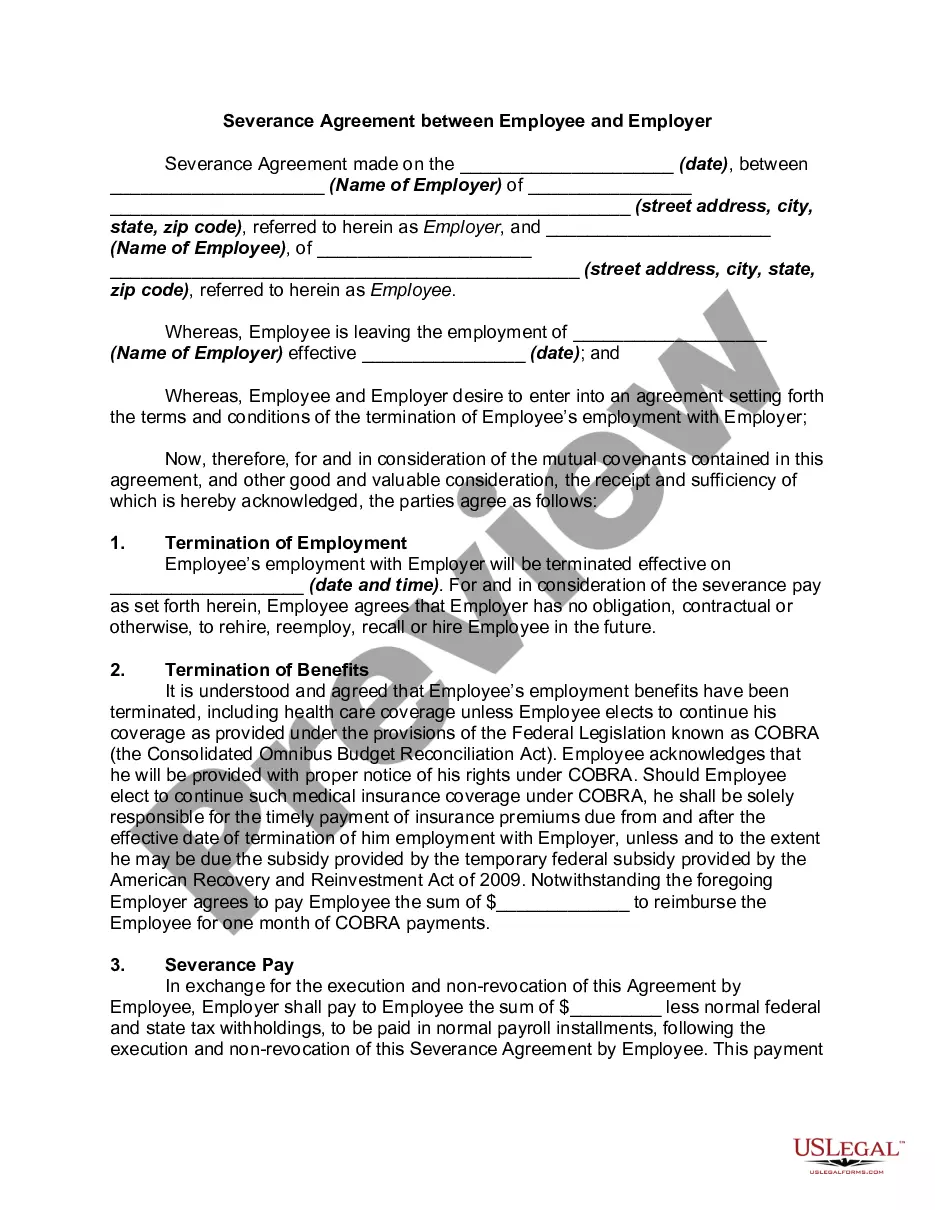
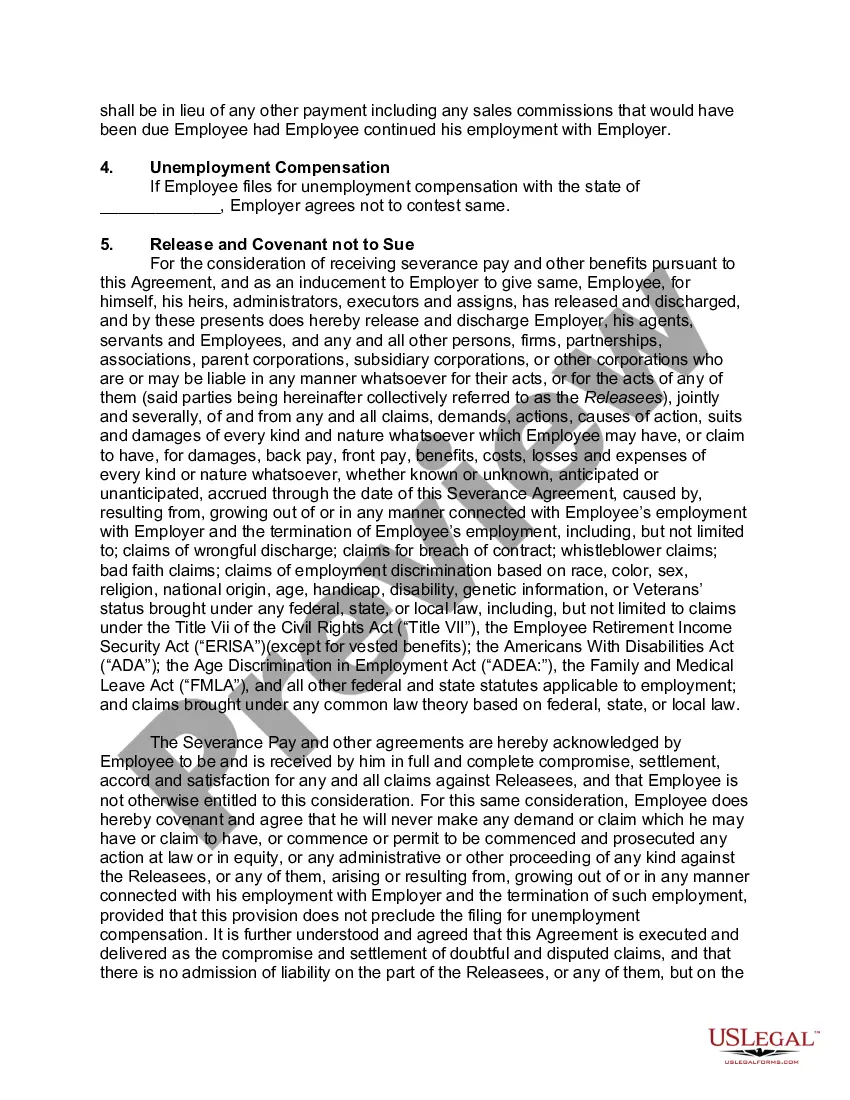
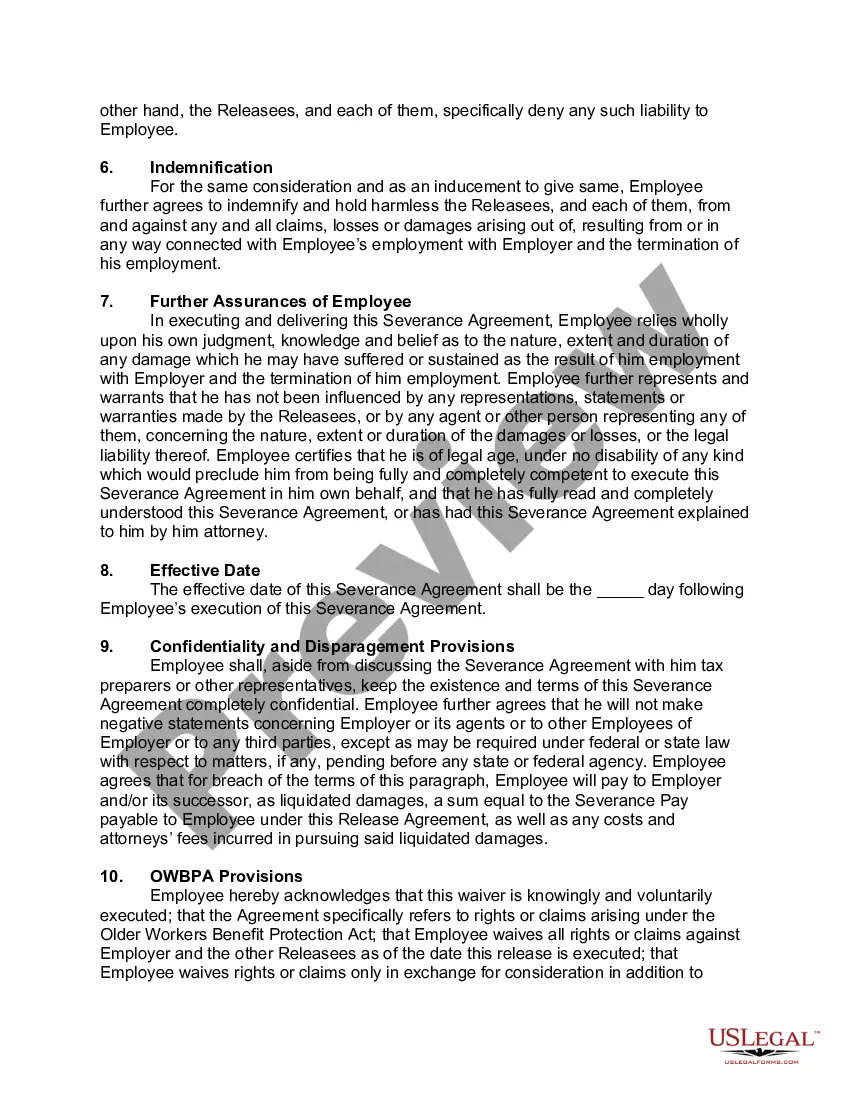
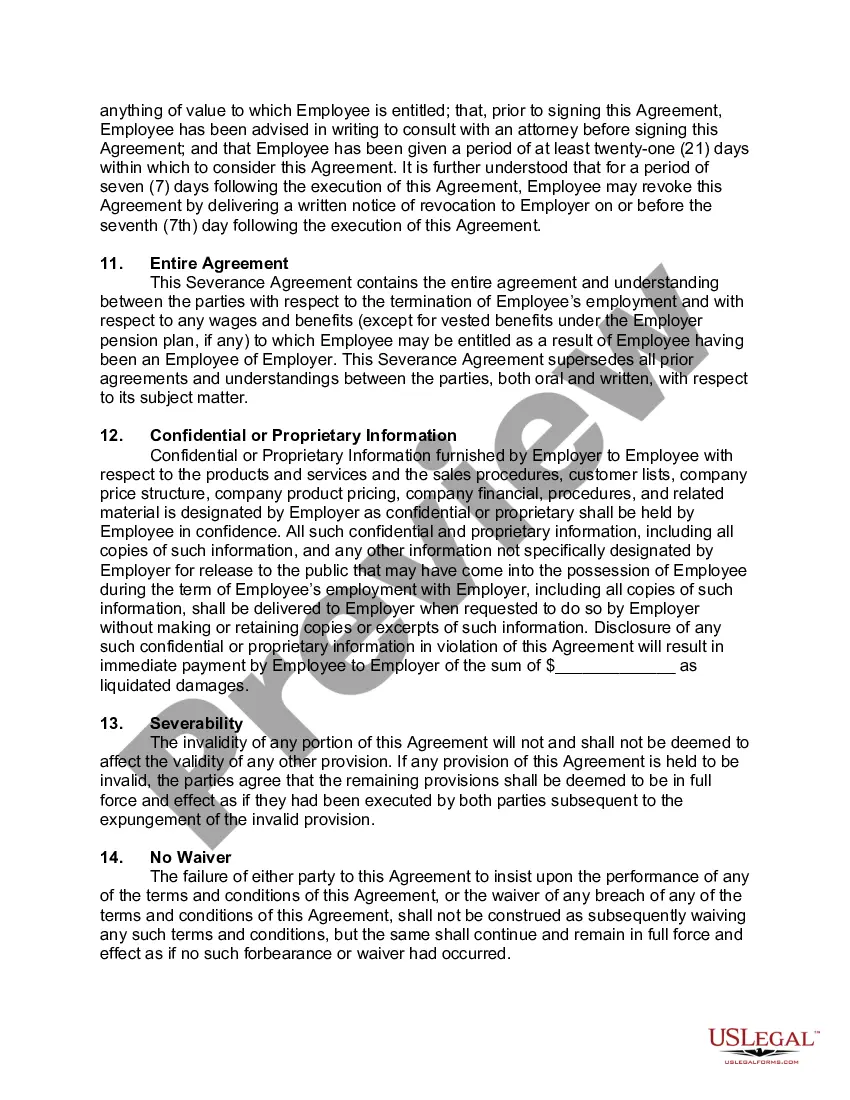
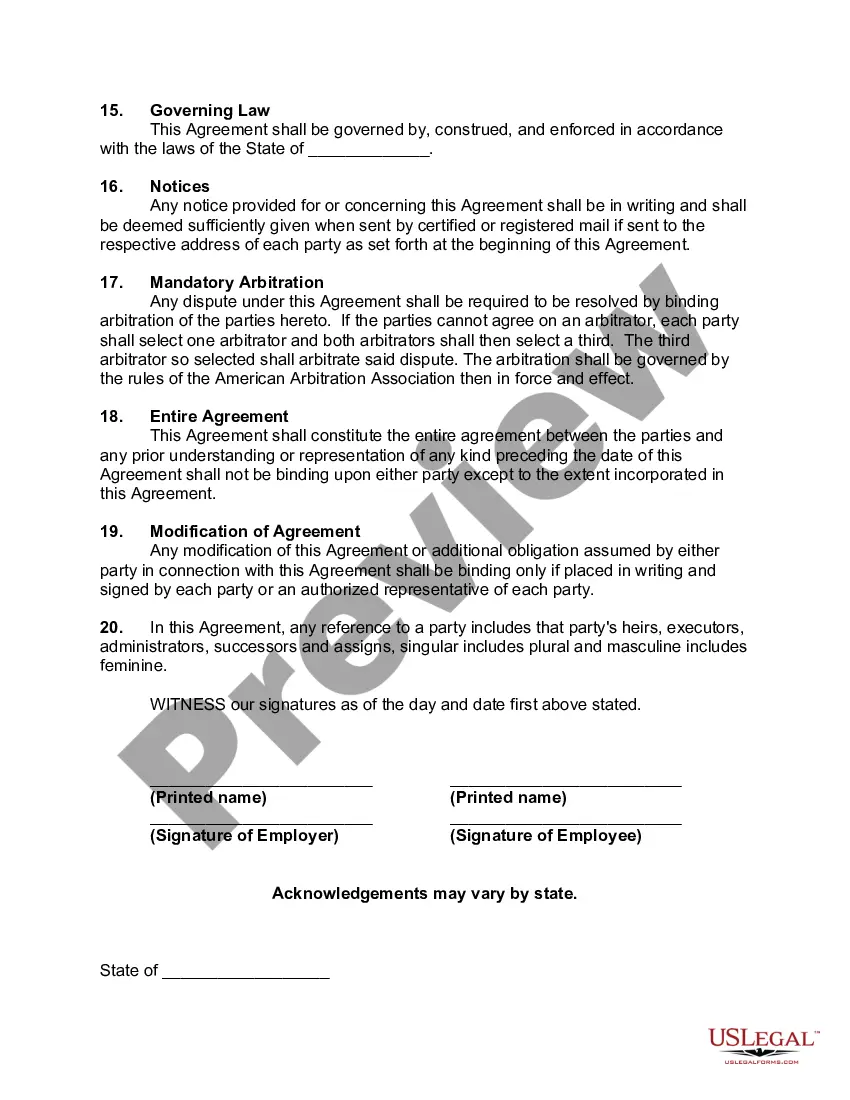
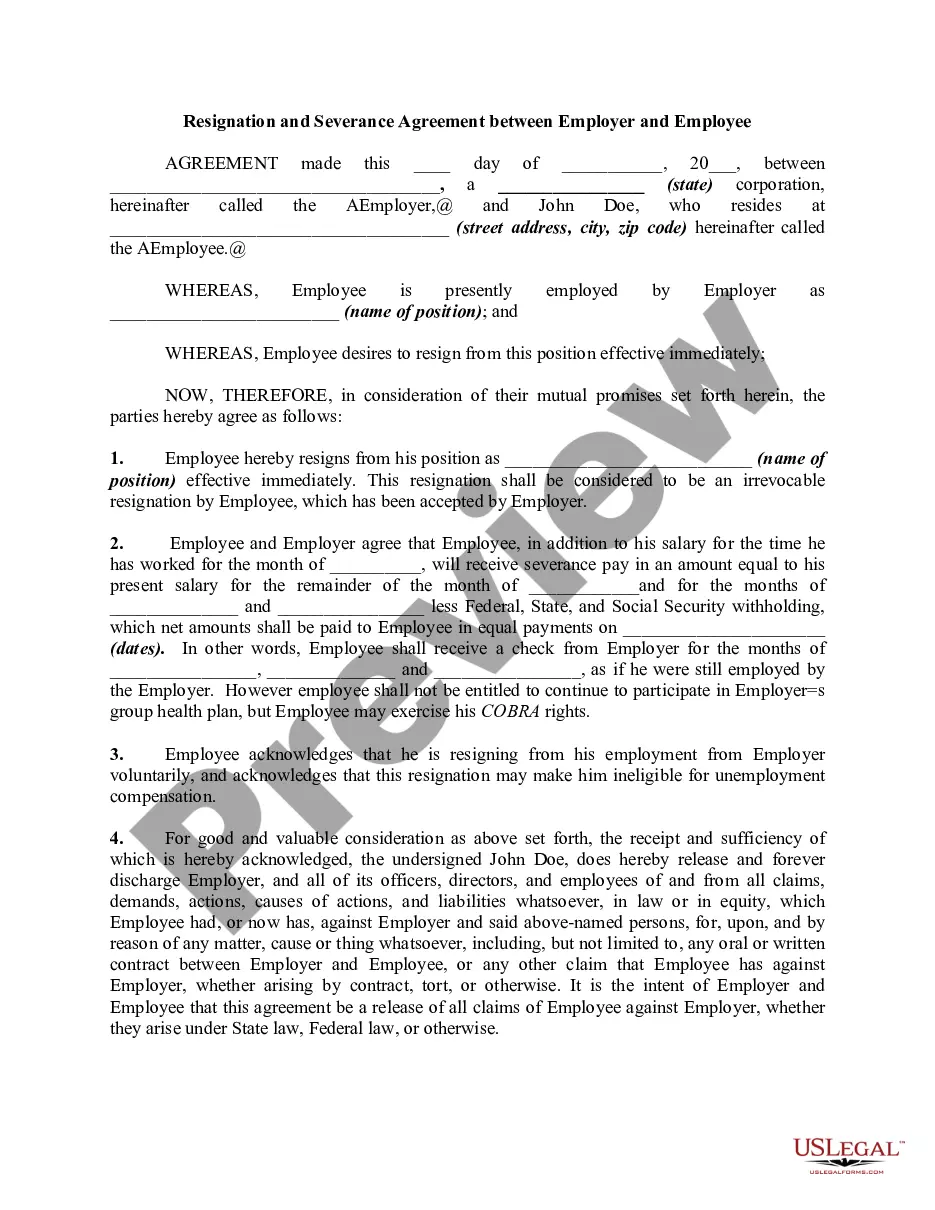
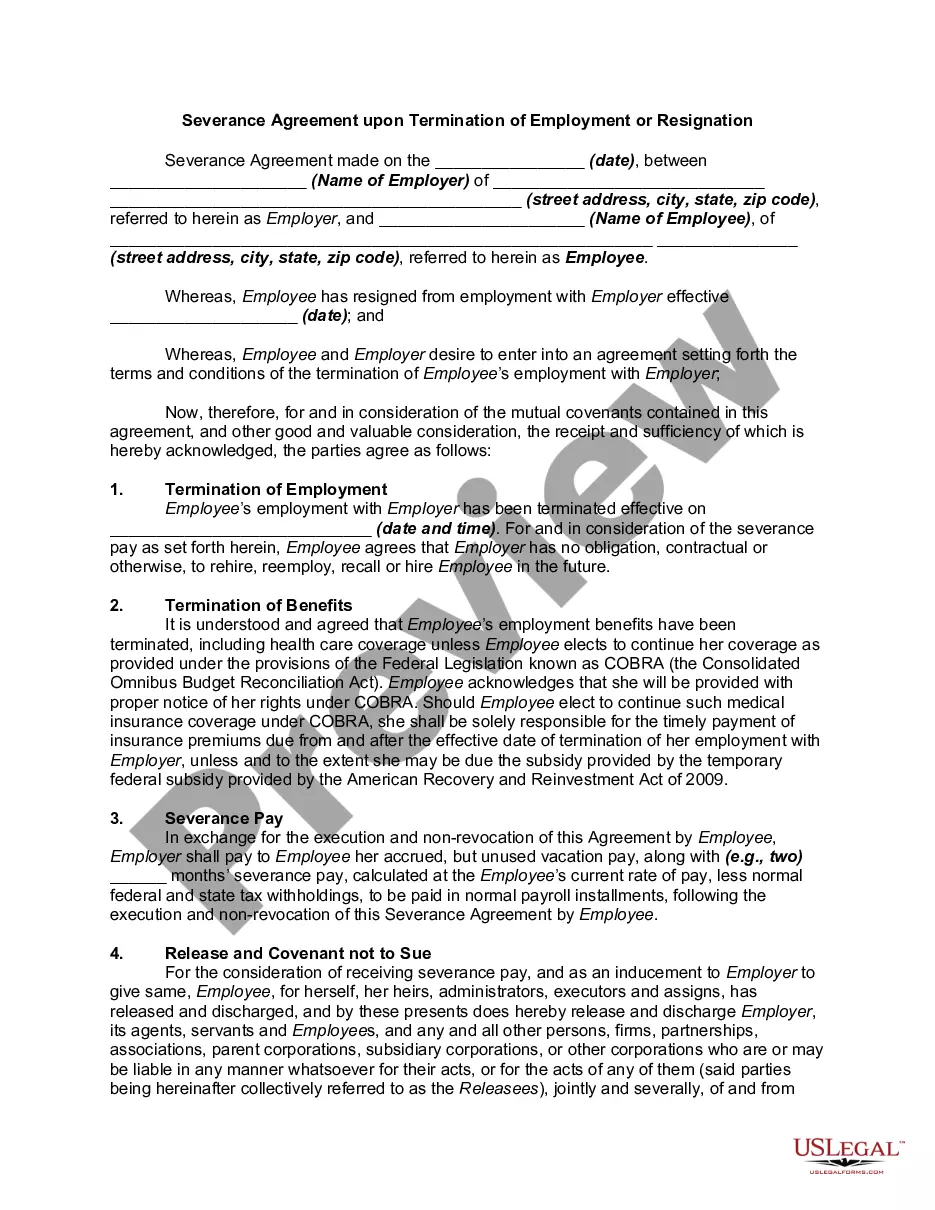
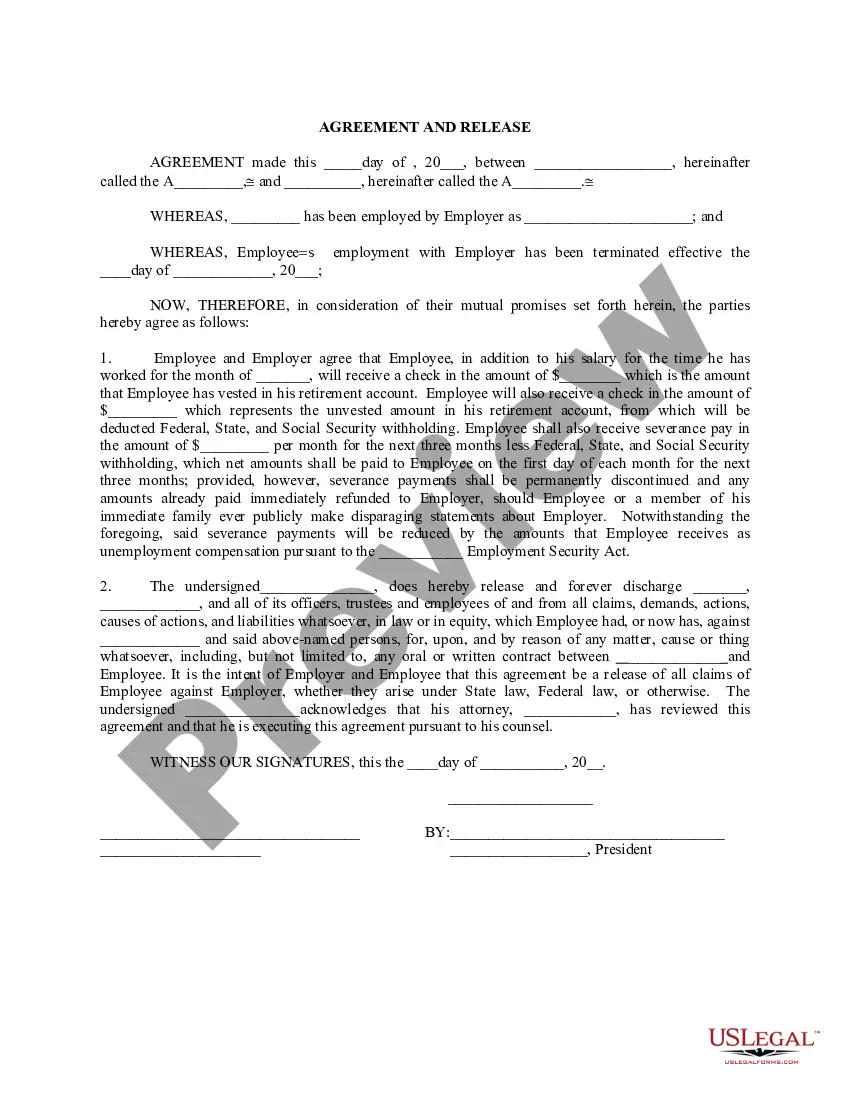
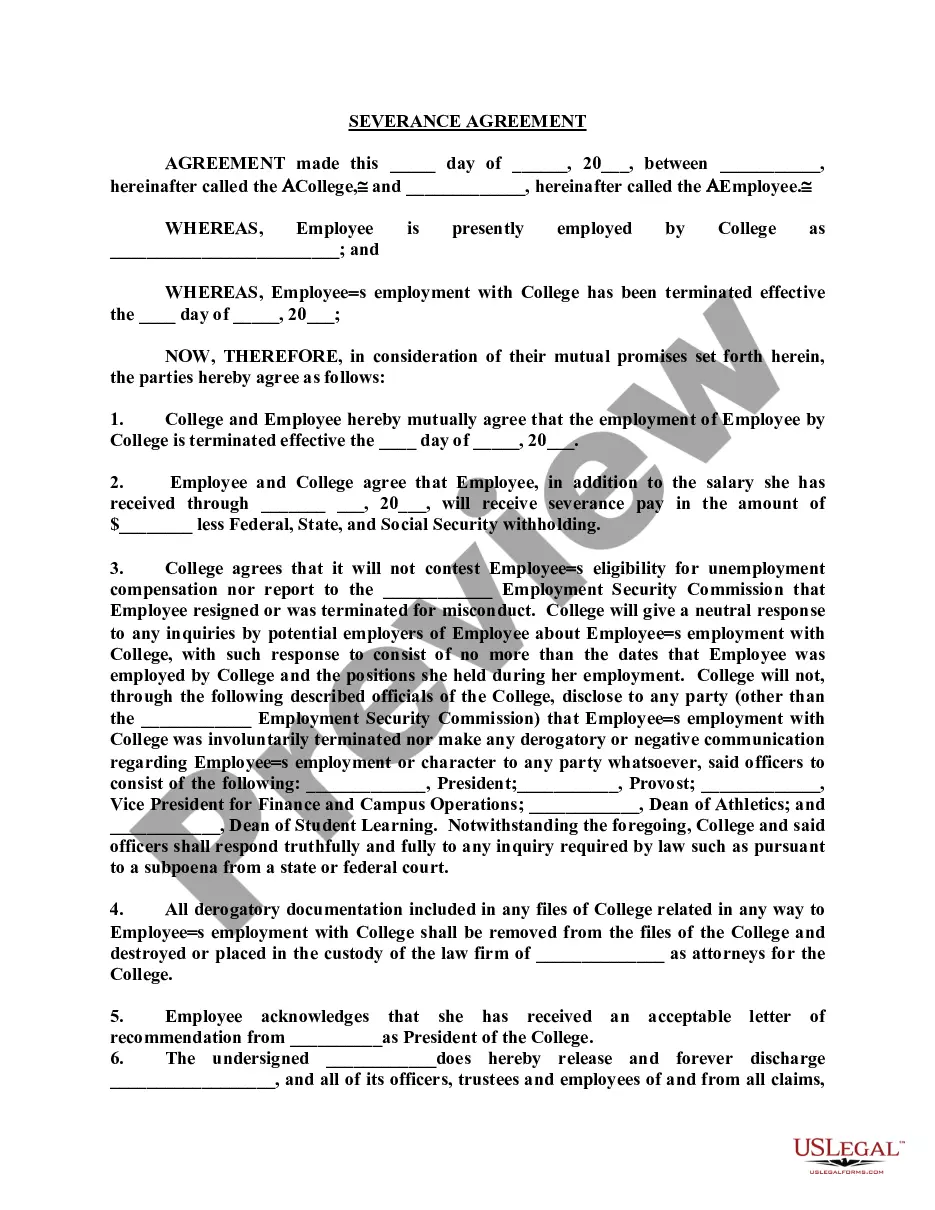
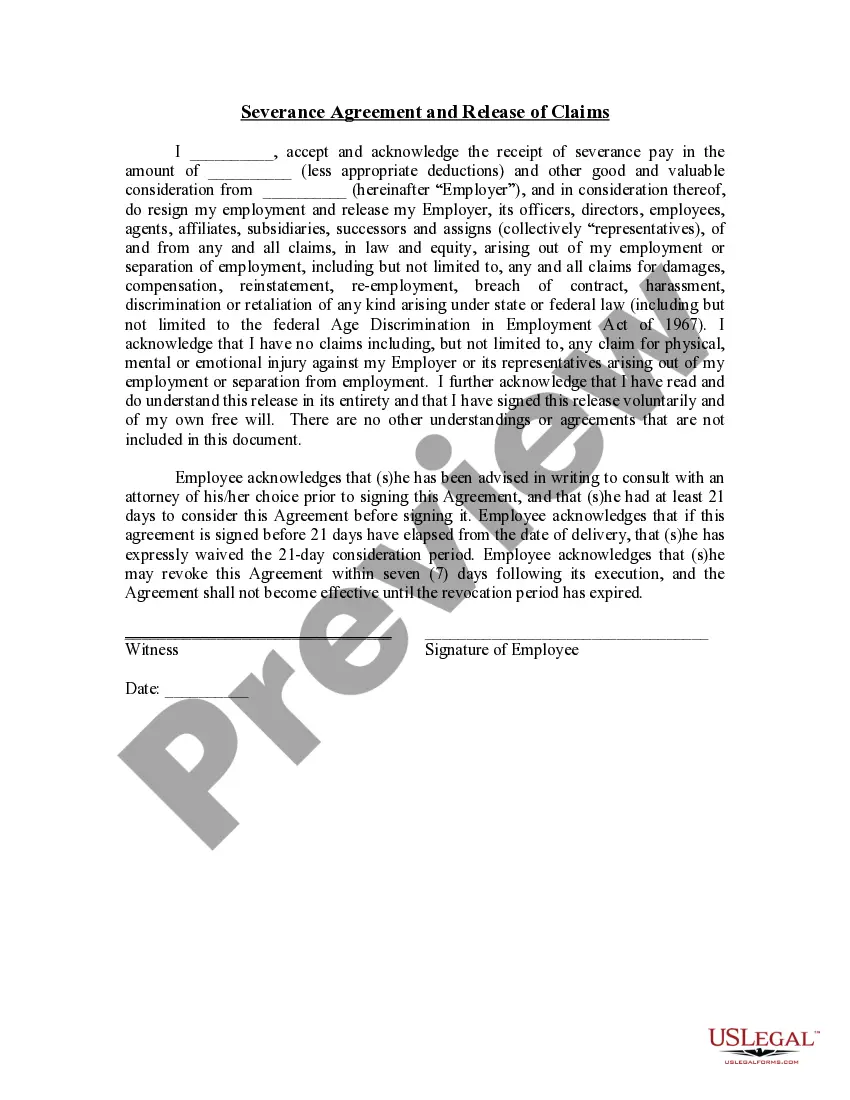
Get your form ready online
Our built-in tools help you complete, sign, share, and store your documents in one place.
Make edits, fill in missing information, and update formatting in US Legal Forms—just like you would in MS Word.
Download a copy, print it, send it by email, or mail it via USPS—whatever works best for your next step.
Sign and collect signatures with our SignNow integration. Send to multiple recipients, set reminders, and more. Go Premium to unlock E-Sign.
If this form requires notarization, complete it online through a secure video call—no need to meet a notary in person or wait for an appointment.
We protect your documents and personal data by following strict security and privacy standards.

Make edits, fill in missing information, and update formatting in US Legal Forms—just like you would in MS Word.

Download a copy, print it, send it by email, or mail it via USPS—whatever works best for your next step.

Sign and collect signatures with our SignNow integration. Send to multiple recipients, set reminders, and more. Go Premium to unlock E-Sign.

If this form requires notarization, complete it online through a secure video call—no need to meet a notary in person or wait for an appointment.

We protect your documents and personal data by following strict security and privacy standards.
Looking for another form?

How to fill out Severance Agreement Between Employee And Employer?
Managing legal paperwork and processes can be a lengthy addition to your schedule. Severance Employee Employer Withdraw and analogous forms frequently require searching for them and comprehending how to complete them correctly.
For this reason, whether you are addressing financial, legal, or personal issues, having a comprehensive and convenient web directory of forms readily available will be immensely beneficial.
US Legal Forms is the premier online platform for legal templates, featuring over 85,000 state-specific forms and a variety of resources to help you complete your paperwork effortlessly.
Explore the directory of relevant documents accessible to you with just a click.
Then, follow the outlined steps to complete your form: Make sure you have located the correct form using the Review feature and reviewing the form description. Click Buy Now when ready, and choose the subscription plan that suits your requirements. Select Download then complete, sign, and print the form. US Legal Forms has 25 years of experience assisting individuals with their legal paperwork. Locate the form you need today and simplify any process effortlessly.
- US Legal Forms provides state- and county-specific forms available anytime for download.
- Protect your document management processes by utilizing a reliable service that allows you to create any form in minutes without any additional or unexpected fees.
- Simply Log In to your account, find Severance Employee Employer Withdraw and acquire it instantly within the My documents section.
- You can also access previously stored forms.
- Is this your first occasion using US Legal Forms? Register and create a free account in just a few minutes to access the form catalog and Severance Employee Employer Withdraw.
Form popularity
FAQ
Common Violations of the Fair Debt Collection Practices Act (... Harass, oppress, or abuse you. Continue collection efforts after you write them to stop. Contact you after representation by an attorney. Threaten IRS reporting or tax consequences, if untrue. Threaten a lawsuit when none is intended.
NJ laws limit the amount of time a creditor can collect on debt to six years. If a default judgment is entered against you, the time allowed to collect increases to 20 years, or longer if renewed. The writ of execution allows the judgment to be enforced, and creditors gain access to more ways to collect from you.
The Fair Debt Collection Practices Act prohibits debt collectors from using abusive, unfair or deceptive practices when attempting to collect a debt. ? legal action will be taken against you, if doing so would be illegal or if they don't intend to take the action.
The amended FDCPA allows debt collectors to use newer technologies, such as email and text messages, to communicate with consumers regarding their debts, subject to certain limitations, which protect consumers against harassment or abuse.
Debt collectors cannot harass or abuse you. They cannot swear, threaten to illegally harm you or your property, threaten you with illegal actions, or falsely threaten you with actions they do not intend to take.
The FDCPA applies only to the collection of debt incurred by a consumer primarily for personal, family, or household purposes. It does not apply to the collection of corporate debt or to debt owed for business or agricultural purposes.
If you don't dispute the debt within 30 days, the debt is assumed valid. That means the debt collector can continue to contact you. You can still send a dispute after 30 days. But at that point, the debt is considered valid, and a debt collector is still legally allowed to continue contacting you.
InCharge provides free, nonprofit credit counseling and debt management programs to New Jersey residents. If you live in New Jersey and need help paying off your credit card debt, InCharge can help you.