Trespassing Law
Description
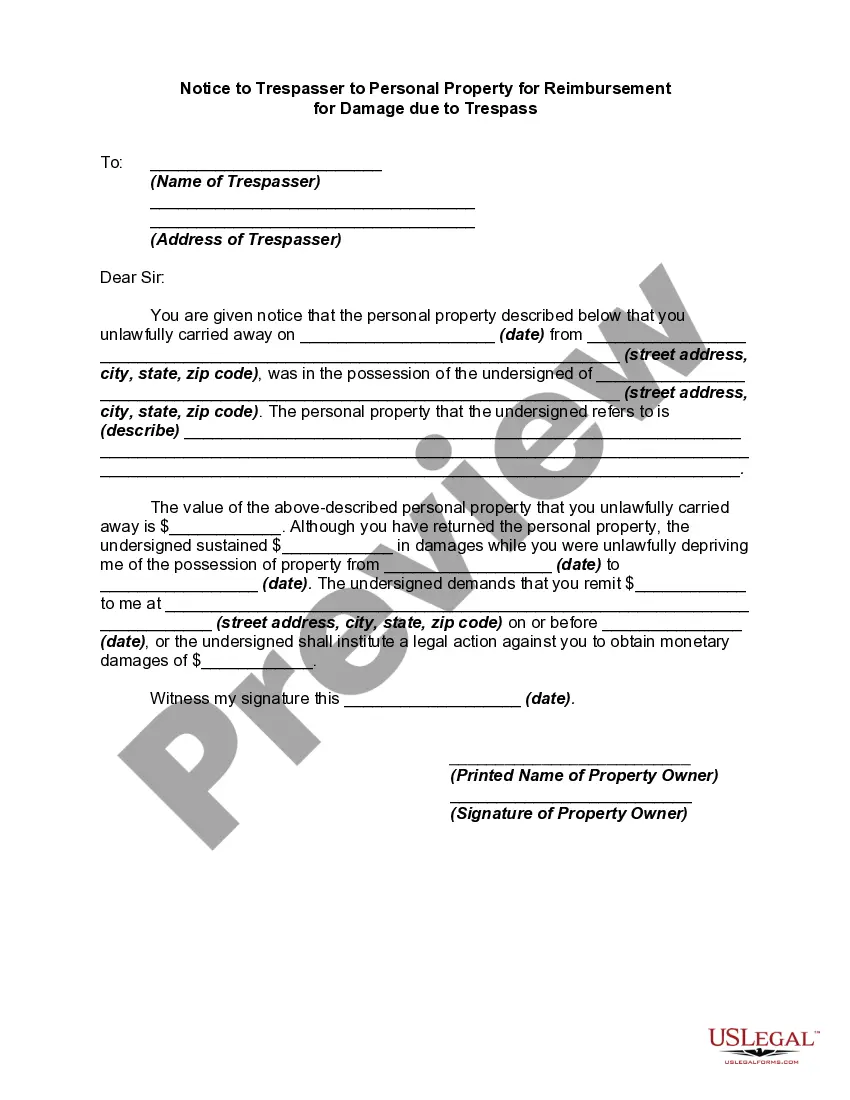
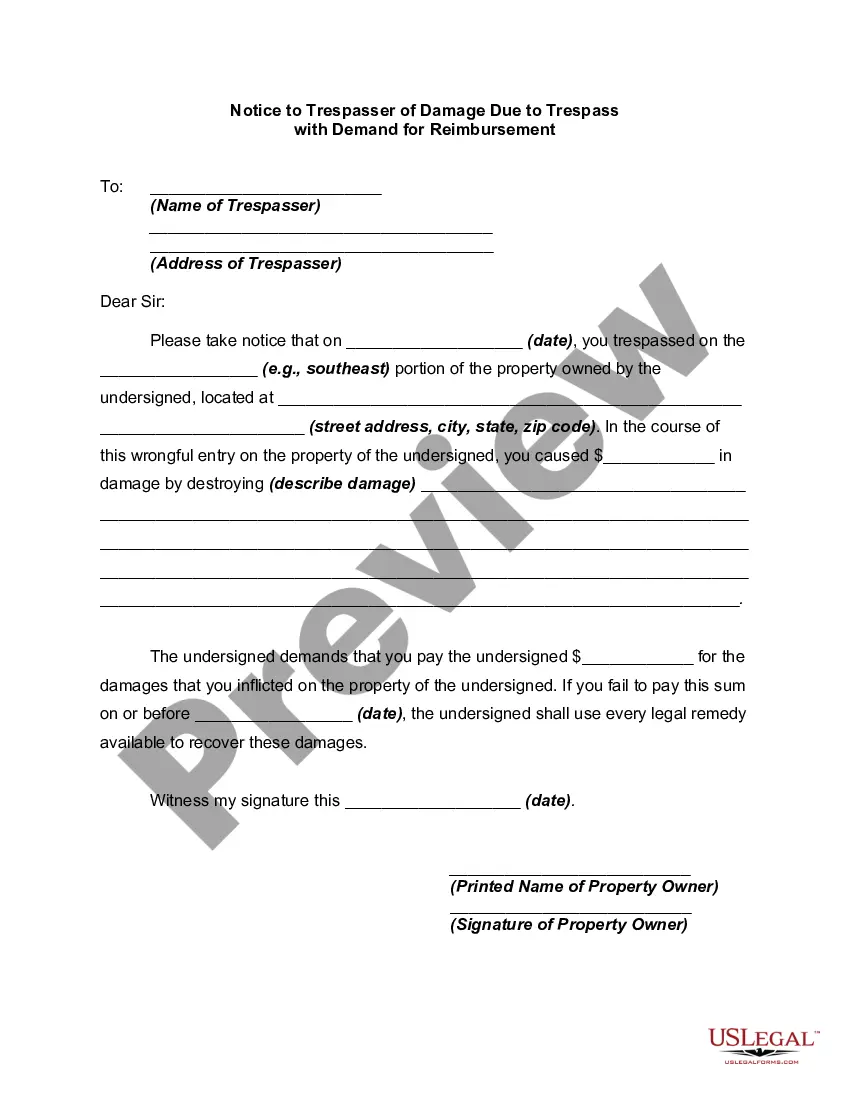
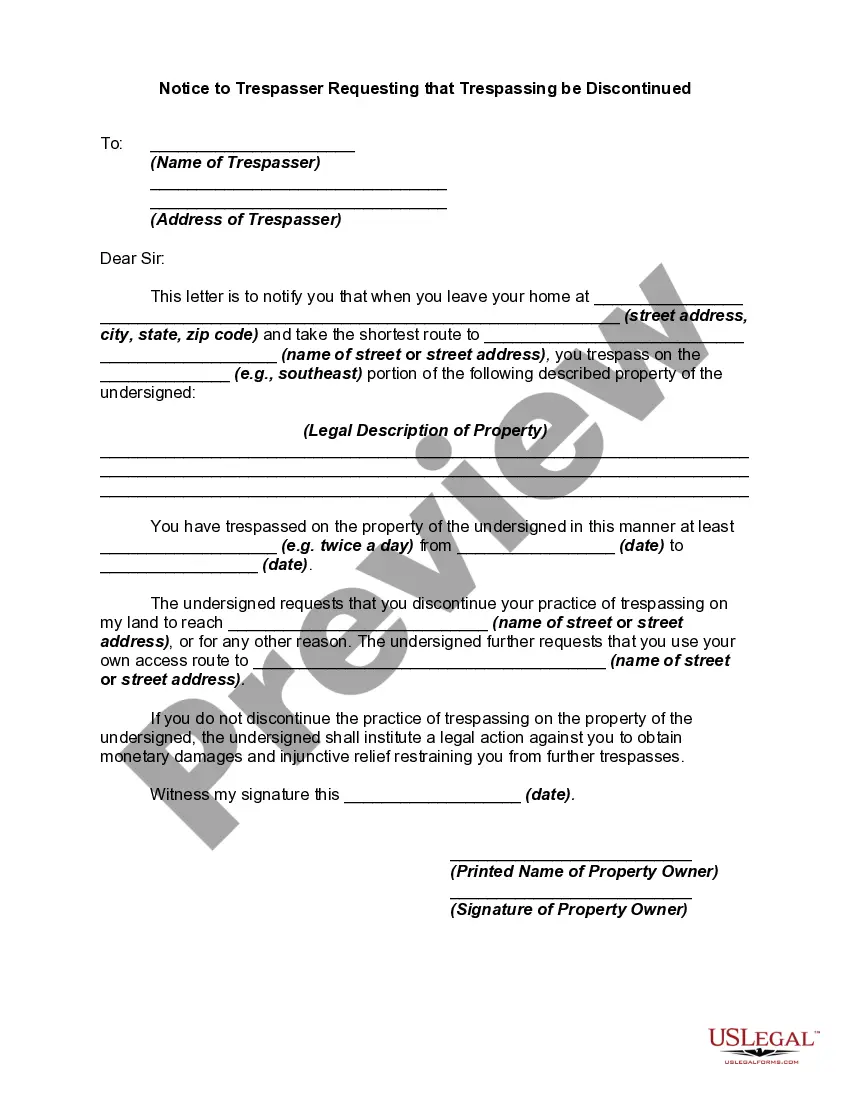
Get your form ready online
Our built-in tools help you complete, sign, share, and store your documents in one place.
Make edits, fill in missing information, and update formatting in US Legal Forms—just like you would in MS Word.
Download a copy, print it, send it by email, or mail it via USPS—whatever works best for your next step.
Sign and collect signatures with our SignNow integration. Send to multiple recipients, set reminders, and more. Go Premium to unlock E-Sign.
If this form requires notarization, complete it online through a secure video call—no need to meet a notary in person or wait for an appointment.
We protect your documents and personal data by following strict security and privacy standards.

Make edits, fill in missing information, and update formatting in US Legal Forms—just like you would in MS Word.

Download a copy, print it, send it by email, or mail it via USPS—whatever works best for your next step.

Sign and collect signatures with our SignNow integration. Send to multiple recipients, set reminders, and more. Go Premium to unlock E-Sign.

If this form requires notarization, complete it online through a secure video call—no need to meet a notary in person or wait for an appointment.

We protect your documents and personal data by following strict security and privacy standards.
Looking for another form?


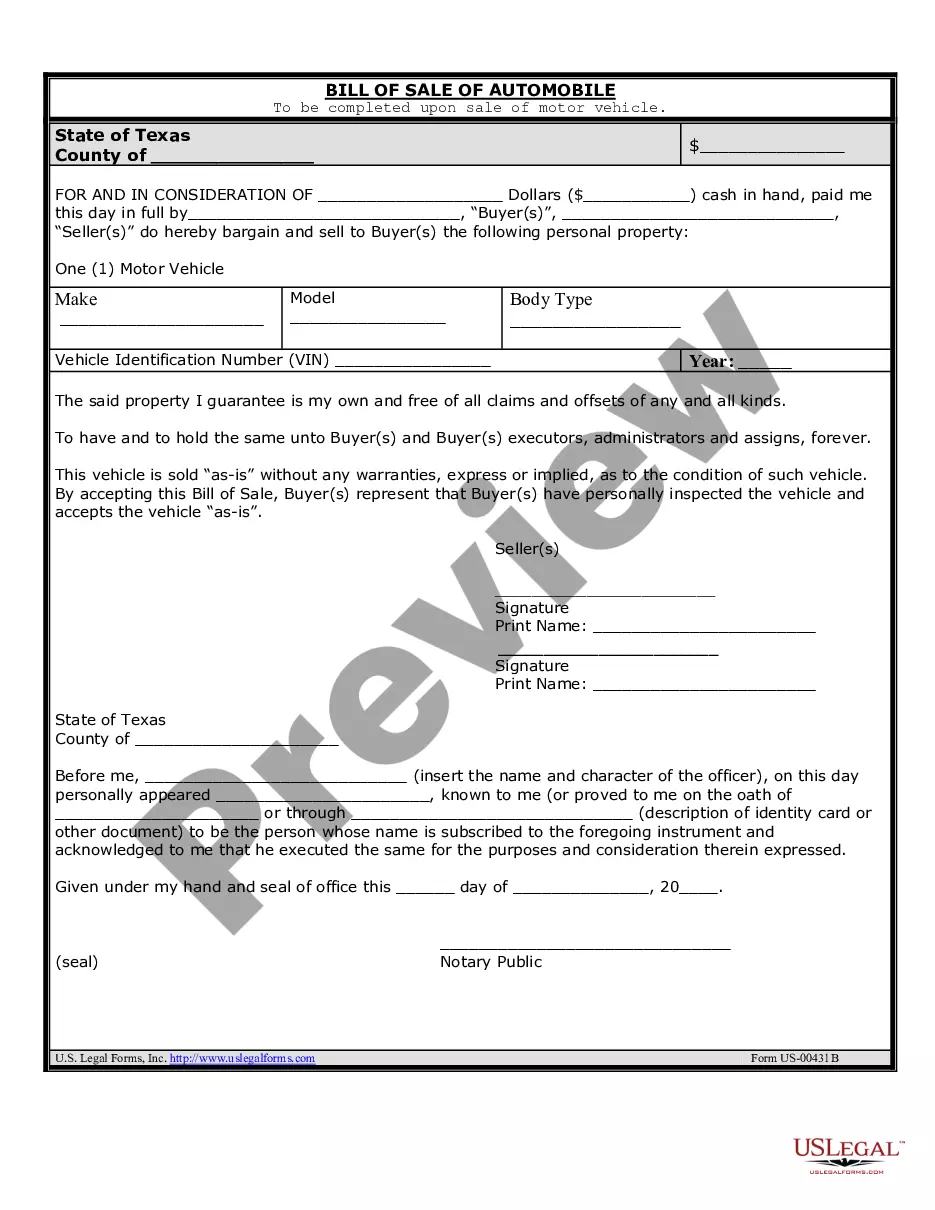



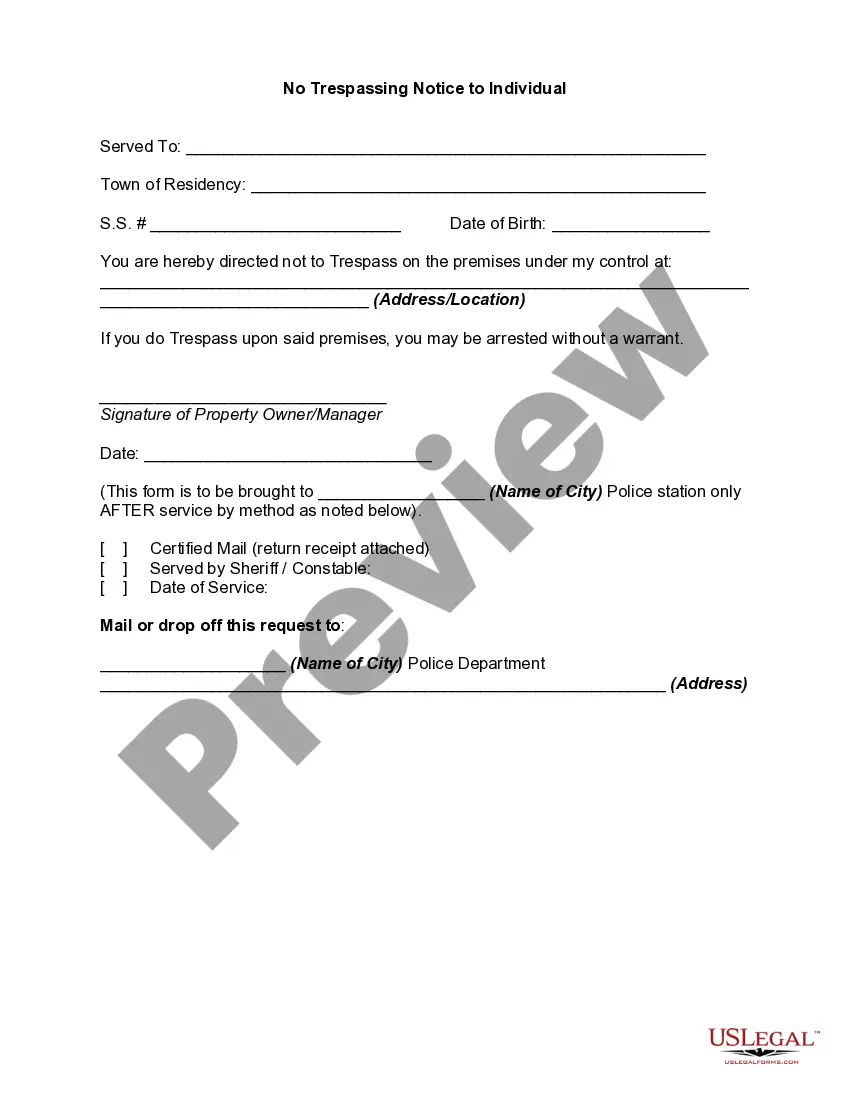
How to fill out No Trespassing Notice To Individual?
- If you are already a member, log in to your account and select the necessary form template. Ensure your subscription remains active, and renew if necessary.
- Preview the available forms to confirm you’ve selected the correct one that aligns with your requirements. Check for any specific jurisdictional needs.
- If you need a different document, utilize the Search feature to locate the appropriate form that fits your criteria.
- Purchase the document by clicking the Buy Now button and selecting your preferred subscription plan. You'll be required to create an account to access our extensive library.
- Complete your purchase by entering your payment details either via credit card or PayPal.
- Download your chosen form template directly onto your device, and remember you can always access it later through the My Forms section of your profile.
With US Legal Forms, accessing over 85,000 customizable legal forms ensures you find exactly what you need. Our service not only provides a robust collection of forms but also grants users access to premium experts for assistance.
In conclusion, understanding trespassing law and obtaining the necessary documents is simpler with US Legal Forms. Start your legal document journey today and empower yourself with our extensive resources!
Form popularity
FAQ
Deciding whether to press charges for trespassing involves several factors under trespassing law. First, consider the severity of the incident and the impact it had on you or your property. If the trespass was damaging or threatening, pursuing charges may be warranted. Additionally, using resources like US Legal Forms can help you navigate the legal process and understand your options, making your decision clearer.
Yes, you can pursue a legal order to keep someone off your property. This typically involves filing for a restraining order or an injunction, depending on the circumstances. It’s important to gather evidence of unwanted behavior to support your case. Platforms like uslegalforms can provide valuable resources and guidance in navigating this legal process.
Yes, you have the right to tell someone to leave your property. This falls under your rights as a property owner, protected by trespassing law. Ensure that you communicate clearly and respectfully. If they refuse to leave, document the incident and consider seeking legal advice to understand your options.
To legally keep someone off your property, first inform them that they are not welcome. If the person continues to enter, you may need to issue a formal notice to vacate, which is often required under trespassing law. If the unwanted visits persist, it may be necessary to pursue a restraining order or involve law enforcement to ensure your right to privacy is respected.
In Texas, trespassing law defines trespassing as entering or remaining on property without consent. This includes ignoring 'no trespassing' signs or the property owner's request to leave. It is important to note that overt actions, such as climbing over fences or breaking locks, can lead to criminal charges. Understanding these nuances can help you protect your property rights.
To keep unwanted people off your property, clear signage indicating private property can be very effective. Ensure your boundaries are marked, as this reinforces your rights under trespassing law. Consider establishing a physical barrier, like a fence, which can deter trespassers. Additionally, using surveillance can help you monitor activity and discourage potential intruders.
Trespassing generally falls into two categories: physical trespass and constructive trespass. Physical trespass occurs when someone enters your property without permission. Constructive trespass involves a situation where someone interferes with your rightful possession of the property, even if they do not physically enter.
If someone refuses to leave your property, it’s crucial to remain calm. Clear communication is key; politely ask the person to leave and explain they are trespassing under trespassing law. If they still refuse, documentation of the incident can be helpful for legal purposes. In some cases, you may need to contact local authorities to assist in safely removing the individual.
The duration of a trespass warning can depend on the specific state laws and the circumstances surrounding the warning. Generally, a trespass warning remains effective until the owner revokes it or until a specified time frame has elapsed. It's wise to verify the local trespassing law to ensure compliance. Always keep documentation of the warning for future reference.
The punishment for trespassing in Maryland can include fines, community service, or even jail time based on the case severity. A first-time offender may face lighter sanctions, while repeat offenders can encounter stricter consequences. Knowing the specifics of trespassing law in Maryland can help you avoid legal issues. Resources like USLegalForms can provide guidance on how to handle trespassing warnings properly.