Trespass On Own Property
Description
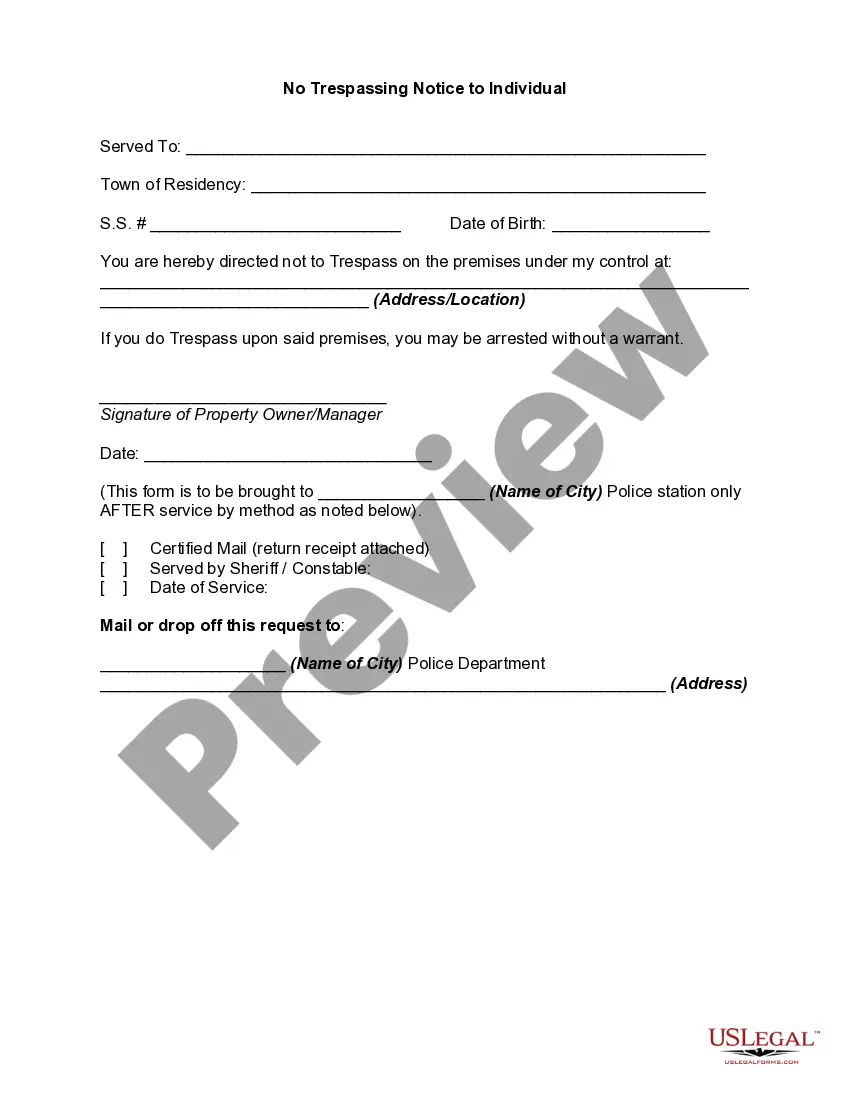
Get your form ready online
Our built-in tools help you complete, sign, share, and store your documents in one place.
Make edits, fill in missing information, and update formatting in US Legal Forms—just like you would in MS Word.
Download a copy, print it, send it by email, or mail it via USPS—whatever works best for your next step.
Sign and collect signatures with our SignNow integration. Send to multiple recipients, set reminders, and more. Go Premium to unlock E-Sign.
If this form requires notarization, complete it online through a secure video call—no need to meet a notary in person or wait for an appointment.
We protect your documents and personal data by following strict security and privacy standards.

Make edits, fill in missing information, and update formatting in US Legal Forms—just like you would in MS Word.

Download a copy, print it, send it by email, or mail it via USPS—whatever works best for your next step.

Sign and collect signatures with our SignNow integration. Send to multiple recipients, set reminders, and more. Go Premium to unlock E-Sign.

If this form requires notarization, complete it online through a secure video call—no need to meet a notary in person or wait for an appointment.

We protect your documents and personal data by following strict security and privacy standards.
Looking for another form?
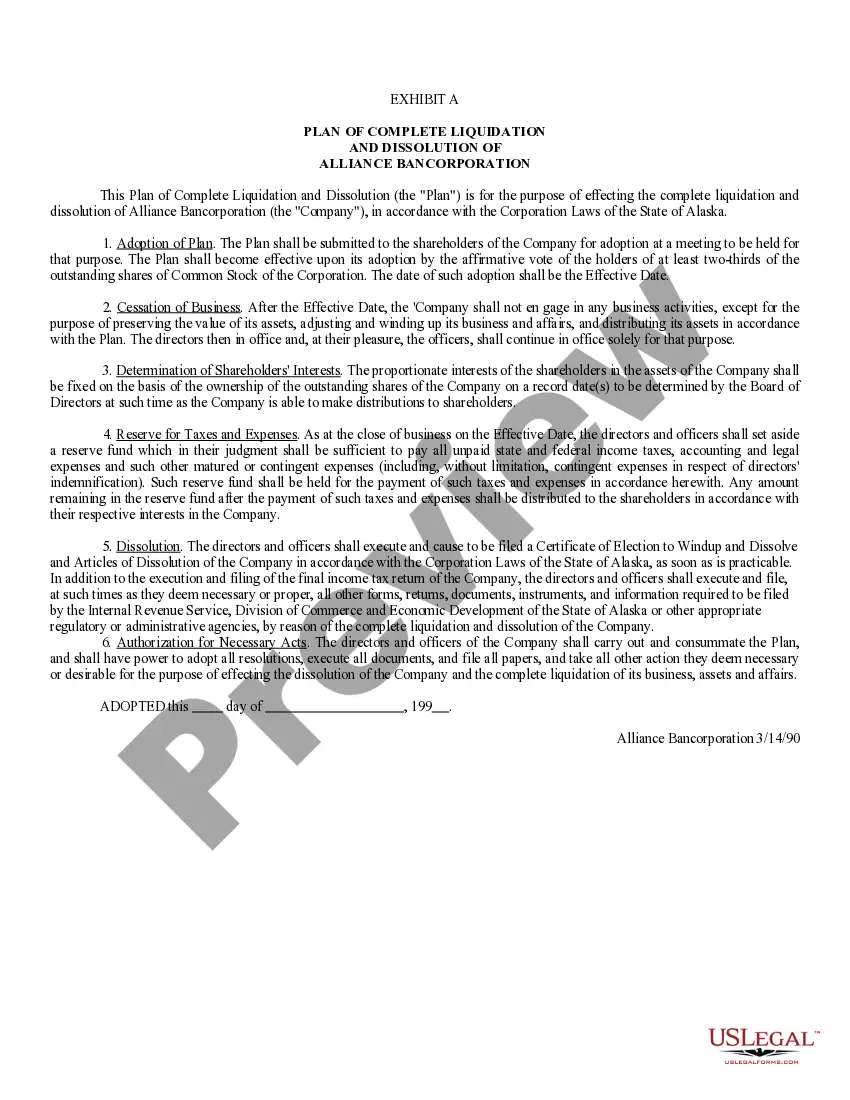

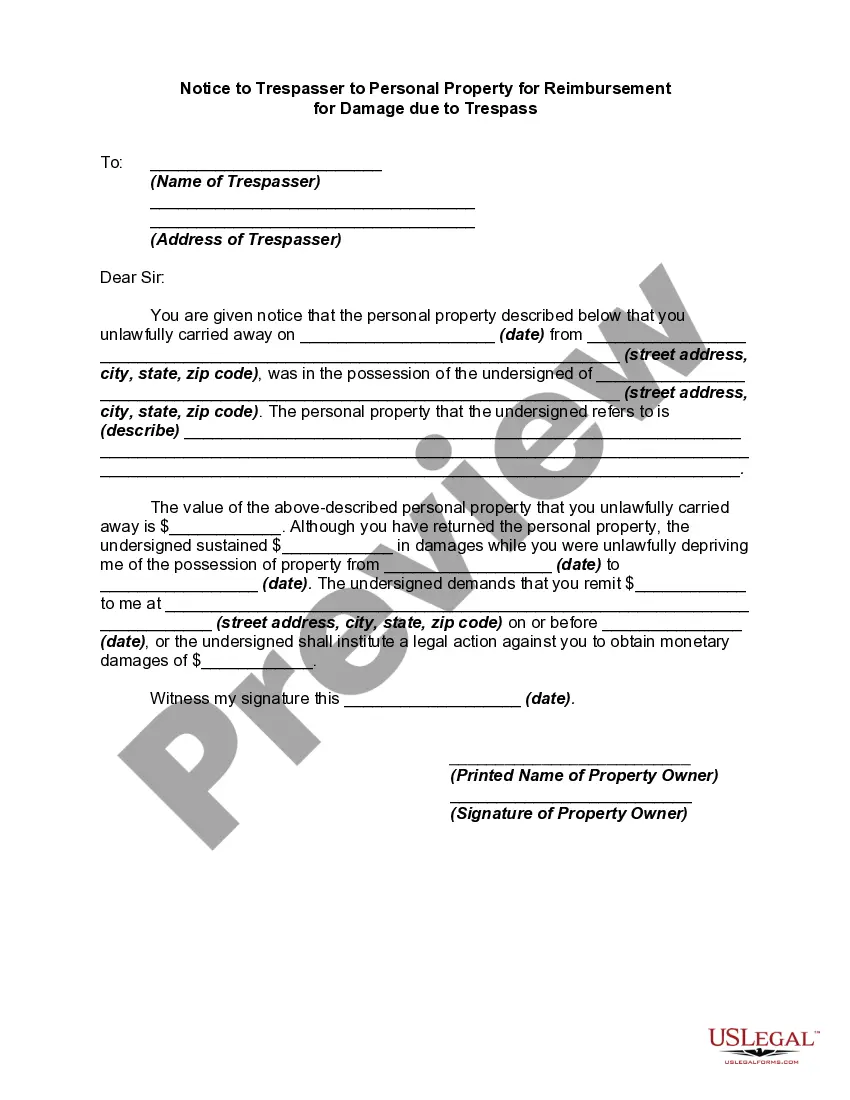
How to fill out Notice To Trespasser To Personal Property For Reimbursement For Damage Due To Trespass?
- Begin by logging into your account at US Legal Forms if you are an existing user. Ensure your subscription is active to access your desired form.
- If you're new to the service, review the available templates in the preview mode. Confirm that the selected form aligns with your needs and local legal requirements.
- Conduct a search using the tab if you don't find the right template initially. This way, you can locate the perfect form suited to your situation.
- Once you find your desired document, click on the 'Buy Now' button. Choose a subscription plan that fits your needs and create an account for library access.
- Finalize your purchase by providing your payment details, either through credit card or PayPal.
- Download your completed form from the platform. It will be saved under 'My Forms' in your account for future reference.
With US Legal Forms, you gain access to an extensive library of over 85,000 editable legal templates. This service not only provides robust document options but also allows users to consult premium experts for assistance.
Ensure your legal documents are accurate and compliant by utilizing US Legal Forms today. Start your journey to legal clarity now!
Form popularity
FAQ
Yes, you can take steps to make someone leave your property, especially if they are trespassing. Trespassing on your own property is a violation of your rights as a homeowner. It's essential to communicate your boundaries clearly and ask them to leave. If they refuse, you may need to consider legal actions to enforce your property rights, such as contacting law enforcement or seeking legal assistance through platforms like US Legal Forms for guidance on how to proceed.
Trespassing in Connecticut refers to entering or remaining on someone else's property without permission. This applies to any land or building where access is barred. Importantly, even if you own property, you can still encounter situations of trespass on your own property if you allow others unauthorized access. To address issues related to trespass on own property effectively, consider utilizing platforms like US Legal Forms for necessary legal documents and guidance.
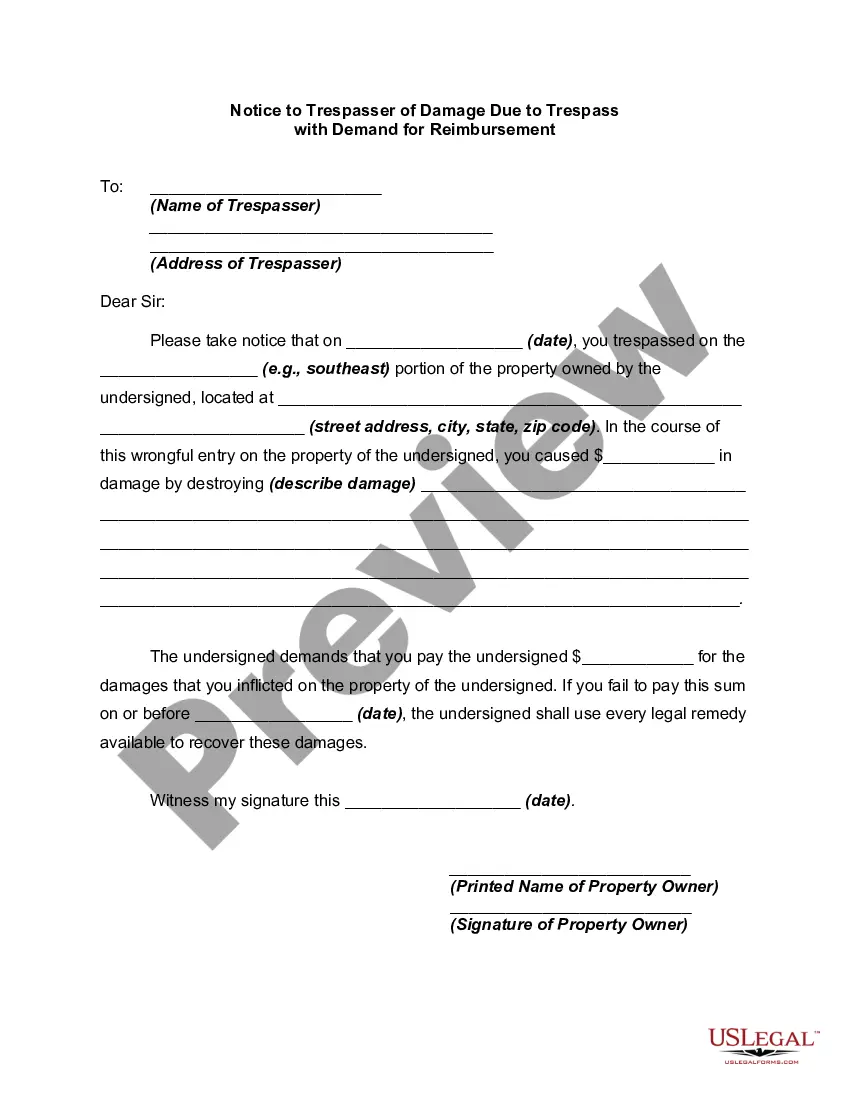
An example of a trespassing letter might start with your contact information, followed by the date and the recipient’s information. In the body, you would describe the specific actions you consider trespassing and express your desire for the individual to stay off your property. Conclude with a clear statement of potential consequences if they ignore this notice. This formal approach can be very effective in reinforcing your rights related to trespass on your own property.
While a trespass warning does not always have to be written, having it in writing is recommended. A written warning creates a clear legal record and allows you to specify any past incidents of trespassing. This documentation helps in resolving disputes if they arise again. It's best to ensure your communication is as clear as possible, especially if you want to avoid further issues on your own property.
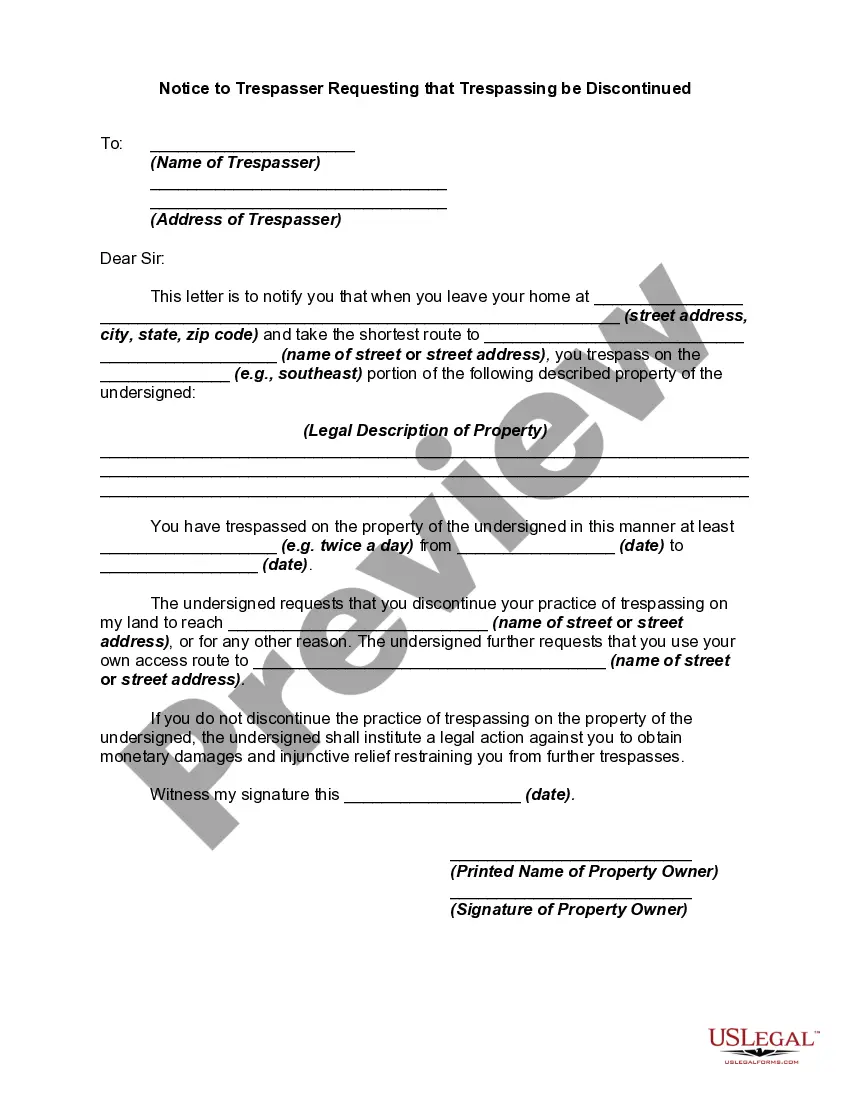
To inform someone they cannot be on your property, start with a direct but respectful conversation. Clearly state that you wish them to refrain from entering your premises, explaining your reasons if necessary. If the individual does not comply, consider sending a formal trespass notice to reinforce your message and outline potential consequences for continued trespassing. This action emphasizes your right to control access to your own property.
An example of trespassing on personal property includes someone entering your backyard without permission. This can also involve someone using, damaging, or stealing items from your garden shed. It is essential to address such activities swiftly, as they infringe on your right to enjoy your property. Maintaining clear boundaries helps in preventing such issues.
When writing a trespass letter, start with a professional greeting and the current date. Clearly state the address of the property in question and describe the specific incidents of trespassing. Outline your expectations, such as contacting you before entering the property in the future. Make sure to close the letter respectfully, and keep a signed copy for future reference.
Yes, a trespass order generally needs to be in writing to be effective. Written documentation provides clarity regarding your wishes about the individual’s presence on your property. While verbal notifications can also serve as an informal warning, a formal written order creates a legal record of your intent. This is especially critical when dealing with individuals who repeatedly trespass on your own property.
To write a certified letter for trespassing, begin with a clear subject line, stating the purpose. Include the date, your name, and your address at the top of the letter. Clearly articulate the trespass issue, specify what happened on your property, and state your expectations moving forward. Make sure to keep a copy of the letter for your records.
To legally keep people off your property, clear signage indicating private property can deter undesired visitors. Additionally, establishing fences or barriers can also help enforce your boundaries. If trespass on own property occurs despite these measures, documenting incidents and contacting authorities may be necessary. Creating a strong legal foundation is essential to protecting your space.