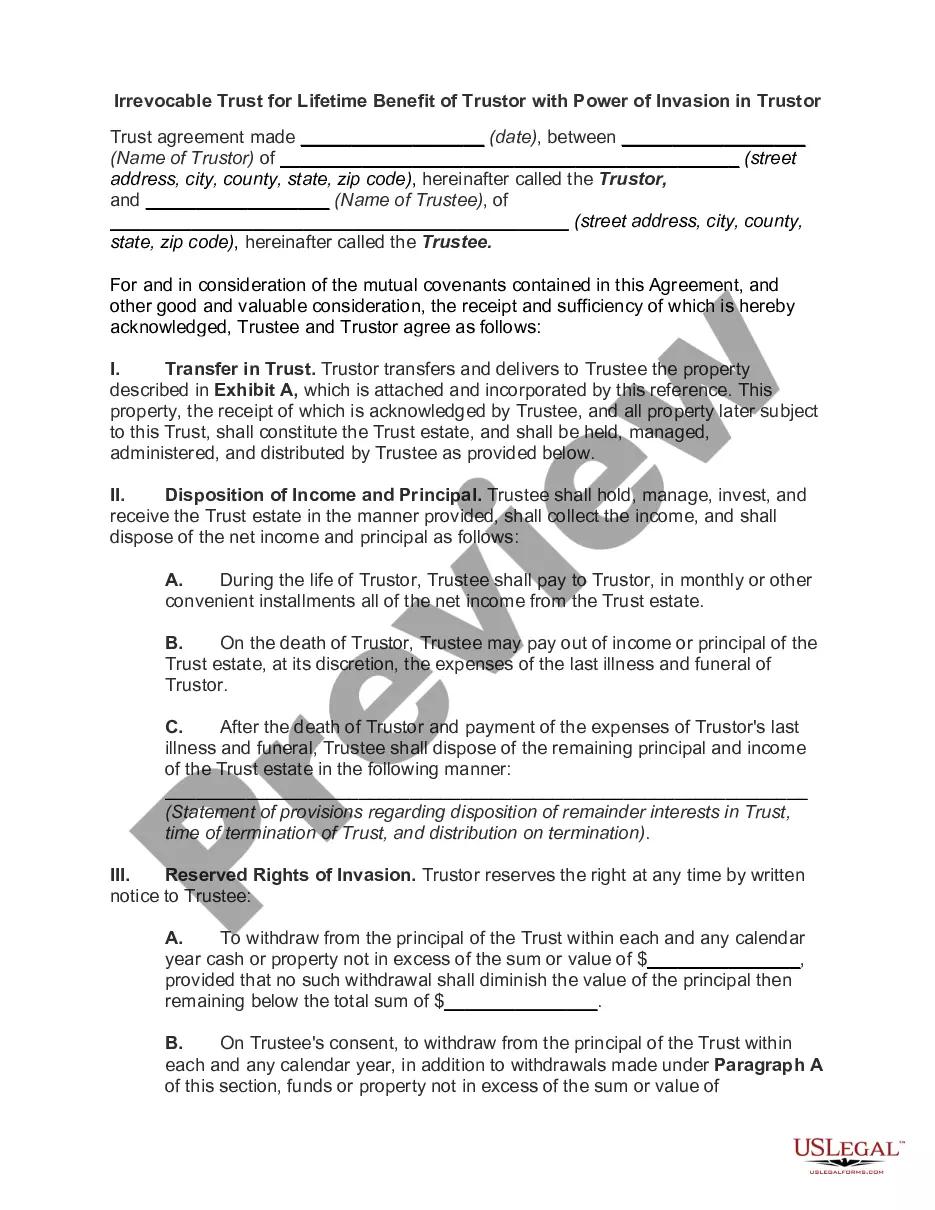
Irrevocable Trust
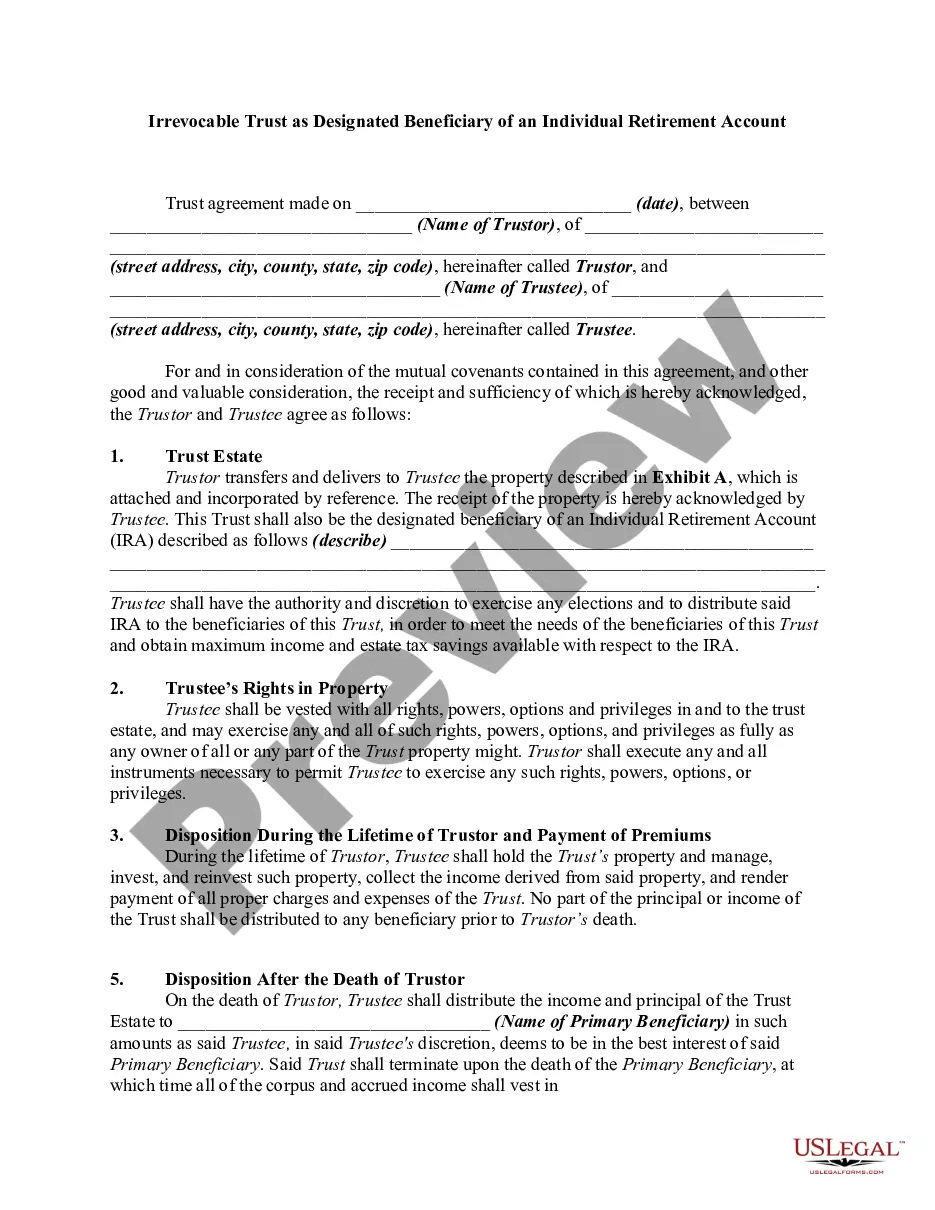
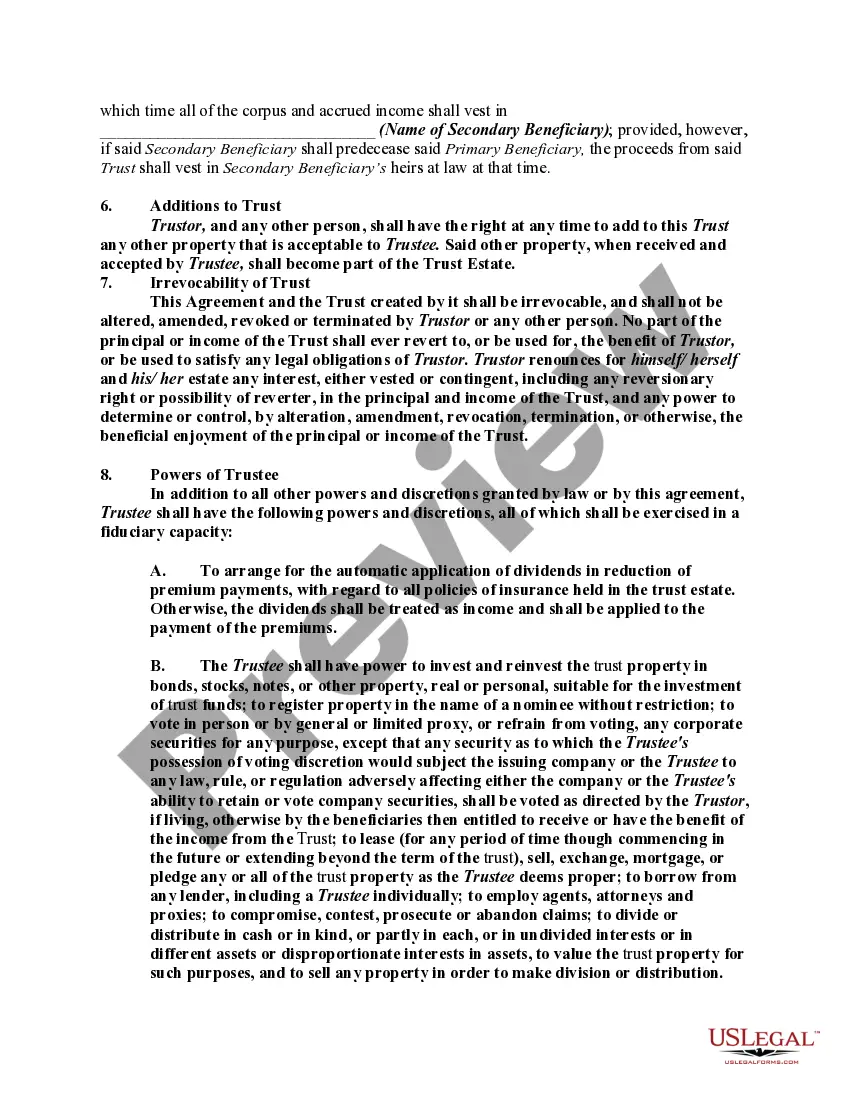
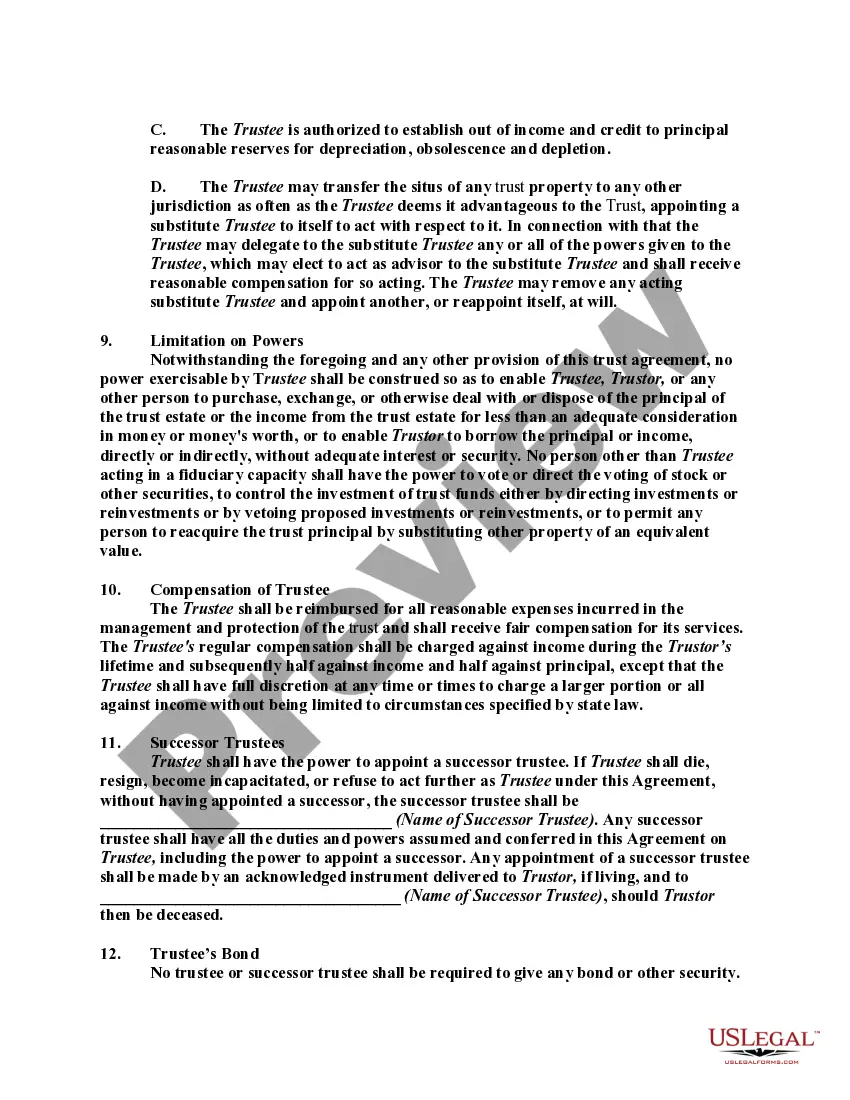
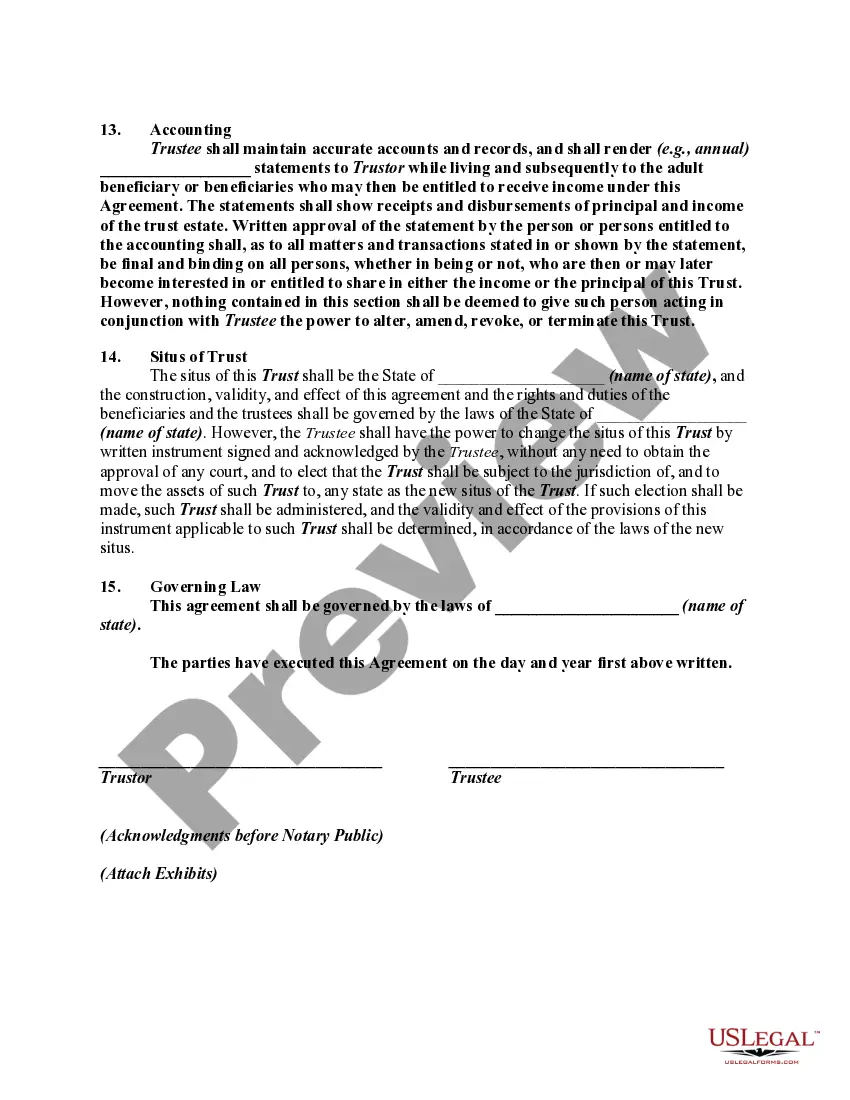
Description

Get your form ready online
Our built-in tools help you complete, sign, share, and store your documents in one place.
Make edits, fill in missing information, and update formatting in US Legal Forms—just like you would in MS Word.
Download a copy, print it, send it by email, or mail it via USPS—whatever works best for your next step.
Sign and collect signatures with our SignNow integration. Send to multiple recipients, set reminders, and more. Go Premium to unlock E-Sign.
If this form requires notarization, complete it online through a secure video call—no need to meet a notary in person or wait for an appointment.
We protect your documents and personal data by following strict security and privacy standards.

Make edits, fill in missing information, and update formatting in US Legal Forms—just like you would in MS Word.

Download a copy, print it, send it by email, or mail it via USPS—whatever works best for your next step.

Sign and collect signatures with our SignNow integration. Send to multiple recipients, set reminders, and more. Go Premium to unlock E-Sign.

If this form requires notarization, complete it online through a secure video call—no need to meet a notary in person or wait for an appointment.

We protect your documents and personal data by following strict security and privacy standards.
Looking for another form?





How to fill out Irrevocable Trust As Designated Beneficiary Of An Individual Retirement Account?
- If you're already a US Legal Forms user, log into your account to access your templates. Ensure your subscription is active to download the necessary document.
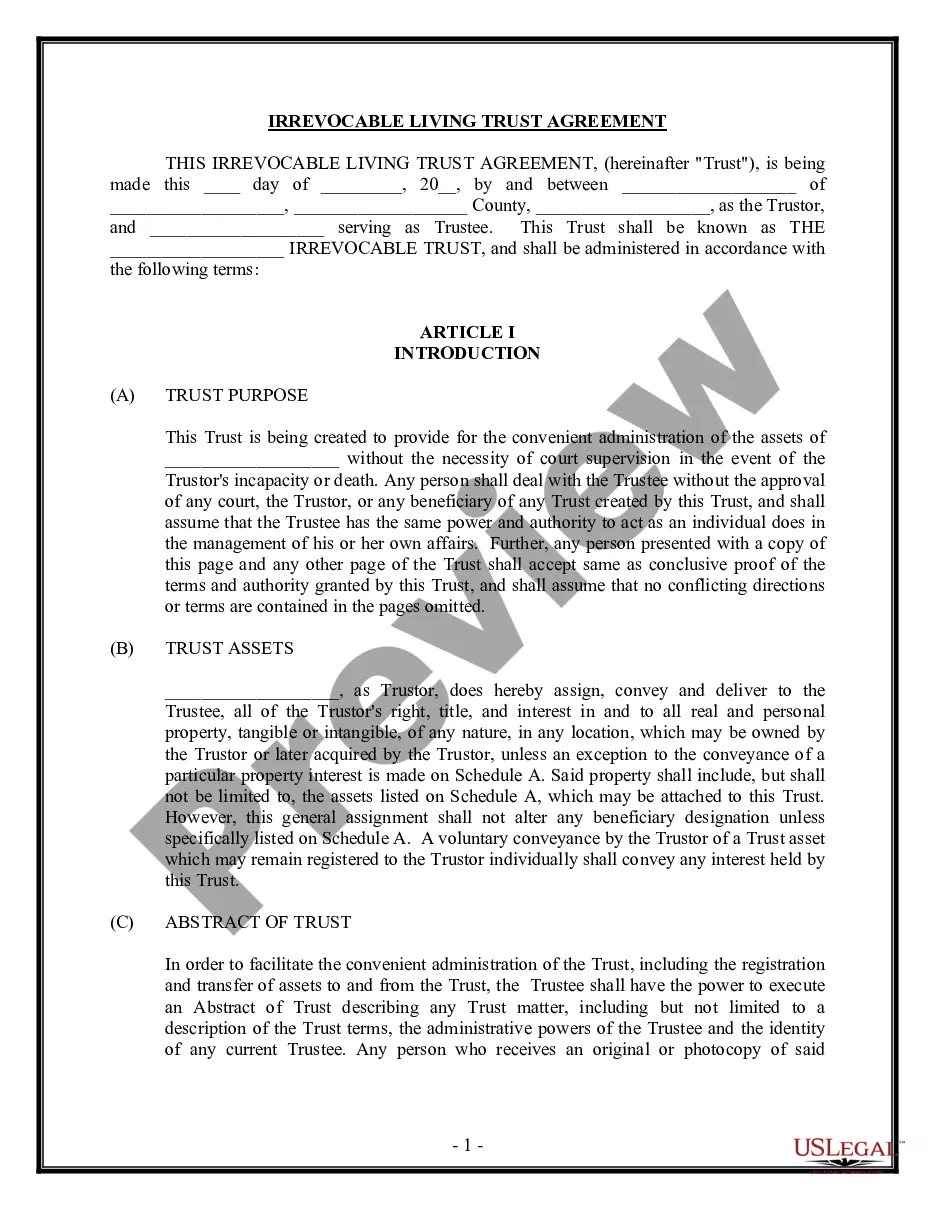
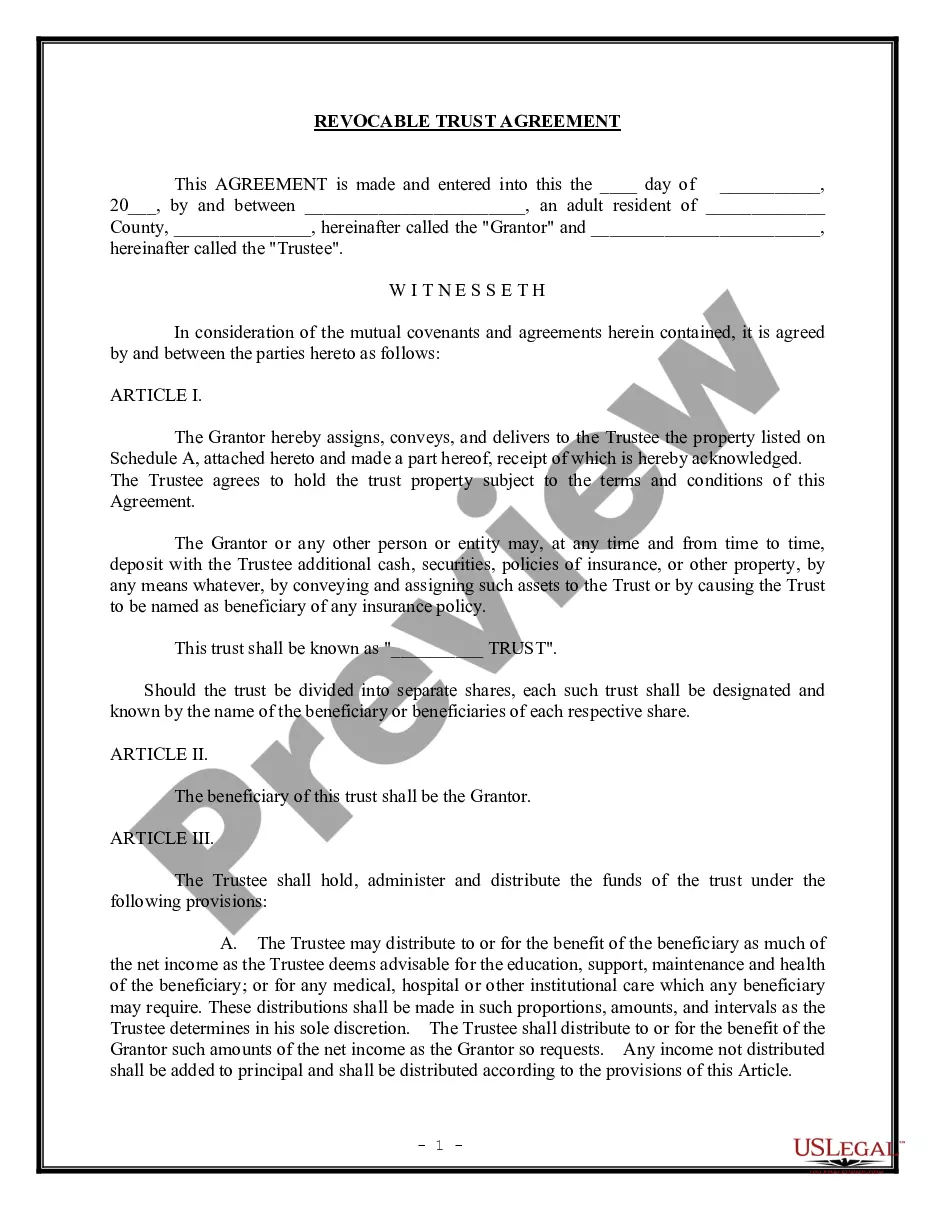
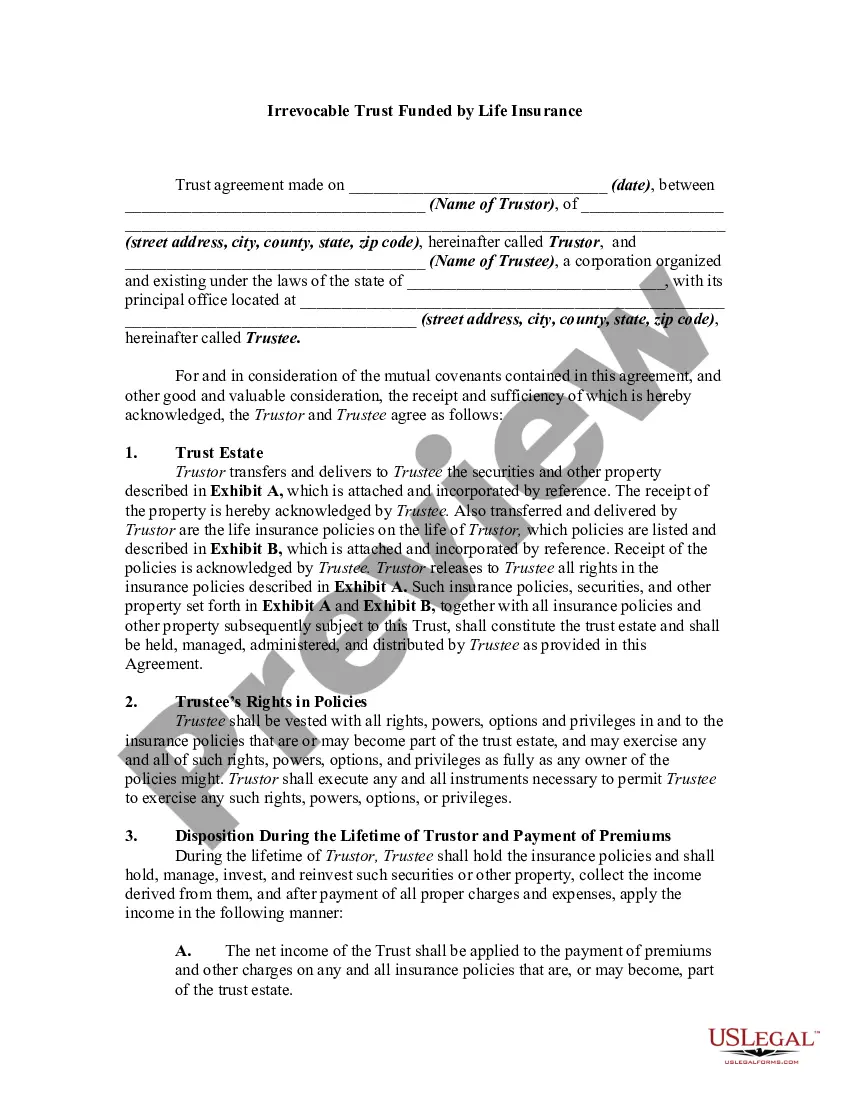
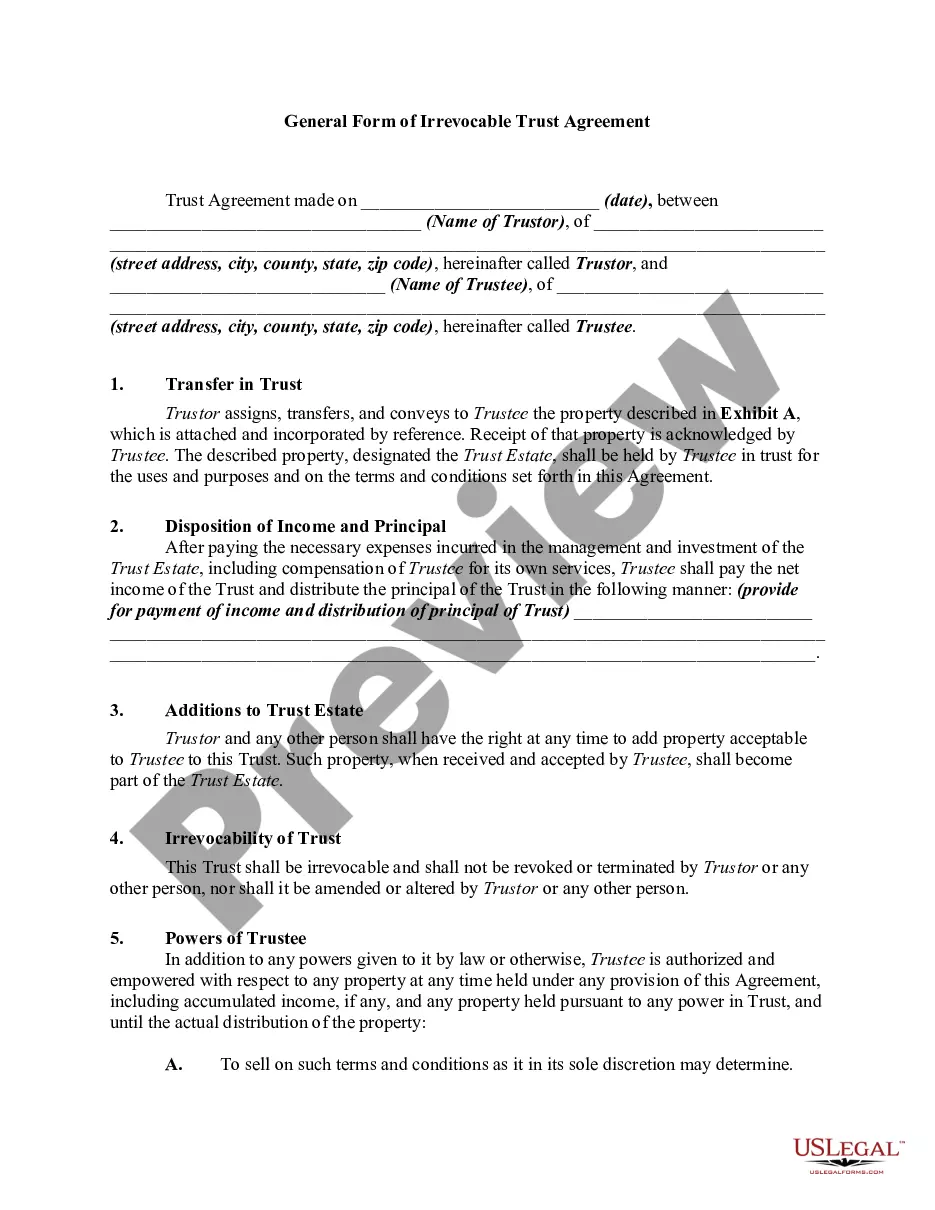
- In case you're new to the service, start by exploring the Preview mode and the form description to select the irrevocable trust template that suits your legal requirements.
- If the initial template isn’t what you need, utilize the Search tab to look for additional options until you find the ideal document.
- Once you’ve identified the correct form, click on the Buy Now button and choose a subscription plan that works for you. You will need to create an account to benefit from our extensive library.
- Proceed with your purchase by entering your payment information via credit card or PayPal.
- After the transaction, download the irrevocable trust template and save it to your device. You can also revisit it at any time in the My documents section of your profile.
In conclusion, US Legal Forms offers a robust collection of over 85,000 fillable legal forms, empowering both individuals and attorneys. With expert assistance available, you can be assured of legally sound documents tailored to your needs.
Start your journey in securing your trust today! Visit US Legal Forms to explore your options.
Form popularity
FAQ
The IRS treats an irrevocable trust as a separate tax entity, meaning it must file its own tax returns. The trust must adhere to specific regulations, including reporting income and capital gains. Understanding these rules is crucial for effective trust management, so seeking professional advice on tax implications is highly recommended.
If an irrevocable trust is not funded, it cannot serve its intended purpose of managing and protecting assets. Without funding, the trust will not hold any property or assets, which means beneficiaries may not receive the benefits planned. Consider using the US Legal Forms platform for guidance on how to properly fund your trust.
Recent changes in tax laws have affected how irrevocable trusts can be used. New regulations focus on tax implications and estate planning strategies to optimize benefits. It’s essential to stay updated on these changes, as they can impact your planning decisions significantly.
While an irrevocable trust does not need to be filed with the court, it is crucial to keep a record of the trust document. This document should be easily accessible to the trustee and beneficiaries. Additionally, some states may require the trust to be registered with the county or state for specific reasons, so check local regulations.
An irrevocable trust does not typically need to be filed with the court unless it becomes part of probate proceedings. However, it's important to file the trust document in a safe place so that your trustees and beneficiaries can access it when necessary. Always consult with legal professionals for specific requirements in your state.
One major downside to an irrevocable trust is the loss of control over your assets. Once transferred into the trust, you cannot change the terms or reclaim the assets without the consent of beneficiaries after your demise. This permanence can be limiting, especially if your financial situation changes in the future. However, utilizing uslegalforms can help clarify the process and ensure you make informed decisions tailored to your needs.
People often choose an irrevocable trust to gain peace of mind regarding their estate planning. With an irrevocable trust, your assets are transferred out of your taxable estate, which can lead to lower taxes for your beneficiaries. Furthermore, an irrevocable trust helps ensure that your wishes for asset distribution are honored exactly as intended, offering both security and clarity. Overall, it is a powerful tool in managing and protecting your legacy.
First, an irrevocable trust can provide significant estate tax benefits, allowing you to effectively manage taxes for your heirs. Second, it can protect your assets from creditors, ensuring that your wealth remains secure. Lastly, individuals often use an irrevocable trust to control asset distribution, allowing you to set specific terms for how and when beneficiaries receive their inheritance. These reasons highlight the strategic advantages of an irrevocable trust.
Setting up an irrevocable trust for yourself is possible, but it requires a clear understanding of its implications. Once you create the trust, you relinquish control over the assets placed within it, which can significantly impact your financial decisions. To make the setup easier, services like US Legal Forms offer comprehensive tools to manage the complexities and help you establish a trust that meets your needs.
You can file your own irrevocable trust, provided you follow the correct procedures and legal requirements. This includes completing the trust document accurately and ensuring it complies with your state laws. Many find it helpful to use platforms like US Legal Forms, which offer user-friendly tools and legal support to facilitate the filing process successfully.