Irrevocable Trust Agreement Benefit With The Government
Description


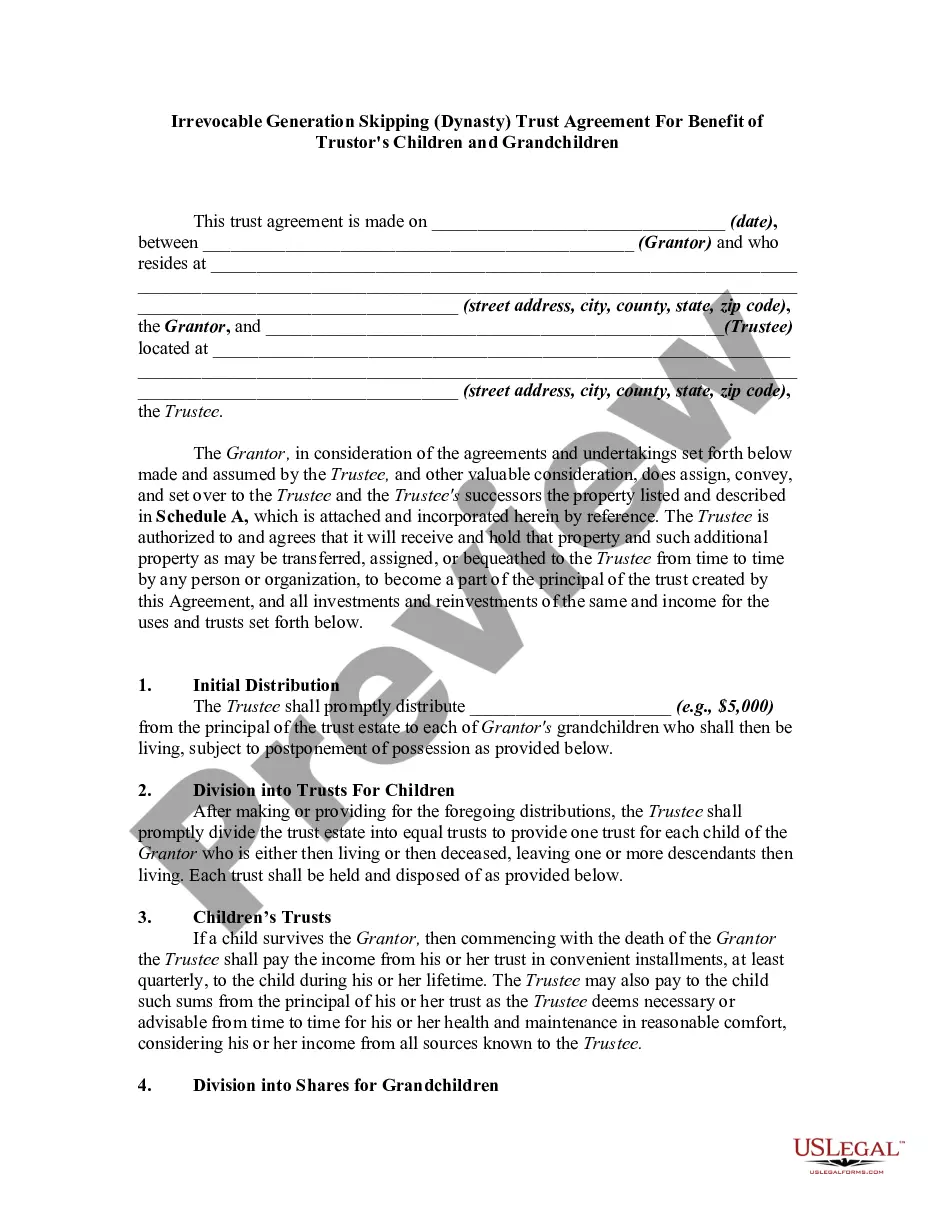
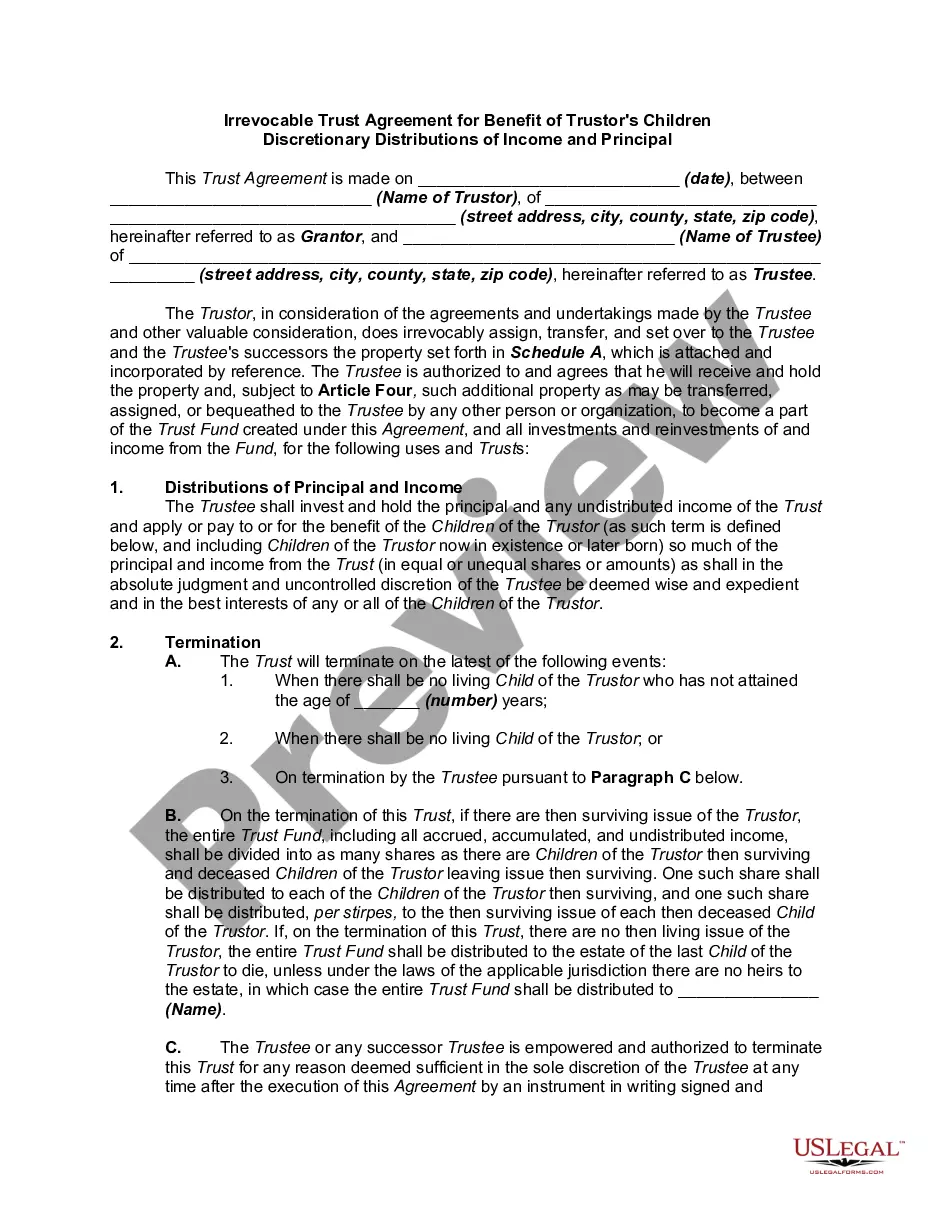


Get your form ready online
Our built-in tools help you complete, sign, share, and store your documents in one place.
Make edits, fill in missing information, and update formatting in US Legal Forms—just like you would in MS Word.
Download a copy, print it, send it by email, or mail it via USPS—whatever works best for your next step.
Sign and collect signatures with our SignNow integration. Send to multiple recipients, set reminders, and more. Go Premium to unlock E-Sign.
If this form requires notarization, complete it online through a secure video call—no need to meet a notary in person or wait for an appointment.
We protect your documents and personal data by following strict security and privacy standards.

Make edits, fill in missing information, and update formatting in US Legal Forms—just like you would in MS Word.

Download a copy, print it, send it by email, or mail it via USPS—whatever works best for your next step.

Sign and collect signatures with our SignNow integration. Send to multiple recipients, set reminders, and more. Go Premium to unlock E-Sign.

If this form requires notarization, complete it online through a secure video call—no need to meet a notary in person or wait for an appointment.

We protect your documents and personal data by following strict security and privacy standards.
Looking for another form?






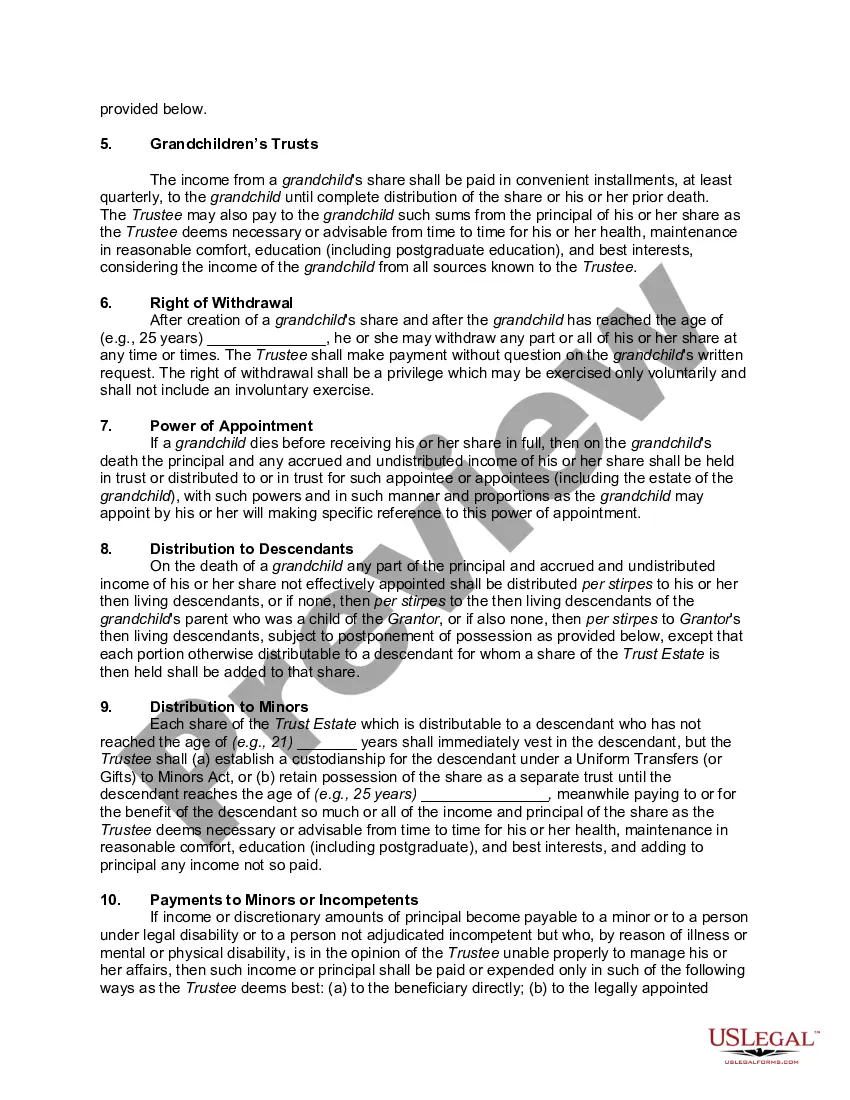
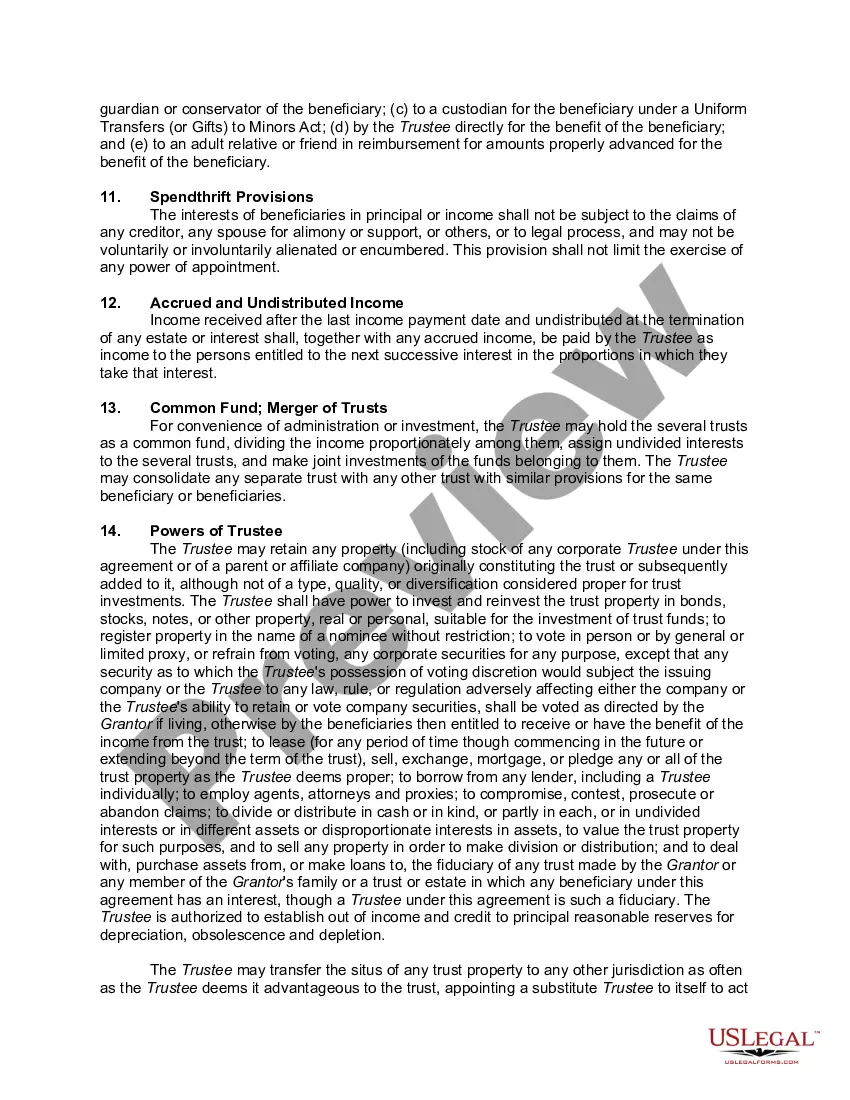
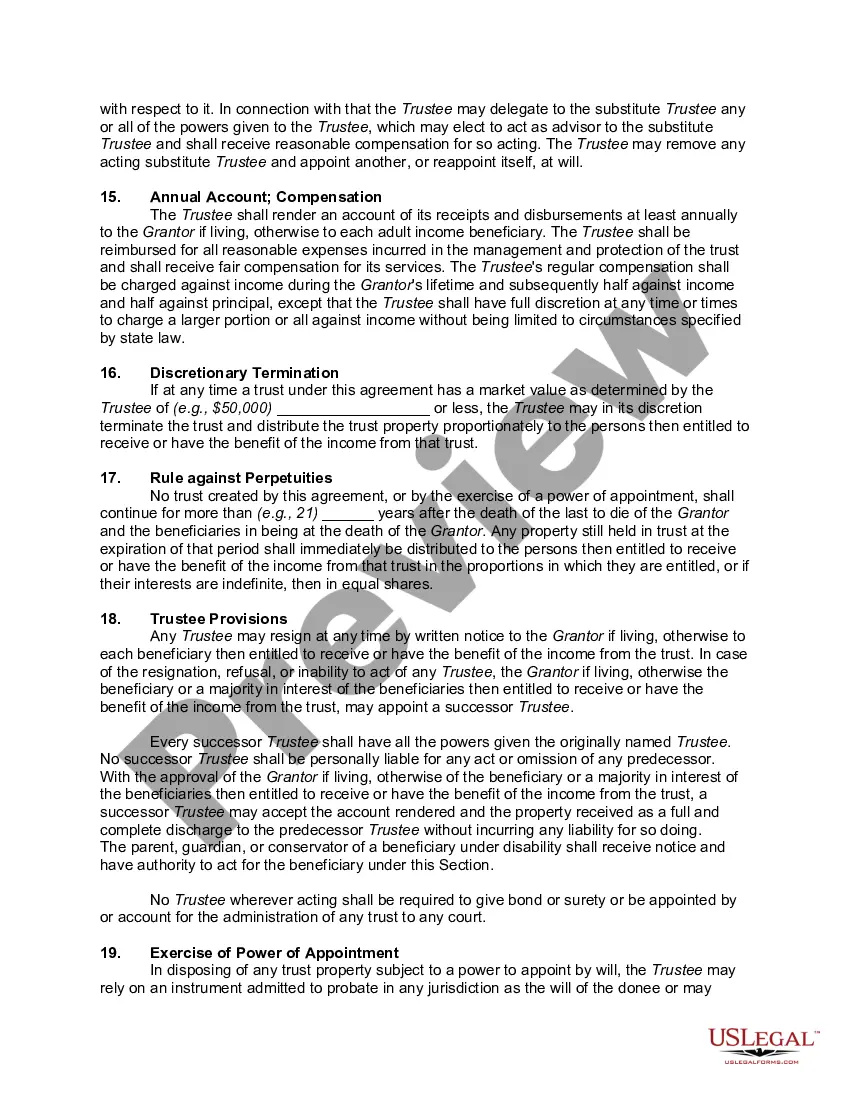
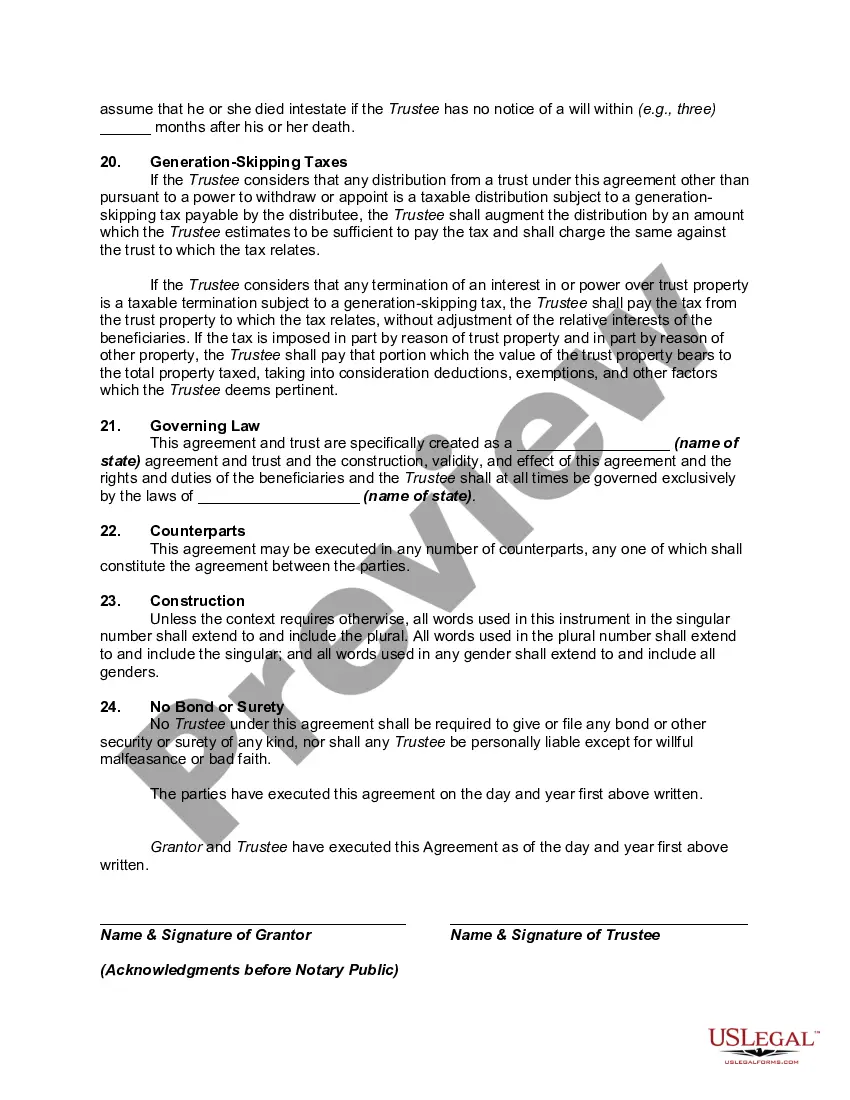
How to fill out Irrevocable Trust Agreement For Benefit Of Trustor's Children And Grandchildren?
- Log in to your existing account on US Legal Forms and download your chosen form by clicking the Download button. Ensure your subscription is active; if not, renew it according to your payment plan.
- Review the document preview and description to verify it meets your needs and complies with your local jurisdiction.
- If you need another form, use the Search tab to locate the correct one. If everything aligns, proceed to buy the document you need.
- Click the Buy Now button and select a subscription plan that works for you. Make sure to register an account to access all features.
- Complete your purchase by entering your payment details or using PayPal to finalize the subscription.
- Download the form to your device for completion. You can retrieve it at any time from the My Forms section in your profile. You will also be able to access resources to assist you further.
In conclusion, utilizing US Legal Forms simplifies the process of obtaining an irrevocable trust agreement while ensuring compliance and ease of access to legal resources. With a robust collection of forms and expert assistance available, you can feel confident in creating a legally sound document.
Start your journey today by visiting US Legal Forms!
Form popularity
FAQ
It's essential to recognize that certain assets may not belong in an irrevocable trust, such as retirement accounts and personal residences. By understanding these limitations, you can optimize the irrevocable trust agreement benefit with the government. Keeping assets that require personal management outside of the trust ensures smooth administration. A legal expert can help determine the best placements for your assets.
Filing an irrevocable trust with the IRS involves completing Form 1041, which is the U.S. Income Tax Return for Estates and Trusts. Additionally, ensure that you include all necessary documentation that outlines the trust’s assets and income. Utilizing the irrevocable trust agreement benefit with the government can simplify your tax responsibilities. If you feel overwhelmed, consider using US Legal Forms for guidance in the filing process.
To avoid capital gains tax within an irrevocable trust, it is crucial to hold the assets in the trust until they appreciate significantly. By leveraging the irrevocable trust agreement benefit with the government, you can effectively shield your assets from immediate taxation. Utilizing tax-deferral strategies will also help. You might benefit from seeking advice from a financial advisor for tailored solutions.
The new IRS rule for irrevocable trusts focuses on taxation and reporting requirements, impacting how these trusts are administered. Understanding these regulations is essential for anyone interested in the irrevocable trust agreement benefit with the government. By complying with these rules, you can effectively manage your trust and protect your assets. Consider consulting a tax professional to ensure proper implementation.
Filling out an irrevocable trust involves specific steps that require attention to detail. Start by gathering necessary information about the assets and beneficiaries. Then, follow the legal framework for your state, which outlines required terms and provisions. Utilizing tools from US Legal Forms can simplify the process, ensuring that you capture the irrevocable trust agreement benefit with the government accurately.
Deciding whether to put assets in a trust depends on individual circumstances. If your parents aim for efficient estate transfer and tax benefits, an irrevocable trust could be a strong option. It's essential to weigh their financial goals and family dynamics. Consulting platforms like US Legal Forms can provide tailored guidance on how an irrevocable trust agreement benefit with the government can be best utilized in their situation.
A significant mistake parents often make is failing to communicate their intentions clearly. This lack of communication can lead to confusion and conflict among heirs. It's also crucial to address the specific needs of all beneficiaries, which many overlook. Understanding the irrevocable trust agreement benefit with the government can assist in better structuring these funds for clarity and fairness.
The primary downside of putting assets in a trust is the relinquishing of ownership. After transferring assets to an irrevocable trust, you no longer have direct control, which some may find unsettling. Additionally, establishing such a trust usually requires legal fees and ongoing administrative duties. Nevertheless, exploring the irrevocable trust agreement benefit with the government can reveal advantages that outweigh these downsides.
An irrevocable trust offers several benefits, especially regarding tax advantages and asset protection. Once established, this type of trust removes assets from your taxable estate, potentially lowering your estate taxes. Moreover, it shields assets from creditors, allowing you peace of mind. This structure directly aligns with the irrevocable trust agreement benefit with the government, which provides added security.
A common downfall of having a trust is the loss of control over the assets. Once you establish an irrevocable trust, you typically cannot alter its terms or access the assets. This can create anxiety for those who might need flexibility in the future. However, learning about the irrevocable trust agreement benefit with the government may clarify how this structure can still serve your long-term goals.