Civil RICO
Does this form need to be notarized?
Notarization is not commonly needed for this form. However, certain documents or local rules may make it necessary. Our notarization service, powered by Notarize, allows you to finalize it securely online anytime, day or night.
Get your form ready online
Our built-in tools help you complete, sign, share, and store your documents in one place.
Make edits, fill in missing information, and update formatting in US Legal Forms—just like you would in MS Word.
Download a copy, print it, send it by email, or mail it via USPS—whatever works best for your next step.
Sign and collect signatures with our SignNow integration. Send to multiple recipients, set reminders, and more. Go Premium to unlock E-Sign.
If this form requires notarization, complete it online through a secure video call—no need to meet a notary in person or wait for an appointment.
We protect your documents and personal data by following strict security and privacy standards.

Make edits, fill in missing information, and update formatting in US Legal Forms—just like you would in MS Word.

Download a copy, print it, send it by email, or mail it via USPS—whatever works best for your next step.

Sign and collect signatures with our SignNow integration. Send to multiple recipients, set reminders, and more. Go Premium to unlock E-Sign.

If this form requires notarization, complete it online through a secure video call—no need to meet a notary in person or wait for an appointment.

We protect your documents and personal data by following strict security and privacy standards.
Looking for another form?

Form popularity
FAQ
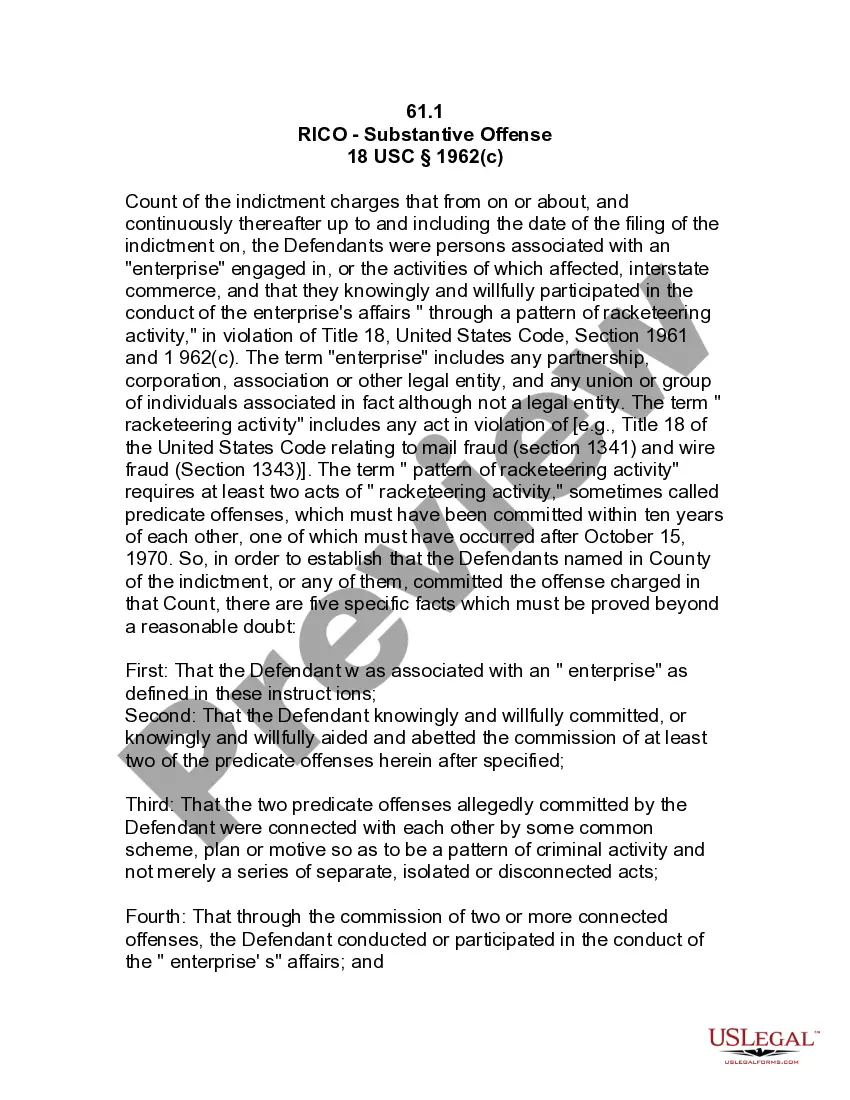
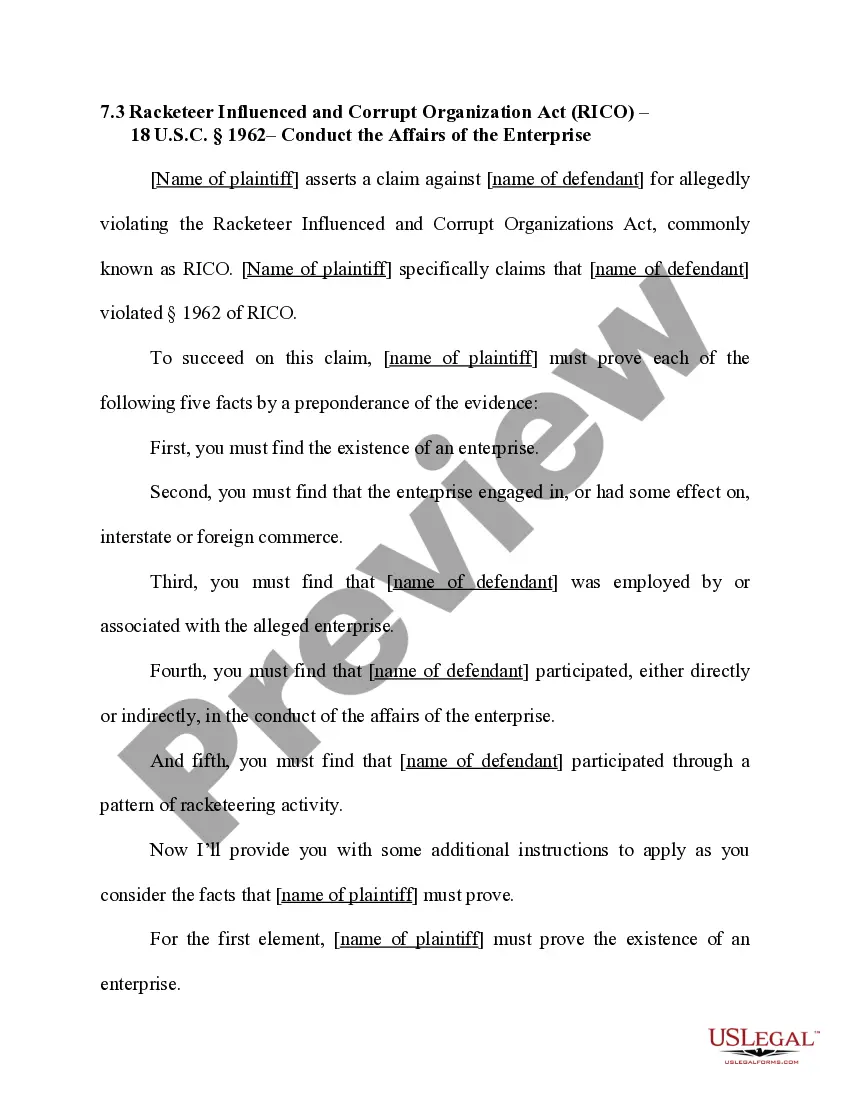
Civil proceedings under the Federal Racketeer Influenced and Corrupt Organizations (RICO) Act are criminal rather than civil in nature and should use criminal procedural protections. RICO currently provides both civil and criminal sanctions.
Beating a RICO charge is tough, but it isn't impossible. If you or your organization is under investigation for RICO charges, you don't just need any lawyer, you need a federal criminal defense lawyer who isn't afraid to go to trial in a federal court.
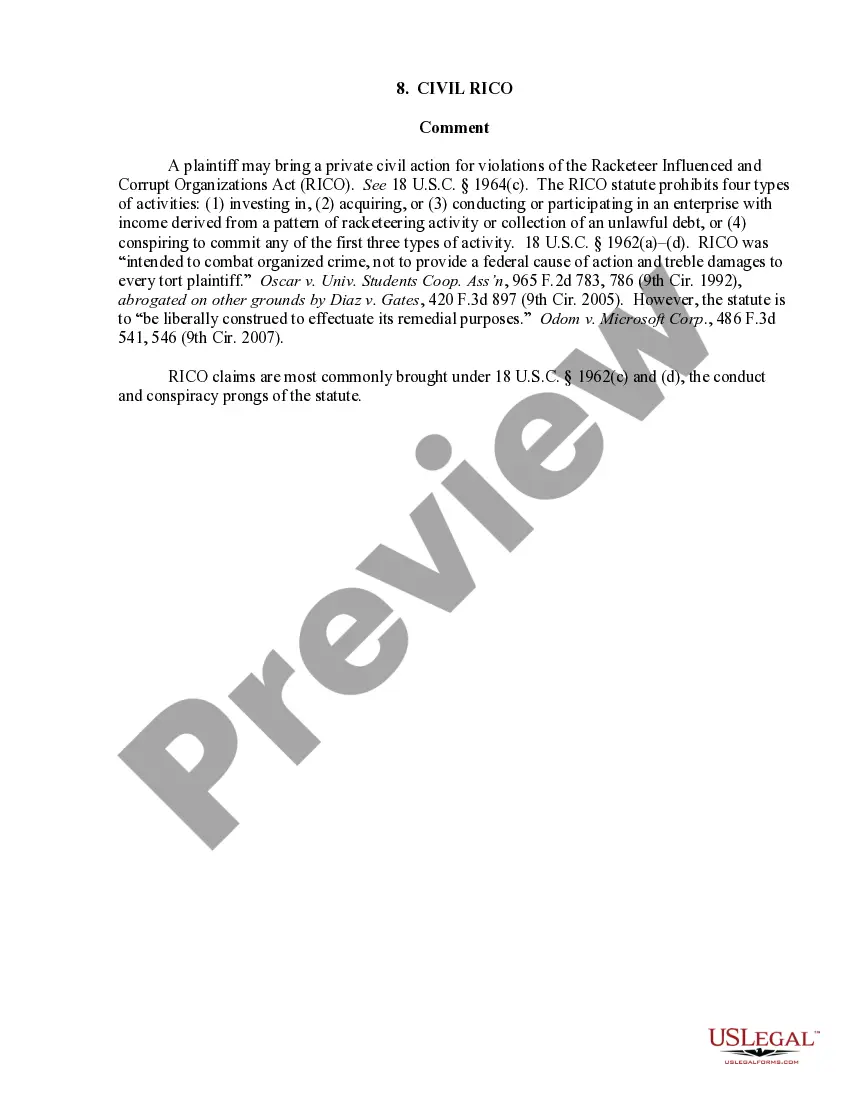
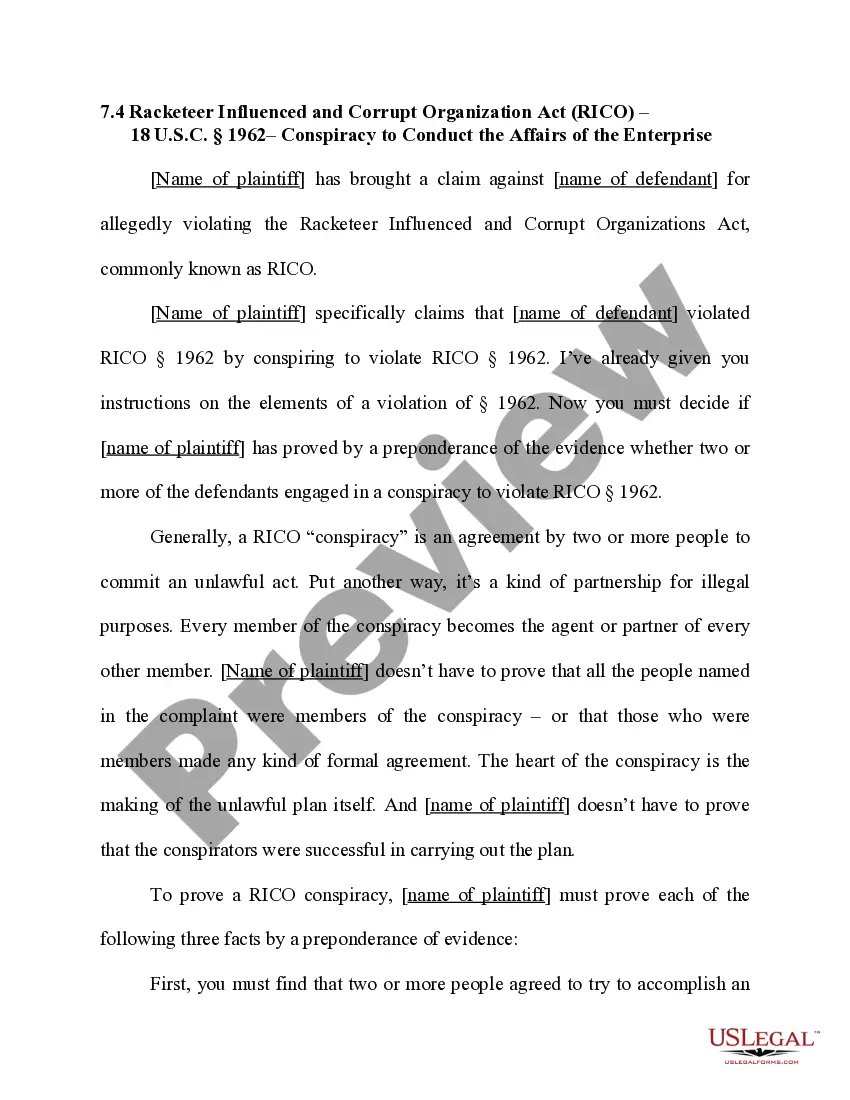
The Racketeer Influenced and Corrupt Organizations (RICO) Act is a United States federal law that provides for extended criminal penalties and a civil cause of action for acts performed as part of an ongoing criminal organization.
The penalties for a conviction under the RICO Act can be as harsh as 20 years in federal prison. RICO penalties can also include civil penalties along with the seizure of assets by the federal government.
Civil RICO allows litigants ? victims ? to sue for what are essentially criminal violations. If a bank uses extortion, for example, to force you to provide more collateral or turn over assets for which it is not entitled, there may be a RICO violation. There are dozens of criminal violations that are included in RICO.
There are many forms of racketeering that fall under the RICO statute, including bank fraud, wire fraud, kidnapping, bribery, extortion, contract murder-for-hire (aka, a Hitman), loansharking, drug trafficking, arson, arson for-hire (for intimidation, insurance fraud, etc.) and embezzlement.
A conviction under RICO has serious consequences. Not only does the RICO statute provide for criminal penalties including 20 years of prison, but the financial penalties are severe. A person convicted can face a fine of either $250,000 or double the amount of proceeds earned from illicit activity.
The criminal RICO statute provides for prison terms of 20 years and severe financial penalties. The law also allows prosecutors to attach assets, so they can't be whisked out of the country before judgment.