Unjust Enrichment Elements With Florida
Description
Get your form ready online
Our built-in tools help you complete, sign, share, and store your documents in one place.
Make edits, fill in missing information, and update formatting in US Legal Forms—just like you would in MS Word.
Download a copy, print it, send it by email, or mail it via USPS—whatever works best for your next step.
Sign and collect signatures with our SignNow integration. Send to multiple recipients, set reminders, and more. Go Premium to unlock E-Sign.
If this form requires notarization, complete it online through a secure video call—no need to meet a notary in person or wait for an appointment.
We protect your documents and personal data by following strict security and privacy standards.

Make edits, fill in missing information, and update formatting in US Legal Forms—just like you would in MS Word.

Download a copy, print it, send it by email, or mail it via USPS—whatever works best for your next step.

Sign and collect signatures with our SignNow integration. Send to multiple recipients, set reminders, and more. Go Premium to unlock E-Sign.

If this form requires notarization, complete it online through a secure video call—no need to meet a notary in person or wait for an appointment.

We protect your documents and personal data by following strict security and privacy standards.
Looking for another form?

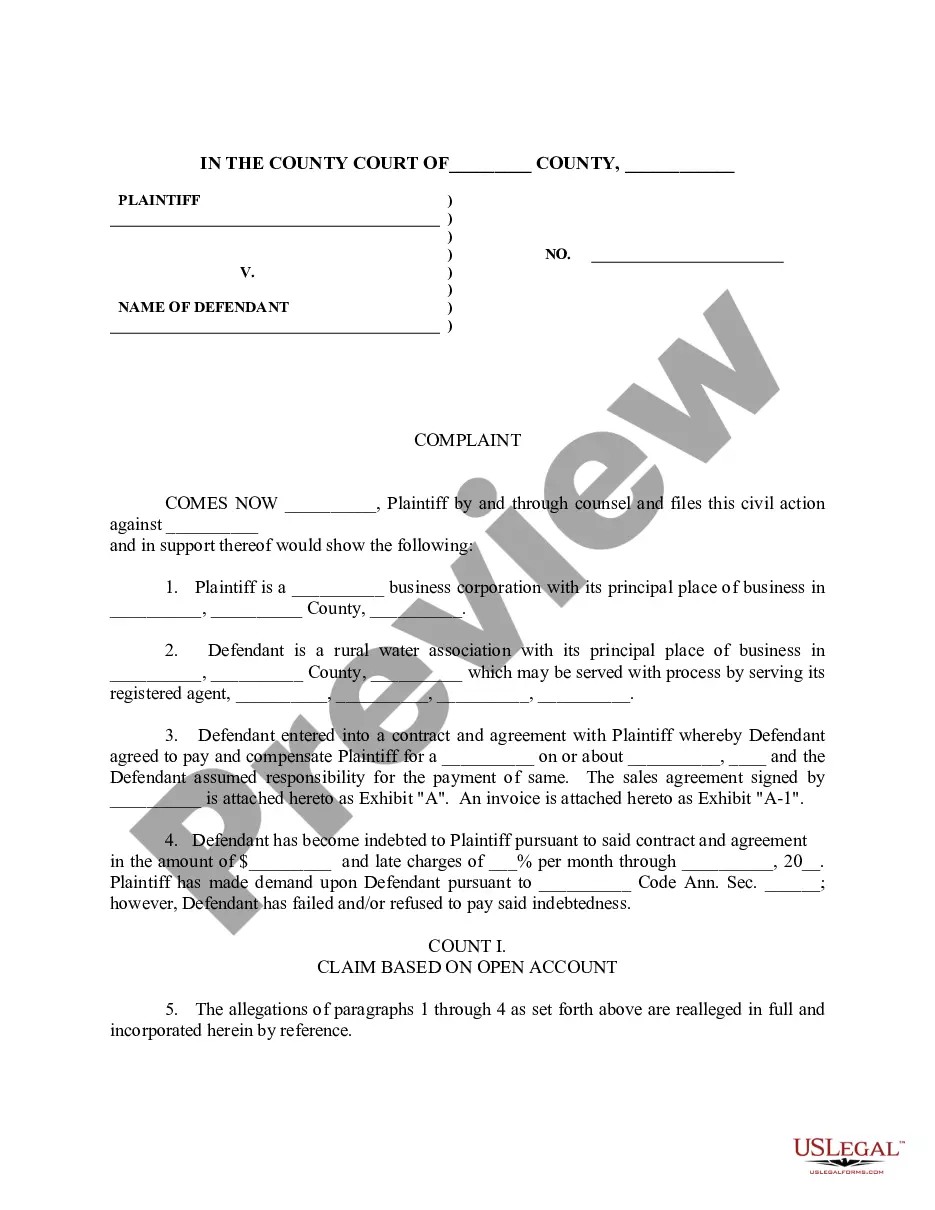
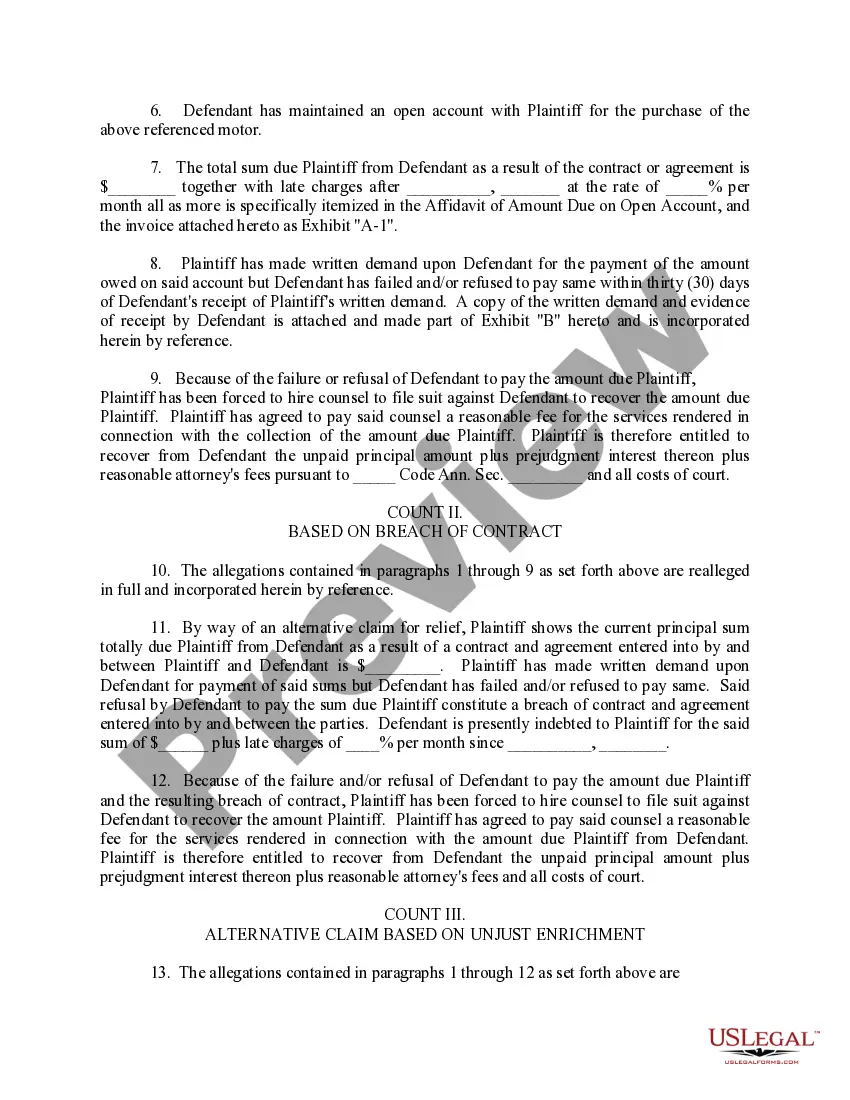
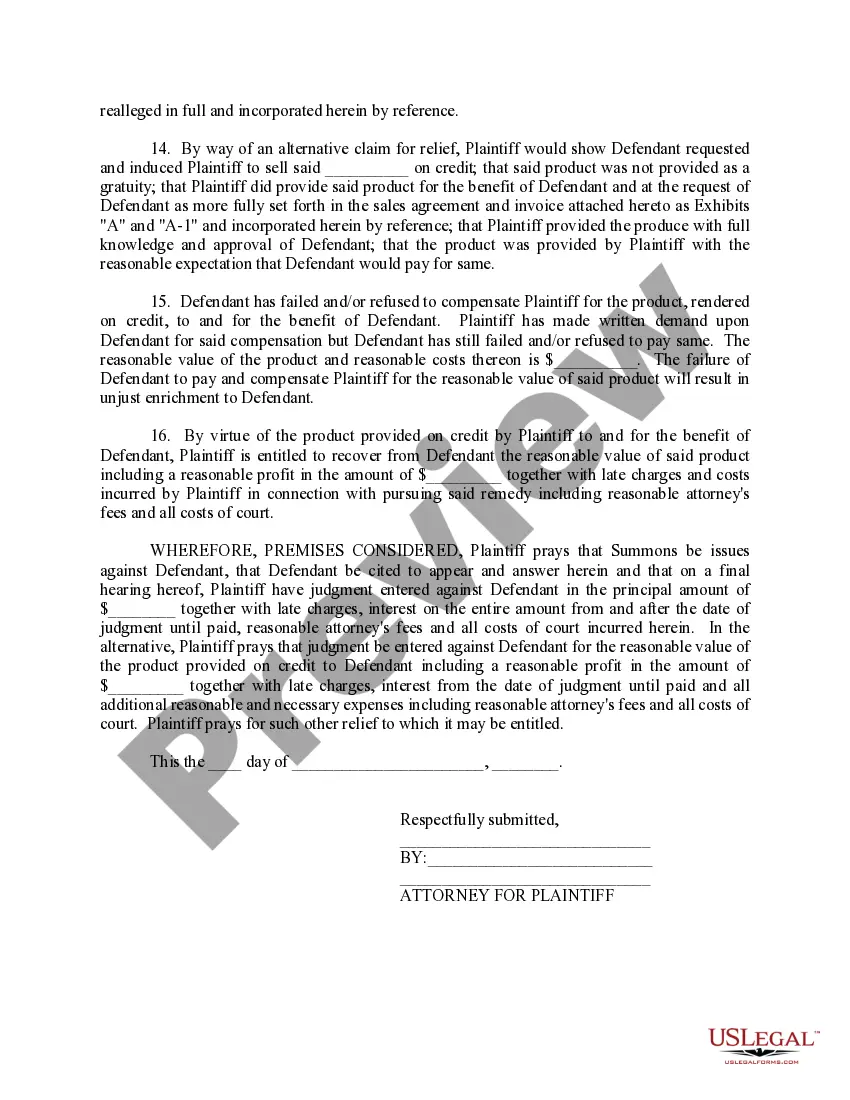
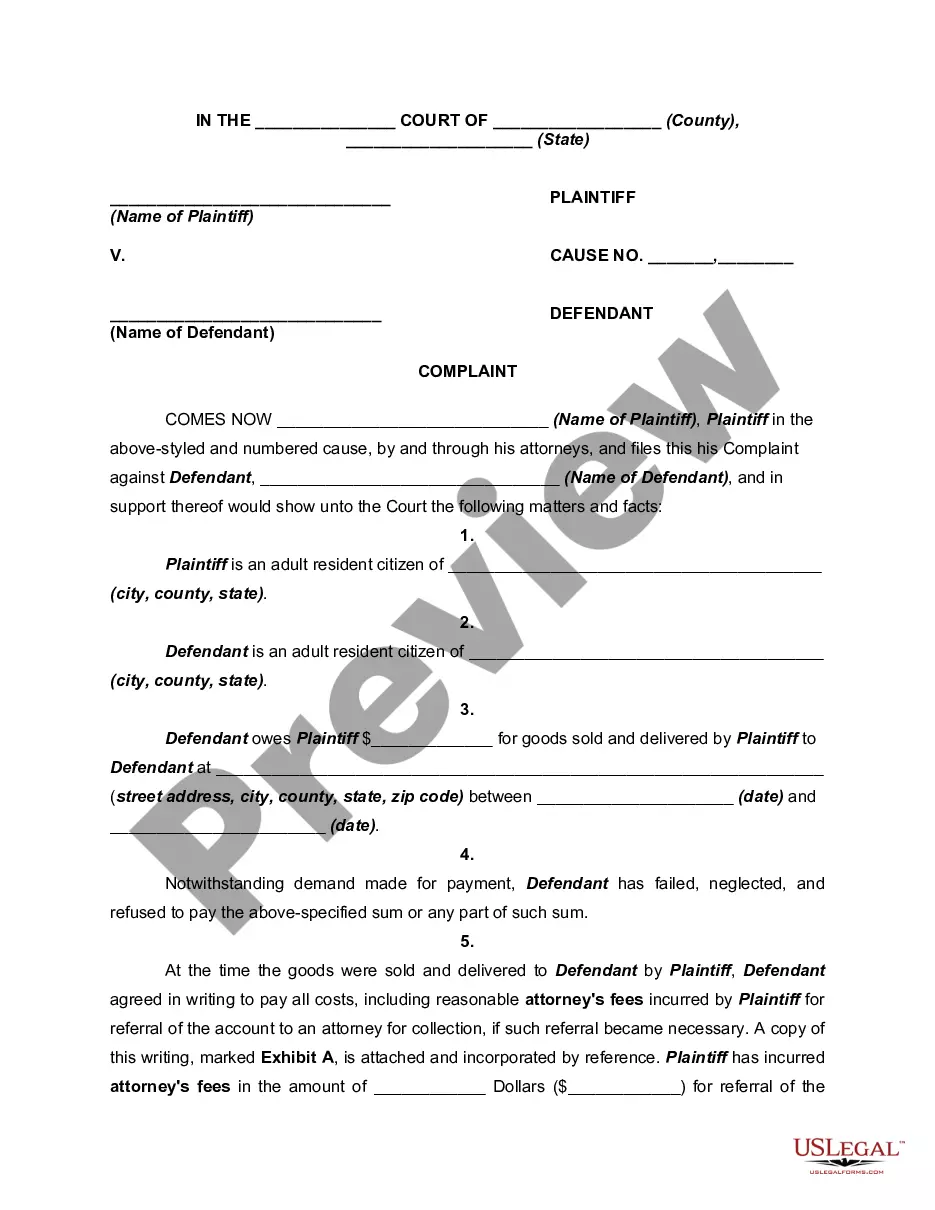
How to fill out Complaint Based On Open Account, Breach Of Contract, Unjust Enrichment?
The Unjust Enrichment Components With Florida displayed on this page is a reusable legal framework prepared by experienced attorneys in accordance with federal and local statutes and regulations.
For over 25 years, US Legal Forms has offered individuals, organizations, and legal practitioners access to more than 85,000 authenticated, state-specific templates for any business and personal needs. It’s the quickest, most straightforward, and most dependable method to acquire the documentation you require, as the service ensures bank-level data protection and anti-malware safeguards.
Subscribe to US Legal Forms to have validated legal templates for all of life’s situations available at your fingertips.
- Find the document you require and examine it.
- Browse through the file you searched for and preview it or review the form description to ensure it meets your needs. If it doesn’t, utilize the search bar to discover the correct one. Click Buy Now when you have identified the template you require.
- Choose and Log In.
- Select the pricing option that best fits you and create an account. Use PayPal or a credit card to make a fast payment. If you already have an account, Log In and verify your subscription to continue.
- Get the editable template.
- Select the format you desire for your Unjust Enrichment Components With Florida (PDF, DOCX, RTF) and download the sample to your device.
- Fill out and sign the paperwork.
- Print out the template to fill it in by hand. Alternatively, use an online multifunctional PDF editor to swiftly and accurately complete and sign your form with a valid signature.
- Retrieve your documents again.
- Use the same document once more whenever required. Access the My documents tab in your profile to redownload any previously obtained forms.
Form popularity
FAQ
In Florida, the 20% rule refers to a guideline used in unjust enrichment claims. This rule suggests that a party can only recover for unjust enrichment if they have conferred a benefit that exceeds 20% of the value of the transaction. When assessing unjust enrichment elements with Florida law, it is essential to determine if the benefit provided meets this threshold. Understanding this rule can help you navigate potential claims effectively and confirm whether you have a viable case.
In Florida, the elements of unjust enrichment include the receipt of a benefit, the conferring of that benefit by another party, and the lack of a legal basis for the benefit. You must show that retention of the benefit would be inequitable. Knowing the unjust enrichment elements with Florida will help you navigate legal challenges and protect your rights. For assistance, consider using resources from USLegalForms to simplify this process.
To establish unjust enrichment in Florida, you must demonstrate that one party received a benefit at the expense of another. This typically includes proving that the benefiting party acted knowingly and that the circumstances warrant restitution. Understanding the unjust enrichment elements with Florida law is crucial for effectively presenting your case. Utilizing tools like USLegalForms can guide you in assembling the necessary documentation.
An unjust enrichment claim in Florida comprises the same core elements previously mentioned: a benefit conferred, knowledge of the benefit by the recipient, voluntary acceptance of that benefit, and the presence of inequity if the benefit is retained without compensation. This understanding allows you to assess whether your situation qualifies for such a claim. To effectively navigate these unjust enrichment elements with Florida, consider utilizing resources from US Legal Forms for guidance and forms needed to proceed.
Florida's 57.105 rule allows a trial court to impose sanctions on a party or attorney that presents a claim or defense deemed without merit or intended to delay proceedings. This rule aims to discourage frivolous litigation and ensure fairness in the legal process. Knowing how this rule interacts with unjust enrichment elements with Florida can help strengthen your legal strategy.
In Florida, the elements of unjust enrichment consist of a conferred benefit to one party, knowledge of the benefit by the recipient, acceptance of the benefit, and injustice in allowing the recipient to retain the benefit without paying for it. This framework ensures that no party unfairly benefits from another's labor or resources. If you face issues in this area, grasping these unjust enrichment elements with Florida law can clarify your options.
The four elements of unjust enrichment generally include a benefit conferred to one party, retention of that benefit without a legal justification, the other party's expectation of compensation, and the inability of the benefitting party to keep the benefit without being unjust. In essence, when one party gains at another's expense under these elements, an unjust enrichment claim may arise. Understanding these unjust enrichment elements with Florida law can help you navigate related legal matters.