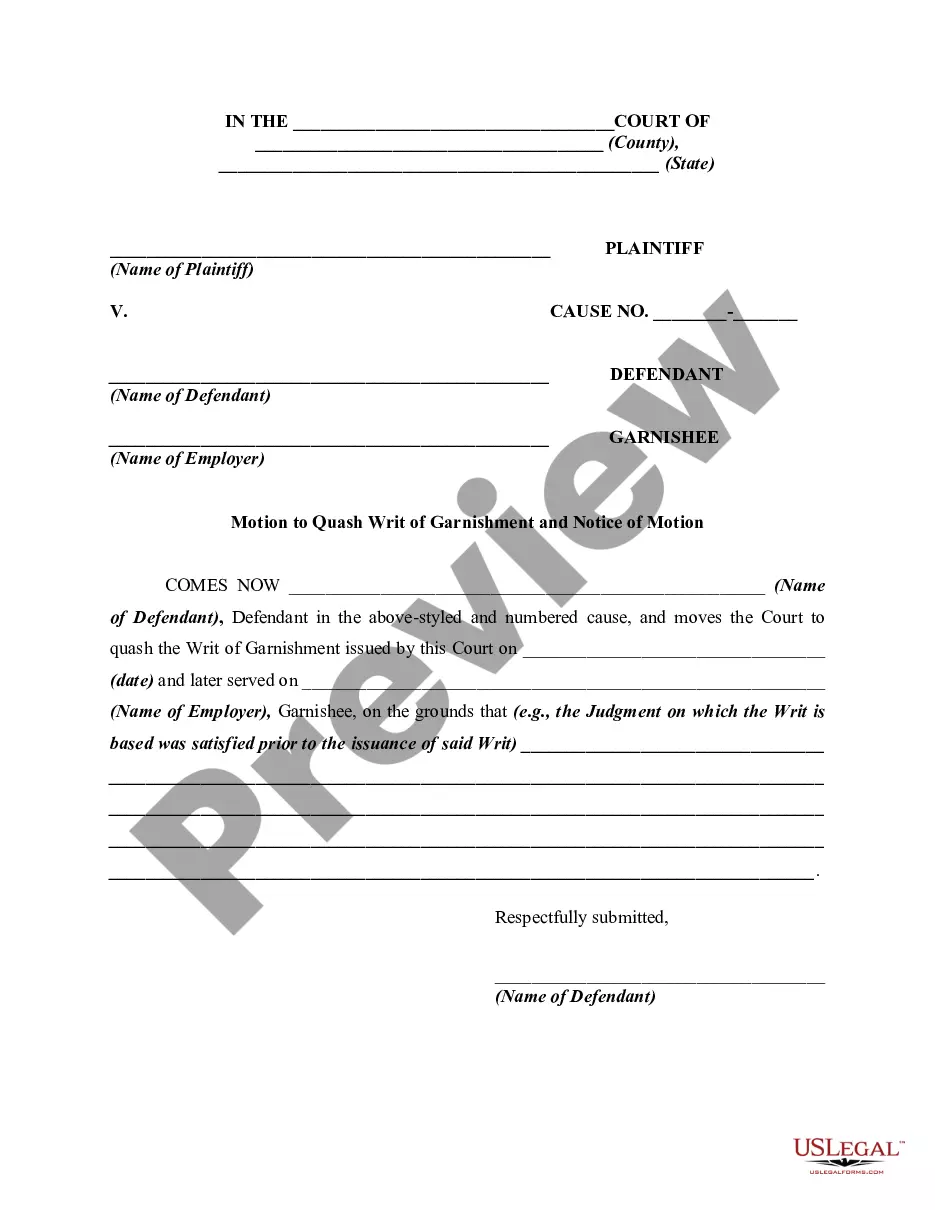
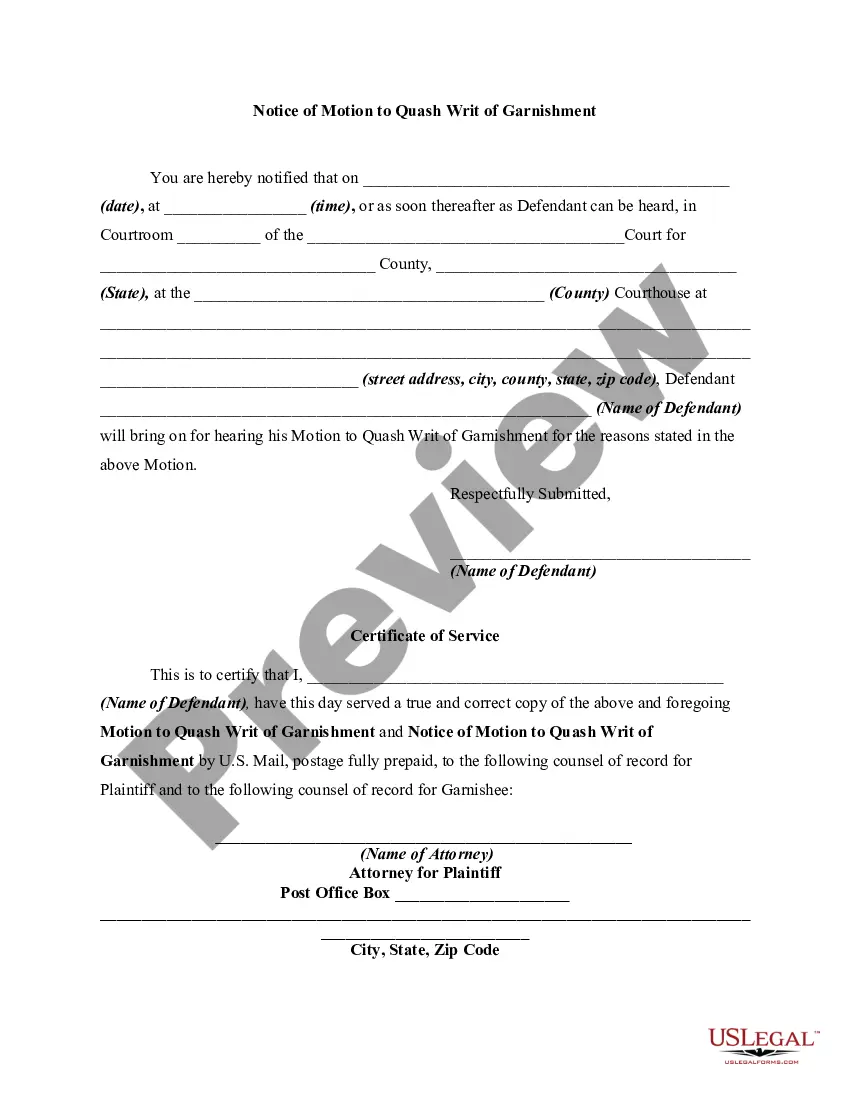
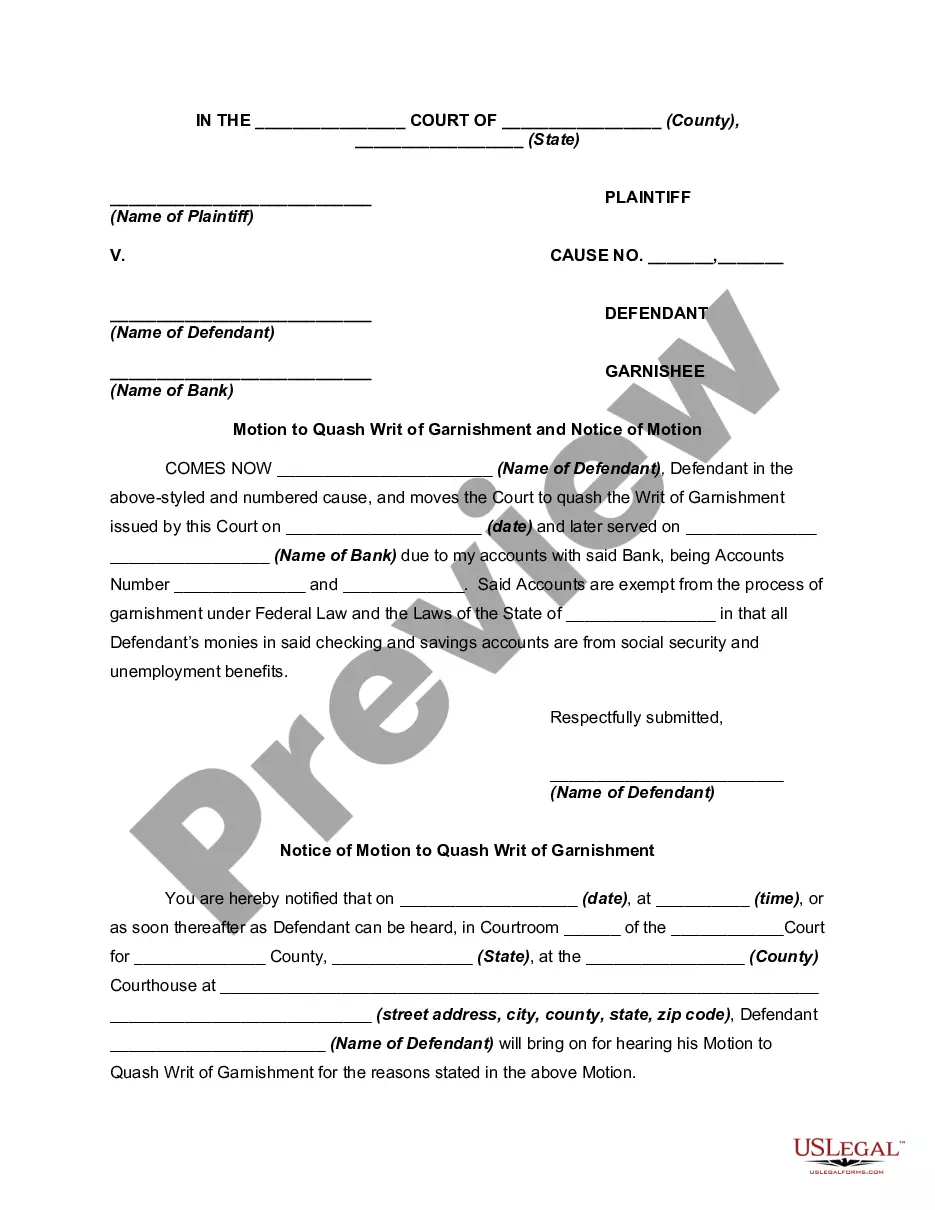
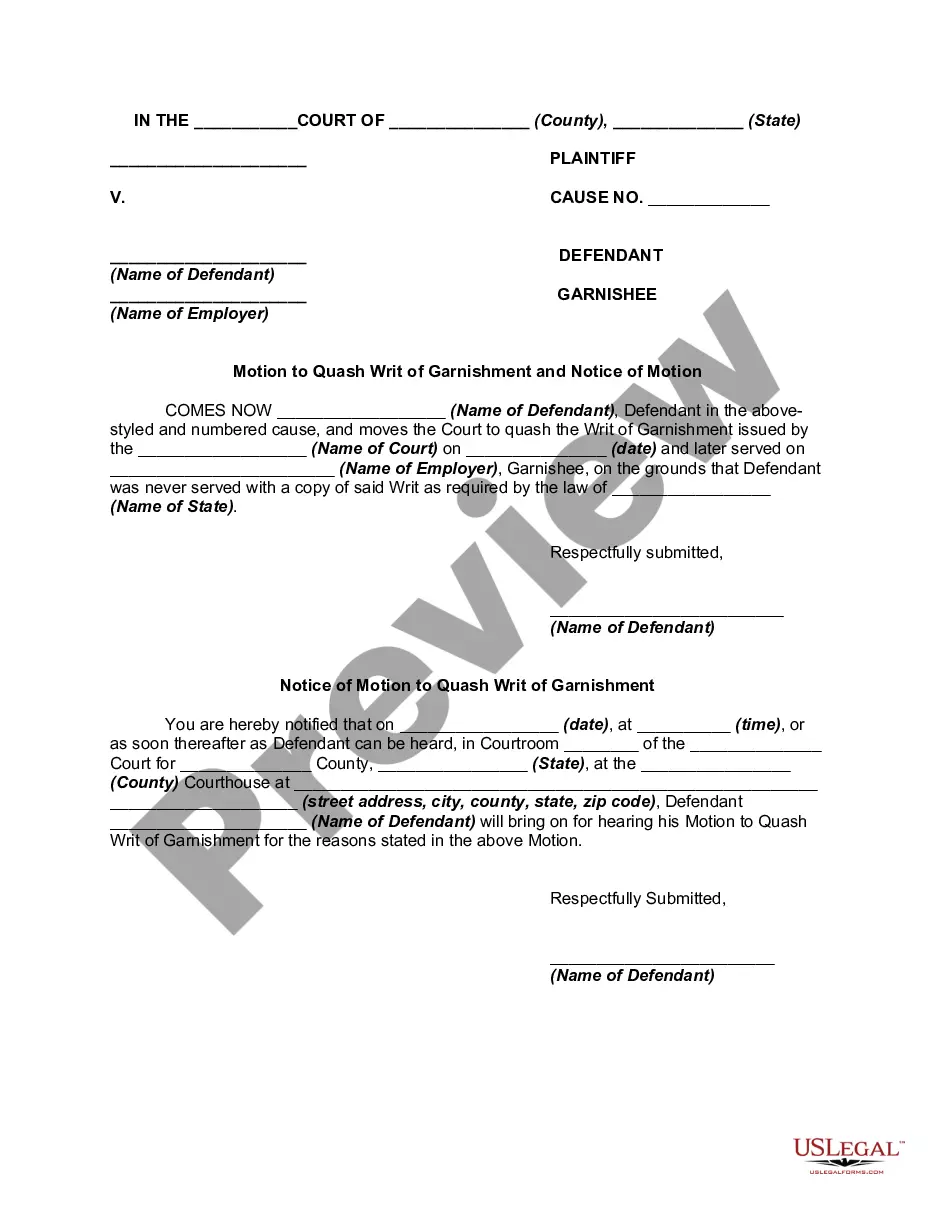
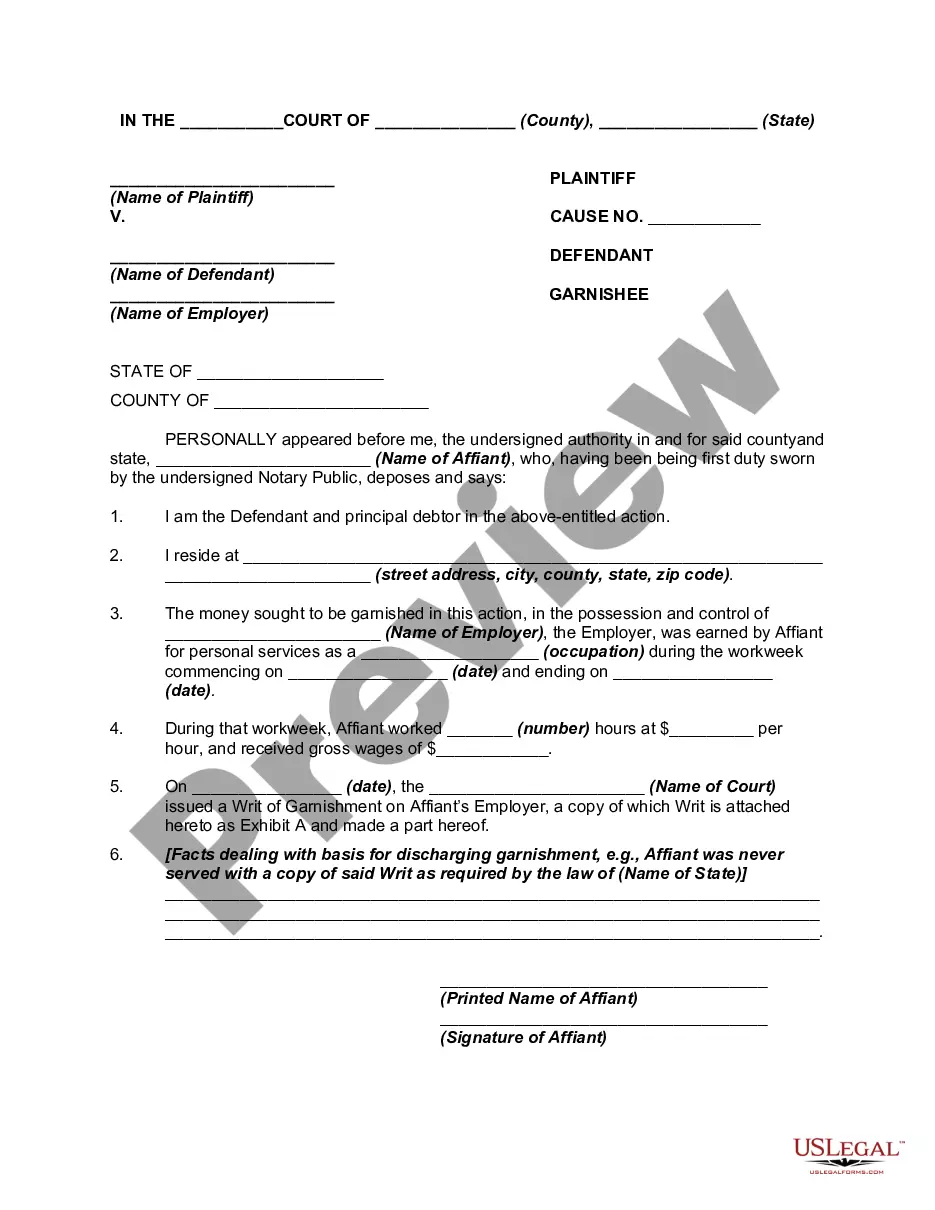
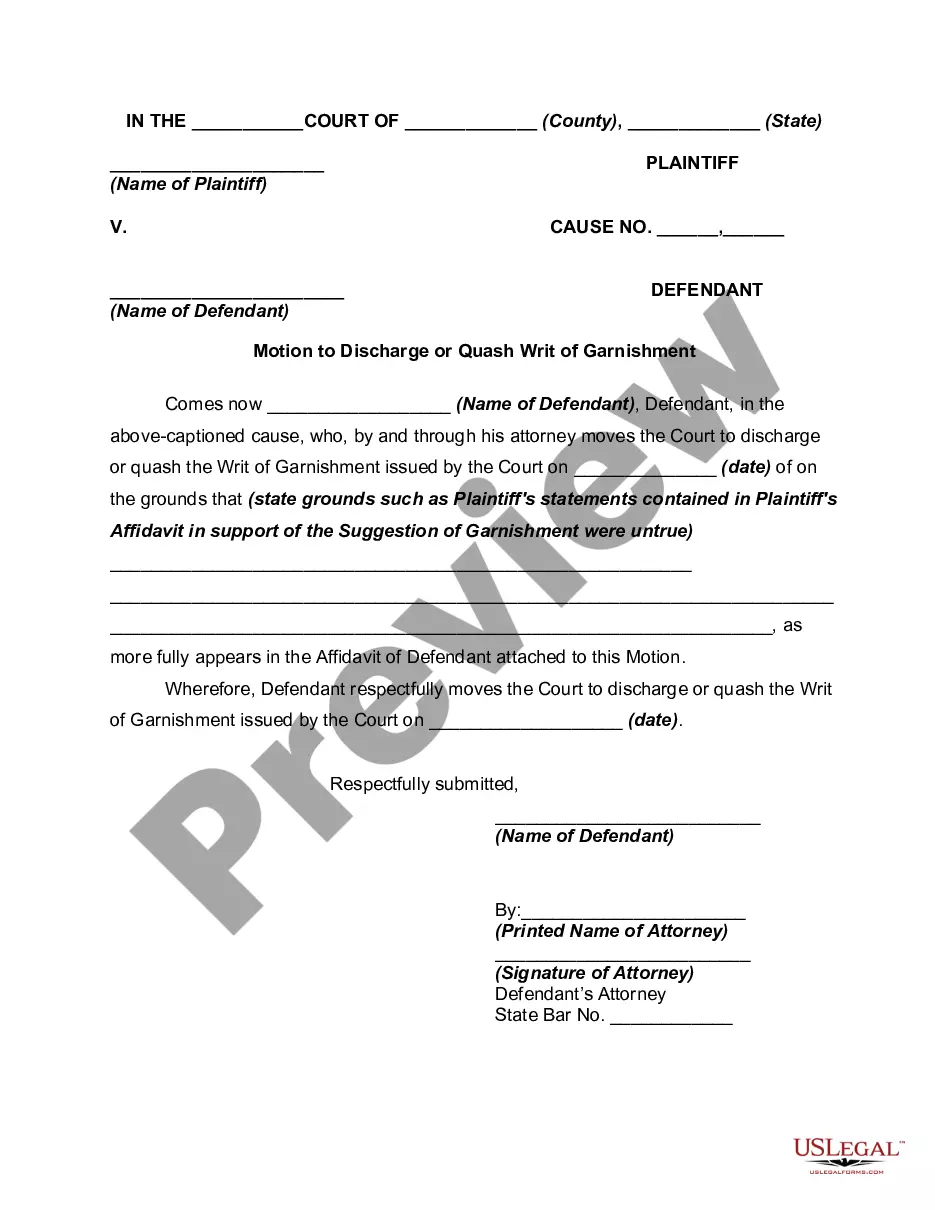
Garnishment Notice Order Form Template
Description
Get your form ready online
Our built-in tools help you complete, sign, share, and store your documents in one place.
Make edits, fill in missing information, and update formatting in US Legal Forms—just like you would in MS Word.
Download a copy, print it, send it by email, or mail it via USPS—whatever works best for your next step.
Sign and collect signatures with our SignNow integration. Send to multiple recipients, set reminders, and more. Go Premium to unlock E-Sign.
If this form requires notarization, complete it online through a secure video call—no need to meet a notary in person or wait for an appointment.
We protect your documents and personal data by following strict security and privacy standards.

Make edits, fill in missing information, and update formatting in US Legal Forms—just like you would in MS Word.

Download a copy, print it, send it by email, or mail it via USPS—whatever works best for your next step.

Sign and collect signatures with our SignNow integration. Send to multiple recipients, set reminders, and more. Go Premium to unlock E-Sign.

If this form requires notarization, complete it online through a secure video call—no need to meet a notary in person or wait for an appointment.

We protect your documents and personal data by following strict security and privacy standards.
Looking for another form?

How to fill out Motion Of Defendant To Discharge Or Quash Writ Of Garnishment And Notice Of Motion?
Legal documents handling can be exasperating, even for seasoned experts.
When you seek a Garnishment Notice Order Form Template and lack the time to spend searching for the accurate and current version, the process can be stressful.
US Legal Forms addresses any needs you may have, from individual to business documentation, all in one convenient location.
Employ sophisticated tools to complete and manage your Garnishment Notice Order Form Template.
Here are the steps to follow after accessing the form you require: Verify that this is the correct form by previewing it and reviewing its description, ensure that the template is accepted in your state or county, select Buy Now when you are prepared, choose a subscription plan, pick the format you need, and Download, fill out, eSign, print, and submit your document. Enjoy the US Legal Forms online library, supported by 25 years of experience and reliability. Transform your daily document management into a seamless and user-friendly experience today.
- Utilize a valuable resource library of articles, guides, and manuals pertinent to your situation and requirements.
- Save time and effort searching for the documents you need, and take advantage of US Legal Forms’ advanced search and Preview feature to find and obtain the Garnishment Notice Order Form Template.
- If you have a subscription, Log In to your US Legal Forms account, search for the form, and download it.
- Check the My documents tab to view the documents you’ve previously downloaded and manage your folders as you see fit.
- If this is your first experience with US Legal Forms, create an account to gain unlimited access to all the benefits of the library.
- A comprehensive online form repository can be transformative for anyone wishing to navigate these matters effectively.
- US Legal Forms is a leading provider in online legal documents, offering over 85,000 state-specific legal forms accessible to you at any time.
- With US Legal Forms, you can access tailored legal and business forms for your state or county.
Form popularity
FAQ
Dear Sir/Madam, I am writing to request that you stop the wage garnishment that is currently being imposed on me. I am unable to make the payments at this time due to [insert reason, such as financial hardship]. I have attached documentation that supports my claim.
Ways to Stop Garnishment Pay Off Debt. Work with the Creditors. File an Objection with the Court. File for Chapter 7 or Chapter 13 Bankruptcy.
Wage Garnishment Order (SF-329B): This Wage Garnishment Order is to be completed by the Federal Agency issuing the Wage Garnishment Order, and must be included as part of the form mailed to employers.
STEP 1: Fill out the Certification in Objection to. STEP 2: Fill out the Wage Garnishment. STEP 3: Fill out the Certification of Service. The Certification of Service tells the court how you. ... STEP 4: Where to file. ... STEP 5: Check your completed forms. ... STEP 6: Mail or deliver your package of. STEP 7: You will get a court date.
The garnishment amount is limited to 25% of your disposable earnings for that week (what's left after mandatory deductions) or the amount by which your disposable earnings for that week exceed 30 times the federal minimum hourly wage, whichever is less. (15 U.S.C. § 1673.)