Discharge Bankruptcy How For An Employee
Description
Get your form ready online
Our built-in tools help you complete, sign, share, and store your documents in one place.
Make edits, fill in missing information, and update formatting in US Legal Forms—just like you would in MS Word.
Download a copy, print it, send it by email, or mail it via USPS—whatever works best for your next step.
Sign and collect signatures with our SignNow integration. Send to multiple recipients, set reminders, and more. Go Premium to unlock E-Sign.
If this form requires notarization, complete it online through a secure video call—no need to meet a notary in person or wait for an appointment.
We protect your documents and personal data by following strict security and privacy standards.

Make edits, fill in missing information, and update formatting in US Legal Forms—just like you would in MS Word.

Download a copy, print it, send it by email, or mail it via USPS—whatever works best for your next step.

Sign and collect signatures with our SignNow integration. Send to multiple recipients, set reminders, and more. Go Premium to unlock E-Sign.

If this form requires notarization, complete it online through a secure video call—no need to meet a notary in person or wait for an appointment.

We protect your documents and personal data by following strict security and privacy standards.
Looking for another form?

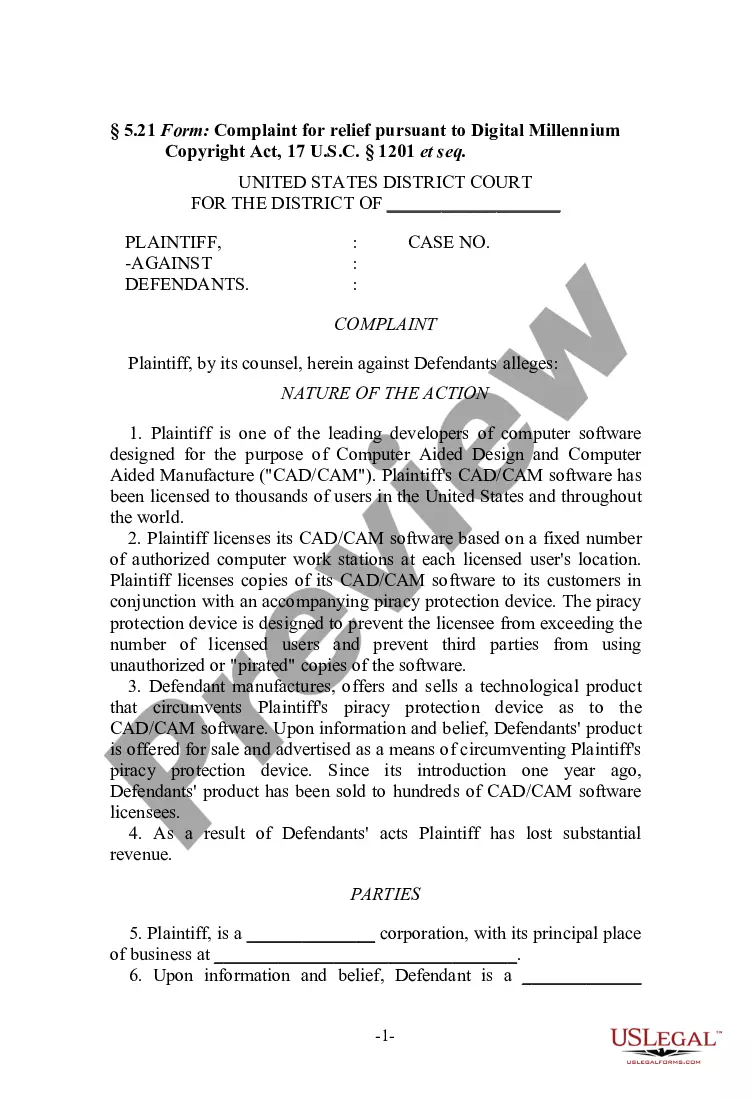
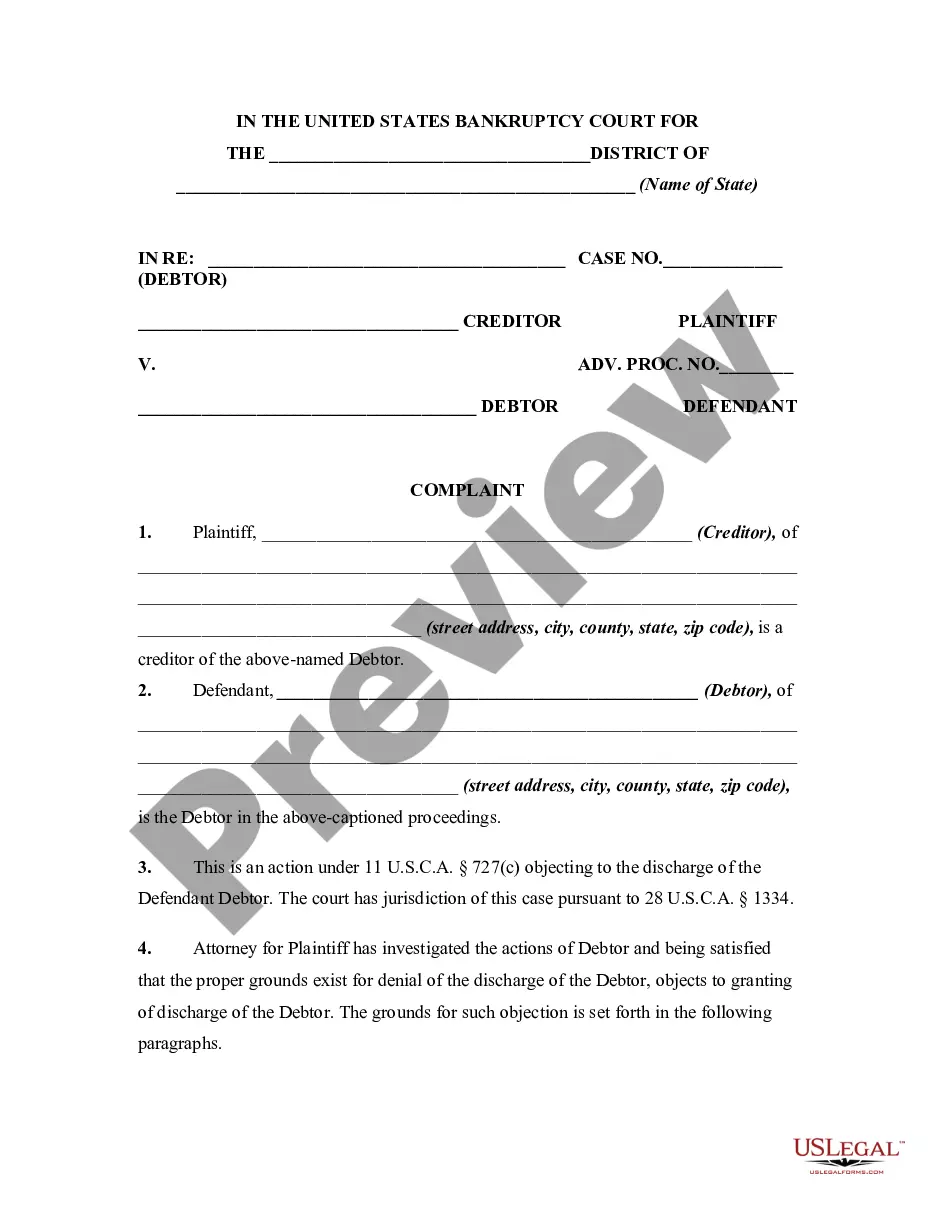
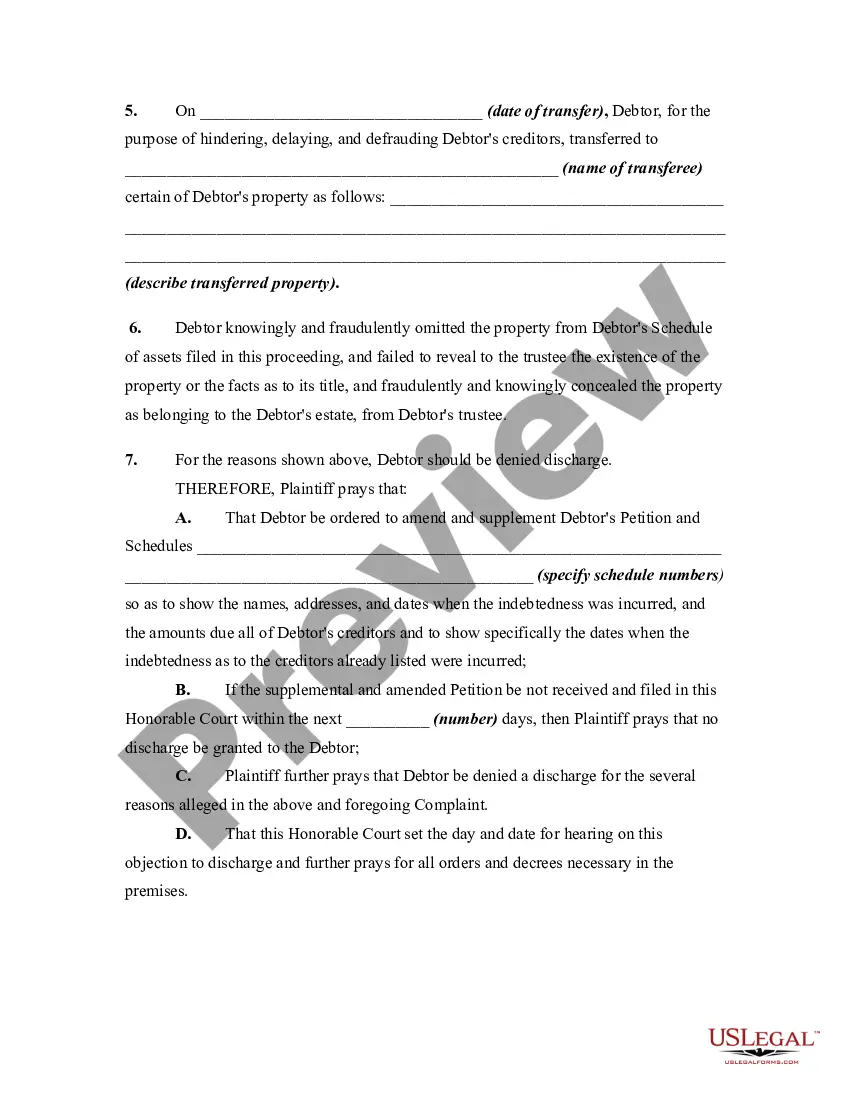
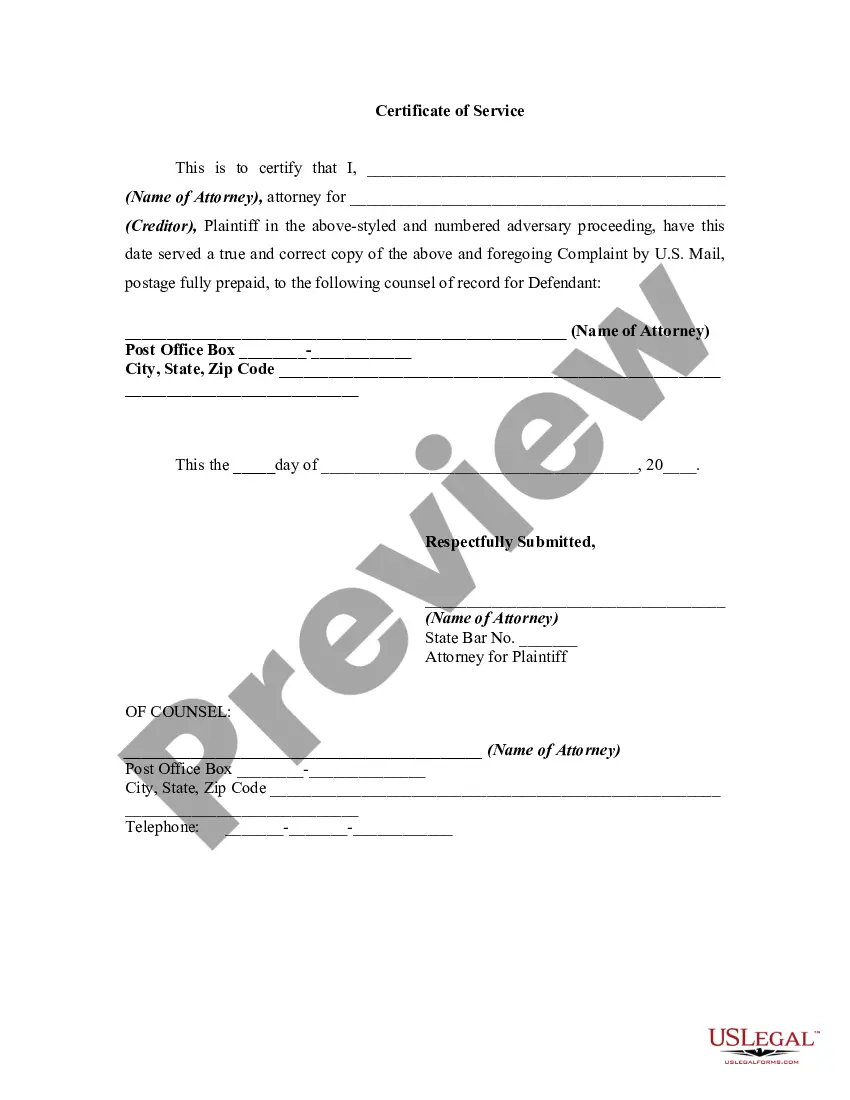
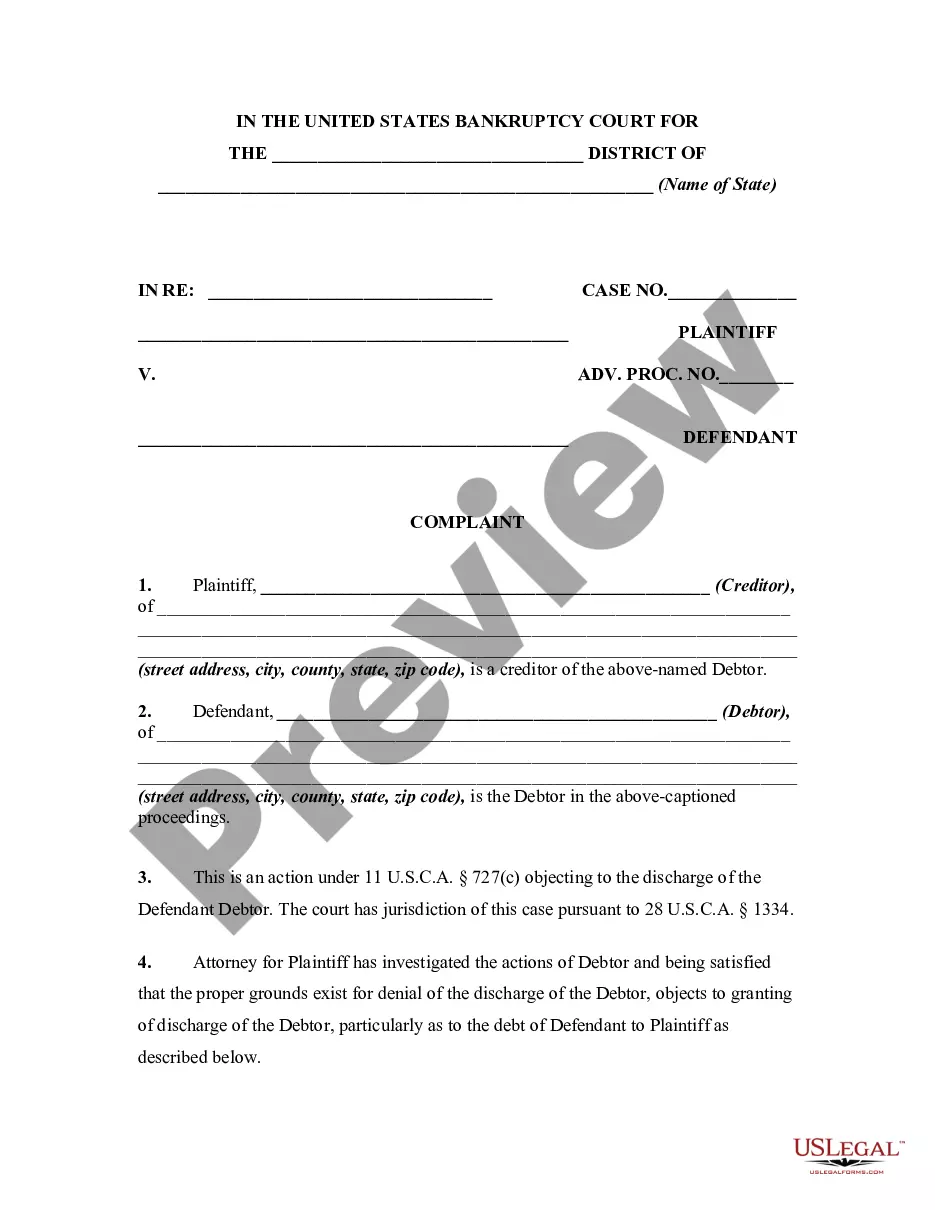
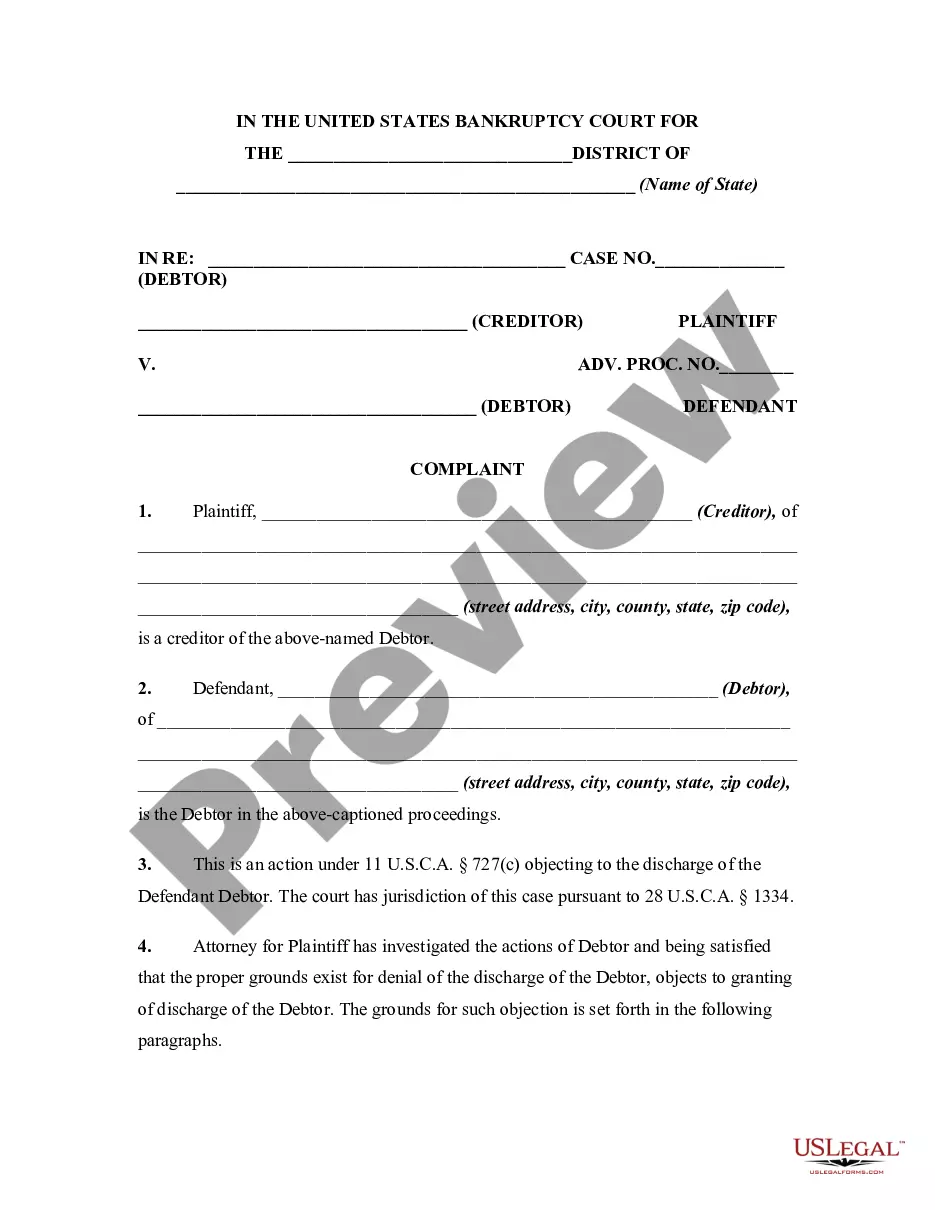
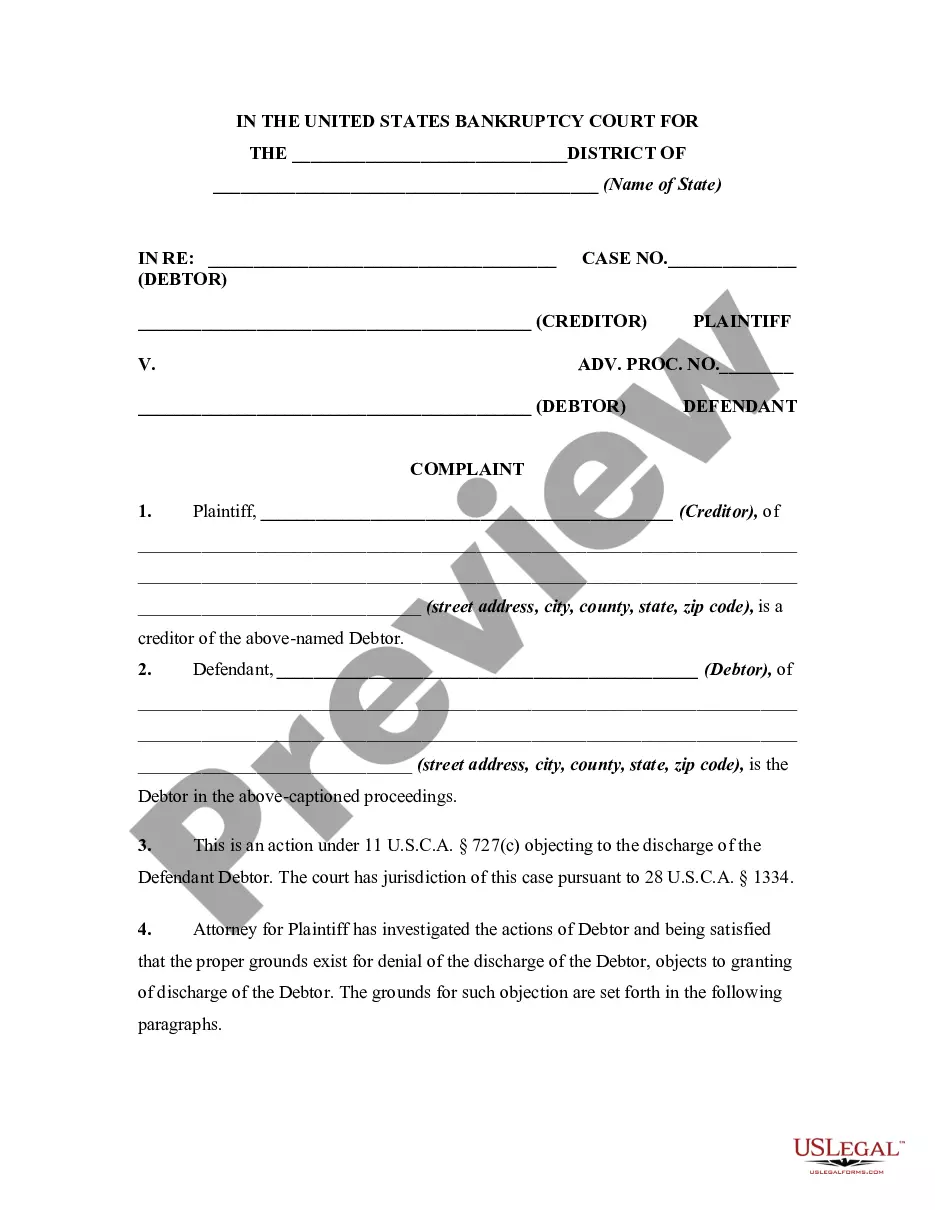
How to fill out Complaint Objecting To Discharge In Bankruptcy Proceedings For Concealment By Debtor And Omitting From Schedules Fraudulently Transferred Property?
- Log in to your US Legal Forms account if you have used the service previously. If your subscription is inactive, renew it based on your payment plan.
- In the Preview mode, review the form descriptions to select the correct one that aligns with your needs and jurisdiction requirements.
- If you need a different template, utilize the Search tab for more options until you find one that fits your needs.
- To proceed, click the Buy Now button and choose a subscription plan that suits you. Create an account to unlock access to the extensive library.
- Complete your purchase by entering your payment details via credit card or PayPal.
- Download the chosen form template to your device and access it anytime in the My Forms section of your profile for easy completion.
With US Legal Forms, individuals gain access to a robust collection of over 85,000 editable legal forms, making the process efficient and user-friendly. Their service also enables you to connect with premium experts for assistance, ensuring your documents are accurate and legally valid.
Don't let the bankruptcy process overwhelm you. Start your journey with US Legal Forms today and simplify your legal needs!
Form popularity
FAQ
Yes, you can declare bankruptcy and still retain your employment. Filing for bankruptcy does not directly impact your job, and many employees continue to work through the process. It is essential to understand how to discharge bankruptcy for an employee, as you may find support and resources to manage both your work and financial responsibilities effectively.
Generally, employers do not have access to your bankruptcy records unless you disclose this information. Bankruptcy filings are public records, but the specifics usually remain private. However, understanding how to discharge bankruptcy for an employee can help you feel more comfortable if the subject arises in conversation.
In bankruptcy, certain debts related to wages can often be discharged, but it depends on the type of bankruptcy filed. If you have wage-related debts that you cannot repay, filing for bankruptcy may help. To understand how to discharge bankruptcy for an employee effectively, you might consider seeking guidance from legal resources like uslegalforms.
When discussing bankruptcy with your employer, it's best to be honest and straightforward. Explain that filing for bankruptcy is a financial decision to manage your debts responsibly. You can emphasize that this process does not affect your job performance, and focus on your commitment to maintaining your responsibilities at work while you discharge bankruptcy how for an employee.
Filing bankruptcy is a legal process that allows individuals or businesses to eliminate or repay their debts under the protection of the bankruptcy court. It serves as a fresh start for those overwhelmed by financial obligations. Understanding how to discharge bankruptcy for an employee can simplify the process, making it easier to regain control of your finances.
Quitting your job before filing for bankruptcy is generally not necessary and could complicate your situation. Maintaining your employment can help stabilize your financial situation while you prepare to discharge bankruptcy how for an employee. It's best to weigh your options carefully and speak with a financial advisor for personalized assistance.
If your employer files for bankruptcy, it can lead to various outcomes, including job loss or changes in your employment terms. You may also experience delays in receiving wages or benefits. To fully understand how to discharge bankruptcy how for an employee in this context, look for legal support to navigate the complexities involved.
When an employer files for bankruptcy, the payment of severance can vary depending on the bankruptcy type and the employer's financial situation. It's possible that severance might be delayed or reduced. To find clarity on discharge bankruptcy how for an employee, staying informed about your rights and seeking expert advice is key.
Filing for bankruptcy does not directly impact your payroll; however, it may affect your future earnings and job stability. Employees often worry about their jobs when pursuing bankruptcy, but understanding the process is crucial. To discharge bankruptcy how for an employee, consider consulting resources such as USLegalForms to navigate this concern smoothly.
Several factors may disqualify you from filing for bankruptcy, such as prior bankruptcy filings or failing to complete required credit counseling. Additionally, actions like committing fraud or illegal activities can impact your eligibility. To discharge bankruptcy how for an employee properly, it is advisable to review these qualifications carefully and seek professional guidance.