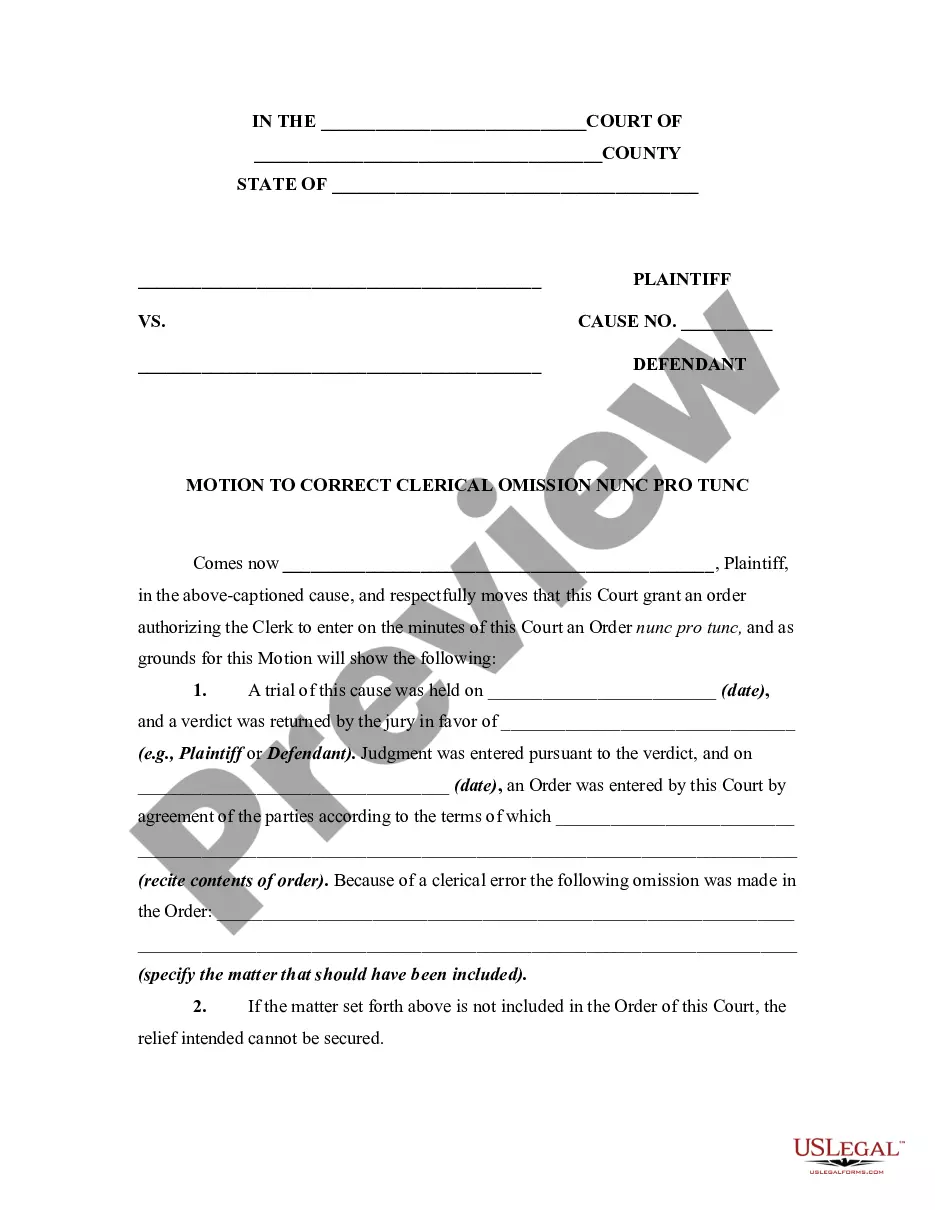
Nunc Pro Tunc Example Form Oklahoma
Description

Get your form ready online
Our built-in tools help you complete, sign, share, and store your documents in one place.
Make edits, fill in missing information, and update formatting in US Legal Forms—just like you would in MS Word.
Download a copy, print it, send it by email, or mail it via USPS—whatever works best for your next step.
Sign and collect signatures with our SignNow integration. Send to multiple recipients, set reminders, and more. Go Premium to unlock E-Sign.
If this form requires notarization, complete it online through a secure video call—no need to meet a notary in person or wait for an appointment.
We protect your documents and personal data by following strict security and privacy standards.

Make edits, fill in missing information, and update formatting in US Legal Forms—just like you would in MS Word.

Download a copy, print it, send it by email, or mail it via USPS—whatever works best for your next step.

Sign and collect signatures with our SignNow integration. Send to multiple recipients, set reminders, and more. Go Premium to unlock E-Sign.

If this form requires notarization, complete it online through a secure video call—no need to meet a notary in person or wait for an appointment.

We protect your documents and personal data by following strict security and privacy standards.
Looking for another form?
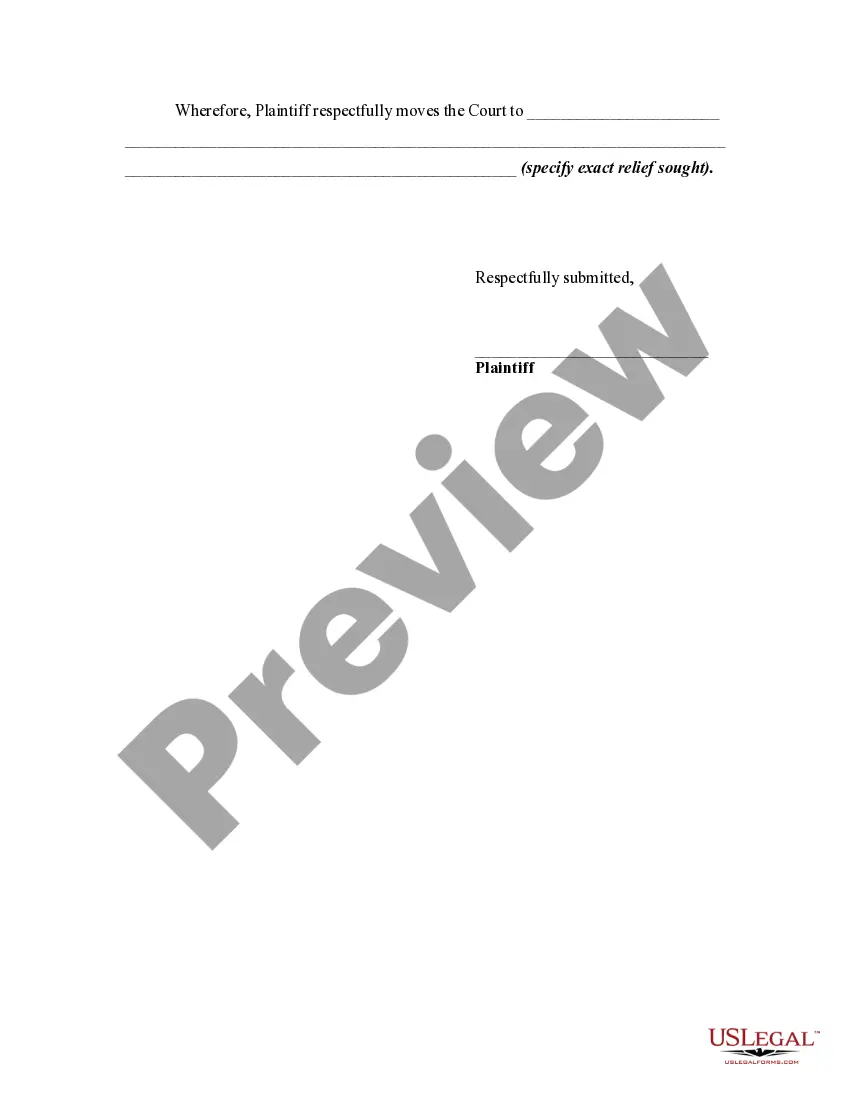
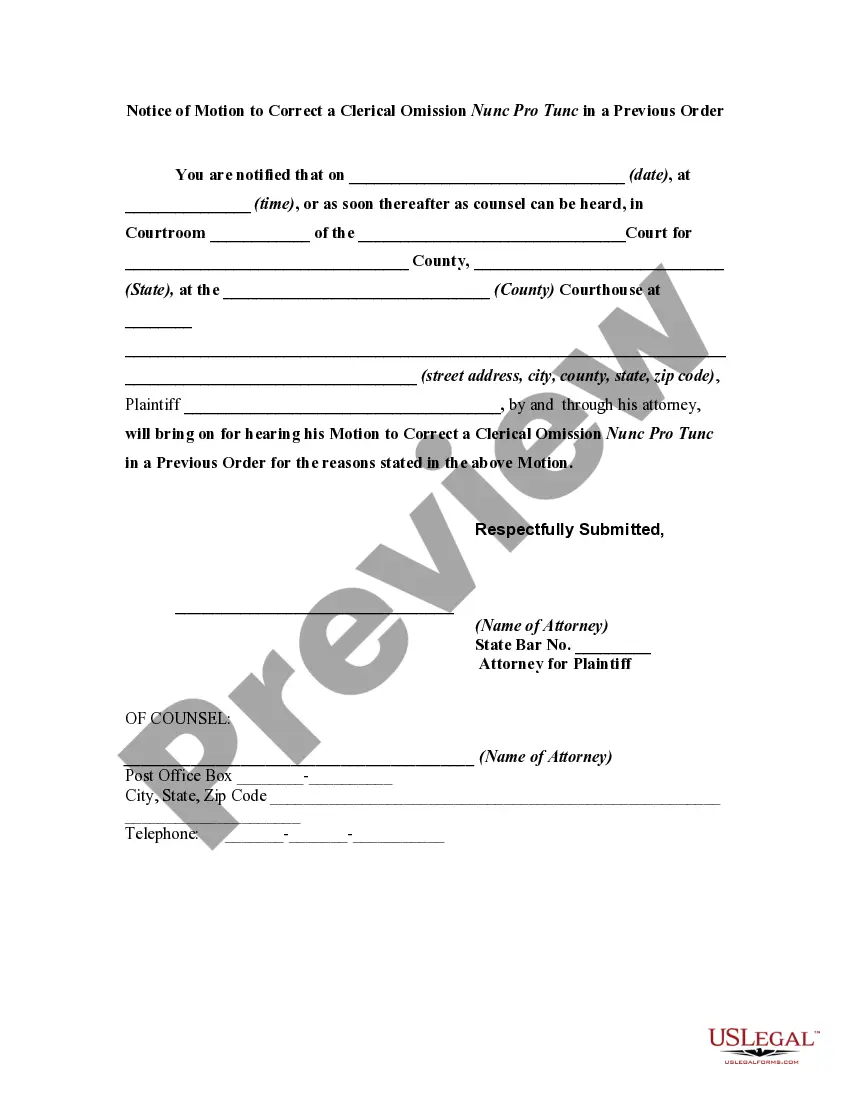
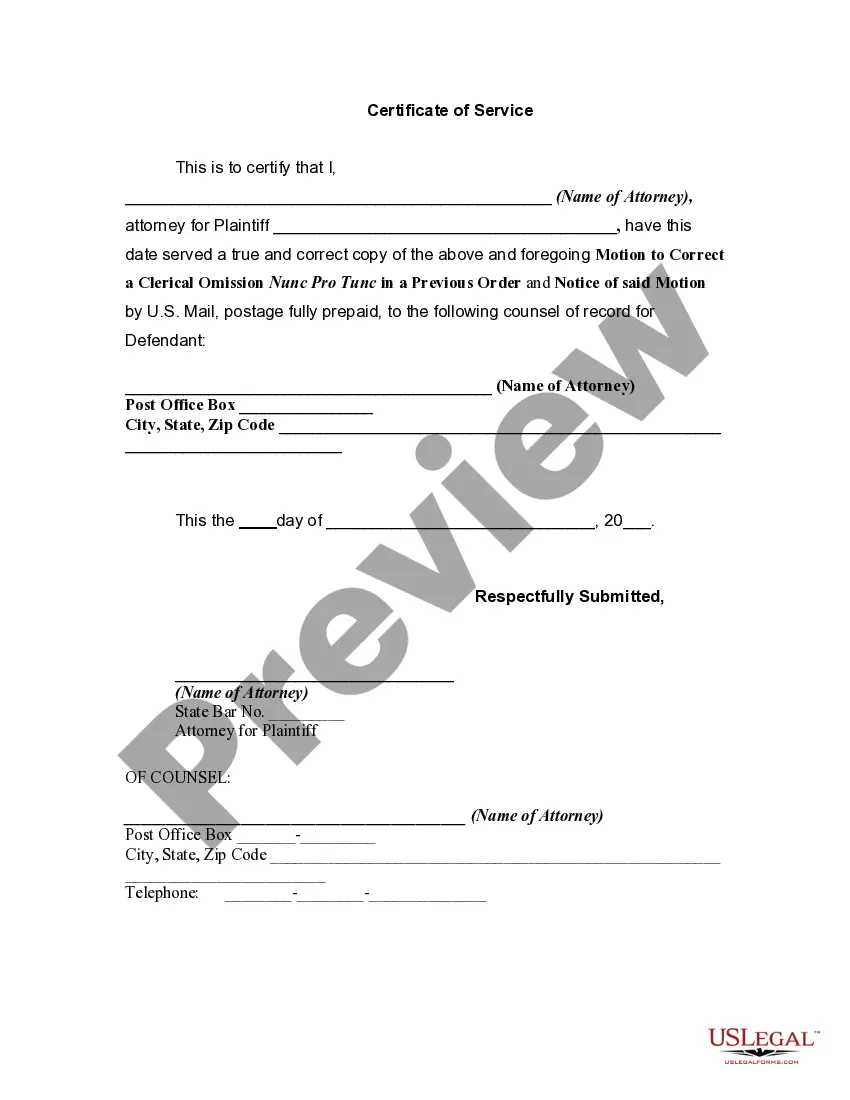
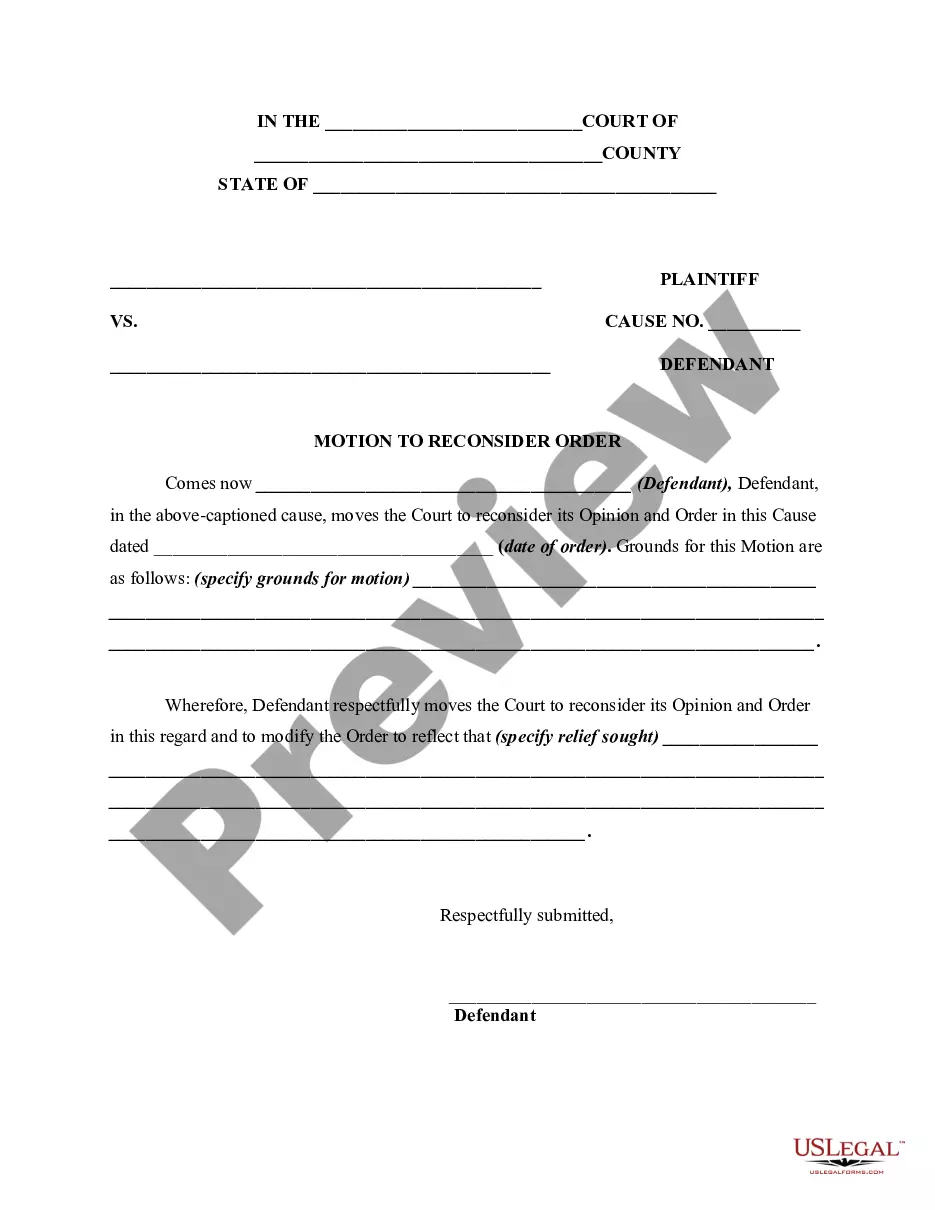
How to fill out Motion To Correct A Clerical Omission Nunc Pro Tunc In A Previous Order?
Identifying a reliable source for obtaining the latest and suitable legal templates is a significant part of navigating bureaucracy.
Locating the correct legal documents requires precision and careful consideration, which is why it is crucial to obtain samples of Nunc Pro Tunc Example Form Oklahoma exclusively from trustworthy providers, such as US Legal Forms. An incorrect template may cost you time and hinder your progress.
Once you have the form on your device, you can edit it with the editor or print it out and complete it by hand. Eliminate the hassles associated with your legal documentation. Explore the extensive US Legal Forms catalog to discover legal templates, assess their relevance to your circumstances, and download them immediately.
- Utilize the catalog menu or search bar to locate your template.
- Access the form’s details to verify it meets the criteria of your state and county.
- View the form preview, if accessible, to ensure it is indeed the document you need.
- Return to the search to find the correct document if the Nunc Pro Tunc Example Form Oklahoma does not fulfill your needs.
- If you are confident about the form’s pertinence, download it.
- If you are a registered user, click Log in to verify and access your selected templates in My documents.
- If you do not have an account, click Buy now to purchase the template.
- Select the pricing option that best suits your requirements.
- Proceed with the registration to complete your purchase.
- Finalize your transaction by choosing a payment method (credit card or PayPal).
- Choose the document format for downloading the Nunc Pro Tunc Example Form Oklahoma.
Form popularity
FAQ
'Nunc pro tunc' literally translates to 'now for then.' This term is used in legal contexts to make actions effective from an earlier date. Understanding this concept is essential when utilizing a nunc pro tunc example form in Oklahoma, as it clarifies how past intentions are recognized in present legal discussions.
Nunc pro tunc is a Latin term meaning "now for then." Generally, this refers to an action taken by a court that applies retroactively to correct an earlier ruling.
It is generally understood that orders take effect on the date they are granted. 1 However, the doctrine of nunc pro tunc, a Latin expression that means ?now for then? 2 allows the courts to give an action retroactive legal effect as though it had been performed at a precise earlier date.
How is a Nunc Pro Tunc Judgment Requested in Texas? In Texas, a nunc pro tunc judgment can be requested by either party to the case or by the court itself. The request must be made in writing and must specify the error that is being corrected.
Nunc pro tunc is a Latin term meaning "now for then." Generally, this refers to an action taken by a court that applies retroactively to correct an earlier ruling.
With or without notice or hearing, the Commission may make or cause to be made an order nunc pro tunc to correct any clerical errors, mistakes, or omissions in an order, or as to timely mailing of the order by the Commission or otherwise to cause the order to correctly reflect the judgment or action of such Commission.