Blank Court Motion
Description

Get your form ready online
Our built-in tools help you complete, sign, share, and store your documents in one place.
Make edits, fill in missing information, and update formatting in US Legal Forms—just like you would in MS Word.
Download a copy, print it, send it by email, or mail it via USPS—whatever works best for your next step.
Sign and collect signatures with our SignNow integration. Send to multiple recipients, set reminders, and more. Go Premium to unlock E-Sign.
If this form requires notarization, complete it online through a secure video call—no need to meet a notary in person or wait for an appointment.
We protect your documents and personal data by following strict security and privacy standards.

Make edits, fill in missing information, and update formatting in US Legal Forms—just like you would in MS Word.

Download a copy, print it, send it by email, or mail it via USPS—whatever works best for your next step.

Sign and collect signatures with our SignNow integration. Send to multiple recipients, set reminders, and more. Go Premium to unlock E-Sign.

If this form requires notarization, complete it online through a secure video call—no need to meet a notary in person or wait for an appointment.

We protect your documents and personal data by following strict security and privacy standards.
Looking for another form?

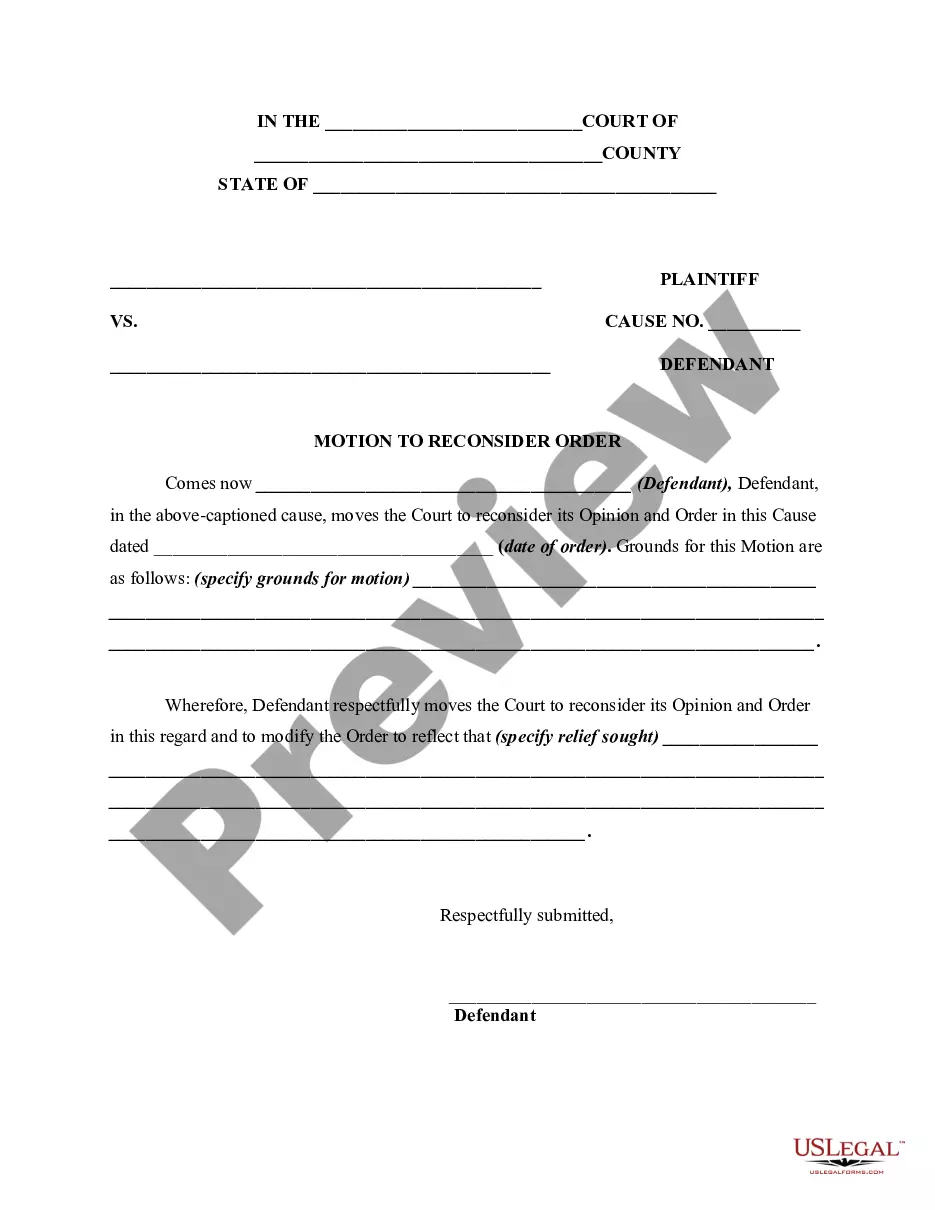
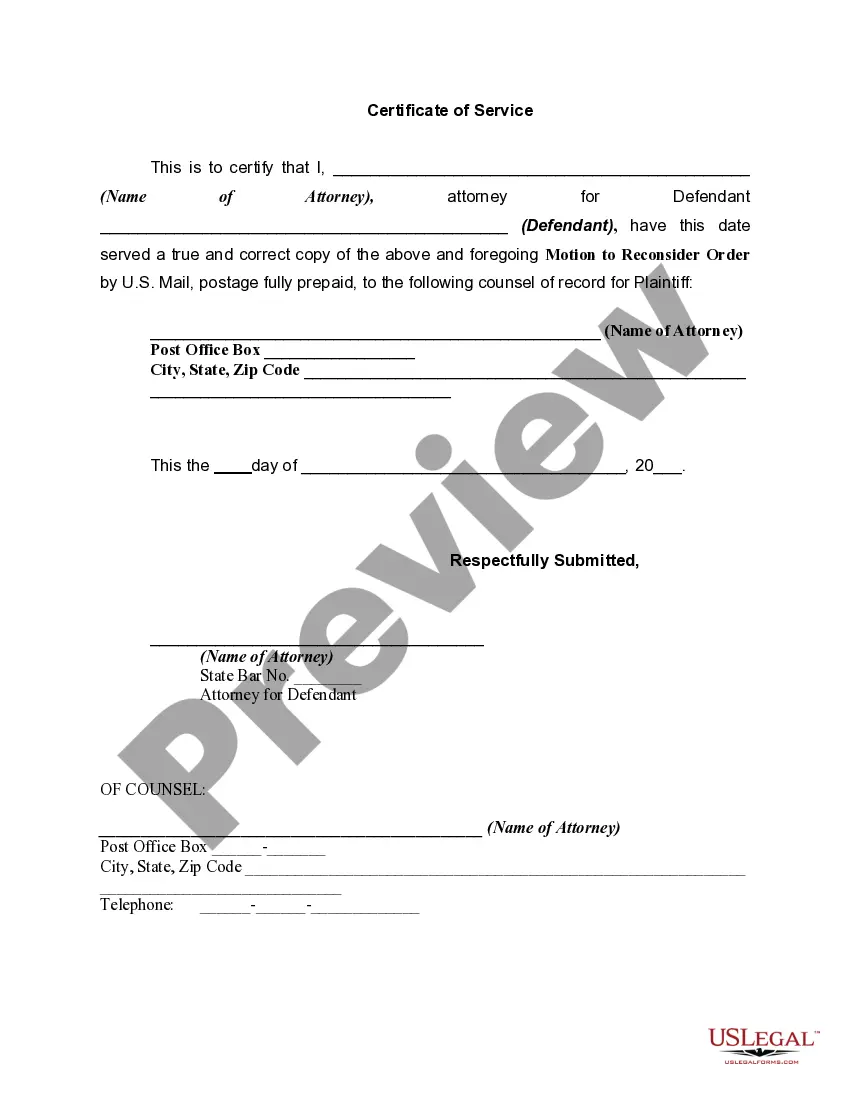
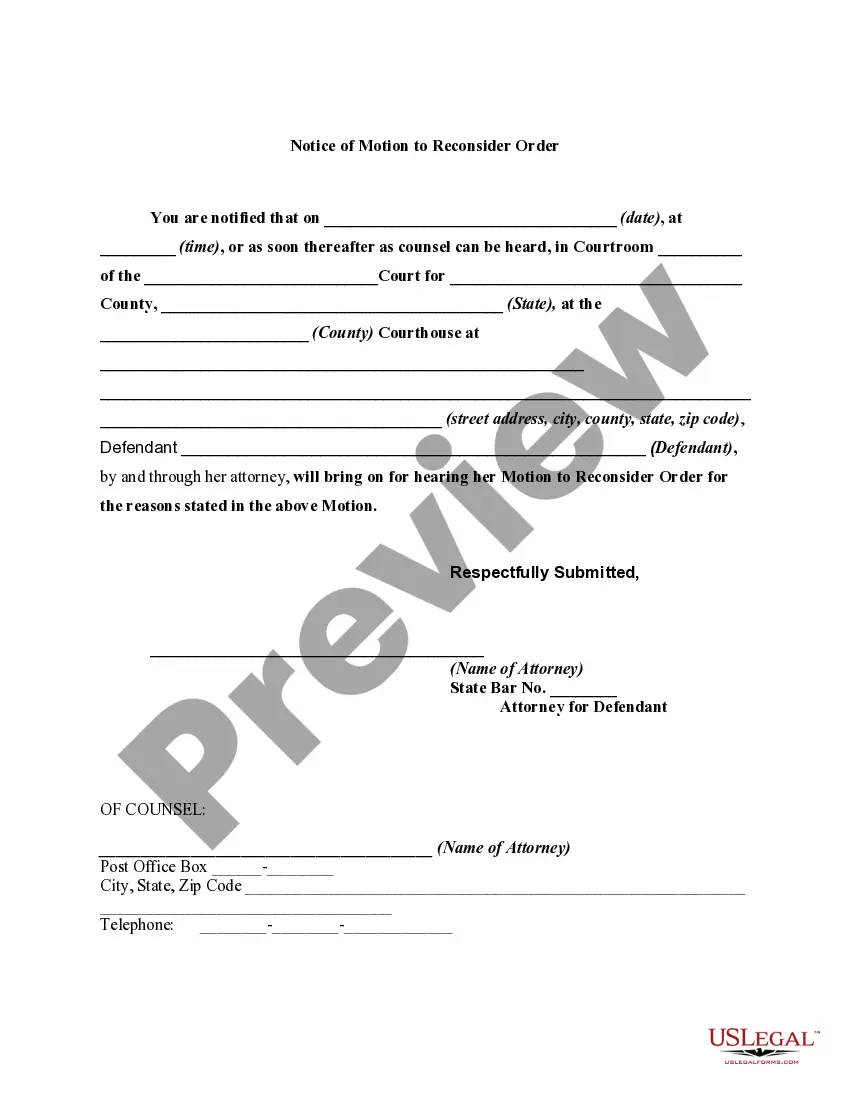
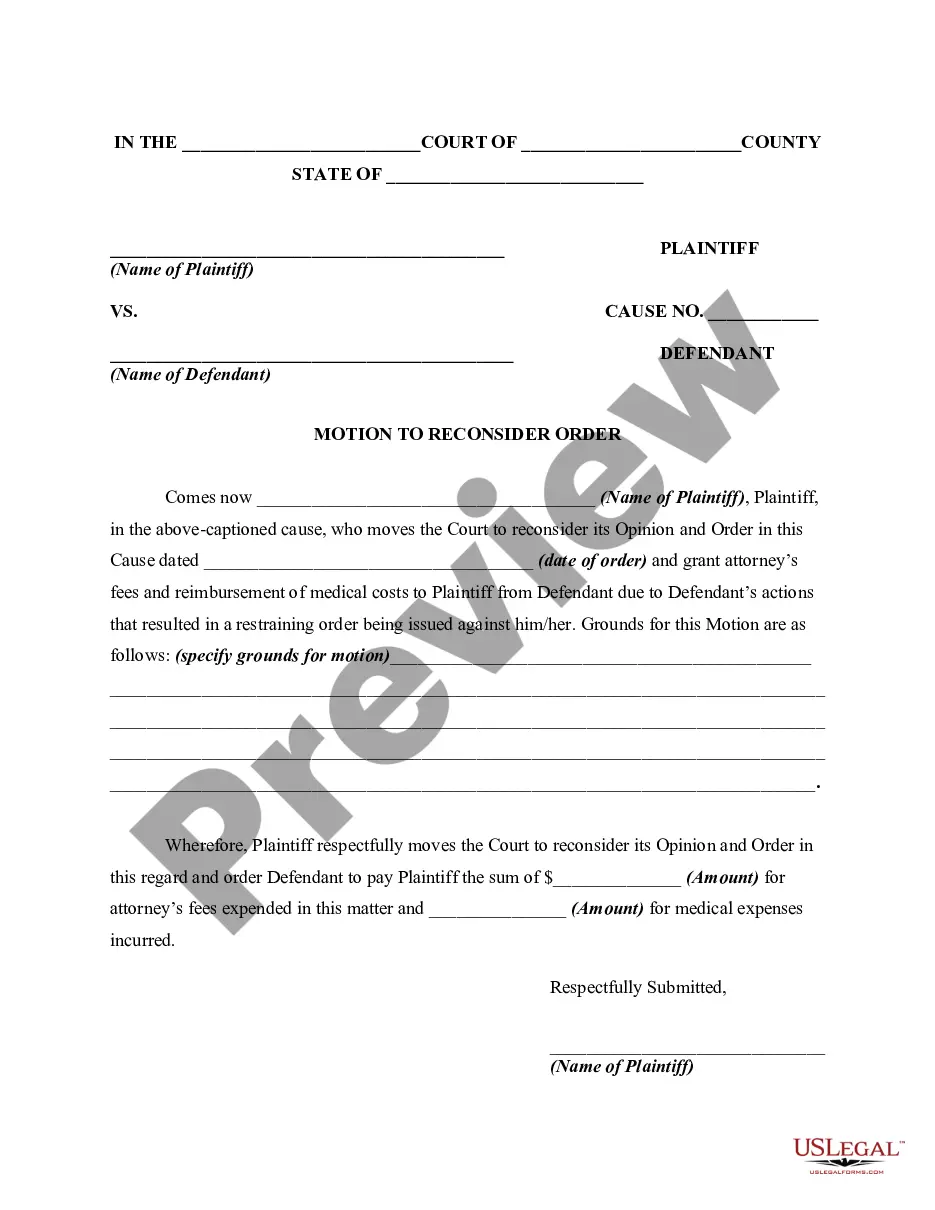
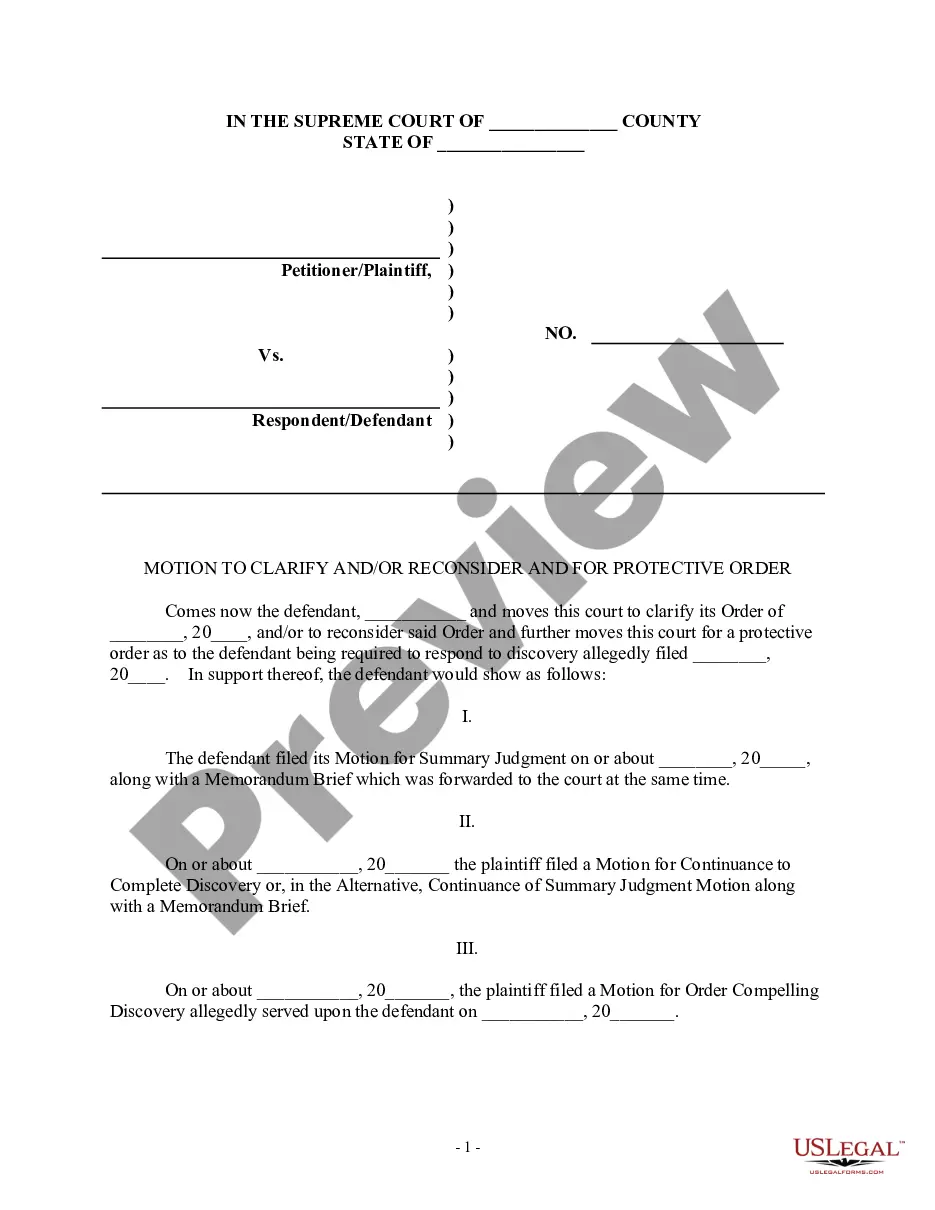
How to fill out Motion Of Defendant Requesting Court To Reconsider An Order And Notice Of Motion To Plaintiff?
- If you're a returning user, simply log in to your account, ensuring your subscription is current, then locate and download the desired blank court motion template.
- For first-time users, start by examining the form preview and description to confirm it meets your local jurisdiction's requirements.
- Should you need a different template, use the Search tab to explore additional options until you find a suitable blank court motion.
- Once you have the right form, click the Buy Now button to select your preferred subscription plan and create your account.
- Complete your purchase by entering your payment details through a credit card or PayPal.
- Finally, download the blank court motion template to your device, and access it anytime in the My Forms section of your profile.
Using US Legal Forms provides you with access to an extensive collection of over 85,000 fillable and editable legal forms, ensuring you have the right tools to create precise and legally sound documents.
Take control of your legal needs today by visiting US Legal Forms and make your legal document preparation seamless. Start your journey now!
Form popularity
FAQ
Writing a motion letter to a judge should be approached with professionalism and clarity. Start by addressing the judge respectfully, state your case clearly, and include a brief overview of the motion's purpose. Ensure to attach any necessary documents, such as a blank court motion form, to support your request.
Yes, there are multiple court systems in the U.S., including federal and state courts, each with its own procedures and requirements. When filing a motion, it is vital to understand the specific court system relevant to your case. Utilizing resources like USLegalForms can help simplify navigating the appropriate forms for each court.
To file a motion without a lawyer, start by drafting a motion using a blank court motion template. Follow court rules for formatting and content, and submit the motion to the court clerk. Don't forget to serve copies to all relevant parties, ensuring that you comply with the legal requirements for notification.
When someone files a motion in court, the court will review the motion and schedule a hearing, which allows both parties to present their arguments. After hearing the evidence, the judge will issue a ruling based on the legal standards and facts presented. This process often requires careful documentation, like a blank court motion, to ensure clarity and effectiveness.
Writing a court motion involves clear and concise language. Begin with a title that specifies the type of motion you are filing. Include the relevant facts, legal arguments, and a request for the court’s help, ensuring to utilize a blank court motion template for guidance.
Filing a motion in court without an attorney is absolutely possible. Start by completing a blank court motion form specific to your case type. Next, submit this form to the court clerk, along with any required fees, and ensure you follow all local rules for service to other parties involved in your case.
The success rate for representing yourself in court varies, but studies suggest that individuals who use prepared documents, like a blank court motion, often fare better. Self-representation requires thorough understanding and careful preparation of motions and arguments. Your familiarity with the case and command of the legal documents play crucial roles in your success.
To file a blank motion, you need to prepare the motion document according to court rules. After completing the necessary forms, you can file them at the court clerk’s office. This process includes paying any required fees, so make sure your blank court motion meets all local requirements for successful filing.
The formatting of a court motion typically follows specific guidelines set by your jurisdiction. You should align your text, include proper headings, and utilize a standard font size. Important sections, such as the title and your arguments, should be distinct and easy to navigate to ensure your blank court motion is professional and readable.
Writing a motion involves outlining your argument, providing factual support, and citing relevant laws. Begin with introductory information, then articulate the specific relief you seek and why it is justified. A well-structured blank court motion should be clear, to the point, and compelling to the judge.