Plaintiff Mediation Statement With Join
Description
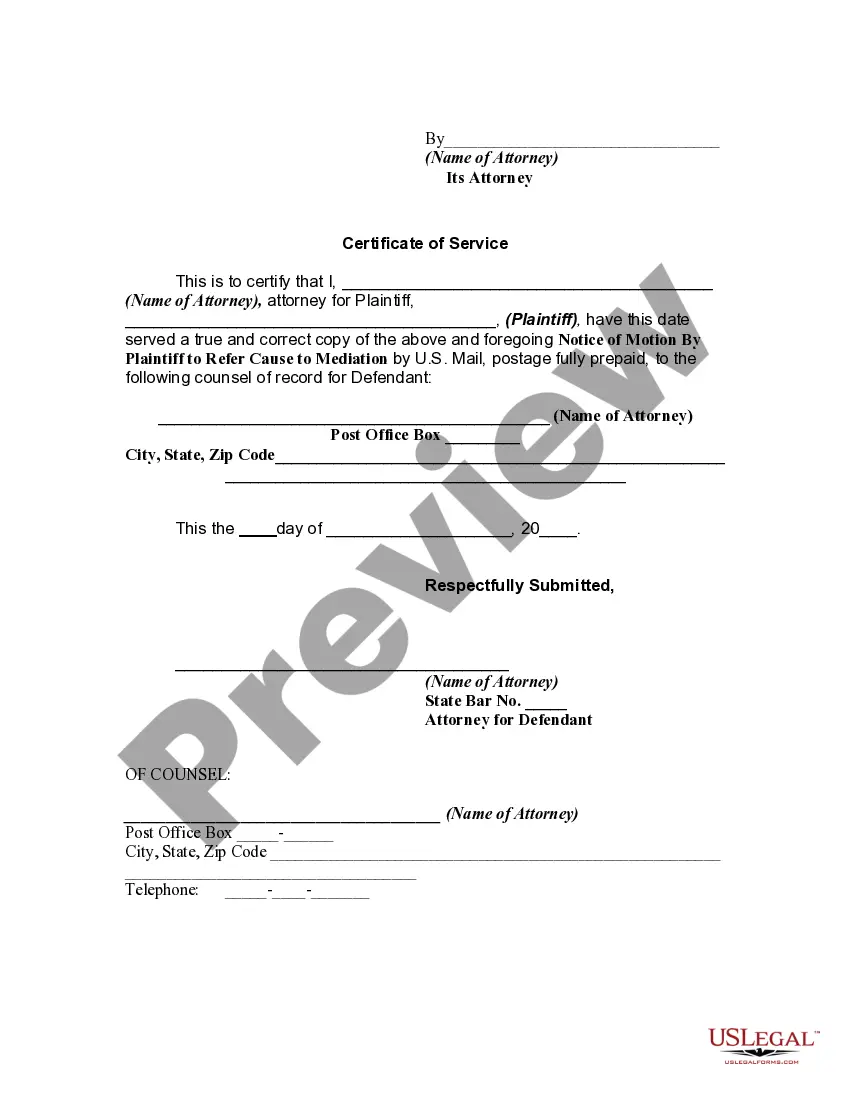
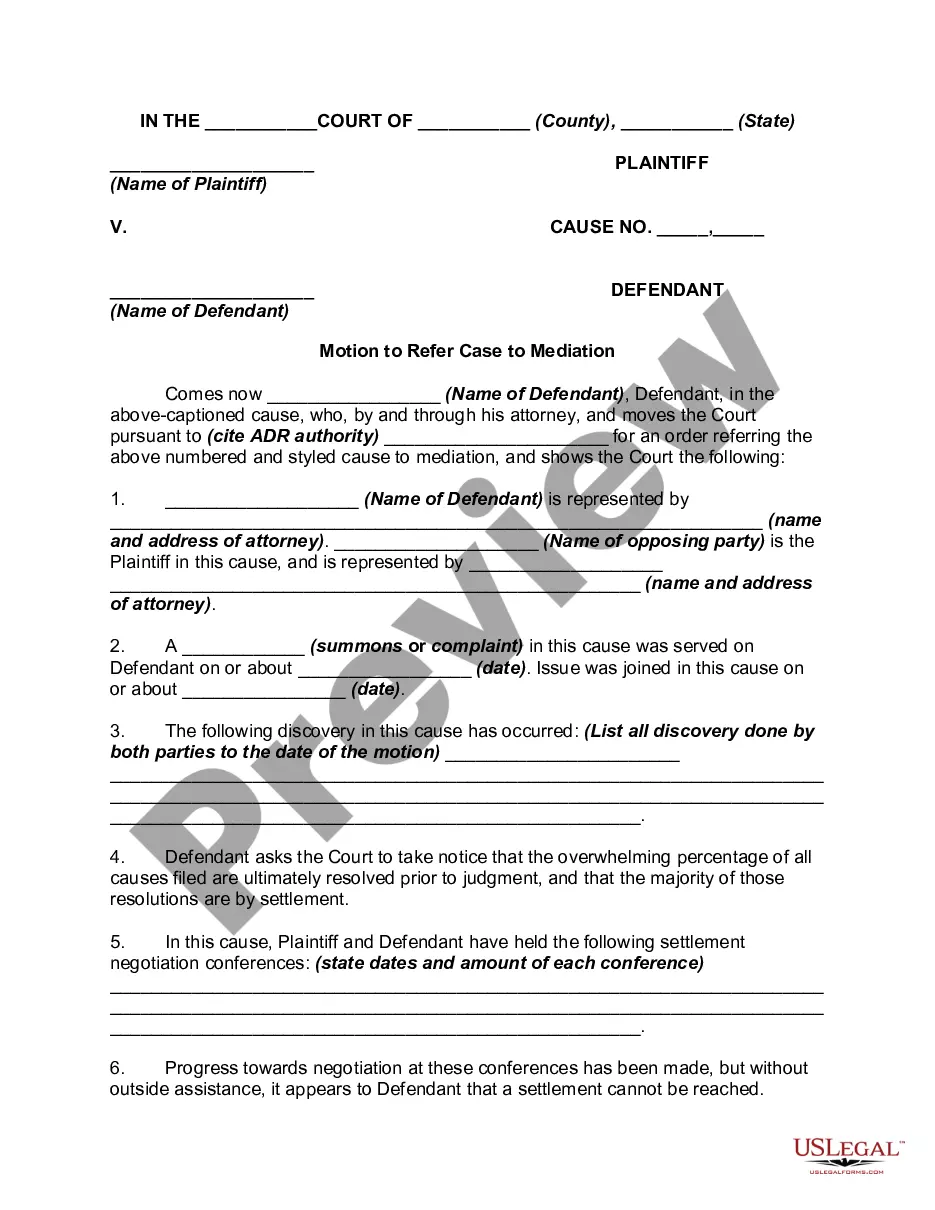

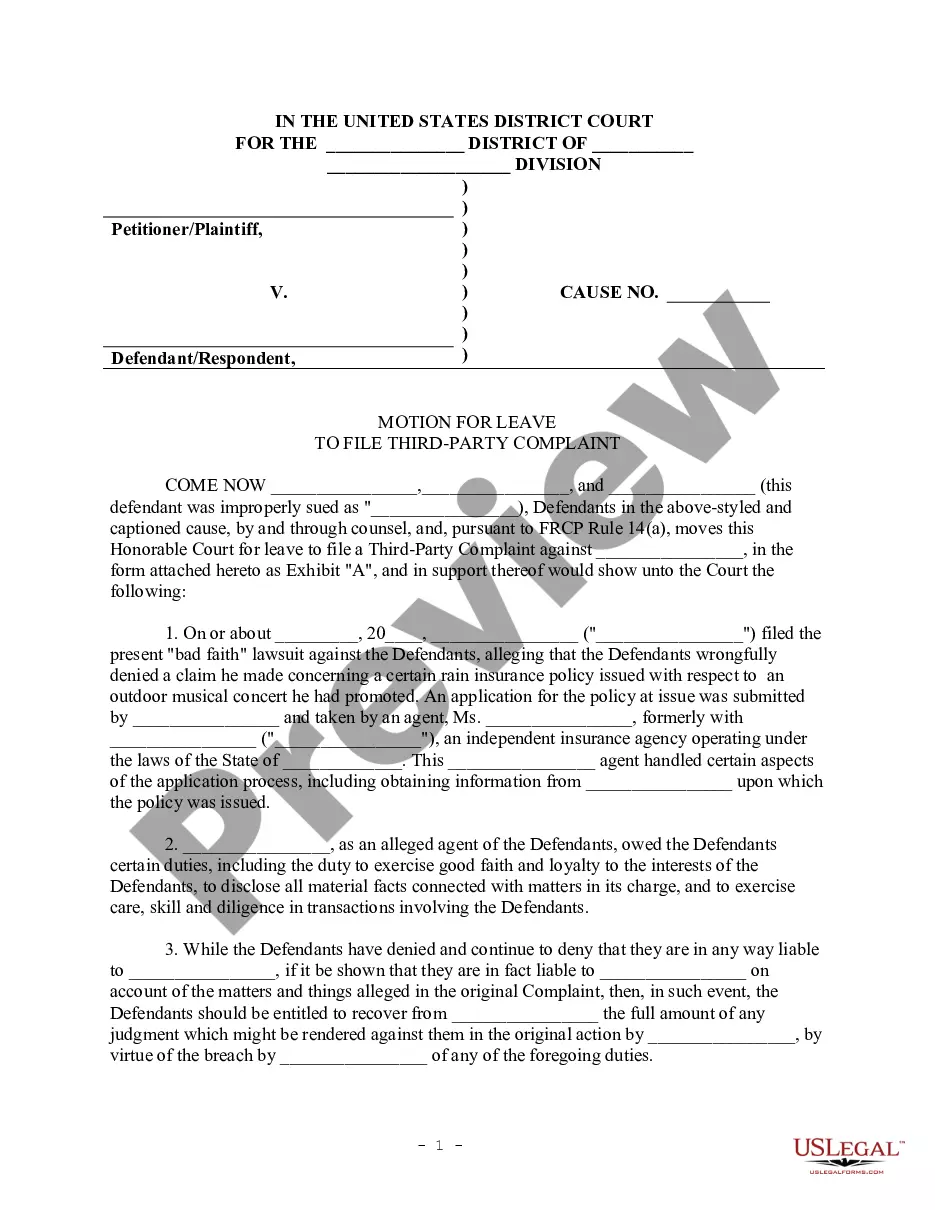
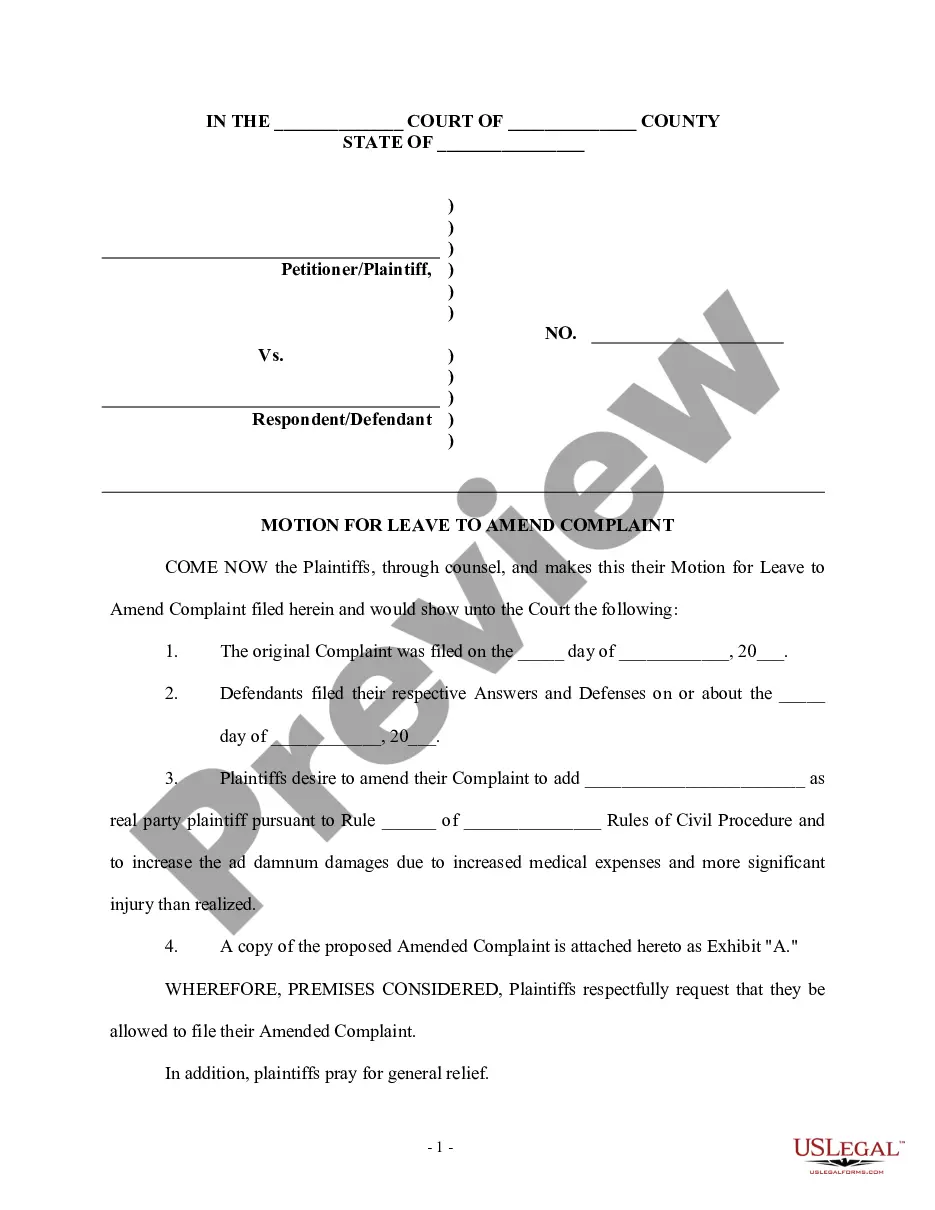
Get your form ready online
Our built-in tools help you complete, sign, share, and store your documents in one place.
Make edits, fill in missing information, and update formatting in US Legal Forms—just like you would in MS Word.
Download a copy, print it, send it by email, or mail it via USPS—whatever works best for your next step.
Sign and collect signatures with our SignNow integration. Send to multiple recipients, set reminders, and more. Go Premium to unlock E-Sign.
If this form requires notarization, complete it online through a secure video call—no need to meet a notary in person or wait for an appointment.
We protect your documents and personal data by following strict security and privacy standards.

Make edits, fill in missing information, and update formatting in US Legal Forms—just like you would in MS Word.

Download a copy, print it, send it by email, or mail it via USPS—whatever works best for your next step.

Sign and collect signatures with our SignNow integration. Send to multiple recipients, set reminders, and more. Go Premium to unlock E-Sign.

If this form requires notarization, complete it online through a secure video call—no need to meet a notary in person or wait for an appointment.

We protect your documents and personal data by following strict security and privacy standards.
Looking for another form?
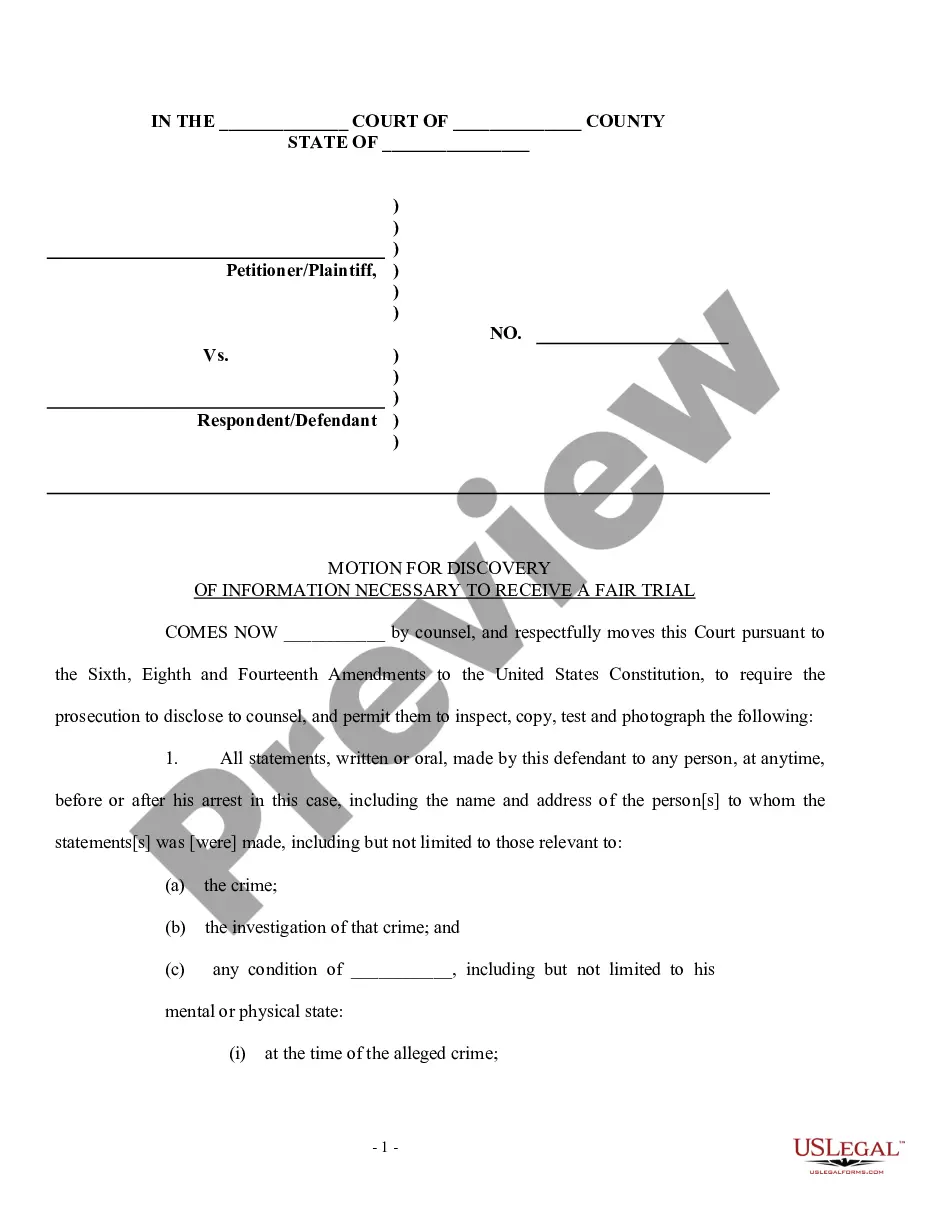


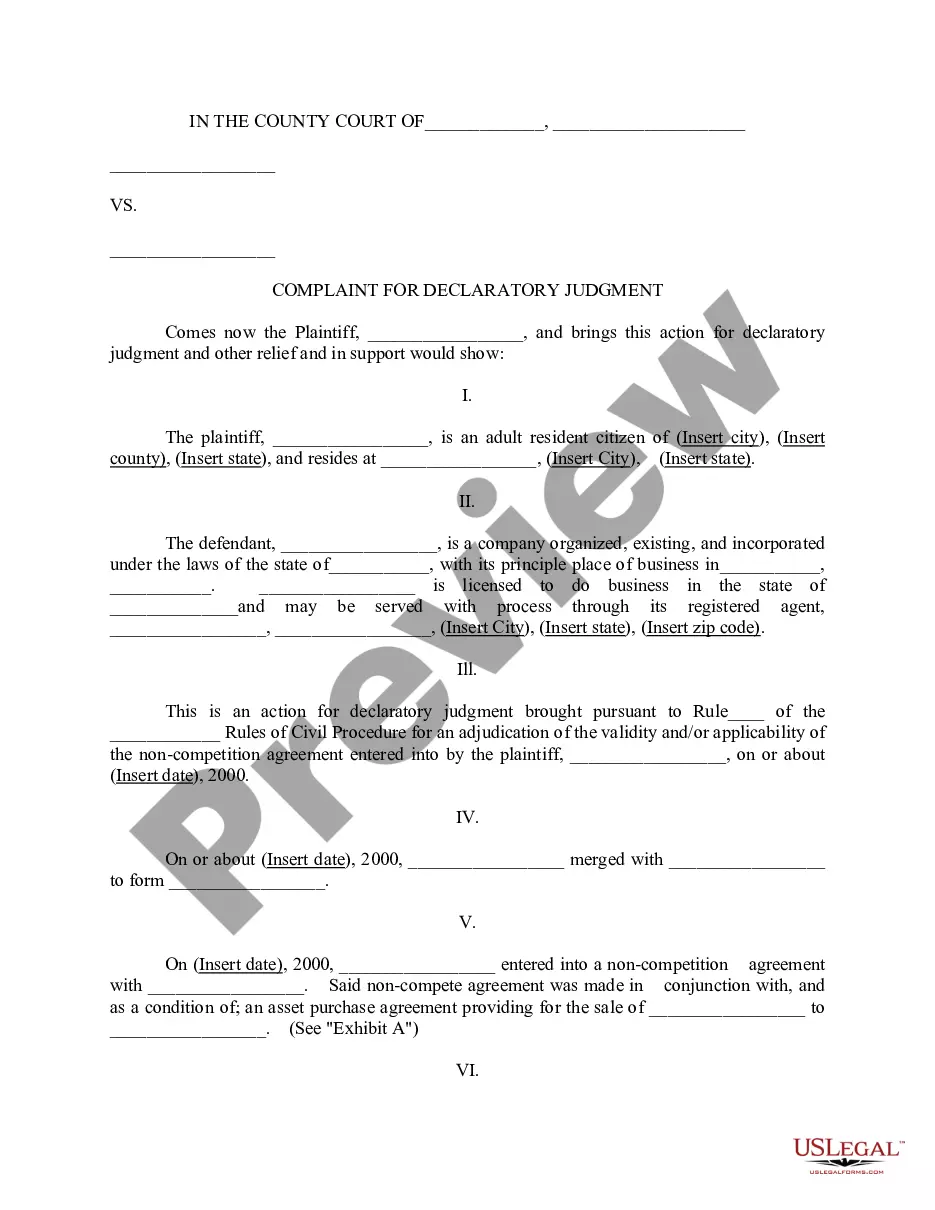

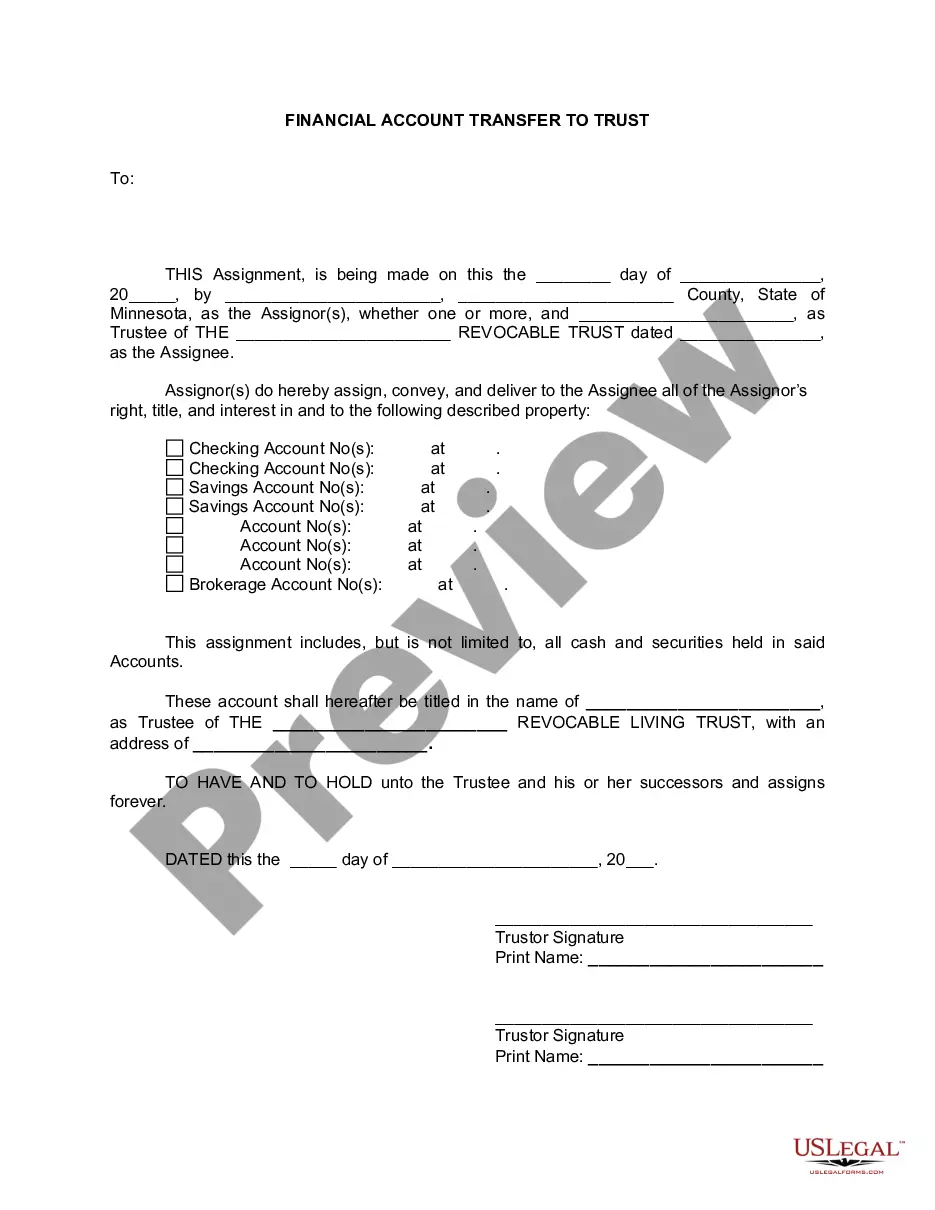



How to fill out Motion By Plaintiff To Refer Cause To Mediation?
Utilizing legal document examples that comply with federal and state regulations is crucial, and the web provides numerous choices to select from.
However, what’s the purpose of spending time looking for a properly drafted Plaintiff Mediation Statement With Join example online if the US Legal Forms digital library has already compiled such templates in one location.
US Legal Forms stands as the largest online legal repository with more than 85,000 customizable templates prepared by attorneys for various business and personal situations.
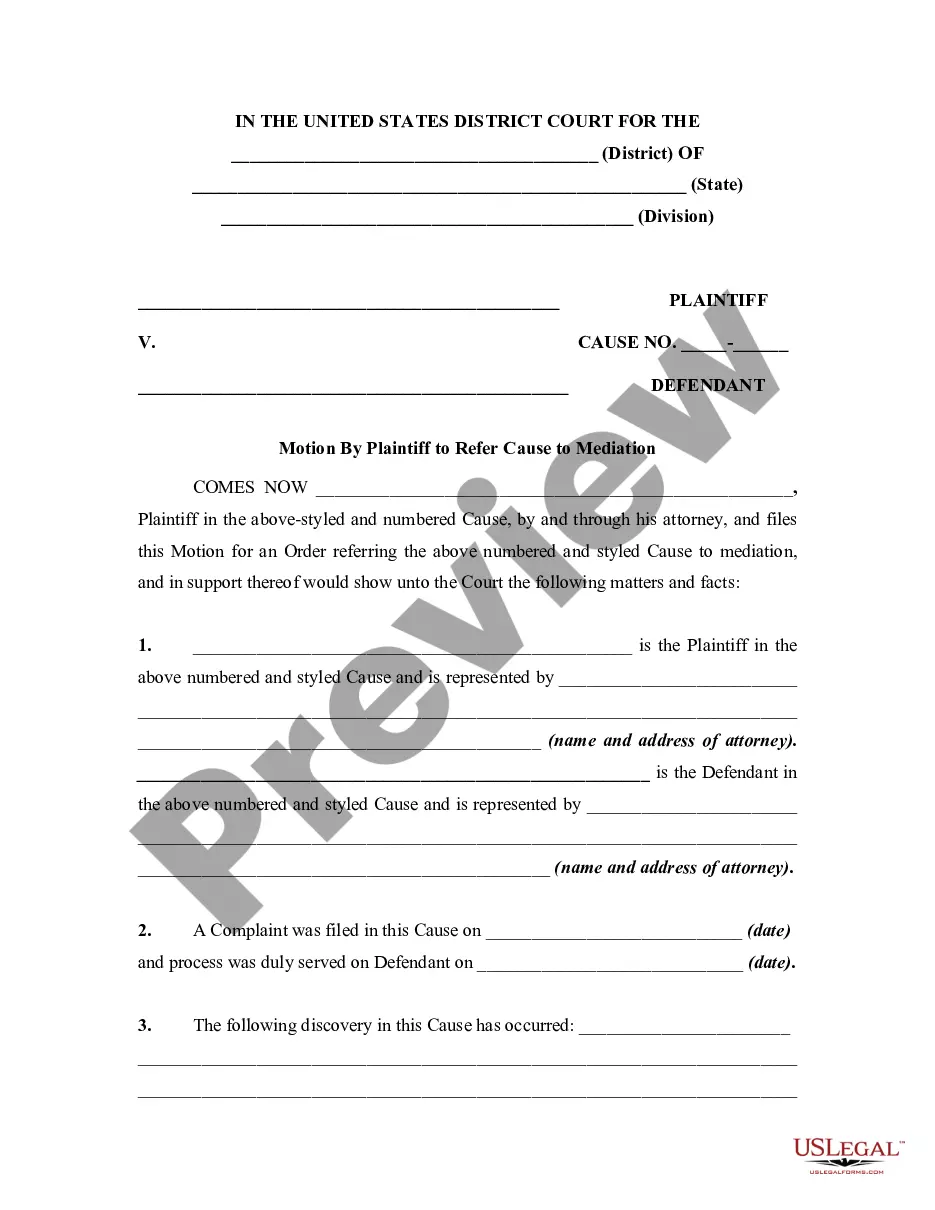
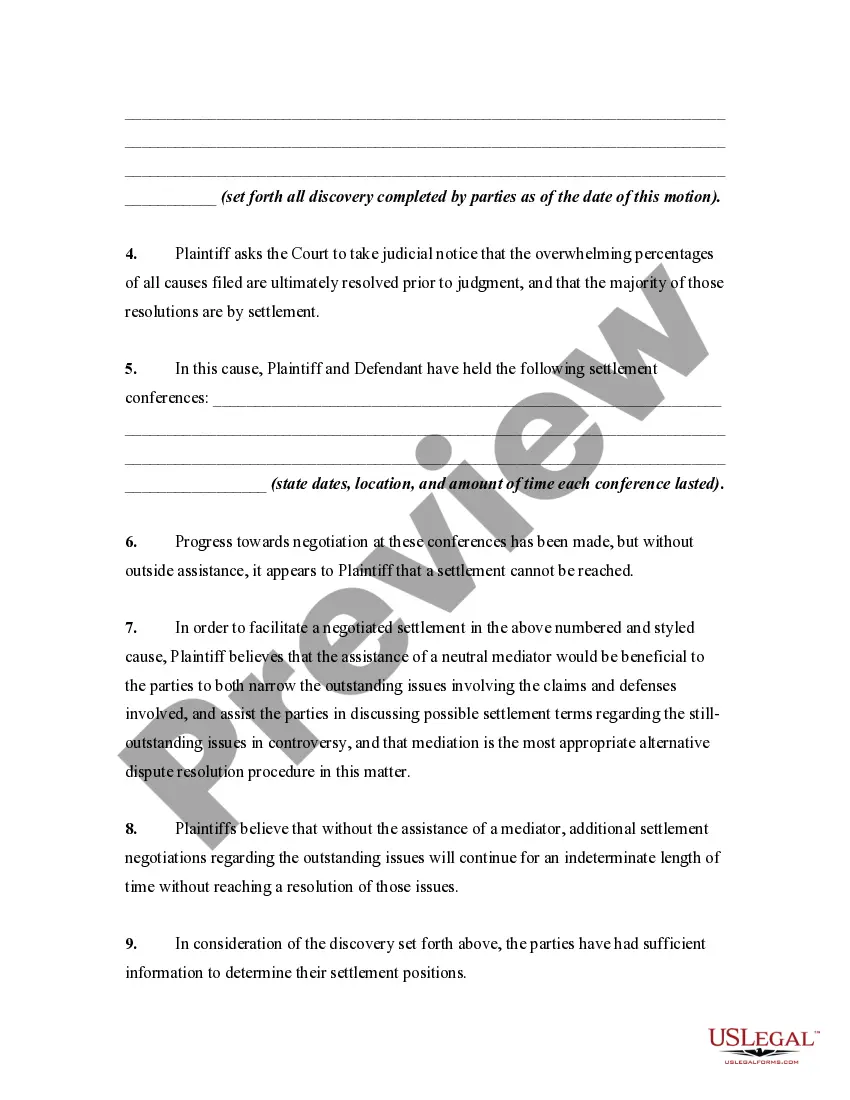
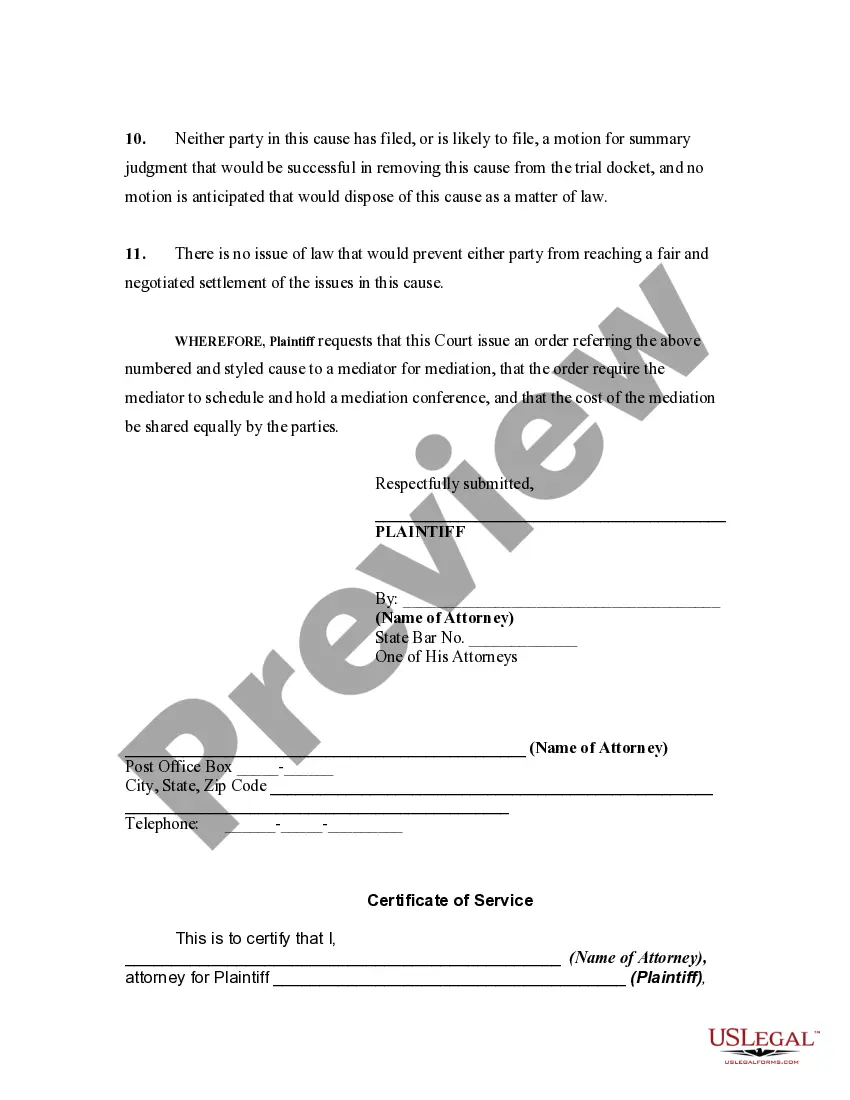
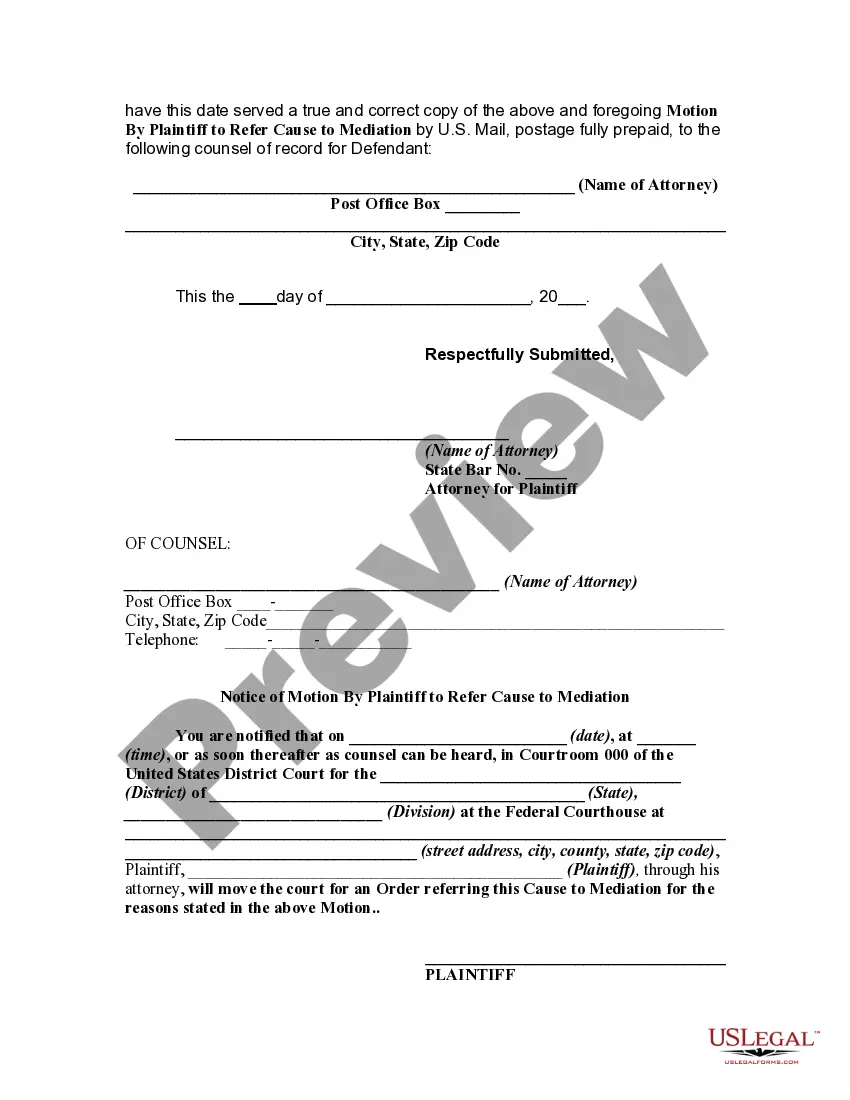
Review the template using the Preview function or the text outline to ensure it fulfills your requirements.
- They are straightforward to navigate with all documents categorized by state and intended use.
- Our specialists stay informed about legislative alterations, ensuring your documents are consistently up to date and compliant when obtaining a Plaintiff Mediation Statement With Join from our platform.
- Acquiring a Plaintiff Mediation Statement With Join is simple and swift for both existing and new users.
- If you have an account with an active subscription, Log In and secure the document template you require in the proper format.
- If you are unfamiliar with our site, follow the steps outlined below.
Form popularity
FAQ
I'm (Mediator's Name) and this is (Mediator's Name). We will be serving as your Mediators. You may call us by our first names; how would you like us to address you? The purpose of our meeting is to help you work out an understanding acceptable to both of you to resolve the situation that has been developing for you.
Good afternoon, my name is _______________ and I am serving as your mediator today. I am a [certified*] mediator trained to assist in resolving disputes such as the one before us today. I am pleased to be here to assist you in working through your issues and believe you will find mediation to be a very helpful process.
Provide a concise summary of the facts and claims. The mediator will not have the patience or need to read an appellate brief. Avoid prose but use headings and bullet points to organize the section, and to summarize the claims, defenses and background about the parties.
A: Generally speaking, professional mediation statements should include the names of all parties involved in the dispute resolution process, their respective goals for the process, any additional information relevant to the resolution process, and a clear description of how any disputes or disagreements should be ...
A Position Statement should briefly explain a party's position, as well as their position on their adversary's case. A Position Statement should not be designed to try and 'prove' any particular point, but rather explain arguments and provoke thought on the other side of the fence.