Discovery In Trial
Description
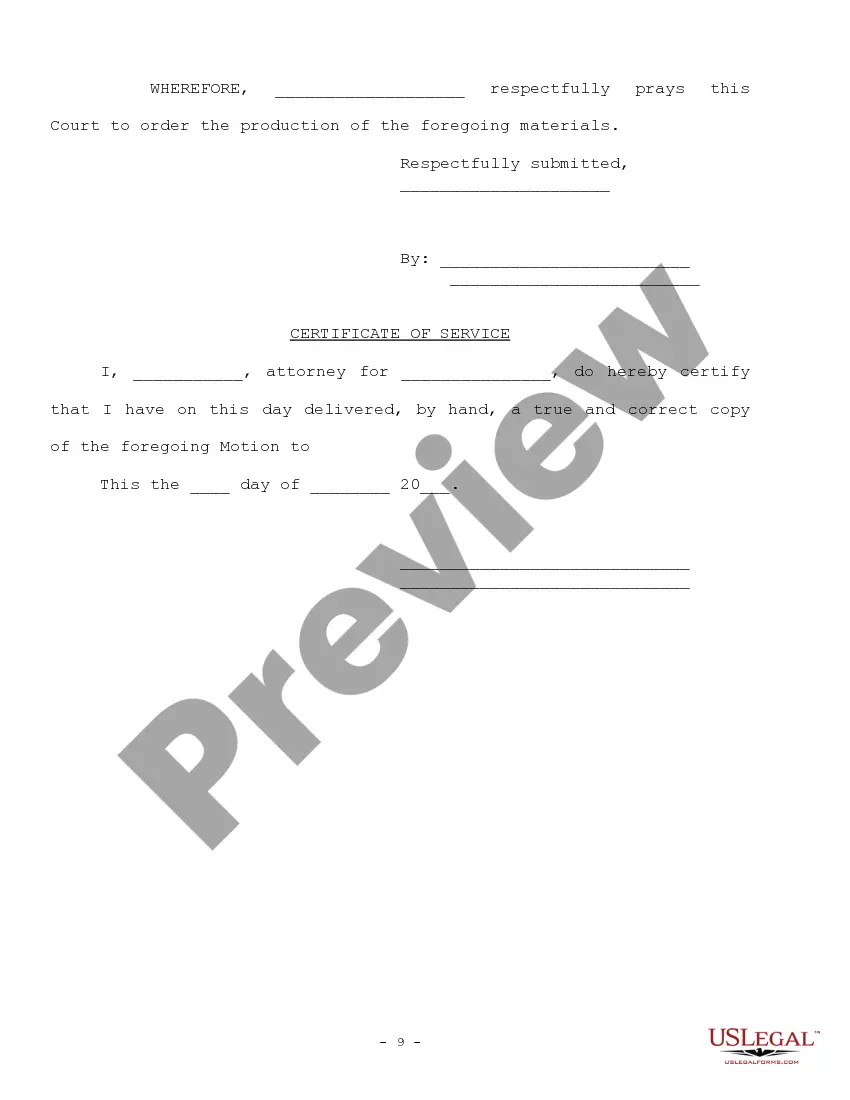
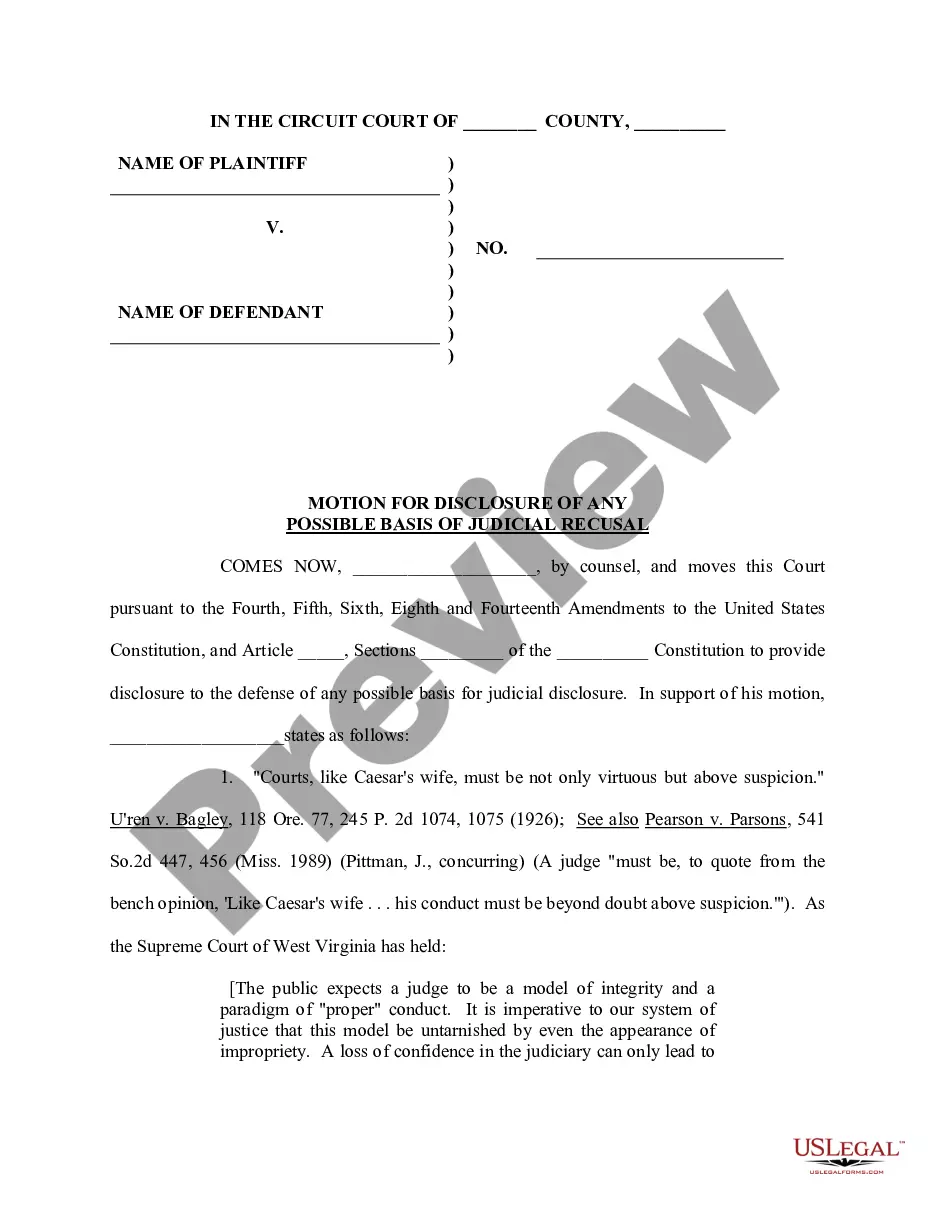
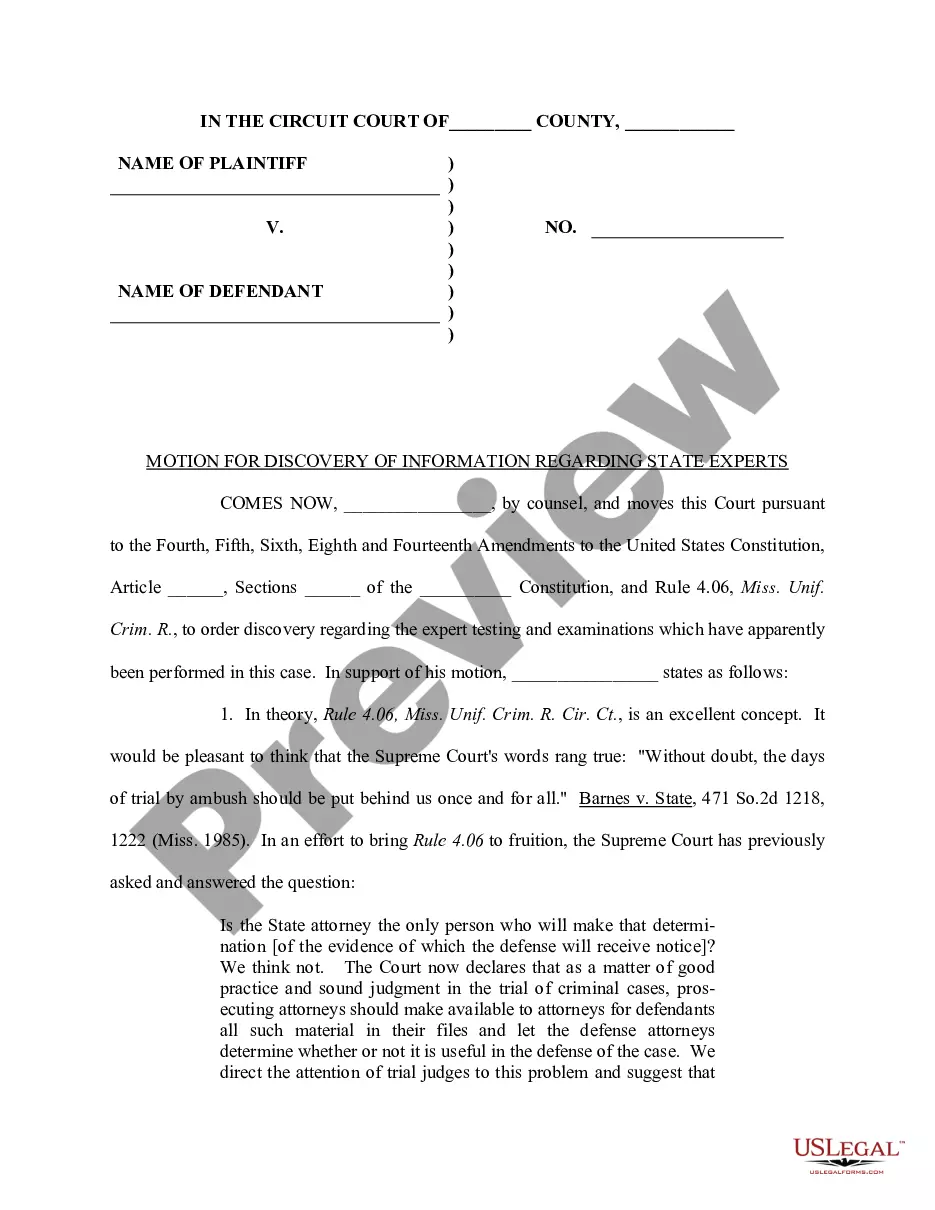
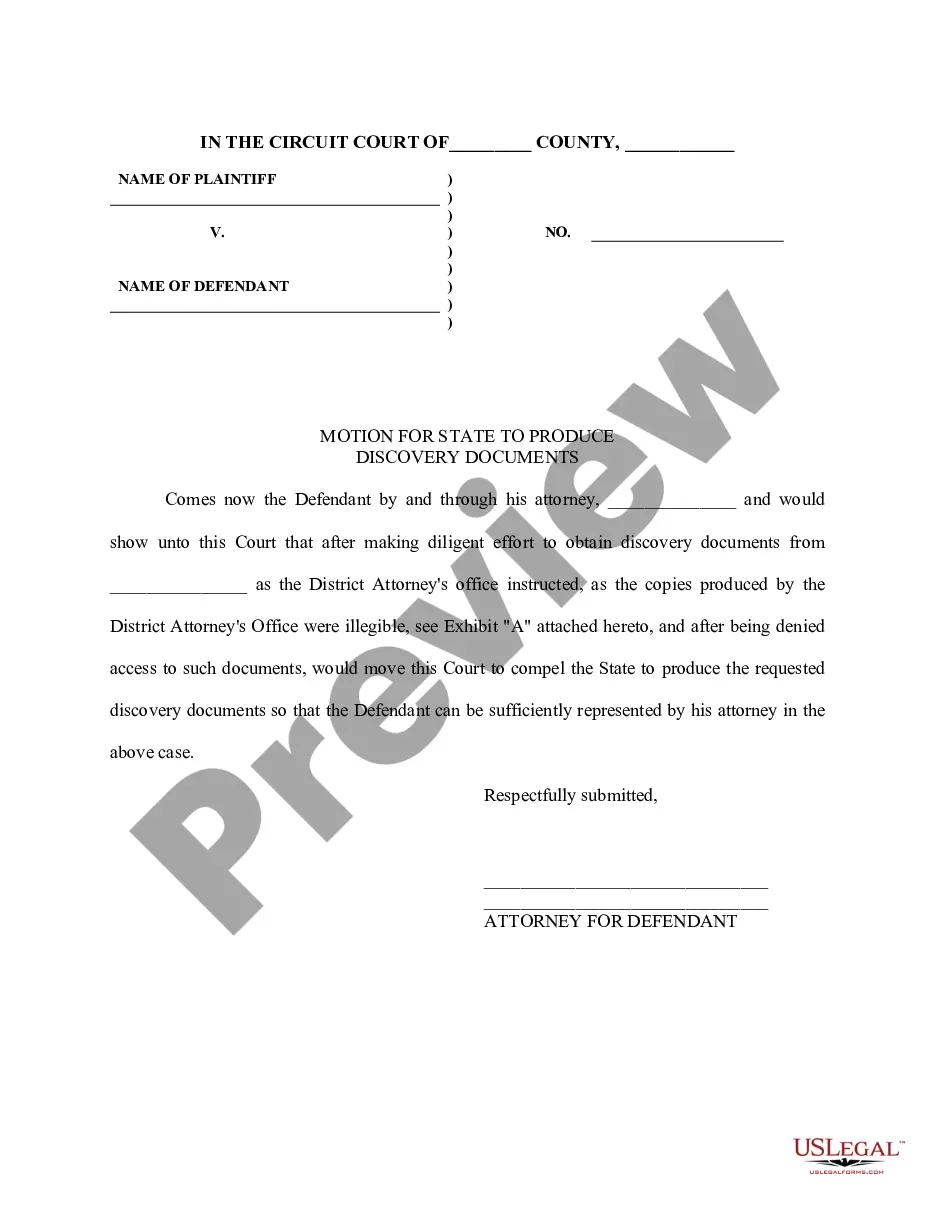
Get your form ready online
Our built-in tools help you complete, sign, share, and store your documents in one place.
Make edits, fill in missing information, and update formatting in US Legal Forms—just like you would in MS Word.
Download a copy, print it, send it by email, or mail it via USPS—whatever works best for your next step.
Sign and collect signatures with our SignNow integration. Send to multiple recipients, set reminders, and more. Go Premium to unlock E-Sign.
If this form requires notarization, complete it online through a secure video call—no need to meet a notary in person or wait for an appointment.
We protect your documents and personal data by following strict security and privacy standards.

Make edits, fill in missing information, and update formatting in US Legal Forms—just like you would in MS Word.

Download a copy, print it, send it by email, or mail it via USPS—whatever works best for your next step.

Sign and collect signatures with our SignNow integration. Send to multiple recipients, set reminders, and more. Go Premium to unlock E-Sign.

If this form requires notarization, complete it online through a secure video call—no need to meet a notary in person or wait for an appointment.

We protect your documents and personal data by following strict security and privacy standards.
Looking for another form?






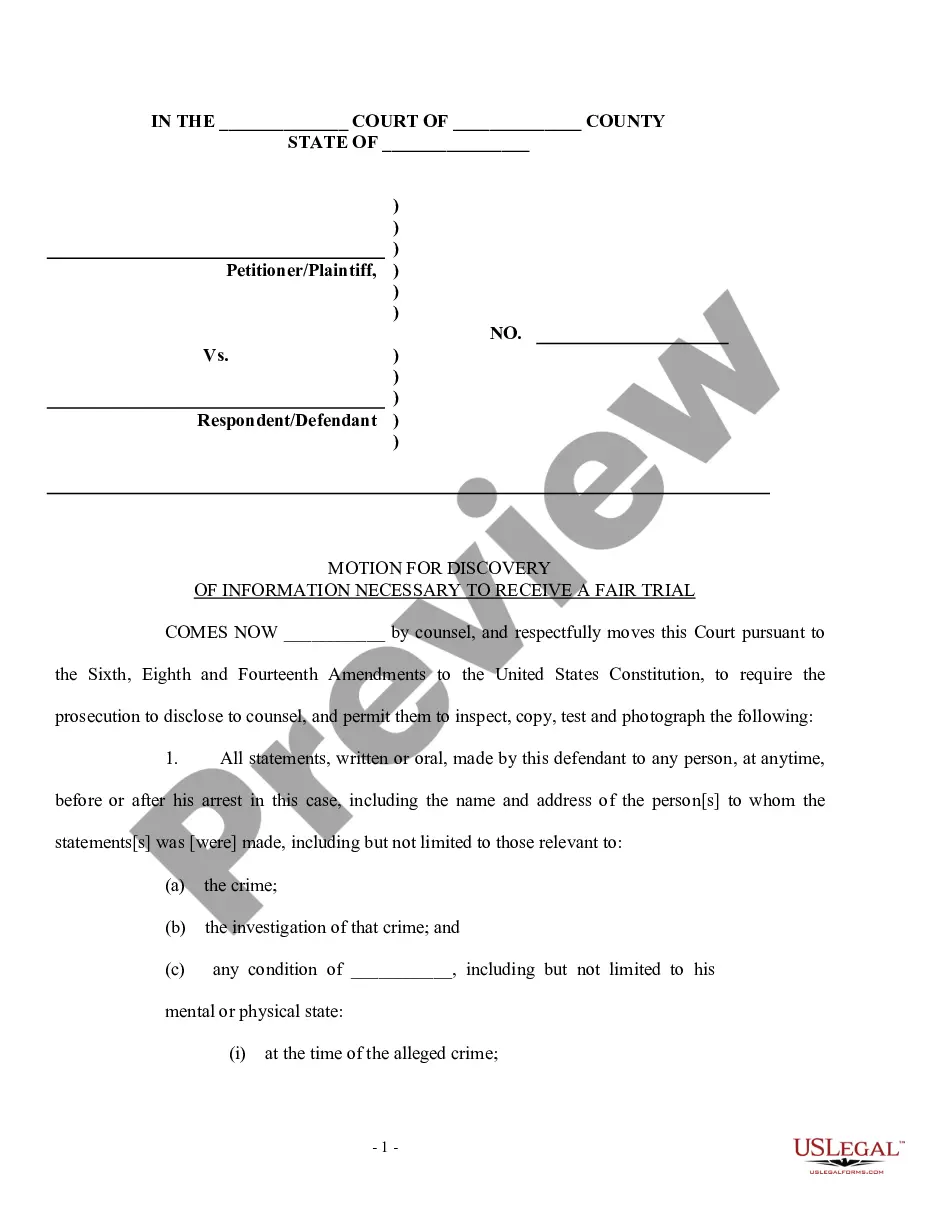
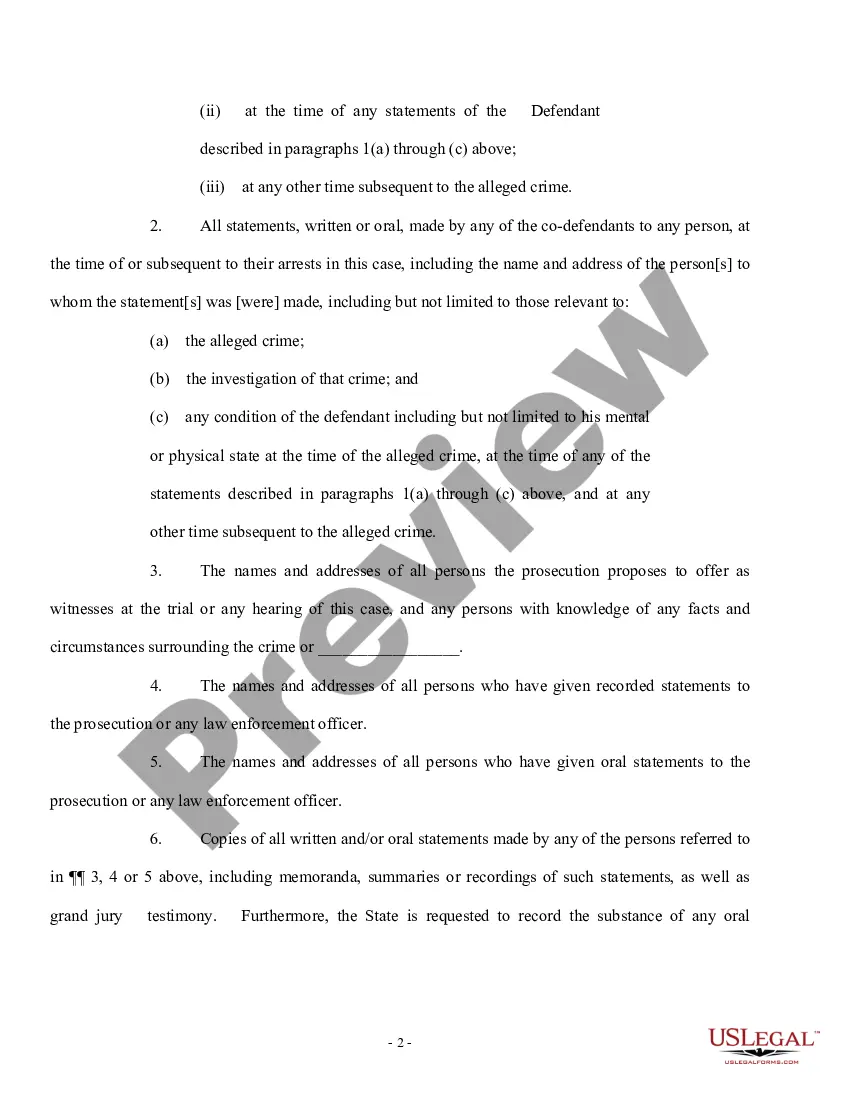
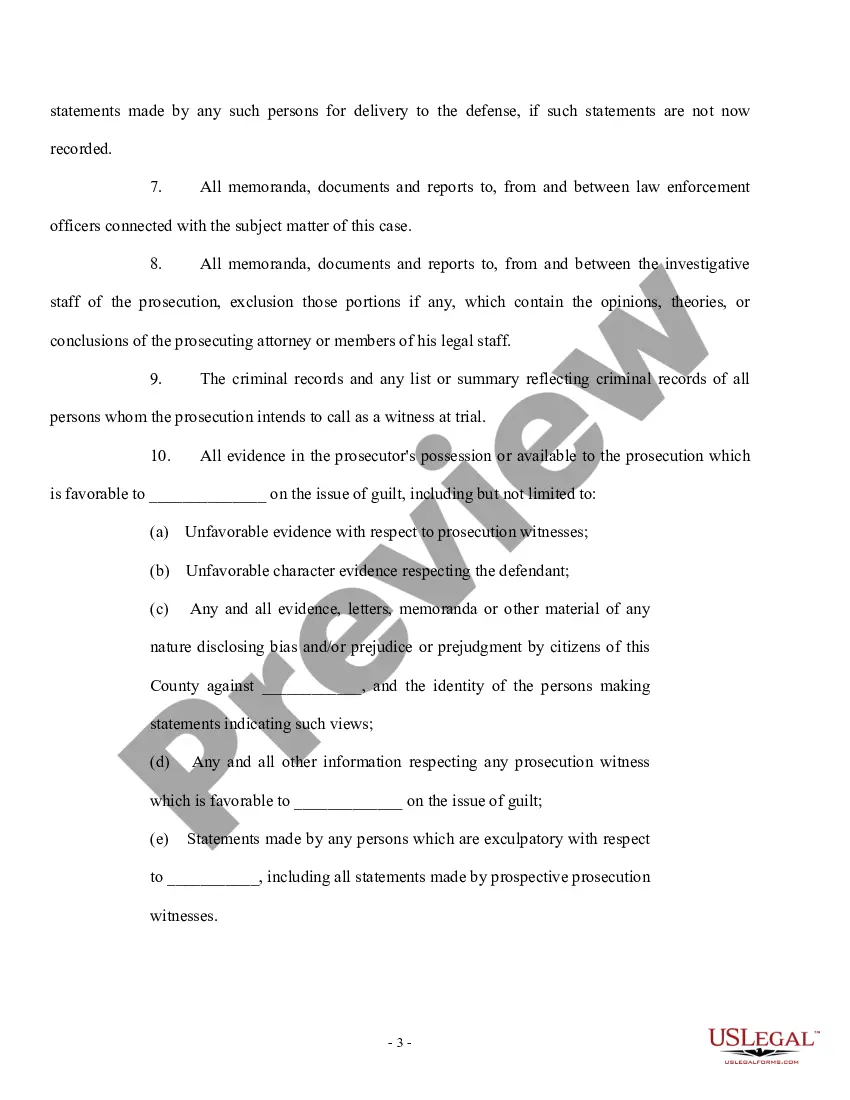
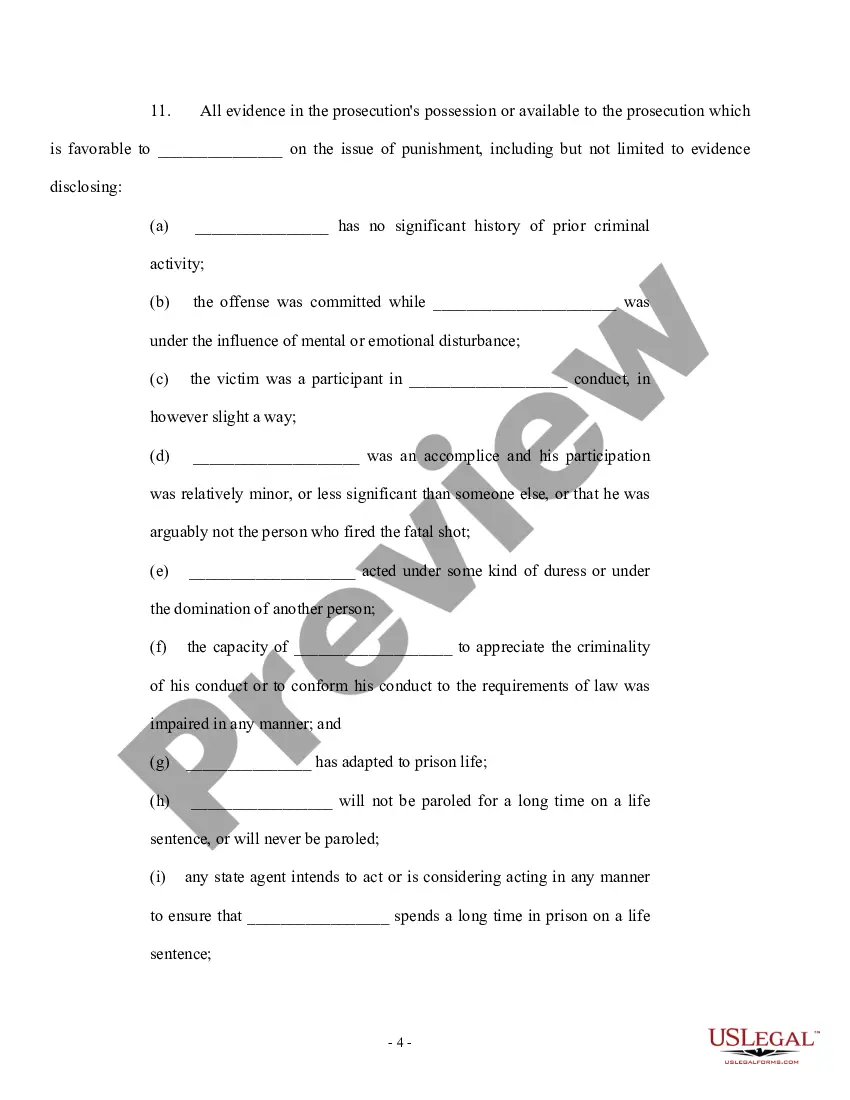
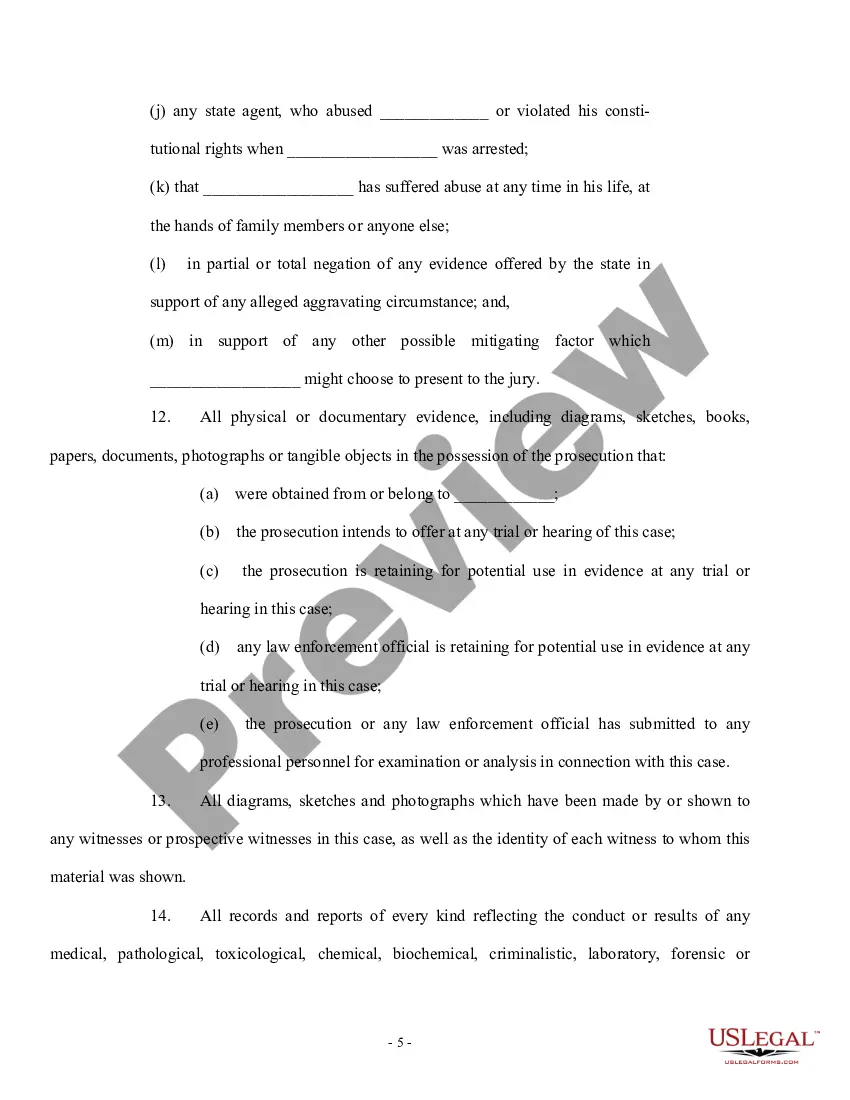
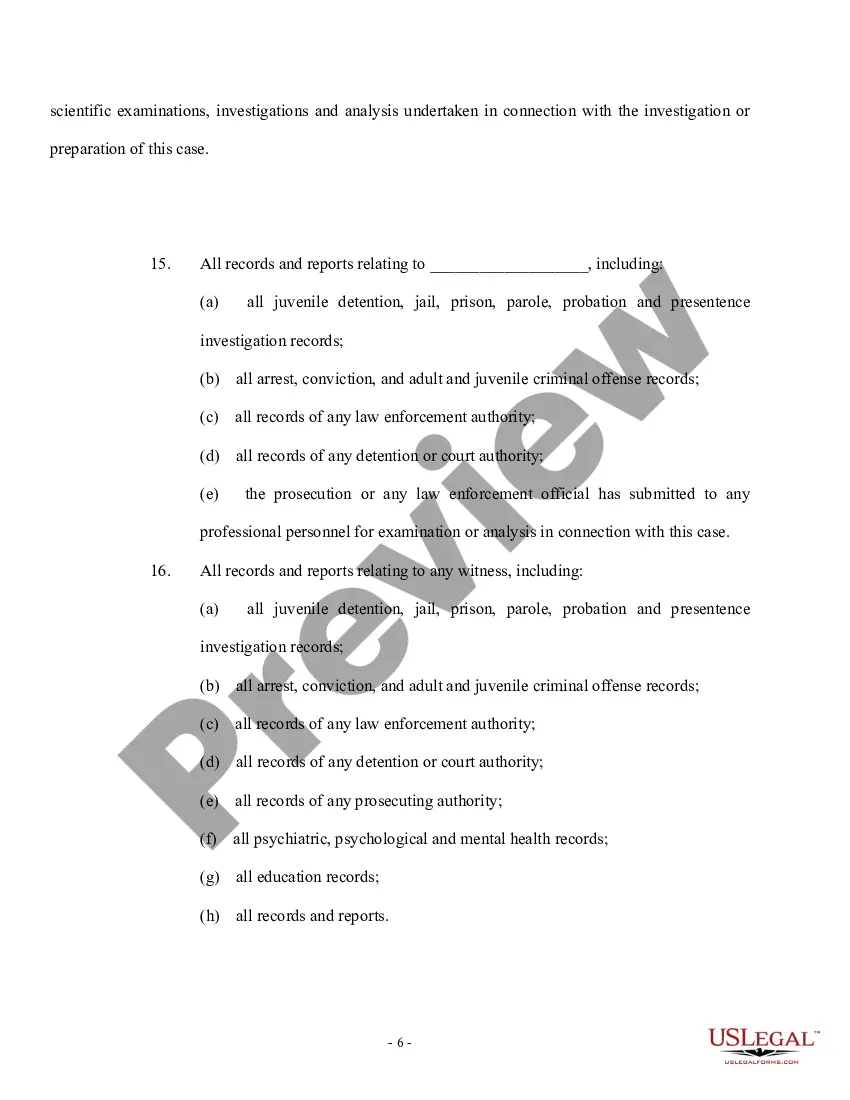
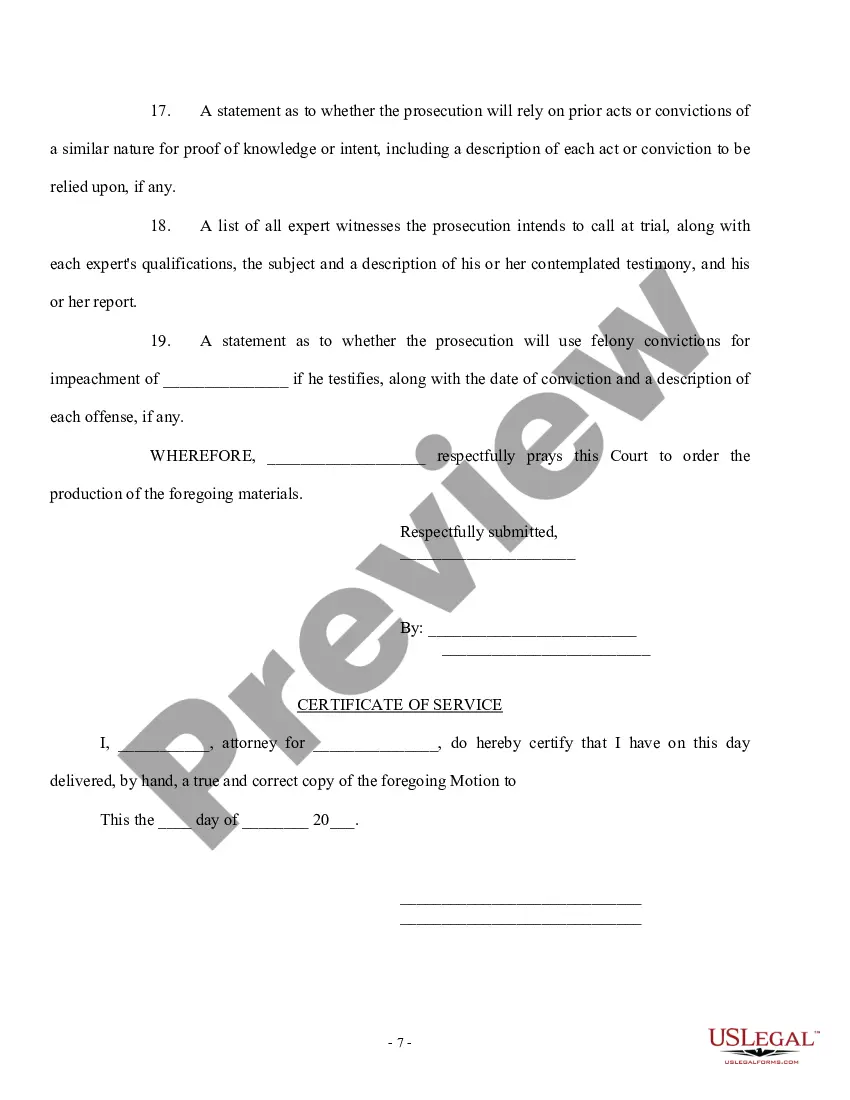
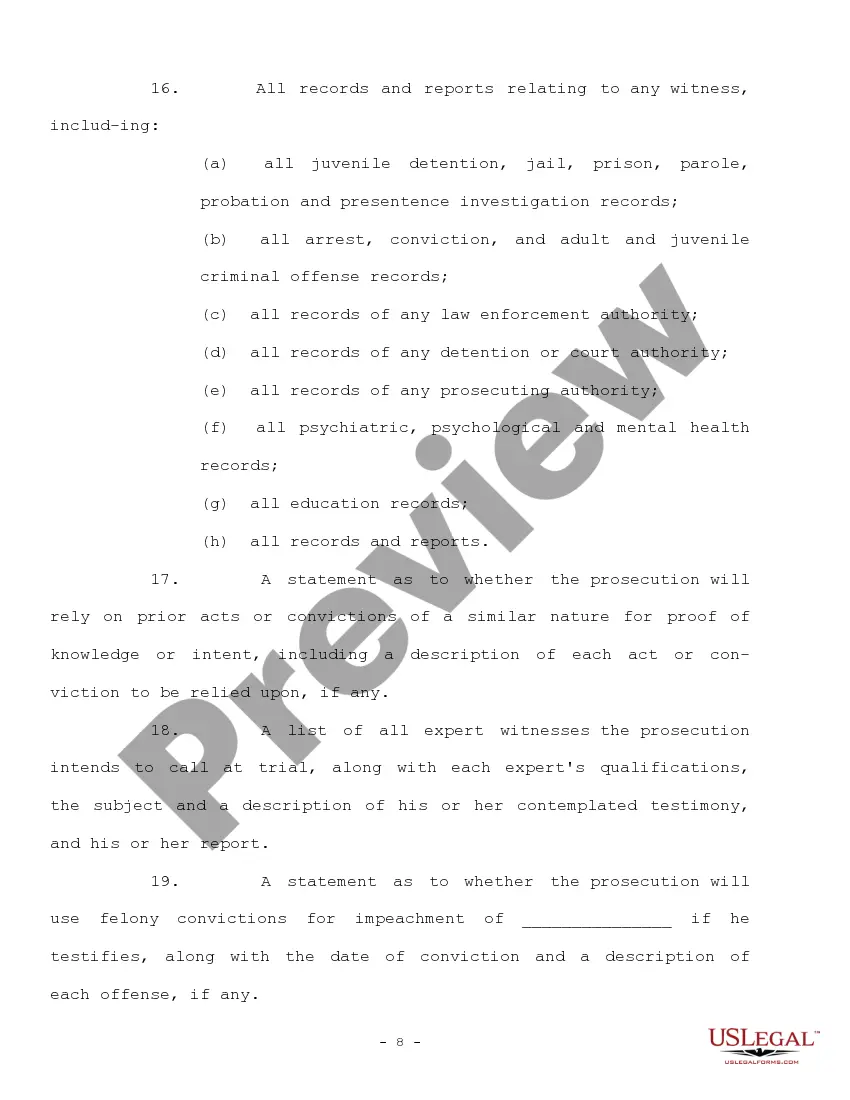
How to fill out Motion For Discovery Of Information Necessary To Receive A Fair Trial?
It’s clear that you cannot become a legal authority instantly, nor can you learn how to swiftly draft Discovery In Trial without a specialized background.
Assembling legal documents is an extensive process that demands specific training and expertise. Hence, why not allow the preparation of the Discovery In Trial to the professionals.
With US Legal Forms, which features one of the most comprehensive libraries of legal templates, you can obtain anything from court papers to templates for internal communication.
You can regain access to your documents from the My documents section anytime. If you’re a current client, simply Log In, and locate and download the template from that same section.
No matter the reason for your documents—whether financial, legal, or personal—our platform has you covered. Give US Legal Forms a try now!
- Understand the document you require using the search field at the top of the page.
- View it (if this option is available) and go through the accompanying description to determine if Discovery In Trial meets your needs.
- Start your search again if you require another form.
- Create a free account and select a subscription plan to acquire the form.
- Click Buy now. Once the payment is completed, you can download the Discovery In Trial, fill it out, print it, and send or mail it to the appropriate parties or organizations.
Form popularity
FAQ
To obtain discovery in a court case, you must formally request it through your attorney. This involves filing specific motions that outline what information or documents you seek. Engaging with a platform like US Legal Forms can streamline the process, providing templates and guidance to ensure your requests comply with legal standards and effectively support your case.
As mentioned earlier, discovery generally does not take place during the trial. The discovery process is designed to occur beforehand, allowing both parties to prepare their cases. However, in rare situations, a judge might permit limited discovery during trial if new, relevant evidence surfaces. Being aware of these nuances can significantly impact your trial strategy.
The hardest cases to win in court often involve complex legal issues, significant evidence gaps, or emotional factors, such as family law disputes. Additionally, cases with a high burden of proof or those against well-prepared opponents can be particularly challenging. Understanding the dynamics of your case is critical to preparing effectively for trial, and using resources from US Legal Forms can help you organize your approach.
In most cases, discovery documents do not need to be filed with the court unless a specific motion is involved. However, you must serve the discovery requests and responses to the opposing party. Keeping a record of all discovery exchanges is crucial for reference during the trial. For assistance in managing discovery documentation, consider using US Legal Forms to ensure proper handling.
Yes, discovery usually occurs before a pretrial hearing. This phase allows both parties to gather necessary evidence and witness testimonies to build their cases. Completing discovery before the pretrial ensures that all relevant information is available for discussion and resolution of any pending issues. This process is vital for a fair trial, and platforms like US Legal Forms can help you navigate it smoothly.
Typically, discovery does not occur during the trial itself; it is meant to happen beforehand. However, there are instances where a judge may allow limited discovery if new evidence emerges. This ensures that both parties have access to relevant information that could impact the trial's outcome. Understanding the timing of discovery is essential for effective trial preparation.
Discovery responses are crucial during trial as they provide essential evidence and information gathered from the opposing party. You can use these responses to challenge the credibility of witnesses or to support your arguments. By referencing specific documents or statements from discovery, you can strengthen your case effectively. Ensure you organize and review these responses thoroughly before the trial.
To ask for discovery in court, you typically need to file a formal request, known as a discovery motion. This document outlines the specific information or evidence you seek from the other party. It is crucial to be clear and detailed in your request to ensure that you receive the necessary materials. Using a platform like US Legal Forms can help you draft and file your discovery motion correctly.
Both parties in a case benefit from discovery, but often the party with better resources and preparation has the upper hand. A thorough discovery process can uncover critical evidence that may influence the outcome of the trial. Additionally, platforms like uslegalforms can provide valuable tools and templates to streamline the discovery process, ensuring that you are well-prepared and informed.
Discovery in a trial refers to the pre-trial phase where both sides gather and share information crucial to their case. This process helps to ensure that all parties have access to the same facts, which can lead to a fair trial. By engaging in discovery, parties can also identify key issues and prepare their arguments more effectively.