Prosecution Using Persons With Disabilities
Description

Get your form ready online
Our built-in tools help you complete, sign, share, and store your documents in one place.
Make edits, fill in missing information, and update formatting in US Legal Forms—just like you would in MS Word.
Download a copy, print it, send it by email, or mail it via USPS—whatever works best for your next step.
Sign and collect signatures with our SignNow integration. Send to multiple recipients, set reminders, and more. Go Premium to unlock E-Sign.
If this form requires notarization, complete it online through a secure video call—no need to meet a notary in person or wait for an appointment.
We protect your documents and personal data by following strict security and privacy standards.

Make edits, fill in missing information, and update formatting in US Legal Forms—just like you would in MS Word.

Download a copy, print it, send it by email, or mail it via USPS—whatever works best for your next step.

Sign and collect signatures with our SignNow integration. Send to multiple recipients, set reminders, and more. Go Premium to unlock E-Sign.

If this form requires notarization, complete it online through a secure video call—no need to meet a notary in person or wait for an appointment.

We protect your documents and personal data by following strict security and privacy standards.
Looking for another form?







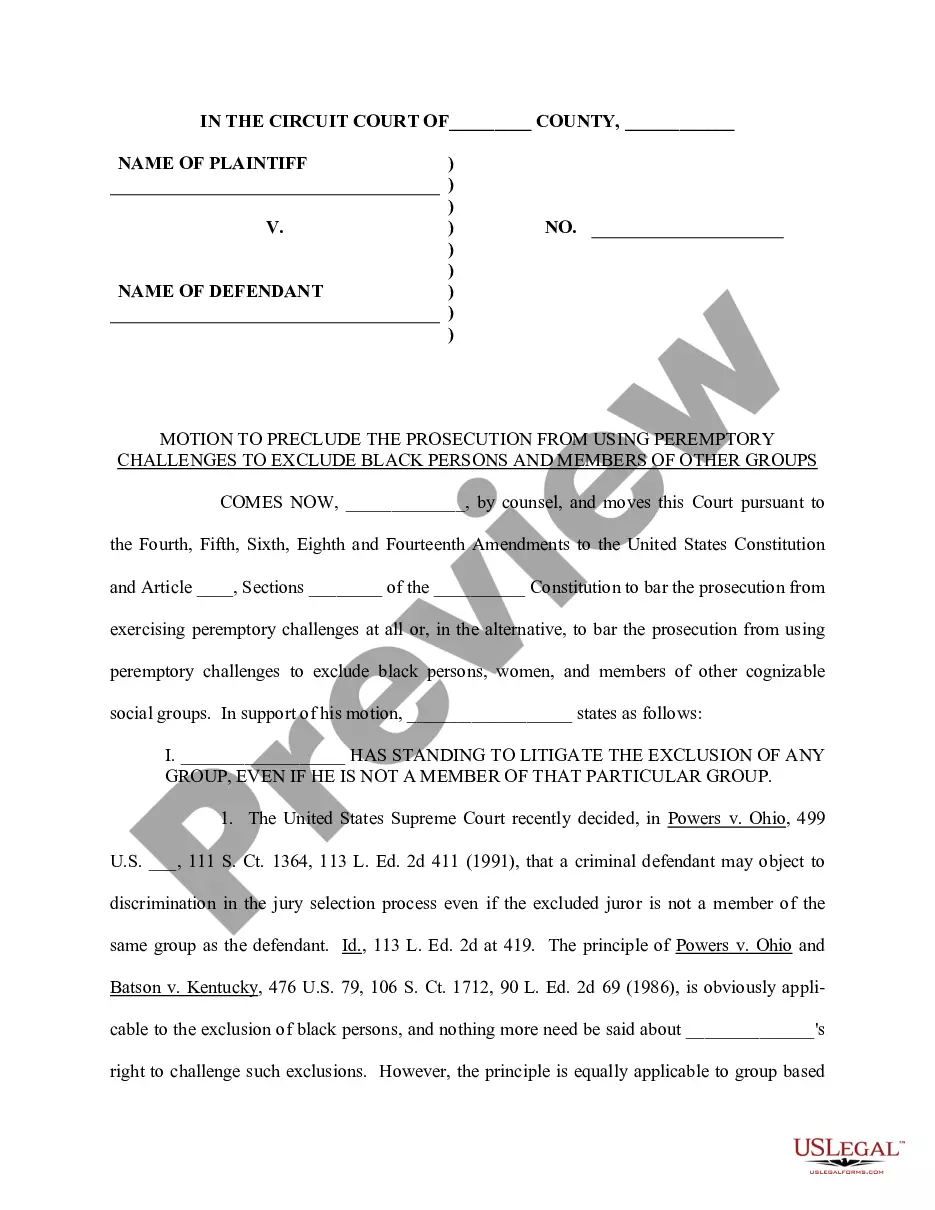
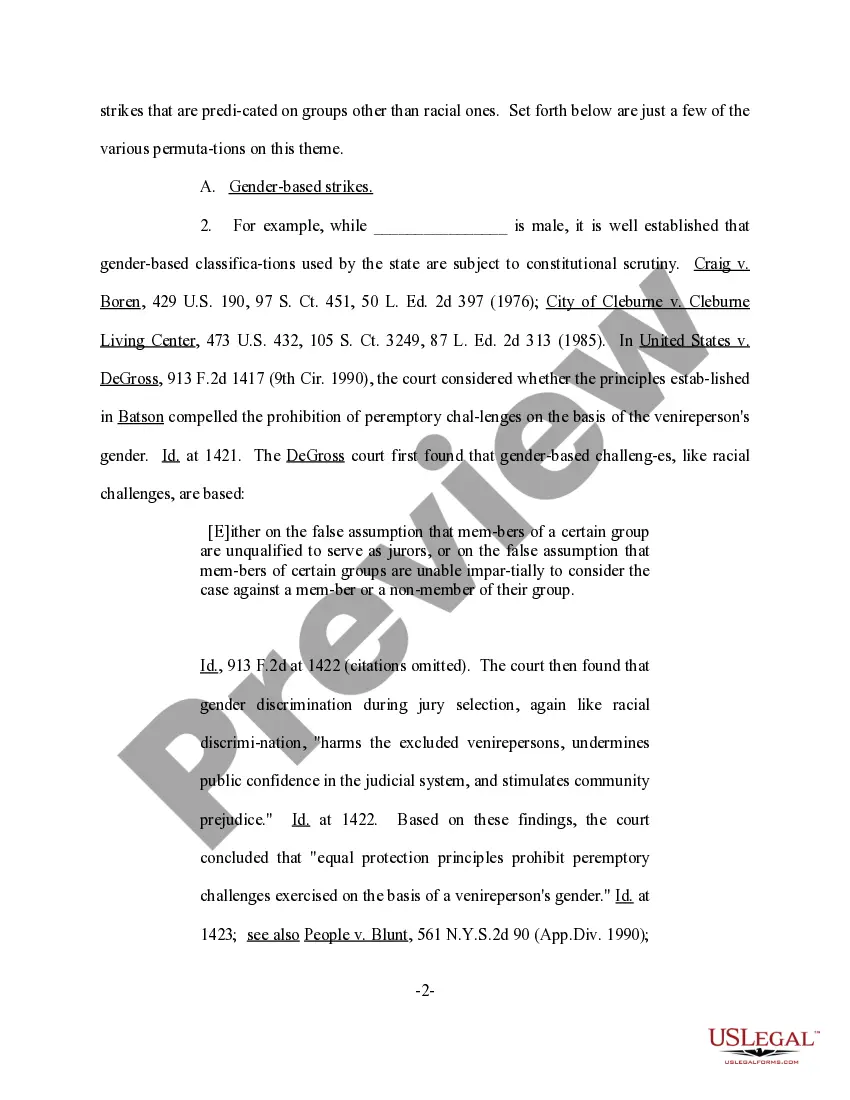
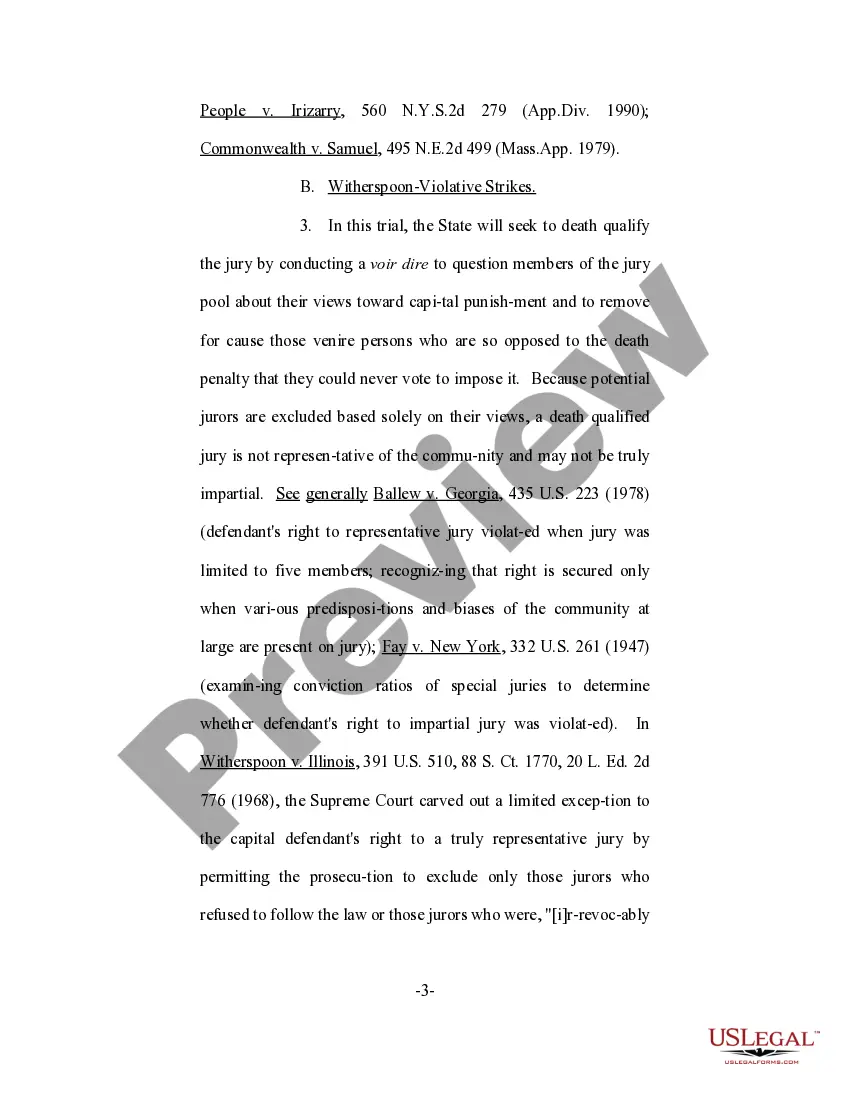
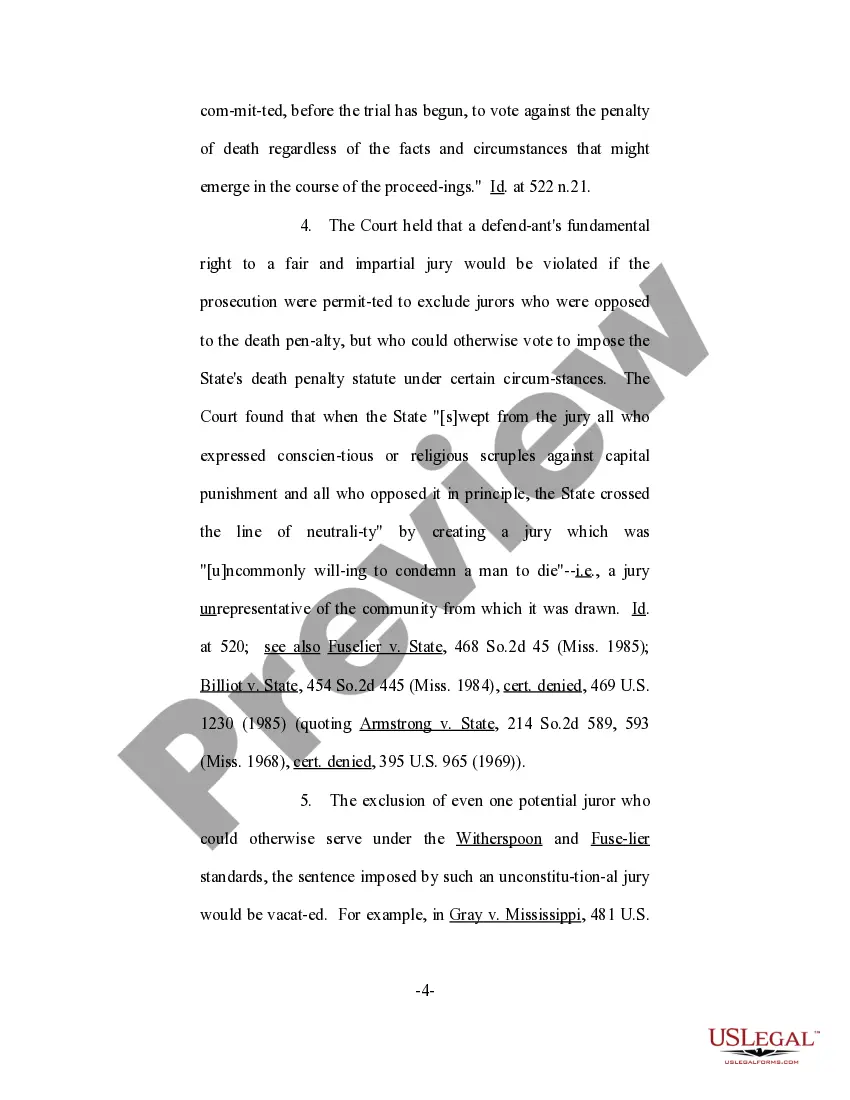
How to fill out Motion To Preclude The Prosecution From Using Peremptory Challenges To Exclude Black Persons And Members Of Other Groups?
Locating a reliable source to obtain the latest and pertinent legal templates is a significant part of managing bureaucracy.
Selecting the appropriate legal documents requires precision and carefulness, which is why it is essential to obtain samples of Prosecution Using Persons With Disabilities solely from credible sources, such as US Legal Forms.
Once you have the document on your device, you can modify it using the editor or print it out and fill it in by hand. Relieve the stress associated with your legal documentation. Browse the comprehensive US Legal Forms catalog to discover legal templates, assess their relevance to your situation, and download them instantly.
- Utilize the catalog navigation or search bar to find your template.
- Examine the form’s description to verify if it complies with the stipulations of your state and locality.
- Preview the form, if available, to confirm that it’s the template you seek.
- If the Prosecution Using Persons With Disabilities does not meet your needs, continue searching for the suitable document.
- When you are confident about the form’s relevance, download it.
- If you are an authorized user, click Log in to verify and access your selected templates in My documents.
- If you do not possess an account yet, click Buy now to acquire the form.
- Select the pricing package that aligns with your requirements.
- Proceed to registration to complete your purchase.
- Finalize your transaction by choosing a payment method (credit card or PayPal).
- Select the format for downloading Prosecution Using Persons With Disabilities.
Form popularity
FAQ
Engaging with a person with a disability requires compassion and understanding. Approach them as you would anyone else, and be attentive to their individual needs and preferences. In contexts like prosecution using persons with disabilities, it's vital to ensure that their rights and dignity are respected. Resources are available through platforms such as uslegalforms to assist in navigating these interactions.
Yes, the term 'disabled' remains in use, but awareness of its implications is vital. Some people embrace the label, while others prefer alternatives that reflect their identity. In discussions about prosecution using persons with disabilities, maintaining sensitivity to individual preferences can enhance communication. It’s always best to follow the lead of the person involved.
When interacting with people with disabilities, it's important to treat them with respect and dignity. Communication should be straightforward, and offering assistance should come from a place of genuine support. Understanding issues like prosecution using persons with disabilities can enhance our interactions, helping us to create a more empathetic approach towards individuals facing challenges.
Don't automatically refer to 'disabled people' in all communications ? many people who need disability benefits and services don't identify with this term. Consider using 'people with health conditions or impairments' if it seems more appropriate.
Title II of the Americans with Disabilities Act (ADA) protects people with disabilities from discrimination in State and local government services, programs, and activities, including law enforcement agencies, justice system entities, and juvenile and adult corrections agencies.
When describing people without disabilities, don't use terms like normal, healthy, able-bodied. Instead, use ?non-disabled? or ?people without visible disabilities.? Such terms are more accurate, because we often cannot tell whether someone has a disability just by their physical appearance.
Research shows that individuals with a disability are more than twice as likely to be a victim of violent crime as those without a disability.
As in 2014 data, in 2019 persons with cognitive disabilities had the highest rates of total violent crime excluding simple assault of individuals with disabilities. (34.6 per 1,000); however, in 2014, the rates were higher at 56.6%.