American Rule For Attorney Fees
Description
Get your form ready online
Our built-in tools help you complete, sign, share, and store your documents in one place.
Make edits, fill in missing information, and update formatting in US Legal Forms—just like you would in MS Word.
Download a copy, print it, send it by email, or mail it via USPS—whatever works best for your next step.
Sign and collect signatures with our SignNow integration. Send to multiple recipients, set reminders, and more. Go Premium to unlock E-Sign.
If this form requires notarization, complete it online through a secure video call—no need to meet a notary in person or wait for an appointment.
We protect your documents and personal data by following strict security and privacy standards.

Make edits, fill in missing information, and update formatting in US Legal Forms—just like you would in MS Word.

Download a copy, print it, send it by email, or mail it via USPS—whatever works best for your next step.

Sign and collect signatures with our SignNow integration. Send to multiple recipients, set reminders, and more. Go Premium to unlock E-Sign.

If this form requires notarization, complete it online through a secure video call—no need to meet a notary in person or wait for an appointment.

We protect your documents and personal data by following strict security and privacy standards.
Looking for another form?







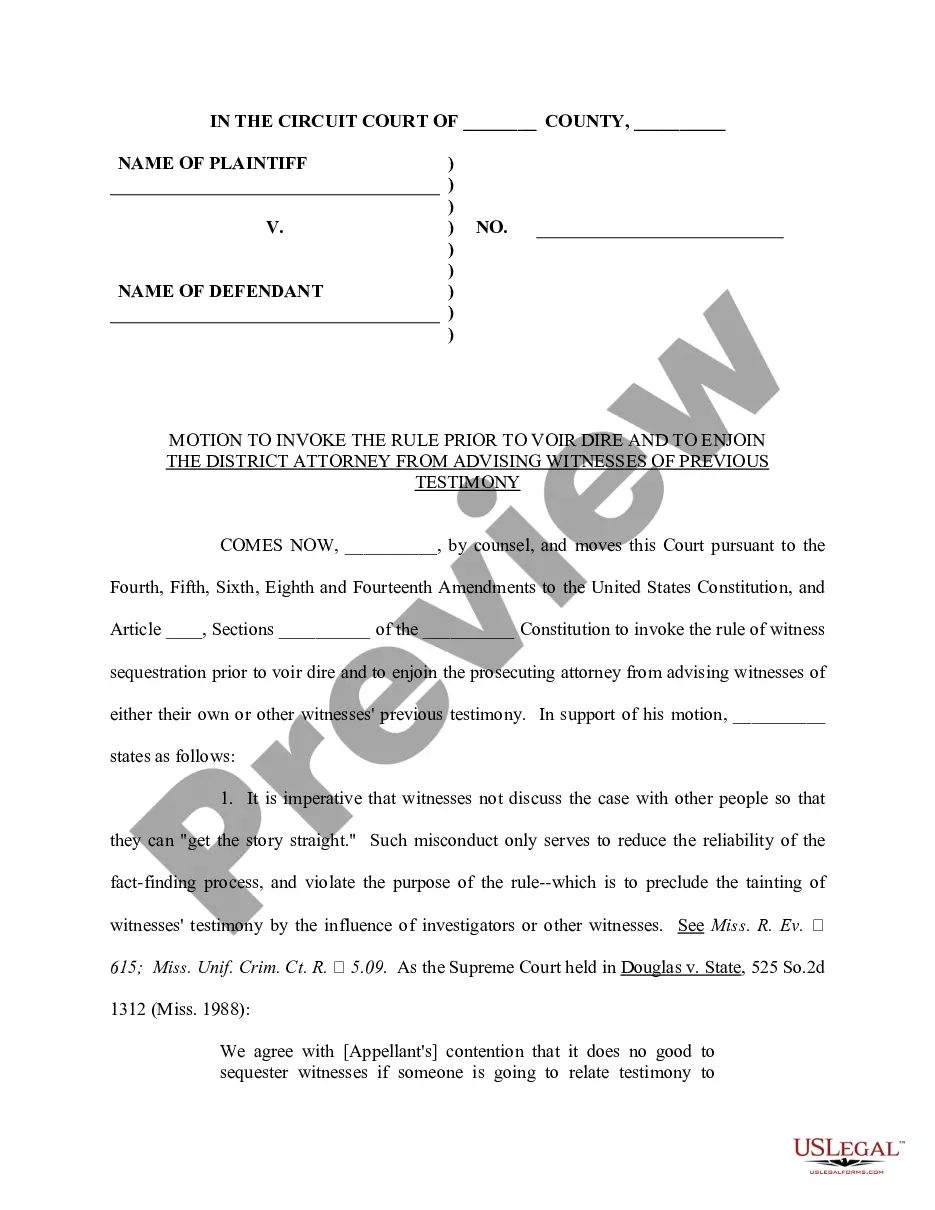
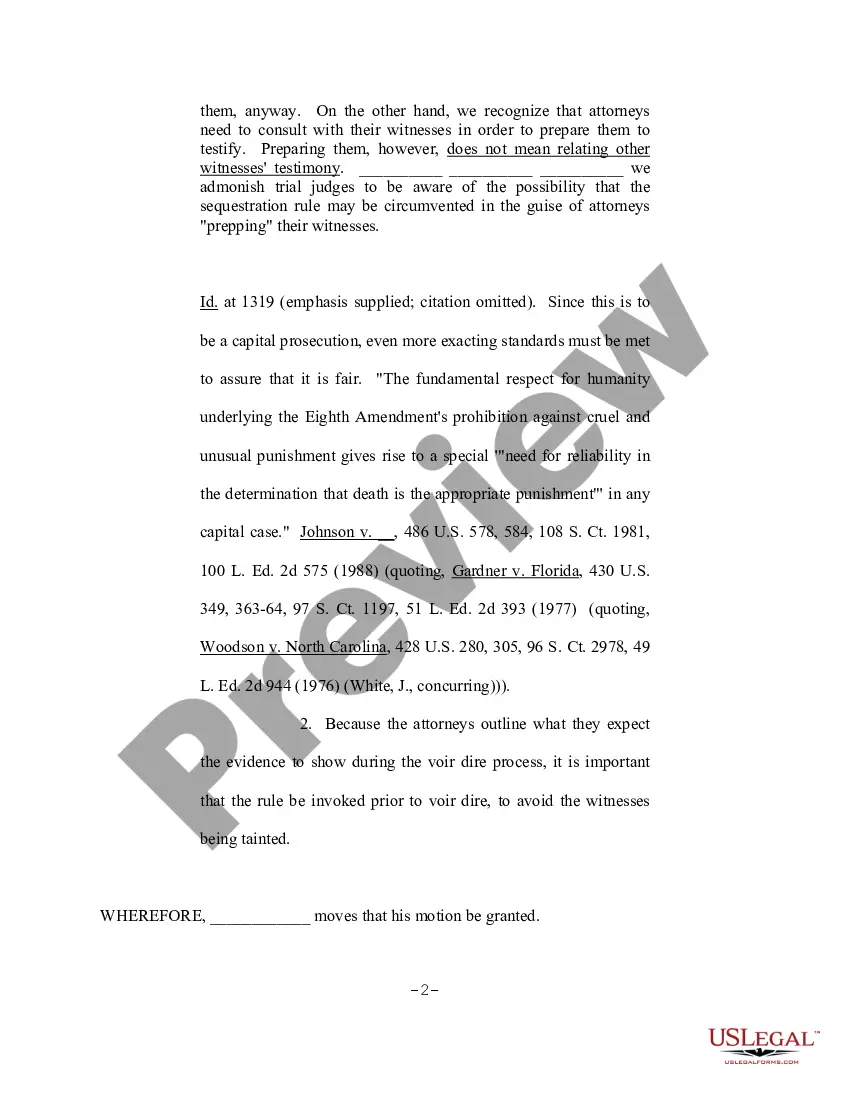
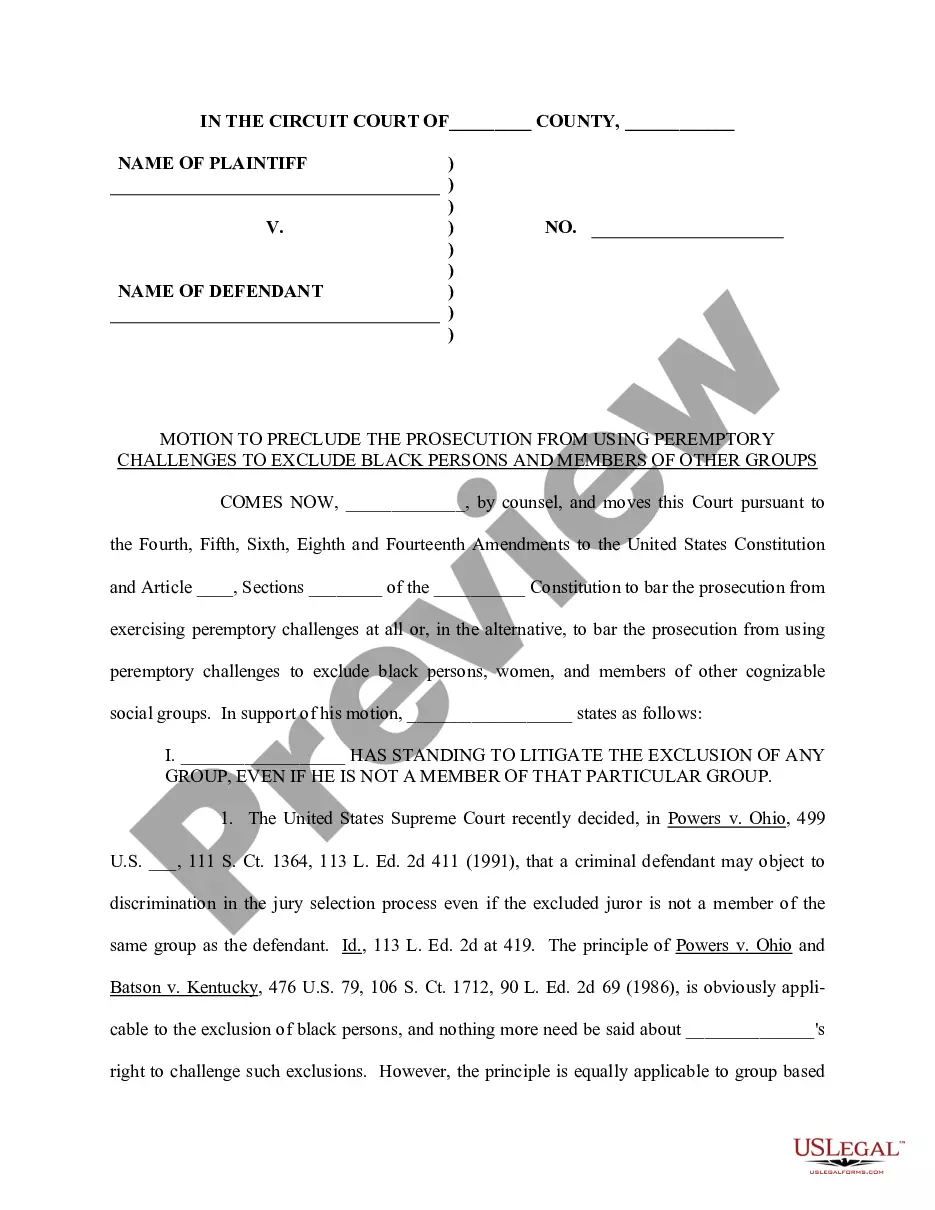
How to fill out Motion To Invoke The Rule Prior To Voir Dire And To Enjoin The District Attorney From Advising Witnesses Of Previous Testimony?
- Log in to your existing US Legal Forms account. Ensure your subscription is active, and if necessary, renew it through your payment plan.
- Review the available forms in Preview mode. Confirm you have selected the correct document that aligns with your requirements and local laws.
- If you need a different template, utilize the Search feature at the top to find the appropriate one.
- Click on the Buy Now button to choose your preferred subscription plan. You will need to create an account to gain full access to the form library.
- Complete your purchase by entering your payment information through credit card or PayPal.
- Once your payment is processed, download the form to your device and find it later in the My Forms section of your profile.
In conclusion, US Legal Forms empowers users with a comprehensive collection of legal documents designed for ease and efficiency. By following these simple steps, you can ensure that you have all the necessary paperwork to handle your legal matters effectively.
Start your journey today, and make legal document preparation effortless with US Legal Forms!
Form popularity
FAQ
To report legal fees, include them on your tax return using Schedule C if you're self-employed, or as itemized deductions under the appropriate categories. Under the American rule for attorney fees, understanding where to classify these fees is crucial for accurate reporting. Keep your records organized and retain documentation of the services rendered. Uslegalforms provides helpful templates that make tracking and reporting legal fees straightforward.
To record legal fees, you should enter them as an expense in your accounting software. Make sure to categorize them appropriately, especially if they relate to the American rule for attorney fees, which impacts how fees are managed in settlements. Accurate recording helps maintain financial clarity while also ensuring compliance with IRS regulations. Uslegalforms can provide templates for documenting these expenses.
Yes, legal settlements are generally subject to 1099 reporting. If the settlement amount meets certain thresholds, the payer must issue a Form 1099-MISC to the recipient. This aligns with the American rule for attorney fees, where the party that pays the attorney fees might be responsible for reporting them. By using uslegalforms, you can ensure you meet all reporting requirements and stay compliant.
Rule 68 of the Federal Rules of Civil Procedure provides a framework related to offers of judgment and can impact attorney fees. Under this rule, if a party fails to accept a settlement offer and subsequently does not achieve a better outcome at trial, they may be liable for the opposing party's fees incurred after the offer. Understanding Rule 68 helps litigants weigh the risks of refusing settlement offers under the American rule for attorney fees. Resource platforms like uslegalforms can further clarify these implications.
The American rule regarding the payment of attorney's fees stipulates that each party involved in a lawsuit is responsible for their own fees. This means that, typically, the outcome of the case does not influence which party shoulders the legal costs. Knowing this can help you prepare adequately for potential legal expenses and encourages individuals to seek representation. Consider consulting platforms such as uslegalforms for more guidance.
The practical effect of the American rule for attorney fees encourages individuals to pursue legal action because they do not risk paying the opposing party's fees if they lose. This promotes access to the courts but can also create a financial burden if the case is prolonged. Nonetheless, understanding these dynamics can help you make informed decisions about legal representation. Resources like uslegalforms can assist you in navigating these aspects.
The primary difference between the English rule and the American rule for attorney fees lies in the responsibility for paying legal costs. In the English rule, the losing party pays the winning party's fees, while in the American rule, each party pays their own fees. This distinction significantly influences legal strategies and decisions on whether to pursue litigation. Understanding these rules can inform your approach to legal disputes.
When detailing attorney fees in legal documents, be clear and precise about the amounts, the rate structure, and any additional costs. It's essential to specify whether fees are hourly, flat, or contingent, and also outline any possible expenses that may arise during the process. This transparency helps prevent misunderstandings later on. For all your legal form needs, US Legal Forms can offer templates that simplify this task and ensure compliance with legal standards.
Lawyers' fees can be a part of closing costs, but it often depends on the nature of the transaction. In real estate purchases, for instance, attorney fees may be considered part of the overall closing costs, which can include title searches, inspections, and more. It’s essential to clarify this aspect with your attorney or a qualified professional. Properly understanding these fees can help you manage your expenses more effectively.
Yes, you can sue for legal fees in the United States under certain conditions, often influenced by the American rule for attorney fees. This typically occurs when a contract explicitly allows for the recovery of such costs or under certain statutes that permit it. Ensuring that your situation qualifies requires careful legal analysis. The uslegalforms platform offers templates and resources to assist in this process.