Remainder Unitrust Living Purchase With Credit Card
Description
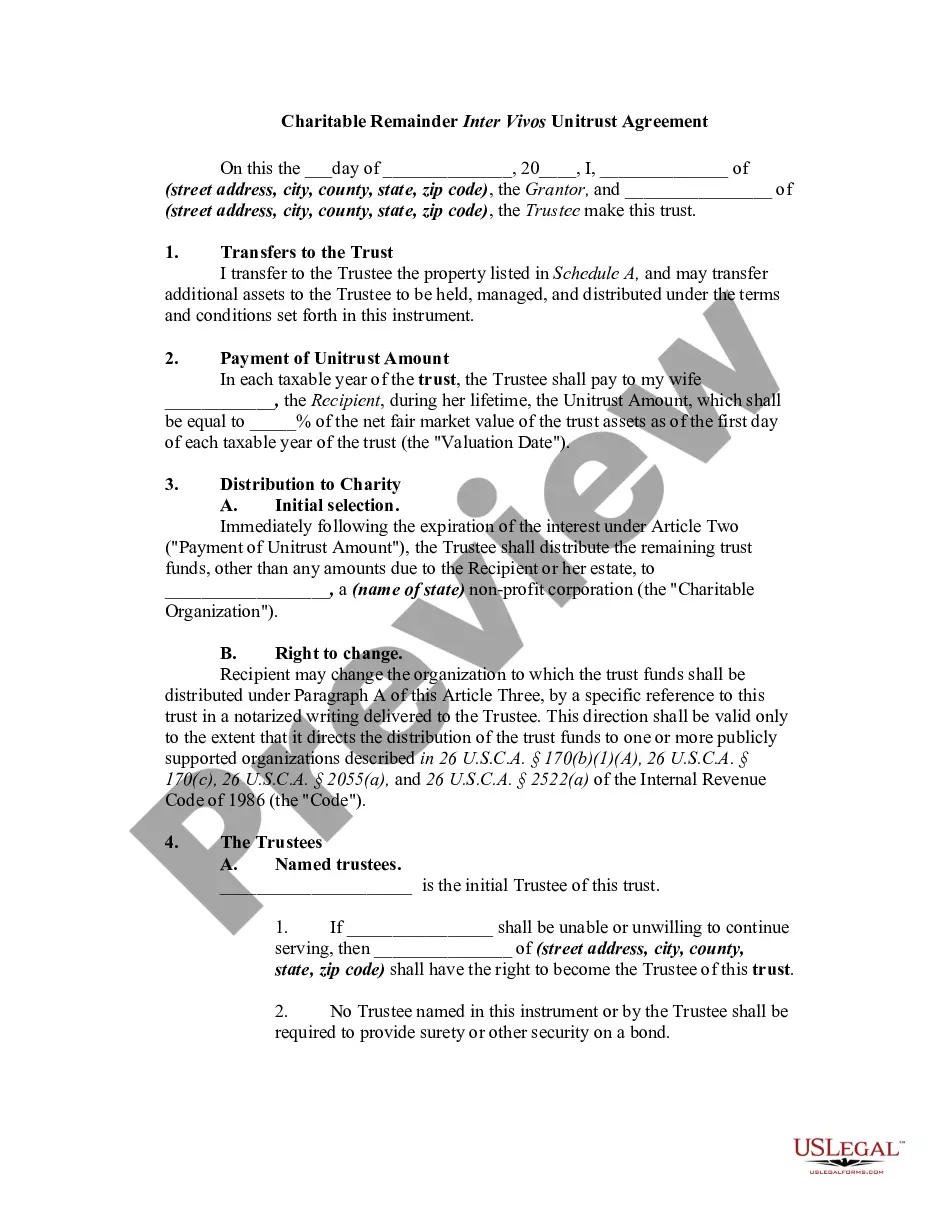
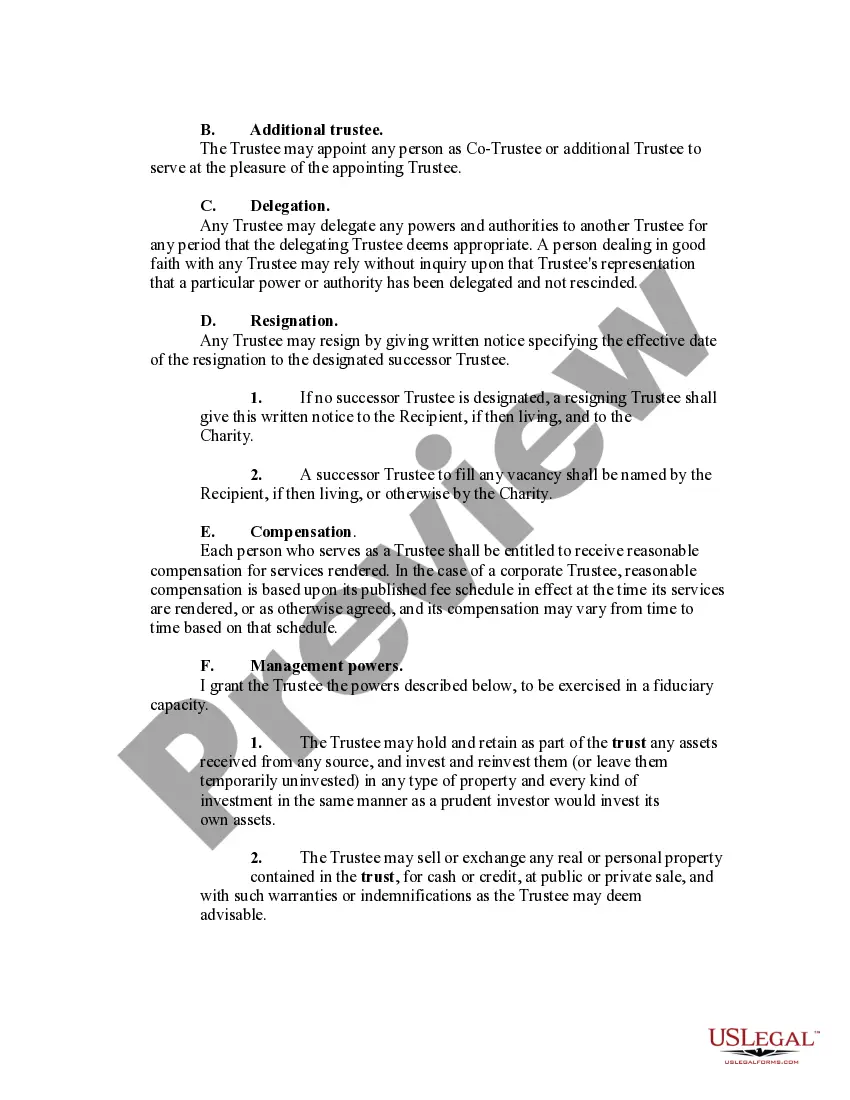
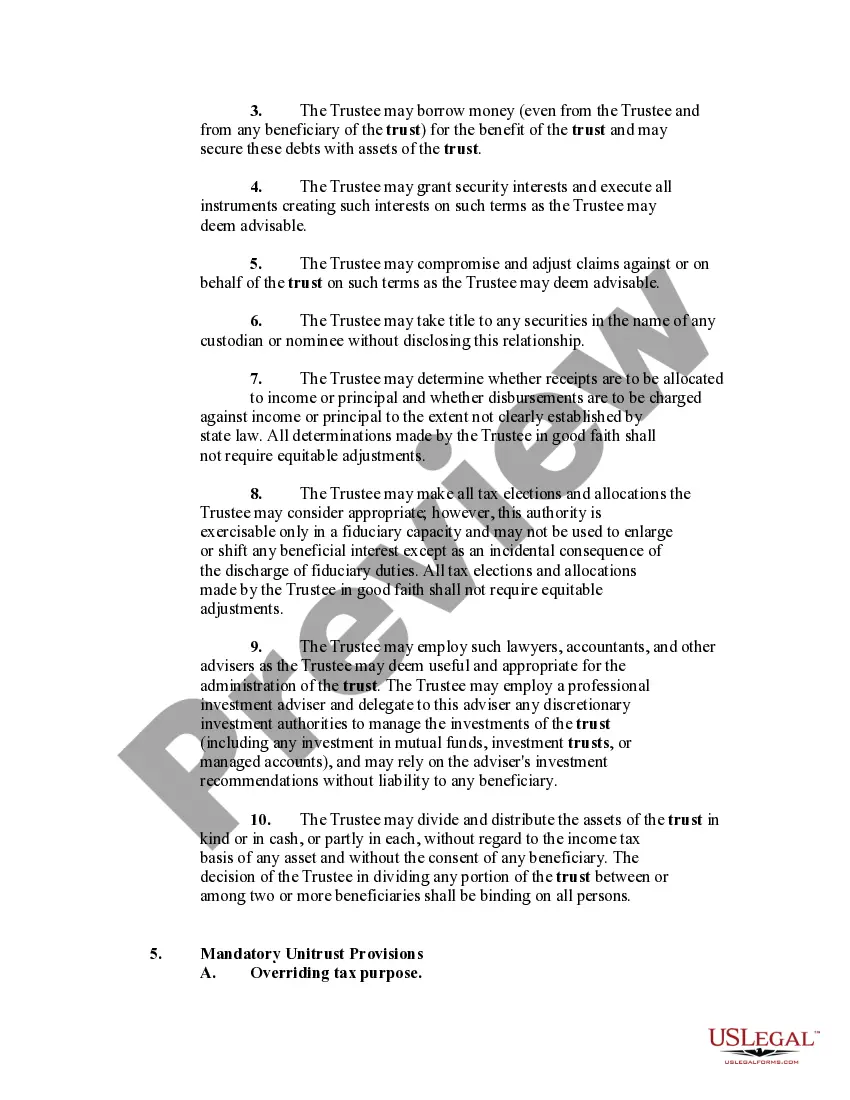
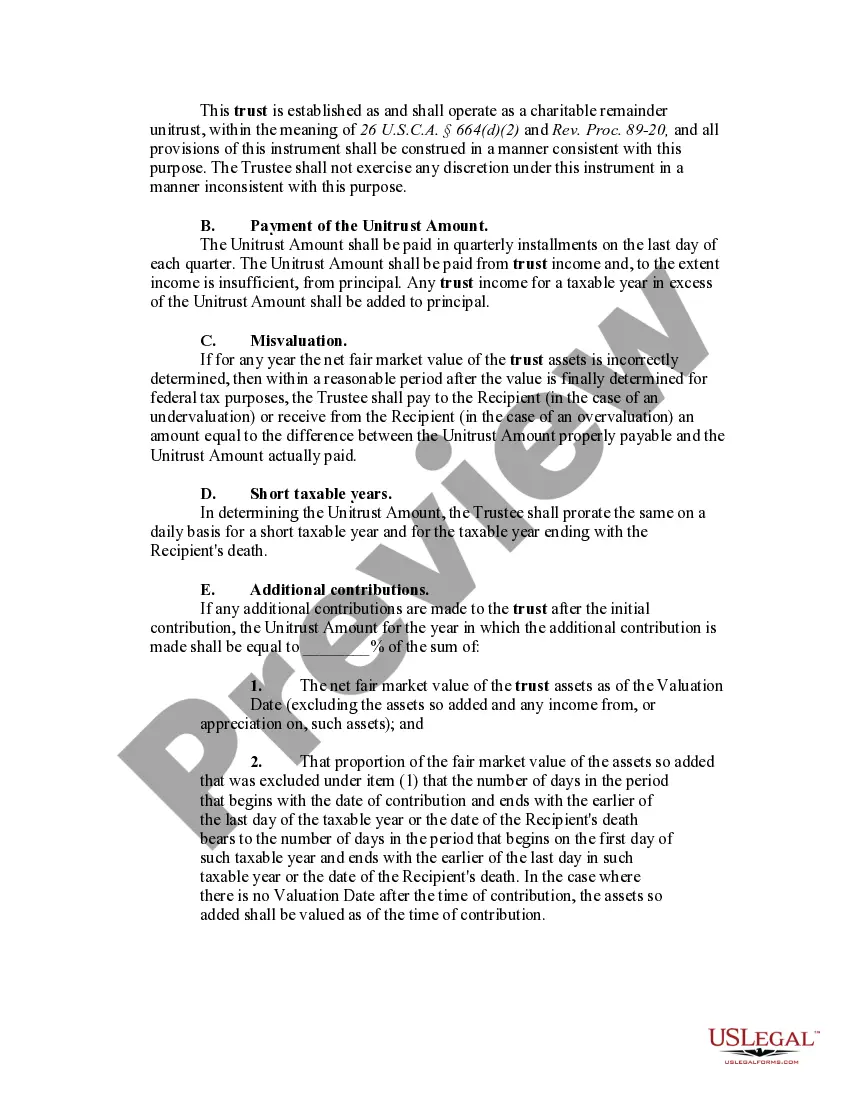
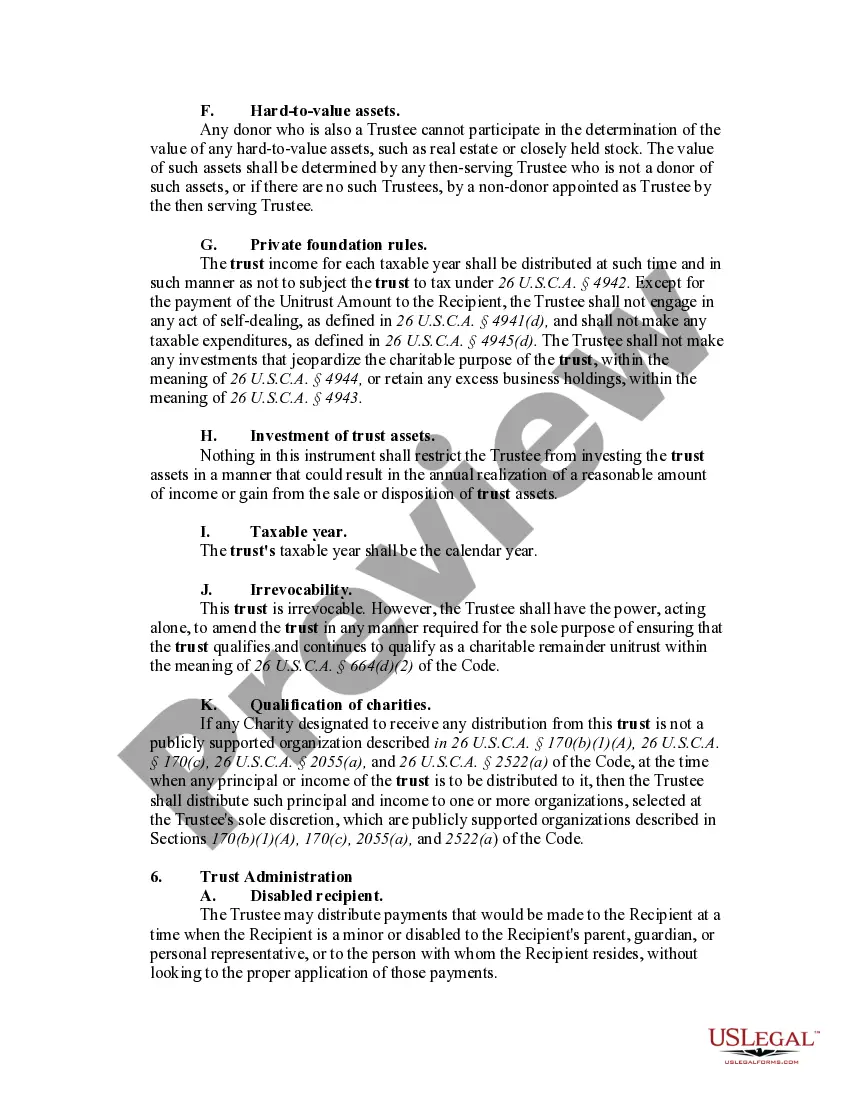
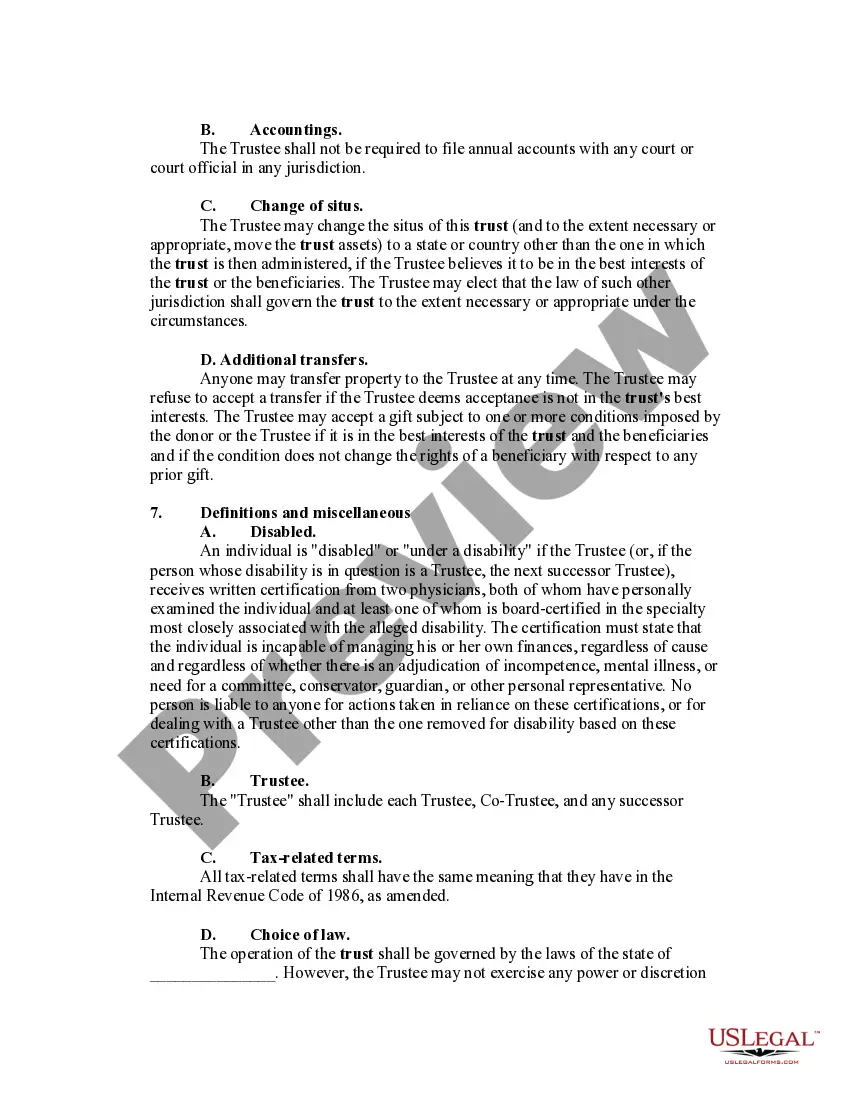
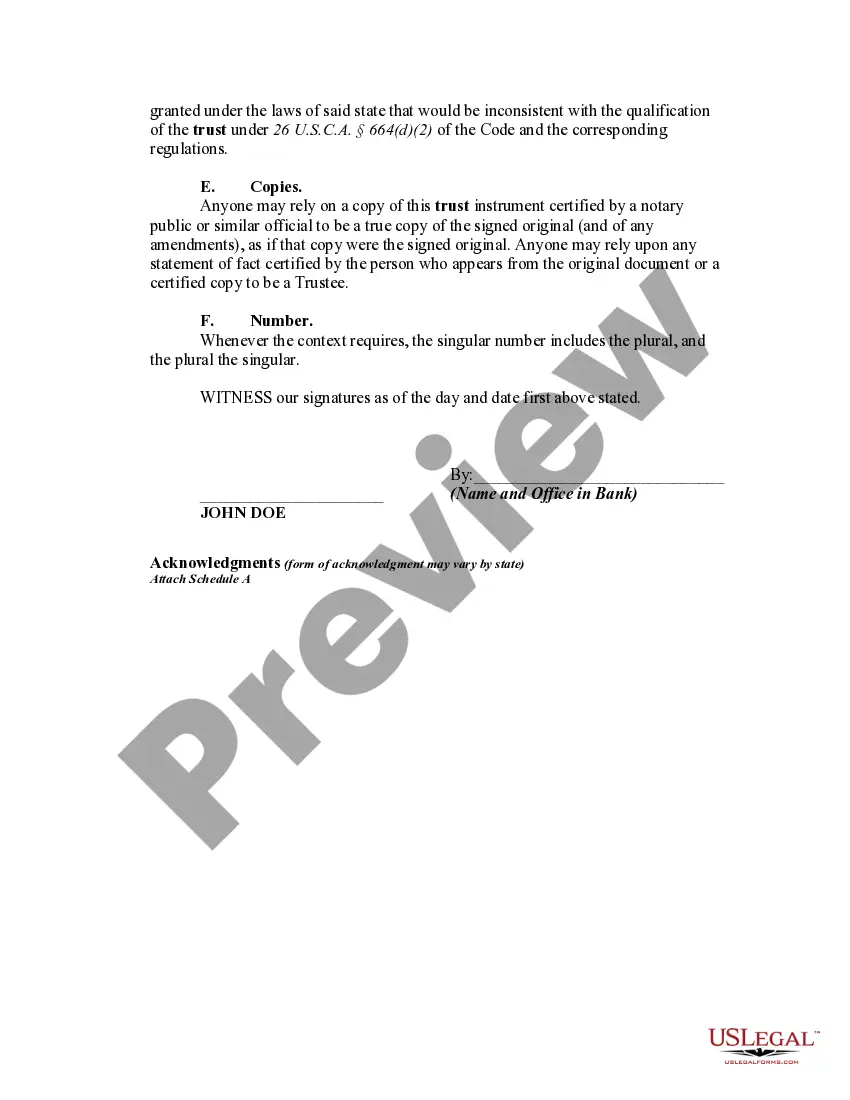
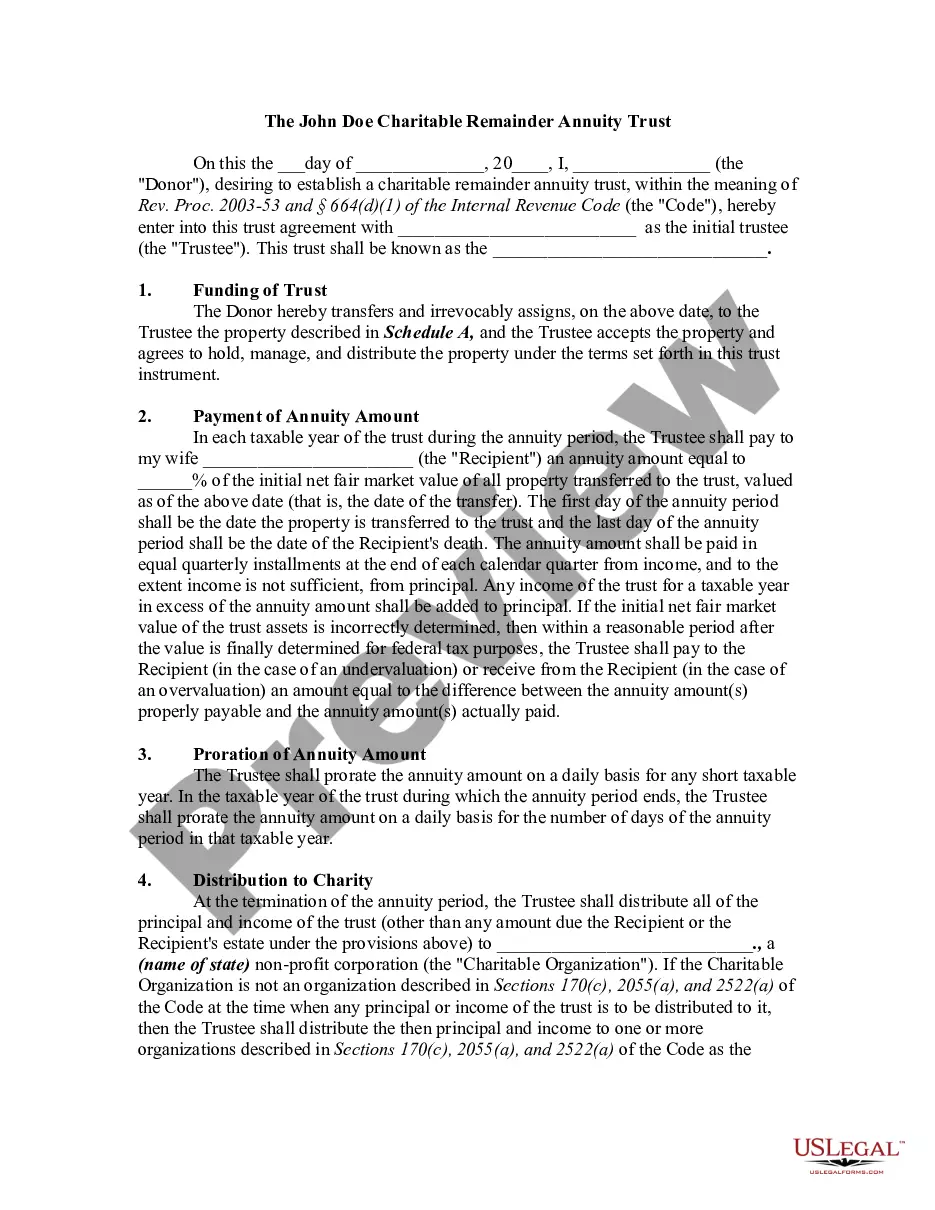
Get your form ready online
Our built-in tools help you complete, sign, share, and store your documents in one place.
Make edits, fill in missing information, and update formatting in US Legal Forms—just like you would in MS Word.
Download a copy, print it, send it by email, or mail it via USPS—whatever works best for your next step.
Sign and collect signatures with our SignNow integration. Send to multiple recipients, set reminders, and more. Go Premium to unlock E-Sign.
If this form requires notarization, complete it online through a secure video call—no need to meet a notary in person or wait for an appointment.
We protect your documents and personal data by following strict security and privacy standards.

Make edits, fill in missing information, and update formatting in US Legal Forms—just like you would in MS Word.

Download a copy, print it, send it by email, or mail it via USPS—whatever works best for your next step.

Sign and collect signatures with our SignNow integration. Send to multiple recipients, set reminders, and more. Go Premium to unlock E-Sign.

If this form requires notarization, complete it online through a secure video call—no need to meet a notary in person or wait for an appointment.

We protect your documents and personal data by following strict security and privacy standards.
Looking for another form?









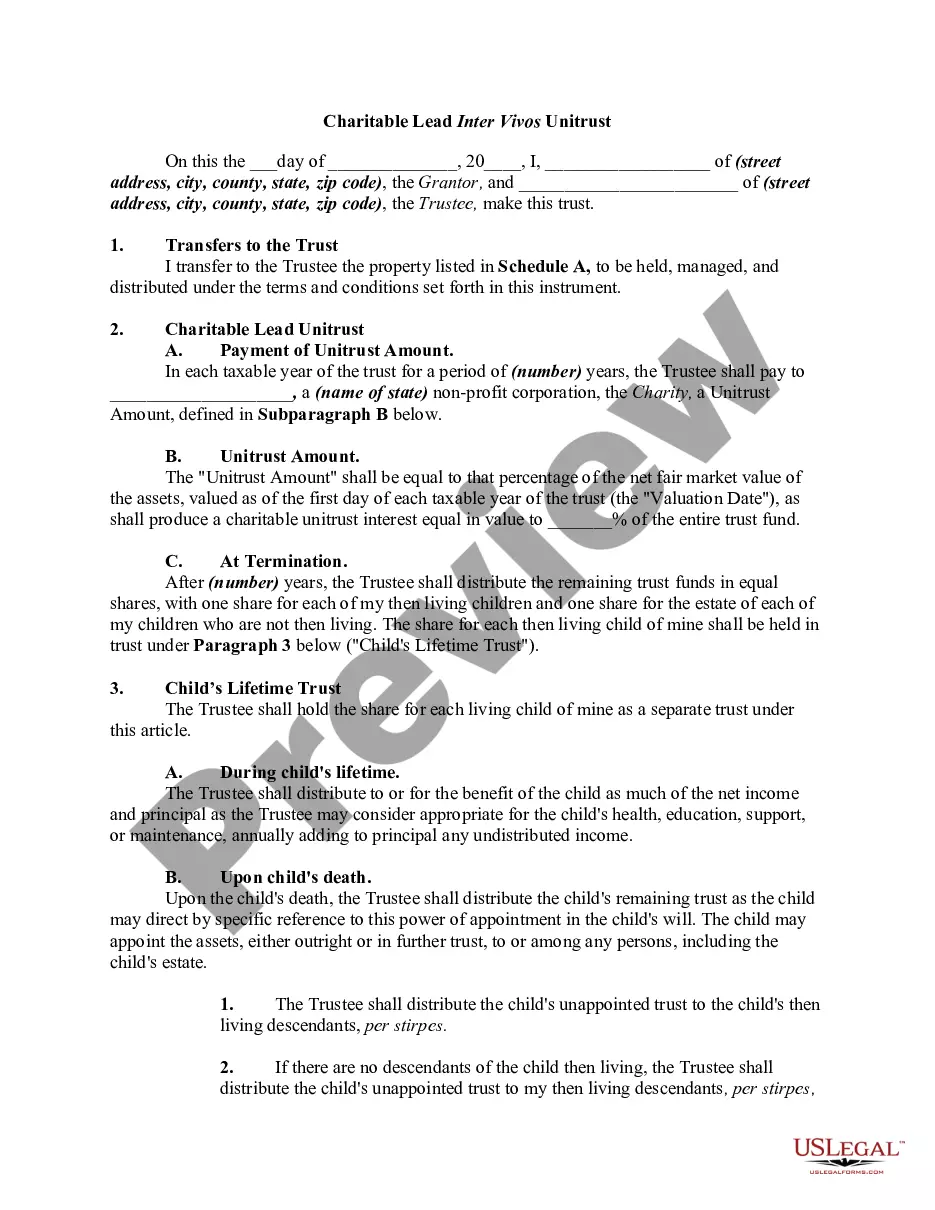
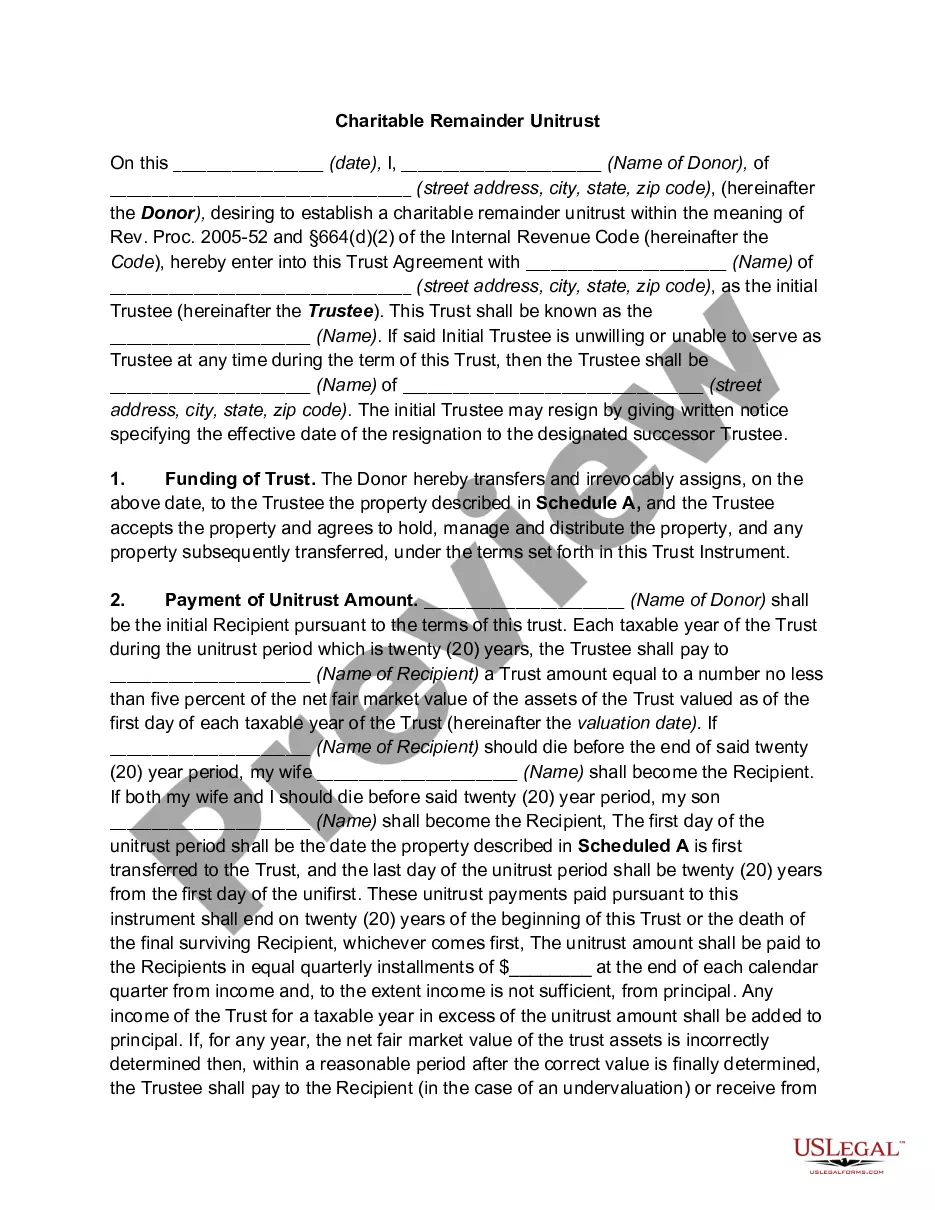
How to fill out Charitable Remainder Inter Vivos Unitrust Agreement?
- If you're a returning user, simply log in to your account and access the document template by clicking the Download button. Ensure that your subscription is active; if not, renew it according to your payment plan.
- For first-time users, start by browsing the Preview mode and the form description to confirm that you have selected the correct template that meets your local jurisdiction requirements.
- If you need to search for additional templates, use the Search tab to find the right one without any inconsistencies.
- After selecting your desired document, click the Buy Now button and choose your preferred subscription plan. Create an account to access the complete library.
- Proceed to make your purchase by submitting your credit card details or using your PayPal account for payment.
- Download the completed form promptly and save it on your device. You can also revisit it at any time in the My Forms section of your profile.
In conclusion, US Legal Forms empowers both individuals and attorneys to efficiently manage their legal documentation needs with a rich inventory of forms—a staggering 85,000 plus templates that are editable and fillable.
Don't wait any longer; start your hassle-free legal document journey today!
Form popularity
FAQ
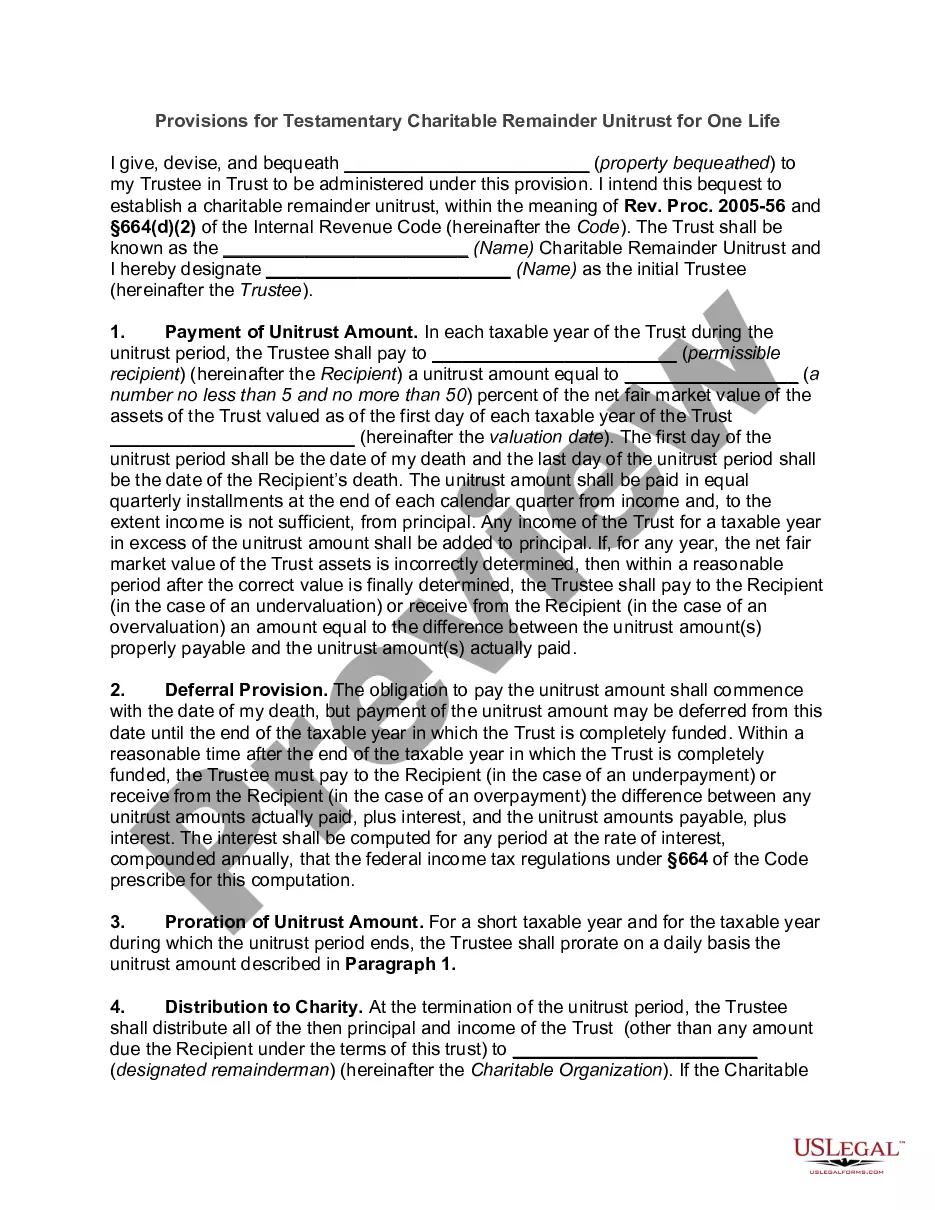
Charitable remainder unitrust distributions must adhere to the payout rate specified in the trust document, which is generally between 5% to 50% of the trust’s annual fair market value. Distributions should begin at least annually, providing the income beneficiary with reliable payments. It's essential to remember that a valid charitable organization must ultimately receive the remainder of the trust assets after the income period ends.
A disqualified person includes anyone who directly benefits from the trust, such as the trust creator (grantor), their family members, or any business entities controlled by them. These individuals cannot receive income or principal from the trust while it is active. This rule is crucial to maintain the integrity of charitable remainder unitrusts. Using a reputable platform can help clarify these classifications.
The tax deduction for a charitable remainder trust is dependent on the present value of the charitable interest at the time of your contribution. Generally, the higher the percentage allocated to charity and the longer the term, the greater your deduction will be. Using services like uslegalforms can help you navigate these calculations with ease, ensuring you don’t miss out on potential tax benefits.
To calculate the present value of the remainder interest in a charitable remainder unitrust, you need to determine the trust term, the payment rate, and the discount rate. These factors help to estimate how much the remaining assets will be worth at the end of the trust term. By using a calculator or consulting with platforms like uslegalforms, you can simplify this calculation and optimize your planning.